
Azerbaijan’s Minister of Ecology and Natural Resources, COP29 President-Designate Mukhtar Babayev and High-Level Champion Arpadarai Nigar met with Sue Biniaz
 The South Caucasus News - SouthCaucasusNews.com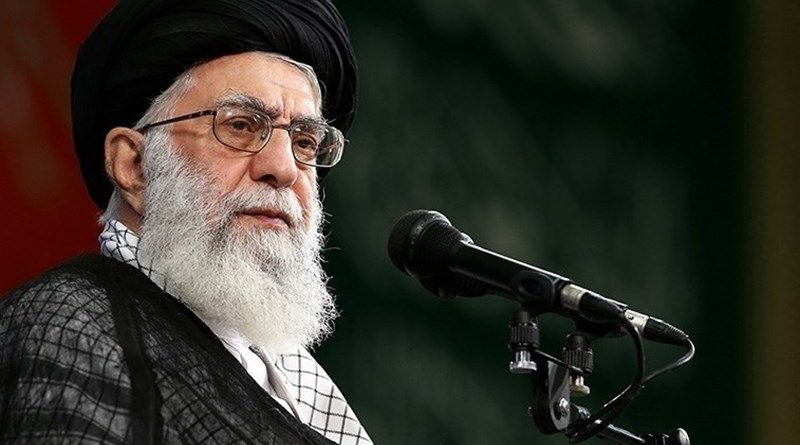
While recently leaked documents exposed the financial corruption of certain members of Iran’s Majlis (Parliament), regime supreme leader Ali Khamenei is still preaching about the necessity of participating in the upcoming parliamentary elections. In a recent meeting with regime loyalists in East Azarbaijan, Khamenei said, “Everyone should participate in the elections. Elections are a fundamental pillar of the system. The path to reforming the country is through elections.” He added, “Those who seek to address and remedy the problems should participate in the elections. Elections are the right path.”
Since the revealed scandals in Majlis have intensified the internal crisis within the regime, Khamenei, to control the situation and silence them, said, “Those who enter the electoral arena should refrain from using foul language, insults, and humiliation towards others… They should avoid spreading negativity. It is not right for some individuals to engage in negative campaigning just to attract attention to themselves; negative campaigning is incorrect, contrary to reality, and based on lies.”
The reality is that the election scandal has become so rampant that even representatives of Khamenei admit repeatedly, even in Friday sermons, that their associates ask them, “Why should we participate in the elections?”
By using ironic language, Khamenei dismissed the idea of selecting the most qualified individuals by the Guardian Council (the body that oversees the elections) and said, “People should pursue the selection of the most qualified. Of course, first and foremost, it is the presence of the people that matters, and then it is the selection of the most qualified. Selecting the most qualified means those who are being brought up because they have surpassed the scrutiny of the Guardian Council, they are all righteous.”
These statements come at a time when Hedayatollah Khademi, a current member of the Majlis qualified by the same Guardian Council, revealed: “Qualification is being bought and sold! And they even receive money to be included in the list!” He explained that he was told, “You have to pay $120,000 in debt for us to approve you!”
Certainly, this is a small amount in comparison to the embezzlement and plundering taking place in the parliament. It seems that the Guardian Council and the regime have granted significant discounts to the mentioned individuals, as the minimum income of a representative in the parliament is 2.5 billion rials according to the recently leaked documents. Furthermore, with the approval of a specific law by the relevant authorities, namely Khamenei and the Islamic Revolutionary Guard Corps (IRGC), they receive incentives that are several times this amount.
Another member of parliament, Jalal Rashidi Kouchi, also revealed in an interview on February 15, “They were offering me 1.5 to 2 trillion rials to go for an interview and declare that the story of car imports is baseless.” When the concerned host expresses surprise and asks, “Does the parliament really have this much (income)?” Rashidi responds, “For someone who seeks it, yes! It has much more than you think!”
Indeed, the Iranian Resistance has long stated that Khamenei can amplify his foolishness and frivolity, but he cannot change the reality that there is no room for “election” within the regime; it is a time for “revolution.” This language is a clear indication that on the streets, there is a clear demand for fundamental transformation and the overthrow of this regime, which has a record of crimes and plunder. The rebellious youth and the disillusioned people have resolved to eradicate this cancerous tumor from their homeland.
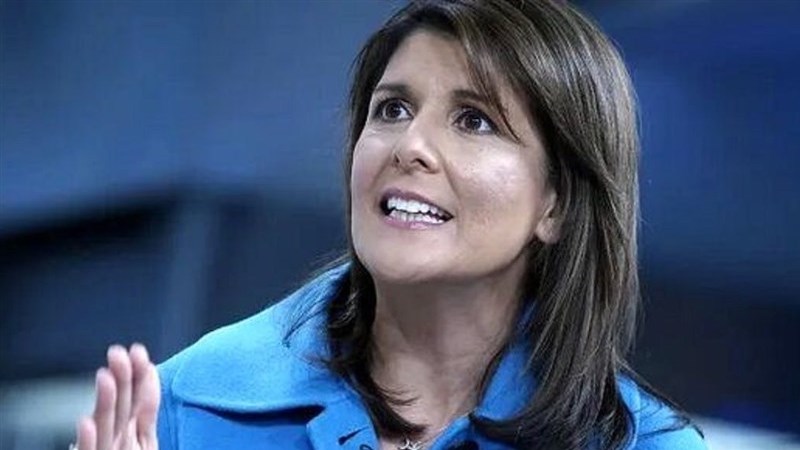
Neocon war hawk Nikki Haley is rarely shy about using force against other people. Most recently, she has called for airstrikes on Iran and Syria, imposition of aggressive economic sanctions, and the elimination of leaders supposedly tied to a drone attack on U.S. soldiers stationed in Jordan. The foreign policy establishment applauds her bellicosity. President Biden apparently believes her advice sage and in recent days has used U.S. airpower to attack multiple targets in the Middle East.
But in an uncharacteristic lapse into humanity, Haley has drawn the ire of pundits. When appearing on the Breakfast Club radio show hosted by Charlamagne tha God, Mr. God asked whether a President Haley would use force against Texas if it seceded from the union. Haley tried to dodge the question, but when pressed she said: “If Texas decides they want to do that, they can do that. If that whole state says, ‘We don’t want to be part of America anymore,’ I mean, that’s their decision to make.” Thus, Haley would not spill the blood of Texans or Americans if Texas sought to withdraw from the union.
A pox on her house! Leftist pundits have described Haley’s peacenik remarks as “a bizarre gaffe” and claimed that Haley “knows better.” The New York Timeslamented the statement and announced that “the states are just lines on a map” with no constitutional significance. A real Republican president, we are told, would not flinch at the loss of 620,000 on the battlefield. Haley needs to get with the Lincolnian program. Feeling the heat, Haley walked back her comments rather than sticking to principle. But this was not enough for the mainstream media.
In scourging Haley, commentators repeatedly assert that the Constitution does not mention secession and thus states may not leave the union. Of course, the Constitution mentions nothing about abortion but the same commentators howl because the Supreme Court overturned Roe v. Wade (1973) based on its lack of constitutional grounding.
Friends of centralization argue that the Civil War settled the issue and the Supreme Court agreed in Texas v. White(1868). But the Reconstruction Congress also agreed that blacks and whites should attend segregated schools in Washington, D.C., and separate-but-equal was established Supreme Court precedent for years. Fortunately, “settled” constitutional mistakes can always be rectified.
How would the Framers and ratifiers of the Constitution react to Haley’s remarks? With cheers! The independent states forming the union would not exist absent a secession from the British Empire. Every American revolutionary was a believer and a participant in secession.
The Constitution, drafted just four years after the Treaty of Paris ended the War of Independence, did not reject our revolutionary principles. Had pro-ratification forces (the Federalists) claimed that after ratifying a state could not leave the union, we would still be governed by the Articles of Confederation. The people were already leery about the proposed federal government and three state ratification conventions explicitly claimed the power to reassume powers delegated to the federal government, i.e., to secede.
In the early 1790s, senators from New England were frustrated with Southern insistence that the United States retaliate against the British because of affronts to American commerce. Senators Rufus King and Oliver Ellsworth (from Massachusetts and Connecticut, respectively) approached Senator John Taylor of Virginia to discuss a peaceful dissolution of the union. Nothing came from the talks, but more significantly no one doubted their propriety.
As Thomas Jefferson, author of the Declaration of Independence, noted in 1819, “if any state in the union will declare that it prefers separation . . . to a continuance in union . . . I have no hesitation in saying ‘let us separate.’”
Belief in secession was practically universal in the early American republic. The celebrated American historian Robert Remini has noted that Andrew Jackson in the 1830s was “the first and only statesman of the early national period to deny publicly the right of secession.”
The Framers and ratifiers did not see states as lines drawn on paper, but as preexisting political communities where the people exercised ultimately authority. Consequently, the Constitution required that the people acting in separate state conventions ratify the Constitution. The Philadelphia Convention did not consider a national act of ratification because its members understood the place of the people of the several states in American political theory.
Hence, James Madison averred in his Virginia Resolutions of 1798 that “the powers of the federal government” result “from the compact to which the states are parties.” Jefferson in his Kentucky Resolution of 1798 further noted that “each party [to the compact] has an equal right to judge for itself, as well of infractions as of the mode and measure of redress.” In other words, a state in its highest sovereign capacity can choose to leave the union when its rights are trampled.
Haley’s initial embrace of secession was not a gaffe, but evinced an understanding of our federal system. Unfortunately, she retreated when faced with criticism. Nonetheless, she should be praised for her refusal to call for military attacks in case of a hypothetical Texas secession when appearing on the Breakfast Club. If she would just learn to exercise the same restraint in sending American forces abroad, she might merit consideration at the ballot box.
This article was also published in Real Clear History
By Alexander Kostyuk
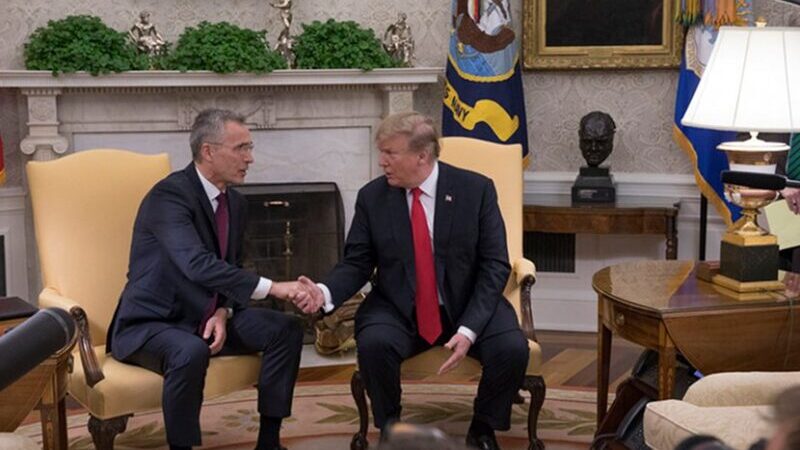
Donald Trump got used to shaking the foundations of NATO with his public statements, more so than any of his predecessors. In 2016, then-candidate Trump’s statements about the unfair fiscal burden carried by the United States compared with its European allies was nothing fundamentally new in NATO’s nearly seven-decade history, as mentioned by Fabrice Pothier and Alexander Vershbow. We can, for example, refer to the experience of the 1970s, when Henry Kissinger pressed US European partners toward an increase of their defense expenditures. But in 2016 Trump moved ahead and declared his readiness to make conditional the US commitment under Article 5 of NATO’s founding treaty, which obligates members to come to the defense of any ally that comes under attack. Trump has suggested that would depend on whether the ally in question had “fulfilled [its financial] obligations to us.” In this Trump meant NATO’s 2 percent of gross domestic product target for defense spending.
In 2016 just two countries of NATO met the two percent target – the US and the UK. After his inauguration in January 2017 and over the next four years, President Trump had an opportunity to use this unsatisfactory defense performance of European countries as a pretext to make good on his threat, but he never did – the US remains in NATO, ensuring security in Europe.
Almost eight have years passed since that time, and in February 2024 Donald Trump made a similar statement in an even more attention-grabbing way. Trump, speaking during a political rally in South Carolina, quoted the president of “a big country” that he did not name as asking, “Well sir, if we don’t pay, and we’re attacked by Russia – will you protect us? I said: ‘You didn’t pay? You’re delinquent?’ He said: ‘Yes, let’s say that happened.’ No I would not protect you. In fact I would encourage them to do whatever the hell they want. You gotta pay.”
Trump has just reminded the European NATO countries about their obligations to spend more on defense – at least two percent of GDP. This is what NATO has requested since 2006, when NATO defense ministers agreed to commit said minimum to ensure the Alliance’s military readiness. This is what Trump has focused his attention on since 2016. His recent reminder is bundled in a manner inherent to him – a mix of warnings, threats and ultimatums. Yet in contrast to the 2016 version, the 2024 Trump statement is much more consequential, even alarming, in the wake of the 2022 Russian invasion of Ukraine.
It seems that in 2024, NATO and European leaders are taking Trump’s statements seriously. Perhaps this is because Trump has now put on a brighter spotlight on the issue, or perhaps because 2016 differs from 2024 in one major way – Russia is now waging a full-scale war in Ukraine, which, if the situation develops accordingly, could drag European countries into the conflict as well.
NATO Secretary General Jens Stoltenberg responded that “any suggestion that allies will not defend each other undermines all of our security, including that of the United States, and puts American and European soldiers at increased risk.” EU Council President Charles Michel said: “Reckless statements on NATO’s security and Article 5 solidarity serve only (Russian President Vladimir) Putin’s interests.”
Germany’s foreign ministry posted the message ‘one for all and all for one’ with the hashtag “StrongerTogether” on its English language X account following Trump’s comments. Polish Defence Minister Wladyslaw Kosiniak-Kamysz stated that “NATO’s motto ‘one for all, all for one’ is a concrete commitment. Undermining the credibility of allied countries means weakening the entire NATO.”
The president of Estonia, another eastern flank NATO country, Roberta Metsola, was more concrete than her partners from Poland: “I think what the presidential candidate in America said is also something to maybe wake up some of the allies who haven’t done that much.” Metsola went on to say that the European Union should spend more on defense.
EU Internal Market Commissioner Thierry Breton was among the most decisive and forward looking: “We have heard that before… nothing new under the sun… we cannot flip a coin about our security every four years depending on this or that election, namely the US presidential election.” Breton, too, was angling for a boost European defense expenditures.
As of 2024, there are now 11 countries that meet the NATO target. This compares to just three countries in 2014 – the US, the UK and Greece. Obviously, this represents progress; however, there are still 19 countries, including Canada, that do not meet the two percent NATO target. Among these 19 countries, nine countries still have defense expenditures lower than 1.5 percent of GDP. Moreover, since 2014 Croatia and Turkey have reduced their defense expenditures as a share of GDP.
Thus, this all gives reason to believe that NATO suffers from a lack of internal discipline, and that administrative levers within NATO must be empowered to encourage compliance.
At the same time, since 2014, NATO has demonstrated excellent results in terms of increasing spending on military equipment. Thus, while in 2014 only seven NATO countries exceeded 20% of equipment expenditure as a share of defense expenditure, as of 2023 all NATO countries exceeded this indicator. Moreover, nine NATO countries have equipment expenditures as a share of defense expenditures that exceed 30%.
In other words, it cannot be said that since 2014, Europe has completely ignored Trump’s calls during his first presidential term. Questions remain however about overall defense spending.
Trump’s threat to Europe to increase defense spending to the minimum target or risk the US not following through on its obligation under Article 5 of the NATO Charter, which was made last week, has already had an immediate impact on European leaders. The case of Germany’s response is certain, with Berlin having already informed NATO that it will allocate a record amount of money for defense. For the first time in three decades, Germany has announced a planned allocation of an amount equivalent to two percent of GDP. The government has informed NATO of a transfer of $73.4 billion for military needs. During the Cold War, Germany’s military spending quota routinely exceeded 3% of GDP.
NATO responded immediately too. Just before the NATO ministerial meeting, NATO Secretary General Jens Stoltenberg announced a record increase in defense spending: “In 2024, NATO members in Europe will invest $380 billion in defense. This will exceed 2% of their total GDP for the first time,” the NATO Secretary General said. In 2023, this figure was 1.85%. The secretary general also announced how many NATO members will spend more than 2% on defense in 2024: “I expect that this year 18 allies out of 31 NATO member states will spend two percent of GDP. This is also a record. This is a six-fold increase since 2014, when only three allies met this requirement,” Stoltenberg added.
Effective deterrence requires not only a powerful military component, but also well-known instruments of geopolitics, including effective diplomacy. Perhaps this is where European leaders feel real uncertainty should the United States withdraw from the European security architecture. Would NATO without the United States be a sufficient geopolitical entity to effectively deter external threats? And to be quite frank and substantive, which NATO countries will be able to fulfill the representative role of NATO that the United States is used to playing?
Last year, Henry Kissinger made an extremely important statement in this regard. Kissinger said the political center of gravity in Europe is shifting inexorably toward Berlin, presenting a fresh challenge to the country’s leadership. “The leading country has to be an example of moderation and wisdom in balancing the interests of all the [European] countries,” said Kissinger.
This is probably what was discussed during Chancellor Scholz’s visit to the White House following his meeting with President Biden in February.
At the same time, the most pressing issue remains US nuclear weapons in Europe, which successfully provided nuclear deterrence against the USSR and Russia for decades. Nuclear deterrence, which, after Russia’s invasion of Ukraine in 2022, has been increasingly supported by the population of Europe, particularly Germany and the Netherlands. Nuclear deterrence, which has been a fundamental element of NATO’s concept since the 1950s, and continues to be so today.
In general, the issue of European security in the context of US geopolitical interests and objectives in other regions; the role of NATO; conventional military capabilities in Europe; US nuclear weapons in Europe; and the role of active diplomacy remain urgent issues, but they are also issues that should be addressed by NATO partners with the participation of the United States in a consistent and effective manner. This is in the interest of not only NATO partners but also adversaries regarding world order, and Trump’s recent statements are a way of reminding European colleagues that this issue needs to be addressed this time; it is urgent. This is the issue of responsibility and contribution of each country of NATO to global and regional security.
The views expressed in this article belong to the authors alone and do not necessarily reflect those of Geopoliticalmonitor.com.
By He Jun
February 24 this year marks the second anniversary of the outbreak of the Russia-Ukraine war. In the past century, after experiencing two world wars and boasting significant advancements in civilization, human society has once again witnessed a large-scale war persisting for two years since the beginning of the 21st century. According to the war reports from Russia and Ukraine, the casualties on both sides may exceed 800,000 to date. Meanwhile, in the Middle East, the conflict between Hamas and Israel has been ongoing for nearly five months, with the death toll on both sides exceeding 30,000 people, with nearly 29,000 deaths in the Gaza Strip.
The simultaneous occurrence of these two wars has torn the world apart, compounded by anti-globalization and geopolitical competition, which greatly alter the global political and economic landscape. On February 17, Singapore’s Defense Minister Ng Eng Hen warned at the 60th Munich Security Conference (MSC) that wars have broken out successively in Europe and the Middle East. The world cannot afford to have three unstable war zones simultaneously, and every effort must be made to prevent conflicts in Asia. He also cautioned, “if indeed there is a conflict for whatever reason between US and China, I think we will have blighted our futures for the next, well, 10, 20, 30 years.”
Observers noted that at the recently concluded MSC, a strong sense of pessimism dominated Europe. Last year, Western countries had high hopes for Ukraine’s counteroffensive against Russia. The U.S. and Europe faced little difficulty in providing weapons and funds to Ukraine, and most Western countries strongly opposed Russia. However, this year, the situation has changed significantly. Ukraine has fallen into difficulties in the war and has shifted to a comprehensive defensive stance after failed counterattacks. During this session of the MSC, the Russian military captured the key town of Avdiivka in eastern Ukraine. The difficulties faced by Western countries in supporting the Ukrainian military have become apparent; the U.S. Congress has shelved a bill to provide billions of dollars in military aid to Ukraine, and Europe is unable to produce the ammunition needed by the Ukrainian military. What is even more troublesome for Western governments is that Donald Trump, who is gaining momentum in the election process, is skeptical of NATO and opposes spending money on Ukraine. If Trump returns to the White House, Ukraine may face the risk of a cutoff in military aid.
Ironically, six decades ago Germany established the MSC to discuss with the U.S. on countering the Soviet Union. Today, 60 years later, Europeans, including Germans, are once again discussing with Americans how to thwart Russia. History seems to be repeating itself, but the mindset and motives of the key actors are no longer the same.
Take Germany as an example. Over 60 years ago, the Soviet Union at that time was stronger than today’s Russia, the sense of threat in the Cold War was heavily felt. Germany at that time was not unified, but divided into West Germany and East Germany. Nevertheless, West Germany at that time still proposed the idea of “change through rapprochement” – a concept that later became an important theoretical basis for Germany’s “Neue Ostpolitik”, or “new eastern policy”. German politicians like Willy Brandt showed historical initiative and confidence, adopting the Neue Ostpolitik to improve relations with the Soviet Union and to secure more peace and development space for Germany and Europe. Of course, it cannot be denied that after World War II, the greatest security guarantee in Europe still came from the U.S., which not only promoted the revitalization of Western European countries through the Marshall Plan but also ensured the collective national security of Western European allies through the NATO organization.
Compared to 60 years ago, Germany seems to lack the autonomy and confidence it once had. It is not just Germany, but other countries in old Europe also appear to be aging. Although there is the existence of the NATO military alliance and the European Union, European countries now seem more weakened and divided, with only a few “New Europe” countries showing more ambition and confidence.
From the performance of European countries at the MSC, it is evident that the fear of Russia has once again become a deep concern for European countries. German Defense Minister Boris Pistorius warned that in the coming decades, the European continent will live in a division: “Free and democratic Europe on one side, authoritarian and warmongering Russia on the other.”. He called on NATO partners to increase military spending and emphasized that “effective deterrence is our life insurance”. Danish Prime Minister Mette Frederiksen stated, “Russia does not want peace with us. They are destabilizing the Western world from many different angles — in the Arctic region, the Balkans, and Africa – with disinformation, cyberattacks, hybrid war, and obviously in Ukraine”. She boldly announced that Danish authorities have decided to transfer artilleries to Ukraine and called on allies to do the same.
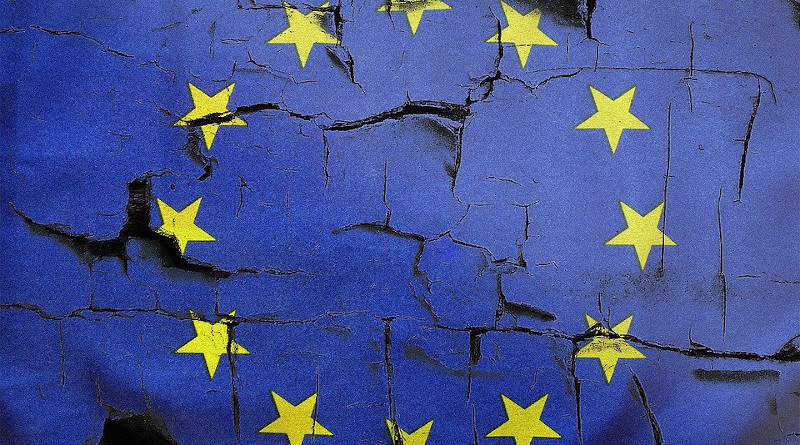
We believe that although European countries have expressed a unified hostility towards Russia, it does not demonstrate their actual unity. Considering the current context, it actually exposes the decline and division of European countries. Old European countries such as France, Spain, and Italy have a certain attitude towards Russia and the war, while “New Europe” countries such as Poland and the Baltic states have quite different views. Moreover, certain individual countries like Hungary firmly lean towards Russia. With the EU already struggling to make comparatively efficient and cohesive counteractions, the massive and cumbersome EU will likely face a more divided and declining future.
Similar to the two World Wars before, the Russia-Ukraine war has once again occurred on European soil. It not only undermines the security situation in Europe but also continuously burdens the European economy. Meanwhile, the concurrent conflict in the Middle East—the Hamas-Israel war—also directly impacts the European economy. The trade routes from Asia to Europe and the Americas have effectively been blocked by the Red Sea crisis. In Germany, the largest economy in Europe, according to an analysis by the Deutsche Bundesbank, following a 0.3% economic contraction in the fourth quarter of 2023, the German economy may experience a slight decline again in the first quarter of 2024, leading to a technical recession, defined as consecutive quarters of GDP decline. The German economy faces numerous challenges, including weak external demand, sluggish consumer spending, and restrained domestic investment.
The intensification of decline and division may make Europe less easy to deal with in international politics and economic cooperation. In China’s perspective, this change is not a good sign for China. The EU is still China’s second-largest trading partner, but under geopolitical tensions, the EU has developed a general sense of wariness towards China in various aspects such as bilateral trade, investment cooperation, and technology transfer. The “pro-American faction” within the EU has even proposed a geopolitical thought of “de-risking” in relation to China.
After attending the MSC, Chinese Foreign Minister Wang Yi wasted no time and visited old European countries such as Spain and France. China’s intention is to strive for relatively friendly relations with Europe and to obtain geopolitical and geoeconomic space through peaceful communication. However, facing a Europe that is more declining and has more disagreements, cooperation between China and European countries in the future may not be as smooth as it used to be.
A sense of pessimism has permeated the 60th Munich Security Conference, and this may be a turning point in the history of international geopolitics. Hindered by the war, European countries are showing increasingly evident decline both politically and economically, while their differences are also growing. The world needs to be prepared for a Europe that is gradually declining.
He Jun is a researcher at ANBOUND
By Mohammed Sinan Siyech
Until the second half of 2023, Middle Eastern and Muslim nations had relegated the Palestine issue to the sidelines, often preferring realpolitik gains over showcasing ideological support for Palestine. With the United Arab Emirates (UAE)—one of the strongest power brokers in the region—normalising ties with Israel (among others) under the Abraham Accords, it seemed that its close ally, Saudi Arabia, was likely to follow suit and the Palestinian cause would have been forgotten.
Even Turkish President Recep Tayyip Erdoğan, a staunch financial and logistical supporter of the armed group Hamas, was slowly increasing trade and other ties with Israel in a bid to shore up his own declining economy and make use of the discovery of gas in the Mediterranean Sea. The United States (US) under Biden was slowly easing into the idea of a Middle East peace process unencumbered by Israeli actions in Palestine.
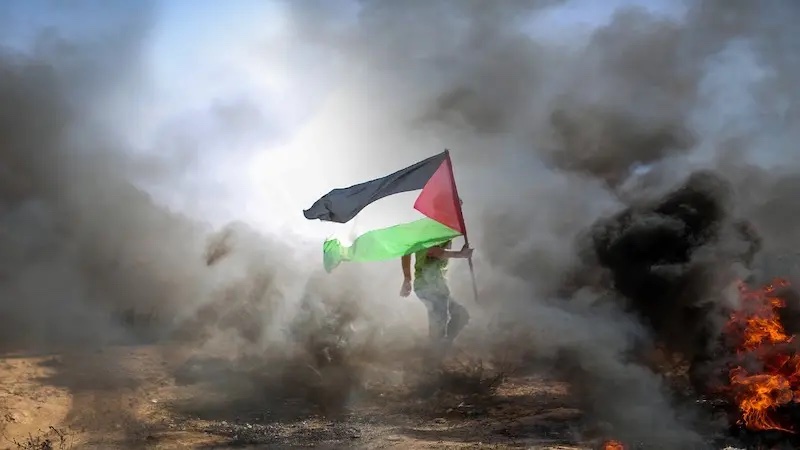
Yet, these processes were significantly impacted by the 7 October attacks in Israel when Hamas tore through sophisticated Israeli defence systems to launch a coordinated land, air, and sea attack. In the process, Israeli citizens were killed or captured, leading to a brutal response by Israel that has killed many Palestinians over the last few months.
The ensuing war between Israel and Palestine has led to widespread condemnations of both Israel and Hamas and major geopolitical changes in the region. Firstly, the trajectory of the Abraham Accords came to a standstill and was even reversed in some instances. Saudi Arabia, which was on the verge of normalising relations with Israel, had to pause its plans and focus on ending the war as soon as possible. Erdoğan, who seemed neutral initially, soon resorted to vocal criticisms of Israel and its leader Netanyahu.
Frustratingly for the Israeli leadership, not only has it been unsuccessful at achieving its initial goal of destroying Hamas, but its actions were also referred to the International Court of Justice for plausible genocide. While no concrete judgement was passed, the deliberations of its actions came as a major blow to its image in the court of global public opinion.
Most recently, calls for a two-state solution have increased significantly. A two-state solution refers to the carving out of a separate Palestinian state based on borders agreed to in 1967, a move that would give Palestine sovereignty and, subsequently, presence in international bodies like the United Nations. Israeli PM Netanyahu has roundly rejected such a step, seeing it as a security threat.
Yet, these calls have only grown in strength since the war began. Even US President Biden, Israel’s closest ally, has reiterated his calls for a two-state solution after the war subsides. Saudi Arabia recently declaredthat it would not normalise ties with Israel without a two-state solution on the table.
The trajectory of the Middle East’s relations with Israel before October 2023 and long-term US support for Israel make it evident that ideological factors are not motivating these renewed calls for a two-state solution. A new entry within the blackbox of foreign policy-making has been the strong presence of public opinion in support of Palestine, compelling state leaders to take positions that are at least neutral, if not positively towards Palestine.
Social media has been one of the strongest tools used by netizens to shed light on the various brutalities of the Israeli army in Palestine and to influence public opinion. Within this, citizen journalists such as Wael al-Dahlouh and Motaz Azaiza have documented various issues in Palestine that bypassed traditional media outlets and reached ordinary citizens across the world.
So severe has been the effect that a TikTok official had to issue a clarification that it was not the algorithm favouring pro-Palestinian opinion, but that TikTok users were overwhelmingly posting in its favour. In addition, news outlets such as Al Jazeera, TRT World, RT News, and alternative media that do not take a Western line on the conflict have given more options for the public to consume news that is pro-Palestinian.
This has had a strong effect on domestic politics in many countries. For instance, US President Biden’s approval rating has dropped significantly over the Palestine issue. This marked one of the first instances that a foreign policy issue not involving American soldiers (at least for the first few months) led to a drop in approval ratings. The Democrats are also facing a tight election in 2024 with ex-President Donald Trump trying to come back. Against this backdrop, swing states like Michigan, Arizona, Minnesota, etc. with significant Arab-American populations, have launched campaigns to vote against the Democrats, leading to moves such as unveiling an Islamophobia register to pacify Muslim voters.
Similarly, Türkiye and Saudi Arabia too have been moved by the pressure of public opinion. Thus, even though Erdoğan tried to maintain a neutral stance and has offered to mediate in the conflict, public opinion in the country, as seen in large pro-Palestine demonstrations, led him to shift his stance and condemn Israel harshly. Similar patterns can be seen in many other countries like Egypt, Jordan, and many other Arab- and Muslim-majority nations across the world. For instance, Bahrain, which had normalised ties with Israel, recalled its ambassador to Israel (a step short of severing relations), demonstrating the reversal of political gains for Israel in the region. As Princeton’s Arab barometer project gauged, public opinion in large parts of the Arab world has been increasingly in favour of Palestine and, in some cases, even Hamas as a resistance movement due to the wide prevalence of social media and local news outlets.
The 7 October attack was not just an attack on Israeli interests but also on the normalisation of ties with Israel across the Arab and Muslim world. The resurgence of public opinion as a powerful mobilising force is one among the big factors that have compelled both Western and Arab nations to change course on their outlook towards Israel and the conflict. Undoubtedly, this may not be the only factor driving policy, but it will definitely play a major role in the future.
Thus, understanding the future outcome of the Middle East conflicts necessitates going beyond traditional political considerations and adding social media-led reactions to the mix as well. While there seemed to be a lull in support for the Palestinian cause over the last couple of decades, the rise of alternate news media outlets and social media has played a strong role in shoring up support again. As such, in the future, state leaders will have to keep in mind the mood of their respective nations when deciding how to approach future conflicts, especially when it comes to Israel, which has proven to be amongst the trickiest issue to deal with so far.
Our partners, Bosco Conference is pleased to invite you to attend the annual B2C & B2B InvestPro Azerbaijan Baku 2024 & InvestPro Turkiye Istanbul 2024 conferences during one week!
Bosco Conference highly values all participants, and therefore their time in particular. So, for logistical convenience and ensuring the…
In a recent diplomatic engagement, Latvia and Azerbaijan have embarked on discussions to bolster their economic ties, particularly focusing on collaboration in the liberated territories of Azerbaijan. Deputy Minister of Economy Sahib Mammadov and Deputy Minister of Agriculture of Latvia, Normunds Schmits, convened in Baku to deliberate on various avenues…
