
#India become an actor capable of determining processes in the #SouthCaucasus, not only influencing them. Sergei Melkonian and Jason Wahlang @JaeWahlang on implications for Russia, Iran and Turkey https://t.co/8oKJ5WKXPH
— Russian Council (@Russian_Council) February 20, 2024
Day: February 20, 2024
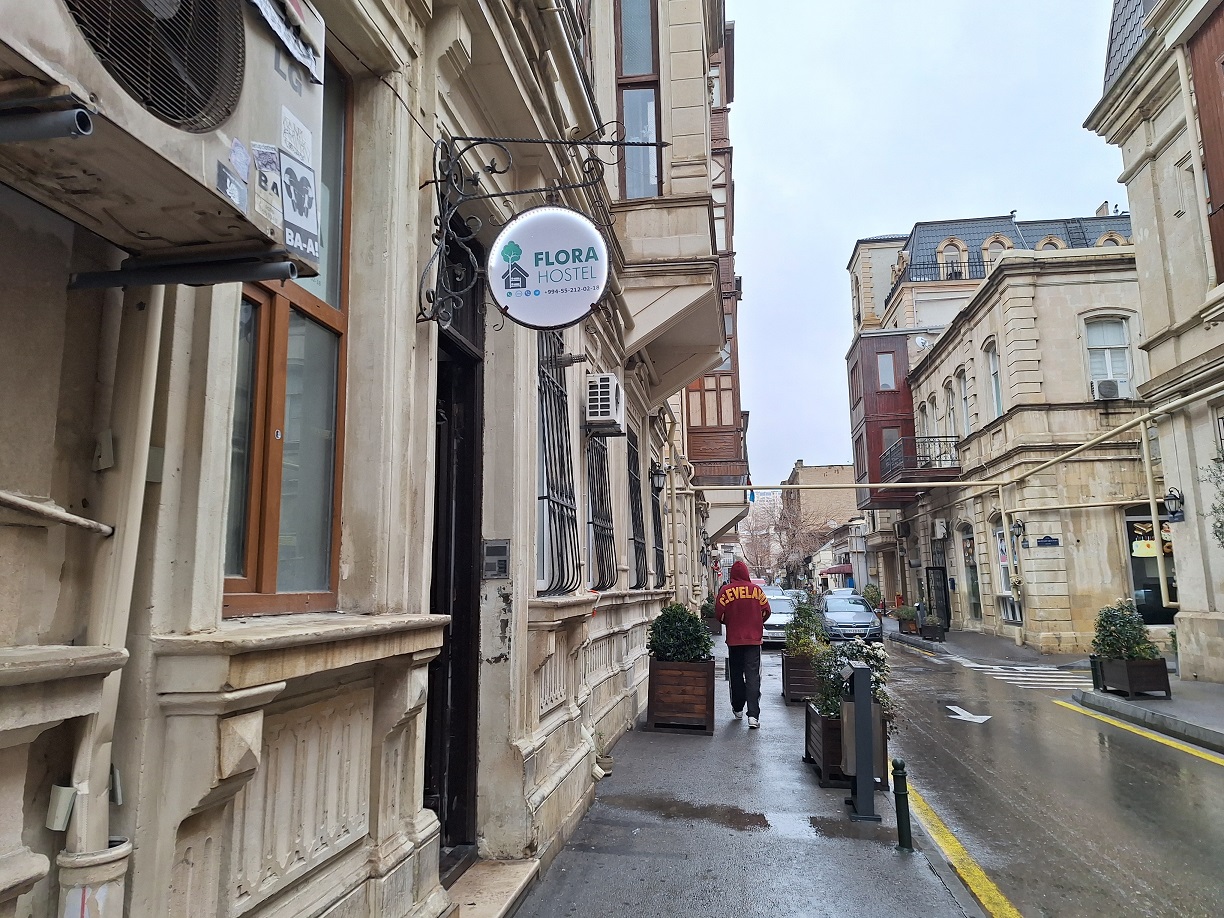
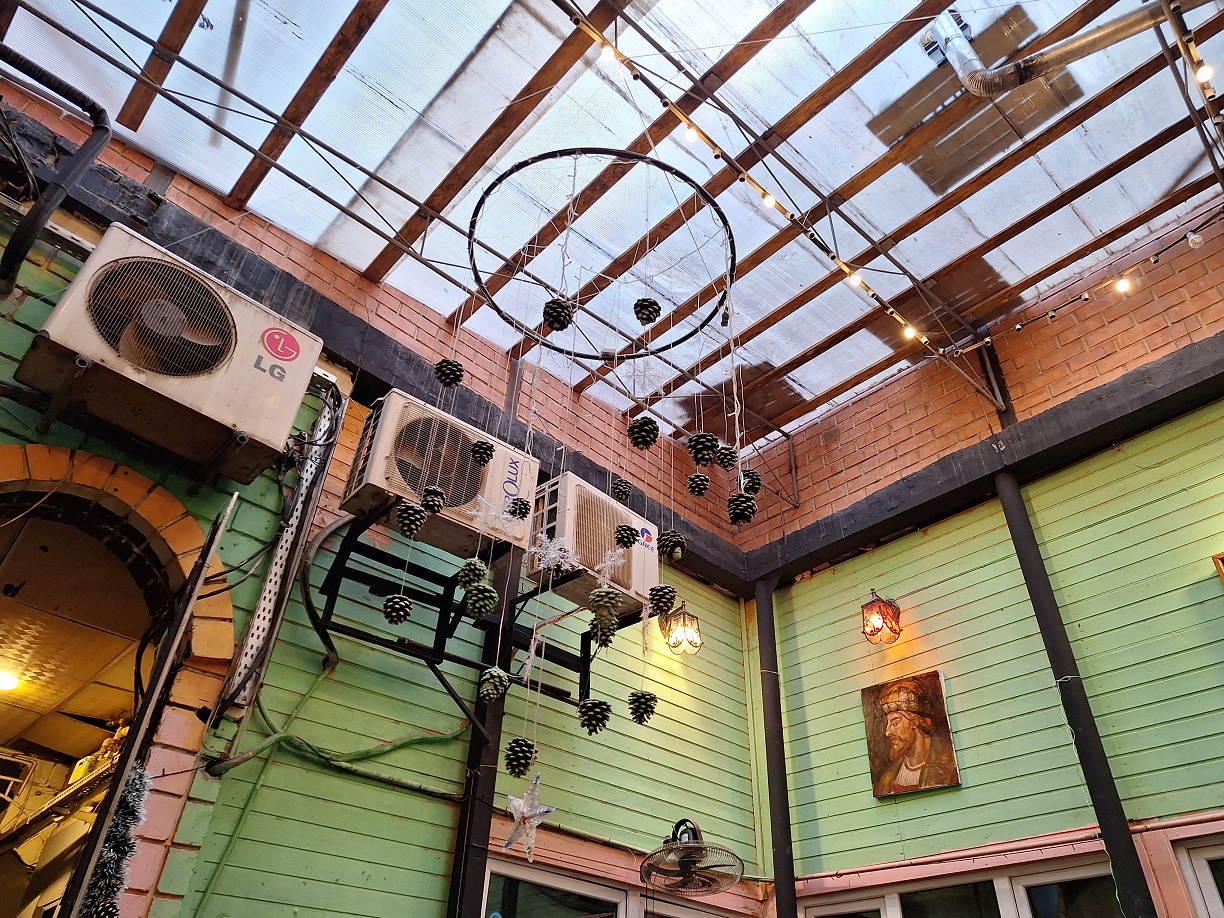
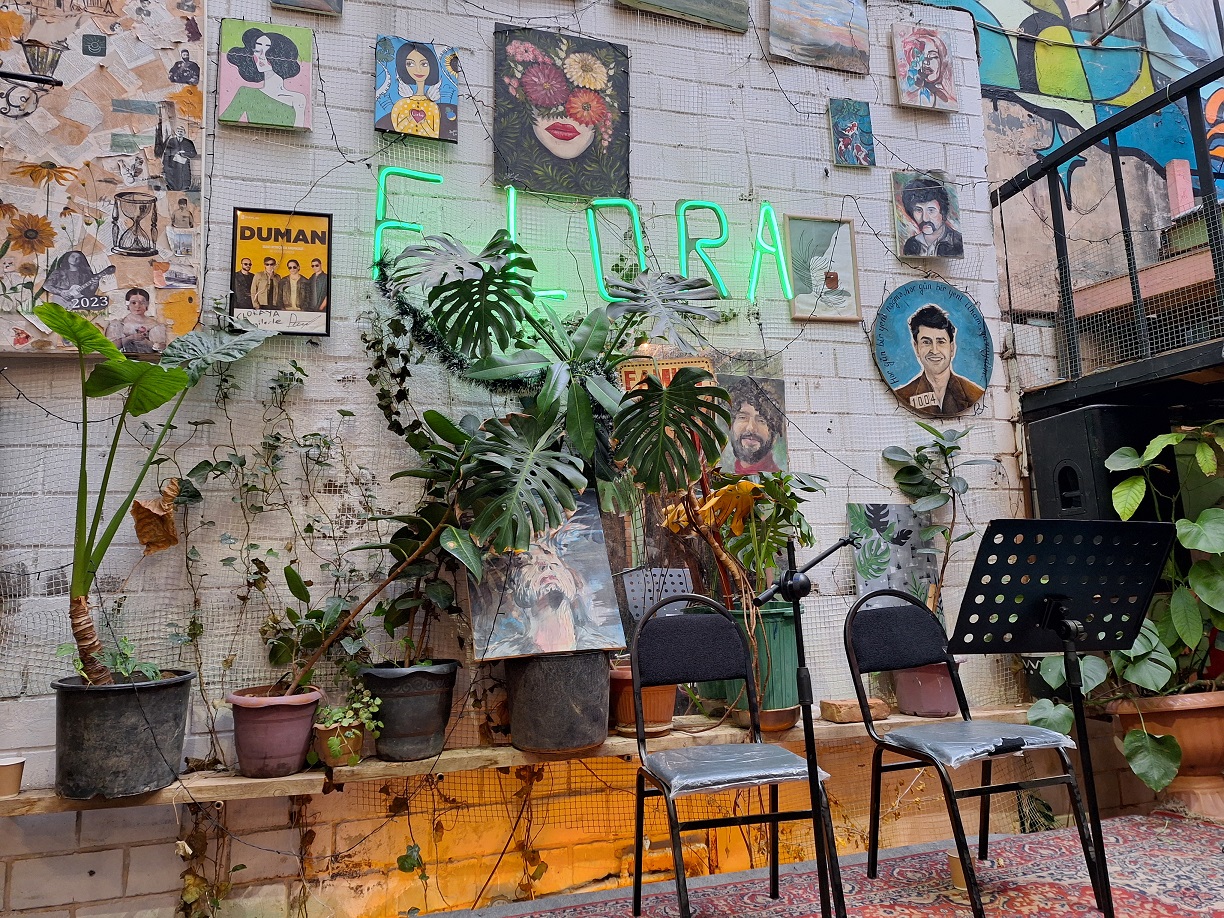
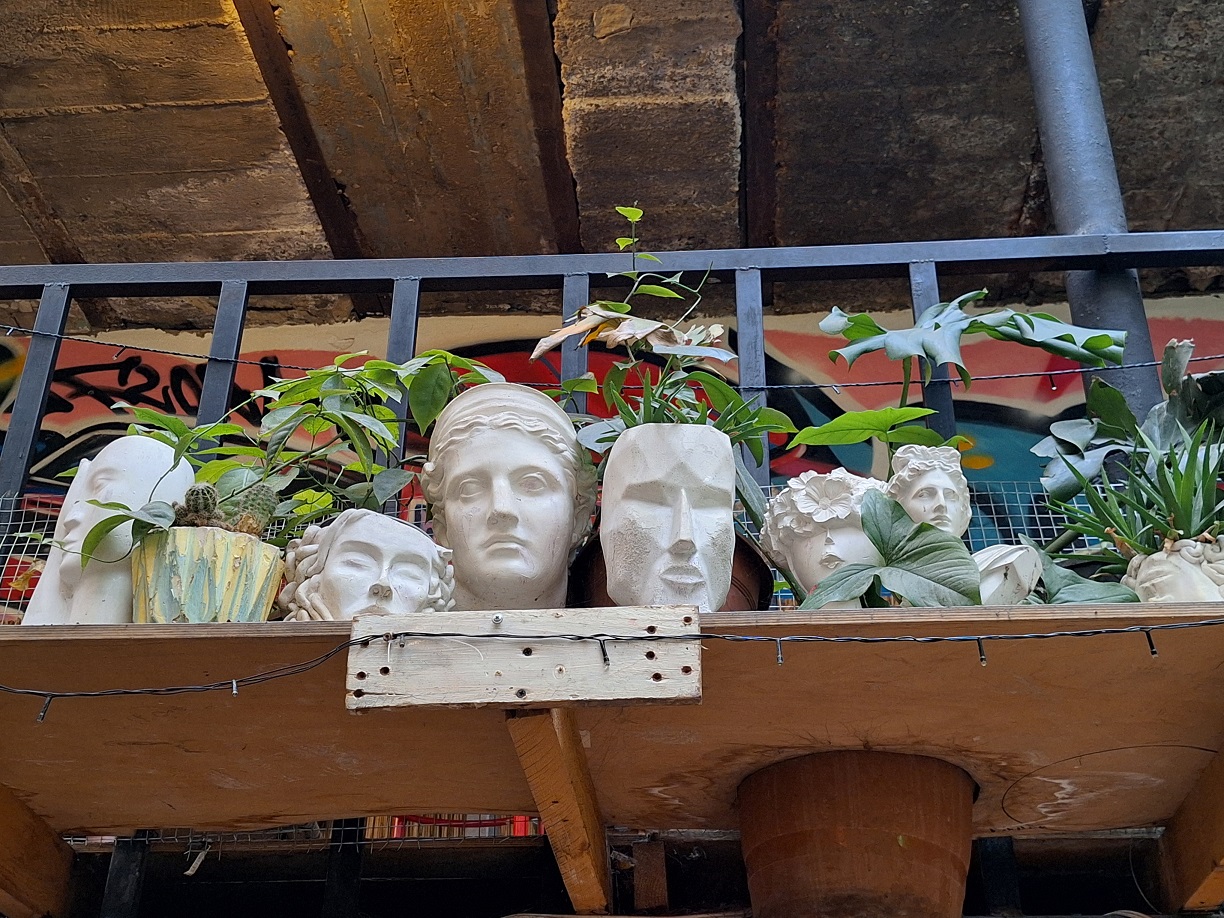
Flora Hostel and the creative youth of Baku
Baku. City center, Dilara Aliyeva Street. 12:00 in the afternoon.
Due to heavy rain the phone screen is all wet, it is very difficult to find the address using GoogleMaps.
“Excuse me, do you know where Flora Hostel is? It seems like it should be around here somewhere,” I ask, stopping a young man walking down the sidewalk.
“You just passed it,” he continues on his way, pointing with his hand in the direction I came from.
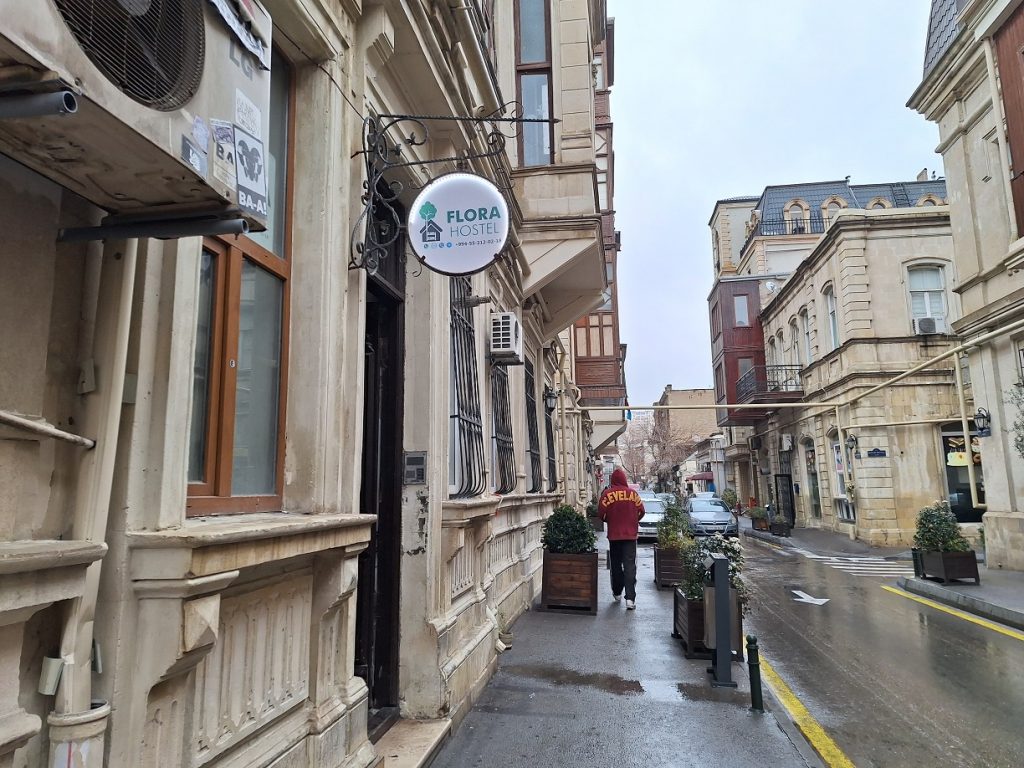
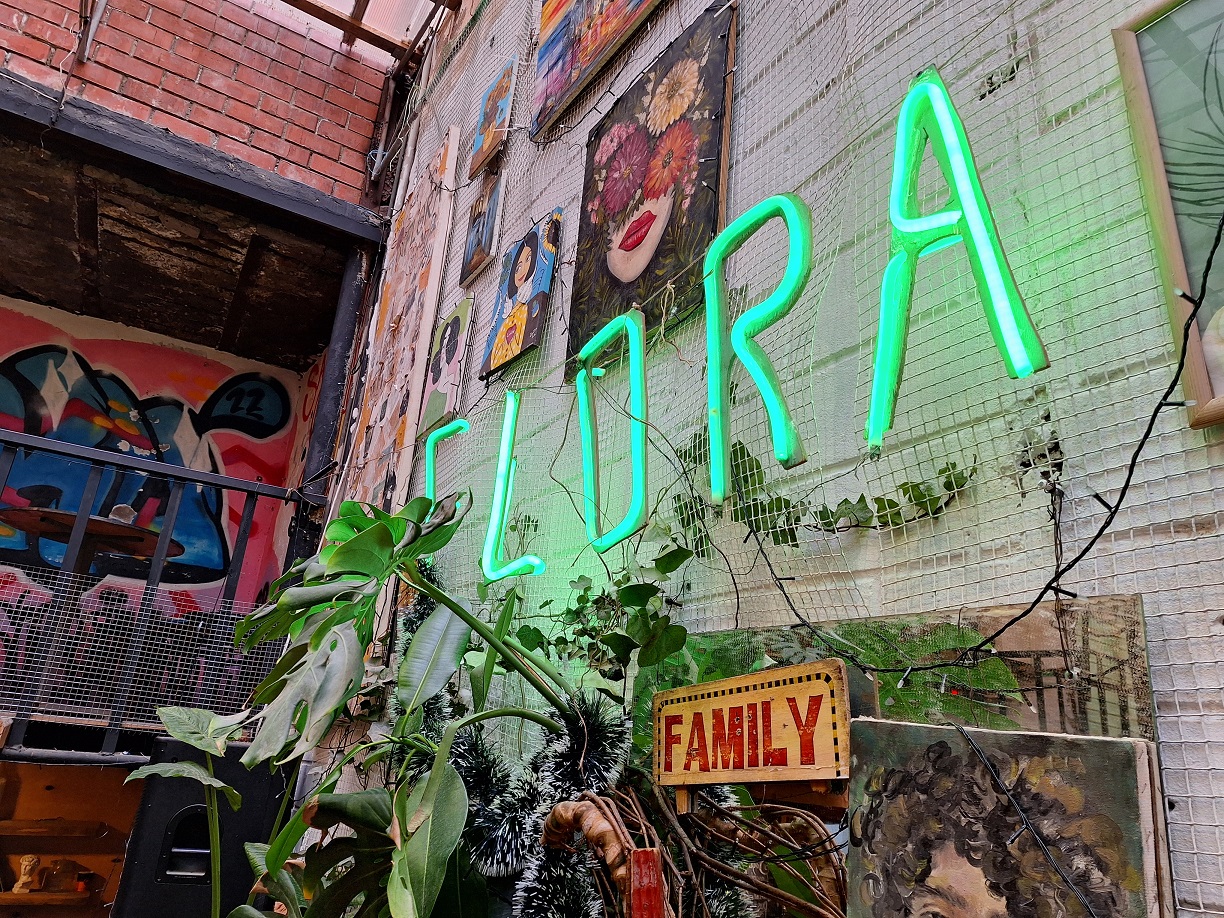
I turn around and see the Flora Hostel sign above my head. I enter through the iron door of the two-story building.
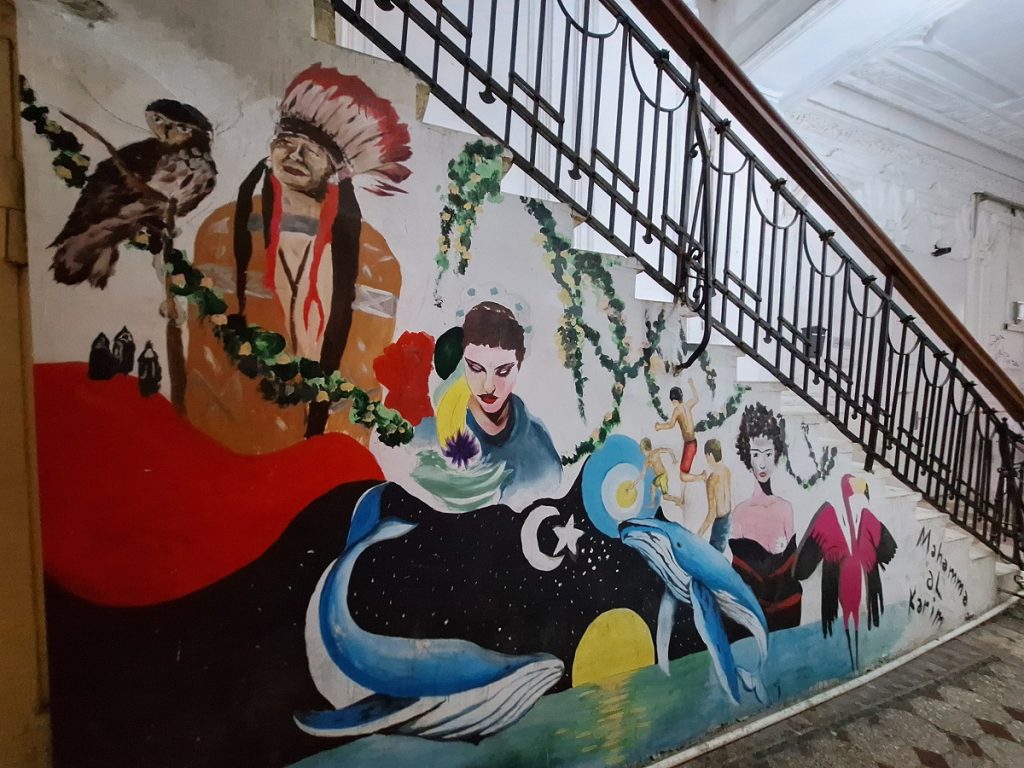
Graffiti on the wall and a “tea garden” welcomes visitors
Inside the building, the first thing that catches my eye is the graffiti painted on the wall below the stairs connecting the first and second floors.
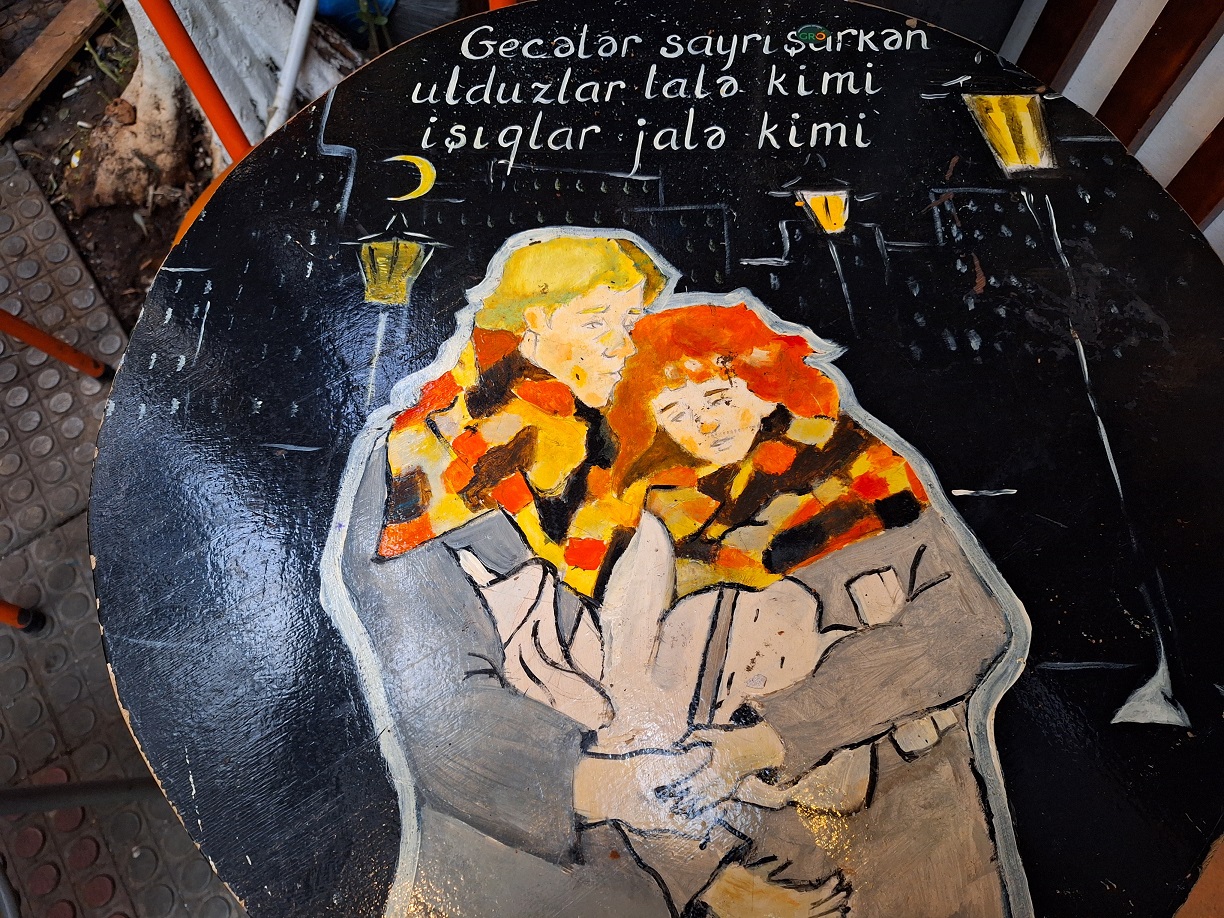
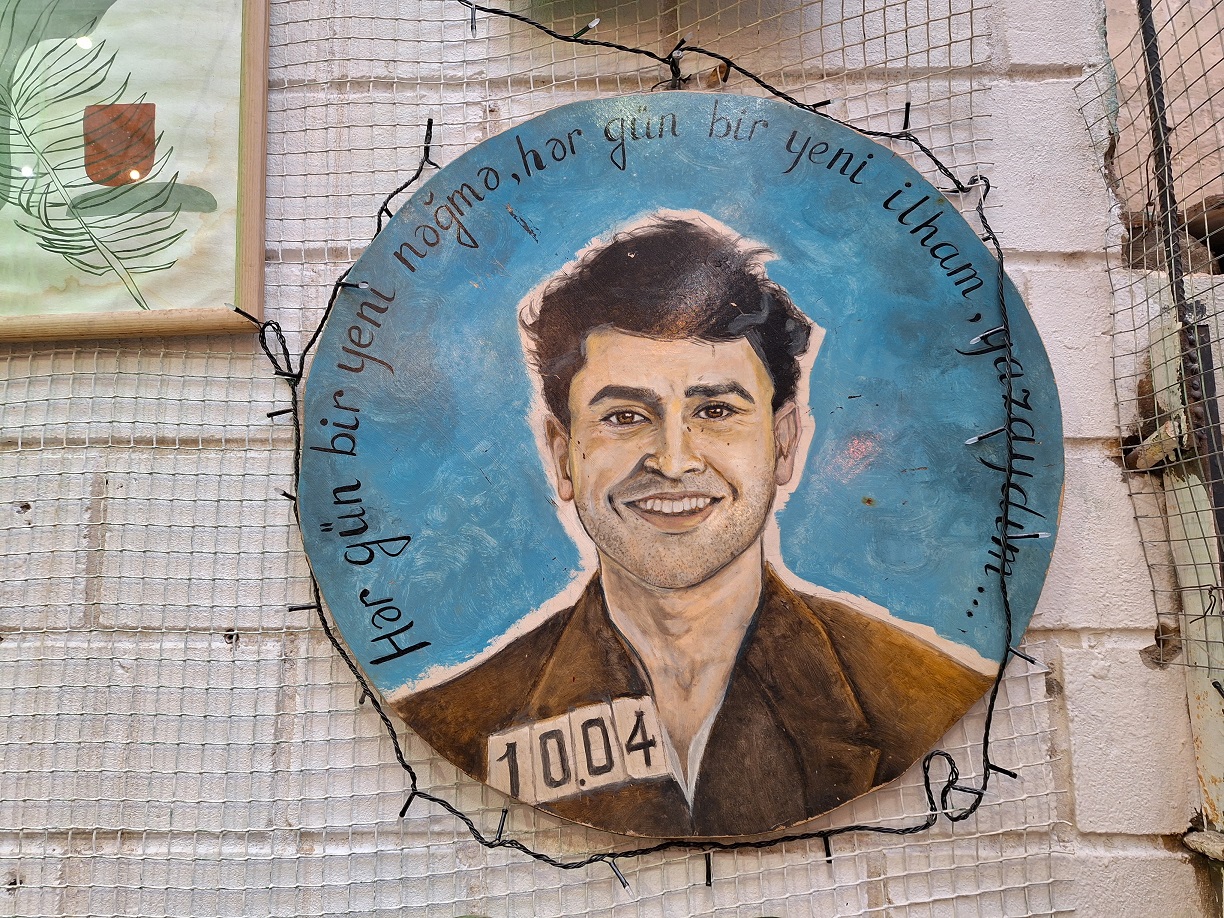
I see interesting images – a pensive Indian, an owl looking at me with a keen eye, a young man with his eyes closed, a girl with short hair giving the impression of a peaceful person, two whales swimming to the surface from the depths of the ocean, and children jumping into the water over their heads.
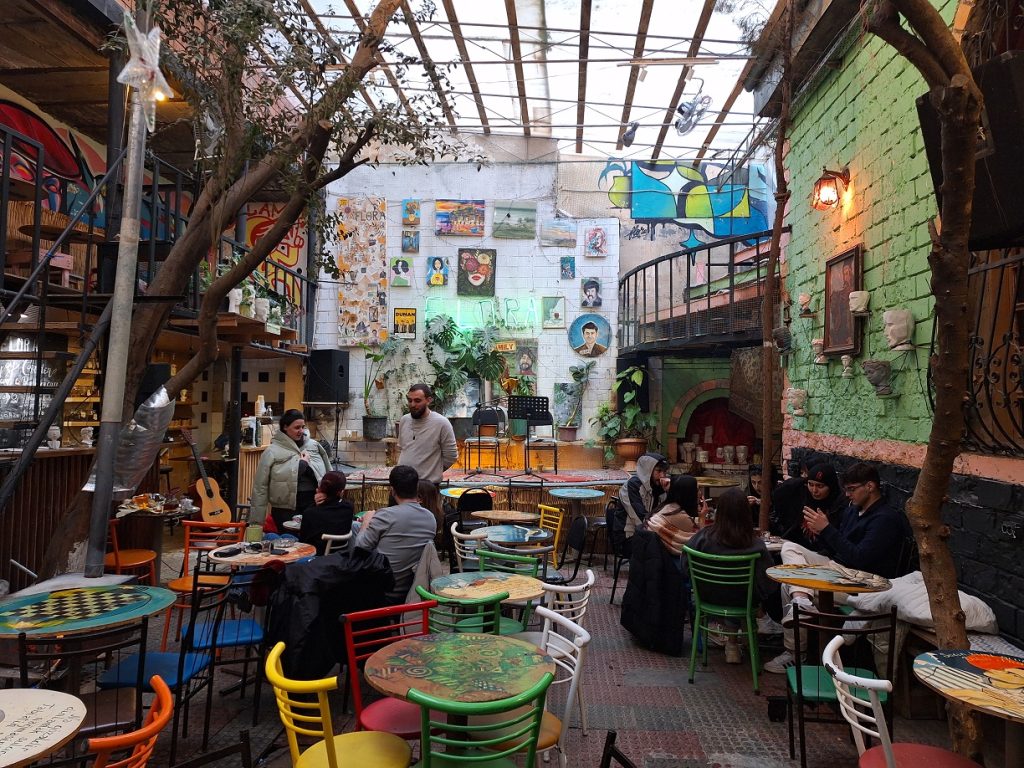
After looking at these images for a few minutes, I move on to the “tea garden”, which is the name of the hostel’s coffee shop. There are about 20 tables in the tea garden.
A group of young girls and guys sitting at a table in the far corner of the café are having a heated discussion. They seem to be talking about the latest local feature film they have seen.
“In my opinion, the director failed to sufficiently reveal the reason for such an abrupt change in his thoughts and direction at the end of the movie. The bad guy suddenly became the defender of all that is good. Why and how is unknown,” the girl excitedly explains to her friends.
Two friends sitting at a neighboring table are discussing about a concert that will be held this evening at the hostel.
“It’s still a long way from tonight anyway. Let’s go to “28 Mall” for now, meet the guys there, and then we’ll all come to the concert together,” the young man suggests to his friend.
“We wanted to bring tourists and local youth together at Flora Hostel”
I walk past them, choose a table and sit down. A little later, Turkay Bayramov, the founder of the hostel, arrives.
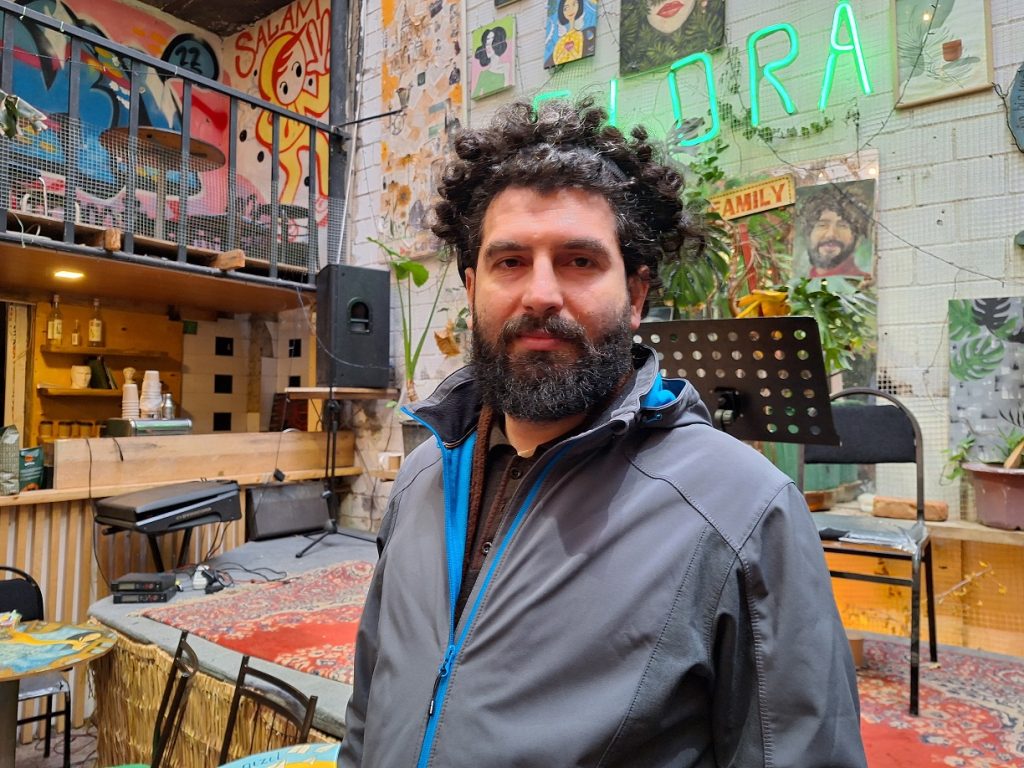
Turkay Bayramov, 33, comes from Jebrail district. After his family was forced to leave their native place during the first Karabakh war, they settled in Imishli district. He received his first higher education in Baku at the State University of Economics. Then he continued his education in Turkey – first at Anatolian University, later at Gazi University.
When he returned to Azerbaijan, he got the idea to open a hostel, but different from others.
Turkay Bayramov says that the initial goal of opening a hostel was to create a place where tourists and locals could communicate. Later, the idea grew, and as a result, Flora Hostel was created, where different art directions are neighboring.
“The hostel has been operating since 2019. Initially, the residential part of the building was mainly for tourists and the café was for locals. We also wanted to create a kind of social space where people could exchange ideas with each other. For the first year, the idea worked well. But then the pandemic period started and it didn’t go the way we thought it would.
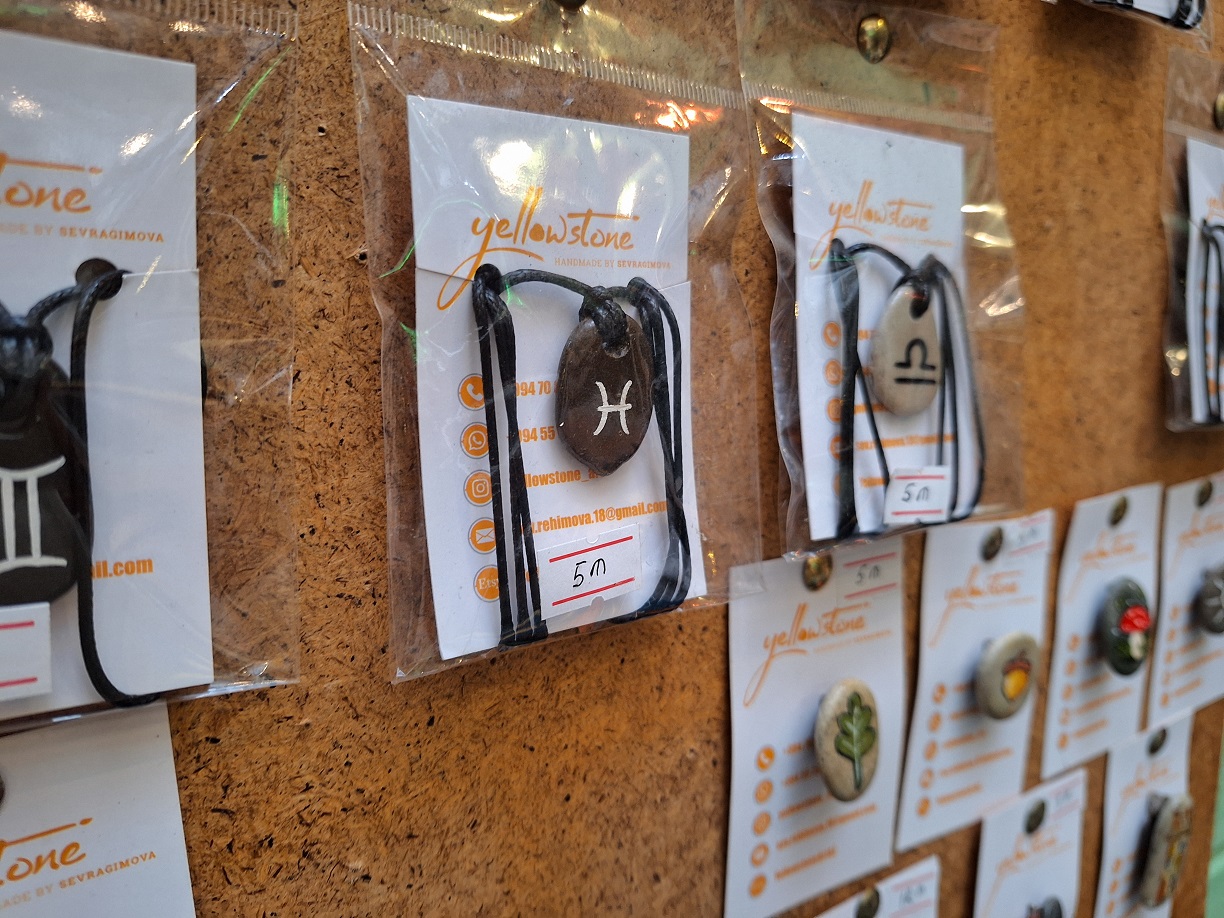
We will probably reach the result in the coming years. But our idea is expanding. We want to make Flora a kind of art center. Because it’s not just a hostel. It is both a cafe and an art center. On the second floor there is “Theater Zero”. It’s an independent theater, and we support it by providing space for people to do art here. Also, Yellowstone Art Studio is on the same floor,” Türkai said.
The hostel portion of the building is designed to accommodate up to 40 guests. Since part of the hostel is now closed for renovations, that number has been reduced to 16 people. Here, guests share a common kitchen and multi-person bathrooms.
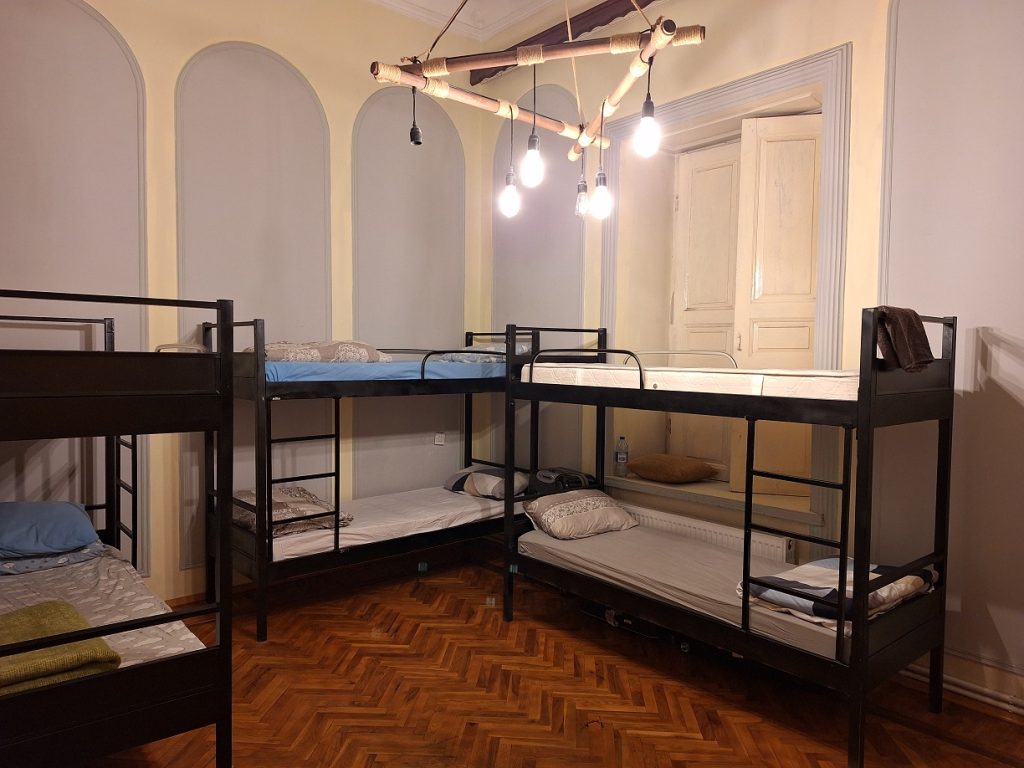
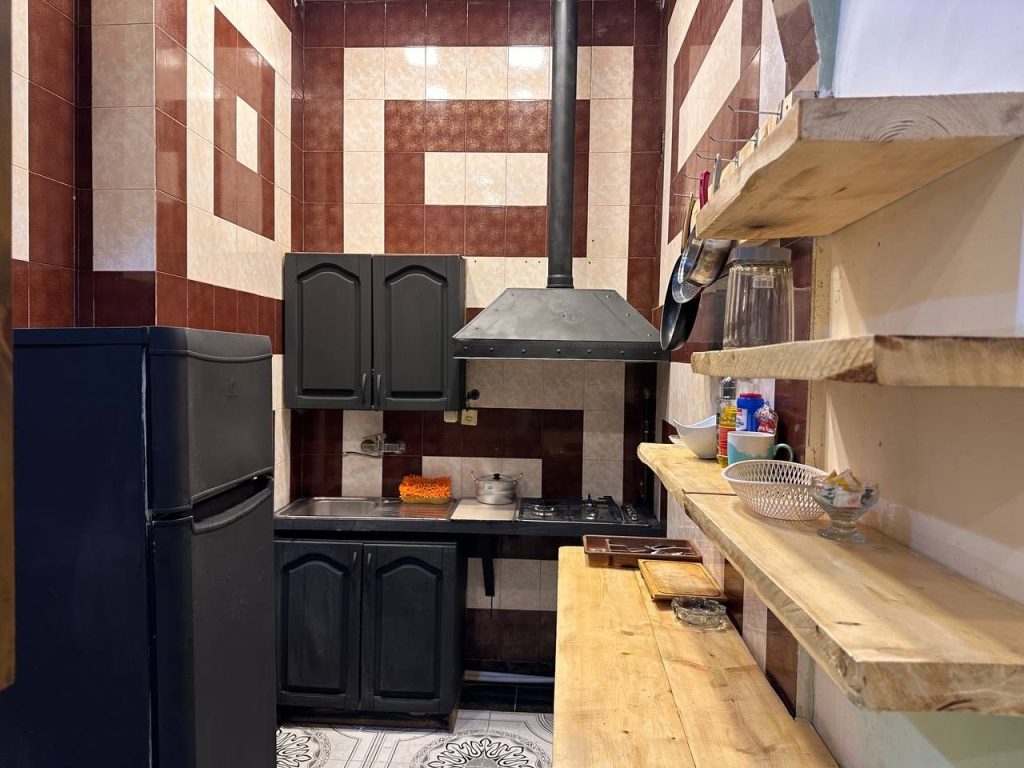 Photo: Alpertunga
“We don’t sell alcohol here.”
For a day’s stay in a hostel, you have to pay 15 manat [about $9]. Turkay says that this price may go down to 10 manats [about $6] for guests staying longer, such as a week. This is also designed to allow guests to stay more comfortably without worrying about money.
As for the prices in the cafe, they range from 5-10 manat [about $3-6] on average. There are more than 30 varieties of tea and a small number of sweets on the cafe’s menu. There are no alcoholic drinks at all.
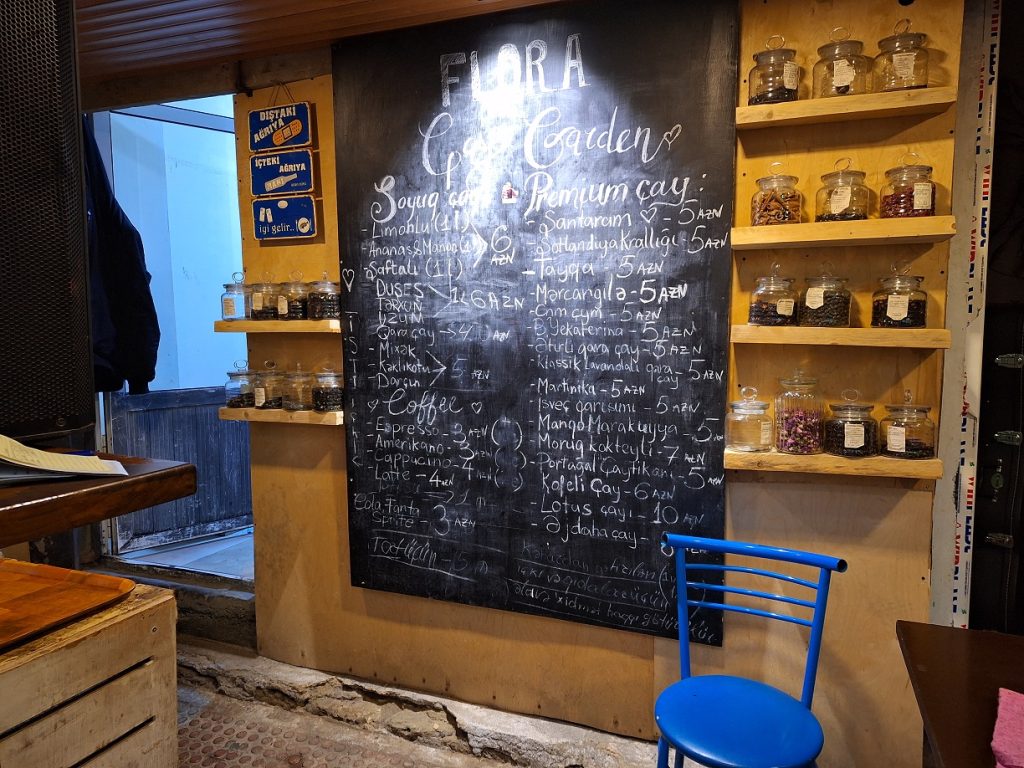
“I myself consume alcoholic beverages. So it’s not something caused by a bad attitude towards alcohol. It’s just that if the place has a strategy to be different, it needs to follow a specific concept. We originally envisioned this cafe as a tea garden. It is the only place in the area that doesn’t sell alcohol and that is what sets Flora apart from other places,” says Türkai.
The hostel has a total of eight workshops, an independent piano and violin school. In addition, frequent concerts in the dormitory increase interest in the hostel.
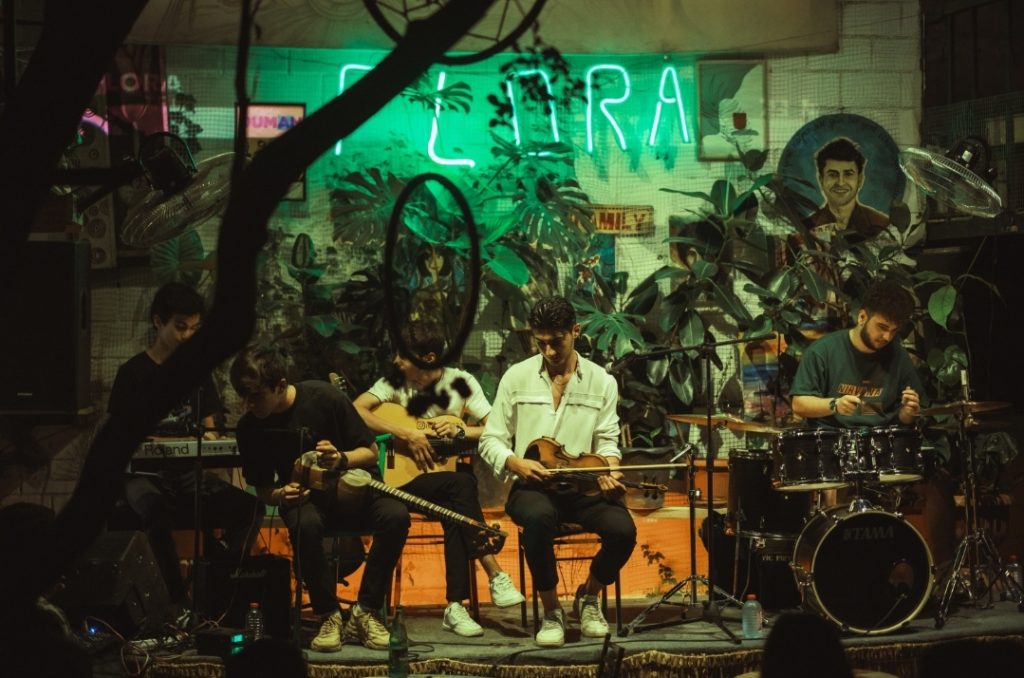 Photo: Alpertunga
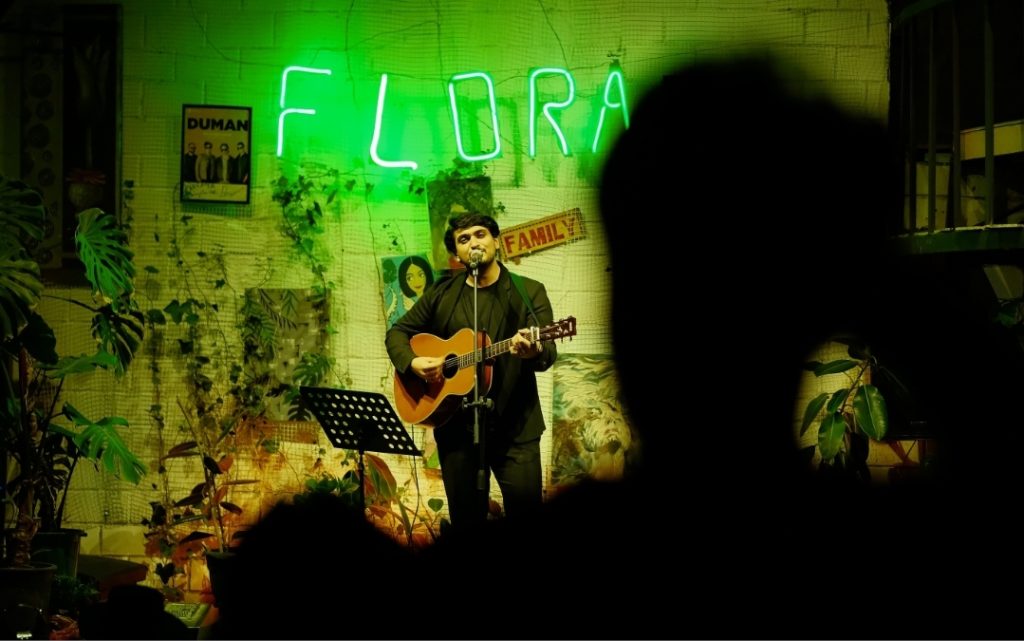 Photo: Alpertunga
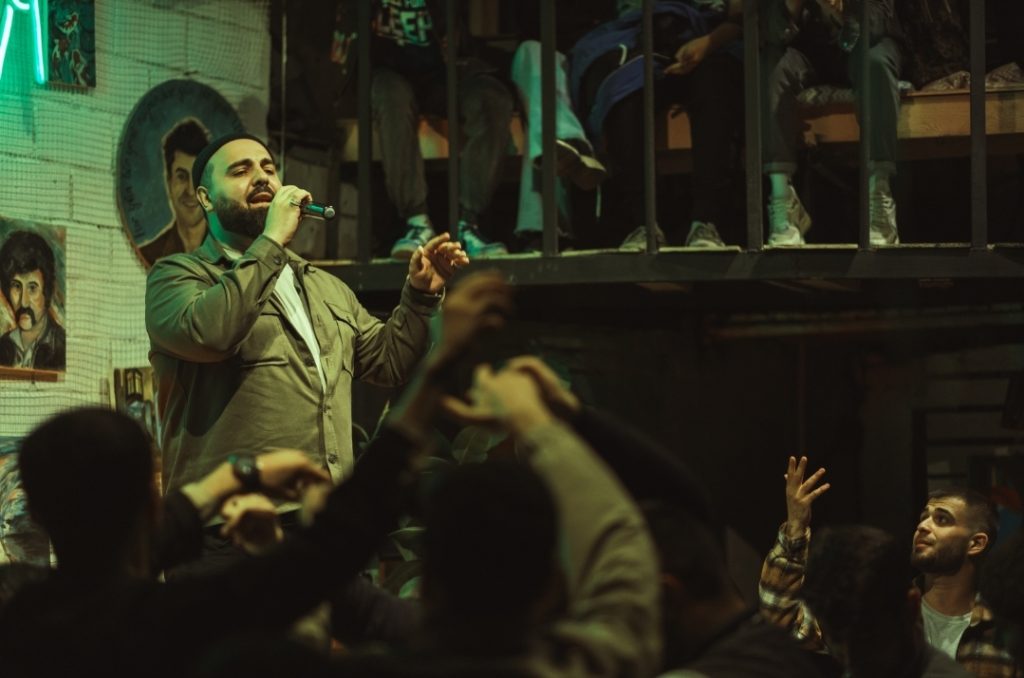 Photo: Alpertunga
From the announcements in the social networks of “Flora” it follows that these concerts are addressed to listeners who like different musical genres – rock, pop, retro and others. Regular customers of the hostel are mainly young people interested in art or active in this field. That is, the main point of contact between people here is art.
A girl, who is a regular customer of “Flora”, says that almost every day she visits the cafe of the hostel, where she often meets familiar faces.
“I have been a regular customer of the hostel since its opening. It is an interesting place in its concept. In general, the idea of combining a hostel and art in one building attracts people. I feel more comfortable here than in other places. My friends who share common tastes are also regular customers here. Many friends and good acquaintances I met for the first time here,” she says, pointing to her friends.
First event at the hostel
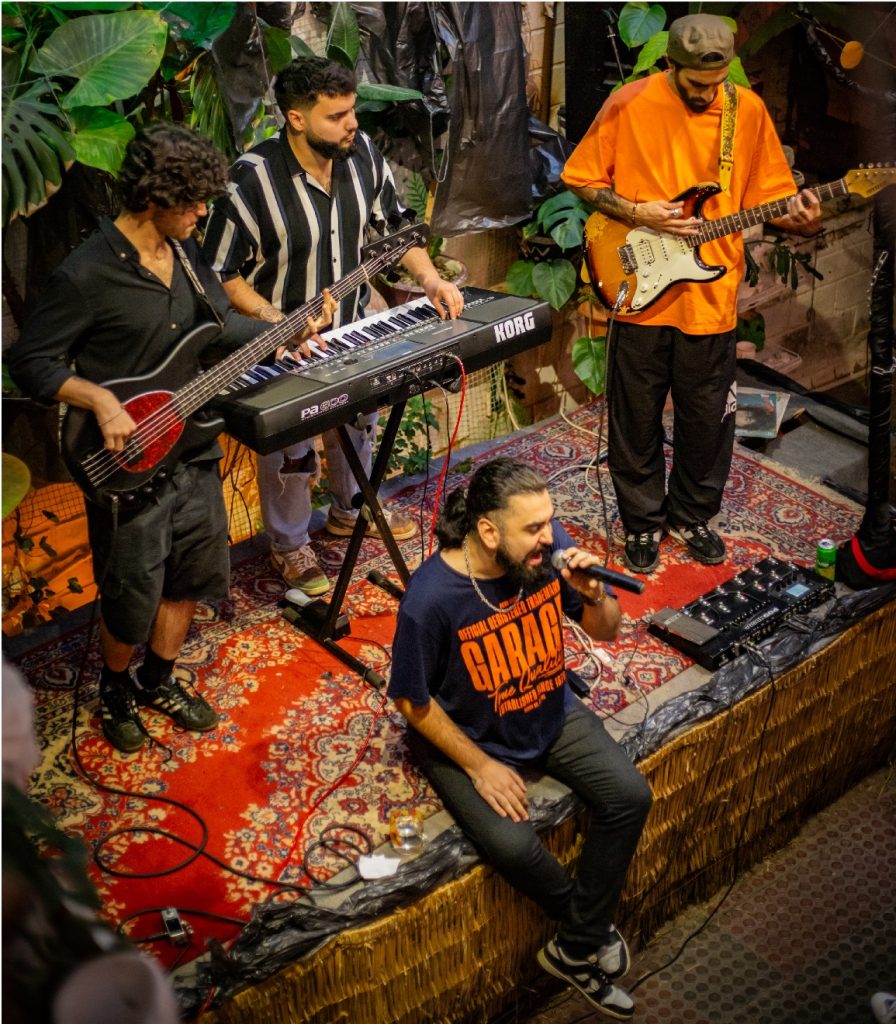 Photo: AF Photography
The first social event in “Flora” took place on the eve of Novruz 2019 holiday. The huge interest in this event served as a source of inspiration for the following events organized in the hostel.
“In February, on the third month of the hostel’s existence, we started celebrating Tuesdays – chershenbeh akhshamy, before Novruz. Tuesdays before Novruz were the days we all looked forward to as children. During which everyone in the courtyard would gather around a festive bonfire and share the joy of Novruz with each other.
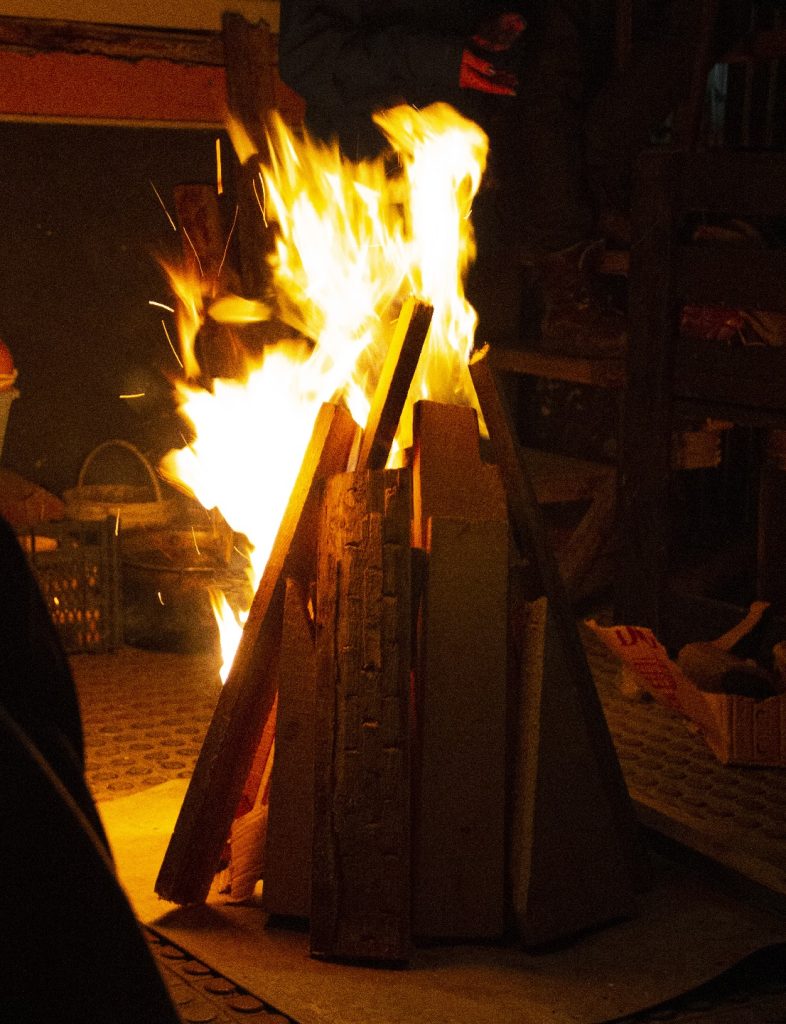 Photo: Alpertunga
It’s been a long time since these Tuesdays have been celebrated in such a mass and interesting way, at least in Baku. So I thought we should have a bonfire and tea party in the center of Baku. So we announced our first public event, organized a holiday Tuesday, had a bonfire, treated everyone to free tea, and the entrance was free,” Türkai recalls the first event held here.
According to him, the hostel, which used to attract a maximum of 20-30 people, welcomed 80 guests that day and 180 at the next similar event. Thus, the founders of Flora Hostel decided to continue organizing mass events with different concepts.
“Theater Zero.”
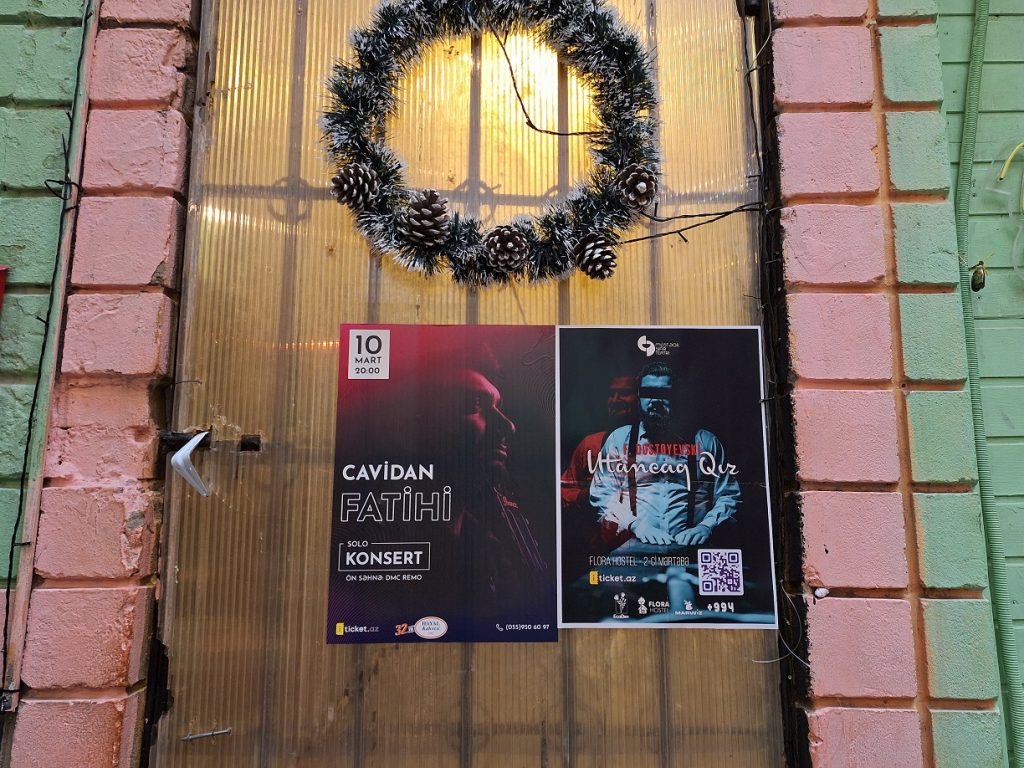
Undoubtedly, one of the most notable activities here is theater. “Theater Zero” has existed under the roof of “Flora” for almost a year now.
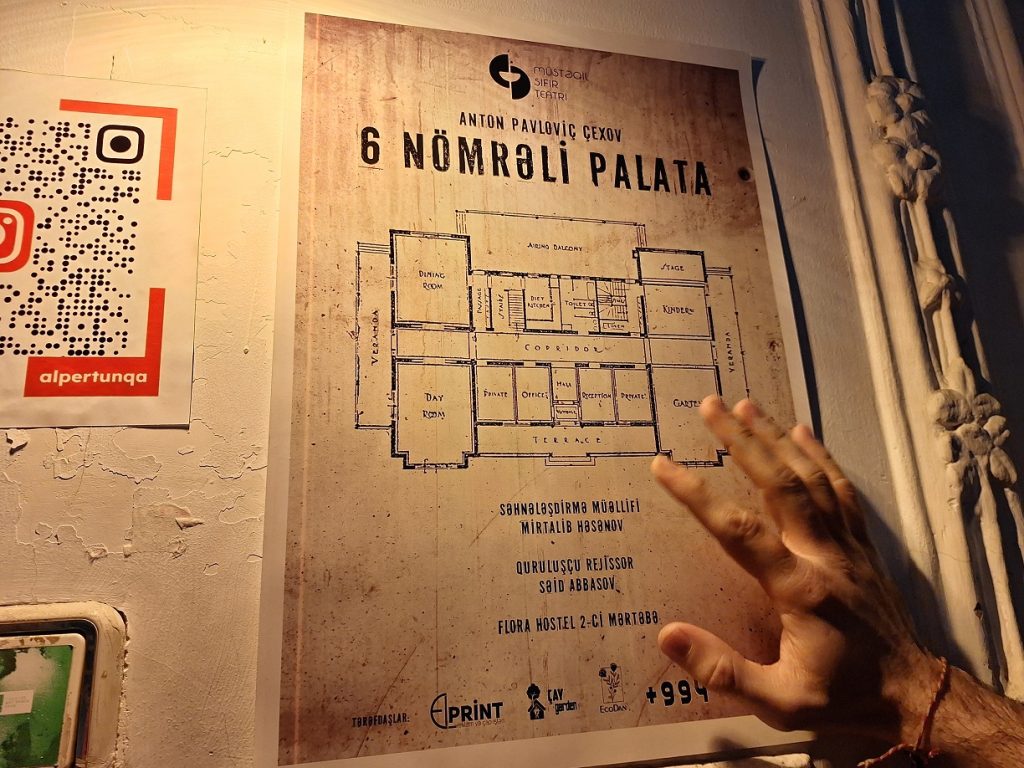
Now the theater has two plays in its repertoire – Anton Chekhov’s “Ward No. 6” Anton Chekhov and “Shy Girl” by Fyodor Dostoevsky. Anar Bulud, the theater’s founder and actor, said that now their eight-member cast is working on a production of Dostoevsky’s “Crime and Punishment”.
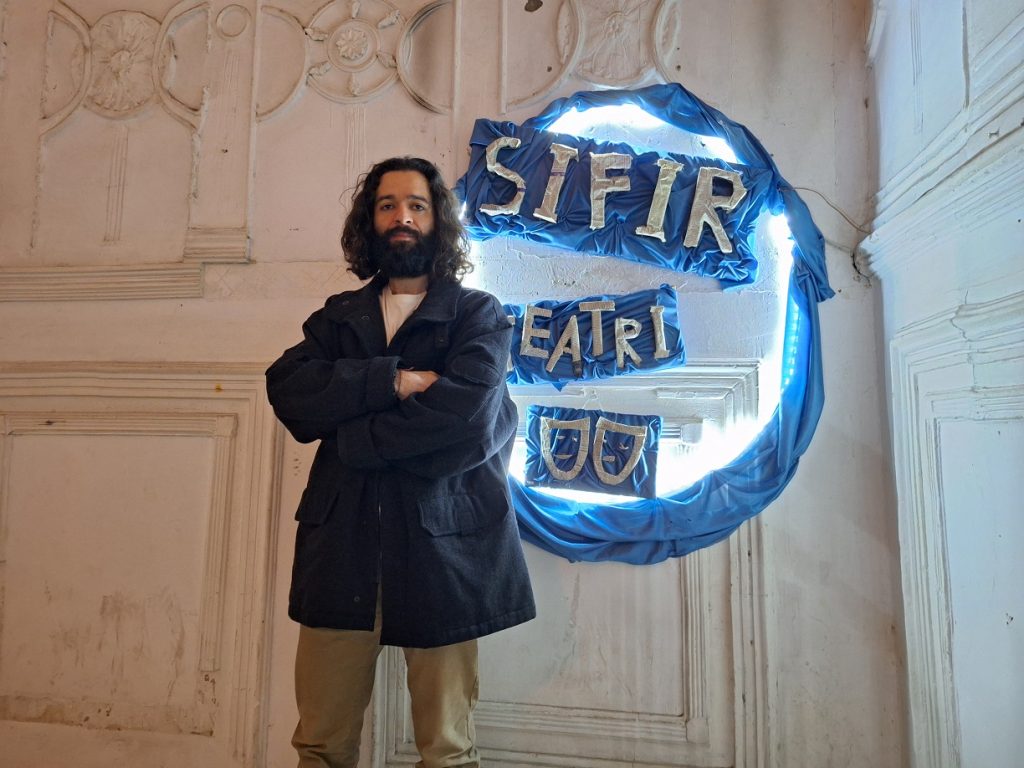
“Theater is an advocacy medium in itself, and here we are engaged along with art to call for environmental protection. Our theater auditorium seats up to 40 people and all the seats are made of recycled materials,” says Anar.
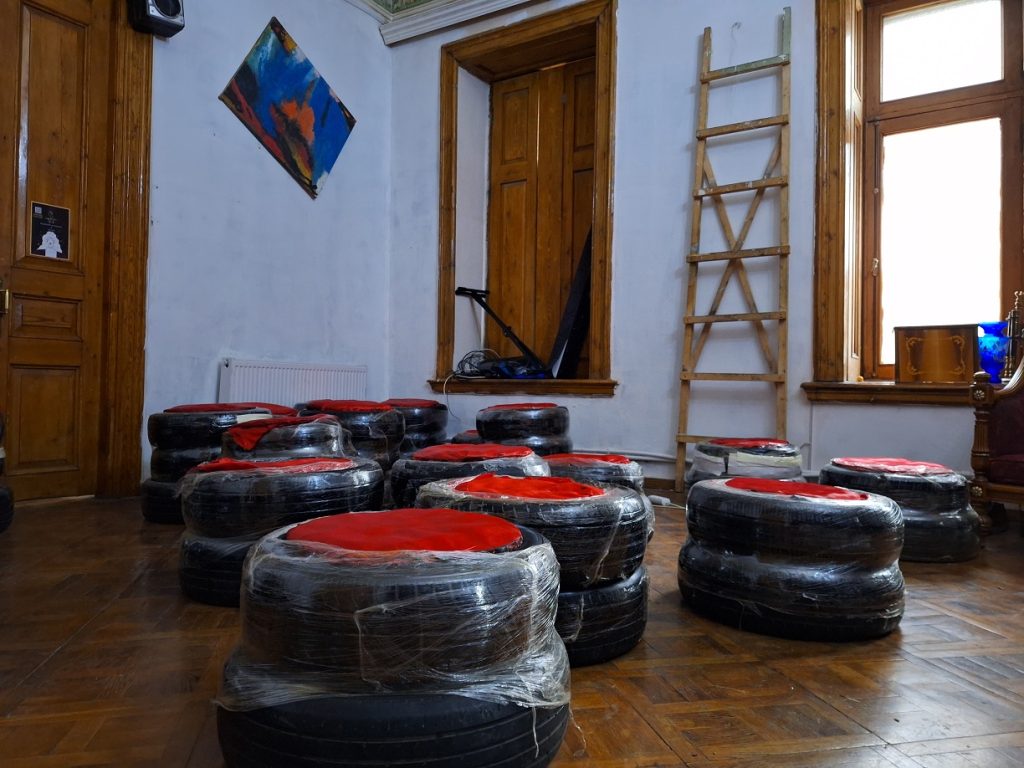
According to him, the actors of “Theater Zero” hardly use makeup. The plays are mostly interactive.
“In state theaters, actors must play according to the ‘fourth wall’ rule. This means that the actor plays facing the audience, in a stable, traditional way. In this case, the actor makes his movements larger and more pathetic so that his facial expressions and voice reach the person sitting on the last row. This is a beautiful style in itself.
But in Theater Zero we are very close to the audience. Therefore, the actor must speak and act according to the real situation. The slightest artificiality and pathos is immediately felt by the audience. Sometimes when casting in the movie avoid actors who have worked for many years in the theater, fearing that they will play in a theatrical manner. And in our theater actors as if preparing for the movie.
Twice a week master classes in different art forms
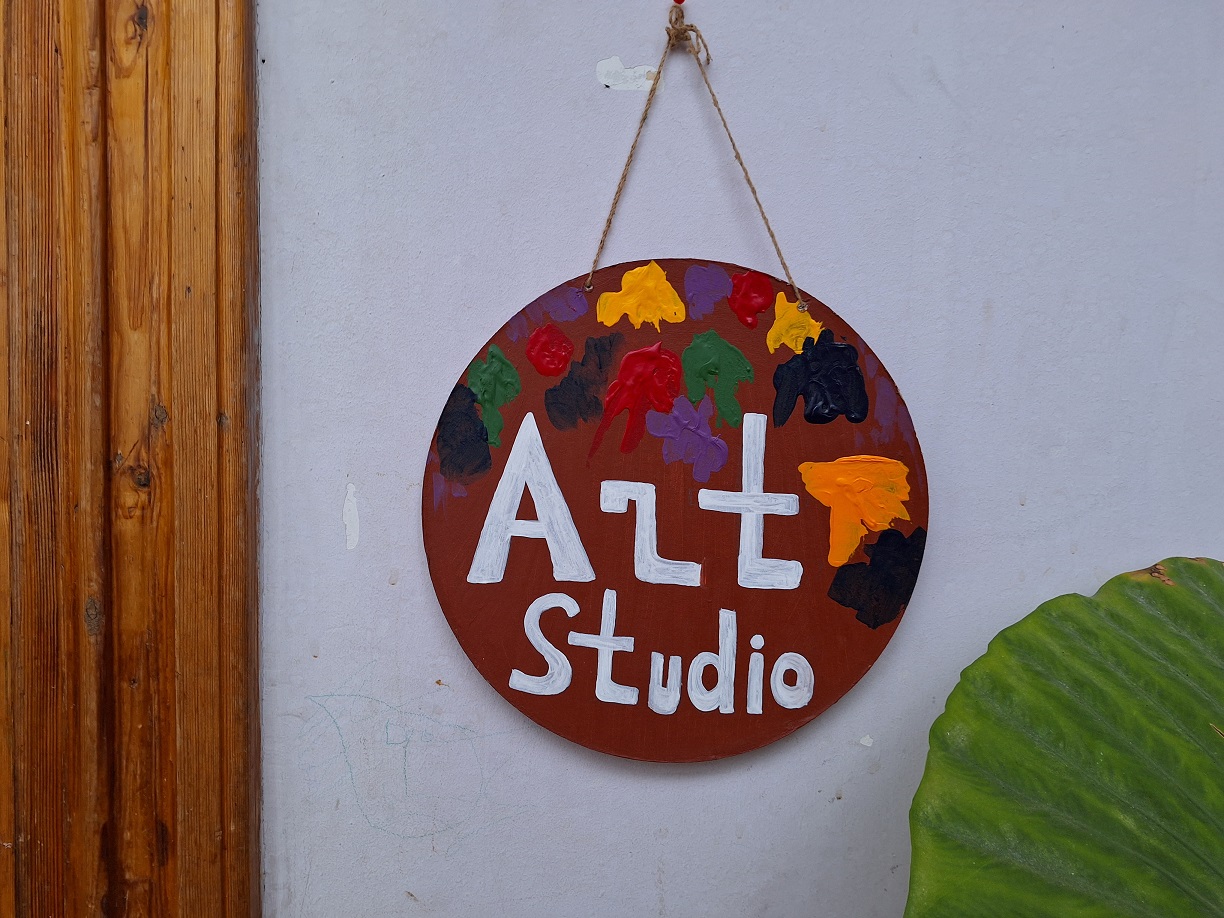
After leaving the theater, I want to visit the workshops on the same floor. Since the doors of the Yellowstone Art studio mentioned earlier by Turkay are wide open, I go in.
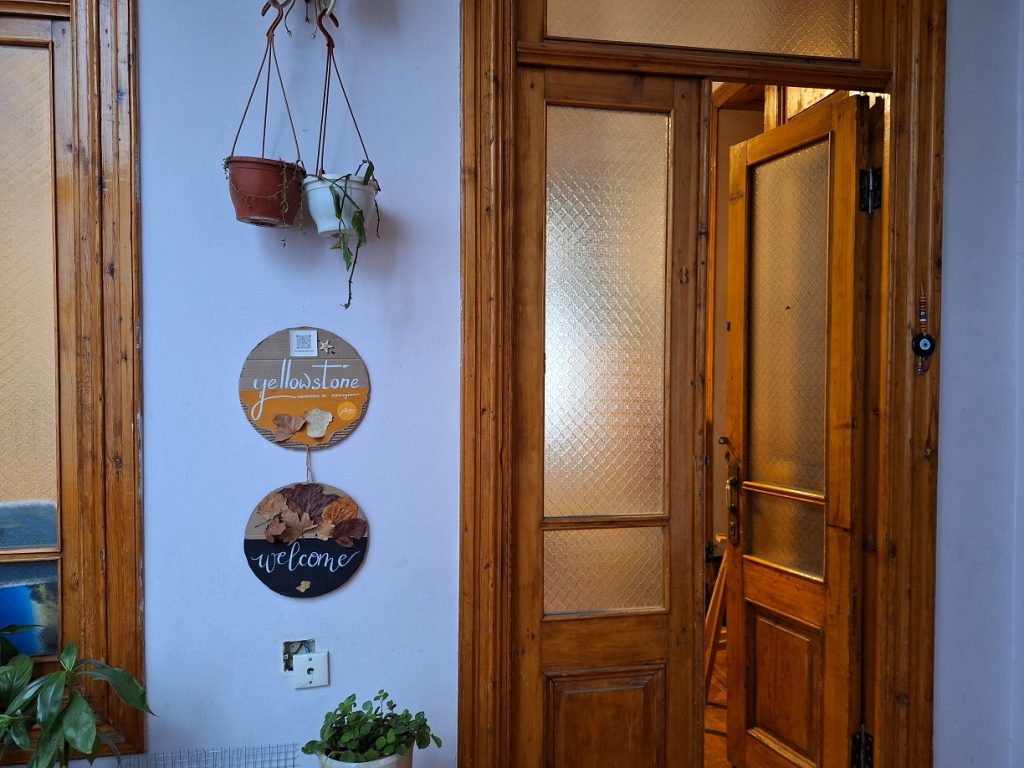
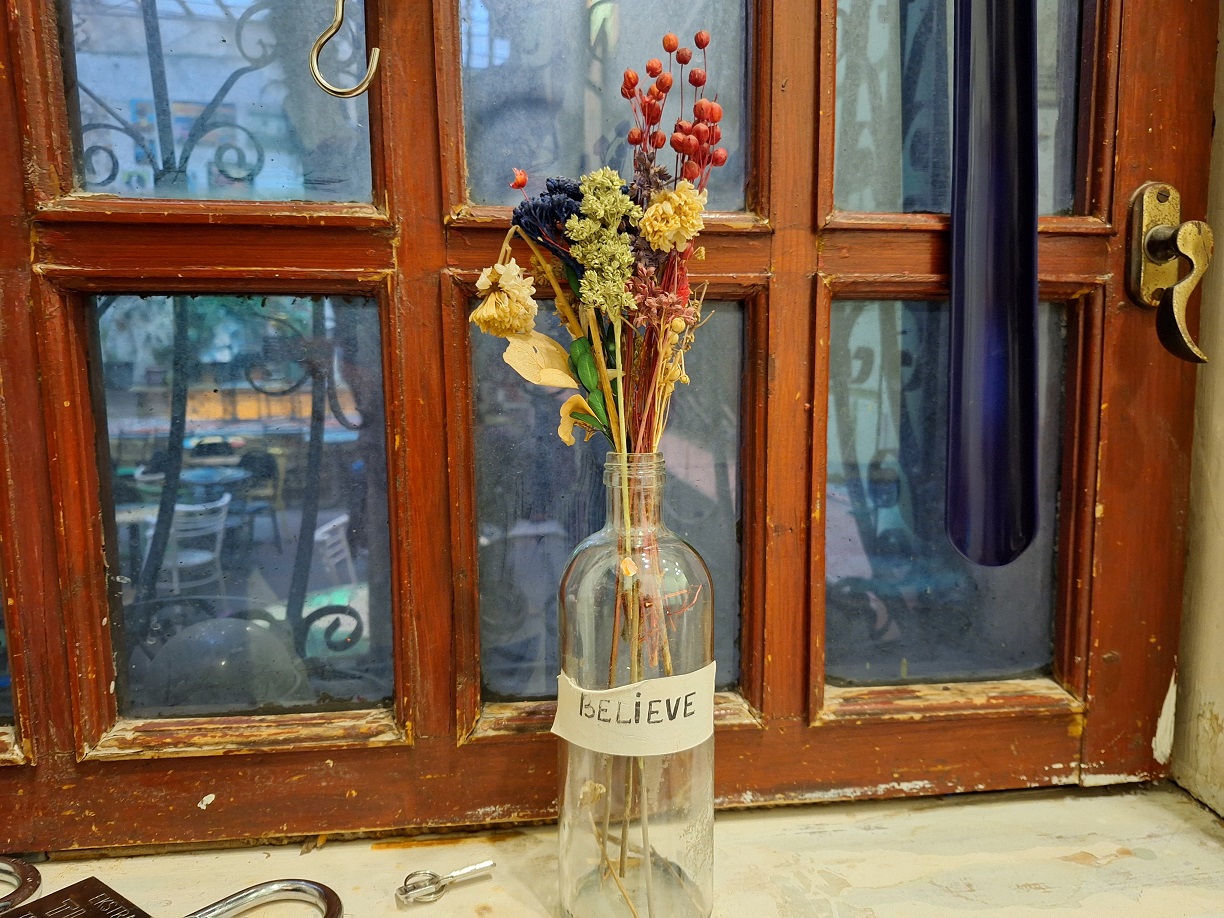
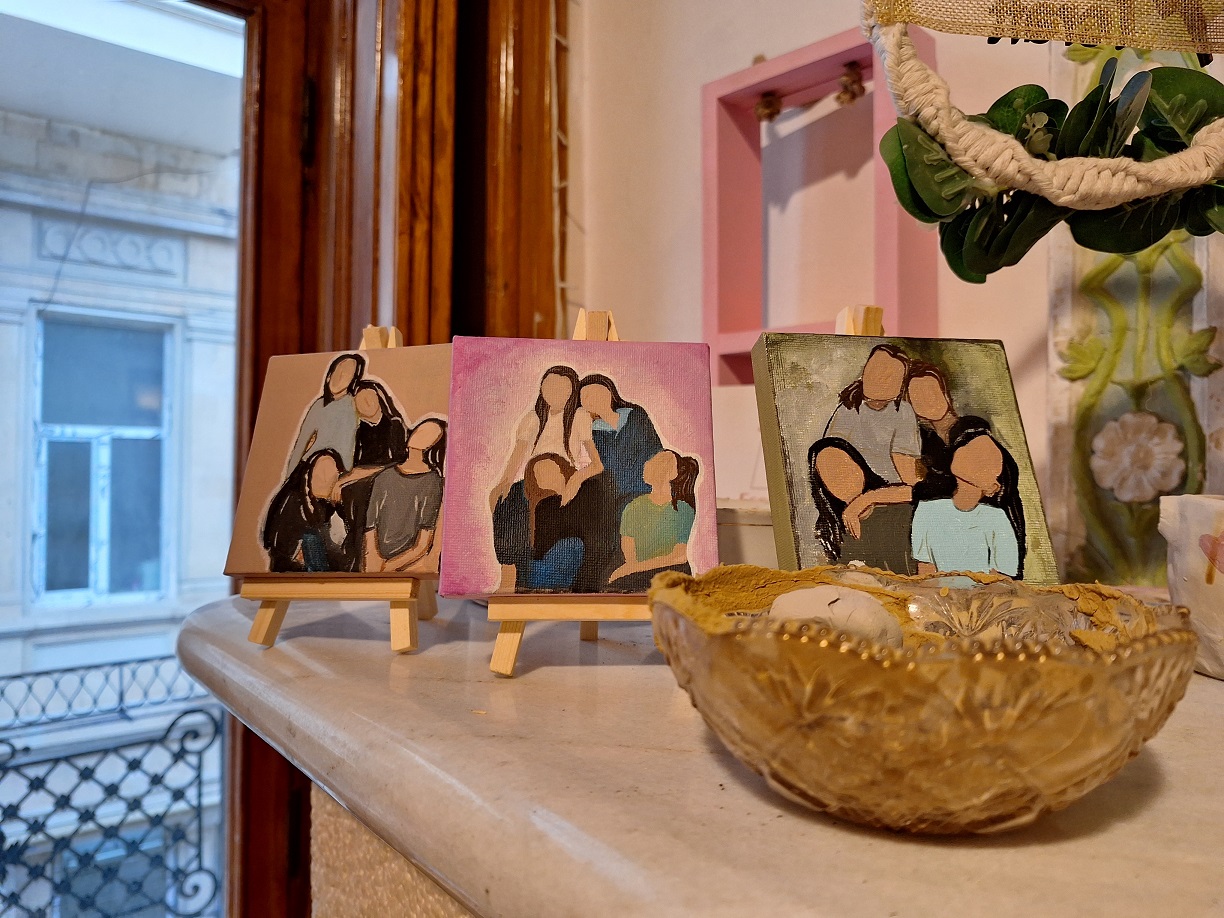
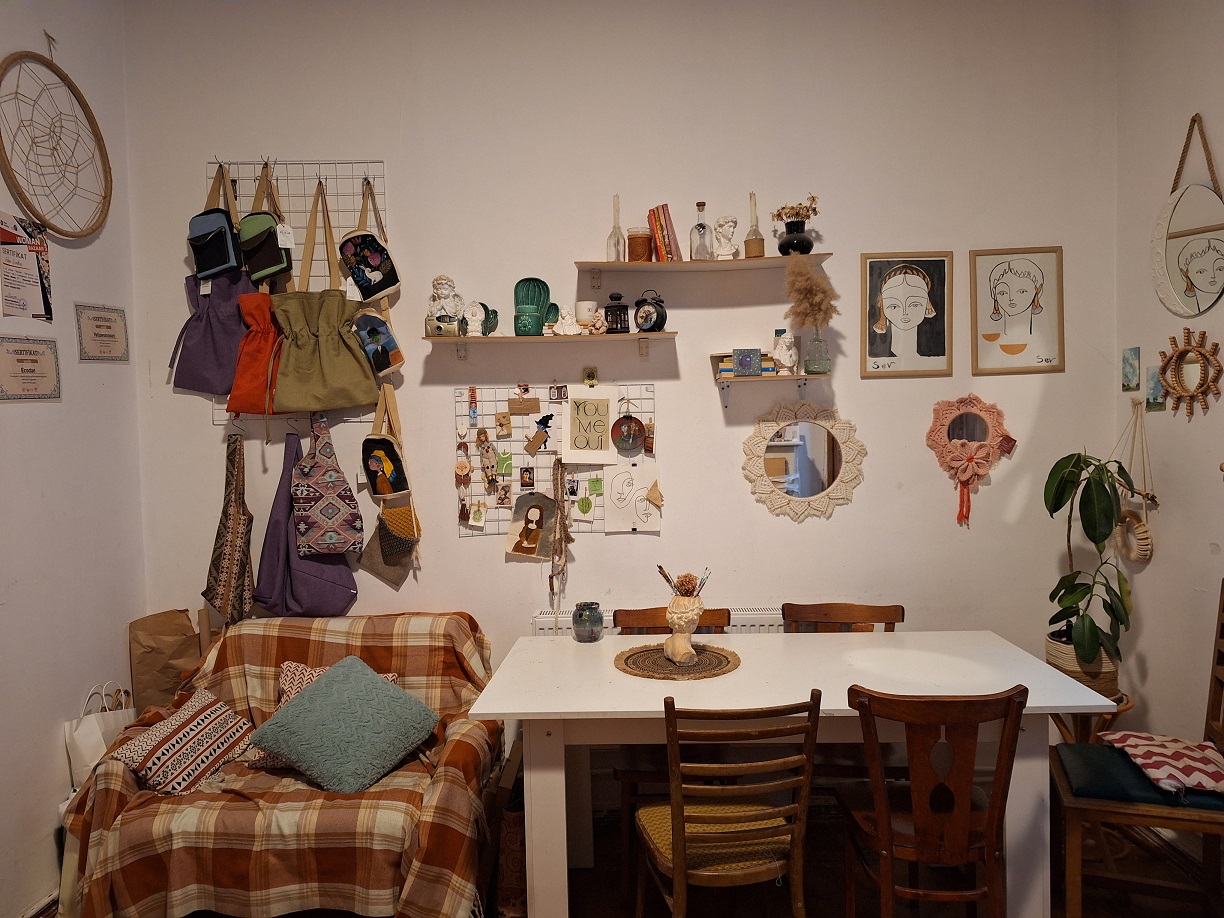
“We hold workshops here twice a week. People can come and do different kinds of art and make different handicrafts with their own hands,” Türkai said, showing samples of handicrafts in the workshop.
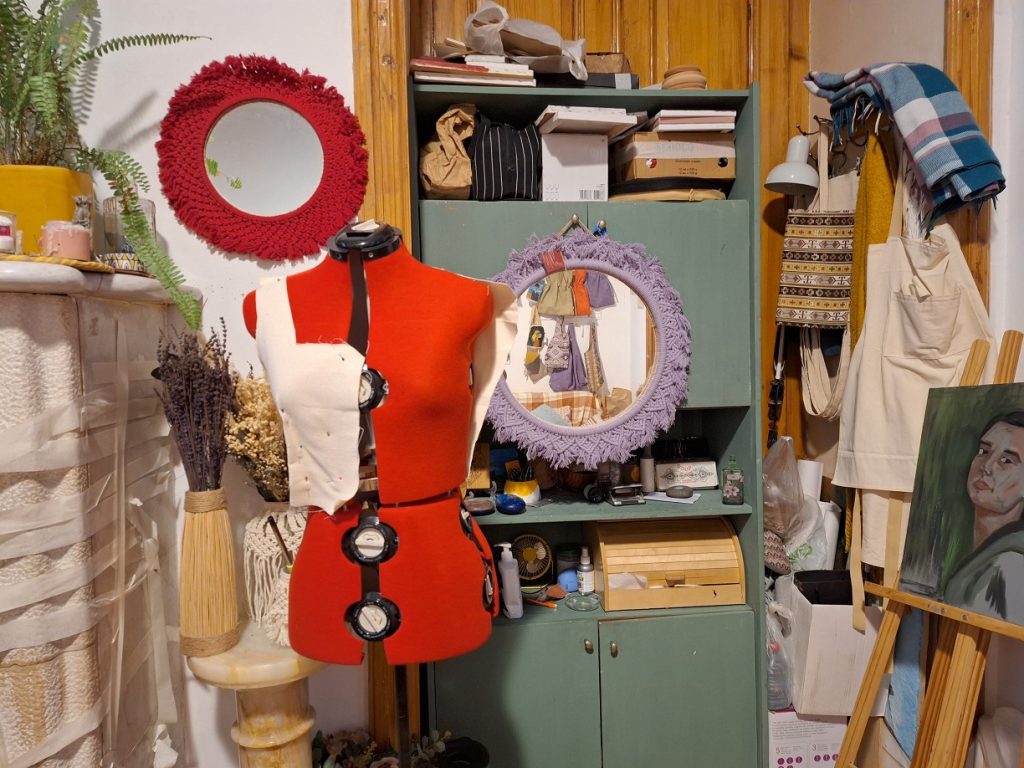
After taking a few pictures from this workshop, I go down to the first floor to leave the building.
“Tomorrow at 7:00 p.m. we’ll be playing ‘Ward 6’. Come, you are invited. We’ll be waiting,” Anar says from the second floor.
I mark the date on my phone and leave the building.
Navalny and Saakashvili
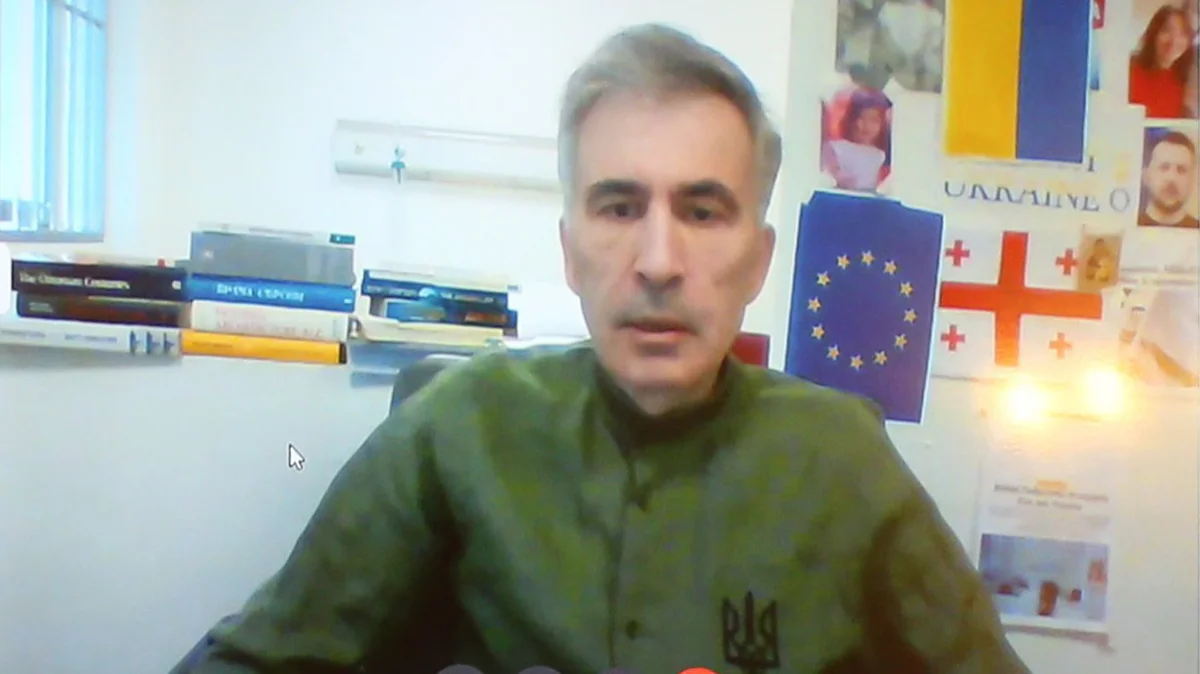
 Mikhail Saakashvili speaks via video link at the court hearing in the case of the brutal crackdown on anti-government protests in 2007, Georgia, October 27, 2023. Photo: Irakli Gedenidze / EPA-EFE
The news of Alexei Navalny’s death quickly became one of the most widely discussed topics in the Georgian media. Simultaneously, a concerning discussion emerged in Georgia: opposition politicians in the media, along with ordinary users in the local sphere of social networks, raised the question: Could the next case of a suspicious death in prison occur in Tbilisi, involving Saakashvili?
Material from “New Newspaper Europe”
The mentioned individuals
In January 2021, Alexey Navalny made an unexpected return to Russia from Germany and was promptly imprisoned. This occurred just a few months after the return and subsequent arrest of Saakashvili in Georgia in the fall of 2020. Since then, these politicians have frequently been compared. However, it was Putin who initially drew this comparison — as early as 2017, he believed that both Saakashvili and Navalny posed a potential threat to destabilize the country.
“Regarding the individuals you mentioned… Do you want them to be like Saakashvili, rallying in the streets as seen in Ukraine? The ones you referred to are essentially Saakashvili, but in the Russian context. Are you advocating for them to destabilize the country? I’m confident that the vast majority of Russian citizens do not desire this and will not permit it,” stated Putin in response to Ksenia Sobchak’s inquiry about the criteria for candidate eligibility in elections. Navalny’s name was not explicitly mentioned.
Furthermore, there is another reference: “We do not wish for someone like Saakashvili to present us with another, second, third, or fifth option. Russia requires individuals with a constructive agenda, and the Russian political landscape does not require figures akin to the former president of Georgia, Mikhail Saakashvili.” Putin made this statement during an interview with an Austrian TV channel, once again alluding to Navalny.
As a result, despite lacking personal acquaintance, friendship, or a shared political platform, Navalny and Saakashvili grew closer, displaying a camaraderie akin to loyal comrades.
Last spring, on April 13th, Navalny, from the Vladimir colony, voiced his support for Saakashvili, acknowledging that while Saakashvili may “weakly represent Georgian politics,” he commended him as “a man and a Christian.”
Navalny’s message remained characteristically clear and relevant: he urged skepticism towards Saakashvili’s actions, cautioning against falling for his theatrics.
“Believe me, imprisonment drains the health of individuals rapidly. Releasing him for medical treatment under a suspended sentence or a similar arrangement that upholds legal obligations while preserving dignity would be the most appropriate course of action,” Navalny advised. He emphasized that the imprisonment and mistreatment of the former president were appalling and devoid of compassion. Navalny highlighted the detrimental effects on European relations, development prospects, and morale, contributing to a pervasive sense of malevolence in the country. He also appealed for a more humane approach from the government compared to its adversaries.
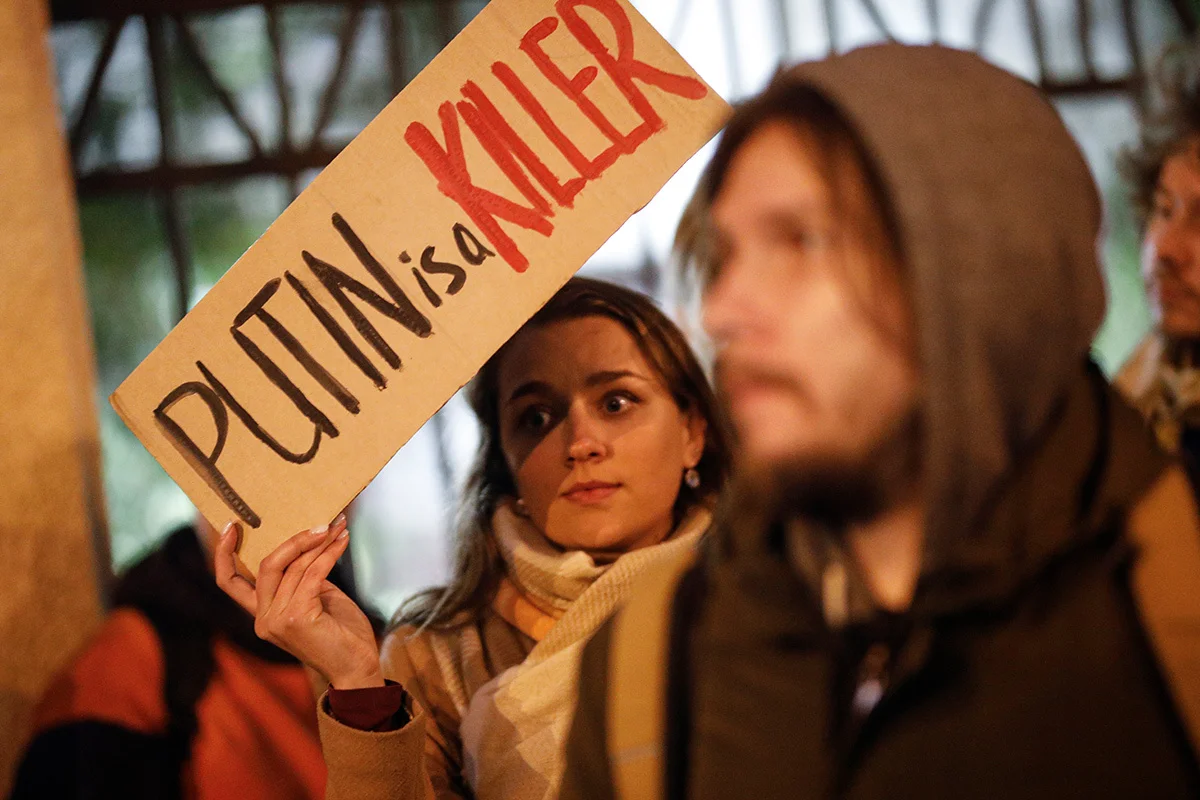 Action in memory of Alexei Navalny at the Embassy of Russia in Tbilisi, Georgia, February 16, 2024. Photo: David Mdzinarishvili / EPA-EFE
Saakashvili also understood the vulnerabilities of the Kremlin and stated that he views Navalny as the future president of what remains of Russia. Additionally, he expressed readiness to collaborate with him:
“There are two points that unite me with Alexey Navalny, whom I believe will become the future president of what will soon be left of Russia: our mutual uncompromising stance against corruption and our shared status as the primary adversaries of Vladimir Putin. I wish Alexey survival, freedom, and the opportunity to lead people.”
Seven years ago, Saakashvili elucidated why Putin could not impeach Navalny.
“Putin has vivid imaginings. He envisions a scenario where he once again imprisons Navalny, only to witness a large crowd of sympathetic young people converging on the center of Moscow. They bravely confront his special forces, seize Navalny with their bare hands, and march him directly to the Kremlin. His hysteria sets in as he envisions a moment when the police fail to resist, overwhelmed by the sheer number of people, allowing Navalny to be swept away,” explained Saakashvili in an interview with Deutsche Welle.
Later, Saakashvili tactfully expressed his disagreements with Navalny, describing him as “a complex figure” who once dabbled in nationalism but is undoubtedly a figure of the future, given his strong youth following. Saakashvili was confident that if Navalny were to lead Russia, it would become “a modern, civilized country,” emphasizing that a normal country cannot be an imperial power that annexes and assimilates foreign territories.
Finally, Saakashvili’s last message, delivered on the day of Navalny’s passing, underscores the Georgian politician’s lack of doubt regarding the reasons for Navalny’s death, while also hinting at his own concerns.
Questions in Munich
One of those who drew parallels between Saakashvili and Navalny was Polish Foreign Minister Radoslaw Sikorski.
Ahead of the Munich Conference on European Security, he took part in a panel alongside the President of Georgia, Salome Zurabishvili. During the forum, Sikorski directly appealed to Saakashvili to grant her a pardon.
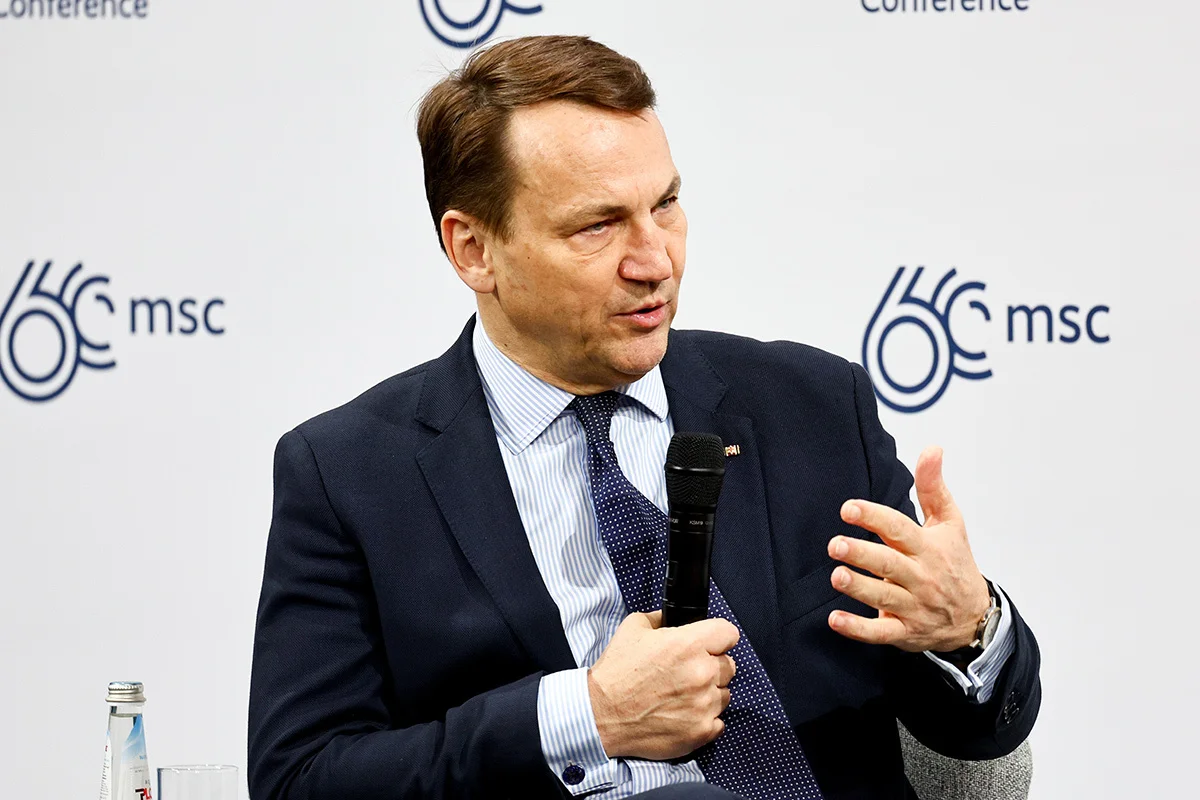 The Minister of Foreign Affairs of Poland Radoslav Sikorsky participates in the panel discussion of the 60th Munich Security Conference in Munich, February 18, 2024. Photo: Anna Szilagyi / EPA-EFE
“I am the first defense minister of Poland to visit Georgia, and as a friend of Georgia, I must say: Madam president, we remember that your predecessor, president Saakashvili, participated in this conference, and for many of us, he symbolizes modernization. While we respect the rule of law in your country, I believe that the treatment of Mikhail Saakashvili is a very important issue. It is crucial that we afford him fair treatment, and you, of course, have the ability to contribute to his release, which would be warmly welcomed by all supporters of Georgia,” stated Sikorsky.
Zurabishvili responded with a diplomatic smile but did not directly address Sikorsky’s statement. Meanwhile, during the Munich conference, she emphasized that joining the EU is an indisputable goal for Georgia, with Russia being the primary threat to the country’s security.
The international press also showed interest in Saakashvili’s fate in light of Navalny’s death at the Munich conference.
For instance, a journalist from Bloomberg, an American media outlet, asked Zurabishvili her thoughts on “the death of Alexei Navalny and the presence of Saakashvili in Georgia, who is also in prison in a serious condition.”
Even as the question was posed, the president began to shake her head in disagreement and stated that such comparisons were inappropriate.
“There is no justification for drawing such a parallel, particularly in this context. I want to reiterate: Georgia is not Russia. If Navalny’s death is confirmed (his wife was recently present at the conference), it would be devastating and tragic for human rights and democracy worldwide. For Russia, it would only serve to reinforce the current regime. However, I believe this is a tragedy for all of us.”
Prior to this, Zurabishvili had remarked that she found it no coincidence that Navalny’s death was reported just before the start of the Munich conference:
“For Russia, it’s typical to attempt psychological manipulation, showing that Russia can act however it pleases, wherever it pleases. I see this as a message directed at the Munich conference.”
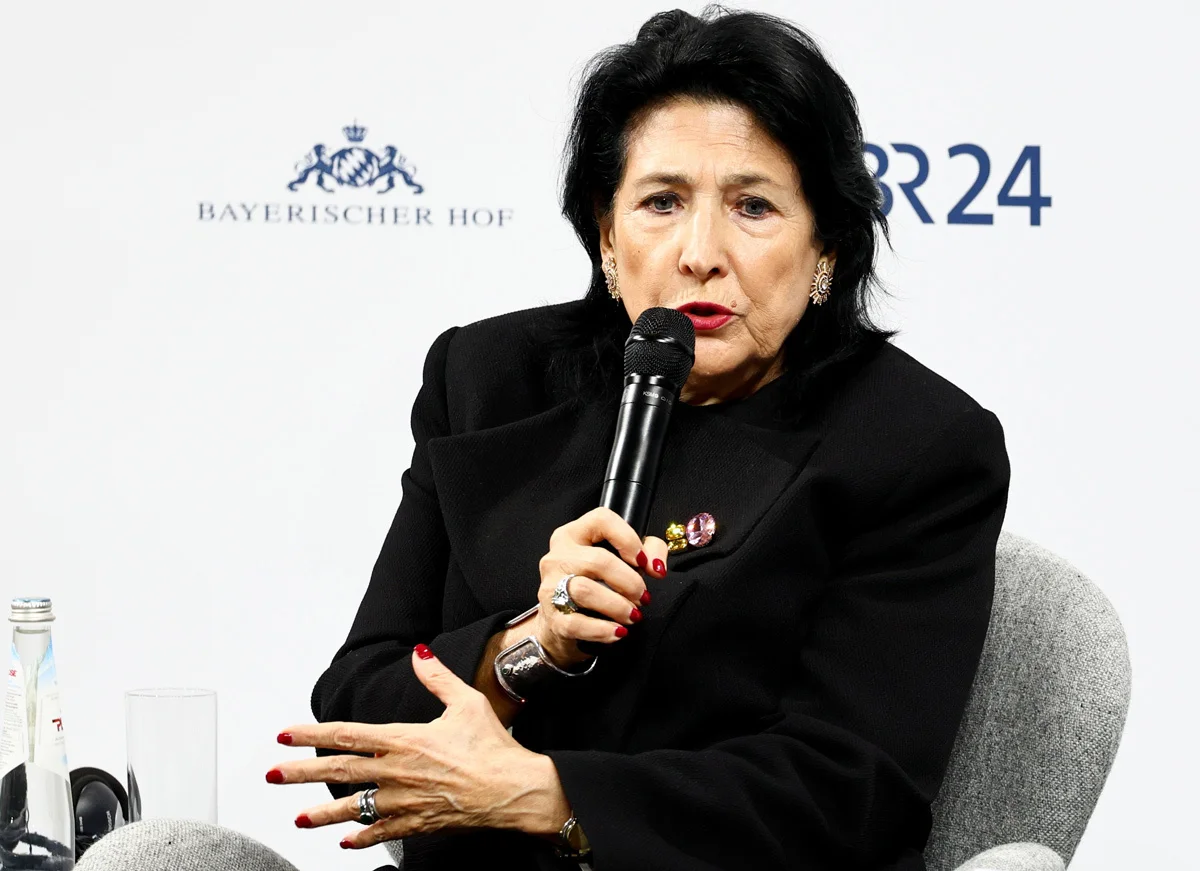 President of Georgia Salome Zurabishvili at the Munich Security Conference in Munich, February 18, 2024. Photo: Anna Szilagyi / EPA-EFE
On February 16, Zurabishvili extended her condolences to Navalny’s family “and to those who carry on his struggle for democracy in Russia.”
She described his passing as “a tragedy for all champions of democracy and human rights.” This message stands as the most direct, clear, and to date, the only official statement from the authorities of Georgia.
Will he show mercy or not?
Exactly a year ago, in February 2023, the European Parliament passed a resolution nearly openly referring to Saakashvili as a political prisoner, stating that “oligarch Ivanishvili” had detained Saakashvili out of “personal vendetta.” The ruling party showed no concern and dismissed such a resolution as “corruption” within the European Parliament.
The largest opposition party, the United National Movement, recently announced its intention to gather signatures calling for Saakashvili’s release, aiming to submit a petition to Zurabishvili on March 1st.
In Tbilisi, signatures are already being collected at the Saakashvili Presidential Library, and over the next two weeks, the process will commence in various regions of Georgia.
According to a survey conducted by Edison Research in December 2023, commissioned by the Formula TV channel, 57% of the population believes that Georgian president Salome Zurabishvili should exercise her constitutional right and pardon Mikheil Saakashvili. However, there is a significant portion of the population—43%—who oppose this idea.
These statistics are also reflected in Zurabishvili’s stance. Initially, her response to inquiries about a potential pardon for Saakashvili, immediately following his arrest, was a resolute “No and never.” However, her tone softened slightly over time, stating that she had “not ruled out” the possibility of a pardon for Saakashvili but preferred not to comment on the matter prematurely. According to political analysts, this shift is attributed to Georgia’s European aspirations and the pressure Zurabishvili faces from Western allies.
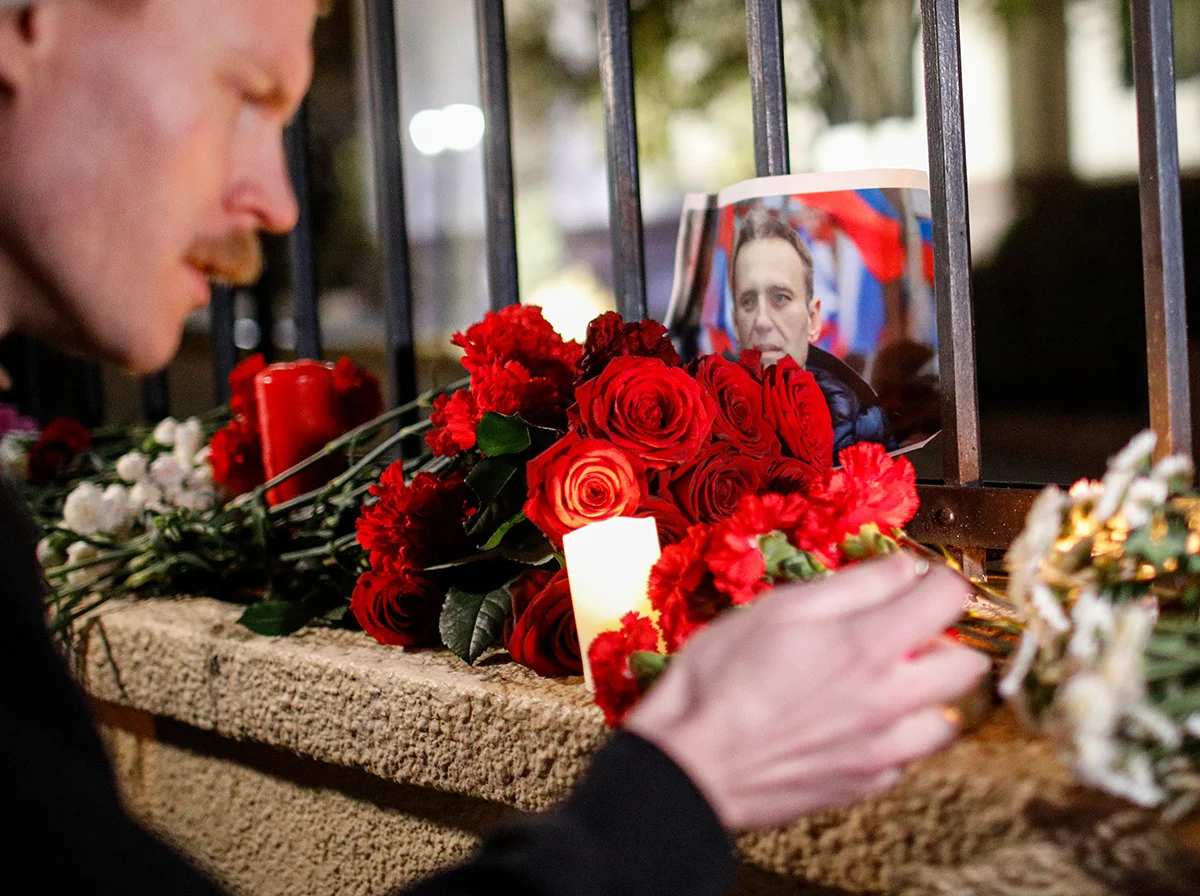 A spontaneous memorial in memory of Alexei Navalny at the Russian Embassy in Tbilisi, Georgia, February 16, 2024. Photo: David Mdzinarishvili / EPA-EFE
Among the arguments against, there is still the fact that even if Saakashvili is pardoned for cases in which a sentence has already been handed down, he will still be incarcerated, as trials on several other charges are pending.
Furthermore, according to individuals familiar with Zurabishvili’s stance, she is apprehensive about the polarization of society and the potential loss of support from those voters who oppose the idea of a pardon.
It is possible that these votes will be needed if Zurabishvili decides to establish her own party after completing her presidential term next year.
The founder of the liberal Republican Party, David Berdzenishvili, asserts that the release of Saakashvili hinges not on the president’s will, but on two other factors: either the opposition must triumph in the elections and assume power, or the West’s stance on Saakashvili’s case must toughen.
“I concur with Zurabishvili that Georgia is distinct from Russia. In Georgia, individuals aren’t seized on the streets for expressing condolences… What’s unfolding in Russia is a ‘catastrophe,’ but here it’s merely ‘bad,’” Berdzenishvili remarks. “The sole avenue to liberate Saakashvili today lies in Western intervention… When the Polish Foreign Minister inquires about Saakashvili, it’s one matter, but the Germans and French, those who wield significant influence in the EU, have yet to raise the issue… I deem it most advantageous to secure Saakashvili’s release through Western efforts; otherwise, I see no viable means for his release until the opposition prevails in the Georgian elections.”
What is the current condition of Saakashvili?
After enduring lengthy hunger strikes in prison, Saakashvili was transferred in May 2022 from a prison in the city of Rustavi to the Vivamed clinic in the capital due to the risk of succumbing to exhaustion and related ailments (he weighed 67 kg at a height of 195 cm, indicating a loss of nearly 60 kg). His health remained precarious for an extended period – Saakashvili only began to regain strength in the summer of 2023, asserting that he was determined “not to perish,” but rather to live “for the sake of Georgia and Ukraine,” and witness the “ultimate demise of the Russian Empire.”
Georgian authorities often emphasize that Saakashvili is not confined to a typical prison cell, but rather to a “two-room ward,” suggesting there are no grounds for grievances against them. However, the European Committee for the Prevention of Torture and Inhuman or Degrading Treatment (CPT) contends that Saakashvili is subjected to “oppressive and degrading” conditions that impede his recovery.
On January 18, a committee under the Council of Europe published a report by its specialists following a visit to the Vivamed clinic, where Saakashvili is being detained.
Overall, the conditions in the clinic were deemed adequate for a medical facility. The experts noted that the clinic featured “wide windows with a pleasant view,” although this was not the case in Saakashvili’s room, where the windows were described as “barely opening” and featured “frosted glass.” Following the visit by the CPT, the clinic reported that the frosted glass had been replaced.
Saakashvili enjoys certain privileges at the clinic, including furnished rooms and access to television and media. However, he does not spend any time outdoors.
The European Committee also has concerns regarding the penitentiary system in general—Saakashvili is not an ordinary patient but a prisoner. On the fifth floor (where “Patient C” was located), the atmosphere was described as “depressing” due to the presence of security cameras. Saakashvili’s room has three cameras installed, meaning he is constantly under surveillance everywhere except in the toilet and shower. For instance, one of the cameras continuously films him while he is in bed. “This not only violates the patient’s privacy but also shows a lack of respect for his human dignity. Clearly, the purpose of the surveillance had nothing to do with the therapeutic process. Monitoring of the patient was primarily conducted by prison service personnel rather than medical staff,” the CPT report stated.
Furthermore, the committee denounced public statements about the ex-president’s health condition made by clinic staff and officials without his consent as a “blatant violation” of medical confidentiality.
Despite the intense scrutiny from observers worldwide, the 56-year-old Saakashvili has managed to gain weight, reaching 77 kg, and has become so robust that he connects online to court hearings in his own case. He periodically addresses his supporters during these hearings, which has irked the authorities.
For instance, prior to his confirmation as the new Prime Minister of Georgia, Irakli Kobakhidze pointed out that the opposition had been consistently predicting Saakashvili’s imminent demise for two years. “They’ve been making these claims for two years. And yet, here he is, actively engaging in politics today. You can judge for yourself whether his condition has improved or not.”
Kobakhidze’s observation proved to be accurate: recently, during one of the court sessions, Saakashvili agreed to the cooperation of his National Movement party, the largest in the opposition, with Salome Zurabishvili within the framework of the “Platform of Unity for Europe” established by her.
While Zurabishvili has been frequently meeting with representatives of the opposition and civil society recently, Saakashvili is urging her to mobilize people to take to the streets.
“Rustaveli Avenue can be filled if we all unite. If the president initiates this, we will stand behind it,” Saakashvili stated.
Saakashvili envisions himself leading the Political Activity Committee of the National Movement in preparation for the parliamentary elections this fall. He also aims to combat potential electoral fraud, alleging that the authorities plan to manipulate up to 500,000 immigrant votes by utilizing counterfeit IDs in electronic elections.
“I am pleased to announce the establishment of a voter protection school, scheduled to launch within the next month and a half. We will train thousands of individuals to recognize and counteract these schemes,” Saakashvili pledged.
Addressing potential inquiries regarding his Ukrainian citizenship, Saakashvili reminded that Bidzina Ivanishvili participated in the 2012 elections despite being a citizen of France: “Of course, I maintain my citizenship of Ukraine. I would like to remind you that Georgia has seen such a precedent: Bidzina Ivanishvili was elected as a citizen of the EU.”
Navalny and Saakashvili

On February 7, early presidential elections will be held in Azerbaijan. They were supposed to take place in 2025 but were re-scheduled following major developments concerning the restoration of the sovereignty of Azerbaijan in its entire territory. In September 2023, Azerbaijan succeeded to dismantle the separatist regime in its Karabakh region, that had been installed in its territories by Armenia in the early 1990s. The country’s incumbent President Ilham Aliyev stressed out the “beginning of the new era” as the first reason behind the rescheduling of the elections. The second reason articulated by the President is also related with this sentiment. “I thought that the first elections to be held across the entire territory of our country should be the presidential elections”, he said, adding that “If we were to hold this election on time, i.e. in April 2025, then municipal elections would be the first to be held. I thought that would not be right.” The main theme that dominates Azerbaijan’s public opinion and political discourse prior to the elections has been understandably the restoration of the country’s territorial integrity and sovereignty and the role of the government of President Aliyev in this fateful mission.
For many years, the Armenia-Azerbaijan conflict, much like other analogous conflicts in the post-Soviet region, seemed to lack significant potential for a substantial resolution. This perception led many observers to characterize this conflict as “frozen conflicts.” In 2020 and 2023, having liberated its territories occupied by Armenia with Russia’s political and military assistance in early 1990s, Azerbaijan achieved a groundbreaking milestone. This accomplishment positioned Azerbaijan as the first post-Soviet country to fully restore its territorial integrity, solidifying the country’s President Ilham Aliyev’s legacy as the key architect of this strategic victory.
A feat that seemed improbable
20 percent of the internationally recognized territories of Azerbaijan (the Karabakh region and seven adjacent districts) had been occupied by the neighboring Armenia in the early 1990s. Russia’s military and political support played a critical role in Armenia’s occupation of these territories and keep them under illegal control. The occupation had displaced more than 700,000 Azerbaijanis who were expelled from their homelands through violent ethnic cleansing and massacres. For up to three decades, Baku sought to return the occupied territories through internationally mediated negotiations. These efforts delivered no practical results due to Yerevan’s refusal to de-occupy the territories and its disregard to the international resolutions including the four resolutions of the United Nations Security Council (1993). Baku’s efforts were further complicated by the manipulation of this conflict by external powers for their own interests in the region.
In 2020, Azerbaijan had to use military force to put an end to this illegal occupation and liberated significant part of the region in the course and aftermath of the war which went down in history as the Second Karabakh War or the 44-day War (September 27 – November 10). The war, however, left a part of the Karabakh region under the joint control of the local separatist regime with a military presence of 15 thousand army personnel of Armenia and the peacekeeping mission of the Russian Federation that had been deployed to the area following the 44-day War.
Since then, Baku sought to reintegrate the remaining part of the Karabakh region and the local Armenian community through negotiations that were mediated by Russia, the European Union, and the United States. These negotiations delivered some outcomes to normalize the Armenia-Azerbaijan relations. However, these efforts had no impact on the reintegration of the Karabakh region, as the local separatist regime refused all calls from Baku for talks and Armenia failed to honour its commitments on withdrawal of its troops. This ended up with another counter-terrorism operation by Azerbaijan which lasted less than 24 hours on September 19-20, 2023 and resulted in the dissolution of the separatist regime on September 28.
Putting an end to the Armenian occupation and separatism in Azerbaijan marks a watershed moment in the nation’s history, breaking the longstanding impasse of frozen conflicts in the post-Soviet region. This significant achievement serves as an exemplary model for other countries, such as Georgia and Ukraine, grappling with similar territorial disputes. This firmly cements the position of the country’s leader, President Ilham Aliyev, in Azerbaijani history, making an accomplishment that few would have deemed possible even a couple of months prior to the 2020 war. Despite the highly confrontational geopolitical landscape in the South Caucasus and the external powers’ manipulation of the conflict, Aliyev’s strategic approach proved remarkably successful and boosted his popularity amongst the citizens.
Having endured the occupation of its territories, forced displacement of its population, and the destruction of settlements and heritage, Azerbaijan staunchly opposes violations of territorial integrity and externally-sponsored separatism. Consequently, Azerbaijan remains steadfast in its commitment to supporting the territorial integrity of Georgia, Ukraine, and Moldova – three fellow post-Soviet countries facing similar challenges.
In the context of Russia’s war against Ukraine, Azerbaijan provided both political and humanitarian support to Ukraine. The humanitarian support provided by Azerbaijan included, amongst others, free of charge fuel at Azerbaijan’s national oil company SOCAR’s petrol-filling stations across Ukraine and energy equipment, including transformators.
How was the victory possible?
Azerbaijan’s successful liberation of its territories can be attributed to several crucial factors. Foremost among them is the consistent and goal-oriented foreign policy that the country has steadfastly pursued since the mid-1990s, forming the backbone of this triumph. President Aliyev, assuming office in 2003, prioritized the de-occupation of the Karabakh region and surrounding territories as the top priority of his presidency.
This victory was facilitated by strategic partnerships forged with foreign allies, the initiation of giant economic projects in the region, and the substantial military build-up over the years. These efforts were all directed toward the overarching goal of restoring the country’s internationally recognized territorial integrity. Aliyev effectively neutralized or marginalized external powers with an interest in perpetuating the conflict. Even Russia, Armenia’s military ally within the Collective Security Treaty Organization (CSTO) and Eurasian Economic Union (EAEU), found itself unable to counter Azerbaijan’s actions, supported by NATO member Türkiye.
The economic independence Azerbaijan achieved in this period was another major factor behind this victory. The country took advantage of its rich oil and gas resources in economic recovery following the collapse of the Soviet Union. The energy pipelines that were laid down with the support of the United States and European Union helped Azerbaijan to overcome economic challenges and diversify its economy that was previously dependent on the former Soviet space. “The GDP of Azerbaijan grew more than four times for the last 20 years, and that was a very remarkable achievement. At the same time, we managed to conduct a very sophisticated, social policy. We managed to reduce the level of people who lived in poverty during the last 20 years from almost 50 to 5.5 percent. This demonstrates that the wealth generated by energy projects was fairly distributed between all segments of our population”, President Aliyev proudly stated in December 2023, summarizing the outcomes of his presidency.
Bolstering the country’s international standing, Azerbaijan has also become a pivotal player in the European energy market and the connectivity between Europe and China. In December 2023, President Aliyev, in an inauguration speech at the opening of Serbia-Bulgaria Gas Interconnector, reaffirmed Azerbaijan’s commitments to energy exports to Europe. “We currently export our natural gas to eight countries, and Serbia is the ninth country. Seven of these nine countries are European, and, of course, today’s ceremony, the launch of the interconnector will make an important contribution to European energy security,” he said.
Post-war challenges in the formerly occupied territories
The liberation of the Karabakh region and surrounding territories disclosed all the destruction and plundering committed by Armenia in those areas during the years of occupation. “Everything is devastated – the infrastructure is destroyed, residential and administrative buildings are demolished”, President Aliyev declared in his address to the nation on December 1, 2020. Immediately following the war, Baku launched extensive reconstruction process to bring life back to once vibrant cities and villages of the Karabakh region.
The reconstruction of the liberated territories is a costly and lengthy process which is being carried out in the face of a number of challenges. On the one hand, the contamination of the region with landmines and other explosive materials and Armenia’s refusal to provide all accurate maps of the mined areas dramatically delay the reconstruction and increase its costs. On the other hand, the reconstruction of the cities and villages from scratch requires huge financial resources which will take several years for Azerbaijan to deliver.
The nation is undertaking the reconstruction of the liberated territories using its own resources, with no international assistance and without resorting to loans. To date, 7 billion USD from the state budget have been invested in reconstruction and restoration efforts. A further allocation of 2.4 billion USD is planned for 2024. As outlined in the state program aimed at facilitating the return of internally displaced people (IDP), an estimated total of approximately 30.5 billion Azerbaijani manats (equivalent to around 18 billion USD) is anticipated to be expended between 2022 and 2026. In accordance with this program, 34,500 families or 140 thousand of Azerbaijani citizens are planned to be resettled in this region by 2026. More than a thousand families have already returned to different parts of the liberated territories.
In summary, Azerbaijan’s successful liberation of its Armenia-occupied territories sets a groundbreaking precedent for post-Soviet nations grappling with similar territorial conflicts. This achievement, once deemed improbable, marks a historic watershed moment, breaking the longstanding impasse of frozen conflicts in the region. President Ilham Aliyev’s strategic vision, backed by consistent foreign policy, strategic partnerships, economic independence, and decisive military action, proved remarkably successful. These achievements will undoubtedly play a critical role in the decision of the Azerbaijan people in their voting on February 7.
*The article was published on the Latvijas Avīze (Latvian Newspaper) news portal. You can read the Latvian version of the article at the following link: