
Categories
Selected Articles

Special counsel charges FBI informant with lying to the bureau about Hunter and Joe Biden


230630-hunter-biden-joe-biden-al-0802-40

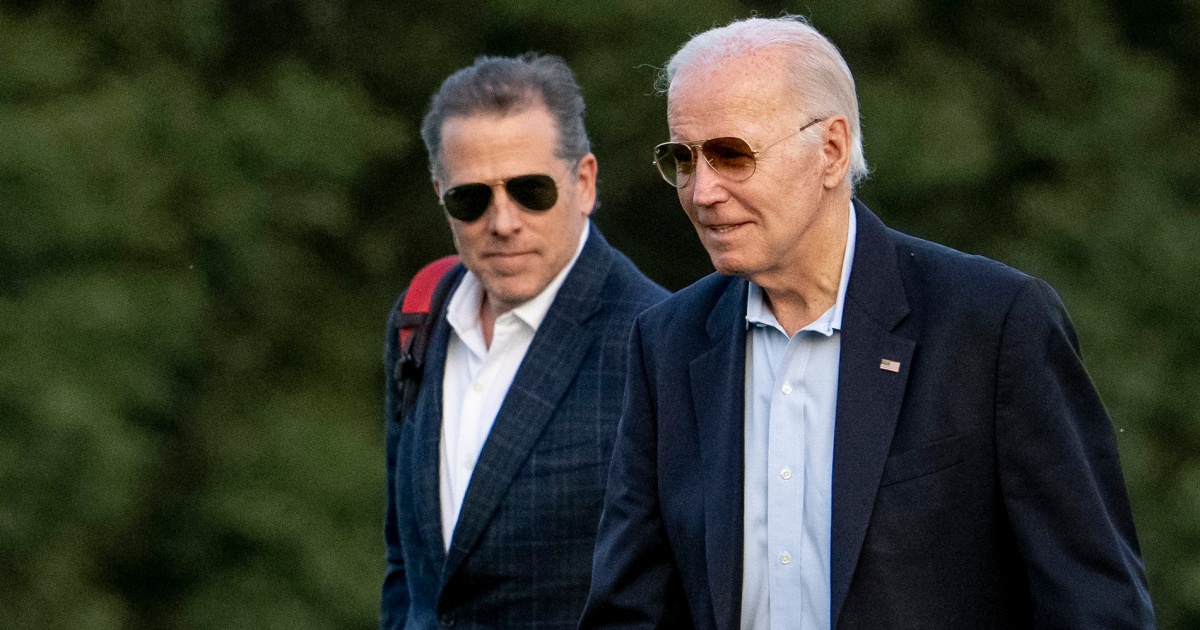
WASHINGTON — An FBI informant has been indicted on two counts for allegedly feeding the bureau false information about President Joe Biden and his son Hunter Biden during the 2020 presidential campaign.

Alexander Smirnov, 43, disliked Joe Biden and was arrested in Las Vegas after returning from a trip overseas, according to the Justice Department. The case grew out of the special counsel investigation being led by David Weiss, who is also leading the case against Hunter Biden. Weiss had been appointed by then-President Donald Trump as the top federal prosecutor in Delaware.

The 37-page indictment alleges that Smirnov had been a confidential human source for the FBI since 2010 and “provided false derogatory information to the FBI” about both Bidens after Joe Biden became a candidate for president in 2020.

He is facing one count of making a false statement to a government agent and falsification of records in a federal investigation.

Smirnov allegedly told the FBI — falsely — that officials with Burisma, the Ukrainian energy company that Hunter Biden worked for, had told him they hired Hunter Biden because he would “protect us, through his dad, from all kinds of problems.” Smirnov allegedly told the FBI — again, falsely — that Burisma officials had told him they paid Hunter Biden and Joe Biden $5 million and that it would take investigators 10 years to find the illicit payments to Joe Biden.

A source familiar with the matter told NBC News that Hunter Biden does not know the individual who was charged and does not believe he ever met him.

An attorney for Hunter Biden told NBC News that Republicans had been warned that they “built their conspiracies about Hunter and his family on lies told by people with agendas, not facts.”

“This is just another instance of Chairman [James] Comer and [Rep. Jim] Jordan peddling falsehoods based on dishonest, uncredible allegations and witnesses,” Abbe Lowell, Hunter Biden’s attorney, continued in the statement.

House Oversight Committee Ranking Member Jamie Raskin called for an end to the impeachment inquiry following the announcement of the indictment against Smirnov.

Smirnov’s account was critical to Republicans’ impeachment inquiry into the president.

“This is the biggest political corruption scandal, not only in my lifetime, but I would say the past 100 years,” Rep. Elise Stefanik, R-N.Y., chair of the House Republican Conference, told “Fox & Friends” in June of what Republicans had termed the “Biden bribery scheme.”

But according to the indictment, Smirnov’s claims to the FBI, which he first made in June 2020, “were fabrications,” and, in truth, he only “had contact with executives from Burisma in 2017,” when Joe Biden had left office as vice president and “had no ability” to influence U.S. policy.

“In short, the Defendant transformed his routine and unextraordinary business contacts with Burisma in 2017 and later into bribery allegations against [Joe Biden], the presumptive nominee of one of the two major political parties for President, after expressing bias against [Joe Biden] and his candidacy,” the indictment alleges.

The indictment also states that Smirnov “repeated some of his false claims” after being interviewed by FBI special agents last September — after Hunter Biden’s plea deal fell apart that summer — while Smirnov “changed his story as to other of his claims, and promoted a new false narrative after he said he met with Russian officials.”

Smirnov wrote in one May 2020 message to his FBI handler that Joe Biden was “going to jail” and suggested that he knew some of the allegations “should be soon in the news.”

Smirnov was told at least seven times he may have to testify about information he provided to FBI and was admonished by the handler at least 21 times to tell the truth to the bureau, the indictment says.

The House Oversight Committee first learned of an issue with this confidential informant from the special counsel indictment being made public Thursday afternoon, a source familiar with the Biden family impeachment investigation told NBC News. DOJ, the FBI, and Weiss’ office have not reached out to the committee, according to the source.

FBI Director Christopher Wray and other bureau officials briefed members of Congress on this issue last year during multiple in-person meetings. During those meetings, questions about the credibility of this confidential human source were asked, and the FBI told lawmakers that the source was highly valued by the FBI, was considered the “go to” source in the region, and had been paid six figures for work to date.

The FBI officials said at the time that they would not release the records being requested by Congress because the source was so highly valued and involved in multiple ongoing investigations.

A judge on Thursday ordered Smirnov to be detained pending a detention hearing, which has been scheduled for a federal court in Las Vegas next Tuesday at 3 p.m., the special counsel’s office confirmed to NBC News.

Categories
South Caucasus News

Opinion: Recent incidents on the Armenia-Azerbaijan border remind us of the fragility of peace in the South Caucasus


As recently as 1 February, Azerbaijani President Ilham Aliyev celebrated peaceful stability along the Armenia-Azerbaijan border following the dissolution of the separatist regime in the Karabakh region in September 2023. There is already de facto peace between the two countries, and a state of peace has prevailed along the border for several months, he said in a meeting with the Secretary General of the Inter-Parliamentary Union. “Yet, to deliver a logical conclusion to this process, a peace treaty must be signed, and Armenia’s territorial claims against Azerbaijan must be brought to an end”, President Aliyev stressed in reference to the territorial claims in Armenia’s constitutional documents.

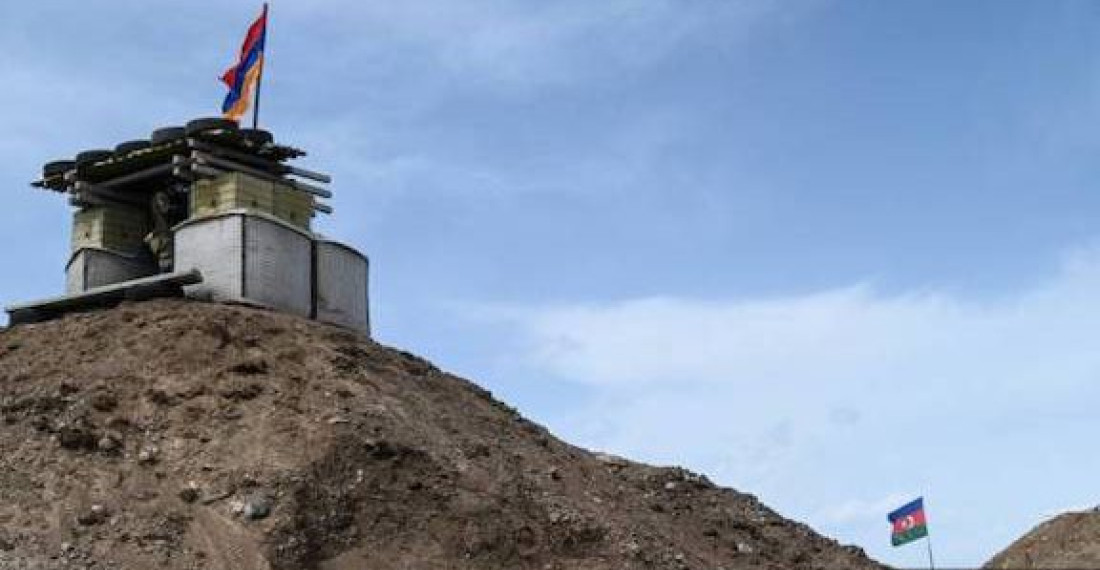
This stability at the border, along with the optimism for a tangible breakthrough in the near future, was undermined on 12-13 February, when the armed forces of the two countries clashed in the border area, which ended with the loss of four servicemen on the Armenian side and wounded soldiers on both sides.

Armenia’s Defense Ministry launched an investigation examining the circumstances of the initial fire against the Azerbaijani side which led to the escalation of tensions and the military response of the Azerbaijani army. While the results of this investigation have not been made public yet, the first Deputy Chief of the General Staff of the Armed Forces of Armenia was relieved of his post on February 14 – which may be related with the border clashes. Another fact that has emerged is that the killed servicemen were senior volunteers from a non-governmental military group called Yerkrapah, i.e., not the members of the regular army of Armenia. This raises further questions about the causes of the first sniper attack against the Azerbaijani side.

The area where the clashes took place is an Armenian border village named Nerkin Hand, which, according to the Foreign Ministry of Azerbaijan, is a zone of observation of the monitoring mission of the European Union (EU). The Ministry’s statement particularly raises this fact and voices concerns. “[This] provocation that was undertaken exactly in the territories observed by the European Union Mission in Armenia raises serious concerns about the aims and purposes of this Mission”, said the ministry on 13 February.

These worrying developments came on the heels of Azerbaijan’s intensifying protests concerning the activities of the EU monitoring mission. On 12 February, the Ambassador of the European Union to the Republic of Azerbaijan, Peter Michalko, was summoned to the Ministry of Foreign Affairs of Azerbaijan, where the Azerbaijani side complained that “the mission is being widely exploited as an anti-Azerbaijani propaganda tool”. Baku also protested the fact that the “Mission has essentially become an agent of ‘binoculars diplomacy’ facilitating the visits of different European officials and unofficial delegations to the border areas.”

Although it has not been stated or hinted by the Azerbaijani government in its recent statements, we may assume that Baku’s concerns are also caused by the mission’s overall impact on the geopolitical situation in the South Caucasus. As Russia gradually recovers its military strength and bolsters its influence regionally, consequences of overt confrontations between Russia and the West over the South Caucasus would be devastating for all three countries of the region. These concerns are shared also by Armenian experts who warn their leaders against “new foreign policy blunders” and urge them to consider that “the prospect of Russia’s defeat in the Ukraine war is gradually becoming dimmer, and if Trump is elected president of the United States in November 2024, its probability may reach zero.”

Russia has never concealed its displeasure and resentment towards growing engagement of the West in the South Caucasus which is seen in Moscow as a “geopolitical game” to drive Russia out of the region. Last month, Russia’s Foreign Minister Sergei Lavrov again accused the EU and the United States of playing “who’s boss” game in this region, interfering into the local affairs with a geopolitical agenda, pursuing their own interests at the cost of others. He blamed the Armenian government for implementing the instructions of the West and undermining the relations between Yerevan and Moscow. At the same time, the Russian government called upon Armenia to urgently return to “normal and full work” within the Collective Security Treaty Organization (CSTO) and lamented that “our Armenian allies have truly distanced themselves from it for now”.

The historical experience shows that Russia’s disputes with a regional country at such an extreme level do not remain limited to only statements. This is a big threat not only for Armenia but also neighboring countries Azerbaijan and Georgia. Any instability in this region may upend the local peace and stability and can turn the South Caucasus into another theater of the Russia-West confrontation. While Prime Minister Nikol Pashinyan denies any intention to depart from the CSTO or align with NATO, his government’s actions, including hosting EU monitoring missions and conducting joint military exercises with the United States, signal a strategic shift.

In conclusion, the recent clashes between Armenian and Azerbaijani forces in the border village of Nerkin Hand serve as a stark reminder of the fragile peace in the South Caucasus. Despite optimistic statements from Azerbaijani President Ilham Aliyev regarding the stability along the Armenia-Azerbaijan border, the eruption of violence underscores the persistent tensions and unresolved issues between the two countries. Azerbaijan’s concerns about the activities of the European Union’s monitoring mission, as well as broader geopolitical dynamics involving Russia and the West, add layers of complexity to the situation. The region is increasingly becoming a battleground for competing interests, with Russia viewing Western involvement as a threat to its influence. For Armenia, navigating these geopolitical fault lines presents significant challenges. The potential consequences of escalating tensions in the South Caucasus are dire, not only for Armenia and Azerbaijan but also for neighboring countries like Georgia. Any instability risks drawing the region deeper into the Russia-West confrontation, jeopardizing the hard-won peace achieved following the dissolution of the separatist regime in the Karabakh region. The local countries and their international partners should make sure that the conflict-ridden South Caucasus is not going to end up with a larger conflict with a geopolitical background.

https://www.commonspace.eu/index.php/opinion/opinion-recent-incidents-armenia-azerbaijan-border-remind-us-fragility-peace-south-caucasus


Categories
South Caucasus News

Nikol Pashinyan confirmed his participation in first ever summit dedicated to atomic energy – 1Lurer


Nikol Pashinyan confirmed his participation in first ever summit dedicated to atomic energy  1Lurer

Categories
South Caucasus News

Nikol Pashinyan left for Munich on business visit with his wife – 1Lurer


Nikol Pashinyan left for Munich on business visit with his wife  1Lurer

Categories
South Caucasus News

West seeks to destabilize South Caucasus, Russian official says


Categories
South Caucasus News

Azerbaijan has no intention of complying with international law, Armenian envoy tells UN


Categories
South Caucasus News

Ambassador-at-large: I am often asked whether Azerbaijan will attack Armenia again – NEWS.am


Ambassador-at-large: I am often asked whether Azerbaijan will attack Armenia again  NEWS.am

Categories
South Caucasus News

MONEYVAL commends Azerbaijan for counter-terrorist financing efforts – Aze.Media – Aze Media


MONEYVAL commends Azerbaijan for counter-terrorist financing efforts – Aze.Media  Aze Media

Categories
South Caucasus News

Aliyev in the lead to win Azerbaijan’s presidential election – Al Jazeera English


Aliyev in the lead to win Azerbaijan’s presidential election  Al Jazeera English

Categories
Audio Review - South Caucasus News

@mikenov: https://t.co/5YiUgoqg0h The News And Times Review https://t.co/O0SIgLVWzM #NewsAndTimes #NT #TNT #News #Times #World #USA #POTUS #DOJ #FBI #CIA #DIA #ODNI #Israel #Mossad #Netanyahu #Ukraine #NewAbwehr #OSINT #Putin #Russia #GRU #Путин, #Россия https://t.co/DO5LG3PY4T… https://t.co/VnSEdh9zWo


https://t.co/5YiUgoqg0h
The News And Times Review https://t.co/O0SIgLVWzM#NewsAndTimes #NT #TNT #News #Times#World #USA #POTUS #DOJ #FBI #CIA #DIA #ODNI#Israel #Mossad #Netanyahu#Ukraine #NewAbwehr #OSINT#Putin #Russia #GRU #Путин, #Россия https://t.co/DO5LG3PY4Tpic.twitter.com/VnSEdh9zWo

— Michael Novakhov (@mikenov) February 16, 2024