
Day: February 15, 2024
At the meeting of the Expert Council on the identification of immovable cultural property under the Ministry of Culture, it was decided to take under state protection a number of tombs, bridges, mosques, and baths in Aghdam district, according to Azerbaijan in Focus, reporting Azernews.
Head of the State Service for Protection, Development, and Restoration of Cultural Heritage of the Ministry of Culture, Sabina Hajiyeva, addressed the meeting and drew attention to the issues on the agenda. The head of the state service said that at today’s meeting, 95 sites with signs of history, architecture, and decorative-applied art across the country were presented for discussion by the council members in order to take appropriate measures to include them in the list of immovable monuments of history and culture.
Chairman of the Expert Council and Rector of the Azerbaijan University of Architecture and Construction, Prof. Gulchohra Mammadova, talked about the objects with features of history, architecture, and decorative-applied art. The rector noted that the objects of cultural heritage discussed for inclusion in the relevant list are located in the liberated territories and Baku city.
Then the comments and proposals of the Council members on the discussed issues were heard.
By unanimous decision of the Council members, the objects discovered by the State Service as a result of control and intervention works in the territories liberated from occupation were discussed.
The members of the Council considered it expedient to take appropriate measures on state protection of the graves located in Alimadatli, Boyahmadli, Kizil Kangarli, and Eyvazkhanbayli villages, the bridge located in Kangarli village, mosques located in Shahbulag, Abdal, and Gulabli villages, as well as bathhouses located in Aghdam city and Gulabli village.
It should be noted that the Expert Council was established with the purpose of making relevant additions and amendments to the Decision of the Cabinet of Ministers No. 132 of August 2, 2001, “On Approval of the section of immovable historical and cultural monuments taken under state protection in the territory of the Republic of Azerbaijan by the degree of importance”.
The Council consists of the Ministry of Culture, the State Service for Protection, Development and Restoration of Cultural Heritage under the Ministry, the State Committee for Urban Planning and Architecture, the Main Department of Architecture and Urban Planning of the Baku City Department, the State Real Estate Service under the Ministry of Economy, the State Tourism Agency, the Azerbaijan University of Architecture and Construction, the Union of Architects of Azerbaijan, the Institute of Archaeology and Anthropology of ANAS, and the Department of State Historical-Architectural Reserve “Icherisheher”. Shusha City Department of the State Reserve and the Ministry of Culture of Nakhchivan MR are represented.
The post Historical buildings in Aghdam to be taken under state protection appeared first on Azerbaijan In Focus.
The broadening of the strategic partnership between Azerbaijan and Serbia brings great satisfaction, said President of the Republic of Azerbaijan Ilham Aliyev in a congratulatory letter sent to President of Serbia Aleksandar Vučić on the occasion of his country’s national holiday, according to Azerbaijan in Focus, reporting Trend.
The post President Ilham Aliyev: Firming Azerbaijani-Serbian partnership offers great delight appeared first on Azerbaijan In Focus.
Armenka, Pashinyan pushes for new constitution, opposition screams foul Osservatorio Balcani e Caucaso
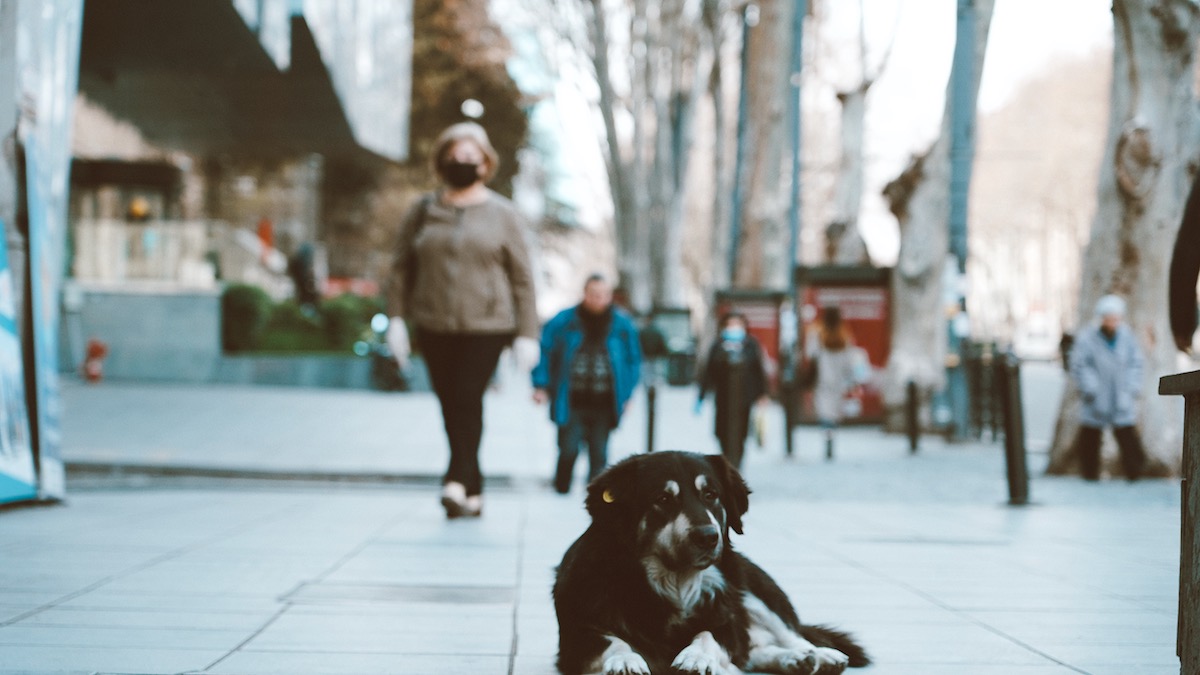
Pets in Georgia
Regulations regarding the ownership and care of dogs and cats are tightening in Georgia, with a corresponding bill already registered in parliament. The parliamentary committee on environmental protection spearheads the initiative.
The proponents of the bill assert that the proposed amendments are rooted in contemporary and well-established methods for the care of domestic animals and the management of their populations.
The new legislation covers aspects such as safeguarding pets from cruelty and euthanasia, as well as regulating breeding, buying, and selling practices. Additionally, it introduces new standards for their care. Stringent sanctions will be enforced against violators of these regulations.
Animal enthusiasts and experts observe that, while acknowledging certain deficiencies and inaccuracies, overall the bill is geared towards animal welfare and represents a positive stride in this regard.
We will elucidate the specific contents of the bill.
The responsibilities of a dog or cat owner include:
- Registering the animal. Failure to comply with this regulation will result in a fine of 1,000 lari [approximately $377].
- Ensuring that the animal undergoes compulsory annual vaccination and veterinary examination. A fine of GEL 1,000 is applicable for non-compliance with this requirement.
- Reporting to the municipality in the event of the animal being lost or deceased.
- Taking responsibility for any harm caused by the animal to another individual and compensating for the damages incurred.
Will a new law solve the problem of stray dogs in Georgia?
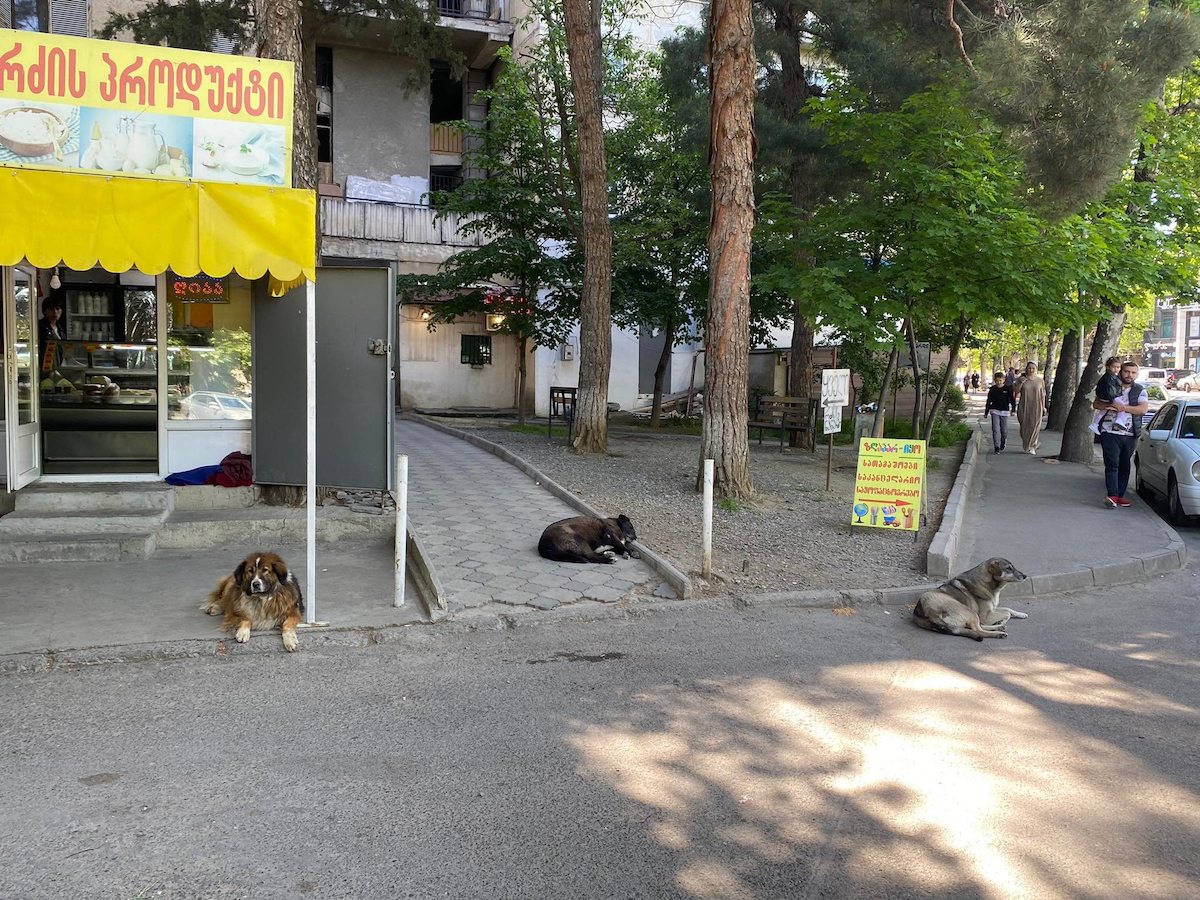
Tourists who come to Georgia say they have never seen so many stray dogs anywhere else
● Breeding mixed-breed animals, i.e., crossing different breeds, is prohibited.
● Residents of apartment buildings are permitted to own only three pets, with the allowance of a fourth or more contingent upon the consent of their neighbors. However, kittens and puppies under two months old are exempt from this restriction.
For owners of high-risk dog breeds:
The bill enumerates 30 dog breeds classified as high-risk, including shepherd dogs, Dobermans, and others.
-
1. American Pit Bull Terrier;
2. Cane Corso;
3. Doberman;
4. Fila Brasileiro;
5. Bull Terrier;
6. American Staffordshire Terrier;
7. Argentine Mastiff;
8. Tosa Inu;
9. American Bulldog;
10. Kangal;
11. Caucasian Shepherd;
12. Central Asian Shepherd Dog;
13. East European Shepherd;
14. Greek Shepherd;
15. Crash Shepherd;
16. German Shepherd;
17. Romanian Shepherd;
18. Mastiff;
19. Dogue de Bordeaux;
20. Dogo Canario;
21. Rottweiler;
22. Giant Schnauzer;
23. Leonberger;
24. Marema;
25. Moscow watchdog;
26. Ca-de-bo (Majorcan Mastiff);
27. Staffordshire Bull Terrier;
28. Bandog;
29. Guldong;
30. Wolfdog (hybrid of dog and wolf).

● These dog breeds necessitate separate registration.
● Individuals under 18 years of age are barred from owning or even walking high-risk breeds of dogs.
● Training these dog breeds for combat purposes (excluding functional dogs owned by government agencies) is forbidden.
● Individuals who own or plan to own a dog of a high-risk breed must furnish additional documentation to the municipality, including a certificate demonstrating completion of a course in proper training and care of the animal, a criminal record certificate, and a certificate from a drug treatment clinic.
Rules for veterinary clinics:
● It is prohibited to carry out operations in veterinary clinics that lack a medical purpose. These include procedures such as ear and tail docking, declawing, vocal cord cutting, etc. If such an operation results in the death or serious injury of the animal, the penalties may include a fine, community service lasting from 60 to 100 hours, or house arrest for up to six months.
Rules for shelters:
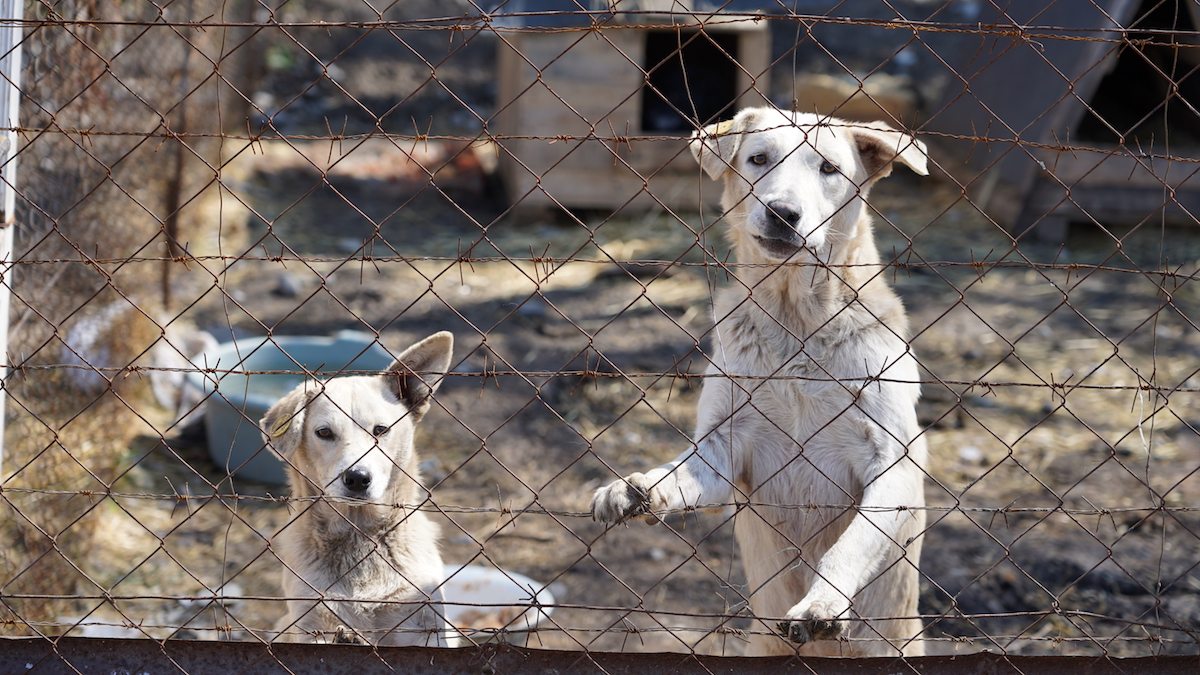
- Shelters must adhere to sanitary and hygienic standards.
- The rooms housing animals must have suitable lighting and temperature control.
- Enclosures must be designed to allow animals to move freely and have an unobstructed view.
Rules for municipalities:
- The law assigns responsibility to municipalities for managing the population of stray dogs.
- Municipalities are mandated to capture stray animals, perform neutering/spaying procedures, administer vaccinations, and register them in the databases.
Purchase and sale of animals/breeding/castration/euthanasia:
- Selling unregistered animals is prohibited.
- Only licensed breeders are authorized to breed animals.
- Animals cannot be separated from their mothers before the age of two months.
- Reproducing mixed-breed animals is prohibited, except in cases of selection.
- Breeding animals that are not identified and registered in a single database, breeding animals with genetic diseases, and using a female to produce offspring more than once a year are prohibited.
- Sterilization of female animals is permissible from the age of four months, and castration of males from one year. However, sterilization or castration of an animal after the age of eight is not permitted.
- The procedure for euthanasia (also known as euthanization) of an animal can only be carried out with a veterinarian’s assessment and under their supervision. Throughout the euthanasia process, the animal should not experience physical pain.
- Euthanasia is considered if: the animal displays aggressive behavior that cannot be altered; there is suspicion of rabies infection; a disease harmful to both animals and humans is detected; or there is an injury deemed incompatible with life.
The Parliament has also introduced amendments to the criminal code, which establish new principles of liability for acts of cruelty to animals.
Cruelty to animals encompasses:
- Consistently tethering the animal.
- Physical abuse.
- Deliberately colliding with the animal using a vehicle or any other form of transportation.
- Inflicting physical distress on the animal that causes suffering.
- Utilizing domestic animals for various scientific experiments or conducting laboratory research on them.
- Organizing, participating in, or promoting animal fights.
Furthermore, the current criminal penalties for subjecting animals to torture and cruel treatment resulting in mutilation are being strengthened. Such offenses will be punishable by a fine, house arrest, or imprisonment for a term of 18 months to two years. In cases where the animal dies as a result, the perpetrator may face imprisonment for two to four years.
Where can you walk your pet?
- In open spaces such as parks, squares, etc., dogs must be walked on a leash.
- Pets are strictly prohibited in kindergartens, schools, universities, grocery stores, pharmacies, hospitals, playgrounds, and sports grounds.
- On the subway and other forms of public transport, dogs must be transported on a leash, while cats must be transported in carriers.
-
For violation of vaccination or other treatment and prophylactic rules – 100 lari [approximately $38];
For failure to register a dog from a “risk group” – 200 GEL [approximately $75];
If the mixed-breed animal is not sterilized/neutered – 300 GEL [approximately $113];
In case of obstruction of the transportation of a sick animal for vaccination – 300 lari [approximately $113];
If a pet caused harm to another animal or person – 500 GEL [approximately $189];
For abandoning an animal – 3,000 GEL (in the case of a legal entity – 5,000) [approximately $1,100 and $1,880 respectively];
Keeping an animal in an educational institution – 50 GEL [approximately $19];
Allowing a dog to stay in an open space without a collar and leash – 150 GEL (for a dog of a high-risk breed – 300 GEL) [approximately $57 and $113, respectively];
Transporting a pet by public transport in violation of the rules – 150 GEL (for a dog of a high-risk breed – 300 GEL) [approximately $57 and $113, respectively];
Breeding dogs younger than 18 months or older than eight years – 200 GEL (for a legal entity – 500 GEL) [approximately $75 and $189 respectively];
Breeding animals without a health and breed certificate – 500 GEL (for a legal entity – 1,000 GEL) [approximately $189 and $377, respectively];
For crossbreeding animals – 500 GEL (for a legal entity – 1,000 GEL) [approximately $189 and $377, respectively];
Breeding animals without the required license – 1,000 GEL (for a legal entity – 2,000 GEL) [approximately $377 and $755, respectively];
For violating the euthanasia rule – 500 lari [approximately $189].