
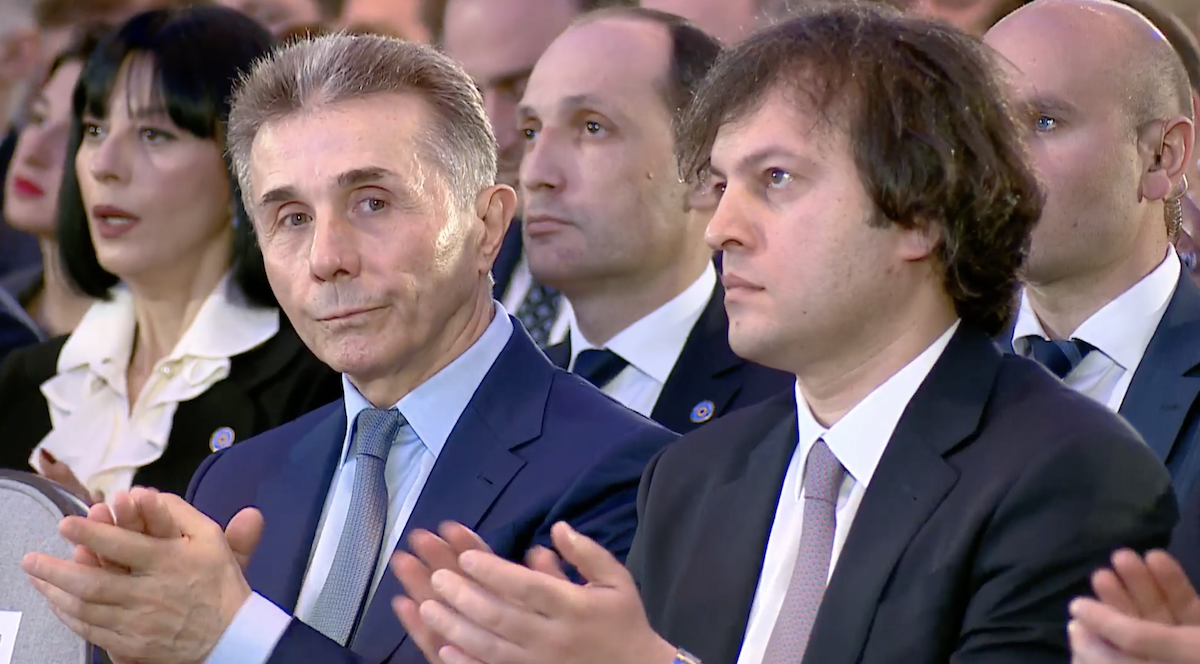
New Prime Minister of Georgia
45-year-old Irakli Kobakhidze assumed the role of the new prime minister of Georgia after receiving official approval from the country’s parliament on February 8. He succeeded Irakli Garibashvili in this position.
Previously, Kobakhidze served as the chairman of the ruling “Georgian Dream” party. Following his appointment as prime minister, former prime minister Garibashvili has taken over Kobakhidze’s previous role, effectively exchanging positions within the power structures.
Who is Irakli Kobakhidze, what is he known for in Georgia, and what is his political background? Let’s discuss.
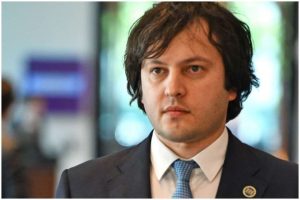
By education, Irakli Kobakhidze is a lawyer, specializing in constitutional law, and is a professor at Tbilisi State University. In 2006, he earned his doctorate in law from the University of Dusseldorf, Germany.
Kobakhidze’s father, Gia Kobakhidze, is also a former politician. He served as a member of parliament during the third and fourth convocations, held the position of deputy chairman of parliament, and was one of the leaders of the pro-Russian “Democratic Movement” of Nino Burjanadze until 2015. However, Kobakhidze Sr. is no longer involved in politics.
Irakli Kobakhidze has been actively involved in Georgian politics since 2014-2015.
His initial significant appearance on the political stage was linked with Irakli Garibashvili, who, in turn, is one of the closest associates of the founder of the “Georgian Dream”, oligarch Bidzina Ivanishvili, often considered the de facto ruler of Georgia.
In 2015, Kobakhidze assumed the role of executive secretary of the “Georgian Dream”, succeeding Zviad Dzhankarashvili, a relative of Irakli Garibashvili, amidst public unrest and allegations of corruption within the “Garibashvili clan.”
Subsequently, Kobakhidze swiftly ascended the career ladder, indicating a high level of trust from Ivanishvili.
Georgian prime minister candidate Irakli Kobakhidze unveils his government program
The 97-page government program highlights four main areas of focus
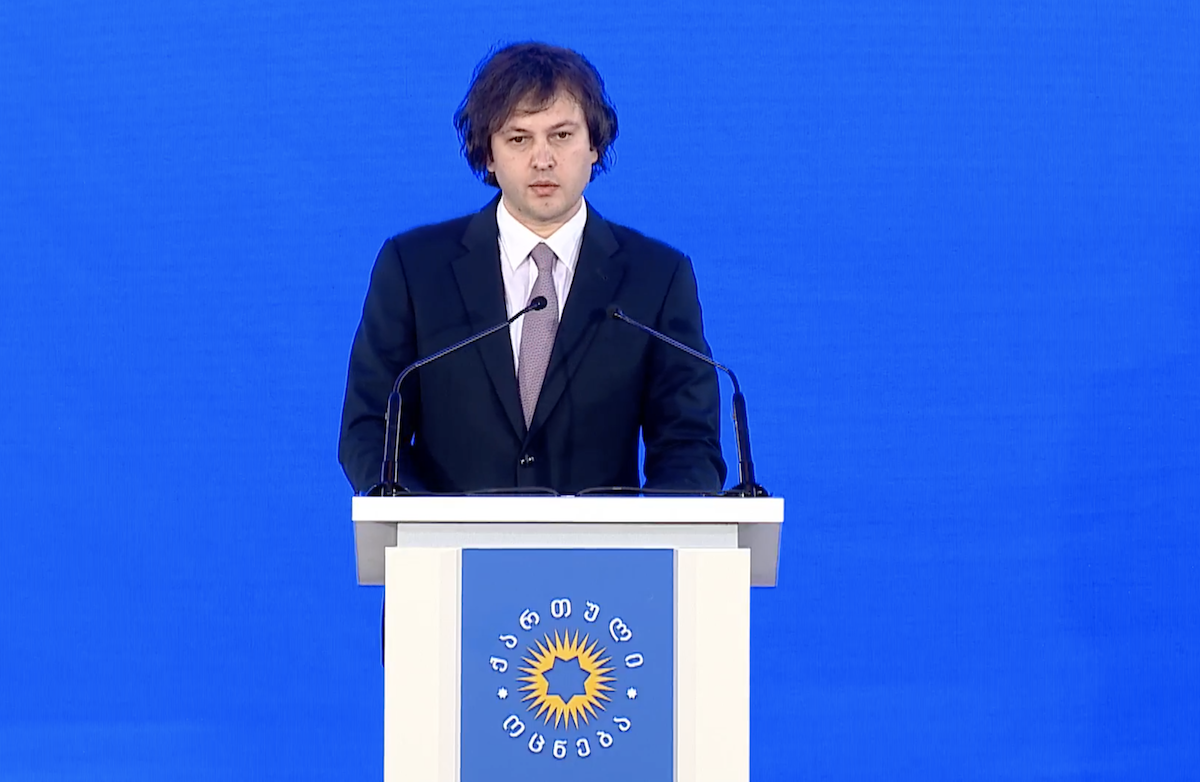
“Night of Gavrilov”
In the 2016 parliamentary elections, Kobakhidze occupied the third position on the “Georgian Dream”electoral list, and following the party’s victory, he assumed the role of speaker of parliament.
In 2019, Kobakhidze tendered his resignation as speaker, albeit under pressure, following the infamous “Night of Gavrilov” incident.
On June 20, 2019, Russian deputy Sergei Gavrilov visited Tbilisi to participate in the International Parliamentary Assembly of Orthodox Christians. During the assembly, Gavrilov took a seat in the chair of the Georgian parliament speaker, sparking massive protests. Security forces forcefully dispersed these demonstrations, leading to Kobakhidze’s resignation on the ensuing day, June 21, 2019.
Then, on January 16, 2021, after Bidzina Ivanishvili announced his second retirement from politics, Kobakhidze was elected as the chairman of the “Georgian Dream” party.
Impeachment, Constitutional Change, Polarization
Aside from the “night of Gavrilov,” several significant political events and controversies in recent years in Georgia are linked to Irakli Kobakhidze.
For instance, in the autumn of 2023, Kobakhidze emerged as one of the key figures leading the impeachment proceedings against President Zurabishvili. The “Georgian Dream” party accused Zurabishvili of constitutional violations and brought a lawsuit against him in the Constitutional Court.
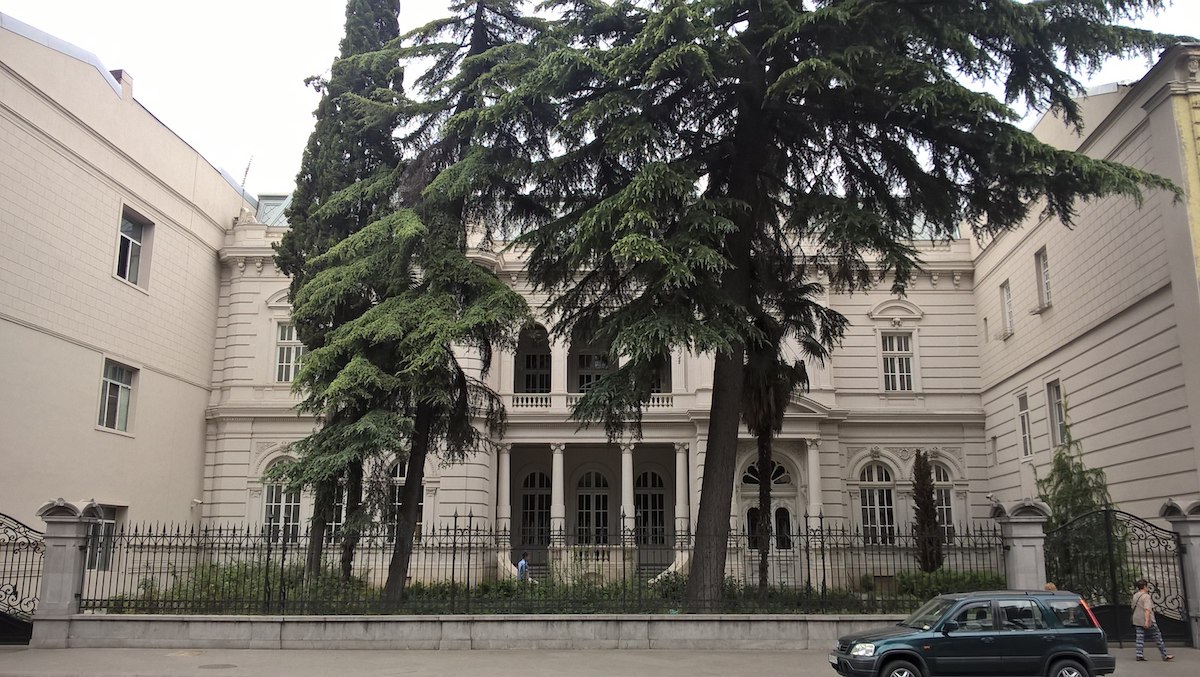
In the end, impeachment did not occur, but this episode had a detrimental effect on Georgia’s international reputation and marked the country’s history as the inaugural attempt to impeach a president.
Irakli Kobakhidze was also prominently involved in the events of March 2023, during which “Georgian Dream” advocated for the adoption of a Russian law regarding “foreign agents.”
According to Radio Liberty, Kobakhidze frequently labeled his adversaries, including President Zurabishvili, as “spies” and “agents.”
Foreign agents bill adopted in Georgia in first reading. Rally in Tbilisi dispersed with water cannons and tear gas
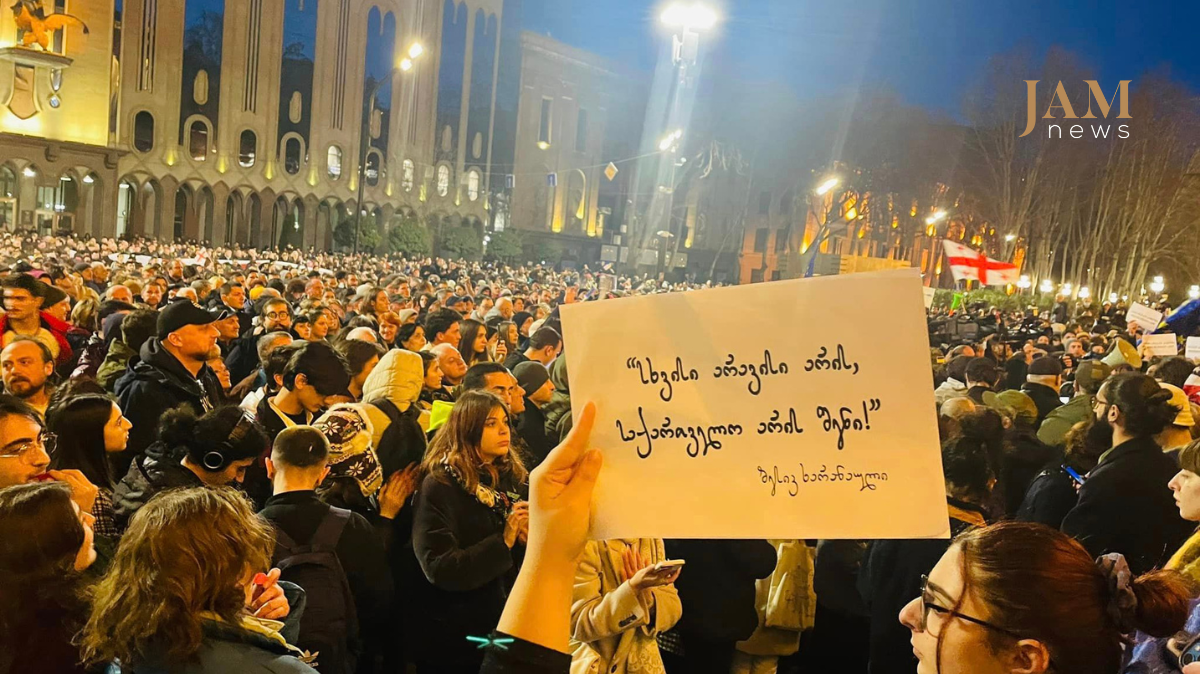
Kobakhidze was also among those who actively propagated conspiracy theories suggesting the existence of a “global war party” aiming to embroil Georgia in conflict.
For instance, regarding actions against “foreign agents,” Kobakhidze insinuated that the opposition “National Movement” (led by Mikheil Saakashvili) and the purported Global War Party orchestrated rallies with the intention of violently overthrowing the government, provoking conflict, and opening a second front in Georgia.
In response to US sanctions against several Georgian judges, Kobakhidze attributed the decision to what he termed “corruption processes,” implying that US Secretary of State Antony Blinken’s decision was influenced by corruption.
After Kobakhidze’s appointment as prime minister, Georgian media also highlighted his contentious remarks towards journalists and opponents.
Experts concur that polarization in Georgia’s domestic politics escalated significantly during Kobakhidze’s leadership within the ruling team.
In response to Western partners’ calls for depolarization, Kobakhidze often asserted that “depolarization is impossible with this opposition” and stated that “until 2024, all the attention of the Dream government will be devoted to ‘denationalization.’”
Additionally, this politician has engaged in numerous verbal attacks on the non-governmental sector, foreign ambassadors, and foreign partners. For instance, he asserted that “US Ambassador Kelly Degnan is damaging Georgian-American relations.” Furthermore, following the departure of former EU Ambassador Karl Hartzel, Kobakhidze remarked that Hartzel “played only a negative role in relations between the European Union and Georgia.”
In the autumn of 2023, “Georgian Dream” accused the United States Agency for International Development (USAID) of promoting a “violent change of power” scenario. Notably, Irakli Kobakhidze, who himself worked for USAID in the early 2000s, commented, “We will need to seek an explanation for why USAID funded training, the immediate purpose of which was to prepare for revolution in Georgia.”