Categories
South Caucasus News

The Dangers Of Complicity: The US Courts, Gaza And Genocide – OpEd


The Dangers Of Complicity: The US Courts, Gaza And Genocide – OpEd

Holding the foreign policy of a country accountable in court, notably when it comes to matters criminal, can be insuperably challenging.  Judges traditionally shun making decisions on policy, even though they unofficially do so all the time.  The Center for Constitutional Rights, a New York-based civil liberties group, was not to be discouraged, most notably regarding the Biden administration’s unflagging support for Israel and its war in Gaza.  

In a filing in the US District Court for the Northern District of California last November, the CCR, representing a number of Palestinian human rights organisations including Palestinians in Gaza and the United States, sought an order “requiring that the President of the United States, the Secretary of State, and the Secretary of Defense adhere to their duty to prevent, and not further, the unfolding genocide of Palestinian people in Gaza.”  Such a duty, arising in the UN Genocide Convention of 1948, “is judicially enforceable as a peremptory norm of customary international law.”

The complaint alleged that the genocidal conditions in Gaza had “so far been made possible because of unconditional support given [to Israel] by the named official-capacity defendants in this case,” namely, President Joseph Biden, Secretary of State Antony Blinken and Secretary of Defense Lloyd Austin.

At the time proceedings were initiated, the Israeli campaign in Gaza, launched in response to the October 7, 2023 attacks by Hamas, had already claimed the lives of 11,000 Palestinian civilians, “more than 4,500 of them children, as well as entire families, numerous journalists and UN workers.”  The bombardment had crippled critical infrastructure, led to the displacement of 1.6 million persons, and had been “accompanied by a total siege of Gaza, depriving Palestinians in Gaza the conditions of life necessary for human survival: food, water, medicine, fuel, and electricity.”  (Currently, the displaced number exceeds 2 million; the number of dead towers at 26,000.)

In reaching his decision to dismiss the case on jurisdictional grounds, Jeffrey S. White admitted it was the “most difficult” of his career.  He acknowledged South Africa’s action in the International Court of Justice against Israel, which argues that Israel’s conduct against Palestinians in the Gaza Strip satisfies the elements of genocide.  

The January 26 interim order of provisional measures granted by the ICJ explicitly put Israel on notice to comply with the Genocide Convention, punish those responsible for directly and publicly inciting genocide, permit basic humanitarian assistance and essential services to the Gaza Strip, preserve relevant evidence pertaining to potential genocidal acts and submit a report to the ICJ on its compliance within a month.  In international law, these interim measures are accepted as binding.

The ICJ also showed some scepticism to arguments that Israel had taken adequate measures to minimise harm to Palestinian civilians and respond to instances where an incitement to genocide could be imputed.  None of the measures taken till that point had removed the risk of irreparable harm; to merely assert compliance was not sufficient evidence of it.

In White’s words, “the undisputed evidence before this Court comports with the finding of the ICJ and indicates that the current treatment of the Palestinians in the Gaza Strip by the Israeli military may plausibly constitute a genocide in violation of international law.”  Lawyers representing the government also chose not to cross-examine witnesses, bar one Holocaust scholar who testified that Israel’s actions in the Gaza Strip could be classed as genocidal.  Unfortunately for the plaintiffs, the claims advanced in this case, involving disputes over foreign policy, raised “fundamentally non-justiciable political questions.”  To compel the US government to cease military and financial assistance to Israel were matters “intimately related to foreign policy and national security”.

The plaintiffs had encountered that great limitation articulated by Chief Justice Marshall in 1803: that ‘[q]uestions, in their nature political, or which are, by the constitution and laws, submitted to the executive, can never be made in this court”.  To do so would violate the separation of powers.  The judiciary was, according to White, “not equipped with the intelligence or the acumen necessary to make foreign policy decisions on behalf of the government.”  

Despite being bound by weighty precedent and rulings in previous cases, White concludes with a plea.  The ICJ had found it “plausible that Israel’s conduct amounts to genocide.”  The judge implored the “Defendants to examine the results of their unflagging support of the military siege against the Palestinians in Gaza.”  Not bad for one lacking intelligence or the acumen necessary to make foreign policy decisions.

While disappointed in White’s ruling, Brad Parker, a senior advisor to one of the organisational plaintiffs, Defense for Children International Palestine, saw the thickest of silver linings.  Along with the ICJ decision, “and the increasing recognition that what Israel is carrying out is a genocide and the US is complicit in those genocidal acts, I think the strong language from a US federal court judge increasingly works to isolate Israel’s actions and also bring pressure on the Biden administration to change course.”

To date, the slaughter in Gaza continues.  Israeli politicians and military officials persist in claiming that murderously innovative approaches to killing Palestinian civilians are not, by definition, genocidal.  But the walls of justifiable impunity, so proudly claimed by Israel in its righteous mission of self-defence, are proving increasingly porous.
Categories
South Caucasus News

Solution For Somali Piracy Has To Be Found On Land, Not At Sea – Analysis


Solution For Somali Piracy Has To Be Found On Land, Not At Sea – Analysis

Sri Lankan scholar Amali Karawita says that Somali piracy is a by-product of a Failed State.

The Salama Fikira (FP) Group, a leading global security and risk management firm, warned in January, that despite a perceived decline in Somali piracy, recent incidents indicate that the menace has not been eradicated and remains a formidable challenge.

By January 2011, 736 people were taken as hostages and 32 ships were captured by pirates. Piracy impeded the delivery of shipments and increased shipping expenses, costing an estimated U$ 6.9 billion a year in global trade according to Oceans Beyond Piracy (OBP). 

According to the German Institute for Economic Research (DIW), a veritable industry of profiteers also arose around the piracy. Insurance companies significantly increased their profits from the pirate attacks as these companies hiked premium rates in response.

 “The hijacking of a bulk carrier off the coast of Somalia on the 14th of December 2023 was the first since 2017, “ said Lt.Col. Conrad Thorpe, Chairman of the Salama Fikira. “ While unusual, it was not surprising given the Somali piracy capability has never been relinquished,” he added. 

Thorpe warned that the tactics employed, including the use of a mother ship (a large ship which can go long distances), enable pirates to operate at sea for extended periods and at considerable distances, catching ship owners off guard. 

The Somali pirates, once a significant concern between 2008 and 2016, saw a decline in activity due to concerted international efforts. But since the Israel-Hamas war in Gaza began in October 2023, the world’s attention was diverted, leaving the coast off the Horn of Africa unpoliced. 

The FP Group warned that pirates are expanding their reach into the Arabian Sea and northern Indian Ocean, targeting ships away from the perceived Houthi threat area in the Red Sea. 

Piracy incidents off the coast of Somalia rose dramatically after 2005 and reached a high of 243 in 2011 but then plunged in 2012 to 63  attacks, says a World Bank report. Since the first known Somali hijacking in April 2005 till about 2013, 149 ships were ransomed for an estimated total of US$315–US$385 million, the report says. 

The international community has now mobilized to combat the surge of piracy off the Horn of Africa. Over 40 countries are involved in military counter-piracy operations. Since 2008, the United Nations (UN) Security Council has adopted 13 resolutions to support counter-piracy action off the Horn of Africa.

Land-based Crime

But a Sri Lankan researcher, Amali Kartika Karawita of the London School of Public Relations in Jakarta, says in her paper entitled: Piracy in Somalia: An Analysis of the Challenges Faced by the International Community, that piracy is actually a “land-based” crime and not a “sea-based” crime. People take to piracy because of economic problems and unsettled conditions in their countries, on land, that is.   

Somalia is a failed State pushing its young men into crime including piracy. Since millions of dollars can be made through piracy it is now in the hands of the rich with links with money launders in Dubai.

Therefore, the solution to piracy lies not so much in capturing and prosecuting the pirates at sea, but in setting right the horrendous conditions in Somalia, Karawita argues.

“Piracy has become a lucrative business in Somalia due to the political instability caused by the absence of an effective government. There are fights between different factions striving for power,” she points out. War lords rule the roost. Agriculture and industry (if any) have collapsed due to the internal wars and absence of governance. This has created unemployment and abject poverty.  

Civil War

From 1969 to 1991, Mohamed Said Barre ruled the country with an iron hand, but his overthrow transformed Somalia into a theatre of violent fights between clans for power. At the dawn of the present century, radical Islam entered the fray. War with neighbouring countries only made matters worse. 

The international community failed to rebuild and stabilize the country. Foreign aid was eaten up by the influential few. There was no strong central authority to ensure that such things did not happen. People began to indulge in crime, including piracy, to make ends meet first and then to become rich.

Grinding Poverty

Poverty in Somalia is endemic. Over 12 million people were living below the international poverty line of US$ 0.19 per day in 2017. The unemployment rate was 67% for a population in which 70% were under the age of 30. 

“When taking into consideration that a single pirate hijack can lead to a ransom range between US$ 500, 000 to US$ 3 million with individual profit going up to US$ 15,000 USD—in a country where poverty is rampant and economic opportunities are low, it becomes understandable why piracy is an attractive business for young Somalis,” Karawita says. 

The US, with the support of the UN, launched a multinational operation in December 1992 called United Nations Operation in Somalia (UNOSOM) to curb piracy. But UNOSOM only reinforced the warlords’ power and allowed the proliferation of armed groups. The UNOSOM was eventually withdrawn, Karawita recalls. 

The failure of the international community to find a durable solution to the Somali politico-economic problem provided a fertile ground for the emergence of radical Islamist movements seeking to create an Islamic State. Since 1991, local terrorist organizations such as Al-Itihaad have tried to establish an Islamic State. Al-Qaeda also developed a network here. 

Somalia’s 3,330 km coastline and its land borders were not patrolled. The absence of an effective authority over Somali territorial waters led to foreign fishing vessels plundering Somali’s fish stocks, costing the country US$ 300 million a year in losses. This affected supply in Somalia. 

Somali waters had also become the dumping ground of hazardous waste for industrialized countries since the early 1980s. This destroyed fish stocks. Shipping companies found dumping in these unpoliced seas much cheaper than disposing off their waste by scientific methods (US$ 2.50 per ton, against US$ 250 per ton). 

To combat such dumping, Somali fishermen began attacking foreign ships and seeking ransom to let them off. Fishermen joined hands with militias and unemployed youth to hijack ships.  

Those who took to piracy on a big scale lived lavishly. But the traditional Somali practice of sharing wealth with the community, led to many common folk developing a stake in piracy, albeit indirectly.

The piracy-led economy was also built on corruption. People openly bribed their way through officialdom. Somalia was ranked as one of the world’s most corrupt countries in 2011, obtaining a score of 1 on a scale of 0 to 10, 10 being the least corrupt. 

Corruption is intrinsically linked to money laundering. Organized pirates’ syndicates operating in Dubai have been laundering money acquired through ransoms. These syndicates play a major role in the development of piracy off the coast of Somalia, especially in providing access to new technologies useful for hijacking and tracking ships. 

Since 2008, the international anti-piracy operation “Atalanta” was highly successful. Several states like China, Russia. India and South Korea have been sending navy ships in the region. The Contact Group on Piracy off the Coast of Somalia (CGPCS) serves as a liaison between different naval forces involved in counter-piracy operations within the Gulf of Aden; an Internationally Recognized Transit Corridor and a part of the Somali basin. 

Then there is the Djibouti Code of Conduct to share intelligence. But this is a non-binding agreement. Therefore, the level of political support is quite weak, Karawita says. 

Much depends on whether States have sufficient national legislations and willingness to commit forces for anti-piracy work, and bring pirates to trial. Both are expensive. 

The United Nations Convention on the Law of the Sea (UNCLOS) Article 101 defines piracy as: “any illegal acts of violence or detention, or any act of depredation, committed for private ends by the crew of the passengers of a private ship or a private aircraft. . . on the high seas against another ship or aircraft.” 

This means that when piracy is committed within territorial waters of a country, it cannot be classified as piracy. This is a handicap. And if the State concerned is weak or is a Failed State like Somalia, piracy will not be investigated at all.

(This story was published in Daily Mirror, Colombo on February 6, 2024)


Categories
South Caucasus News

Red Sea Crisis: Economic Turbulence In Global Trade And Supply Chains – OpEd


Red Sea Crisis: Economic Turbulence In Global Trade And Supply Chains – OpEd

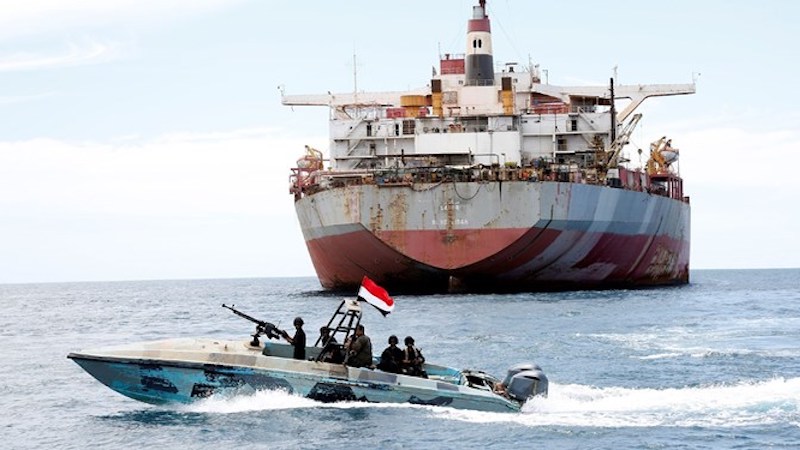
File photo of Houthi rebels patrolling near a merchant ship in Red Sea. Photo Credit: Fars News Agency

Introduction

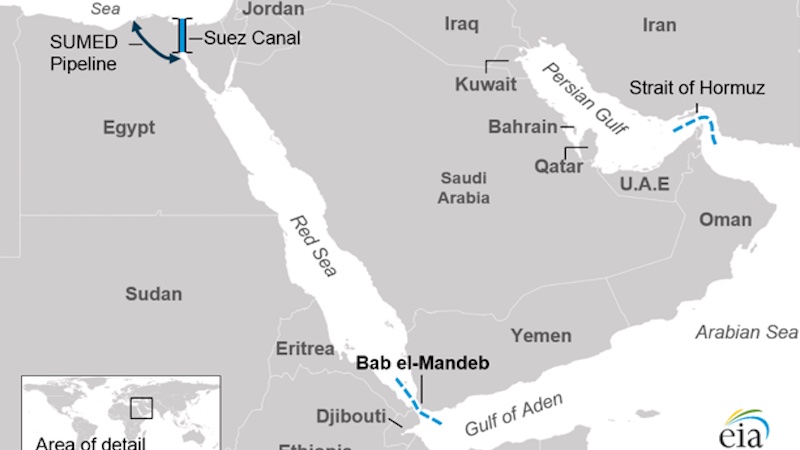
The necessity of maritime shipping for international trade is severely strained by several problems at major global maritime hubs. The main source of instability is the Houthi attacks on ships in the Red Sea and the Gulf of Aden, which are crucial arteries for ships passing via the Suez Canal.

US and UK forces have responded to these attacks, which involve advanced weapons supported by Iran, raising fears of a larger conflict escalation. It now seems more difficult to access this important shipping channel, raising concerns about the long-term viability of the region’s maritime economy. The Houthis seek to strengthen their support base in Yemen while pressuring Western countries to demand a ceasefire in Gaza through their Red Sea attacks, which they defend as acts of sympathy with Palestinians. The Houthis struggle to provide for basic requirements in the face of Yemen’s protracted conflict and dire humanitarian problems. They deflect attention by portraying themselves as frontline defenders of the Palestinian cause against Israel and the United States of America. Moreover, the Houthis aim to gain international recognition by utilizing these attacks to demonstrate their significance in the global arena and avert being disregarded by more powerful nations.

Location of the Bab el-Mandeb Strait, the Red Sea and the Middle East. Map Credit: EIALocation of the Bab el-Mandeb Strait, the Red Sea and the Middle East. Map Credit: EIA

Significance of Red Sea 

  • It connects the Indian Ocean to the Mediterranean Sea, as a mean of major trading route.
  • It separates Northeastern Africa from the Arabian Peninsula.
  • The Red Sea is the route for over 15% of all seaborne commerce worldwide, which includes 8% of all grain trade, 12% of all oil transport, and 8% of all liquefied natural gas trade.
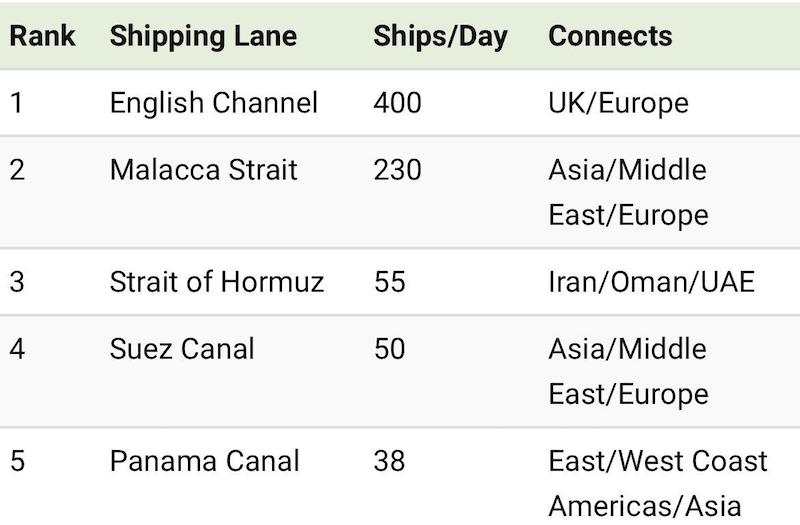
  • The Suez Canal is one of the busiest shipping lanes in the world. 

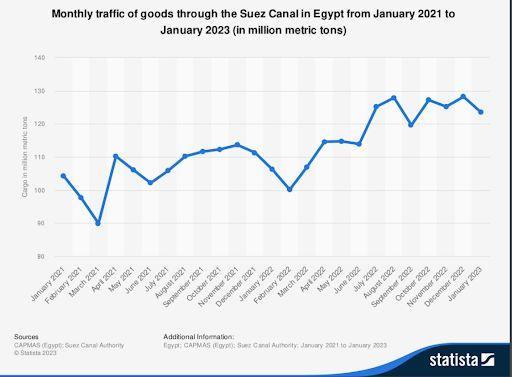
Monthly Traffic in Suez Canal (Source – Statista, 2023)

Global Economic Consequences of Attacks by Houthis

Trade routes must run smoothly and efficiently to support the world economy, and any hiccups or obstructions can have far-reaching effects. As a result, the stability and expansion of the world economy are negatively impacted by the ongoing Red Sea conflict. Therefore, several effects can be witnessed on the global economy due to this Red Sea crisis. 

a) Uncertainty added to Global Supply Chain  

The Red Sea issue is still developing, but it is already having a more significant effect on global supply networks than it did when the COVID-19 epidemic first broke out. Service networks are severely being disrupted by the Red Sea strikes. Throughout 2024, trade interruptions are probably going to persist, which will lead to more supply chain difficulties and increased inflationary pressures.

b. Global Trade is Declining

The attacks on cargo ships in the Red Sea were a major factor in the 1.3% decline in worldwide trade that occurred between November and December, reported by the Kiel Institute for the World Economy.

c. Increased Insurance Cost 

The very first reason is that the insurance cost of transportation has increased. This simply means when this transpiration cost increases, the production cost will also increase – inculcating into inflation. Insurance costs for trips to the Bab al-Mandab and the Red Sea have increased significantly, according to analysts monitoring cargo insurance. These charges are currently up to 2 percent, while normally they are about 0.6 percent of the value of the cargo on a ship, according to Ali Ahmadi, an executive fellow at the Geneva Centre for Security Policy. The cost of traveling across the Suez Canal is further increased by cargo insurers who tack on an extra war risk premium

d. Redirecting the Route 

The second reason is that companies are suspending their operations from the Red Sea and redirecting their route – which is a long one. Ships operating in the southern hemisphere are starting to circumnavigate the Cape of Good Hope, but doing so incurs additional expenses and a two-week delay. According to Forgione, the cost of transporting containers from Asia to Europe has already gone up by 175–250% due to redirecting routes. She also points out that the price of petrol and oil has been extremely volatile. 

e. Decline in Production 

The economic rule is that when supply decreases, the price level tends to increase. The same can be witnessed in this scenario as several firms have stopped their operation due to a spike in the supply chain. Due to supply delays, electric vehicle manufacturer Tesla is forced to close its manufacturing near Berlin starting Monday through February 11. A week-long production stoppage occurred at a Suzuki Motor Corp. plant in Hungary as a result of a delay in receiving engines and other parts from Japan. As reported by Bloomberg, Volvo has decided to temporarily suspend operations at its plant in Belgium, citing the need to divert ships transporting gearboxes to prevent acts of violence.

f. Delay in Goods Reaching to Customers 

This longer route raises fuel expenses, lowers shipping efficiency, and may result in higher import prices, including vital shipments of Middle Eastern and Asian oil and grain.

Table 1: Shipping Lane duration (Source – TEC Container Solutions)

g. Rise in Oil Prices

Fears over the potential economic effects of disruptions of global trade through the Red Sea and rising tensions in the Middle East have caused oil prices to reach $80 (£62.83). The prices are expected to rise as this chaos is happening in the Middle East, and well everyone knows that ME is the hub of energy.

Conclusion

To sum up, the effects of the Red Sea crisis is compounded by the Russo-Ukrainian war. Both attacks are increasing the inflation level around the world, the trade level is affected between states, the oil prices are at an uncertain situation, and the supply chains are disrupted severely. All the economic chaos due to war in Red Sea could affect the lives of people around the world. These repercussions touch on different industries and nations, underscoring the global economy’s interdependence and susceptibility to hostilities in strategic areas. Thus, the economy which started to recover after the Covid pandemic faced a stumbling block first from Russo-Ukrainian war and then now from Red Sea war.


Categories
South Caucasus News

U.S. reiterates support to Armenia-Azerbaijan peace process, readiness to host talks – ARMENPRESS


U.S. reiterates support to Armenia-Azerbaijan peace process, readiness to host talks  ARMENPRESS

Categories
South Caucasus News

Meet as.am, the apparel brand bringing the past into the future


Enter a Diasporan Armenian home and you’ll likely come across these decor staples: a Mt. Ararat painting, a framed թռչնագիր (bird letter) alphabet, a blue glass evil eye, an Armenian carpet, a glass jar of dried apricots or pistachios. But some homes now have replaced their traditional flowery bird letters for graphic designer Alek Surenian’s more modern take. The refreshed look uses a “flat” graphic style and a muted, curated color palette. When explaining his process, Surenian noted, “I think it’s good to evolve what’s been done in the past and turn it into something new and fresh.”

Alek Surenian

Much of his work draws inspiration from the past – whether it’s old Armenian posters, illuminated manuscripts, carpets, architecture or family heirlooms. The Armenian rug tote bag he created, for example, was inspired by a doily his great grandmother made. “It’s pretty sacred to my family, since it’s one of the few items in our possession that was owned by her,” he said. “The doily has a circular composition, so I pulled patterns from that and a Persian rug in our home and combined them together.” 

Armenian rug tote inspired by Surenian’s great grandmother’s doily (Photo: Alek Surenian)

Surenian’s latest drop and fifth release, The Yeraz Collection, is inspired by William Saroyan’s The Armenian and the Armenian. Featuring a cap and T-shirt with custom typography – squiggly, cloud-like letters that spell out the word երազ (dream) – the collection is “an ode to the dreamers” and those “longing for a world where a ‘New Armenia’ can become a reality.” For all of the products Surenian sells, he also sets aside a portion of proceeds for an Armenian organization. “I’ve had the great pleasure to donate to organizations such as the ARS, With Our Soldiers, Tufenkian Foundation, and now, All For Armenia, with this recent collection,” Surenian explained. 

as.am “Yeraz” collection (Photo: Sepahn Chiloyan)

While as.am launched in 2021, many AYF members in the United States already owned some of Surenian’s designs, as he created designs for the organization’s branded merch for many years. “As a Junior growing up in Chicago, my first experiences doing product design began with designing t-shirts for local midwest AYF events,” Surenian said. Later, he served as a member of the AYF Central PR Council, during which he designed the swag for regional events. “Without these experiences, I wouldn’t be the designer I am today, and most importantly, I’ve learned new skills which I added to my ‘design tool box,’” Surenian noted.

Click to view slideshow.

Outside of his work for the AYF and his as.am brand, Surenian’s graphic design skills have shaped the aesthetic of the promotional materials and artwork for his two music projects: the Norkef Ensemble and Armadi Tsayn band. Since the Norkef Ensemble performs traditional kef music at dances, picnics and regional events like AYF Senior Olympics, the art draws inspiration from old album covers. Armadi Tsayn, on the other hand, is “more contemporary and artistic” so the visuals have a modern flavor; the logo is an outline of a sun peeking out over a minimalist Mt. Ararat, with an array of roots stretching into the ground. Though it’s a symbol representing a specific musical project, the logo is reflective of Surenian’s approach to art as a whole: shining light on a new future while still staying true to his origins. “I think that being Armenian is all about bringing the past into our future,” he said. “Our ability to preserve and find ways to evolve our culture from generation to generation is essential to the survival of our identity.”


Catch Surenian and folk band Armadi Tsayn at upcoming live performances in Boston on February 10, New York City on February 24, and Los Angeles on March 16. 

Author information

Knar Bedian

Knar Bedian

Knar Bedian is a freelance writer and photographer whose work has been published in NPR, Gizmodo, Wired Magazine and Boston Art Review, among others. She is also the founder of a local music publication called Sound of Boston.

|

The post Meet as.am, the apparel brand bringing the past into the future appeared first on The Armenian Weekly.


Categories
South Caucasus News

AP Headline News – Feb 06 2024 16:00 (EST)


28013281


Categories
South Caucasus News

English Translation of Areg Azatyan’s ‘The Flying African’ Now Available


Author Areg Azatyan holding a copy of his new book, “The Flying African”

Frayed Edge Press announced the publication of “The Flying African” by Areg Azatyan, translated from Armenian by Nazareth Seferian.

The book follows the journey of an unnamed traveler, a young Armenian writer who spends fifty-four adventurous days in Africa, one day in each of the continent’s countries. Fifty-four chapters provide vignettes of the visits to each country, in which the traveler experiences the beauty of the land and the complexity of the people, as well the continent’s darker side: the on-going effects of colonization, war, poverty, and disease. While it is impossible to understand the whole of Africa or even one country in a short visit, each chapter provides a snapshot of something significant about the country visited, grounded in its own history, culture, and customs. 

The traveler’s progress is episodic and surreal, and at times he becomes dissociated and unsure of even where he is or what he is observing. He experiences some of the typical aspects of travel—seeing ancient mosques and other interesting architecture, visiting markets and trying new foods, and meeting both natives and other travelers, but the real journey is a psychological and emotional one. The geographic adventure of travel takes a back seat to the psychic adventure of unmooring oneself from the familiarity of home and reaching out to the unknown. Even as the narrator struggles to make sense of the sometimes magical and fantastic stories told to him, as well as his own disorienting experiences, he is still greatly affected by witnessing the human condition and has flashes of insight illuminating the human psyche’s capacity for growth, pain, and resilience. 

Ultimately, the traveler, and the reader along with him, takes a complex journey of letting go of expectations and opening up to the profound effects of encountering what is both familiar and foreign.​

​Olivia Hetreed, screenwriter for the major motion picture “Girl with a Pearl Earring” said, “I really enjoyed the book opening and was intrigued and amused by the different chapters. I loved…the quick way I was drawn into encounters with strangers and little mysteries.” Canadian filmmaker and scriptwriter Atom Egoyan has also praised the author, saying “Azatyan has a distinct talent with a playful sensibility full of probing questions…I look forward to following his work.”

Author Areg Azatyan is an Armenian writer and filmmaker based in the USA. He is the author of six fiction books published by leading publishing houses in Armenia: “Life Beyond the Sun,” “The Trial of the Human,” “Grasping at the Ladybug’s Leg,” “The Flying African,” “The Romanticists,” and “During the Lull.” He has also published short fiction in Armenian and international magazines and newspapers. He was the recipient of one of the highest governmental literary awards in Armenia, the Presidential Youth Prize for Literature (2004), as well as the Best Writer of the Year (2010) Mesrop Mashtots trophy, and several other international and national literary awards. As a filmmaker, his work has been recognized with several awards and prizes, and he has participated in more than forty international film festivals, including Berlinale, Rotterdam, Sao Paulo, and Gothenburg.

Translator Nazareth Seferian was born in Canada, grew up in India and moved to his homeland of Armenia in 1998, where he has been living ever since. His university education was not specific to translation studies, but his love for languages led him to this work in 2001. He began literary translations in 2011 and his published works include the English version of “Yenok’s Eye” by Gurgen Khanjyan, “The Clouds of Mount Maruta” by Mushegh Galshoyan, “Ravens Before Noah” by Susanna Harutyunyan, “Jesus’ Cat” by Grig, “The Door Was Open” by Karine Khodikyan, and “Robinson” by Aram Pachyan. He has also translated several short stories by other Armenian authors including Artavazd Yeghiazaryan, Levon Shahnur, Armen of Armenia (Ohanyan), Areg Azatyan, Avetik Mejlumyan, and Anna Davtyan. Nazareth produces several pages of translation each day, driven by his desire to promote greater availability and recognition of Armenian culture for English speakers worldwide​

“The Flying African” officially launched on January 30 and may be purchased directly through our distribution partner. The book is also available through major online booksellers, including Amazon and Barnes & Noble and most library book jobbers, including Ingram and Baker & Taylor.

Frayed Edge Press is a small independent press located in Philadelphia, Pennsylvania, which specializes in publishing marginalized voices, overlooked literature in translation, and works that wrestle with important questions impacting contemporary society. For more information about the press, visit the website.


Categories
South Caucasus News

Reservist Arthur Grigoryan dies as a result of fire incident


Categories
South Caucasus News

Hrant Jilavyan appointed Deputy Head of the Foreign Intelligence Service


Categories
South Caucasus News

President Khachaturyan considers his visit to Hungary historic