
Georgian prime minister Irakli Garibashvili resigns Yahoo News Australia
Day: February 5, 2024
Are Netanyahu and Yossi Cohen plotting the “Operation Trump” – 2024? https://t.co/bDmaF6cLu6 – The News And Times Review https://t.co/O0SIgLVWzM#NewsAndTimes #NT #TNT #News #Times#World #USA #POTUS #DOJ #FBI #CIA #DIA #ODNI#Israel #Mossad #Netanyahu#Ukraine #NewAbwehr #OSINT… pic.twitter.com/Z2VyJpU3Zm
— Michael Novakhov (@mikenov) February 5, 2024


Georgia’s SGB intercepted explosives from Ukraine
The Georgian State Security Service reported that several units of special equipment and a significant amount of explosives were seized on the border between Russia and Georgia. The explosives were being transported from Ukraine to the Russian Federation via Georgia.
According to the State Security Service, seven Georgian citizens were involved in the delivery of the 14 kilograms of explosives to Georgia. The counter-terrorism center seized the explosives, monitored its movement across the country, and intercepted one of the containers en route to the Russian Federation.
- Georgia after Karabakh: What has changed in the region and what lessons Tbilisi should learn
- Four scenarios for the development of events in Crimea in 2024: A detailed analysis
Statement by the Georgian State Security Service
According to the agency, the explosives were concealed in two batteries designed for an electric car, serving as containers. They were discovered during the search of the vehicle by the anti-terrorist center’s personnel.
As per the SGB, each battery contained six explosive devices.
A specialized demining team confiscated them and forwarded them to the Interior Ministry for examination. To maintain secrecy, law enforcement discreetly substituted the explosives with dummy materials to monitor the cargo’s movement and apprehend those involved in its shipment.
The progression of the cargo was monitored by the counter-terrorist center’s personnel. The primary objective of the investigation was to identify the customers, perpetrators, and any other individuals potentially linked to the transportation of the cargo. Furthermore, it aimed to ascertain the route of the explosives and their ultimate intended use.
It has been determined that the explosive devices contain C-4 military explosives, capable of being activated using an electric detonator and a special timer. The total weight of the explosive material is 14 kilograms.
The containers also held six units of detonators and six units of special keys. Each of the six individual boxes containing explosive devices was equipped with an electronic activation timer, with the activation time already programmed.
Law enforcement officials clarified that the preliminary examination indicated that all six devices were crafted by a high-level specialist and were intended to have a broad kill radius.
It has been determined that the explosive devices contain C-4 military explosives that can be activated using an electric detonator and a special timer. The total weight of the explosives reaches 14 kilograms.
The containers also held six units of detonators and six units of special keys.
The same number of electronic activation timers were installed in all six individual boxes of the explosive devices, in which the activation time had already been programmed.
Law enforcement officials explained that the initial examination revealed that all six devices were manufactured by a high-level specialist and were designed for a wide kill radius.
According to the agency, following complex actions conducted by the counter-terrorism center, and based on testimonies from questioned witnesses and audio files discovered, it was determined that the explosives were transported from Odessa via Romania, Bulgaria, and Turkey to Georgia on January 19. They were brought through the Sarpi checkpoint on the Turkish-Georgian border in a minivan owned by a citizen of Ukraine. Subsequently, the cargo was intended to reach Russia, specifically Voronezh, through the “Daryal” checkpoint.
Through operational-search and investigative measures, it was found that seven people from Georgia, three from Ukraine, and three from Armenia were involved in importing explosives into Georgia. Their movement through the country’s territory has been established. An attempt was made to take one container with three explosive devices out of Georgia, while the second container, also containing three devices, was left in Tbilisi. The cargo was intercepted and seized by the employees of the anti-terrorist center while attempting to transfer the explosives to Russia, as reported by the SGB.
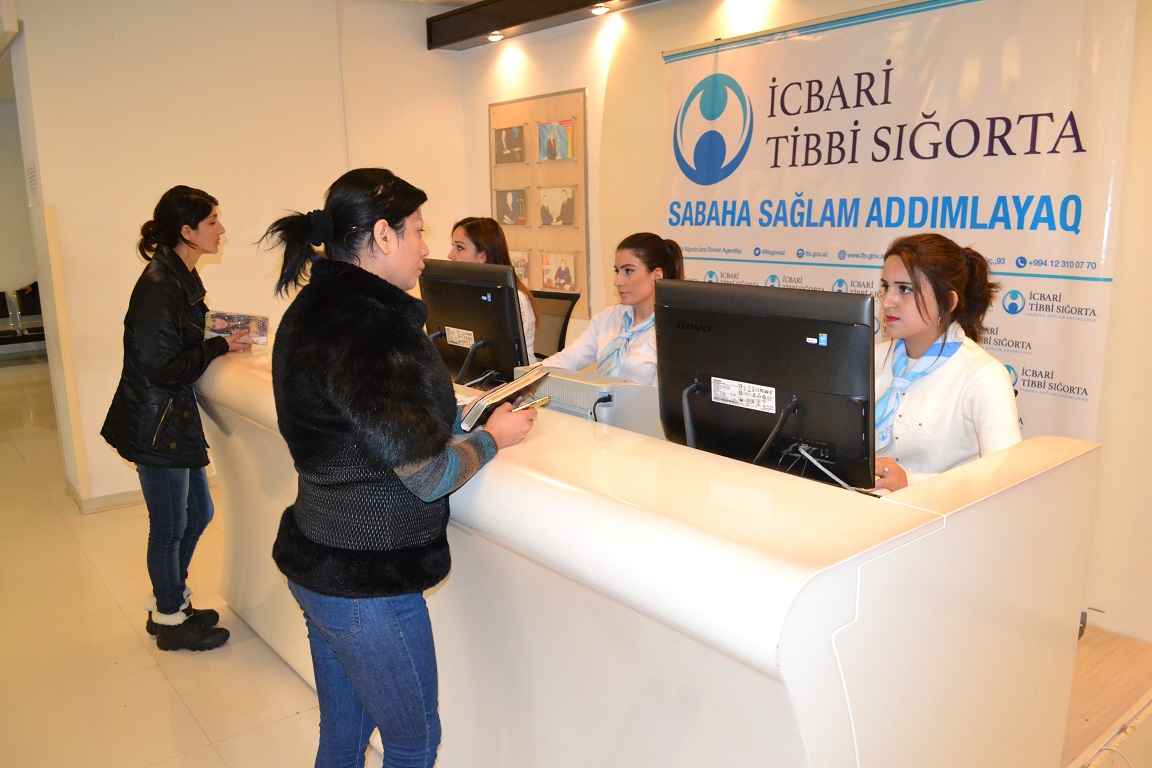
Mandatory medical insurance in Azerbaijan
“Each month, I allocate 10 manats (approximately $6) from my salary for mandatory health insurance. However, I only required this service for the first time last year. On a particular day, I woke up experiencing severe chest pain and promptly visited the local polyclinic. Despite conveying my concern to the district doctor, I was not thoroughly examined”.
Vahida Mehdiyeva is 45 years old. She lives in Baku and works as a cleaner at one of the state institutions. The woman says she was told at the polyclinic that they could not examine her because the ultrasound machine was not working.
- Massive fines for lack of residence registration have become a huge problem in Azerbaijan
- Residents of burnt dormitory in Sumgayit left without help
- Destroyed graves, demolished houses – in Garadaghli village after 32 years
“Breast cancer runs in our family, and due to persistent breast pain, I began to suspect that I might be facing the same disease. I shared this concern with my doctor, who advised me to seek oncology consultation. When I requested a referral for the necessary diagnostics, the doctor claimed he lacked the authority to provide one. Knowing this was untrue, I confronted him. Later, he asked for 30 manats (approximately $18) to issue the referral. While I could afford the amount, I felt angered and refused to pay. I questioned why I should pay for a checkup in a public hospital when my insurance money is deducted from my paycheck every month!” – Vahida Mehtiyeva inquires.
She opted to undergo an examination at a private clinic, where it was revealed that the chest pain she experienced was unrelated to the feared disease, cancer. Since then, Vahida Mehtieva shares that she avoids public health facilities unless the situation is genuinely urgent.
The package comprises 3,344 medical services
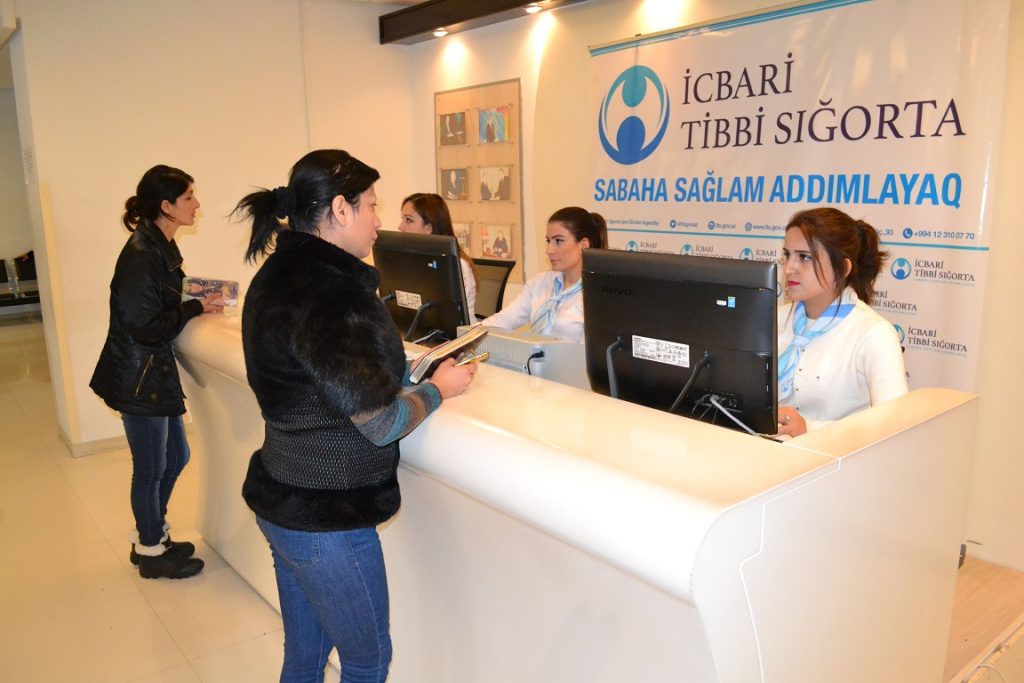
Since 2021, Azerbaijan has implemented a compulsory health insurance system nationwide. This system offers complimentary medical services to the population across all public medical institutions under the Union for the Management of Medical Territorial Units (TƏBİB), following an approved package of services.
The “Mandatory Health Insurance Package,” initially consisting of 2,550 various medical services as approved by the Cabinet of Ministers, has seen an addition of 794 new medical services to the list since August 2023. Consequently, the total number of medical services within the package has been elevated to 3,344.
Out of the recent additions, 33 services pertain to invasive radiology, 43 are outpatient services, 200 are laboratory services, and 518 are designated as inpatient services. Notably, the expanded list now encompasses surgeries for tendon, muscle, bone marrow, kidney, and liver transplants.
The covered surgeries incorporate procedures like heart valve replacement and repair, surgeries addressing congenital heart disease, minimally invasive endovascular surgery, brain and dura mater surgery, removal of benign brain tumors, bone and muscle lengthening, and lower extremity flexor tendon lengthening for cerebral palsy. Additionally, the coverage extends to high-cost medical services such as tendon fixation and scoliosis surgery.
“Compulsory health insurance restricts citizens’ access to medical services”
Radiologist Aydin Aliyev holds the view that the compulsory medical insurance system restricts citizens’ opportunities to access medical care.
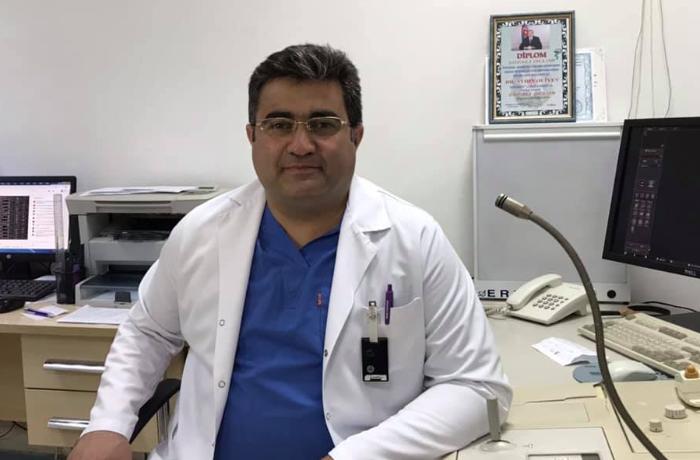
“Compulsory medical insurance refers to a system where citizens of the country are entitled to free medical services in state medical institutions. In essence, any citizen can avail themselves of medical services at a state medical institution in their place of residence simply by presenting their ID card.
However, in reality, as per the “Public Health Law,” citizens have the right to select their preferred doctor and access services free of charge in any public medical institution across the country. For instance, an individual residing in a distant region should have the ability to come to Baku and avail themselves of medical services in any state hospital. Unfortunately, compulsory medical insurance curtails this right, as per the latest decision, allowing citizens to apply only to the nearest medical institution.
If the required service is unavailable at the nearest medical institution, the individual is directed to another private facility in the vicinity through a doctor’s referral. Without a referral, the citizen is obligated to cover the expense of the medical service personally. Consequently, I believe there is an error in this decision; restrictions should not be placed on citizens”, the doctor explains.

Aydin Aliyev points out that the service packages of compulsory health insurance systems in many countries worldwide encompass significantly more expensive diseases, a contrast not observed in Azerbaijan.
“According to global and Azerbaijani disease statistics, cardiovascular diseases top the list, followed by oncological diseases. However, Compulsory Health Insurance (OMC) does not cover the treatment of these diseases. For instance, if a patient receives an oncologic diagnosis in a medical institution where they were examined under MHI, there is no TƏBİB-subordinate institution to which they can be referred for treatment. The National Cancer Center, the sole specialized institution, is not under TƏBİB’s jurisdiction. This poses a significant problem, as cancer patients who had to liquidate their properties for treatment often seek assistance,” explained Aydın Aliyev.
He emphasizes that it should be feasible to utilize compulsory medical insurance for all diseases, without any exceptions.
As per the decree signed by the President of Azerbaijan in December 2022, the budget revenues for the Compulsory Medical Insurance Fund in 2023 are sanctioned at AZN 2,393,243,970. Notably, the expenditure amount aligns precisely with the Fund’s revenue.
As per the details shared by Zaur Aliyev, Chairman of the board of the State Agency for Compulsory Medical Insurance, in 2023, 47% of the country’s population availed themselves of compulsory medical insurance services. Throughout the year, a total of 358,772 operations and procedures were conducted.
“Health insurance covered the expenses for my mother’s surgery as well as my husband’s”
However, there are numerous individuals who express satisfaction not only with the examinations but also with complex surgeries covered by the Compulsory Health Insurance (MHI). Lala Amirli’s husband and mother are among them.
Lala Amirli mentions that both her husband, Faig Amirli, and her mother, Adila Allahverdiyeva, underwent surgeries under the Compulsory Health Insurance (MLA) in 2023.
“In February 2023, my husband underwent kidney surgery under challenging circumstances. Simultaneously, my mother faced difficulties with her legs, experiencing dysfunction in her knee joints, impairing her ability to walk normally. Both surgeries were facilitated through health insurance.
To be honest, when I applied, I anticipated a complex official procedure, expecting to go through the hassle of collecting numerous documents. However, that wasn’t the case. They simply requested a certificate of residence and a referral from the polyclinic. Once we submitted these two documents, the operation took place within a week, and we didn’t incur any additional expenses.
The only difficulty we encountered was the horrendous queues at the hospitals to obtain a referral from the doctor. Some individuals arrived as early as 7 a.m. and patiently waited in line to secure a referral as soon as possible,” shares Lala Amirli.
“I want to live, raise my son”. The number of lung diseases increases in Azerbaijan after the pandemic
The WHO says the COVID-19 pandemic has reversed gains made in the global fight against tuberculosis
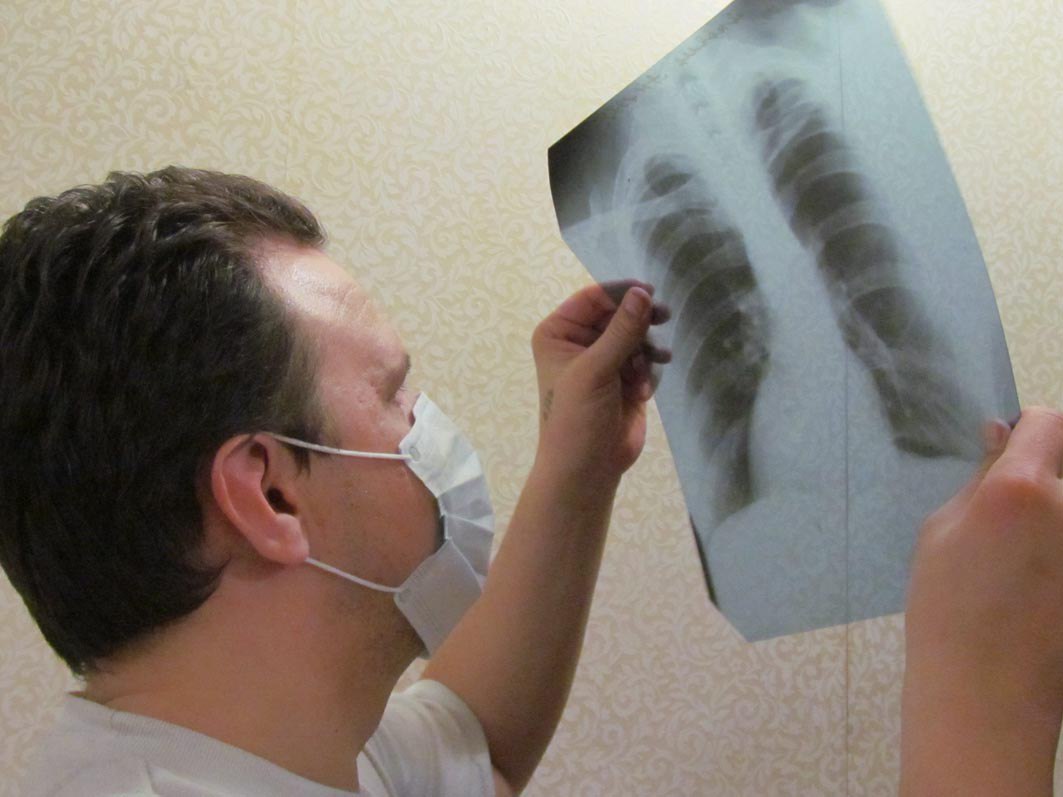
The issue of queues in hospitals
According to Dr. Aydin Aliyev, one of the most significant sources of dissatisfaction among citizens utilizing MHI is precisely the issue of overcrowded hospitals and extensive queues:
“This issue is prevalent worldwide, but in Azerbaijan, the problem of queues is more challenging and widespread. Hospitals experience a genuine pandemonium of people.
Various factors contribute to this situation—perhaps not everyone is familiar with electronic queue registration, or a particular hospital receives an overwhelming number of applications. Therefore, I would propose providing citizens who apply online with statistics on hospital overcrowding. This way, they can make informed choices and opt for institutions with fewer queues,” says the doctor.