
Former #Mossad chief Yossi Cohen emerges as a strong contender for #Likud leadership and a potential successor to @netanyahu.
Cohen led Mossad’s covert mission to smuggle Iranian nuclear secrets from Tehran to Israel in 2018.#YossiCohen #LikudLeadershiphttps://t.co/RjpNLTqpVf— All Israel News (@all_israel_news) February 4, 2024
Day: February 4, 2024
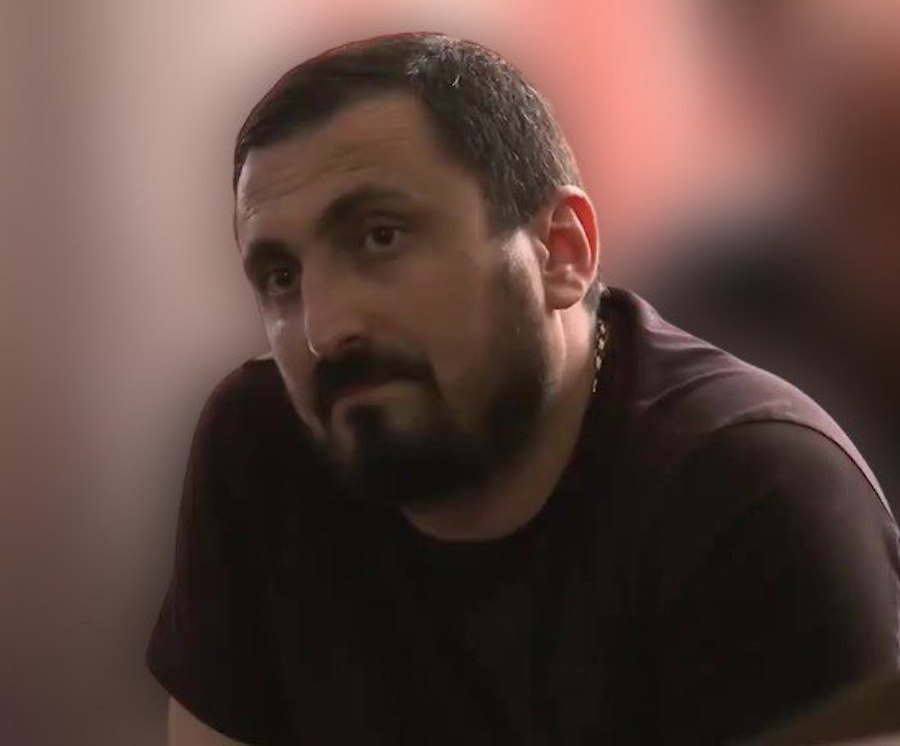
In Abkhazia, Badri Dzhikirba, accused in the high-profile case known as the “police murder of Anzor Tarba,” has been appointed as the head of the Gal district police.
Anzor Tarba was apprehended in June 2019 as a suspect in a kidnapping. Subsequently, he died within the ministry of internal affairs building. Social media reports suggested that Tarba died due to torture, with photographs of his body revealing numerous bruises and abrasions. Badri Jikirba was the head of the criminal investigation department at that time.

Initially, police officers involved in the interrogation asserted that Anzor Tarba jumped from the internal stairs of the second floor of the ministry of internal affairs building, resulting in his fatal fall. After a four-year investigation, it was determined that Tarba died from multiple inflicted injuries.
However, on November 30, 2023, the cassation board of the Supreme Court acquitted all four policemen implicated in the case, including Badri Jikirba.
 Badri Jikirba
Now, the rehabilitated Jikirba has secured a new position.
Not only him but also Aslan Chedia, another former defendant in the case of Anzor Tarba’s murder, has been appointed as his deputy in the Gali district police.
Ironically, the former police chief of the Gali district was dismissed for a comparable case involving the death of a detainee.
These positions have remained unfilled since December 2023 when the entire leadership of the district police was terminated following the death of Vitaly Karbaya. Karbaya, a resident of the village of Tsarcha in the Tkuarchal district, died in police custody during an interrogation.
Toponyms, terminology, views and opinions expressed in the article do not necessarily reflect the views and opinions of JAMnews or any employees thereof. JAMnews reserves the right to delete comments it considers to be offensive, inflammatory, threatening, or otherwise unacceptable
Erstmals #Rugby-Länderspiel in #Dessau-Roßlau: #Deutschland – #Georgien https://t.co/JNgYSNDfnz via @MDRAktuell @mdrde @MDR_SAN
— Notes from Georgia/South Caucasus (Hälbig, Ralph) (@SouthCaucasus) February 4, 2024
https://t.co/oZgLqZDjgx
The News And Times Reviewhttps://t.co/O0SIgLVWzM#NewsAndTimes #NT #TNT #News #Times#World #USA #POTUS #DOJ #FBI #CIA #DIA #ODNI#Israel #Mossad #Netanyahu#Ukraine #NewAbwehr #OSINT#Putin #Russia #GRUhttps://t.co/DO5LG3PY4Thttps://t.co/ze5LKIfHQ4…— Michael Novakhov (@mikenov) February 4, 2024
Roy Cohn’s Jews in the FBI – GS https://t.co/jQ9i9Cxy59
The Overlooked Jewish Identity of Roy Cohn in Kushner’s … Project MUSEhttps://t.co/OOoU76OGp3 › article › pdf
by E King · 2008 · Cited by 4 — Hannah Arendt, describing the marginalization of Jews as “outside society”… pic.twitter.com/KSzNojdWpz— Michael Novakhov (@mikenov) February 4, 2024
By Ronojoy Sen
The spectacular opening of the Ram temple in the north Indian town of Ayodhya on 22 January 2024 was a watershed event. The temple was built on a site, believed to be the birth place of Lord Ram and where a 16th century mosque once stood.
The political and legal battles over the temple site in independent India began in 1949, when an idol of Lord Ram was placed inside the existing Babri Masjid, which was demolished in 1992. Eventually, a 2019 Supreme Court rulingpaved the way for the construction of the Ram temple. After having played a central role in the consecration ceremony of the temple, India’s Prime Minister Narendra Modi declared, “January 22, 2024 is not a date on a calendar. This is the origin of a new time cycle. A nation rising up after breaking the mentality of slavery, a nation taking courage from every bit of the past, creates history in this way.”
Putting aside the rhetoric, there are many layers to the opening of the temple, which was as much a political event as it was religious. For the ruling Bharatiya Janata Party (BJP), this was a fulfilment of one of the core items on its agenda and one that has figured prominently in its election manifestoes over the past three decades. This was also the issue that propelled the rise of the BJP in the 1990s from a marginal entity to its current dominant status. The temple opening and the intense mass mobilisation around it was one more step in the long-time goal of the BJP and the Sangh Parivar (Saffron Brotherhood) of uniting a significant number of Hindus, cutting across region, class and caste. The ceremony was also a marriage of politics and religion in a way not seen before in independent India.
Second, the role of the courts was critical to the opening of the Ram temple and drew praise from Modi at the opening of the temple. Indeed, the 2019 Supreme Court ruling on the disputed site in Ayodhya gave the opening of the temple a legitimacy that a popular movement would never have been able to achieve. Over the years, the court has constructed its own version of an all-encompassing Hinduism, which has helped the Hindu nationalist project on occasion.
The tendency to erase the differences within Hinduism was very much in evidence in the 2019 Ayodhya ruling. In the voluminous judgment, the court stated that the “Hindu community” claims the disputed site as the “birth-place of Lord Ram”, ignoring that there are many Hindus who either do not worship Ram or are ambivalent about the disputed site. Much of the judgment revolved around evaluating the faith and reverence of Hindus for a mythological site, which is tricky at the best of times.
Despite admitting that the existing mosque on the site had been first “desecrated” in 1949 and destroyed in 1992, the bench unanimously ruled that the claim of the Hindus to the entire disputed property to be on a better footing than the Muslims. The court compensated the Muslims by awarding a plot of land elsewhere in Ayodhya to build a mosque. For India’s Muslim minority, the manner in which the temple was sanctioned and built is bound to be disquieting.
Third, the dispute over Ayodhya has represented one of the most potent challenges to Indian secularism. In India, one of the planks of a liberal conception of secularism – the wall of separation between state and religion – is constitutionally absent. Though Articles 25 and 26 of the Indian Constitution guarantee the right to individual and collective freedom of religion, they, along with other articles, also empower the state to intervene in Hindu religious institutions and practices.
A historical parallel to the opening of the Ram temple can be found in 1951 when the rebuilt Somnath temple was inaugurated. Then Prime Minister Jawaharlal Nehru did not attend the function and was unhappy with President Rajendra Prasad for “associating” himself with and attending the “spectacular opening”. When Modi, in the company of other government functionaries and backed by the entire government apparatus, starred in the ceremonies around the temple consecration, the line between the state and the majority religion was blurred more than ever before.
Fourth, given the timing of the temple opening, the issue is likely to play a crucial role in the upcoming general election. Following the opening, the Union cabinet passed a resolution on 24 January 2024, hailing the prime minister. There has already been a nationwide outreach by the BJP and other constituents of the Sangh Parivar around the temple opening and this is sure to continue in the weeks ahead. The opposition parties, which largely boycotted the temple opening, will find it difficult to counter such an emotive issue.
There are many, including members of the government, who believe that the Ram temple represents a “civilisational reawakening” of India. There are others who believe that the event was a “terrifying spectacle” and represented the “death” of the republic. What is certainly true is that the opening of the temple with full state sanction and involvement takes the Indian republic into uncharted territory.
- About the author: Dr Ronojoy Sen is a Senior Research Fellow and Research Lead (Politics, Society and Governance) at the Institute of South Asian Studies (ISAS), an autonomous research institute at the National University of Singapore (NUS). He can be contacted at isasrs@nus.edu.sg. The author bears full responsibility for the facts cited and opinions expressed in this paper.
- Source: This article was published by Institute of South Asian Studies (ISAS)
By Aleksandar Novakovic
Today, Serbia does not enjoy a reputation as a free country. The philosophy of strong hand, top-down organization of society, a socialist understanding of economy, and fierce nationalism are its trademarks.
The legacy of socialism with a human face, of which I have written elsewhere, has entrenched a statist mentality among the population and has shaped the understanding of economics among the political and intellectual elite.
But it is little known that Serbia developed two very important traditions of freedom in its modern history.
Of the two, the better known was the liberal-conservative movement of the second half of the nineteenth century when conservatives and liberals dominated Serbian politics. The movement consisted of influential people from the top echelons of power—prime ministers, finance ministers, party leaders—to influential intellectuals and public figures. Despite sharp disagreement, both groups were nevertheless committed to drawing the boundaries of state power. The rule of law under firmly secured private property within a minimal and limited government was their philosophy.
It was, however, the conservative side of the coin that institutionalized liberal capitalism in Serbia. Their views differed from the liberals mainly in their criticism of democracy, which they abhorred as a dangerous concept for a society with a rudimentary understanding of politics. Serbian conservatives cherished mainly Burkean and Tocquevillian wisdom. In practice, conservatives rejected egalitarianism, while liberals were democrats and nationalists.
On the other hand, the liberals were led by energetic Vladimir Jovanović, a politician, finance minister, and prolific writer. Liberals were radicals who valued rationality, science, and tolerance. Their works and public appearances embodied a mixture of the British liberalism of the time, especially the utilitarian strain, and to a lesser extent the American political experience based on Lockean natural law. This is evident in Jovanović’s work, who was influenced by Mill and Spencer (Milosavljevic), but who also thought there was an innate similarity between American and Serbian individualism and the love for freedom, while in small Switzerland and large England he saw continental role models.
From today’s perspective, it is almost shocking how different these people were from their contemporary countrymen. Nobody from Serbia today would have made such a statement as Dragiša Mijušković, who wrote,
“It is not the State which must directly provide the goods which every interior policy requires. It is sufficient for the State to secure the person and property and other conditions of life and development; the creation of the goods themselves must be accomplished without the State, by self-governing free work; what cannot be accomplished by such work should be regulated by the State, and in the manner marked by the free agreement of all citizens, regardless of the initial interests of this or that party.”
According to Boško Mijatović, for conservative Čedomilj Mijatović, “The development of the right of self-ownership goes hand in hand with the development of the right of the free individual. These ideas are so closely connected that it is impossible to imagine one without the other.”
Unfortunately, tradition was destined to succumb to the combined forces of nationalism and socialism, as it did almost everywhere in Europe at the time.
At the end of the golden liberal age, Serbia had an extraordinarily developed parliamentary life. In terms of quality, the debates about the organization of society were not far behind the constitutional arguments of the federalists and antifederalists. Unfortunately, a dynastic struggle, wars to regain territories still occupied by the Turks, and resistance to Austro-Hungarian domination (which eventually led to World War I) sidelined the tradition of freedom. The central government grew stronger, supported by the ideology of the People’s Radical Party led by Nikola Pašić. Politics without principles, pure pragmatism cloaked in nationalistic rhetoric and the philosophy of raison d’état, began to dominate political life. The state went from one social experiment to another, from the creation of the kingdom of Yugoslavia to the communist revolution and the new communist Yugoslavia. The tradition of freedom was under constant attack during the monarchical period and the first Yugoslavia. However, it was Josip Broz Tito’s Yugoslavia that eradicated freedom completely.
The second tradition of freedom, which is very little known even among historians, is particularly interesting and original.
During the late Ottoman Empire in the eighteenth century, the spontaneous institutions of “peasants” or “patriarchal democracy” emerged. This was a rather anarchic, almost entirely decentralized social organization that preceded the rise of the modern Serbian centralized state.
What was then called the Belgrade Pashalik (Serbia)—a part of the Ottoman Empire—represented a military buffer zone between two empires (Austro-Hungarian and Ottoman). Due to harsh living conditions in the surrounding Turkish provinces, Serbs began to migrate to the zone. These were people of the same ethnic origins but with different cultures and understanding of life.
In literature, this melting pot of people with very different habits and customs was described as the pillar of the emerging civic order. Unlike typical Balkan institutions of a tribal character, the new institutions were proto-civic. As a military buffer zone, the Belgrade Pashalik enjoyed a certain autonomy within the Turkish Empire. Geographical position but also a weak grip of the Turkish central power pushed people to self-organize and create institutions of freedom, which in many respects resembled traditional (peasant) Swiss democracy. This was a peasant society. While Turks lived in urban areas (cities and fortresses), Serbs lived in villages. For ordinary people, Ottoman power was a distant entity. Only once a year during the tax-collection period did Serbs have direct contact with the state. Otherwise, society was left alone.
The combination of cultural diversity and the weak central power forged original organization of life based on a bottom-to-top principle. Society was organized around families living in zadruga (cooperatives). Families, with their representatives, deliberated on all communal issues at zbor (village assembly or meeting). What the village decided was then passed on to an elected knez (village “prince”) who presented the decision to a larger administrative body comprised of several villages called knežina. It was then the task of obor knez (higher prince) to present the decision at the regional assembly comprised of several knežina, regional knežina. The decisive thing is that kneževi and obor kneževi were only administrators, messengers. They did not have a significant role in the decision-making process. The system was arranged in such a way that what was decided at the lowest level could not be amended without the consent of those who were the initial decision-makers.
Unfortunately, this tradition was short-lived and started eroding during the first Serbian uprising (1804) that emerged as a reaction to the incredible cruelty of Turkish military renegades (dahije).
During the war for independence from the Ottoman Empire (1804–13 and 1815–17), a new group of revolutionary leaders (vojvode) emerged and imposed itself. These were the beginnings of the modern Serbian state. Some vojvode started to circumvent the traditional institutions of decentralized decision-making, actively usurping and destroying the existing order.
The erosion of traditional decentralized self-government continued throughout the nineteenth century and spread well into the twentieth. Liberals and conservatives tried to play the game within the new statist paradigm. Their struggle to constrain the power of the state was ill-fated. Despite the failure, the two traditions of freedom left an everlasting beacon of light for all those in Serbia and in the Balkans who aspire to freedom.
- About the author: Dr. Aleksandar Novakovic is a philosopher and political scientist. He writes on political theory, post-socialist transition, and ideologies. He published numerous papers and co-authored monographs, the latest being Order and Liberty – Conversation between Conservatives and Libertarians (2020) and Conservatism and Capitalism – An Uneasy Dialogue? (2022). Aleksandar serves as a dean at the SMC Business School and is research fellow at IPS (Belgrade).
- Source: This article was published by the Mises Institute
By Peter Fabricius
No one in South Africa was more delighted than International Relations and Cooperation Minister Naledi Pandor when the national soccer team Bafana Bafana beat Morocco this week to reach the Africa Cup of Nations quarter-finals. ‘Bafana did us the job of returning the favour by 2-nil,’ Pandor beamed at a press conference on 31 January.
The ironic ‘favour’ returned was Moroccan Ambassador Omar Zniber’s unexpected defeat of South African Ambassador Mxolisi Nkosi – by 30 votes to 17 – in the 10 January elections for the 2024 United Nations Human Rights Council (UNHRC) presidency. Morocco clearly outmanoeuvred South Africa, bypassing the customary procedures.
It was Africa’s turn to nominate a country for the presidency, which rotates among the world’s five regions. The African Group of Ambassadors in Geneva typically selects the candidate, making the council vote a formality. The African ambassadors nominated South Africa.
But Morocco managed to insert itself as a second African candidate, undermining the consensus and forcing the 47-member council to vote, said diplomatic sources in Addis Ababa. Clayson Monyela, spokesperson for South Africa’s Department of International Relations and Cooperation, confirmed with ISS Today that this was what happened.
The African Group of Ambassadors in Geneva had nominated South Africa as the region’s candidate
That Morocco gunned for South Africa was no surprise. The two are bitter enemies, mostly because Pretoria has championed the independence of the Sahrawi Arab Democratic Republic (SADR), while Rabat claims it as its province. South Africa regards this as Africa’s last decolonisation struggle, and just before the vote, Nkosi said if Zniber were elected, it would ‘shatter whatever shred of legitimacy this Council ever had.’
But why did South Africa lose the wider vote (and so badly)? Africa Confidential attributed it to several factors: Pretoria’s strong pro-SADR stance; its ‘non-aligned’ (some would say pro-Moscow) position on Russia’s war against Ukraine; its pro-LGBTQ policies; and most recently, its high-profile charge of genocide against Israel at the International Court of Justice (ICJ).
Scanning the 47 council members, one could see how Pretoria’s positions on Western Sahara and Ukraine, and its activism on Israel, could have cost it support among some African, and perhaps all Western, members. Its Russia-Ukraine posture probably would have also cost it the votes of Eastern European states like Bulgaria and Romania.
In that sense, Morocco was shrewd to shift the vote from the African Group to the wider council – a more favourable arena for Rabat. Of the possible contributing factors to South Africa’s loss, the ICJ-Israel case is perhaps the most interesting.
The ICJ hearing in The Hague was to begin just a day after the Geneva vote, and South Africa’s detailed application had been public since 29 December. No Western nations had expressed support for the move, and the US, a UNHRC member, called it ‘meritless, counterproductive and completely without any basis in fact.’
Morocco was shrewd to shift the vote to the wider council – a more favourable arena for Rabat
The role each of these factors played is hard to say, since the ballot was secret. But if the ICJ case was among them, South Africa’s 2024 UNHRC presidency would be the first international casualty of its genocide charges against Israel. Others might follow, including threats to its trade preferences in the US.
Morocco’s victory was largely symbolic, African Union (AU) observers told ISS Today. The UNHRC isn’t a very powerful body, struggling to achieve legitimacy and credibility as it votes pretty much according to national rather than purely moral positions.
Nevertheless, to head any UN body is prestigious, and Morocco probably intends to use it to deflect criticism of its Western Sahara occupation and allegations that it’s committing human rights abuses against the territory’s inhabitants. In that sense, beating South Africa was a double victory for Morocco – winning not only the position, but also denying it to perhaps its greatest African rival.
Africa Confidential also suggested Morocco had worked with Israel to defeat South Africa in the presidency poll. It cited Morocco’s ‘de facto alliance with Israel under the Abraham Accord. Rabat recognised Israel in 2021 in a three-cornered pact in which the United States recognised Morocco’s sovereignty over Western Sahara.’
Uniting against South Africa would make sense for Morocco and Israel, from a tactical perspective. South Africa has lumped Israel and Morocco in the same basket, as when Pandor last year described how she campaigned to prevent Israel from being recognised as an AU observer. She said Israel and Morocco were both ‘oppressors’ and ‘colonial occupiers … playing a very negative role in Africa’ by using their ‘financial muscle’ to win the support of African countries.
Uniting against South Africa would make sense for Morocco and Israel, from a tactical perspective
An AU expert who requested anonymity was sceptical that Israel and Morocco were in cahoots, suggesting that no Muslim state could afford to be seen backing Israel in light of the devastation it’s wreaking in Gaza. But Morocco wouldn’t of course, go public with any deal it might have cut with Israel.
Morocco’s controversial return to the AU in 2017, bitterly opposed by South Africa, continues to be disruptive across Africa, mainly because of its deep enmity with its neighbour Algeria, a strong South Africa ally, also largely over Western Sahara. ‘It is in fact paralysing the continent,’ one AU observer said.
For instance, less than three weeks before the AU’s 2024 ordinary summit, North Africa hasn’t nominated a candidate to chair the continental body this year. It is the region’s turn to take the position, but officials in Addis Ababa say North Africa is still ‘consulting.’
The AU expert said Egypt would like the chair, as that would enable it to exert influence in the Sudan crisis and other issues. But it last chaired in 2019 – it wouldn’t look good to chair again so soon. The other option was Mauritania, ‘but it is a very weak state,’ the expert said.
The concerns of Algeria, and its supporters on this issue, like South Africa, are that if Morocco were elected AU chair, it would use the position to advance its claim to Western Sahara. That would include sidelining or expelling the Polisario-led SADR, which claims to represent the territory as an independent state.
For South Africa, even though it has won widespread international acclaim for its ICJ application, the question is whether its resounding UNHRC defeat was a warning that its foreign postures could cost it Western, and perhaps broader, support.
- About the author: Peter Fabricius, Consultant, ISS Pretoria
- Source: This article was published at ISS Today
(EurActiv) — The United Nations’ highest court on Friday (2 February) ruled that it will hear a case in which Kyiv has asked it to declare it did not commit genocide in eastern Ukraine, as Russia claimed as a pretext for attacking its smaller neighbour.
Ukraine brought the case to the International Court of Justice (ICJ), also known as the World Court, days after Russia’s full-scale invasion of Ukraine in February 2022.
On Friday, judges found the court had jurisdiction to hear just a small part of the original case. The judges threw out a request by Ukraine to rule on whether or not the Russian invasion violated the 1948 Genocide Convention.
Instead the panel of 16 judges said they will rule at a later stage on whether or not Ukraine committed genocide in the Donetsk and Luhansk areas of eastern Ukraine now occupied by Russia.
“It is important that the court will decide on the issue that Ukraine is not responsible for some mythical genocide which the Russian Federation falsely alleged that Ukraine has committed,” Ukraine’s representative Anton Korynevych told journalists at the ICJ.
He added that it was also important that the emergency order by the court in March 2022 — that Russia immediately halt its military operations in Ukraine — still stands.
While the court’s rulings are final and legally binding, it has no way to enforce them and some states, like Russia, have ignored them.
In hearings in September last year, lawyers for Moscow urged judges to throw out the entire case, saying Kyiv’s legal arguments were flawed and the court had no jurisdiction.
On Friday, the judges granted some of Russia’s objections but allowed Ukraine’s request for the court to rule that there was no “credible evidence that Ukraine is committing genocide in violation of the Genocide Convention” in eastern Ukraine.
It could take many months to hear the case on the merits.
Ukraine previously argued there was no risk of genocide in eastern Ukraine, where it had been fighting Russian-backed forces since 2014.
Ukraine won another small victory at the ICJ on Wednesday when the judges ruled Russia had violated UN treaties against the financing of terrorism and discrimination in a different case that dealt with incidents from 2014.