Categories
South Caucasus News

Navigating Complexity Of Climate Change: A Closer Look At Scientific Method And Its Challenges – OpEd


Navigating Complexity Of Climate Change: A Closer Look At Scientific Method And Its Challenges – OpEd

By Frank Hollenbeck

The physical sciences have greatly advanced knowledge by elucidating the workings of simple phenomena. In a simple phenomenon, we have a limited number of important variables, all of which are identifiable and measurable. This allows us to run a scientific experiment. In such an experiment, we hold all other variables constant and examine the influence of one variable on the phenomenon. We can therefore measure this variable’s direction and how important it is to this phenomenon. We can then do this same experiment to all the other variables to determine their direction of influence and relative importance. We can identify which assumed relationships are correct and which are wrong. We can draw conclusions on hypotheses about simple phenomena.

Complex phenomena, on the other hand, have some or many unmeasurable or unobservable factors or variables, whose influences and interactions may vary. Thus, it is impossible to run a scientific experiment to separate the influences of each factor. This greatly limits the value of empirical or historical evidence on complex phenomena since it is impossible to distinguish between causation and association.

Economists know this problem all too well. Over a hundred years ago, the limits of empiricism in economics were made crystal clear. In the article “The Elasticity of Demand for Wheat,” R. A. Lehfeldt (1914) attempted to determine the elasticity of demand by looking at the historical data of the price of wheat against the consumption of wheat. He attempted to correct for changes in other factors (ceteris paribus) and found the elasticity of the demand for wheat to be a positive factor of +0.6.

Should we conclude from this study that the demand curve for wheat is upward sloping? Hasn’t this empirical study showed that economic theory is wrong? Should we reexamine the theory?

Any sensible economist would explain that what is observed are not points on a stable demand curve but ever-changing intersection points between demand and supply or points moving toward such an equilibrium. A demand curve is like a photograph: it is only valid for that instance since other factors change constantly so that the positions of the curves are different from one instance to the next. It is impossible to empirically measure the slope of a demand curve. This echoes Heisenberg’s uncertainty principle in physics, illustrating the inherent difficulties in simultaneously determining position and velocity of an object.

Yet many other empirical studies since 1914 on different goods and services have demonstrated this inverse relationship between price and quantity demanded. However, this empiricism only supports this complex hypothesis: it can never prove it.

Economists, in general, have had little to say about climate change although they regularly deal with similar complex phenomena. Yet when economists have commented on climate change, they have added insult to injury. William Nordhaus received the Nobel Prize in 2018 for his work on an integrated assessment model that he says measures the impact of man-made climate change on the economy.

So here we are dealing with two complex phenomena: man-made climate change and its impact on the economy, as well as developing a mathematical model to describe their interactions. Never mind that many factors in Nordhaus’s analysis are unobservable, and those that are observable have impacts and interactions that are either unstable or unmeasurable. Also, any measures of these impacts are only statistical estimates. Generally, the larger the model, the larger the variance of the results.

It is normal to have differences of opinions on hypotheses on complex phenomena. These differences of opinions would be irrelevant if it remained at that level, but Nordhaus in his address recommended that governments impose restrictions (e.g., cap and trade, carbon taxes, and regulations) to slow emissions of CO2. The Paris Agreement of 2015, where 195 parties pledged to tackle climate change, aimed to limit global warming to “well below” 2ºC by the end of the century and “pursue efforts” to keep warming within the safer limit of 1.5ºC.

One study showed that burning fossil fuels causes more than 75 percent of anthropogenic greenhouse gas emissions and more than 90 percent of carbon dioxide emissions. Fossil fuels produced from existing oil, gas, and coal fields are more than enough to breach the 1.5ºC limit. Extracting fossil fuels from new oil and gas fields is incompatible with a 1.5ºC limit, according to a report by the International Institute for Sustainable Development and another by the International Energy Agency.

Hence, we have one side of the climate debate imposing on the life, liberty, and property of others on something that will always remain an unproven hypothesis. A recent study found that 99.9 percent of climate studies agree that humans cause climate change. Yet we must wonder how many of these authors inform readers of the limitations of their conclusions? Can we really call them scientists if they do not apply or discuss the scientific method?

Lost in the details of this recent United Nations Intergovernmental Panel on Climate Change report is this important conclusion: “In climate research and modelling, we should recognize that we are dealing with a coupled non-linear chaotic system, and therefore that the long-term prediction of future climate states is not possible.” This complexity leads to an important conclusion: acknowledging the restricted knowledge about man-made climate change.

In a world often marked by strong opinions, a real discussion on climate change should start with humility, recognizing the limits of human knowledge. Balancing scientific understanding, economic considerations, and policy decisions in this intricate landscape requires a nuanced approach that respects both the complexities of the climate system and the inherent uncertainties in modeling and predictions.

Yet in our opinionated world, such humility is unlikely.

  • About the author: Frank Hollenbeck has held positions at international universities and organizations.
  • Source: This article was published by the Mises Institute

Categories
South Caucasus News

Azerbaijan negotiates cooperation with Inter-Parliamentary Union – Trend News Agency


Azerbaijan negotiates cooperation with Inter-Parliamentary Union  Trend News Agency

Categories
South Caucasus News

Prosecutor’s Office investigating transnational call centre fraud at several locations in Tbilisi


prosecutorsofficeofgeorgia.jpeg


Categories
South Caucasus News

Armenia premier: Moment of transformation from ‘non-state people’ to ‘state people’ is constitutional referendum – Armenia News


Armenia premier: Moment of transformation from ‘non-state people’ to ‘state people’ is constitutional referendum  Armenia News

Categories
South Caucasus News

UN: At least 122 journalists were killed in Gaza


United Nations reports indicate that at least 122 journalists and other media workers have been killed and many others injured in the Gaza Strip since war erupted there following Hamas’s deadly attacks inside Israel on October 7, Report informs citing AFP

Categories
Selected Articles

Ukraine set to receive new game-changing US-made ‘glide bombs’


The new 100-mile ‘glide missiles’, built by Boeing and Saab, could prove to be a game changer in Kyiv’s military capabilities in its fight against Moscow’s forces.

Categories
Selected Articles

Russia makes first convictions for ‘LGBT extremism’ following ban


Two Russian courts have meted out the first convictions in connection with what the government calls the “international LGBT social movement” and which was designated as extremist last year.

Categories
South Caucasus News

Stepanyan & Beglaryan represent the Artsakh people’s interests and aspirations on Capitol Hill


Without international support for the safe return of Artsakh Armenians and justice for the crimes committed against them, a sustainable regional peace will be elusive, argued Artsakh Ombudsman Gegham Stepanyan and former State Minister Artak Beglaryan.
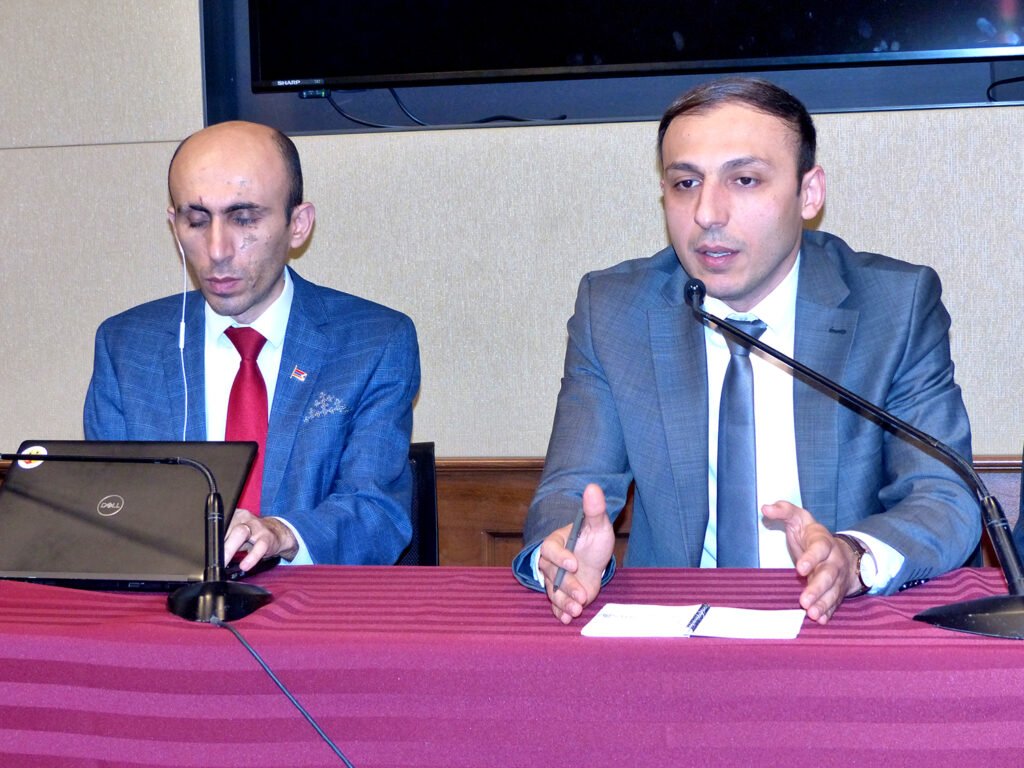
WASHINGTON, D.C.—Republic of Artsakh (Nagorno Karabakh) Human Rights Defender (Ombudsman) Gegham Stepanyan and former State Minister Artak Beglaryan represented the Artsakh people’s inalienable rights, national interests and democratic aspirations at a Capitol Hill briefing featuring powerful remarks by Representatives Brad Sherman (D-CA) and James Costa (D-CA), and organized by the Armenian National Committee of America (ANCA).

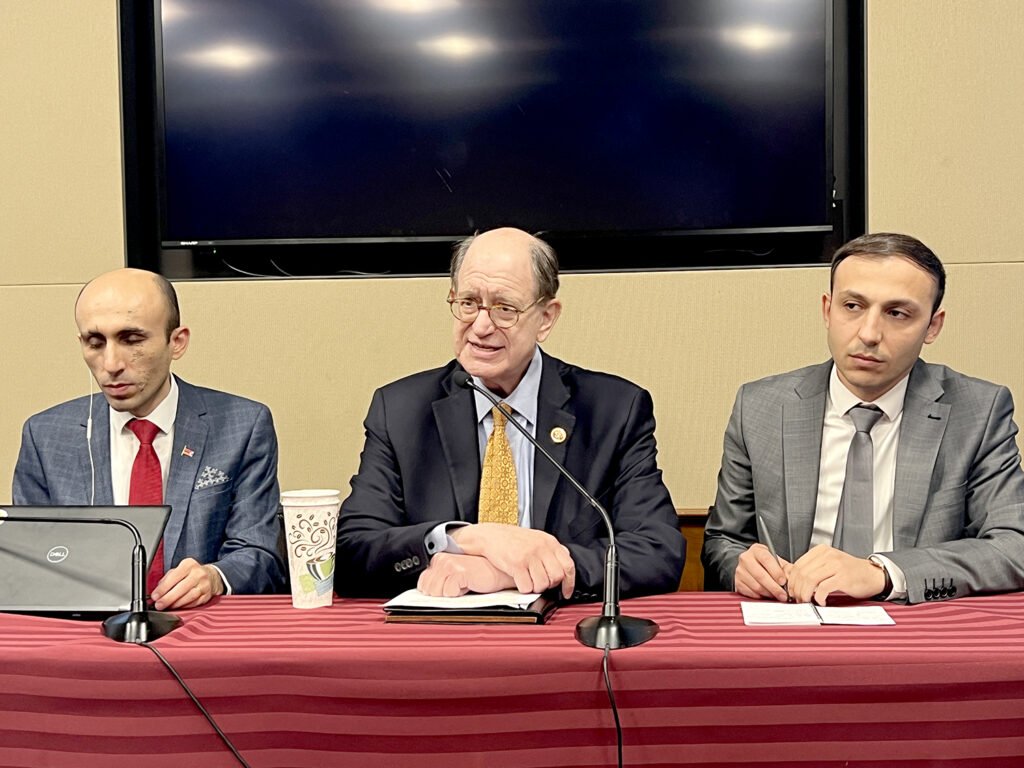
Rep. Brad Sherman (D-CA) urged the Biden administration to provide U.S. defensive weapons to Armenia in response to Azerbaijan’s escalating war rhetoric at a Capitol Hill briefing with Artsakh representatives Gegham Stepanyan and Artak Beglaryan.
“We are here to demand the right of safe return of Artsakh’s refugees to their homes, homes that in many cases have been occupied by their families for hundreds and hundreds of years,” stated Rep. Sherman, who urged the enforcement of Section 907 restrictions on U.S. aid to Azerbaijan, sanctioning the Aliyev regime for the ethnic cleansing of Artsakh. Citing President Aliyev’s escalating rhetoric claiming Armenia’s capital Yerevan is Azerbaijani territory, Rep. Sherman urged the Biden administration to provide defensive military weapons to Armenia, “to avoid the next tragedy which is being planned in Baku.”  Rep. Sherman concluded his remarks with a message to President Aliyev, who claims that his main enemies are the Armenians of the world. “Well, I have news for you, Mr. Aliyev. Your main enemies are every person in the world who believes in democracy, who believes in human rights and who believes in justice.”

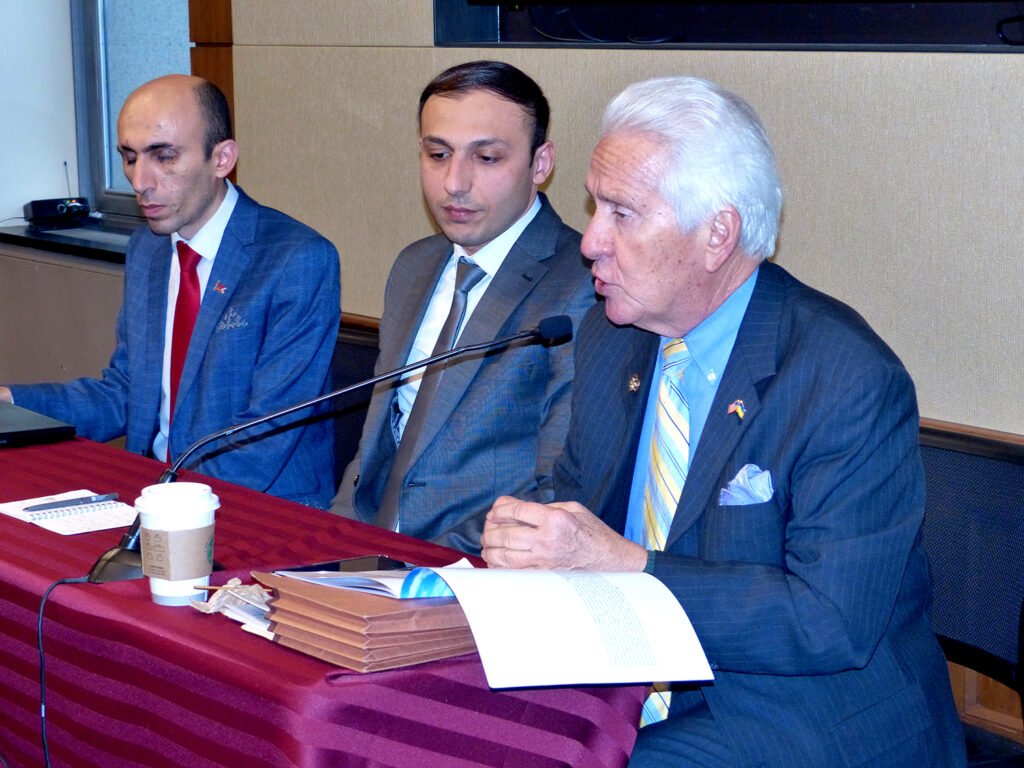
“We must hold the Azerbaijan government responsible for not only the ethnic cleansing but the cultural genocide,” stated Rep. Jim Costa (D-CA) at a Capitol Hill briefing with Artsakh representatives Gegham Stepanyan and Artak Beglaryan.
Condemning Azerbaijan’s ethnic cleansing of Artsakh, Rep. Costa noted, “We must do more” to provide U.S. humanitarian assistance to Artsakh’s forcibly displaced population through the foreign aid supplemental currently under consideration. “We must hold the Azerbaijan government responsible for not only the ethnic cleansing but the cultural genocide that they continue to attempt to implement as part of a systematic effort that has long been the history of Azerbaijan and their attitude toward the Armenian people and the culture and the religion.  The threats that Azerbaijan is now making toward Armenia, I believe, are serious and real, and therefore should be treated as such,” stated Rep. Costa.  He also called for concrete U.S. action to secure the return of Artsakh leaders and Armenian POWs illegally held hostage by Azerbaijan.

“Artsakh’s rights were center stage this week in Washington, D.C., as two of the Republic’s most eloquent voices – Artak Beglaryan and Gegham Stepanyan – made the case to U.S. legislators and international religious freedom leaders for the safe return of indigenous Armenians to their ancient homeland,” said ANCA Executive Director Aram Hamparian. “Today’s congressional briefing was a great opportunity for legislators to hear first-hand about the Artsakh genocide and also for them to consult among themselves about the concrete U.S. steps needed to restore this integral part of the Armenian homeland.”

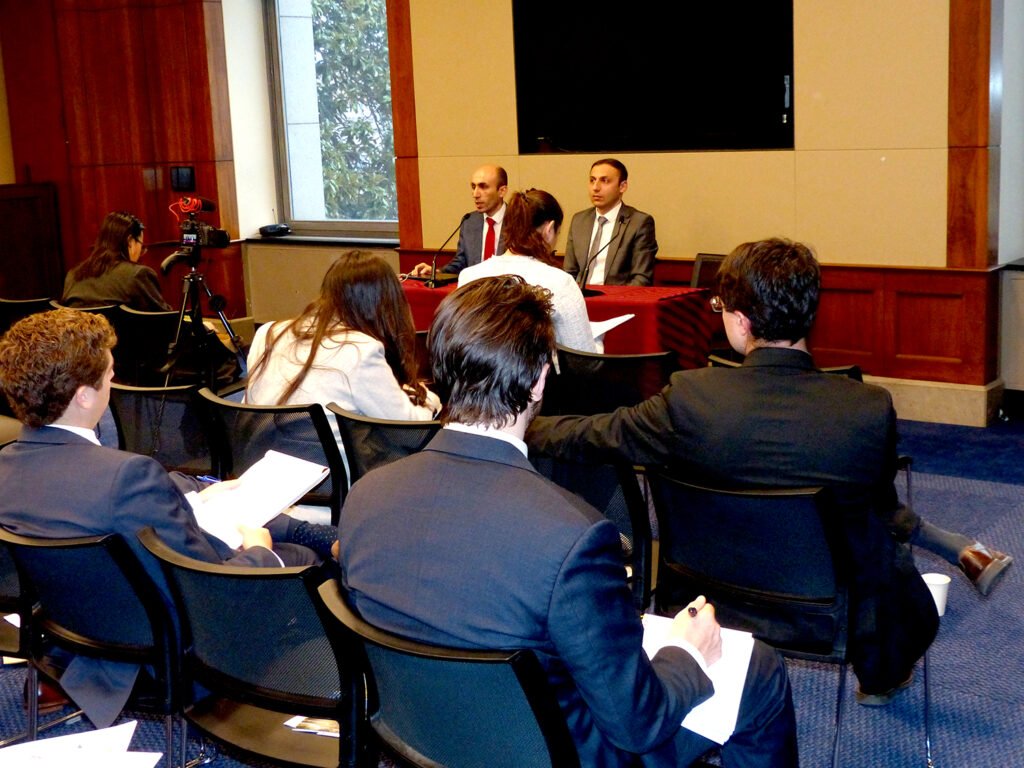
Artsakh Ombudsman Gegham Stepanyan and former State Minister Artak Beglaryan share an eyewitness account of Azerbaijan’s genocide against Artsakh Armenians and offer policy recommendations for justice and lasting peace.
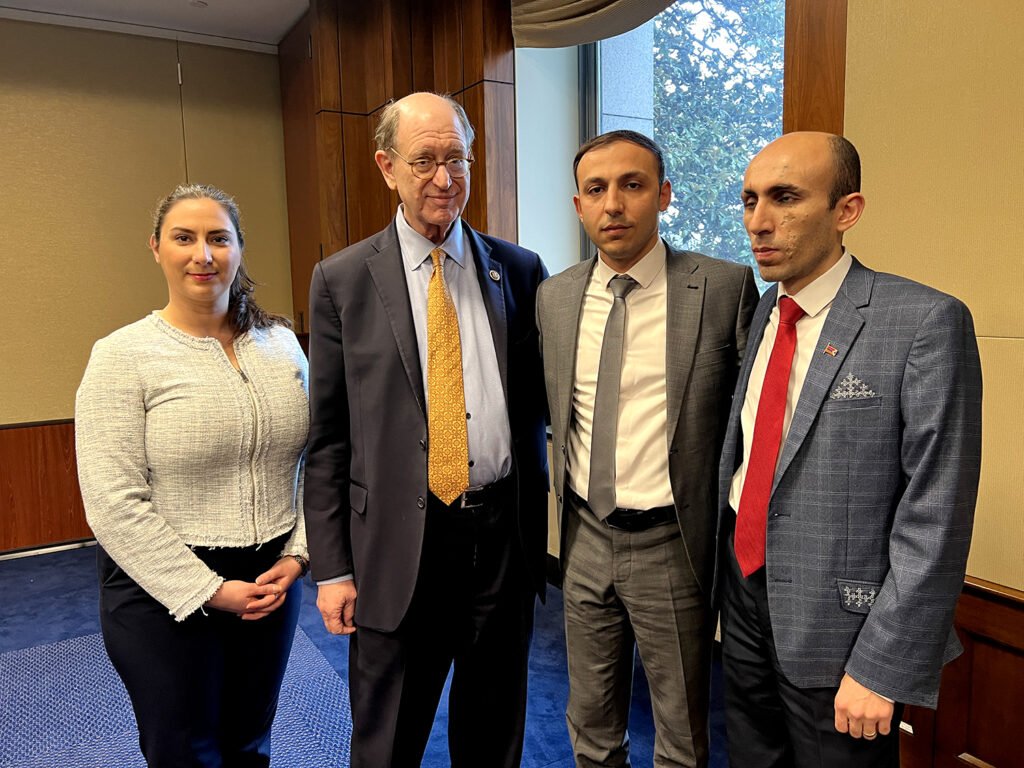
During the briefing, Stepanyan and Beglaryan offered eyewitness accounts of the brutal realities of Azerbaijan’s ten-month blockade of Artsakh, which culminated in the September 2023 genocidal attack that forcibly emptied Artsakh of its indigenous Armenian population.  The Artsakh leaders shared the history of Azerbaijan’s premeditated attacks against Artsakh’s Armenians, which laid the foundation for the 2023 genocide.

Beglaryan and Stepanyan called for bold U.S. and international leadership to hold Azerbaijan accountable for the Artsakh genocide, including via:

— Sanctions on Azerbaijan, building on Senate passage of S.3000, which enforce Section 907 restriction on U.S. military and security aid to Azerbaijan.  They also encouraged the application of Magnitsky sanctions on Aliyev government officials for war crimes and ethnic cleansing committed during the 2020 Azerbaijan-Turkey war against Armenia and Artsakh and subsequent genocidal aggression.

— U.S. aid for Artsakh’s forcibly displaced Armenian community, including housing and job placement assistance, until a secure mechanism can be put in place through international oversight and mediation with Artsakh authorities to guarantee the safe return of forcibly displaced Armenians to their Artsakh homes.

— Expanded U.S. and international efforts to help secure the immediate release of Artsakh leaders captured in September 2023 and POWs illegally held by Azerbaijan since the 2020 Azerbaijan/Turkey attacks.

— Preservation of Artsakh’s Armenian cultural and religious heritage already under threat of destruction by Azerbaijan.

Stepanyan and Beglaryan stressed that without international efforts to address the Artsakh people’s right to safe return and justice for the crimes committed, it will be impossible to establish sustainable peace in the region. They also emphasized that the systemic anti-Armenian hatred fomented by the Azerbaijani government must be eradicated to ensure an enduring settlement of the conflict and regional stability.

The speakers underscored that enforcement of Section 907, via enactment of S. 3000, would represent a meaningful contribution to regional peace. They also touched on related initiatives, among them ANCA-backed resolutions pending in the U.S. House, H.R. 5686 and H.R.5683. These measures would hold Azerbaijan accountable for ethnic cleansing against Artsakh’s indigenous Armenians and help deter further military aggression against Armenia by providing foreign military financing (FMF) aid to Armenia. They also raised H.Res.735, requesting a report on Azerbaijan’s human rights practices under Section 502B of the Foreign Assistance Act, and H.Res.861, a bipartisan resolution introduced by Rep. Schiff calling on the United States to ensure the immediate release of Armenian POWs and other detained persons illegally held by Azerbaijan.

Rep. Brad Sherman (D-CA), Artsakh Ombudsman Gegham Stepanyan, former State Minister Artak Beglaryan and ANCA Government Affairs Director Tereza Yerimyan discuss U.S. policy options to support Artsakh’s forcibly displaced Armenian population.
The ANCA is accompanying Beglaryan and Stepanyan as they represent Artsakh interests during two weeks of Washington, D.C. meetings with elected officials, policymakers and religious freedom advocates, as part of a 120,0000 Reasons coalition effort supported by the Tufenkian Foundation and the Philos Project.

Earlier this week, Stepanyan offered powerful remarks on Capitol Hill at an International Religious Freedom Summit-related forum calling for U.S. government and non-governmental organization leadership to provide for the secure return of Artsakh Armenians, protection of Artsakh’s Christian heritage and sanctions against the Azerbaijani government.  Throughout the IRF Summit, they discussed the broad range of challenges and opportunities for international action to assist forcibly displaced Artsakh refugees.

Author information

ANCA

The Armenian National Committee of America (ANCA) is the largest and most influential Armenian-American grassroots organization. Working in coordination with a network of offices, chapters and supporters throughout the United States and affiliated organizations around the world, the ANCA actively advances the concerns of the Armenian American community on a broad range of issues.

| Twitter |

The post Stepanyan & Beglaryan represent the Artsakh people’s interests and aspirations on Capitol Hill appeared first on The Armenian Weekly.


Categories
South Caucasus News

@mikenov: Georgian PM resigns | Eurasianet https://t.co/zh3CWoYlkE The News And Times Review – #NewsAndTimes – https://t.co/PHMNa5CDQU #News #Times #NT #TNT #Israel #World #USA #POTUS #DOJ #FBI #CIA #DIA #ODNI #Mossad #Netanyahu #Putin #Russia #GRU #Ukraine #SouthCaucasus #NewAbwehr #OSINT https://t.co/XtkPhZurXR


Georgian PM resigns | Eurasianet https://t.co/zh3CWoYlkE
The News And Times Review – #NewsAndTimeshttps://t.co/PHMNa5CDQU#News #Times #NT #TNT #Israel #World #USA #POTUS #DOJ #FBI #CIA #DIA #ODNI #Mossad #Netanyahu #Putin #Russia #GRU #Ukraine #SouthCaucasus #NewAbwehr #OSINT pic.twitter.com/XtkPhZurXR

— Michael Novakhov (@mikenov) February 1, 2024


Categories
South Caucasus News

@mikenov: https://t.co/boWMNhVegb The News And Times Review – #NewsAndTimes – https://t.co/PHMNa5CDQU #News #Times #NT #TNT #Israel #World #USA #POTUS #DOJ #FBI #CIA #DIA #ODNI #Mossad #Netanyahu #Putin #Russia #GRU #Ukraine #SouthCaucasus #NewAbwehr #OSINT


https://t.co/boWMNhVegb
The News And Times Review – #NewsAndTimeshttps://t.co/PHMNa5CDQU#News #Times #NT #TNT #Israel #World #USA #POTUS #DOJ #FBI #CIA #DIA #ODNI #Mossad #Netanyahu #Putin #Russia #GRU #Ukraine #SouthCaucasus #NewAbwehr #OSINT

— Michael Novakhov (@mikenov) February 1, 2024