
Day: January 31, 2024
Another example of #NATO fortifying its eastern flank defenses after Russia invaded #Ukraine– more fighter jets, advanced surveillance, and robust ground-based air defenses are in play. A united front for peace and security. #Military #defense #Security https://t.co/xFnouqoYsd
— Robert Morton (@Robert4787) January 31, 2024
В этот день родился Юлий Юльевич Клевер (1850—1924) — русский художник—пейзажист немецкого происхождения. pic.twitter.com/zGTOwitUYq
— Художники и Поэты (@Xudozhnikipoeti) January 31, 2024
Narineh Abrimian is ushering in an era of dating with intention through Achkt Louys, a matchmaking service for Armenian singles in the United States.
“We’ve all been there with the dating apps. We’ve all been there thinking someone Armenian was going to come around, and you’re going to get married. It doesn’t always play out for everybody,” Abrimian said in an interview with the Weekly.
Abrimian, a 36-year-old middle school English teacher from Waltham, Massachusetts, launched Achkt Louys at the start of 2024 to “help Armenians ages 21-50 find someone with whom they truly feel a connection and can see themselves with in a long, happy and healthy relationship,” as stated on the Achkt Louys website.
While taking certification courses in matchmaking in 2023, Abrimian realized that her communication skills as an educator have prepared her to be a matchmaker. “My friends and family have always shared how I’m a very good listener, and many of my friends call me their life coach. They always come to me for advice. Even my eighth graders come to me, and I’m like, ‘I can’t be talking to you about these things,’” Abrimian shared with a laugh. “Their personal lives, families, boyfriends, girlfriends, friend drama.”

Abrimian draws on her teaching experience and her years-long interest in psychology and human behavior to determine compatibility, set up matches and guide people through dates. Over Zoom calls, she gets to know her clients intimately, asking them about their professional goals, whether or not they want children and the strengths and weaknesses they bring to a relationship. “I save you the first few dates,” Abrimian summed up. “I’m basically dating the client for them before I introduce them.” After each date, she has a follow-up meeting with each client to debrief and reflect on their experience – yet unlike filling in a friend about a date, Abrimian offers unbiased, professional guidance.
Like many, Abrimian feels disillusioned with the failed promise of dating apps to deliver romance. In the era of cursory swiping, she believes matchmaking can be a successful alternative for people seeking committed and meaningful relationships. While working with a matchmaker, clients learn about the qualities and goals of their potential dates before seeing photos of them, thereby eliminating snap judgments. “I don’t think people take dating apps very seriously,” Abrimian said. “You don’t know the person’s intention behind the screen, as compared to with a matchmaker. If they come to seek me, I know they’re serious.”
For Abrimian – an active member of her local Armenian community and the Armenian Relief Society and as an Armenian language teacher at St. Stephen’s Saturday School – dating within the Armenian community can build on the mutual understanding each person brings to the relationship in regards to their culture, traditions and upbringing. “You don’t need to worry about their background or their overprotective parents, because you already know what having an overprotective parent is like. You don’t have to explain yourself. It makes things a bit easier,” she said.
Many Armenians traditionally met their spouse through a matchmaker. Abrimian is reviving this tradition, yet not purely for the purpose of creating Armenian matches, but rather creating Armenian matches that will last, founded on compatibility and equality.
Achkt Louys adapts old Armenian customs to the needs of the contemporary dating pool. Many Armenians traditionally met their spouse through a matchmaker. Abrimian is reviving this tradition, yet not purely for the purpose of creating Armenian matches, but rather creating Armenian matches that will last, founded on compatibility and equality. Abrimian has witnessed how, within the Armenian community, being single and eligible are sometimes treated as sufficient qualities to set two people up on a date. She urges Armenians who want to date within their community to prioritize the fundamental traits and values necessary to build a partnership, alongside identity.
“Sometimes you let go of things you actually want to make an Armenian union,” Abrimian reflected. “I don’t like the idea of just marrying an Armenian just to be with an Armenian. We live one life, and if that person’s not compatible with you, you’re giving away your whole life for something you probably weren’t looking for and sacrificing, potentially, your happiness.”
Achkt Louys is also updating Armenian matchmaking for the modern age through its inclusivity. Abrimian extends her matchmaking services to Armenian men, women and members of the LGBTQ community. “Everyone deserves their right to happiness. No one’s more special, as I tell my students, than anybody else,” she said. “If I could have a safe space for people to reach out to look for a same-sex partner, then I want to be that safe space for them.”
For Valentine’s Day, Abrimian is offering gift certificates for a free interview and to be entered into the Achkt Louys singles database.
“I often have friends say to me, ‘You love seeing others in relationships and being happy.’ It never crossed my mind that that’s how I felt, but once a friend made the comment, I realized how true it was. It fills me with energy, positivity and life to see happy relationships,” Abrimian shared.
Author information
Lillian Avedian
Lillian Avedian is the assistant editor of the Armenian Weekly. She reports on international women’s rights, South Caucasus politics, and diasporic identity. Her writing has also been published in the Los Angeles Review of Books, Democracy in Exile, and Girls on Key Press. She holds master’s degrees in journalism and Near Eastern studies from New York University.
| Twitter |
The post Achkt Louys, Armenian matchmaking for the modern era appeared first on The Armenian Weekly.
The Armenian EyeCare Project (AECP) had the distinct privilege of honoring both a very close corporate partner and a generous benefactor and friend who has sadly passed on during the nonprofit organization’s annual Gala fundraiser in Newport Beach, California.
A Decades-Long Partnership with CHLA
A close partner and collaborator for nearly 15 years, Children’s Hospital Los Angeles (CHLA) was honored as the AECP’s Corporate Honoree at the organization’s event. In attendance was president and CEO of Children’s Hospital Paul Viviano, CHLA Division Chief of Ophthalmology Dr. Thomas Lee and several other staff members from the notable hospital who work regularly with the AECP team in Armenia on various initiatives, including Dr. Eyal Ben-Issac, Dr. Armine Lulejian, Jenia Ghazarian and more.
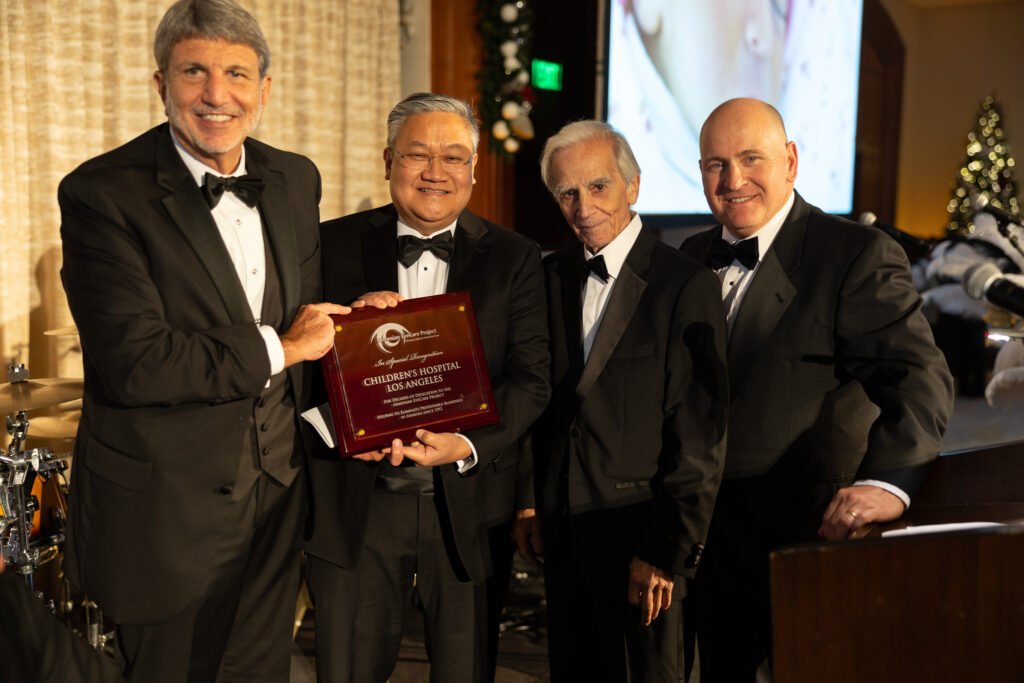 Left to right: CHLA President and CEO Mr. Paul Viviano; CHLA Division Chief of Ophthalmology Dr. Thomas Lee; AECP Founder and President Dr. Roger Ohanesian and AECP Volunteer Physician and Master of Ceremonies Dr. John Hovanesian
“We are thrilled to be here tonight to celebrate our 14-year history with the Armenian EyeCare Project and the lives of all the children we have touched during that time,” Viviano said during the gala. “What started as a targeted program to train ophthalmologists on how to diagnose and treat a devastating form of childhood blindness has blossomed into a larger training mission to educate not just doctors but also nurses and hospital leaders on how to prepare for the future of Armenia.”
 As a result of CHLA’s partnership with AECP, no child in Armenia has gone blind from retinopathy of prematurity, a debilitating eye disease found in infants, since 2018.
Since their involvement began in 2009, CHLA has been instrumental in the success of AECP’s pediatric program in Armenia, dedicated to advancing eye care for infants and children and eliminating preventable blindness caused by retinopathy of prematurity (ROP) and other childhood eye diseases. Since this time, CHLA’s continued commitment to serve the people of Armenia has expanded through several additional joint programs with AECP through the years. This includes the opening of a Neonatal Simulation Center inside the AECP’s Center of Excellence for the Prevention of Childhood Blindness in Yerevan; the implementation of a large-scale School Screening Program throughout Armenia for school-aged children; the provision of educational resources and training opportunities for medical staff in Armenia including neonatal nurses, mental health professionals and more; and participating as a consistent co-organizer of the AECP-CHLA Annual Conference held in Yerevan, Armenia every year.
CHLA has helped the AECP leverage innovative solutions to touch the lives of thousands of children in Armenia. They have used telemedicine to train physicians in Armenia who have now performed more than 35,000 screenings for ROP and 950 surgeries. As a result of this partnership, no child in Armenia has gone blind from this debilitating eye disease since 2018.
“We are committed to the lives of all children whether they are in Los Angeles or halfway around the world,” Viviano said. “Our commitment to Armenia will continue, and we are so grateful to have the Armenian EyeCare Project as our steadfast partner in helping us in our mission.”
Saying Goodbye to a Dear Friend
 Luther J. Khachigian
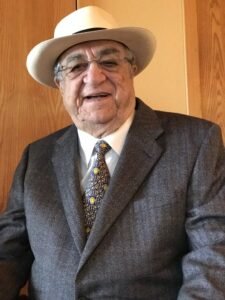
Also honored at the gala was a great benefactor and dear friend of the AECP, the late Luther Khachigian, who passed away in June 2023. A longtime supporter of the AECP, Khachigian contributed greatly to the organization’s many sight-saving initiatives in Armenia over the years. These included the funding of several pieces of cutting-edge medical equipment used to diagnose and treat eye disease as well as the underwriting of an entire Regional Eye Center in the country. Named after his father, who Khachigian loved and respected very much, the John Ohannes Khachigian AECP Regional Eye Center was developed and opened in Gyumri, the second-largest city in Armenia, in 2017.
“Luther was not only a great supporter and a generous and committed benefactor, he was also a very dear friend,” AECP founder Dr. Roger Ohanesian shared. “He was instrumental in providing long-term support to various AECP initiatives and always stressed the importance of getting more Armenians involved.”
Many of Khachigian’s family and friends were present at the AECP gala to watch him being honored posthumously. This included Khachigian’s son Luther Khachigian II, Khachigian’s younger brother Ken Khachigian, and others. During the event, Luther II shared that his father’s extraordinary generosity would continue through Khachigian’s bequest.
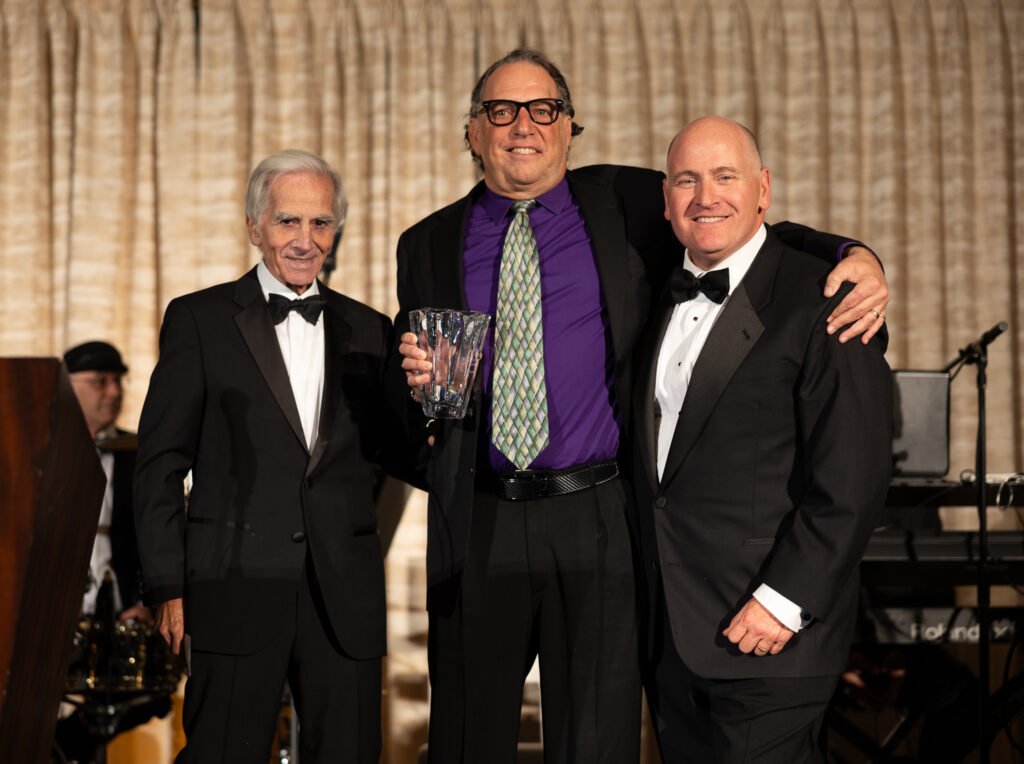 Khachigian’s son, Luther Khachigian II, with Dr. Roger Ohanesian and Dr. John Hovanesian
Presenting the AECP with a generous contribution from his father’s estate, Luther II said that it was an honor for his father to be remembered by AECP and pledged more support for the organization through Khachigian’s estate in the coming year.
As thousands of patients continue to be treated at Khachigian’s regional center in Gyumri and with news of his legacy funding, there is no doubt that Khachigian’s tremendous impact and contribution to eye care in Armenia will be felt for generations to come.
Author information

Guest Contributor
Guest contributions to the Armenian Weekly are informative articles or press releases written and submitted by members of the community.
|
The post Armenian EyeCare Project honors Children’s Hospital L.A. and the late Luther Khachigian appeared first on The Armenian Weekly.
 Creative Armenia has announced an open call for applications to the second edition of its signature Artbox Incubator program, designed to develop creative ideas into business plans.
In Spring 2024, Artbox Incubator will run an eight-week program through a cutting-edge online platform, and selected projects from various creative fields will be given an unprecedented opportunity to work with prominent business leaders and renowned cultural figures to develop a complete package for their projects, covering a business model strategy, production strategy, marketing strategy and more. Following the preparation of this package, all participants will present their projects for financial support, enabling them to bring their creative projects to life. This encompasses grants of up to €10,000, available for up to 10 strongest projects each.
To learn more about the Artbox Incubator and to apply by the February 29, 2024 deadline, visit the website.
“While it is vital for us to support the growth of existing creative businesses, cultural institutions and individuals, giving a strong and smart spark to creative ideas and supporting artists to develop those into creative projects and businesses proves to be our big investment in the future and even more vital for the growth and sustainability of Armenian culture. This is why we are thrilled to run our second Artbox Incubator and push new ideas upward,” said Anush Ter-Khachatryan, director of programs at Creative Armenia.
The application is open for creators from across the world with projects intended for implementation within the Republic of Armenia. Priority will be given to projects demonstrating potential for commercial success.
“AGBU Katapult is thrilled to launch this next round of Artbox incubator with Creative Armenia. This will mark the final incubator round within Katapult, but we’re sure there are many more to come beyond our cooperation scope. We have done our due-diligence to make sure to provide all stages of creative business ideas with support along their journey – from incubation to acceleration and hub establishments. We can’t wait to see what new ideas Artbox incubator will seed and blossom over the next few months,” said Anna Gargarian, the head of the KATAPULT Creative Accelerator Program.
Inspired by innovative models in business and tech, Artbox is a reinvention of the incubator and accelerator models for the art world – a dynamic entrepreneurial system that supports individuals, projects and institutions across disciplines with potential for success. Through a set of signature cutting-edge programs, Artbox develops commercial viability, audience growth and investable creative products.
Author information
Guest Contributor
Guest contributions to the Armenian Weekly are informative articles or press releases written and submitted by members of the community.
|
The post Artbox Incubator by Creative Armenia is currently accepting applications appeared first on The Armenian Weekly.
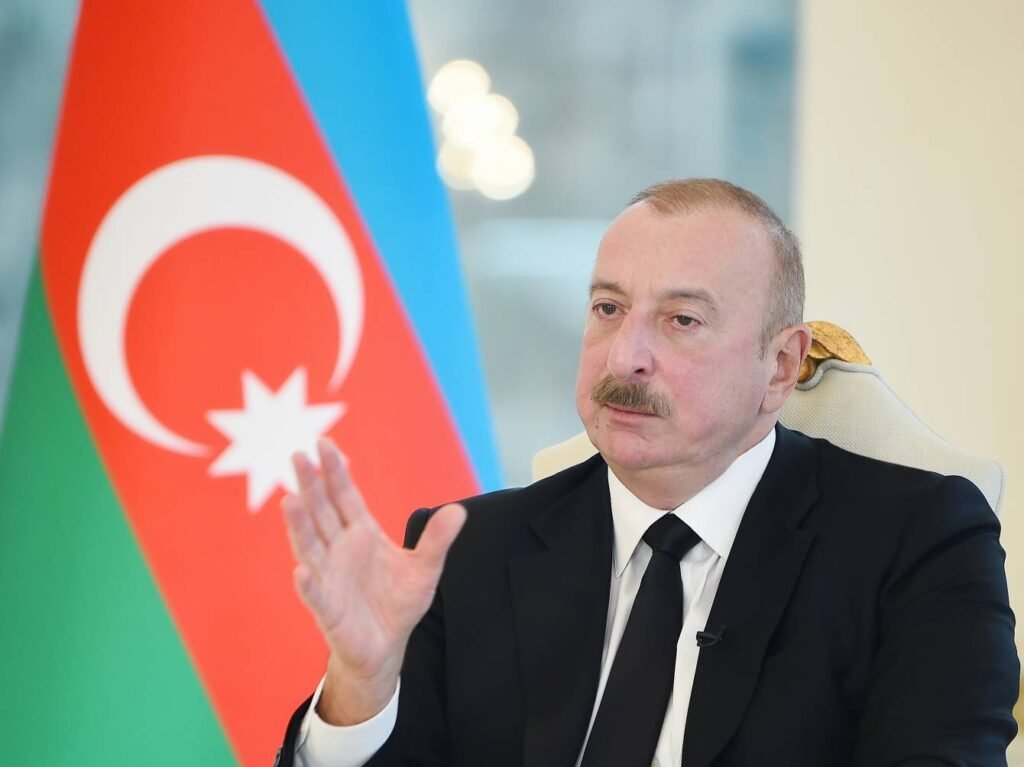 Azerbaijan’s President Ilham Aliyev (President of the Republic of Azerbaijan, Jan. 10, 2024)
Aliyev’s recent remarks on Armenia
On January 10, 2024, Azerbaijan’s President Ilham Aliyev gave a 2.5-hour interview with local TV channels. In his interview, Aliyev not only repeated false remarks and justified the ethnic cleansing of the Armenians of Artsakh but also threatened Armenia.
When it comes to delimiting and demarcating the Armenia-Azerbaijan border, he rejected the old Soviet maps proposed by Armenia, arguing, “In the 20th century, the lands of Azerbaijan were given to Armenia in parts. One day after the establishment of the Azerbaijan People’s Republic in 1918, the ancient Azerbaijani city of Irevan was handed over to Armenia. After the Sovietization in April 1920, in November, the Soviet government took the bigger part of Western Zangezur from Azerbaijan and handed it over to Armenia. By May 1969, Azerbaijani lands were given to Armenia in parts, and from an area of about 100,000 square kilometers, it dropped to 86,600 square kilometers.”
Aliyev also continued pushing the false “Zangezur corridor” narrative. He ignored Armenia’s sovereignty over transport routes in its southern province Syunik, insisting that Azerbaijani cargo must pass from Nakhichevan to other parts of Azerbaijan via Meghri without any inspection or customs clearance and under Russian control. If not, Aliyev warned, Baku will continue its blockade on Armenia.
Regarding the Soviet-era exclaves, Aliyev said, “The four villages should be returned to Azerbaijan without any preconditions. The villages that are enclaves, a separate expert group should be established and the issue should be discussed. The roads leading to these enclaves should have the necessary conditions, and the people living there should be accommodated in these enclaves.” Aliyev added that Azerbaijan will not withdraw its troops from the positions within Armenia it captured in May 2021 and September 2022, meaning that as long as the border is not defined, Azerbaijan can freely occupy Armenian territories.
Responding to Aliyev’s interview, Armenia’s Prime Minister Nikol Pashinyan said he considered the Azerbaijani president’s statements a “serious blow to the peace process” and accused Baku of attempting to form territorial claims against Armenia. Aliyev’s remarks were not surprising. Tigran Grigoryan, the head of the Yerevan-based Regional Center for Democracy and Security, said that Aliyev is aiming to impose a “victor’s peace” on Armenia. He warned that Azerbaijan “has no intention of relinquishing control over these territories (occupied in 2021 and 2022) under any circumstances.”
Such remarks should not come as a surprise, as Aliyev is mobilizing his people before the upcoming presidential elections and seeks a high voter turnover to consolidate his power and legitimize his rule in the eyes of the international community.
Why hold elections now?
In December 2023, President Aliyev called for snap presidential elections on February 7, 2024 (which were originally scheduled for October 2025). The election is also informally known as the “Victory Elections” due to Azerbaijan’s military operation in Artsakh last September. As in previous elections, this election takes place in an authoritarian context in which opposition and independent media are suppressed, and the two main opposition parties, Musavat and Popular Front, are boycotting the election, citing its undemocratic nature.
Bahruz Samadov, a Ph.D. candidate in Political Science at Charles University in Prague, argued that the Azerbaijani public has never been so disengaged from politics and political campaigns. Samadov argued that since 2020, Azerbaijan’s political agenda has been dominated by relations with Armenia and Artsakh. After Baku’s military victory in 2020 and 2023 and the mass exodus of Armenians from Artsakh, Azerbaijan has adopted an anti-Western stance, accusing the West of pro-Armenian bias, according to Samadov. Moreover, while the largest opposition parties are boycotting the elections, as they have done for the last two presidential elections, Aliyev’s challengers are “largely sycophants who echo the regime’s talking points.”
This is unsurprising, as during the first electoral debate on Azerbaijani public TV, all of the candidates praised Aliyev’s military victory in Artsakh. One of the candidates, Fuad Aliyev, called for closer relations with Russia, China, the Shanghai Cooperation Organization (SCO), BRICS and the Eurasian Economic Union (EAEU) and distancing the country from the West. Ultra-nationalist Elshad Musayev from the “Greater Azerbaijan Party” made territorial demands against Armenia and called for the annexation of Syunik, which he called Azerbaijani “historical land.” MP Gudrat Hasanguliyev from the “Whole Azerbaijan Popular Front Party” vowed to closely cooperate with Turkey, Russia, Israel, Pakistan and the Turkic states.
Observers have speculated on the timing of the elections. An article in the Associated Press suggested that Aliyev moved up the vote to coincide with elections in Russia in an attempt to minimize possible Russian influence. Opposition leader Ali Kerimli argued that authorities “are afraid of political competition even in this repressive atmosphere.” Meanwhile, the Musavat leader Arif Hajili criticized the date of the snap elections and called the election a “formal procedure,” arguing that the majority of people will not go to voting centers due to the cold winter season.
Unlike previous elections, the current campaign is full of anti-Western hysteria and serves as a direct message to the West. It is also unclear whether this will be the beginning of a divorce with the West and whether Azerbaijan will take a Belarussian path to further consolidate authoritarianism and move closer to Russia. Such a scenario would be seen as a success in Moscow, as Baku’s growing geo-economic importance for Russia within the context of the “International North-South Transport Corridor” is increasing.
Deepening the divide with Europe
Amid the presidential electoral campaigns, Baku’s relations with the EU are deteriorating. On January 22, 2024, during the first meeting of the winter session of the Parliamentary Assembly of the Council of Europe (PACE), the credentials of the Azerbaijani delegation were not approved, and its voting rights were limited. Some of the reasons offered by PACE for this decision included that Azerbaijan did not allow EU observers to visit the Lachin Corridor in 2023, observe the humanitarian situation in Artsakh nor meet with the Armenian political prisoners currently detained in Baku.
Azerbaijan responded to this action by claiming that “the Karabakh problem has been solved. Azerbaijan currently does not need the Council of Europe, which does not have influence in Europe.” Baku suggested that it may consider leaving the jurisdiction of the European Court of Human Rights (ECHR). Azerbaijani MP Azer Badamov also hinted that Azerbaijan may leave the European Court. “The decisions of the European Court regarding Azerbaijan were only related to the protection of the ‘5th column’ of the West. Through the ‘5th column’, the West tried to disrupt social and political stability in Azerbaijan, weaken the country and turn it into a place of color revolutions,” he said.
The government-owned agency APA also accused PACE of being “pro-Armenian,” “Islamophobic,” a “tool against Azerbaijan” and acting like “other Christian clubs like the European Union and the European Parliament.” Interestingly, Azerbaijan, which portrays itself as a secular and multicultural country, has started using sectarian language similar to that of Turkey’s political leaders when addressing European institutions. The media channel also accused the “French-German tandem” of “acting together in recent steps taken against Azerbaijan in Europe.” Amid this crisis, Armenia’s ambassador to the EU Tigran Balayan said that he expects the EU to impose sanctions on the Azerbaijani government.
This anti-Western hysteria in Azerbaijan is marginalizing the voices of opposition and independent voices. Human rights activists have raised concerns over the detention of about a dozen journalists and civil society figures since November. Azerbaijani activist Rustan Ismayilbayli tweeted, “If Azerbaijan is going to leave CoE (Council of Europe) as the next step, all international mechanisms, which let activists and journalists defend themselves at some level, will be gone. We have been through horrible days, much more horrible days are coming.”
Conclusion
Are Aliyev’s recent remarks part of an electoral tactic or in preparation for a new war against Armenia? The Azerbaijani president’s recent interview showed that Aliyev has no sincere intentions to build peace in the region and put an end to his hatred of the Armenian nation. Autocrats always need external (and sometimes internal) enemies to consolidate and justify their rule. If they don’t have any, they must create one. The life of Middle Eastern autocrats is a clear example in which decades-old authoritarian rule and one-party systems justify their rule against existent and sometimes imaginary enemies. With this aim, will Aliyev risk a new escalation? It is unclear whether the Azerbaijani president will risk an open confrontation with the West and abandon his country’s traditionally balanced foreign policy after the elections. While he may dictate new terms against Armenia through a war, he may be forced to abandon his traditional balanced foreign policy if he further isolates his country.
Author information
Yeghia Tashjian
Yeghia Tashjian is a regional analyst and researcher. He has graduated from the American University of Beirut in Public Policy and International Affairs. He pursued his BA at Haigazian University in political science in 2013. In 2010, he founded the New Eastern Politics forum/blog. He was a research assistant at the Armenian Diaspora Research Center at Haigazian University. Currently, he is the regional officer of Women in War, a gender-based think tank. He has participated in international conferences in Frankfurt, Vienna, Uppsala, New Delhi and Yerevan. He has presented various topics from minority rights to regional security issues. His thesis topic was on China’s geopolitical and energy security interests in Iran and the Persian Gulf. He is a contributor to various local and regional newspapers and a presenter of the “Turkey Today” program for Radio Voice of Van. Recently he has been appointed as associate fellow at the Issam Fares Institute for Public Policy and International Affairs at the American University of Beirut and Middle East-South Caucasus expert in the European Geopolitical Forum.
| Twitter |
The post Is Aliyev sincere in his “peace” plans? appeared first on The Armenian Weekly.
Our relationship with the Armenian church is complicated. Criticism of performance and personalities runs rampant privately, but is strangely silent publicly. Most who are disappointed simply and quietly choose to leave. We should not confuse this with a lack of faith. Many who leave have faith but have chosen to express it through other vehicles. Many of the causes are difficult issues but must be addressed if the church is to remain relevant. Intermarriage, language and ethnic/spiritual balance are some of the topics we occasionally debate but have yet to confront. I would add knowledge and respect to the list of challenges. The former has become problematic, as functional illiteracy has evolved with succeeding generations. We have many laity in positions of influence who have limited knowledge of the history, canons and protocols of our church. I respect the commitment, but they can best be of service as informed individuals. Good quality immersion programs, camps and retreats are doing a credible job of reversing that trend within the emerging generations. The question is whether enough people are exposed for a critical mass going forward. Respect (or a lack of) has always been the major cause of conflict in our church. When egos and power become more important than compromise and collaboration, we all lose. How many talented people have you seen leave the church over conflicts?
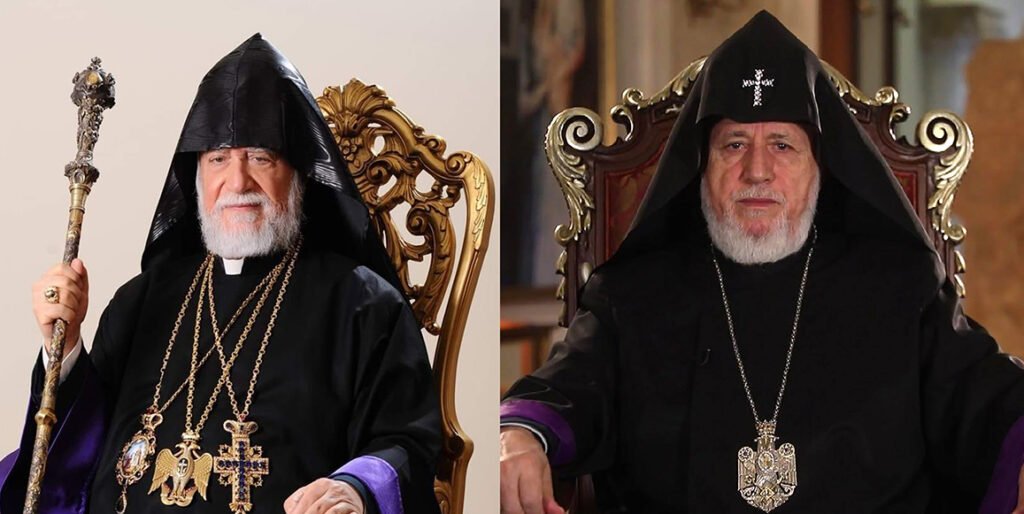 His Holiness Catholicos Aram I and His Holiness Catholicos Karekin II
Here in the Americas, we have settled into an institutional division that began decades ago. At face value, the lack of reconciliation is an affront to our Christian value of forgiveness, yet we seem to have convinced ourselves that we are entitled to a waiver with friendly clergy and lay relations between the Diocese and the Prelacy. We all welcome the advances in meaningful relations, particularly in the last 20 years, but a lack of knowledge and respect still finds its way onto our tables. Our church has four hierarchical seats in Constantinople, Jerusalem, the Great House of Cilicia in Antelias and the Mother See in Holy Etchmiadzin. Any practicing Armenian Apostolic Christian has a responsibility to understand and embrace this reality. Unfortunately, that is not the case. Our division here in America has created a byproduct of ignorance that threatens our future. Many of the adherents (lay) to the Etchmiadzin diocese in America have little knowledge of the Holy See of Cilicia and feel little responsibility to respect its presence in the life of the Armenian Church. The Holy See of Cilicia was once the seat of all Armenians and has existed independently since 1441, yet that has little bearing on current views.
The recent pontifical visit of His Holiness Aram I illustrates this point. We have let our administrative division (as our leaders call it) evolve into a lack of respect for one of the hierarchical sees of our church. There is no malice for the most part, just ignorance and ambivalence. Was Aram I invited by any diocesan church to conduct a simple hrashapar service to honor his presence? I applaud the presence of some diocesan clergy, but our expectations are too low. The reverse is also true. We must all remember that Holy Etchmiadzin is the Mother See. The term “All Armenians” should carry some value. Many in the Prelacy view the Catholicoi as competing, and therefore respecting both is not an option. The Prelacy faithful have a tendency to judge the personality of the current Vehapar and as a result pay less attention to the seat itself. Disagreeing with the policies or practices of a church leader is not an acceptable reason for ignoring the institution. We must be strong enough not to sacrifice knowledge and respect for the sake of short-term opinions. Criticism that is connected to expectations in the interest of the church is not only valid but essential to our sustainability. The absence of knowledge and respect is a threat to our future and tragic in that it is self-inflicted. Our divisions are artificial and should never be an impediment to knowledge and respect. We must strive to individually and collectively become informed people who maintain civil relationships in our communal life.
I was reminded this week of how low our expectations have become. While reading the weekly eastern diocesan newsletter, I noted an article about Catholicos Karekin II making another “non-pontifical” visit to the United States and meeting with the diocesan staff and Fund for Armenian Relief (FAR) team. I was deeply disappointed by the news of another visit by Catholicos Karekin II to America without a public itinerary. It has been 16 years since the last pontifical visit of the Vehapar to these shores, yet during that period there have been at least half a dozen visits of a private nature devoted to benefactors and fundraising for the Mother See. I understand that collecting funds is a high priority and that time is usually allocated to this mission. Catholicos Aram I raised funds for Antelias when he visited this past fall, and I am sure this will continue with the second part of his pontifical visit later this year. Raising money is not the issue. What I find unacceptable is that the leader of the church can come here and make no public appearances during which he can bless the faithful, meet the young people and listen to our concerns. It is a major responsibility to be with the faithful and build that relationship. Our people need the inspiration of their spiritual leaders.
We should have two expectations of our spiritual leaders. The first is to be visible and make a difference in our lives. The second is to use their authority to empower our diverse diaspora dioceses to address the challenges of our survival.
Perhaps of even greater concern is the silence of the adherents in the diocese. Numerous selective visits and 16 years without a public visit are not a matter of concern? There was a time when the standard for a visiting Vehapar was always a pontifical visit, with fundraising a private secondary outcome. Beautiful high badarak, public rallies with our youth, formal gatherings to hear his message and local parish visits with hrashapar services were etched in our memory – no longer with the Mother See. The young people today do not know the Catholicos of All Armenians. Our local leadership apparently finds this acceptable. We are a church driven and at times paralyzed by protocol and formality. The visit of a Vehapar happens as a result of an invitation by the host diocese, but we all know that if the Vehapar wants to visit, the invitation will be forthcoming. Has the diocese extended an invitation to the Vehapar in the last 16 years? If not, has the diocese questioned the need during his numerous private trips? It is rather insulting for the common faithful of the parishes to be denied this opportunity unless you add some financial value to the Mother See. In this most recent visit, unless you are a substantial benefactor or in the leadership of FAR (which funds many programs in Armenia), you have no access. I will not question the integrity of those participating in the financial support of the Mother See, but as long as the faithful of this diocese are denied public visits, then we are all complicit.
We have lowered our expectations in response to this behavior, because we are taught that challenging authority is disrespectful. In the name of respect for the position, we fail to hold elected officials accountable. In the Armenian church, all lay and clergy leaders are elected by a ratio of lay/clergy prescribed in the bylaws. It is not only possible, but also our responsibility, to show respect while speaking out for the betterment of our church. Unfortunately, we are plagued by concerns of being unpopular or socially isolated if we address some of these problems. Challenging the Vehapar in the proper manner to fulfill his responsibility to the faithful is not disrespectful or counterproductive. It may take courage since most of our proceedings are either procedurally robotic or determined in smaller groups. I remember when the Vehapar came many years ago and the youth gathered in Central Park in New York. Those teenagers are now in their 30s and building families. What about today’s teenagers? Will they have that experience? How about the small parishes that need a spiritual boost from a special experience? I have been told that he is not comfortable in this role. Respectfully, we should have two expectations of our spiritual leaders. The first is to be visible and make a difference in our lives. The second is to use their authority to empower our diverse diaspora dioceses to address the challenges of our survival. If we have learned anything in the last few generations, it is that one size does not fit all in our church. Specifically, the diocesan primate, Bishop Parsamyan, needs the freedom to address the core issues that are unique to the American Armenian experience. The Vehapar is the only person in our structure who can empower that need. It is puzzling to me why this eludes us. Empowering our leaders and being visible will only enhance the credibility of Holy Etchmiadzin. Many Armenians feel aloof from the Mother See because of the lack of presence and relationship. We cannot succeed long term only with selective relationships.
This should not be construed as an attack on our leadership. Quite the contrary. It will hopefully be viewed as a proposal to increase the influence of the Mother See. Our faithful want to be led, and our leaders need followers. During the early decades of the diaspora, intercontinental travel was limited until Catholicos Vasken of blessed memory came to America. This column began with a plea for respect for our hierarchical sees. We should not simply welcome but also insist on our spiritual leaders’ presence to fortify our faith. All Armenians should welcome Aram I here this fall. We should insist on inviting the Catholicos of All Armenians in a similar vein. For those who are focused on behavior and style, cast that aside and focus on our greater needs. Let’s hold each other accountable to build a stronger church.
Author information
Stepan Piligian
Columnist
Stepan was raised in the Armenian community of Indian Orchard, MA at the St. Gregory Parish. A former member of the AYF Central Executive and the Eastern Prelacy Executive Council, he also served many years as a delegate to the Eastern Diocesan Assembly. Currently , he serves as a member of the board and executive committee of the National Association for Armenian Studies and Research (NAASR). He also serves on the board of the Armenian Heritage Foundation. Stepan is a retired executive in the computer storage industry and resides in the Boston area with his wife Susan. He has spent many years as a volunteer teacher of Armenian history and contemporary issues to the young generation and adults at schools, camps and churches. His interests include the Armenian diaspora, Armenia, sports and reading.
|
The post We love our church, yet our expectations are low appeared first on The Armenian Weekly.