
Day: January 30, 2024
During the evening of January 25, Kenneth Eugene Smith, having failed to convince the US Supreme Court to delay his execution, became yet another victim of judicial, state-sanctioned murder. A previous, failed effort, using lethal injection, had been made in 2022. On this occasion, it was the state of Alabama which sought to bloody (or gas, in this instance) its copybook at the William C. Holman Correctional Facility in Atmore. The method of execution: nitrogen hypoxia.
Smith was convicted in 1989 for murdering Elizabeth Sennett, the wife of a preacher’s wife, in a murder-for-hire killing. His life, taken in turn, succumbed to a tawdry experiment of penological vice. When state authorities dabble with various methods of death, they can never be anything but cruel. Sometimes, these methods might even be unusual.
Defenders of capital punishment take refuge behind the words of the Eighth Amendment of the US Constitution, which has often functioned as a form of subversive encouragement to murderous authorities. While the amendment famously states that no cruel or unusual punishments are to be inflicted, the onus is then on officialdom to come up with a form of punishment that is not cruel, nor unusual. And how often has death by firing squad, lethal injection, or swift decapitation been defended on those very grounds?
Nitrogen hypoxia has received much press, much of it ghoulish. In December 2023, the US Chemical Safety and Hazard Investigation Board (CSB) released its final report into the deaths of six poultry plant workers. All had been victims of nitrogen asphyxiation. Investigators found that the Foundation Food Group facility in Gainesville, Georgia was staffed by workers inadequately informed, trained or equipped to deal with deadly leaks. Such concerns were also expressed about staff at the Atmore correctional facility. To date, the US lacks a national standard on the managing, storing, use and handling of such cryogenic asphyxiants as liquid nitrogen.
The degrading nature of the Smith execution was also highlighted by the fact that many US veterinarians would not even stoop to using nitrogen in euthanising animals. In 2020, the American Veterinary Medical Association stated in its euthanasia guidelines that using nitrogen was problematic for mammal species. Such gas would also have to be “supplied in a precisely regulated and purified form without contaminants or adulterants”.
UN experts, including Morris Tidball-Binz, Special Rapporteur on extrajudicial, summary or arbitrary executions and Alice Jill Edwards, Special Rapporteur on Torture and Other Cruel, Inhuman or Degrading Treatment or Punishment, also warned that nitrogen asphyxiation was “an untested method of execution which may subject [Smith] to cruel, inhuman or degrading treatment or even torture.”
None of these concerns has dissuaded lawmakers hunting for other methods of killing convicts. Oklahoma (2015) was the first state to permit prison staff to use nitrogen gas. Mississippi (2017) and Alabama (2018), followed. Much of this is being propelled by crude market considerations. The drugs used in lethal injections are becoming harder to obtain, be they because of shortages or restrictions placed on their use in executions by pharmaceutical companies.
With Alabama being the first to apply the measure, a dark interest in the minutiae of killing was taken. The state’s protocol on how the gas would be employed came under withering scrutiny. With nitrogen gas being administered through a mask, intruding oxygen might risk triggering a stroke, creating a permanent vegetative state, or cause excruciating suffocation. Depriving a person of oxygen could also lead to vomiting, thereby choking the victim.
With such complications in the offing, blissful, or wilful ignorance reigned among correction officials and lawmakers. For those involved in a state’s killing machinery, be they robed judges, hungry prosecutors, or the executioners themselves, this remains a standard response. Seedy justifications are offered: just retribution, deterrence, the confusion of novelty with humane policy. Alabama Solicitor General Edmund LaCour was keen to emphasise the latter point with his absurd remark that his state had “adopted the most painless and humane method of execution known to man.”
Alabama officials had submitted in a court filing that they expected Smith to lose consciousness within a matter of seconds and expire in a matter of minutes. “What we saw,” stated Smith’s spiritual adviser, Reverend Jeff Hood, “was minutes of someone struggling for their life.”
In witnessing such executions, those present commune and connive in the same scene. They become vicarious participants, many the unintended apologists for a spectacle featuring murder. On hand were journalists to feed on the macabre display of Smith’s demise. “I’ve been to four previous executions,” the insatiable Alabama journalist Lee Hedgepeth told the BBC’s Newsday program, “and I’ve never seen a condemned inmate thrash in the way that Kenneth Smith reacted to the nitrogen gas.” The session saw Smith gasping “for air repeatedly and the execution took about 25 minutes in total.”
The stern face of officialdom was supplied by John Hamm, Alabama Department of Corrections Commissioner. For Hamm, all that was aberrant about the scene could be rationalised, reasoned, and explained. Smith understandably held his breath as long as he could. His movements had been involuntary; he showed expected symptoms from inhaling nitrogen gas. He had lost consciousness quickly. “He struggled against the restraints a little bit but it’s an involuntary movement and some agonal breathing. So that was all expected.”
A more candid, vengeful note was struck by the state’s Attorney General, Steve Marshall. “Tonight, Kenneth Smith was put to death for the heinous act he committed over 35 years ago: the murder-for-hire slaying of Elizabeth Sennett, an innocent woman who was by all accounts a godly wife, a loving mother and grandmother, and a beloved pillar of her community.” Smith’s calculated death, crudely experimental and economically determined, was no less heinous, a vulgar rationalisation of cold intent, the exemplar of state cruelty.
By Leon Hadar
(FPRI) — The Hamas attack on Israel on October 7, 2023 came out of the blue. The Palestinian terrorist group struck at a time when the White House believed there wasn’t any major threat to stability in the Middle East and was expecting a process of normalizing the relationship between Israel and Saudi Arabia. No one anticipated a new Arab-Israeli war.
President Joe Biden’s administration took time to assess the situation prior to formulating a geo-strategic response. It then drew up the outline of an American response, that would secure US interests and manage those of its regional partner, namely Israel and the Arab-Sunni states.
As the US government saw it, Hamas, a close partner of Tehran and financial and military dependent of Tehran, was the driving force in the crisis. The Palestinian terrorist group had hoped the surprise attack on Israel, coupled with the kidnapping of close to 250 hostages, would nullify the deterrence capability of its adversary and sabotage the American plan to normalize Saudi-Israeli relations.
In that context, in addition to giving Hamas the green light to attack Israel, the Iranian government also gave a green light to its regional allies, including Hizballah guerrillas in Lebanon, to launch a series of attacks on northern Israel. Shiite groups in Syria and Iraq and Yemen’s Houthi rebels also carried out attacks.
Policymakers in Washington were worried that Israel was distraught by the Hamas attack, the kidnapping of the hostages, Hizballah’s blitzes, and the loss of their deterrence power. As a result, US officials were concerned that Israel’s military response could transform into a major regional military conflagration involving Israel and Iran, especially if the Israel Defense Forces were to attack Hizballah’s bases in Lebanon.
In case of a war between Israel and Iran, the United States would have little choice but to come to the Jewish state’s assistance and find its military forces directly drawn into the new war in the Middle East.
Biden Bear-Hugs Netanyahu
Against this backdrop, Biden decided that to avert such a scenario the United States needed to provide a sense of security to its ally, thus giving US military and diplomatic support as it launched an attack aimed at destroying the Hamas military and political infrastructure.
Biden, therefore, flew to Israel to demonstrate American support. He also dispatched two American aircraft carriers and Marine units to the Middle East to deter Iran and Hizballah from making offensive moves against Israel.
The initial “bear-hug” that Biden gave Prime Minister Benjamin Netanyahu, as the media referred to it, proved to be an effective approach by Biden, who succeeded in pressing the Israeli leader to refrain from attacking Hizballah’s sites in Lebanon and to allow some humanitarian aid into the besieged Gaza Strip.
The US government has also expressed reservations about the way Israel has conducted military operations in Gaza, including the use of airstrikes that resulted in the killing of thousands of Palestinian civilians and the destruction of entire neighborhoods.
The Israeli approach was condemned by the majority of UN members, especially by those belonging to the so-called Global South. Some European governments also expressed reservations over Israel’s conduct. Israel was also criticized by left-leaning Democratic lawmakers, such as Sen. Bernie Sanders, who called on the White House to press the Israeli government to move towards a ceasefire in Gaza. The idea has been rejected by those who insist that they would not end the fighting without the destruction of Hamas.
Meanwhile, the Israeli government came under public pressure to negotiate the release of the hostages held by Hamas through Qatari and Egyptian mediation. And, indeed, it agreed to suspend fighting for a few days on November 30, 2023, to allow for the release of about 100 hostages.
Biden-Netanyahu Clash
There were signs of growing tensions between Washington and Jerusalem over postwar strategy.
The Biden administration has indicated that it wanted to see the Palestinian Authority—currently ruling the West Bank—take over control of the Gaza Strip after Hamas is removed from power. Washington has also hoped to launch a diplomatic initiative in support of Saudi Arabia and other Arab-Sunni governments. Under this plan, the West Bank and the Gaza Strip would become the nucleus of an independent Palestinian State that would live side by side in peace with Israel.
Netanyahu, who heads the most right-wing government in Israel’s history, has rejected the idea of handing over the control of Gaza to the Palestinian Authority and expressed opposition to taking steps to establish an independent Palestinian state.
But Israel’s dependency on American military and diplomatic support has left the government no choice but to change tactics in the Gaza Strip and to shift to a new phase that relies less on airpower, has narrow targets, and results in fewer civilian casualties. In any case, while Israel may have killed hundreds of Hamas fighters there were no indications that the movement’s top leaders have been affected.
At the same time, around 130 people were abducted from Israel on October 7, including several Americans, are believed to be still in captivity in Gaza. Hamas has ruled out any further hostage releases until Israel agrees to a “full cessation of aggression.” Israel has rejected that demand, but may eventually have to agree if it wants to see the hostages return alive.
The Strategic Stakes
On one level, the war in Gaza could be seen as just another round of fighting between Israel and Palestine, or a phase in the century-old struggle between Jews and Arabs over the territory of Palestine/Land of Israel.
But this time the danger is that the war between Hamas and Israel could not be contained as a local ethnic-religious conflict. In a way, the role Iran played in orchestrating the war could lead to the regionalization of the conflict in the form of a military confrontation between Israel, a nuclear power, and Iran, which has come close to acquiring its own nuclear military capability.
At minimum, the Hamas attack has shifted the balance of power in the Middle East in the direction of Iran and its proxies, while weakening the position of the United States and its partners. Adding to a sense of Iranian aggressiveness, there were reports that Tehran has considerably ramped up its production of uranium in recent weeks, reviving fears that it may be speeding toward the capability of fabricating several nuclear weapons.
A failure to obstruct this Iranian drive for regional supremacy would be a geopolitical loss for the United States and undermine its global position relative to China and Russia. The nightmare scenario consists of Iran and its proxies succeeding in establishing a new balance of power in the Middle East under which Israel is left damaged, Hamas is not destroyed, and the normalization of relations between Israel and Saudi Arabia remains stalled. While all this would not necessarily amount to Iranian “victory,” it would give Tehran more influence.
Containing Iran
Hizballah, coordinating its moves with Iran, has continued to attack Israeli targets. Iran also started providing intelligence and weaponry to its Houthi allies in Yemen who were starting to target ships, including commercial vessels passing through the Red Sea. At first, the Biden administration refrained from responding to strikes by Iran’s proxies against American forces in Syria and Iraq, or, for that matter, to the Houthis’ threat to international shipping, through direct military response.
The danger is that the Iranians may view this American caution as weakness and, notwithstanding Biden’s rhetoric and the deployment of US aircraft carriers to the Middle East, the American president is worried about the potential of direct US military intervention. That could lead to war with Iran at a time when the United States is confronting Russia in Ukraine and is worried about the threat of a Chinese attack against Taiwan.
Iran also recognized that the United States does not have the military resources to fight on three fronts and that the American people don’t want to be drawn into a new quagmire in the Middle East. And they wondered: When push comes to shove, would Biden be ready to pull the trigger?
Biden Pulls the Trigger—To a Point
After weeks of warning of retribution against the Houthi rebels, who were threatening vital maritime trade routes, the United States and United Kingdom responded in mid-January. The US Navy fired dozens of Tomahawk cruise missiles towards Yemen from the Red Sea, while British jets launched laser-guided Paveway bombs at selected targets.
Biden’s patience and fear of escalation apparently ran out. The strikes gave some credibility to the warning that the Houthis would face “consequences” if they kept up their piracy and likely helped restore American deterrence in the region. But it’s not clear whether they did, with the Houthis continuing their attacks on shipping in the Red Sea and the Iranians arming them and providing them with real-time targeting intelligence.
In fact, when the United States took out Houthi launching facilities—radar and weapons depots in Yemen—it struck at night, after clearly telegraphing its intentions, and avoiding targeting the Houthi leadership behind the Red Sea shipping attacks.
The point is that Iranian officials seem to believe that an escalating conflict in the Middle East will increase the costs to the United States and the West without risking a wider war. From their perspective, continuing escalation of the conflict would be cost-effective, since the United States would never take steps that risk war with Iran and would do everything to minimize those already existing.
Averting a War and Making Peace
In a way, American policies during the Gaza war have been driven by an interest in averting a war with Iran: pressing Israel to avoid a full-blown military confrontation with Hizballah, restricting its military operations in the Gaza Strip, and trying to get Israel to avoid civilian casualties.
Ultimately, the United States would like to see Israel destroy the military power of Hamas and erode the power of Hizballah, but it is preventing Israel from taking the steps to do so, as they could escalate the conflict and make it more likely that Iran would be able to exert its influence.
At the same time, Biden administration officials believe that the most effective way for them to try to return to the pre-October 7 balance of power in the Middle East is, as national security advisor Jake Sullivan suggested during a presentation at Davos, by reaching a ceasefire in the Gaza War to be followed by the launching a diplomatic initiative. Under such a diplomatic plan Israel and Saudi Arabia would normalize their relationship as part of a process that would include an agreement by Israel to establish an independent Palestinian State and a commitment by the Saudis to rebuild Gaza’s economy.
This plan assumes a lot of things that aren’t necessarily going to happen. Could Hamas be disarmed and marginalized in this process? Would the Palestinians be able to come up with a new and effective leadership that would work with Israel? And in the aftermath of the trauma of October 7 would the Israeli government agree to the establishment of an independent Palestinian state on their borders.
And perhaps most important from the perspective of the geo-strategic chess game between Washington and Tehran: Why would the Iranians and their proxies accept an arrangement that would allow the United States to reassert its position in the Middle East and reverse what they see as their win of October 7?
If anything, there have been growing concerns in Washington in late January that continuing actions against the United States by Iran and its proxies could force a more decisive retaliation on the part of the Americans, resulting in a broader regional war.
Or as national security advisor Sullivan put it, “We have to guard against and be vigilant against the possibility that, in fact, rather than heading towards de-escalation, we are in a path of escalation that we have to manage.” In other words, how to strengthen the chessboard and ensure the pieces don’t fall.
The views expressed in this article are those of the author alone and do not necessarily reflect the position of the Foreign Policy Research Institute, a non-partisan organization that seeks to publish well-argued, policy-oriented articles on American foreign policy and national security priorities.
- About the author: Leon Hadar is a Senior Fellow in the Foreign Policy Research Insitute’s Middle East Program.
- Source: This article was published by FPRI
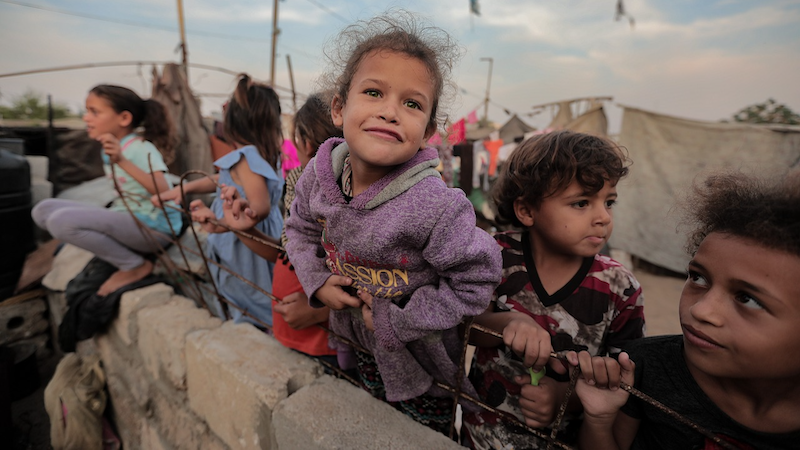
The timing of US and Israeli allegations that United Nations Relief and Works Agency (UNRWA) staff participated in Hamas’ October 7 attack on the Jewish state was hardly coincidental.
The allegations, that have yet to be substantiated, and the halt in UNRWA funding by ten Western countries, including the United States, Britain, Germany, Italy, Canada, and Australia, raise questions that go far beyond UNRWA’s potential culpability. The nine countries’ move freezes US$667 million pledged to UNRWA.
Gaza’s third largest employer, UNRWA is the leading UN aid agency in the Strip. UNRWA, the only UN arm focused exclusively on one group of refugees, has a staff of 13,000, including 3,000, who have reported to work during the Gaza war. More than 130 UNRWA staffers have been killed in the war.
The US and Israel’s allegations came barely 24 hours after the International Court of Justice (ICJ) warned that Israel’s conduct in the Gaza war risked acts of genocide.
The court ordered Israel to “take immediate and effective measures to enable the provision of urgently needed basic services and humanitarian assistance to address the adverse conditions of life faced by Palestinians in the Gaza Strip.”
The Western funding freeze threatens to aggravate an already dire human apocalypse in Gaza. It violates the principles of due process that would give UNRWA an opportunity to defend itself and address legitimate complaints.
Due process would have also allowed the US and others to adopt positions less at odds with the court ruling and more independent of Israeli policy.
Not all Western countries followed the US lead. Norway and Ireland have opted for a more balanced approach.
“We need to distinguish between what individuals may have done, and what UNRWA stands for. The organisation’s tens of thousands of employees in Gaza, the West Bank and the region are playing a crucial role in distributing aid, saving lives, and safeguarding basic needs and rights,” said Norway’s representative to President Mahmoud Abbas’ West Bank-based, internationally recognised Palestine Authority.
“Don’t punish the children of Gaza. This is totally reckless. None of us can guarantee that staff are not doing something that is criminal. We have to punish the sinners and not collectively the population of Gaza,” added Jan Egeland, secretary general of the Norwegian Refugee Council.
With UNWRA’s future in doubt, the organisation’s former spokesman, Christopher Gunness, warned that wealthy Gulf states’ failure to step in would come to haunt them.
Countries like Saudi Arabia and the United Arab Emirates are seemingly hesitant to fund an organisation accused of links to Hamas. The two countries would like to see Hamas defeated because of its links to the Muslim Brotherhood and violence, even if they condemn Israel’s devastating military tactics.
“Where is the Arab world?… This is a Middle Eastern problem. The Palestinian refugee problem is in the neighbourhood, in the backyard. These Arab states got billions and billions in oil money. Why can’t they step up to the plate and give UNWRA the funds it needs to deal with what is effectively a problem which is destabilizing their region… What these Arab donors need to realise is that their attitude towards UNWRA in this specific moment will have wider regional implications,” Mr. Gunness said.
Former UNWRA official Lex Takkenberg suggested that the organization may only feel the financial pinch several months down the road. He said UNRWA will likely have received “large advances” on pledged funds that will keep it afloat for some time.
“Hopefully, by that time an investigation will have demonstrated results,” Mr. Takkenberg said, adding that in past cases, Israel often failed to provide evidence, forcing UNRWA to close an investigation.
Israeli Prime Minister Binyamin Netanyahu’s foreign policy advisor, Ophir Falk, asserted that there was “abundant evidence… It seems that this is just the tip of the iceberg… An in-depth investigation is underway.”
Mr. Falk said the evidence was on camera and based on information revealed by captured Hamas operatives.
The US-led response to the allegations bolsters a long-standing Israeli campaign against UNRWA that is as much an integral part of a broader policy to undermine Palestinians’ refugee status as it may be based on legitimate concerns.
Israel hopes to undermine Palestinians’ insistence on the right to self-determination and an independent state by depriving many of them of their refugee status that dates to Israel’s creation and the 1948 and 1967 Middle East wars.
To be sure, UNWRA defines as refugees not only those Palestinians who fled the wars, but also their descendants, now in their fourth generation. In doing so, the agency has a vested interest in maintaining their status, which is not to diminish Palestinian rights.
“Israel has been building a case against UNRWA for a long time… Regardless of the veracity of the charge, the decision to go with this news…seems like an attempt to distract from the ICJ ruling on genocide in Gaza,” said International Crisis Group Israel analyst Mairav Zeinszon.
By not following due process, Western countries have fuelled an Israeli campaign that could add to the suffering in Gaza and complicate efforts to resolve the Israeli-Palestinian conflict.
“We have been warning for years: @UNRWA perpetuates the refugee issue, obstructs peace, and serves as a civilian arm of Hamas in Gaza… UNRWA will not be a part of the day after,” said Israeli Foreign Minister Israel Katz, referring to the day hostilities end.
Critics take Mr. Katz’s assertion with a grain of salt.
“Israel is not about to suspend its ties with UNRWA… Unless the Israel Defense Forces decides it wants to distribute the food, water and medical supplies to over 2 million Palestinians in Gaza, it needs UNRWA to do it… It’s just a matter of time before those Western governments restore UNRWA’s funding… UNRWA will still be full of Hamas members, and it will still be needed nevertheless.” said prominent Israeli journalist Anshel Pfeffer.
UNRWA has not denied allegations that 12 staff members participated in the October 7 attack in which 1,100 people, mostly civilians, were killed.
In response to the allegations, UNRWA said it had fired the employees identified by the US and Israel. “Any UNRWA employee who was involved in acts of terror will be held accountable, including through criminal prosecution,” UNRWA said.
The UN organisation noted that it “shares the list of all its staff with host countries every year, including Israel. The Agency never received any concerns on specific staff members.”
UNRWA has asked for an independent investigation, while warning that Gazans depended on it for humanitarian aid.
The investigation could substantiate allegations that support for Hamas among UNRWA staff is broader than the organisation has admitted.
UN Watch, a pro-Israel group focused on the United Nations, asserted that 3,000 UNRWA teachers were members of a Telegram chat group that “celebrated the October 7th Hamas massacre.”
It was unclear whether the chat group included only current staff or also past employees.
Before the war, UNRWA allocated 58 per cent of its budget to education. It operated 183 schools in Gaza attended by 286,000 students that follow curricula provided by the Palestine Authority supplemented by materials produced by the UN organisation’s staff.
Since the war, UNRWA schools have become shelters for Palestinians displaced by hostilities.
A November 2023 report by the Institute for Monitoring Peace and Cultural Tolerance in School Education (Impact-SE), an Israeli group that engages in textbook analysis, asserted that materials in UNRWA schools were “openly anti-Semitic and continue to encourage violence, jihad, and martyrdom while peace is not taught as preferable or even possible. Extreme nationalism and Islamist ideologies proliferate throughout the curriculum, including in science and math textbooks.”
The report cited, among others, an exercise for 9th graders that celebrated a Palestinian firebombing attack on a Jewish bus as a “barbecue party” and a female fighter who in 1978 allegedly murdered Gail Rubin, the niece of US Senator Abraham A. Ribicoff, and hijacked a bus, killing 38 Israelis, including 13 children.
Responding to an earlier March 2023 report co-authored by Impact-Se and UN Watch, UNRWA said its staff “receive regular in-person training sessions and mandatory online courses on humanitarian principles, social media use, and ethics. In addition, UNRWA undertakes regular and meticulous reviews of all textbooks and learning materials.”
In response to a 2022 report, UNRWA asserted it had “in reviewing the material referenced in the report…, discovered the existence of a private, commercial website that illegally utilizes the Agency’s logo and the names of UNRWA educators. The Agency is seeking additional information on these sites for follow-up action, including possible legal referral.”
UNRWA noted that Germany’s Leibniz Institute for Educational Media or Georg Eckert Institute had concluded in a 2021 study that Impact-se reports were “marked by generalising and exaggerated conclusions based on methodological shortcomings” that require “further investigation based on an overarching and comprehensive examination of the textbooks, contextualising the specific passages mentioned.”
In a letter to US Senate Majority Leader Charles E. Schumer in November 2023, UNRWA’s Washington representative, William Deere, asserted that “UNRWA has a stringent staff conduct framework in place to ensure that staff members do not affiliate themselves, and by extension, UNRWA, with any other groups. All UNRWA staff, Palestine refugees, and contractors, vendors, and non-state donors are screened against the Consolidated United Nations Security Council Sanctions List.”
To be sure, a majority of Gazan Hamas affiliates are unlikely to have been added to the sanctions list.
Even so, backing for Hamas among mostly Gazan UNRWA staff suggests broader popular support for Hamas that ebbs and flows, particularly in times of war.
Moreover, the anti-UNRWA campaign speaks to the achievability of Israel’s goal of destroying Hamas. It suggests that Hamas has a popular base that will ensure it is a Palestinian force to reckon with irrespective of when the guns in Gaza fall silent.
As a result, the solution is not penalising UNRWA at a time of Gazans’ greatest need. The immediate solution is due process leading to reform of the organisation and, ultimately, a resolution of the Israeli-Palestinian conflict that meets the aspirations and security needs of Israelis and Palestinians.
For Israel, this is true strategically and tactically. Already on the defensive in an information war in which images of carnage speak louder than words, Israel would benefit more from being seen as complying with the international court’s emphasis on humanitarian aid and encouraging UNRWA to tackle its problematic issues.
“Israel can just go and say whatever it wants…but basically, if you are explaining, you are losing. Online, what speaks powerfully is images,” said Max Boot, a military historian and foreign policy analyst.
“We’re used to a reality where history is written by the victor. It’s not the case anymore,” conceded Masha Michelson, an Israeli military social media warrior.

The clash between the Biden Administration and Texas spilled out into the open last week, when the US Supreme Court ruled that Federal authorities could remove razor wire that Texas Governor Greg Abbott had been installing along the border with Mexico to stop the millions of illegal immigrants from crossing over to the United States.
This time Abbott did not back down. Instead, he issued a statement declaring that “an invasion under Article I, Section 10, Clause 3” of the US Constitution is underway and invoking “Texas’s constitutional authority to defend and protect itself.”
Here Governor Abbott answers an important question I brought up back in my 1988 US Presidential run: at what point do open borders and mass illegal immigration into the US become an “invasion,” which would grant governors the authority – and obligation – to take action?
By some estimates, more than six million illegal immigrants have crossed into the United States during the three years of the Biden Administration. These illegals likely mostly come from Mexico and Central America, but the fact is we have no idea how many of them may be arriving from, for example, the Middle East or other war-torn areas of the world. Last month even the New York Times wrote of the disaster on the US border that, “thousands of migrants are arriving at the border every day, trekking from the farthest reaches of the globe, from Africa to Asia to South America, driven by relentless violence, desperation and poverty.”
With the world awash in US weapons, it’s not hard to imagine the danger of the situation.
It is a problem that the Biden Administration is not willing to tackle, likely for political reasons particularly in an election year. And Biden found an ally in the US Supreme Court and Chief Justice John Roberts with the ruling that Federal agents may begin removing barriers set up by Texas authorities. But the intensity of the dispute became apparent this time when 25 Republican-led states issued statements in support of Texas.
It began to look like a showdown and many even began to invoke words like “secession.”
However, if the Biden Administration intends to use the Supreme Court ruling to take action against the Texas border barrier there are more immediate ways of defending the border. Rep. Thomas Massie took to Twitter last week to recount a meeting he and a group of US House Members had with the late Justice Antonin Scalia. At the breakfast, Massie wrote, Justice Scalia told the group to quit complaining about Supreme Court rulings and start defunding rulings they oppose.
As Massie explained in another Tweet, “Congress can render the 5-4 Supreme Court decision against Texas IRRELEVANT by simply refusing to fund Biden’s removal of border security measures.” Nullification through the “power of the purse” is an important tool given to Congress in the US Constitution and it could be easily exercised in this case.
Biden is clearly playing politics with the immigration crisis, claiming last week that as soon as Congress passes yet another immigration “reform” bill – one that includes $100 billion in military welfare for Ukraine, Israel, and Taiwan – he will take steps to address the Border. Congress should reject this blackmail and US states should continue to take measures – including nullification of the Supreme Court ruling – to protect against invasion.
This article was published at RonPaul Institute
As U-Haul confirms, 2023 was the fourth consecutive year during which more Californians rented one-way trucks to leave California than residents of any other state. By the count of Los Angeles Times editor Paul Thornton, more than 800,000 Californians left the state last year, but their “reasons to leave don’t explain the impulse to insult California on the way out,” so people should leave “without verbally trashing the place.”
Those on the way out are not trashing “the place” with wonders such as Yosemite Valley, redwood forests, beautiful ocean beaches, and such. For Tom Garnett, who left his “beloved home state” of California for North Carolina, it was a matter of politicians pushing “costly progressive policies on climate change, homelessness and other programs, but with no clear measures of success.” Mr. Garnett has a point.
“The problem of homelessness has become intractable under status quo policies,” explains UCLA economics professor Lee Ohanian. “California has spent $20 billion on homelessness in the last five years, and during this period the number of unhoused persons has increased by nearly 40,000,” with a current total in the range of 172,000. State politicians must also confront, Ohanian says, “the many more thousands who will become homeless in the future because of their policies.”
“California’s status quo policies have given rise to what has become a perpetual problem,” Ohanian notes. “And those who created those policies show no willingness to change.” That also applies on the issue of crime.
The 2014 Proposition 47 “reduced a host of serious felonies to misdemeanors, including drug crimes, date rape, and all thefts under $950, even for repeat offenders who steal every day,” explains Katy Grimes of the California Globe. “The commensurate escalation of crime throughout California is stunning. And there is no coincidence that during this same time period, the exponential escalation of homeless vagrants and drug addicts on the streets occurred.”
That is a strange outcome for a measure titled “The Safe Neighborhoods and Schools Act” by then–state Attorney General Kamala Harris. The author of Smart on Crime: A Career Prosecutor’s Plan to Make Us Safer, Harris also gave the title “the Public Safety and Rehabilitation Act” to 2016’s Proposition 57.
As Grimes notes, this measure “now allows nonviolent felons to qualify for early release, and parole boards can now only consider an inmate’s most recent charge, and not their entire history.” Under Proposition 57, Grimes explains, “non-violent” crimes include: “rape of an unconscious person or by intoxication,” “drive-by shooting at inhabited dwelling or vehicle,” “assault on a police officer,” “serial arson,” and others. To date, no state Democrat has “openly admitted” that these “are indeed violent crimes, and need to be reclassified back.”
At least 20,000 convicts, including convicted murderers, grabbed $140 million courtesy of more than $30 billion in unemployment fraud during the pandemic. That took place on the watch of Julie Su, head of California’s Labor and Workforce Development Agency (LWDA).
Su, Joe Biden’s pick for labor secretary, also supported Assembly Bill 5, a frontal assault on California’s independent workers. Gov. Gavin Newsom signed the measure and, during the pandemic, went on a spending binge of his own.
In April of 2020, Gov. Newsom announced a $1 billion deal for masks with the Chinese company Build Your Dreams, which had no experience in protective equipment. The $1 billion tab was 30 percent more than the state budget for infectious diseases for the entire year. The governor concealed details even from fellow Democrats, and what, exactly, happened to this money remains unclear.
Newsom also locked down the healthy and shut down businesses and schools. On the other hand, the governor and his cronies felt free to dine sans masks at the upscale French Laundry.
Newsom’s draconian pandemic regime could easily motivate Californians to seek other states or countries. So could California’s status as a high-tax, high-regulation, and high-crime state with a homeless problem that, as Ohanian notes, seems to get worse “the more California spends.”
All told, Californians have many legitimate reasons to leave, and they should feel free to voice their complaints. They might say, “Last one out turn off the lights,” but that is already going on. “Rolling blackouts” have been common in recent years, and, during a 2022 heat wave, state officials asked Californians not to charge their electric vehicles.
For many, that could have been the last straw, and, as U-Haul confirms, the exodus continues apace. Failed progressive policies have fundamentally transformed California from a place where people want to live to a place people want to leave.
This article was also published in The American Spectator
abwehr and orthodox judaism – Google Search https://t.co/VMYMrRQtqk pic.twitter.com/FEekajz3jw
— Michael Novakhov (@mikenov) January 30, 2024
