Categories
South Caucasus News

Feudalism In Malaysia Today – Analysis


Feudalism In Malaysia Today – Analysis

Malaysia Negaraku Merdeka Sekolah School Murid Girls Schoolgirls Children Flag

The real elephant in the room is the elite

Commentary and literature on Malaysia will tell you that the country’s problems are related to race. There was May 13, 1969, which is portrayed as a watershed in Malaysia’s history and the catalyst of the affirmative action policies towards Bumiputeras. 

Then, Article 153 of Malaysia’s Constitution grants the Yang di-Pertuan Agong (King of Malaysia) responsibility for ‘safeguard[ing] the special position of the Malays and natives of any of the states of Sabah and Sarawak. This partly enhanced the ‘Ketuanan Melayu’ or Malay supremacy narratives advocated by some groups, where politicians from the Malay quarter of politics have demonized other races for the ‘so called ills’ of ‘Malay backwardness’.  

However, these narratives don’t match up with the realities. Malaysian society still has many of the traits of the old feudalism. Malaysia’s title system reinforces a feudal hierarchy. Agencies and ministries have special VVIP service rooms, such as are found in immigration offices. VVIP car parks and number plates espouse to the public that there is a multi-tiered citizenry hierarchy.

Race has been long used as a placard to divide society. The Malays have been continually described as needing support to rise above their handicaps. Thus, special privileges ranging from quotas in education and the civil service, to institutionalized discounts on property are espoused as necessary to help the Malays. 

Over the years, these policies have created a sense of entitlement within Malays, where many expect the government to provide for them. The ‘myth of the lazy Malay’ conjured up by Mahathir Mohamed in his book ‘The Malay Dilemma’, to some extent became a self-fulfilling prophecy by the introduction of the New Economic Policy (NEP). 

By ‘feeding the Malays cake’, the real divisions of society could be hidden for many years. Many Malays were very grateful for what they were given, and UMNO told them to show their gratitude by voting for them each election. This kept UMNO in power for more than 50 years. This also allowed a class of elites to accumulate great wealth, far beyond the imagination of the ordinary person. 

This wealth accumulated by a class of elite was well hidden from the public, especially before the advent of the internet. Anti-corruption mechanisms were almost non-existent until the formation of the Malaysian Anti-Corruption Commission (MACC), which itself is not independent. The MACC is controlled by the executive, which told MACC management what to pursue and what to ignore. The top echelons of the civil service looked after their own, bushing corruption under the carpet to avoid scandal. The media has been hindered by intimidation and harsh defamation laws to stifle the very concept of investigative journalism. With self-censorship, most newspapers and news portals have become nothing much more than mouthpieces for the government.

The ruling elite became untouchable, often citing the slogan “We are the law” in Malaysia. Criticizing royalty is basically taboo. Politicians and their cronies until now, have escaped legal scrutiny, due to a non-independent attorney general and public prosecutor. Defamation laws prevent local investigative journalists and activists exposing corruption. Whistleblowers are persecuted. 

Budgets and five-year plans unashamedly provided projects for the elite, who have been nurtured by Mahathir and Anwar Ibrahim’s development of crony capitalism in Malaysia during the 80s and 90s. Prize assets and monopolies were handed to these elite and even bailed out, if necessary. 

For fifty years the elite have run amok all over the Malaysian economy with ‘who you know capitalism’. The elite have taken the choice rent-seeking opportunities in the nation. Today, Malaysian politics and business is filled with a group of families, who dominate both political power and business. 

Malaysia’s political instability over the last 5 years doesn’t have racial origins. It is caused solely by a fragmented elite now fighting over power. The investigations and prosecutions going on now are the result of a deep rift within the elite. When this rift is patched up, business will most likely just go back to usual. 

All the governments have been led by the same old politicians, who are members of, or aligned with the elites. 

This situation is so blatant, new blood is being kept out or sidelined from government to the point, Malaysia doesn’t have the talent waiting in the wings to takeover power in the future. Economically, there are very few wealth creation segments within the economy. The elite have geared the economy towards rent-seeking activities they or their nominees’ control. Anyone who exposes them is sent into bankruptcy through legal proceedings.  

The elephant in the room is the elites, not racial division. Anyone who thinks otherwise has been fooled by the cover up over so many years.

Its ironical that the elites themselves are the ones exposing that class is Malaysia’s real problem. Mahathir’s pursuit of prosecuting former prime minister Najib Razak after GE14, exposed the riches he had. Now Anwar’s use of the MACC to investigate and prosecute the old cronies of the elite is exposing the charade. The people are supportive of their prosecutions and jailing. How long will it be before the people realize, who the real enemies have been over the last fifty years? 


Categories
South Caucasus News

Republican Governors’ Revolt Tests Biden’s Willpower Over Illegal Immigration – OpEd


Republican Governors’ Revolt Tests Biden’s Willpower Over Illegal Immigration – OpEd

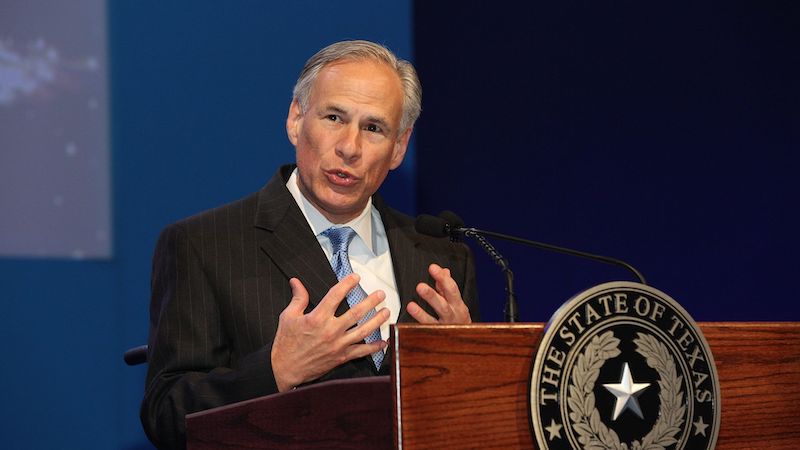
File photo of Texas Governor Greg Abbott. Photo Credit: World Travel & Tourism Council, Wikipedia Commons

By Andrew Morrow

Right now, the governor of Texas and up to 25 other states are in open defiance of the US federal government. Unless you are terminally online, though, you might have missed it. Establishment media outlets like The New York Timeshave so far refused to cover this governors’ revolt, although the newspaper of record did amplify the complaints of nine Democratic governors.

Let’s back up. In 2012, the state of Arizona, which shares a border with Mexico, lost a case at the Supreme Court (Arizona v. United States). The Court ruled that federal immigration law is supreme over state laws; the states, therefore, cannot enforce immigration law or prevent people from crossing the southern border. Federal supremacy is an established principle of American constitutional law, but the negation of state authority to hinder and deal with illegal immigration was unprecedented. The Supreme Court decided that this was the federal government’s exclusive responsibility. To borrow Douglas Adams’s phrase, this has made a lot of people very angry and been widely regarded as a bad move by those on the right. Either way, it is now the law of the land.

Since then, the federal government has largely abdicated its responsibility to enforce the southern border or immigration law.  More illegal immigrants than the total population of 33 states have been allowed into the country within the last four years alone.

Conservatives are outraged. One of the oldest responsibilities of any state is to make sure that that state’s borders are secure. If a state’s borders are not protected, its distinctiveness from other states is non-existent. Quite simply, a country without borders is not a country. For the last 14 years, elements of state governments have tried, and largely failed, to claw back any scrap of authority they can from the federal government in the area of immigration. At times, state law enforcement has interdicted illegal immigration on human trafficking grounds, other times on drug smuggling grounds and still other times on grounds as simple as trespassing. But no matter what, the federal leviathan has asserted itself in the arena, and the states have quailed — until now.

Texas has taken matters into its own hands

The state government of Texas has decided to stop playing around. On September 23, 2023, Governor Greg Abbott called up elements of the Texas State Guard and evicted units of the United States Border Patrol (USBP) from Shelby Park, a vital sector of the southern border abutting the Rio Grande River, where the tide of illegal immigration is often highest. Abbot has also had barriers of concrete, shipping containers and razor wire constructed. The federal government lodged a lawsuit against Texas. The case has made its way to the United States Court of Appeals for the Fifth Circuit with a speed that only such a critical case could have. The circuit court issued an injunction against the federal government, forestalling the federal authorities from removing Texas’s fortifications.

The government appealed that injunction straight to the Supreme Court. The Court vacated the injunction without issuing an opinion. The vacating of the injunction gives the federal authorities the right to remove Texas’s fortifications while the case proceeds. Generally, the Court’s ruling on an injunction serves as a bellwether for its decision on the case itself. Therefore, this ruling would typically indicate that Texas’s efforts will fail on the merits. In simpler, less contentious, times, that is where the drama would have ended. Texas would have decried the decision, vowed to fight the case on its merits and allowed the USBP to remove the fortifications.The conclusion of the case would have been the end of the debate.  

Not this time. Abbott has defied the Court’s order vacating the injunction. The Texas Guard has actively denied the USBP access to the park to remove the fortifications. Moreover, they have added more fortifications to the border after the injunction was vacated, further obstructing the removal process. The Texas Guard and the USBP are still currently in a standoff.

Abbott invokes the compact theory of federalism

On January 24, Abbott issued a statement accusing the federal government of breaking the “compact” between the states. This language borrows directly from the Confederate state of Virginia’s 1861 secession ordinance. Abbott has thus invoked the “compact theory” of American federalism. According to this theory, the US constitution is a treaty between the states. If the states or the federal government violate this treaty, every party is free from its obligations. This theory was the rationale for the Confederate states’ secession from the Union. As early as 1793 (Chisholm v. Georgia), and again after the Civil War in 1869 (Texas v. White), the Supreme Court rejected this theory, insisting that the United States was not a treaty organization but a sovereign republic. By invoking the compact theory, then, Abbott is calling into question the federal government’s claims to sovereignty.

Abbott is not calling for secession yet. Instead, he says that, since the federal government has failed to fulfill the compact, it falls on the states to uphold it. If America is a marriage, this is an accusation of adultery. It does not say “divorce” yet, but it could lay the groundwork for it.

Abbott’s statement lays out the derelictions of duty of which he accuses the Biden administration. President Joe Biden has failed to enforce federal immigration law by refusing to prosecute immigrants for illegal entry. He argues that the federal government has breached Article IV, Section 4 of the constitution: “The United States shall guarantee to every State in this Union a Republican Form of Government, and shall protect each of them against Invasion.”

Texas must thus invoke its right to self-defense laid out in Article 1, Section 10, Clause 3: “No State shall, without the Consent of Congress … engage in War, unless actually invaded, or in such imminent Danger as will not admit of delay.” Abbott invokes Supreme Court Justice Antonin Scalia’s dissenting opinion in Arizona v. United States. In that opinion, Scalia wrote, “The State has the sovereign power to protect its borders more rigorously if it wishes, absent any valid federal prohibition.”

Texas has said it is ready to rumble — whether in defense of the whole or in defense from the whole remains to be seen.

In happier, less contentious times, Abbott’s would have been little more than a fever-dream manifesto. The statement reads like something out of an alternate history novel. But, at the time of writing, up to 25 state governors, all Republicans, have vowed to support Texas in a looming, real showdown with the federal government. Will the federal authorities blink? I don’t know. No one knows. This is a dispute with little precedent. Cooler heads probably will prevail and reach a compromise deal. 

But they might not. The federal government doesn’t like being challenged or having its authority eroded. And make no mistake, no matter what happens, the federal government’s authority will be eroded by this somehow, whether the federal authorities back down, and their authority is eroded, or Texas backs down, and we see the USBP open the border to allow millions more illegal immigrants into the country. That doesn’t even begin to countenance the worst thing that could happen from a major standoff between armed enforcers of state and federal governments. 

Will that happen? I do not know. But I know that, on the morning of April 12, 1861, precious few people woke up thinking they’d be at war by the time they went to bed.

The views expressed in this article are the author’s own and do not necessarily reflect Fair Observer’s editorial policy.

  • About the author: Andrew Morrow is a lawyer and a former administrative law judge. Born in Indiana, he later moved to Arizona. Andrew earned his bachelor’s degree in philosophy from Arizona State University. He earned his law degree from Arizona Summit Law School, a school that no longer exists, which is fine by him. Andrew currently practices civil, civil rights and employment litigation in New Mexico and Utah. He likes to read, play video games that are really spreadsheets with graphics attached and chase his two-year-old son around.
  • Source: This article was published by Fair Observer

Categories
South Caucasus News

Iran: Regime Becoming Increasingly Desperate About Its Elections – OpEd


Iran: Regime Becoming Increasingly Desperate About Its Elections – OpEd

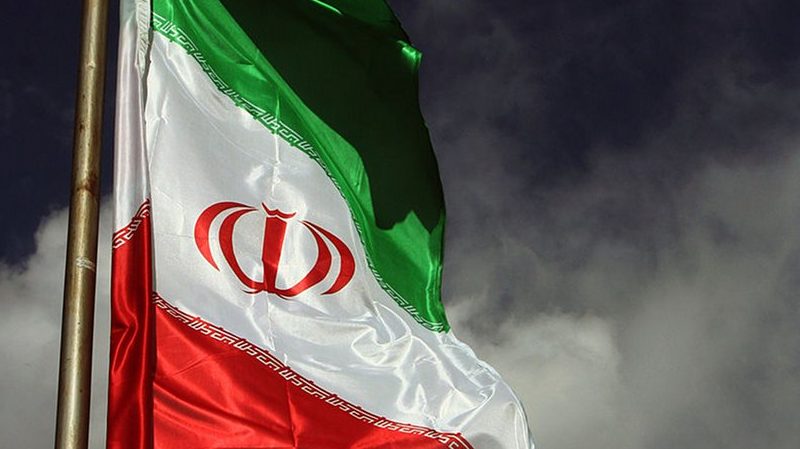
Flag of Iran. Photo by Farzaaaad2000, Wikipedia Commons.

Throughout its history, Iran’s regime has maintained its hold on power through suppression and deceit. The regime has abused religion to impose its fundamentalistic ideology on the masses and massacre its opponents. However, the regime’s deceitful tactics in the name of Islam are becoming more hollow and less effective.

Even regime insiders have confessed to all the deceit of this regime.  On January 13, Khabar Online quoted journalist Abbas Abdi as saying, “These individuals are completely unfamiliar with the word ‘belief’ and for them, it has only been a game of words and nothing more… Wherever their interests lie, they deceitfully fabricate narratives that contradict the religious obligations that people believe in. Therefore, the issue is not about beliefs but about interests.”

In one of the latest examples of regime’s deception, the spokesperson for the Guardian Council, the body that oversees the elections, suddenly remembered the “people’s right” and announced that “unveiled women can also participate in the voting booths and exercise their right to choose representatives, and no individual or authority can deprive citizens of this right.”

This is coming from the same regime that fines, beats, imprisons, and even kills women who do not adhere to its medieval hijab rules.

People in society and social networks have ridiculed this hypocrisy. The state-run Hamdeli newspaper wrote on January 20, “If the same [unveiled] citizen intends to go to the airport, government offices, banks, etc. to exercise their ordinary citizenship rights, their presence in these institutions is prevented,” how can the regime support their right to vote? And loyalists of the regime, who have learned the lesson of deception from regime founder Ruhollah Khomeini, respond by saying, “Just as a convicted criminal serving time in prison can vote, it is the undeniable right of an unveiled lady to vote and there is no legal prohibition.”

The regime has demonstrated over the decades that it not only does not uphold any rights for its citizens, to the extent that it even murders individuals like Mahsa Amini for violating the imposed dress codes of the Islamic Republic, but now, in its moment of weakness and instability, it shamelessly exploits unveiled women for the theatrics of its elections and does not shy away from any extravagance.

More than ever, the regime’s maneuvers become evident, as Khamenei, the Supreme Leader, intended to divert attention from social crisis and uprisings on one hand through regional warmongering, and on the other hand by focusing on the elections and purging his own ranks. However, the situation has turned in a way that regional warmongering has only resulted in further vulnerability and continuous elimination of his key players, without yielding any significant results.

Missile attacks against other countries have also backfired, yielding no results other than the killing of innocent civilians and further condemnation and isolation of the entire mullahs’ regime.

Hence, it has become clear that different social classes have become aware of the weakness of the ruling regime and have explicitly declared in the strongest terms in every gathering that they will not participate in the regime’s electoral circus.

On January 19, Entekhab newspaper quoted two-term president Hassan Rohani and former head of Supreme National Security Council of the regime as saying that the regime’s “crisis of social capital,” the enormous defection of the regime’s loyal forces, and the gap between regime and the people has reached its deepest level possible.


Categories
South Caucasus News

Legacies Of Injustice And Racial Inequality – OpEd


Legacies Of Injustice And Racial Inequality – OpEd

black vote minority hands

By Wanjiru Njoya

Supporters of free market capitalism are often thought, wrongly, to be unconcerned about human well-being. On the contrary, it is precisely because we are concerned about human well-being that we promote free markets, productivity, and peaceful exchange—a point powerfully made by Ludwig von Mises in Liberalism: In The Classical Tradition:

That there is want and misery in the world is not, as the average newspaper reader, in his dullness, is only too prone to believe, an argument against liberalism. It is precisely want and misery that liberalism seeks to abolish, and it considers the means that it proposes the only suitable ones for the achievement of this end.

In contemporary debates about racial inequality, supporters of free markets contend that people of all races thrive in free markets, which are in turn dependent upon individual liberty and the protection of private property. Thus, progressives who dismantle property rights in an attempt to promote the welfare of disadvantaged racial groups undermine their own goals by dismantling the only effective path to progress.

The idea that property rights are an impediment to human progress derives partly from a failure to understand the causes of economic inequality. In discussing economic inequality, questions of causation do not trouble egalitarians, socialists, and communists, who invent wild schemes that they claim will fix inequality. Yet the causes of economic outcomes, of course, matter. Ultimately, the racial injustice debates draw upon redistributive concepts of justice that treat economic inequality as presumptively unjust with no attempt to ascertain the causes of that inequality. Political demands for wealth redistribution and racial “equity,” although couched in the language of justice, are in fact incompatible with true justice.

Property Rights and Racial Injustice

Claims concerning racial injustice take many forms. Key among them are claims for wealth redistribution, racial preferences in allocation of tax spending, reparations, and—even in extreme cases—abolishing property rights. Such schemes, which normally parade under the label of “equity,” are incompatible with property rights. The rationale behind these types of wealth transfers is that they are necessary in the public interest—namely, the promotion of racial equality. A particularly egregious example is South Africa’s Expropriation Bill under which it is sought to seize private property without compensation: “Local, provincial and national authorities will use this legislation to expropriate land in the public interest for varied reasons that seek to amongst others, promote inclusivity and access to natural resources.”

The argument behind such policies is that social values such as equity and inclusivity require the restriction or abolition of property rights. The rationale is that, in promoting justice, it is necessary in such situations to abrogate private property rights.

However, property rights are not an impediment or obstacle to achieving justice. As Robert Nozick observes in Anarchy, State, and Utopia, the defense of private property does not stand in the way of legal redress in cases of stolen property: “Returning stolen money or compensating for violations of rights are not redistributive reasons.” Claims for return of stolen property, where theft can be proved, raise questions of fact that should be decided at the outset: whether the property claimed to have been stolen was in fact stolen.

Quite obviously, theft must be proved with objectively verifiable evidence and not merely asserted. However, once proved, the stolen property must be returned or compensated for. That is entirely consistent with property rights—the true owner, upon proof of his case, is entitled to get his property back. On this basis, the owners of Bruce’s Beach had their property returned by the State of California:

Bruce’s Beach was purchased in 1912 to create a beach resort for black people at a time of racial segregation in southern California.

Located in the desirable city of Manhattan Beach, it was forcibly taken by the local council [under eminent domain laws] in 1924.

But on Tuesday, Los Angeles officials voted to return the land to the family.

The objection to wealth redistribution concerns cases where wealth transfers between different racial groups are proposed based purely on the existence of wealth disparities between races. No specified thief or victim is identified as the claim is purely couched in the language of historical racial domination and subordination. As William Shaw argues in the context of Africa, a historical claim to land title based on legal and archaeological evidence is quite different from a claim based purely on membership of a racial group said to have inhabited the land centuries ago. Amorphous “you stole our land” pronouncements cannot be used to justify black people stealing farms from white farmers. The notion of justice plainly cannot be used to justify theft.

On the contrary, justice is predicated on the right of a property owner to defend his life, his home, and his property. In the terminology of human rights, classical liberals would say that property rights are human rights, and to that we might add that there are no human rights that are not also property rights as Murray Rothbard argues in The Ethics of Liberty:

For not only are there no human rights which are not also property rights, but the former rights lose their absoluteness and clarity and become fuzzy and vulnerable when property rights are not used as the standard . . . human rights, when not put in terms of property rights, turn out to be vague and contradictory, causing liberals to weaken those rights on behalf of “public policy” or the “public good.”

The Causes of Inequality

It is often claimed that economic outcomes and wealth disparities between racial groups are caused by legacies of oppression or generational trauma from decades or centuries past and that wealth disparities between racial groups are attributable to these historical events. The argument is that the actions and life experiences of people today are constrained and determined by injustices suffered by their ancestors. On that basis, the case for reparations claims that any disparities—any “economic gap” between different groups, communities, or nations—is caused by past injustice and is presumptive evidence of legacies of that injustice. Wealth transfers designed to close economic gaps are therefore said to be the best or indeed the only way to remedy past injustice and their resulting legacies.

Often these claims about causation are very loosely framed: it is essentially said that the occurrence of historical events explains why people are now poor, in that oppressed people have never managed to escape their chains. The old forms of oppression are said to remain, having evolved into new invisible forms of oppression: “Instead of vanishing, the disadvantages confronting black Americans simply morphed.”

Such claims are generally constructed upon a set of causal relations, the validity of which is taken by critical race theories to be self-evident and thus not to require further exposition or substantiation. Critical race theories in this context rely on a set of interlinked presumptions. The first presumption relates to a causal connection between historical injustice and contemporary discrimination. Building on that, the second presumption relates to a causal connection between contemporary discrimination and economic outcomes. Unequal outcomes are said by critical race theorists to be a legacy of the exploitative relationship between historical “oppressors” and the historically “oppressed.” In addition, critical race theories assert that contemporary discrimination is “systemic” in nature, so that systemic racism is said to be manifest not in specified individual conduct or particular individual life experiences but in the very systems on which society in general is constructed, such as the legal system or the criminal justice system.

Based on those causal presumptions, critical race theorists construct their solution to economic inequality: they assert that paying for historical crimes would resolve the historical injustice, would thereby help to “end discrimination,” which they would in turn expect to yield equal outcomes for all racial groups. So far as wealth and income are not proportionately distributed between different racial groups—that is, so far as equal outcomes do not emerge—they take that as evidence that MORE redistribution needs to be done: “We need to equity harder.”

It is said that there is nothing black people can do to improve their conditions: after all, the causes are systemic and not individual so nothing the individual can do will change that. The economic system as a whole would need to be reformed. The prognosis is dire: “Unless current economics change, black families will be poorer on the 175th anniversary of Emancipation than they were in 1980.”

The idea that the causes of economic inequality can be traced back to historical events fails to take causation seriously. Without correctly identifying the causes of a phenomenon, it is impossible to understand it or evaluate it, nor can any problems be resolved when their causes are incorrectly identified. This is the task to which libertarian and classical liberal economists like Peter Bauer, Robert Higgs, Walter Williams, and Thomas Sowell have devoted much attention.

This inattention to the causes of inequality derives partly from the assumption that inequality is unjust. From a classical liberal perspective, justice means to give each man his own. Justice does not require that everyone must have equal amounts of wealth or equal life experiences. In “Enforced Equality—Or Justice?,” Antony Flew explains that justice in the classical sense is not synonymous with equality of condition or equality of outcome. It follows that the absence of equal conditions is not in itself unjust, but rather, account must be taken of how the inequality is manifest and what has caused that inequality. Flew is therefore critical of arguments that presume justice and equality to be synonymous so that they make no attempt to explain why inequality should automatically be treated as an injustice. Flew’s argument is that justice properly understood neither promises nor requires equal distribution of wealth or fortune.

The same analysis applies to the concept of “equal opportunities,” which is promoted by liberals who never pause to consider what is meant by opportunity, how they propose to equalize everyone’s opportunities, and by what test or measure they would ascertain to their satisfaction that everyone’s opportunities are equal. Eradicating want and deprivation as well as promoting human well-being and prosperity for all people regardless of race, sex, or other identity characteristics is not dependent on opportunities being equal. While helping the poor is to be lauded, “helping the poor and leveling income differ entirely as goals.”

One could say, for example, that every child should have the opportunity to acquire a good start in life, a good education, good health, the opportunity to live a happy life, and realization of his or her full potential. However, that is not the same thing as saying the opportunities of all children must be equal. The opportunities of children in different families are not equal because families are not equal. Does someone from a stable, happy home have an “equal opportunity” to do as well in a test as someone from a dysfunctional and chaotic home? To call their opportunities equal would be to stretch words beyond credibility.

Even the opportunities of children in the same family are not equal because their talents and personalities and interests differ and will influence their life opportunities. For example, the opportunity to be a concert pianist is not equal between the talented and the untalented pianist. Indeed as Thomas Sowell puts it, “Nobody is equal to anybody. Even the same man is not equal to himself on different days.” Inequality of wealth, fortune, talent, or opportunity is inherent in the human condition, despite the claims of those who wish to rail against nature. The sinister activists behind equalization schemes therefore find themselves destroying and dismantling social institutions, including the family, which they see as a hotbed of unequal opportunities. Ultimately, when they inevitably find themselves unable to equalize everyone’s opportunities, they are driven in frustration and desperation to begin equalizing outcomes as seen in the examples of racial quotas and affirmative action.

For these reasons, when highlighting the importance of causation and identifying the causes of inequality, we must distinguish between inequality on the one hand and poverty or deprivation or human suffering on the other. The goal is to alleviate poverty, deprivation, and human suffering, and free markets are the only way to accomplish that goal.

The Meaning of Justice

In the racial injustice debates, the language of “justice” is often invoked to avoid analyzing the benefits and costs of proposed redistributive schemes. The language of justice gives political schemers a free pass—they do not have to substantiate or justify their claims any further if they can claim to be promoting justice. As Friedrich von Hayek observed in The Mirage of Social Justice: “The people who habitually employ the phrase [social justice] simply do not know themselves what they mean by it and just use it as an assertion that a claim is justified without giving a reason for it.” A similar function is served by other beguiling labels like kindness, compassion, inclusiveness, and diversity—“making people feel welcome.” This language is often used to obfuscate rather than to achieve its putative goals. Thomas Sowell makes a similar point in The Quest for Cosmic Justice, where he criticizes the notion that historical injustice can be reversed by reallocating wealth between different racial groups. Sowell describes this notion as an intertemporal view of justice: the idea that past injustice can be retrospectively corrected by action taken in the present. As Flew explains, this is not justice and, on the contrary, it often relies on injustice and coercion to pursue its goals.

How Should We Think about Justice?

The classical ideal of justice is reflected in the principle of formal equality. Everyone has equal rights in the eyes of the law. Nobody has special rights based on race, sex, or other identity characteristics.

Further, justice in the classical liberal tradition is based on individual responsibility. Any attempt to enforce notions of collective guilt is unjust. As H. D. Lewis argues in “Collective Responsibility,” individual responsibility is a basic ethical principle: “No one can be responsible, in the properly ethical sense, for the conduct of another. Responsibility belongs essentially to the individual.” This principle lies at the heart of the presumption of innocence and the associated principle that anyone who accuses another of any wrongdoing bears the burden of proof. If responsibility is individual, the culpability of each individual for his crimes must be justly ascertained.

Further, as H. D. Lewis argues, “‘A structure’ cannot be the bearer of moral responsibility; neither can ‘society in general,’ for these are both abstractions which we must be careful not to hypostatize.” It follows that we cannot accept the amorphous concept of “systemic racism.” Nor can we hold any person liable to pay reparations for what his “community” or his tribe or his race or even his own forefathers who bear his own name are said to have done in the past.

Three conclusions may be drawn from this analysis. First, that racial preferences designed to redress historical injustice are themselves unjust. We cannot redress historical injustice by implementing new injustices against innocent people today and in the future. Second, that any measures designed to implement such schemes such as “equity” are wrong and should be opposed on that basis.

Third, that justice does not require equal outcomes. Nor does justice require the equalization of everyone’s opportunities, a goal which is humanly impossible and amounts, as Rothbard said, to a revolt against nature. Rather, justice requires formal equality, meaning equal rights and equal status in the eyes of the law regardless of race, sex, or any other aspect of our personal or group identity.

  • About the author: Wanjiru Njoya is the author of Economic Freedom and Social Justice (Palgrave Macmillan, 2021), Redressing Historical Injustice (Palgrave Macmillan, 2023, with David Gordon) and “A Critique of Equality Legislation in Liberal Market Economies” (Journal of Libertarian Studies, 2021).
  • Source: This article was published by the Mises Institute. This article is a revised version of a talk given at the Oxford University Mises Society on January 16, 2024. The talk drew upon themes discussed in David Gordon and Wanjiru Njoya, Redressing Historical Injustice: Self-Ownership, Property Rights and Economic Equality (Palgrave Macmillan, 2023).


Categories
South Caucasus News

Azerbaijan, Denmark mull preparation process for COP29 – AzerNews.Az


Azerbaijan, Denmark mull preparation process for COP29  AzerNews.Az

Categories
South Caucasus News

Azerbaijan announces agenda for upcoming parliamentary session – Trend News Agency


Azerbaijan announces agenda for upcoming parliamentary session  Trend News Agency

Categories
South Caucasus News

Azerbaijan’s carrot imports surged in value and quantity in 2023 – FreshPlaza.com


Azerbaijan’s carrot imports surged in value and quantity in 2023  FreshPlaza.com

Categories
South Caucasus News

Raspberry farming booms in Azerbaijan’s Goygol district – FreshPlaza.com


Raspberry farming booms in Azerbaijan’s Goygol district  FreshPlaza.com

Categories
South Caucasus News

What Does Azerbaijan Want? – The Armenian Mirror-Spectator


What Does Azerbaijan Want?  The Armenian Mirror-Spectator

Categories
South Caucasus News

Georgian PM Irakli Garibashvili resigns


Georgian Prime Minister Irakli Garibashvili said in a televised briefing on Monday that he was resigning ahead of parliamentary elections due by October.

Georgia’s ruling Georgian Dream party will name its chairman, Irakli Kobakhidze, as the next Prime Minister, replacing Irakli Garibashvili ahead of parliamentary elections later this year.

The swap, in which Garibashvili will take over as party leader, will be officially announced on Feb. 1.