
Day: January 23, 2024
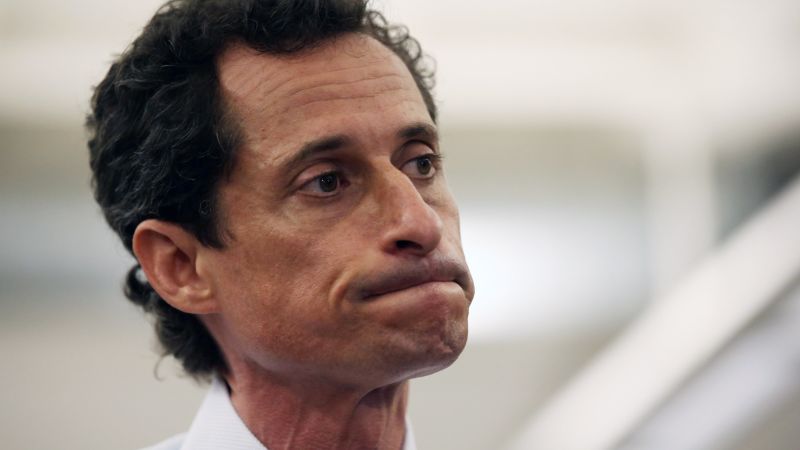
Authorities have opened preliminary investigations
Weiner is alleged to have exchanged sexually explicit text messages with a purportedly underage girl
Prosecutors in the office of US Attorney Preet Bharara have issued a subpoena for Anthony Weiner’s cell phone and other records, according to law enforcement officials.
The FBI and the New York Police Department have opened preliminary investigations of allegations that the former New York Democratic congressman exchanged sexually explicit text messages with a purportedly underage girl.
Spokespersons for the US Attorney’s Office in Manhattan and the FBI declined to comment.
The allegations first surfaced in the Daily Mail.
The online sexting relationship allegedly went on for months between Weiner and a girl claiming to be just 15. The Daily Mail reported she said he sent her numerous photos, one of him in a pool and at least one bare-chested.
The outlet reported that the girl said she reached out to Weiner in January on Twitter.
In a statement to CNN, Weiner neither confirmed or denied sending the texts.
“I have repeatedly demonstrated terrible judgment about the people I have communicated with online and the things I have sent. I am filled with regret and heartbroken for those I have hurt,” he said.
Weiner continued: “While I have provided the Daily Mail with information showing that I have likely been the subject of a hoax, I have no one to blame but me for putting myself in this position. I am sorry.”
CNN has not been able to confirm this was a hoax.
In a statement, a spokeswoman for Republican presidential nominee Donald Trump noted that Weiner donated $550 to Hillary Clinton’s presidential campaign last year.
“The announcement by the FBI and New York Police Department that they are investigating close Clinton ally Anthony Weiner’s inappropriate relationship with an underaged female is extremely disturbing,” Jessica Ditto said. “The Clinton campaign should immediately return all campaign contributions from Weiner. America has had enough of the sleaze that is Clinton, Inc.”
Huma Abedin, one of Clinton’s closest aides, announced last month that she was separating from Weiner after photos emerged of him allegedly sexting with another woman while their son was in bed with him. That woman was described in the New York Post as a 40-something divorced woman from the West.
Weiner left Congress in June 2011 when sexually-charged, sometimes explicit, texts with women other than his wife first emerged. His social media habits continued after leaving Congress and contributed to his poor showing in the 2013 New York City mayoral race, a contest in which he had once been a leading contender.
CNN’s Sonia Moghe contributed to this report.
Authorities have opened preliminary investigations
Weiner is alleged to have exchanged sexually explicit text messages with a purportedly underage girl
Prosecutors in the office of US Attorney Preet Bharara have issued a subpoena for Anthony Weiner’s cell phone and other records, according to law enforcement officials.
The FBI and the New York Police Department have opened preliminary investigations of allegations that the former New York Democratic congressman exchanged sexually explicit text messages with a purportedly underage girl.
Spokespersons for the US Attorney’s Office in Manhattan and the FBI declined to comment.
The allegations first surfaced in the Daily Mail.
The online sexting relationship allegedly went on for months between Weiner and a girl claiming to be just 15. The Daily Mail reported she said he sent her numerous photos, one of him in a pool and at least one bare-chested.
The outlet reported that the girl said she reached out to Weiner in January on Twitter.
In a statement to CNN, Weiner neither confirmed or denied sending the texts.
“I have repeatedly demonstrated terrible judgment about the people I have communicated with online and the things I have sent. I am filled with regret and heartbroken for those I have hurt,” he said.
Weiner continued: “While I have provided the Daily Mail with information showing that I have likely been the subject of a hoax, I have no one to blame but me for putting myself in this position. I am sorry.”
CNN has not been able to confirm this was a hoax.
In a statement, a spokeswoman for Republican presidential nominee Donald Trump noted that Weiner donated $550 to Hillary Clinton’s presidential campaign last year.
“The announcement by the FBI and New York Police Department that they are investigating close Clinton ally Anthony Weiner’s inappropriate relationship with an underaged female is extremely disturbing,” Jessica Ditto said. “The Clinton campaign should immediately return all campaign contributions from Weiner. America has had enough of the sleaze that is Clinton, Inc.”
Huma Abedin, one of Clinton’s closest aides, announced last month that she was separating from Weiner after photos emerged of him allegedly sexting with another woman while their son was in bed with him. That woman was described in the New York Post as a 40-something divorced woman from the West.
Weiner left Congress in June 2011 when sexually-charged, sometimes explicit, texts with women other than his wife first emerged. His social media habits continued after leaving Congress and contributed to his poor showing in the 2013 New York City mayoral race, a contest in which he had once been a leading contender.
CNN’s Sonia Moghe contributed to this report.
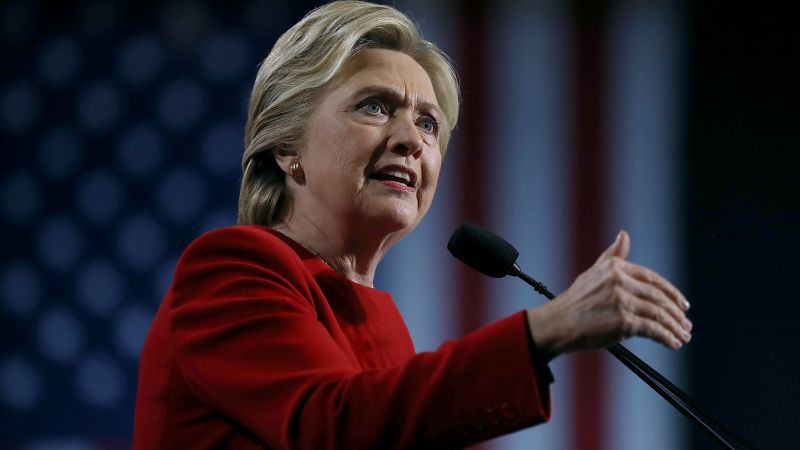
The Justice Department’s inspector general will issue a report on how top federal officials handled the investigation into Hillary Clinton’s use of a private email server while secretary of state.
Here are the key dates of the investigation from 2015 and 2016:
July 10, 2015 – The FBI opened a criminal investigation, code-named “Midyear Exam,” into Hillary Clinton’s handling of classified information while secretary of state.
Late September 2015 – As then-FBI Director James Comey prepared for his first public questions about the case at congressional hearings and meetings with reporters, he met with then-Attorney General Loretta Lynch at the Justice Department. Lynch asked him to refer to the investigation as a “matter,” Comey said in his book, “A Higher Loyalty.”
In a statement to CNN after Comey’s book was released, Lynch defended her language and said no concerns were raised. “If he had any concerns regarding the email investigation, classified or not, he had ample opportunities to raise them with me both privately and in meetings. He never did,” Lynch said.
June 27, 2016 – Lynch met with President Bill Clinton at an airport in Phoenix after Clinton realized the two were on separate planes on the same tarmac.
July 1, 2016 – Lynch said at the Aspen Institute that she “wouldn’t do it again”; she made clear she wouldn’t formally recuse herself from the investigation, but would accept the recommendations of career DOJ staff and the FBI.
July 2, 2016 – Hillary Clinton was interviewed by FBI for three-and-a-half hours.
Morning of July 5, 2016 – Comey, in “A Higher Loyalty,” said he called Lynch and Deputy Attorney General Sally Yates and told them that he planned to hold a news conference on the Clinton case and was not coordinating the statement with the Justice Department. Comey writes in the book Lynch asked only, “What will you be recommending?” and he replied with, “I’m sorry, but I’m not going to answer that.” He added: “It’s very important that I not have coordinated this in any way with the department. I hope some day you will understand why.” Lynch said nothing, according to Comey.
Later on July 5, 2016 – Comey issued a surprise statement on the email server investigation recommending no charges against Clinton; he said DOJ officials “do not know what I am about to say.”
September 22, 2016 – CNN reported federal prosecutors were investigating former Rep. Anthony Weiner, the husband of top Clinton aide Huma Abedin, for sexting with a minor.
September 28, 2016 – Comey testified in front of the House Judiciary Committee.
Asked if he would reopen the Clinton case if he found new information, Comey said: “It’s hard for me to answer in the abstract. We would certainly look at any new and substantial information.”
On or about September 28, 2016 – FBI Deputy Director Andrew McCabe was informed about Clinton emails found on Weiner’s laptop. “Got called up to Andy’s earlier…hundreds of thousands of emails turned over by Weiner’s atty to sdny, includes a ton of material from spouse. Sending team up tomorrow to review … this will never end …,” FBI counterintelligence agent Peter Strzok wrote to FBI lawyer Lisa Page. The two worked closely on the Clinton email probe, and later on the FBI’s investigation into Russian meddling in the election.
Early October 2016 – Comey, in “A Higher Loyalty,” wrote that someone at FBI (he believes McCabe), mentioned to him that the Weiner had a laptop might have some connection to the Clinton case. “I don’t remember the conversation clearly. I suspect that is because it seemed like a passing comment and the notion that Anthony Weiner’s computer might connect to Midyear and Hillary Clinton made no sense to me,” Comey said.
October 24, 2016 – The Wall Street Journal reported that Jill McCabe, the wife of Andrew McCabe, accepted nearly $500,000 from the political action committee of then-Democratic Virginia Gov. Terry McAuliffe, a Clinton family ally, during a failed bid for state senate in 2015.
October 26, 2016 – Rudy Giuliani went on Fox News to say that then-Republican presidential nominee Donald Trump had “a surprise or two that you’re going to hear about in the next two days.”
October 27, 2016 – Comey held a meeting with the Clinton e-mail investigation team at the FBI to discuss obtaining a search warrant for a set of Clinton-related emails the FBI had discovered on Weiner’s laptop.
Comey wrote in his memoir that the FBI agents in the room told him that it “would take many weeks” to review the newly discovered emails, and that there was “no chance” that it would be done before the election.
October 28, 2016 – Comey wrote to Congress saying, “In connection with an unrelated case, the FBI has learned of the existence of emails that appear to be pertinent to the investigation.” Lynch and Yates privately said the letter ran afoul of DOJ policy.
October 30, 2016 – Prosecutors obtained a search warrant to begin reviewing Weiner’s laptop for emails related to the Clinton investigation.
November 1, 2016 – McCabe sent emails to FBI executives and officials overseeing the Clinton email Investigation informing them that he was recusing himself from those investigations.
November 2, 2016 – Email is leaked showing that Peter Kadzik, then-head of legislative affairs at the Justice Department, offered Clinton campaign chairman John Podesta a “heads-up’” in May 2015 about a congressional hearing where a Justice official was likely to be questioned about Clinton’s email use.
November 6, 2016 – A second Comey letter to Congress stated, “Based on our review, we have not changed our conclusions that we expressed in July.” CNN reported that DOJ agreed with decision to send letter.
November 8, 2016 – Donald Trump is elected President of the United States.
CNN’s Marshall Cohen contributed to this report.
The Justice Department’s inspector general will issue a report on how top federal officials handled the investigation into Hillary Clinton’s use of a private email server while secretary of state.
Here are the key dates of the investigation from 2015 and 2016:
July 10, 2015 – The FBI opened a criminal investigation, code-named “Midyear Exam,” into Hillary Clinton’s handling of classified information while secretary of state.
Late September 2015 – As then-FBI Director James Comey prepared for his first public questions about the case at congressional hearings and meetings with reporters, he met with then-Attorney General Loretta Lynch at the Justice Department. Lynch asked him to refer to the investigation as a “matter,” Comey said in his book, “A Higher Loyalty.”
In a statement to CNN after Comey’s book was released, Lynch defended her language and said no concerns were raised. “If he had any concerns regarding the email investigation, classified or not, he had ample opportunities to raise them with me both privately and in meetings. He never did,” Lynch said.
June 27, 2016 – Lynch met with President Bill Clinton at an airport in Phoenix after Clinton realized the two were on separate planes on the same tarmac.
July 1, 2016 – Lynch said at the Aspen Institute that she “wouldn’t do it again”; she made clear she wouldn’t formally recuse herself from the investigation, but would accept the recommendations of career DOJ staff and the FBI.
July 2, 2016 – Hillary Clinton was interviewed by FBI for three-and-a-half hours.
Morning of July 5, 2016 – Comey, in “A Higher Loyalty,” said he called Lynch and Deputy Attorney General Sally Yates and told them that he planned to hold a news conference on the Clinton case and was not coordinating the statement with the Justice Department. Comey writes in the book Lynch asked only, “What will you be recommending?” and he replied with, “I’m sorry, but I’m not going to answer that.” He added: “It’s very important that I not have coordinated this in any way with the department. I hope some day you will understand why.” Lynch said nothing, according to Comey.
Later on July 5, 2016 – Comey issued a surprise statement on the email server investigation recommending no charges against Clinton; he said DOJ officials “do not know what I am about to say.”
September 22, 2016 – CNN reported federal prosecutors were investigating former Rep. Anthony Weiner, the husband of top Clinton aide Huma Abedin, for sexting with a minor.
September 28, 2016 – Comey testified in front of the House Judiciary Committee.
Asked if he would reopen the Clinton case if he found new information, Comey said: “It’s hard for me to answer in the abstract. We would certainly look at any new and substantial information.”
On or about September 28, 2016 – FBI Deputy Director Andrew McCabe was informed about Clinton emails found on Weiner’s laptop. “Got called up to Andy’s earlier…hundreds of thousands of emails turned over by Weiner’s atty to sdny, includes a ton of material from spouse. Sending team up tomorrow to review … this will never end …,” FBI counterintelligence agent Peter Strzok wrote to FBI lawyer Lisa Page. The two worked closely on the Clinton email probe, and later on the FBI’s investigation into Russian meddling in the election.
Early October 2016 – Comey, in “A Higher Loyalty,” wrote that someone at FBI (he believes McCabe), mentioned to him that the Weiner had a laptop might have some connection to the Clinton case. “I don’t remember the conversation clearly. I suspect that is because it seemed like a passing comment and the notion that Anthony Weiner’s computer might connect to Midyear and Hillary Clinton made no sense to me,” Comey said.
October 24, 2016 – The Wall Street Journal reported that Jill McCabe, the wife of Andrew McCabe, accepted nearly $500,000 from the political action committee of then-Democratic Virginia Gov. Terry McAuliffe, a Clinton family ally, during a failed bid for state senate in 2015.
October 26, 2016 – Rudy Giuliani went on Fox News to say that then-Republican presidential nominee Donald Trump had “a surprise or two that you’re going to hear about in the next two days.”
October 27, 2016 – Comey held a meeting with the Clinton e-mail investigation team at the FBI to discuss obtaining a search warrant for a set of Clinton-related emails the FBI had discovered on Weiner’s laptop.
Comey wrote in his memoir that the FBI agents in the room told him that it “would take many weeks” to review the newly discovered emails, and that there was “no chance” that it would be done before the election.
October 28, 2016 – Comey wrote to Congress saying, “In connection with an unrelated case, the FBI has learned of the existence of emails that appear to be pertinent to the investigation.” Lynch and Yates privately said the letter ran afoul of DOJ policy.
October 30, 2016 – Prosecutors obtained a search warrant to begin reviewing Weiner’s laptop for emails related to the Clinton investigation.
November 1, 2016 – McCabe sent emails to FBI executives and officials overseeing the Clinton email Investigation informing them that he was recusing himself from those investigations.
November 2, 2016 – Email is leaked showing that Peter Kadzik, then-head of legislative affairs at the Justice Department, offered Clinton campaign chairman John Podesta a “heads-up’” in May 2015 about a congressional hearing where a Justice official was likely to be questioned about Clinton’s email use.
November 6, 2016 – A second Comey letter to Congress stated, “Based on our review, we have not changed our conclusions that we expressed in July.” CNN reported that DOJ agreed with decision to send letter.
November 8, 2016 – Donald Trump is elected President of the United States.
CNN’s Marshall Cohen contributed to this report.
On January 22, the Georgian NGO Civic IDEA, a self-described monitor of “China’s growing influence in Georgia”, issued a response to the harsh criticism of the organization and its founder Tinatin Khidasheli by the Speaker of the Parliament, Shalva Papuashvili. The harsh criticism intensified after the publication on January 18 of Civic IDEA’s brief entitled “A drop in the Ocean – Chinese investments in Georgia“.
The brief, based on statistical data, provides information on foreign direct investment from China. It highlights the “extremely small” share of Chinese investment in Georgia and illustrates the government’s “complete failure to attract Chinese investments, particularly in contrast to the lofty claims of significant interest and “immeasurably deepened” relations.” Official data shows a significant decline in Chinese investment after it doubled to $221 million in 2014. The document notes that since 2015, China has not even been among the top 10 investors in Georgia, according to statistics from 2011 to 2022.
Later on the same day that the letter was published, Speaker Shalva Papuashvili criticized Tinatin Khidasheli, accusing her of presenting herself as a China expert while using “hostile rhetoric” toward the People’s Republic of China (PRC). Papuashvili noted that Khidasheli’s organization is funded by the Taiwanese NGO Taiwan Foundation for Democracy, which he said suggested a deliberate effort to stir up anti-Chinese sentiment in Georgia.
Papuashvili urged the media to question Khidasheli about her position on the territorial integrity of the PRC and her views on Taiwan, given Civic IDEA’s source of funding. He expressed concern that Khidasheli, a former Defense Minister with access to classified information, was involved in “lobbying Taiwan and funding from an unrecognized state,” posing a potential national security risk that “requires the attention of the appropriate authorities.”
During the interview, Papuashvili also stressed “the importance” of the dropped “Foreign Agents Law,” which aimed to register foreign-funded NGOs and media organizations as “agents of foreign influence. He claimed that cases like Khidasheli’s were exactly what they [ruling GD authorities] had in mind when proposing the law in February 2023, because “NGOs are used by foreign subjects to influence domestic politics”.
On January 20, Papuashvili addressed the importance of Sino-Georgian relations at a press briefing in which he criticized NGOs in Georgia. He reiterated concerns about politicians deeply involved in the NGO sector engaging in political propaganda, specifically pointing to Civic IDEA, among others.
Papuashvili stated: “Georgia’s interest is the Middle Corridor, the Silk Road, … and we have an opportunity to use this corridor right now. The goods moving between China and Europe should pass through Georgia. The people who oppose this serve the interests of those who are funding and are behind these people. It is a fact that all those who stir up anti-Chinese sentiments in Georgia aim to disrupt the projects of the strategic importance of Georgia, to turn Georgia into a dead-end and not a corridor.”
Other MPs from the ruling GD party joined in, lashing out at what they called the “anti-state nature of Civic IDEA’s activities.” Over the next three days the pro-government media covered the topic extensively, including a 14-minute segment on TV Imedi, criticizing Civic IDEA and discussing the PRC’s future involvement in Georgia, including in projects such as the new international airport and the Anaklia deep-sea port.
Civic IDEA notes that it has repeatedly pointed out the Georgian government’s lack of due diligence in dealing with the PRC, criticizing procurement policies that favor discredited Chinese companies that fail to complete projects on time and within approved budgets.
The organization views the recent attacks on its activities as a preemptive measure before the government announces larger strategic projects. The organization stresses the suspicious nature of the “the intensity of back and forth communication by the government and Parliament representatives with Beijing”, especially in the context of the potential involvement of China in the Anaklia project.
Also Read:
Georgian police arrested five people linked to the criminal underworld, the Georgian Ministry of Internal Affairs (MIA) reported on January 23. The investigations were carried out in the capital Tbilisi and in the Imereti region of Georgia by the local police.
According to the MIA press release, the individuals were arrested for belonging to the criminal underworld, participating in criminal gatherings, supporting the activities of the criminal underworld, requesting the assistance of a “thief in law” [crime boss], organized extortion, and joint participation in organized extortion. The Criminal Law of Georgia provides for ten years imprisonment for the crimes committed.
“Thieves in law,” also known as “vor v zakone” in Russian [“вор в законе” – Russian], is a term to describe influential people within the organized crime world, particularly in the context of Soviet and post-Soviet criminal groups. “Thieves in law” are often involved in overseeing criminal activities, mediating conflicts, and enforcing their own set of rules within the criminal hierarchy, in the absence of well-functioning and effective state law-enforcement. Membership in, endorsement of, and seeking assistance from “thieves in law” for settling disputes are punishable by law in Georgia.
According to the MIA, the investigation revealed the active involvement of these individuals in various criminal activities. It notes that one of those arrested asked the defendants for help in settling the financial dispute, with the aim of obtaining personal benefit. To this end, they conducted a “thief in the law” type of discussion involving both parties to the dispute. The MIA reports that “at the meeting, which was held in accordance with the traditions of the ‘thief in law’, the defendants demanded that one of the disputants pay a certain amount of money to another disputant within a certain time, and if he did not do so, they threatened him with personal retaliation.
Also Read:
A dramatic eviction on Kekelidze Street in Tbilisi has turned into a tense standoff between authorities, the family being evicted and a group of protesters. Officers from the National Bureau of Enforcement arrived to carry out the eviction in the morning of January 23 but were met with fierce resistance from the apartment residents and supporters.
Following hours of resistance from a group of protesters and the former owner’s family, who had barricaded themselves inside the targeted apartment, the law enforcement officers have reportedly finally managed to start the eviction process.
According to some media reports, the authorities allegedly used tear gas inside the building against people who had gathered to oppose the eviction. The National Bureau of Enforcement denied this information. “On the contrary, in order to interrupt the process, the people who were inside the apartment probably used pepper spray against the [employees of the] Enforcement Police and Emergency Services, as a result of which several police officers received injuries”.
The eviction has drawn criticism from the President of Georgia, Salome Zurabishvili, who expressed her disapproval stating that “evicting people during winter and in snowy conditions, damaging their property, insulting their dignity, and promoting usurers are unacceptable.” She emphasized that such actions are against European values and pointed out that the eviction of people during winter is prohibited in all European countries.
This incident marks the fifth attempt by the police to evict the family since 2019, according to the Social Justice Center, a local NGO focusing on social issues. The organization revealed that the family is willing to settle the primary financial debt, but they are currently being denied the opportunity to do so.
“In a flawed monetary and credit policy, creditors primarily aim to gain possession of mortgaged property. Moneylenders exploit the poor socio-economic conditions of the borrowers, resulting in the signing of loan agreements with unfavorable terms and an elevated risk of losing their homes,” the NGO noted.
The Public Defender’s Office said it is trying to locate the detainees in order to see them and react accordingly. The Ombudsman’s Office says it will also investigate the legality of the police actions.
Later today, the Ministry of Interior confirmed that 18 people had been arrested under administrative charges for allegedly disobeying lawful police orders and disturbing public order.
The ministry argues that the protesters verbally and physically insulted the police and used “as yet unidentified special means, such as spray”.
The Ministry says it is investigating the charges against the protesters under Article 353 of the Criminal Code of Georgia, which provided for punishment for attacking a police officer, employee of the Special Penitentiary Service or other representative of authority or a public institution.
The MIA also alleges that the protesters damaged the car of the National Bureau of Enforcement. The case is being investigated under Article 187, Part 2, Subsection “c” of the Criminal Code of Georgia, which provides for punishment for damage or destruction in a group of another person’s property resulting in substantial damage. Two persons have been arrested on this charge.
This article was updated on 23/01/2024 at 16:48 to reflect the MIA’s statement.
Also Read:
On January 22, the Georgian NGO Civic IDEA, a self-described monitor of “China’s growing influence in Georgia”, issued a response to the harsh criticism of the organization and its founder Tinatin Khidasheli by the Speaker of the Parliament, Shalva Papuashvili. The harsh criticism intensified after the publication on January 18 of Civic IDEA’s brief entitled “A drop in the Ocean – Chinese investments in Georgia“.
The brief, based on statistical data, provides information on foreign direct investment from China. It highlights the “extremely small” share of Chinese investment in Georgia and illustrates the government’s “complete failure to attract Chinese investments, particularly in contrast to the lofty claims of significant interest and “immeasurably deepened” relations.” Official data shows a significant decline in Chinese investment after it doubled to $221 million in 2014. The document notes that since 2015, China has not even been among the top 10 investors in Georgia, according to statistics from 2011 to 2022.
Later on the same day that the letter was published, Speaker Shalva Papuashvili criticized Tinatin Khidasheli, accusing her of presenting herself as a China expert while using “hostile rhetoric” toward the People’s Republic of China (PRC). Papuashvili noted that Khidasheli’s organization is funded by the Taiwanese NGO Taiwan Foundation for Democracy, which he said suggested a deliberate effort to stir up anti-Chinese sentiment in Georgia.
Papuashvili urged the media to question Khidasheli about her position on the territorial integrity of the PRC and her views on Taiwan, given Civic IDEA’s source of funding. He expressed concern that Khidasheli, a former Defense Minister with access to classified information, was involved in “lobbying Taiwan and funding from an unrecognized state,” posing a potential national security risk that “requires the attention of the appropriate authorities.”
During the interview, Papuashvili also stressed “the importance” of the dropped “Foreign Agents Law,” which aimed to register foreign-funded NGOs and media organizations as “agents of foreign influence. He claimed that cases like Khidasheli’s were exactly what they [ruling GD authorities] had in mind when proposing the law in February 2023, because “NGOs are used by foreign subjects to influence domestic politics”.
On January 20, Papuashvili addressed the importance of Sino-Georgian relations at a press briefing in which he criticized NGOs in Georgia. He reiterated concerns about politicians deeply involved in the NGO sector engaging in political propaganda, specifically pointing to Civic IDEA, among others.
Papuashvili stated: “Georgia’s interest is the Middle Corridor, the Silk Road, … and we have an opportunity to use this corridor right now. The goods moving between China and Europe should pass through Georgia. The people who oppose this serve the interests of those who are funding and are behind these people. It is a fact that all those who stir up anti-Chinese sentiments in Georgia aim to disrupt the projects of the strategic importance of Georgia, to turn Georgia into a dead-end and not a corridor.”
Other MPs from the ruling GD party joined in, lashing out at what they called the “anti-state nature of Civic IDEA’s activities.” Over the next three days the pro-government media covered the topic extensively, including a 14-minute segment on TV Imedi, criticizing Civic IDEA and discussing the PRC’s future involvement in Georgia, including in projects such as the new international airport and the Anaklia deep-sea port.
Civic IDEA notes that it has repeatedly pointed out the Georgian government’s lack of due diligence in dealing with the PRC, criticizing procurement policies that favor discredited Chinese companies that fail to complete projects on time and within approved budgets.
The organization views the recent attacks on its activities as a preemptive measure before the government announces larger strategic projects. The organization stresses the suspicious nature of the “the intensity of back and forth communication by the government and Parliament representatives with Beijing”, especially in the context of the potential involvement of China in the Anaklia project.
Also Read: