Categories
South Caucasus News

Police Physically Assault Journalists During Eviction Standoff, Detain One


During a dramatic eviction of a family on Kekelidze Street in the capital Tbilisi, the police physically assaulted journalists covering the events says the statement by the Georgian Charter of Journalistic Ethics which, condemns the fact of physical assaults on journalists and calls on the Georgian Ministry of Internal Affairs to immediately launch an investigation and punish the guilty police officers.

The Charter cites the physical assault on Rati Ratiani, a journalist with the local news agency “Mautskebloba” [Broadcaster]. While he was covering the eviction “a policeman brutally threw him down [from the car roof] and seriously threatened his health and life,” – reads the statement which is based on a video of the incident. The statement adds that police officers physically assaulted three other journalists from the same agency, Natia Karchiladze, Ani Giorgadze and Giorgi Arobelidze.

“The Georgian Charter of Journalistic Ethics strongly condemns the facts of physical attacks on journalists. Such acts of the police encourage violence against journalists in the country, where dozens of crimes committed against journalists are still not investigated,” – reads the statement, adding that such incidents undermine Georgia’s aspirations to the European and Euro-Atlantic structures.

The statement emphasizes that unlawful interference in the professional activities of journalists is a criminal offense in Georgia and “calls on the Ministry of Internal Affairs and other relevant agencies to give a proper qualification to these violent acts and immediately launch an investigation to hold the offending policemen accountable to the full extent of the law,” – the statement says.

In addition to the physical assaults, one journalist was reportedly arrested during the events. According to local media reports, the founder and editor-in-chief of the Georgian news agency “Mtis Ambebi” [Mountain Stories], Gela Mtivlishvili, was arrested while covering the events at the site [The Georgian MIA reported the arrests, but the information does not specify whether the aforementioned journalist was among those detained.]

The Georgian Charter of Journalistic Ethics has issued a separate statement, condemning Mtivlishvili’s arrest. The Charter strongly condemns the fact of illegal arrest of the journalist and physical violence used against him. It calls on the law enforcement agencies “to immediately release the detained journalist and to immediately investigate the fact of excessive use of force by the policemen during his arrest”.

UPDATE:

The arrested journalist Gela Mtivlishvili of Mtis Ambebi has been released on parole. Commenting on his arrest with the journalists, he said that he had nothing to do with the rally and had gone there to carry out his professional duties. According to him, two to three minutes after arriving at Kekelidze Street, while observing the violent behavior of the police towards the gathered youth, he saw one of the gathered youth being arrested and followed him to the police car.

According to the journalist, at this point, a policeman pushed him. Mtivlishvili told him that he was a journalist, and immediately a group of policemen surrounded him and threw him into the car. The journalist asked why he was being detained, repeating that he was a journalist, but received no answer from the police. Mtivlishvili said that there were five policemen in the car with him who were “aggressive” and that three of them “tried to choke” him.

Mtivlishvili said he had lodged a complaint but had ‘no illusions’ that the incident would be investigated.

This news was updated at 18:40 to include the information on the release of Gela Mtivlishvili.

Also Read:


Categories
South Caucasus News

34 People Rescued by Georgian Captain and Sailors Near Crete


The Georgian Maritime Transport Agency reports that on the night of January 20, the crew of the Lider Halil ship, including the Georgian captain and two sailors, rescued 34 people from the migrant boat in the Mediterranean Sea near the island of Crete.

According to the Agency, the Lider Halil ship was contacted late in the evening by the rescue service of the island of Crete, which informed it that there was a migrant boat with about twenty-five people in its vicinity asking for help. The successful search and rescue operation, which lasted 3 hours, began immediately under the command of the Georgian captain, Vazha Jangveladze.

Also Read:


Categories
South Caucasus News

Fire Tears Through Abkhazia Museum—and More Art News – ARTnews


Fire Tears Through Abkhazia Museum—and More Art News  ARTnews

Categories
South Caucasus News

AP Headline News – Jan 23 2024 13:00 (EST)


28013281


Categories
South Caucasus News

France drags itself into quagmire with its anti-Azerbaijan move – AzerNews.Az


France drags itself into quagmire with its anti-Azerbaijan move  AzerNews.Az

Categories
South Caucasus News

FM Mirzoyan urges Russian colleagues to refrain from attributing baseless accusations to Armenia – ARMENPRESS


FM Mirzoyan urges Russian colleagues to refrain from attributing baseless accusations to Armenia  ARMENPRESS

Categories
South Caucasus News

Georgian Election Commission Chair briefs political party leaders on electronic voting technology


cecmeeting.jpg


Categories
South Caucasus News

I made jingalov hats for the first time


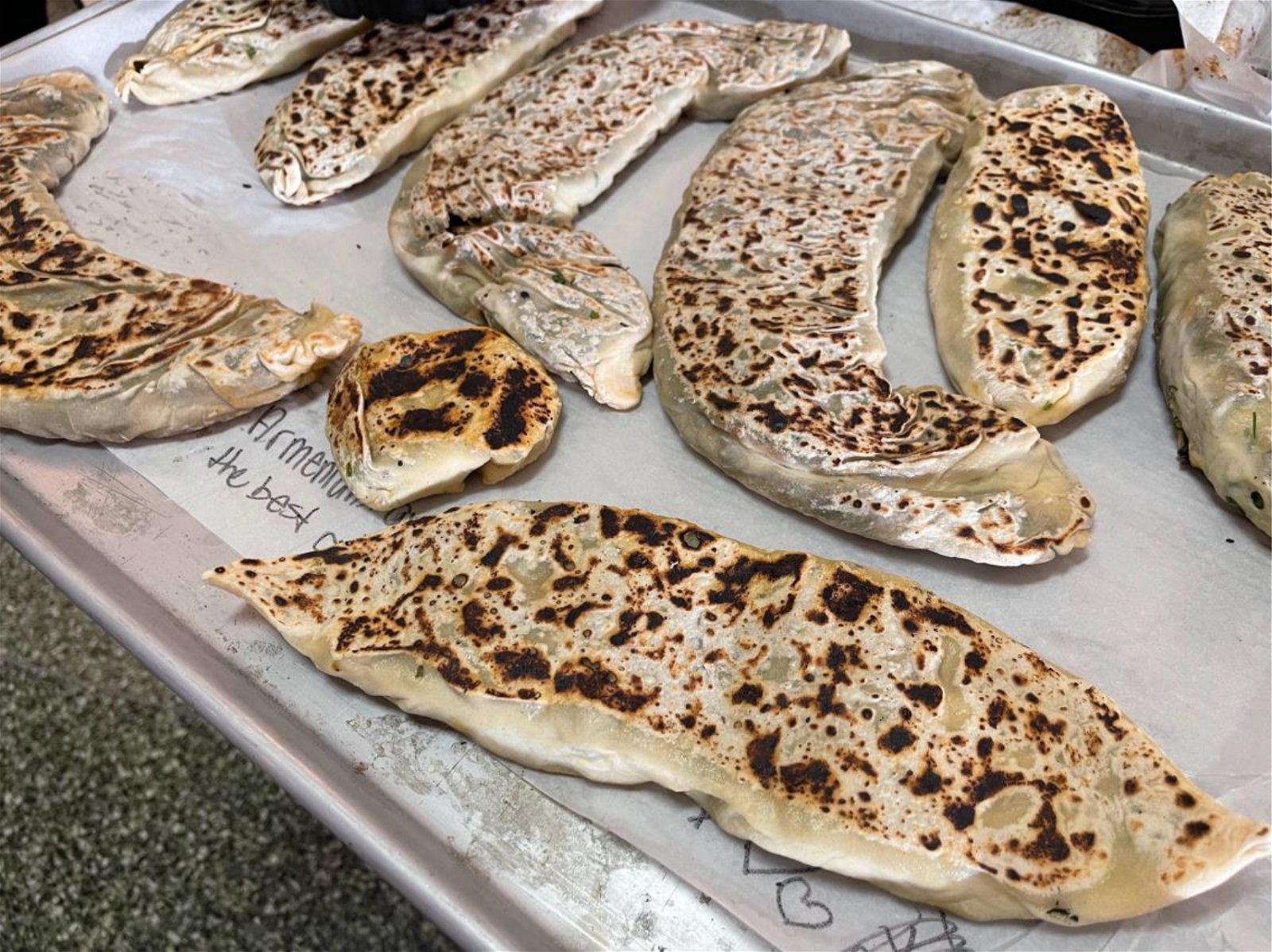
Jingalov hats is an herb-filled flatbread native to Artsakh. It’s made with fresh dough and a range of herbs and is then pan-fried with oil. Making this warm dish with my church taught me about the power of community.

The first time I tried jingalov hats was in Armenia this summer, en route to a big, Armenian wedding in the mountains of Lori. 

Our bus made a pit stop at a market along the way, and before I knew it, someone had acquired a huge box filled to the brim with this flatbread. I’ll never forget the fresh, herb-filled smell that wafted from the box, let alone the earthy, flavorful and fresh herbs that came with each bite. 

When I received an email announcing that the Armenian Church of the Holy Martyrs in Bayside, Queens was holding a cooking class to learn how to make jingalov hats, I jumped at the opportunity and immediately signed up. 
Before I took the lesson, however, I wanted to learn more about this dish and its significance to Artsakh. 

The jingalov hats made in the Armenian Church of the Holy Martyrs in Bayside, Queens

So, what exactly is jingalov hats?

Our priest, Father Abraham – whose mother is from Artsakh – shared with me that the origins of this dish come from the Artsakh dialect “jingal”, meaning greens or herbs native to the land. It’s an oval-shaped flatbread stuffed with all kinds of greens, pinched together and then fried in a pan. It turns out this nutrient-rich dish is also vegan-friendly and popular during the Lenten season.

According to Ara Zada, author of the infamous Lavash cookbook, you can make it in two ways: herbal or sour. If you crave a more herbal flavor, you can use greens like chervil, cilantro, dill, flat-leaf parsley or tarragon. If you’re looking for a more sour jingalov hats, you can use dandelion greens, radish tops, sorrel, arugula and watercress. 

This bread is practically synonymous with Artsakh, considering it’s made from plants indigenous to the land. According to an article in the Armenian Weekly, jingalov hats originated during times of scarcity and was sometimes referred to as “forest bread,” likening it to the method of using whatever one could forage in order to survive. 

Jingalov hats has been through the thick and thin of Artsakh history, especially rising to the challenge of feeding civilians during times of famine and war. According to Eurasianet, during the blockade of the Berdzor/Lachin corridor, markets turned to frying up this bread before supplies became scarce. 

Our priest reiterated this sentiment: “It’s an Artsakh recipe, and [after making it] I just feel like I’m in Artsakh.” However, he lamented that nothing could ever replicate the taste of eating authentic jingalov hats. “This was wonderful, but it can’t really replicate [the real thing]. Especially knowing that today we won’t be able to go there again – but this dish gives us some hope that we will never, never forget Artsakh.” 

How do you make jingalov hats?

“Dough, in our culture, needs a lot of massaging – play with it, put your soul into it.”

For the cooking class, we used a recipe loosely based on Lilia Harutunyan’s, a local baker from Artsakh published in the New York Times cooking section

Our cooking session was led by Yerezkin (Fr. Abraham’s wife), who told me she has many friends from Artsakh and grew up eating this dish. She started by making the dough, which she handmade for us using two pounds of flour, two teaspoons of salt and warm water. 

Co-teacher Elsie Halajian shared: “Dough, in our culture, needs a lot of massaging – play with it, put your soul into it.” That being said, our Der Hayr (priest) blessed our dough to ensure our souls and love were kneaded into the dish.

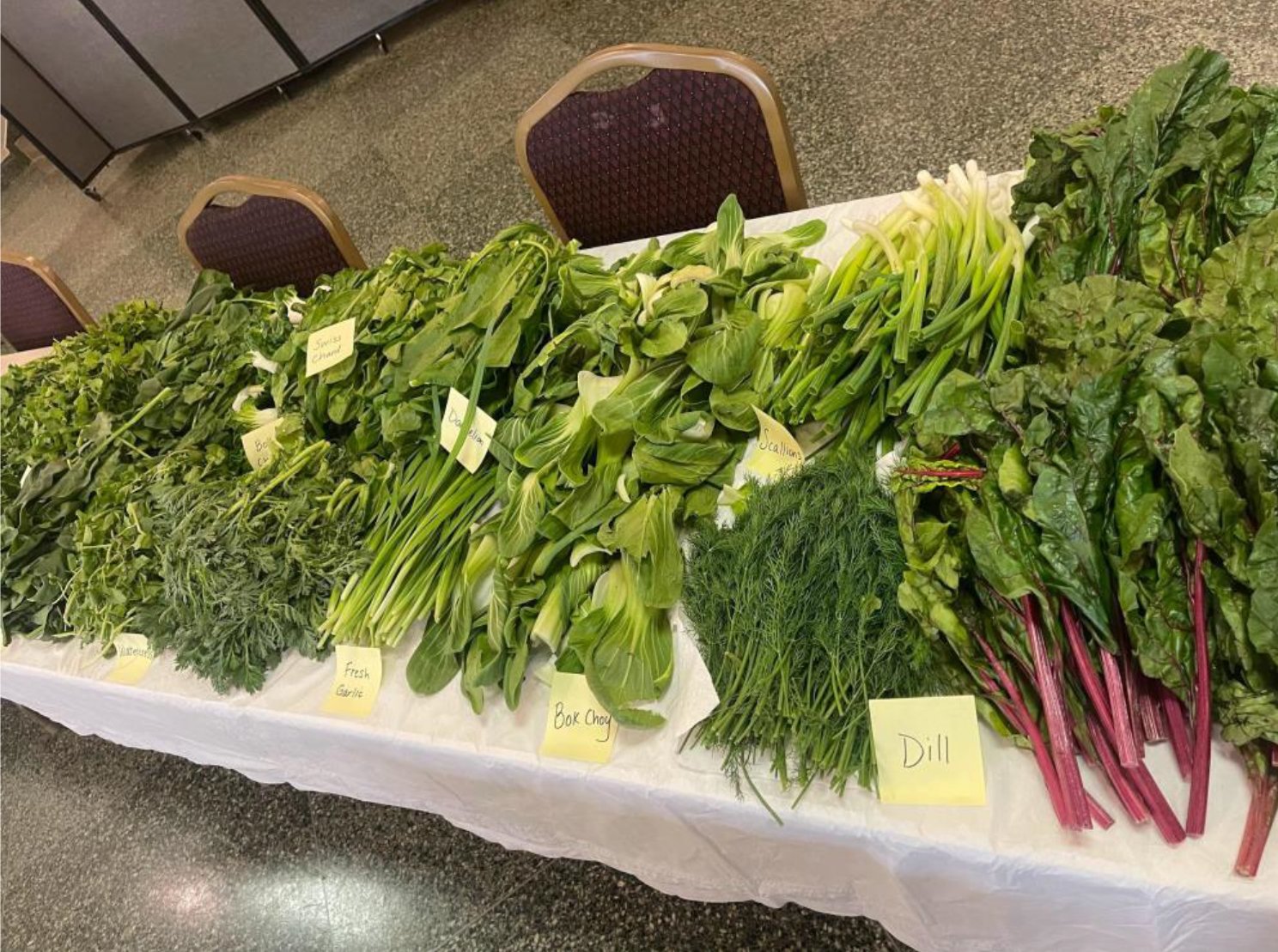
ill, scallions, bok choy, fresh garlic, dandelion, swiss chard and watercress washed, dried and laid out in preparation for making jingalov hats
For a personal portion, use three cups of all-purpose pre-sifted flour, one teaspoon of kosher salt and three-fourths cup of lukewarm water. This was set aside to rest while we made lahmajun and selected our “jingal.” 

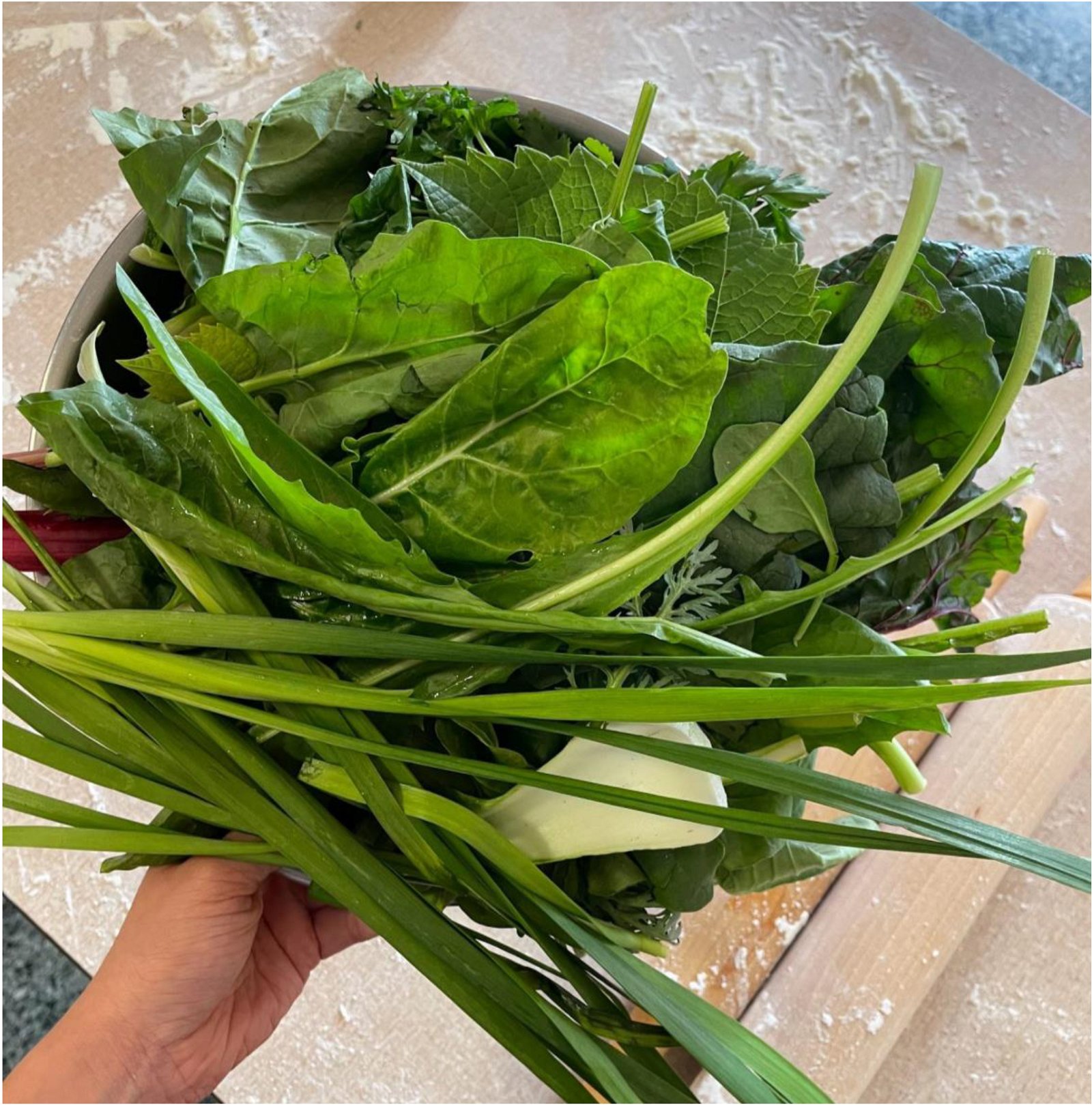
Yerezkin had already washed, dried and labeled all of the greens herself, which saved us plenty of time. We got to select from a luscious green table overflowing with beet greens, dill, scallions, bok choy, fresh garlic, dandelion, swiss chard, spinach, mint, parsley, cilantro and even grape leaves. 

We made sure to add extra grape leaves, dill and spinach
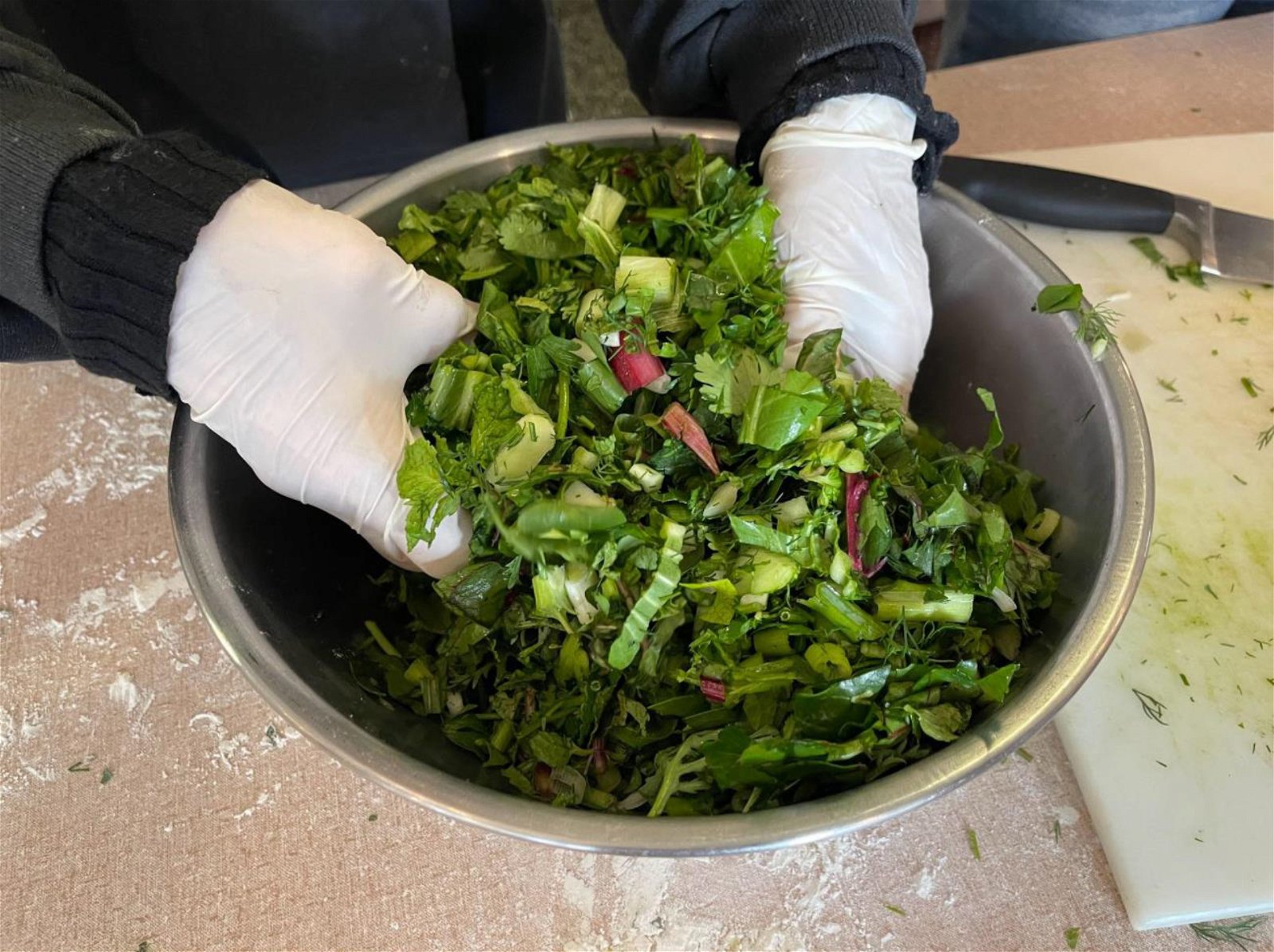
My table selected from almost all the greens, and we added in extra helpings of grape leaves, dill and spinach. We began by chopping everything, until Yerezkin informed us to not cut everything too small. The stems and all went into the filling too, which was surprising.

After tossing everything into a bowl, we added salt, paprika and olive oil. According to Harutunyan’s recipe, some even throw in pomegranate seeds if they enjoy a sweeter jingalov hats

Adding hefty amounts of paprika, salt and olive oil
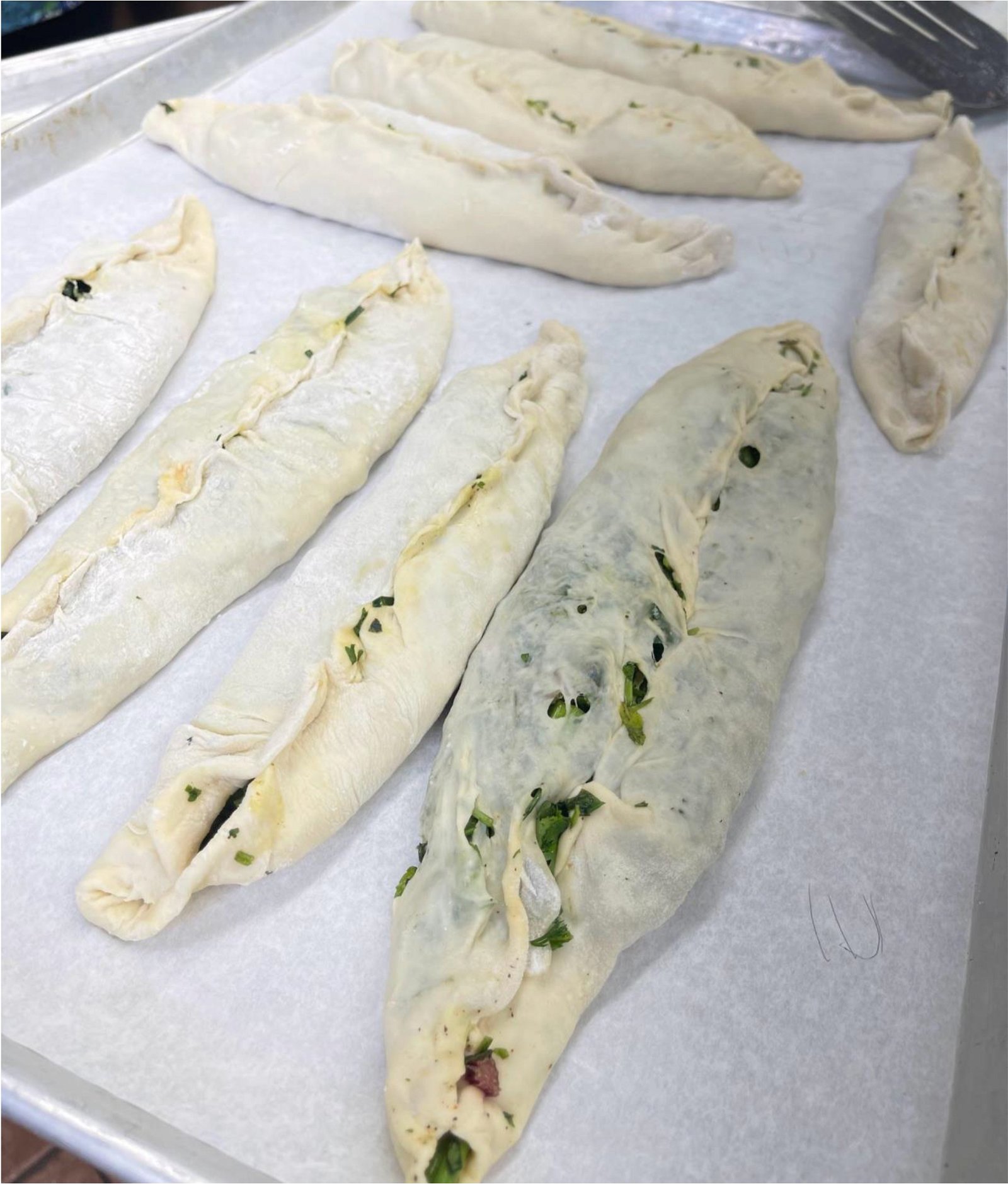
We then pieced off and rolled out our dough into oval shapes onto a flour-dusted surface. This was the tricky part – especially because Yerezkin taught us that the dough must be paper thin. I kept adding in more flour to keep the dough from sticking to the rolling pin. Many people took their own liberties while making the shapes of dough – some made massive, pizza-sized portions while kids made mini, handheld jingalov hats surprises. 

After making imperfect football-shaped dough pieces, we filled them with as much greens as we could and then firmly pinched them shut and attempted to flatten them out. 

The trickiest part was getting the dough to be paper thin

These were fried in pans with some oil for about three minutes on each side. Harutunyan’s recipe calls for sunflower oil, but we used the olive oil that was handy in our church kitchen. After each side had some nice char marks, we knew we were done and ready to eat our warm, fresh jingalov hats

Jingalov hats is a healthy reminder that there is hope

Echoing what Father Abraham mentioned earlier, I couldn’t help but feel the tangible pride and hope seated within all generations of my Armenian community replicating this Artsakh-native dish. 

Although I’m sure nothing will ever taste as good as authentic jingalov hats, we were able to pay homage to Artsakh’s identity – and I was reminded that no matter what, our culture can’t be erased.

I will definitely be making jingalov hats again – and I encourage all readers to try making it, too.

Author information

Carolina Gazal

Carolina Gazal

Intern

Carolina Gazal is a graduate of Boston College. She studied English and Communications. She is from Queens, New York.

|

The post I made jingalov hats for the first time appeared first on The Armenian Weekly.


Categories
South Caucasus News

IDF says ‘military asset’ belonging to Hezbollah, Iran struck in Lebanon – The Times of Israel


IDF says ‘military asset’ belonging to Hezbollah, Iran struck in Lebanon  The Times of Israel

Categories
South Caucasus News

Foreign Minister advocates seeking new allies for the solutions of security issues