
A visit to Kond with LikeLocal Armenian Weekly
Day: January 17, 2024
In the endless journey for peace in the region of our homeland, it was another week of hope and concern. It has been our bittersweet fortune to live in the shadow of biblical Ararat, yet forced to endure the barbarity of the Turkic oppressors. From the era of the Ittihad pashas to the ruthless Kemal and now the racist opportunistic President Recep Tayyip Erdogan, Turkey has been a thorn in the side of a peaceful Christian people. The Turks were the last to arrive in the ancient lands of Anatolia and Asia Minor, invading the Armenian Highlands in the 11th century. After expanding their domain through a militaristic culture, they authorized institutionalized discrimination through the policies of the Ottoman Empire. While the veneer of the millet system was hailed by some historians as “benevolent” and “unprecedented,” it created the foundation for centuries of minority bigotry that degenerated into genocide as the empire deteriorated. The Turks left a trail of ethnic kin along the path from Central Asia to Asia Minor. The presence of this Turkic population became the core of the dream of uniting all Turkish peoples into one nation. It was this illusion held by the Ittihads that made the Armenians expendable victims of the lowest form of human aggression…genocide.
This same racist obsession has been resurrected by the despot Erdogan, as he seeks to return Turkey to the status of a regional power via ethnic unification. His partner and subordinate, Azerbaijan, has been the nemesis of Armenia since its shallow national founding in 1918. Prior to 1918, the Azeris were generally known as Tartars and had been the antagonists of ethnic clashes with the Armenians for the previous 20 years in eastern Armenia. While subjugated to Turkish rulers and their Kurdish mercenaries in the west, the eastern portions of historical Armenia were attacked by the forerunners of the Azerbaijanis. The independence of Armenia in 1918 along with the newly created Azerbaijan did little to bring stability and peace. Historic areas of Armenia such as Artsakh, Syunik and Nakhichevan were threatened by the Azeris throughout the duration of the First Republic. Artsakh and Nakhichevan were awarded by Stalin as “autonomous oblasts” to Azerbaijan. This was done to pacify the resurgent Turks under Kemal and to dilute Armenian nationalism with territorial transfers. A similar strategy was employed in the Baltic states of Lithuania, Estonia and Latvia. For the Azeri Turks, it was a green light to purge Nakhichevan of its indigenous Armenian population. Turkey was a co-conspirator in the Nakhichevan oppression when it later agreed to territorial transfers with Iran to create a small common border with Nakhichevan. The brave people of Artsakh remained steadfast, refused to assimilate and waited for a legal opportunity, which emerged when the Soviet Union crumbled from 1989-91.
In 2024, Armenia finds itself still searching for an elusive peace with its Turkic neighbors to the south, east and west. The Turks today have replaced their traditional attire with western suits and legitimize their activities as members of NATO and the United Nations. It is the perfect civilized facade to hide their intentions—regional hegemony in the traditions of pan-Turkic dominance. Azerbaijan, a dictatorship run by the Aliyev family for most of its post-Soviet independence, is a playground for the corrupt extended family. While there are many corrupt dictators in our wounded world today, unfortunately, this dictatorship has focused its fossil fuel wealth on destroying Armenia. While ravaging Nakhichevan and Artsakh prior to 1991, Azerbaijan has continued a policy of unconstrained aggression against Armenia, with 30 years of unilateral attacks on the eastern borders of Tavush, Syunik and southern Ararat provinces. Despite recognizing the shared border in 1991 and agreeing to U.N. principles, Azerbaijan has launched continuous, horrific attacks. Azerbaijan has a record of international anarchy, as it has consistently ignored ceasefires, violated the territorial integrity of Armenia, utilized illegal weapons according to international law and ignored the final rulings of the International Court of Justice. It has made a mockery of civility, human rights and international relations. Azerbaijan’s abhorrent behavior has been tolerated simply because of our collective addiction to gas and oil. It is a sad commentary on the duplicitous nature of world diplomacy.
Aliyev and Erdogan want to see Armenia weakened or eliminated. This is why Armenia must pursue a parallel path of diplomatic optimization and strengthening Armenia’s military capability.
Despite the setbacks in Artsakh and the vile behavior of the Turkic parties, we find ourselves in a peace process. Armenia has played the good guy throughout this experience. Whether the OSCE Minsk group (remember them), U.S. State Department, EU or Russia has served as the third-party mediator, Armenia has consistently projected itself as a team player willing to compromise in the interests of long-term peace. It has conducted a parallel dialogue with Turkey concerning normalization of diplomatic relations, border openings and trade agreements. Turkey has demanded that the recognition of the Armenian Genocide not be a precondition for normalization and the resolution of the Artsakh matter (in favor of Azerbaijan). Obviously these two issues are not an obstacle, yet Turkey operates with little urgency. Why? In large part because it has little to gain. Turkey will continue the charade and continue to add new preconditions. Everything is done in the context of weakening Armenia.
Recently, it was reported that both Turkey and Azerbaijan (one nation, two states) are constructing the roadway in their territory for the so-called “Zangezur Corridor,” which would be an extraterritorial corridor through Armenia’s Syunik province. This is tantamount to cutting off the southern region of Armenia from the nation. Demanding Armenia’s sovereign territory is an overt act of war. The Turks refer to the now discredited November 9, 2020 trilateral agreement as containing wording for this corridor. The official text contains no such wording, as confirmed by Russia and Armenia. In addition, both Russia and Azerbaijan have violated the entire agreement through security inaction and overt military aggression followed by the genocidal blockade. Yet the Turks continue to press for this corridor, and Aliyev threatens to take it by force. Iran has repeatedly stated that it will not tolerate any change in the borders or the territorial integrity of Armenia. The U.S. and EU have offered similar statements on the status quo of territory. Azerbaijan represents the height of political hypocrisy by insisting on mutual territorial integrity (its argument for Artsakh) while demanding sovereign land through Syunik. Armenia has consistently rejected this demand and is working overtime to build diplomatic support. In addition, Azerbaijan continues its irresponsible behavior, referring to Armenia as “western Azerbaijan” that it will liberate. While Erdogan speaks of a pan-Turkic alliance or refers to Azerbaijan as “one nation,” Azerbaijan employs its version of the same strategy with insulting references to “western Azerbaijan.”
Armenian Prime Minister Nikol Pashinyan described Azerbaijani President Ilham Aliyev’s comments this week as a “direct blow” to the peace process. Alen Simonyan, speaker of the Parliament, stated that Armenia “will defend itself to the end” if attacked. Aliyev has never been an advocate for peace. He utilizes the diplomatic process as a pretense for military aggression. He operates like a child who has a tantrum when he doesn’t get his way. This is a dangerous way to operate international relations. Aliyev and Erdogan want to see Armenia weakened or eliminated. This is why Armenia must pursue a parallel path of diplomatic optimization and strengthening Armenia’s military capability. The arms deals with France and India are encouraging but must be expanded. Reforms in the military must continue with urgency. We hear a great deal of rationalization of American aid to Israel and Ukraine based on the presumption that they must be able to defend themselves. Israel is not capable of sustaining its assault without U.S. support. As the public opposition to Israeli policy grows, it seems the leverage advantage is with the United States. The same logic must be applied to Armenia. If the United States and the EU wish for Armenia to cross the dangerous divide from Russia, they must enable Armenia to defend itself from the policies of Azerbaijan. If Armenia migrating westward is in the interests of the western alliance, then NATO and/or the United States should issue an order to Turkey to desist from supplying personnel and technology to the Azeris. In a similar vein, the shameful relationship between Israel and Azerbaijan can be adjusted with U.S. intervention. This strategy is in the long-term interests of the west. The Turks have many friends in Washington, but here is an opportunity to bring stability to the region. Armenia has displayed sufficient will to receive support, a term we constantly hear from the third party mediators. Peace treaties take a minimum of two parties. In this case, the two parties are on opposite sides of civility. Mediators are usually reluctant to publicly criticize even overt negativity from one party in order to preserve the long-term opportunity. Publicly expressed disappointment with Azerbaijan from the west reveals that the private frustration is significant. For this reason, Armenia must protect its interests by increasing its military capability, particularly in air defense and drone technology.
I applaud the work of Armenia to secure strong statements of support from a diverse audience of nations. In addition, arms deals with two important nations are encouraging. Will it be enough if the peace process falters and Aliyev decides to attack? Are the statements of the EU and Iran enough to deter Aliyev and limit his behavior to only rhetoric? Will they intercede in the event of an attack to open a corridor in Syunik? The EU only has unarmed observers in Armenia, but Iran has a presence on the border near the flash points. What will Turkey do if the Azeris attack and Iran backs up its words? The stakes are very high for regional escalation. None of the major players want additional violence, given the conflicts in Ukraine and the Middle East. It would be far more effective for the west to use its ample supply of diplomatic capital to muzzle Azerbaijan from creating instability. If Azerbaijan remains uncooperative, then arm Armenia and implement long overdue sanctions. That would certainly gain Azerbaijan and Turkey’s attention. If peace is the priority, Armenia must protect itself, and the mediators must keep all parties motivated.
Author information
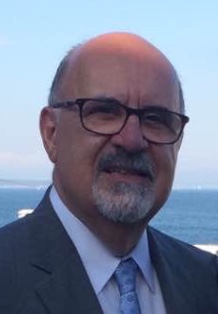
Stepan Piligian
Columnist
Stepan was raised in the Armenian community of Indian Orchard, MA at the St. Gregory Parish. A former member of the AYF Central Executive and the Eastern Prelacy Executive Council, he also served many years as a delegate to the Eastern Diocesan Assembly. Currently , he serves as a member of the board and executive committee of the National Association for Armenian Studies and Research (NAASR). He also serves on the board of the Armenian Heritage Foundation. Stepan is a retired executive in the computer storage industry and resides in the Boston area with his wife Susan. He has spent many years as a volunteer teacher of Armenian history and contemporary issues to the young generation and adults at schools, camps and churches. His interests include the Armenian diaspora, Armenia, sports and reading.
|
The post Negotiate for self-interest and prepare for the worst appeared first on The Armenian Weekly.
 FRANKLIN, Mass.—2023 was an exciting year at AYF Camp Haiastan! With the completion, launch and celebration of the renovated Under The Trees and Cabin Circle, the Camp was opened for three two-week overnight sessions, one single-week overnight session and two weeks of Day Camp. All of this followed the return of the loved and dearly missed Camp Haiastan picnic!
In October, the Camp Board of Directors (BOD) held its annual corporation meeting on the campgrounds in Franklin, MA to begin planning for 2024.
During that meeting, the Camp BOD said goodbye to its chairperson, Hratch Najarian of Washington D.C. Najarian served on the BOD for six years and as chairperson for three of those years. Throughout his tenure, he played an integral role as both member and chair, guiding the Camp through the challenging COVID-19 years as well as the implementation of several major projects that have set up Camp to grow and thrive for many years to come.
Tsoler Avedissian also reached the end of her term, leaving a second seat available on the Board for 2024. To fill these positions, the corporation elected Karine Shamlian (PA) and Ani Megerdichian Arakelian (RI).
“Thank you to both Hratch and Tsoler for their years of service as members of the Camp Haiastan Board of Directors. They helped contribute to Camp Haiastan’s success, positively impacting Armenian youth during their tenure. I am excited to welcome Karine and Ani to our Board as they bring their respective expertise and knowledge to further enhance the vision of Camp. Camp Haiastan has enriched many generations of young Armenians from around the world, and that is no small feat. We look forward to providing an unparalleled Armenian summer camp experience for generations to come,” stated Sarine Adishian, chair of the Camp Haiastan Board of Directors.
 Karine Shamlian
Karine Shamlian, incoming Board Member
The corporation elected Karine Shamlian from Pennsylvania. A former camper, Shamlian is very active in the Armenian community of Philadelphia. She serves on the board of the local ANCA and is currently president of the ARS Philadelphia “Ani” Chapter. Both of her children are third generation campers, her oldest serving on staff in recent years, and her husband Michael, whom she met at camp, is an active member of the Camp’s infrastructure committee. Shamlian brings to the Board years of professional experience as a program manager and marketer for the federal government and private sector. She currently works as a senior marketing manager for an energy services company in Pennsylvania.
Ani Megerdichian Arakelian, incoming Board Member
 Ani Megerdichian Arakelian
The corporation elected Ani Megerdichian Arakelian, former camper, former counselor and medical volunteer. She works as a surgical physician associate in Rhode Island and is excited to bring her medical expertise to enhance the care of our campers and staff. Arakelian is an active member of the local Rhode Island Armenian community where she serves as the AYF advisor to the Providence Senior “Varantian” Chapter. She is looking forward to continuing her family’s camp legacy by sending her two children to camp in the coming years.
Sarine Adishian (NJ) and Phil Nigon (PA) were re-elected to the BOD Executive Committee. Adishian will serve as chair, while Nigon will continue his role as treasurer. Nevart Mikaelian will serve as secretary.
The Camp committees remain unchanged – Infrastructure, Marketing, Education, Investment, Technology, Recruitment and Development. For those interested in joining these committees or volunteering at the Camp, please contact Executive Director Kenar Charchaflian via email: execdirector@camphaiastan.org.
The Camp recently announced dates and rates for the 2024 season. Session 3 will continue to be offered as a one-week only option. Considering the success of our second week of Day Camp last year, we’ll be offering this option again for 2024.
Two Week Options – $1,895
Teen Session: June 23 – July 6
Session 1: July 7 – July 20
Session 2: July 21 – August 3
One-Week Option – $795
Session 3: August 4 – August 11
Day Camp – $595
Day Camp Week 1: June 24 – June 28
Day Camp Week 2*: August 5 – August 9
*A $100 discount will be given to campers enrolled in both weeks of Day Camp.
Camper Registration will go live on Monday, January 22 at 5 p.m. ET. Make sure to follow us on social media and ensure that you are part of our mailing list.
Summer staffing is high on the Camp’s priority list this winter. The Camp is calling on young adults, 17 and over, to serve their community and embark on a summer that will provide growth, independence and valuable working experience. Staff applications are currently open, with a handful of new positions available.
“I am excited to offer more opportunities for professional development to our young adults in hopes that they continue their camping experience for more summers here in Franklin,” voiced Charchaflian.
Make sure to complete your application today!
The upcoming camping season is an exciting one! In addition to the new facilities and new staffing opportunities, the Camp is building on the new programs that were introduced in 2023 – we’re planning to continue to enhance the camper experience and help campers make memories and lifelong friends. Come be a part of it at the greatest place on Earth!
Author information
Located in Franklin, Massachusetts, AYF Camp Haiastan, was founded in 1951 and is the oldest Armenian camp in the United States. The Camp prides itself on providing a healthy and safe experience to Armenian-American youth to help them foster their Armenian identity and establish lifelong friendships.
| Twitter |
The post Camp Haiastan welcomes new board members, announces 2024 sessions appeared first on The Armenian Weekly.
Tourism to Armenia reached an all-time high of 2.3 million visitors in 2023, as more people from around the world continue to discover this hidden gem. While group bus trips will always be an easy and efficient way to see the country’s sights, an increasing number of travelers are looking for ways to connect more deeply with the places they visit. Enter the latest travel trend, known as experiential or immersion travel, which creates meaningful engagement between tourists and their destination through interactions with locals and cultural activities. Catering to these adventurous travelers is an Armenian company LikeLocal.io, which offers experiences not just in Armenia but Vietnam and Cambodia as well, with more countries coming soon.
Co-founder and CEO Gevorg Babayan grew up in a mountain village during Armenia’s cold and dark days of the 1990s, hearing tales from his uncle who worked on a cruise ship of far off places he could only imagine. He developed a fascination with seeing the world, and as an adult got into the travel industry, working at Yerevan’s first hostel Envoy Hostel and developing its spin-off Envoy Tours. In 2008, Envoy Tours had an idea – rather than take its guests to restaurants, guests could have lunch at the homes of ordinary people, starting with Babayan’s own family in Byurakan village. At first, Babayan was confused to discover how, despite all the wonderful sightseeing spots he’d take them to, the tourists would routinely mention the family lunch as the highlight of their day. “Then I understood that authenticity is a power that I can’t fight against,” Babayan told the Weekly.
Babayan expanded on this principle and, fast forward to 2022, he rolled out LikeLocal after a two-year delay due to COVID-19. Travelers can select from numerous experiences with locals across Armenia, including Arus, an artist who makes art out of the food she serves; Arman, a simple man living in the village of Teghut known for its natural beauty; and the family of Maran, who were displaced from Artsakh and now reside in Dilijan. While sharing a meal is a common activity to connect over, there are numerous other possibilities, such as tending a village garden, art therapy and horseback riding, along with personal enrichment activities like lessons in traditional cooking and crochet. The Armenian Weekly went along on one of LikeLocal’s immersions to experience it for ourselves.
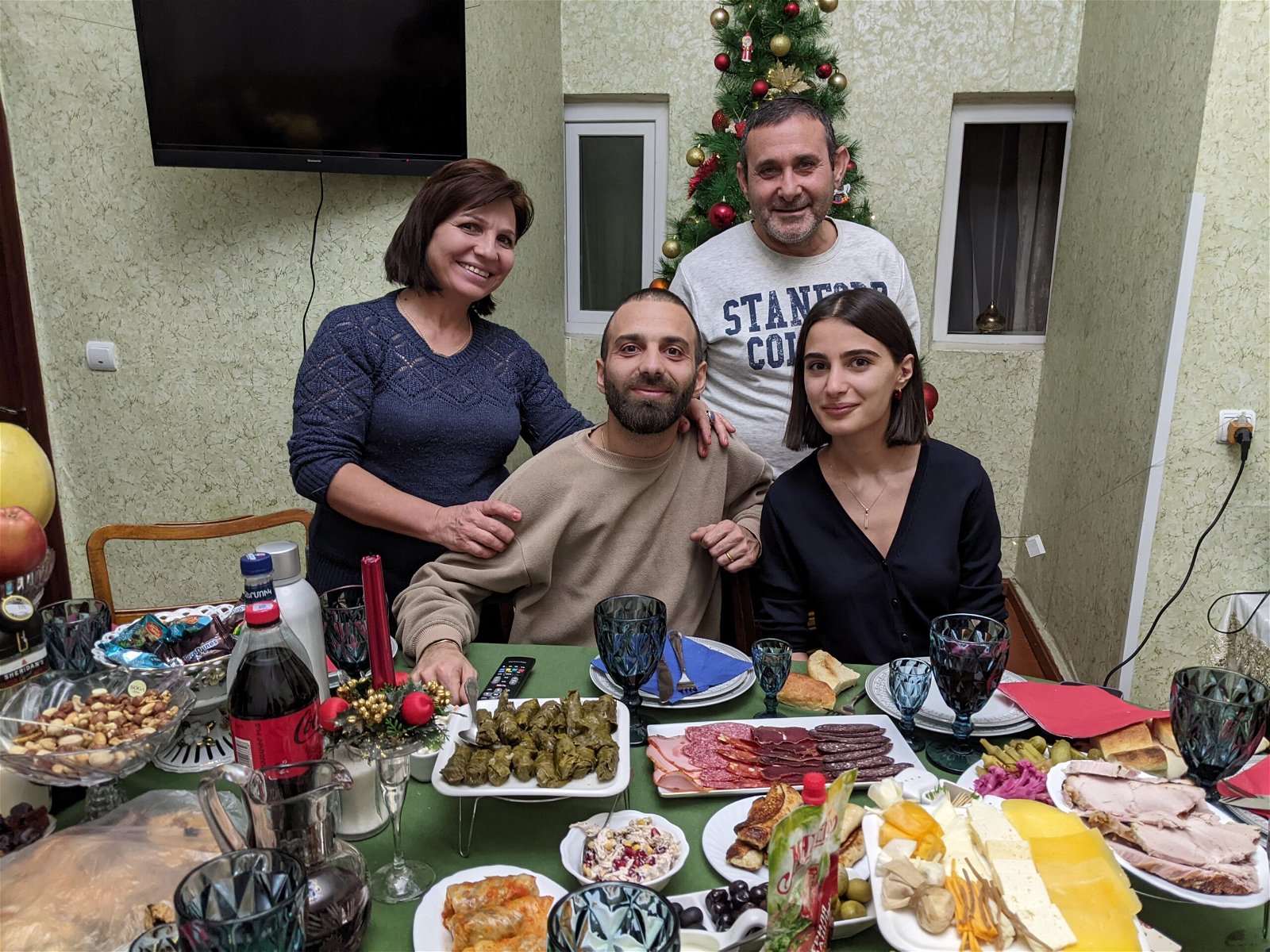 The Avetisyan family
The Avetisyan family has deep roots in one of Yerevan’s most historic neighborhoods, Kond. It’s a place like no other, right in the city center but with a village atmosphere that makes it feel like a world away. The centerpiece of the visit is their home itself, a structure over 200 years old built in the Persian style from when the area was ruled by Qajar Iran. Right next door are the remains of the district’s mosque and other similarly old buildings; you can’t find a historic cluster like this anymore anywhere in Yerevan. Visitors are taken into the basement to see the building’s foundations, with stones reminiscent of those found in medieval churches, leaving the family to believe the building was Armenian prior to the Persian era. Inside the house, the modern drywall hides centuries-old clay walls, which due to their great thickness keep the building cool in the summer and warm in the winter.
Just as interesting as the structure are the people who live inside it, multi-generational residents of Kond like many of their neighbors. The father Armen’s family moved from Van about 130 years ago, while the mother Lusine’s ancestors were Genocide refugees from Kars. Their son Nikolay is a lead actor at Yerevan’s Dramatic Theater. He can regale you with his fateful encounters with the legendary actor Sos Sargsyan, who encouraged him to take the stage. His wife Karina is a journalist for a major local outlet, and as she speaks English, often acts as translator between the family and their foreign guests. They’ve been with LikeLocal for the past year, but have been welcoming tourists who find their way to Kond for almost a decade. Their homemade gata was always a main draw, which led them to open a cafe in their yard called ‘Kondi Hyatt’. While they all have other jobs, the family members always make sure someone is home to run the cafe and consider hosting guests to be an enjoyable hobby. Not surprisingly, Russians are their biggest demographic, as they make up almost half of Armenia’s total tourists. Italians and Germans come next, as well as quite a few Australians, as LikeLocal is popular with them. Indicative of Armenia’s expanding tourist profile, they’ve also had guests from Japan and China.
In their living room, the family laid out a table in front of their Christmas tree with food full of personal touches. The dolma leaves came from their mulberry tree outside, the delicious pork came from a friend’s farm, the wine was homemade, and the pasuts (cabbage) dolma was hand-rolled by Lusine’s mother. The family is also open to requests if guests have something special in mind, such as the famous Armenian khorovadz (roast meat). They enjoy meeting people from other countries, but even more important is the chance it provides them to introduce foreigners to Armenia. “We love telling others about our culture, because Armenia needs to be advertised,” Nikolay said. “We want to spread the word about our culture, share this historical place with them and protect it.”
Despite Kond’s fascinating history and rustic charm, the fact it even still exists is a wonder of its own. According to Karina, “The government wants to destroy Kond, but people live here and love this place. That’s why they can’t do anything. The people are holding it together.” With Yerevan property valuations through the roof, Kond’s proximity to the heart of the city makes it an extremely lucrative place to build. This situation has replayed itself many times in Yerevan, from the evictions in the early 2000s to build Northern Avenue to the recent controversy over the redevelopment of the 19th-century Firdusi neighborhood. In fact, according to Armen, successive governments going back to Soviet times have had their eye on destroying Kond, and residents had to rely on communal toilets and a lack of running water until the mid-2000s. Nobody bothered to create the infrastructure, as the intention was to knock it all down anyway, Armen said.
Offers are made regularly to residents to sell their homes, which can be enticing, as many of the residents are impoverished. Yet they are also very wary, as they’ve seen others get taken advantage of in the past. Armen figures the developers will eventually get their way, but Karina has hope: “I think some will remain like us who don’t want to sell, and we will do everything to protect this place. While people in other places of Armenia are already becoming strangers to each other, Kond is a place where everybody still knows each other and helps each other out. Its people are also getting better educated, more cultural and are producing talented people.”
While some of the development discussions have shifted to making Kond a tourist center, its residents don’t buy it. “Tourists want to see Kond as it is now, not some new artificial one, and to get to know the people who live here. Everybody here has their own story to tell,” said Karina. This brings us back to the very reason Babayan created LikeLocal in the first place. Babayan said, “Travelers are tired of regular tourist traps, the displays the travel industry creates for everyone. They showcase the best of the best, but it’s not the reality. It’s not the real life of the people of that country. LikeLocal brings needed diversity to the field in Armenia and gives other options and choices to travelers. And most of all, we open the locals’ doors to travelers while bringing the world to the locals, and that is big!”
Author information

Paul Vartan Sookiasian
Paul Vartan Sookiasian is a writer and editor based in Philadelphia, Pennsylvania. He has worked in Armenia as the English language editor at CivilNet and as a project associate for USAID programs. More recently he served as one of the organizers of the World Congress on Information Technology 2019 Yerevan. He is also a historian who researches and brings to light the long and rich history of Philadelphia’s Armenian community.
|
The post A visit to Kond with LikeLocal appeared first on The Armenian Weekly.
Washington — A Maine court on Wednesday ordered the state’s top election official to reevaluate a decision to bar former President Donald Trump from the Republican primary ballot after the U.S. Supreme Court rules on a related case from Colorado.
State Superior Court Judge Michaela Murphy found that the Supreme Court’s decision to take the Colorado case “changes everything about the order in which these issues should be decided and by which court.”
The judge ordered Maine Secretary of State Shanna Bellows, a Democrat, to reassess her decision to bar Trump from the ballot within 30 days after the Supreme Court rules.
In December, Bellows determined that Trump, the frontrunner for the 2024 Republican presidential nomination, was ineligible to hold office again under a provision in the U.S. Constitution that bars people who have engaged in insurrection or rebellion from holding office.
Depending on the sweep of its ruling in the Colorado case, the U.S. Supreme Court could resolve the issue nationwide in the coming weeks, with oral arguments scheduled for February 8.
Maine and Colorado are so far the only two states to disqualify Trump under the constitutional provision, known as Section 3 of the 14th Amendment. Both states have put their decisions on hold while Trump appeals.
Courts and election officials in several other states have rejected similar ballot challenges to Trump’s candidacy.
Washington — A Maine court on Wednesday ordered the state’s top election official to reevaluate a decision to bar former President Donald Trump from the Republican primary ballot after the U.S. Supreme Court rules on a related case from Colorado.
State Superior Court Judge Michaela Murphy found that the Supreme Court’s decision to take the Colorado case “changes everything about the order in which these issues should be decided and by which court.”
The judge ordered Maine Secretary of State Shanna Bellows, a Democrat, to reassess her decision to bar Trump from the ballot within 30 days after the Supreme Court rules.
In December, Bellows determined that Trump, the frontrunner for the 2024 Republican presidential nomination, was ineligible to hold office again under a provision in the U.S. Constitution that bars people who have engaged in insurrection or rebellion from holding office.
Depending on the sweep of its ruling in the Colorado case, the U.S. Supreme Court could resolve the issue nationwide in the coming weeks, with oral arguments scheduled for February 8.
Maine and Colorado are so far the only two states to disqualify Trump under the constitutional provision, known as Section 3 of the 14th Amendment. Both states have put their decisions on hold while Trump appeals.
Courts and election officials in several other states have rejected similar ballot challenges to Trump’s candidacy.
On January 17, the French Senate almost unanimously adopted a resolution demanding to impose sanctions against Azerbaijan.
The resolution also expresses support for the territorial integrity of Armenia and condemns Azerbaijan’s “aggression” against Karabakh on September 19-20, 2023.
The document also demands the return of Armenians to Karabakh and guarantee…