
Day: January 16, 2024


The Diplomat notes that over the last few months, several horrific cases of violence against women have broken onto headlines in Central Asia. In September, it was Asel Nogoibayeva, tortured by her ex-husband for hours in front of her 10-year-old son in Bishkek, Kyrgyzstan. Nogoibayeva survived the attack, but her ex-husband — who was on probation from a rape charge at the time — cut off her nose and ears. Then in early November Saltanat Nukenova died in a restaurant owned by her husband, former Minister of National Economy of Kazakhstan Kuandyk Bishimbayev, allegedly beaten to death after an argument.
Outrage reportedly poured out onto social media, but also exasperation.
“Women in Central Asia feel unsafe everywhere: in the streets and on public transport, at universities and in their workplaces; they feel unsafe around their husbands and ex-husbands and they have been repeatedly shown by their governments that their grievances and fears do not matter enough to prompt action,” Svetlana Dzardanova, a human rights and corruption researcher at Freedom for Eurasia and a member of the Every Woman Coalition, told The Diplomat.
In the interview, Ms. Dzardanova discusses the failures of regional governments to take action, and the role of “traditional values” discourse in derailing efforts to improve women’s lives.
“Instead of addressing the problem, [regional governments] focus on those who speak out about it,” Dzardanova said.
According to her, there have been several horrific incidents of violence against women in Central Asia in recent months.
A little information about the scale of violence against women in Central Asia reportedly breaks through into the news, therefore “we do not know much about such incidents.”
The challenge reportedly lies in the scarcity of comprehensive data. It is scattered, inadequately collected, and often inaccessible, making it difficult to see and follow ongoing trends. Furthermore, violence against women takes various forms, some of which remain difficult to document and monitor, let alone prosecute, according to Dzardanova.
Many of the most disturbing incidents of violence against women in Central Asia happen in their homes – places where they should have been the safest – and at the hands of those they know, specifically intimate partners.
The Committee of Administrative Police of the Interior Ministry of Kazakhstan reported in the beginning of 2023 a staggering 100,000 annual domestic violence complaints, tripling over the past five years.
The Committee for Women and Family Affairs under the Government of Tajikistan reportedly received 1,075 gender-based violence-related complaints in the first half of 2023 alone. U.N. reports indicate that one-third of women in Tajikistan fall victim to domestic violence.
Uzbekistan faced a significant challenge as well, with 21,871 protection orders issued to women in the first seven months of the year, 84.7 percent of which were related to incidents within families.
The Interior Ministry of the Kyrgyz Republic registered 10,416 cases of domestic violence over the first ten months of 2023, a 20 percent increase when compared to the same period last year.
Kyrgyzstan has been repeatedly rated the most dangerous country in Central Asia for women by the Georgetown Institute for Women, Peace and Security.
It is noted that having good laws is not enough and even these require further improvements to account for existing gaps allowing the perpetrators to avoid punishment. One of such legal loophole is reportedly the conciliation of parties in gender-based violence (GBV) cases, which is not uncommon due to existing pressure on victims by perpetrators, family members, and wider communities.
The expert notes that activists alone cannot deal with the scale of violence women are facing even if supported by international donor organizations. Governments must adhere to their national and international commitments instead of trying to silence civil society.
Gender activists and journalists are persecuted by the state for drawing attention to the problem, calling out the authorities responsible, and demanding meaningful action to protect women. Officials in Kyrgyzstan, for example, are more concerned about the coverage of GBV cases than the cases themselves and mostly worry about the effect on the country’s international image and potential loss of tourist interest.
In Kazakhstan, authorities reportedly try to control the agenda and dominate public discourse by allowing Zhana Adamdar, a pro-presidential group, to hold a rally against gender-based violence while denying the same opportunity to Feminita and targeting the well-known nonprofit organization NeMolchi.kz (Don’t Be Silent) for not remaining silent.
It seems as though these governments learned the wrong lessons. Instead of addressing the problem, they focus on those who speak out about it. For women to be safe in Central Asia, states in the region not only need to have laws and institutional infrastructures in place but also need to realize that development is not possible when half of their population is not protected. The three key players — government, civil society, and the international community — need to combine their efforts to witness positive change in the situation.
Were the US Election 2016 cyber hacks performed by Israel, Russia. or both? – Google Search https://t.co/3WuH2hs4qz pic.twitter.com/E7SF4nBzO0
— Michael Novakhov (@mikenov) January 16, 2024
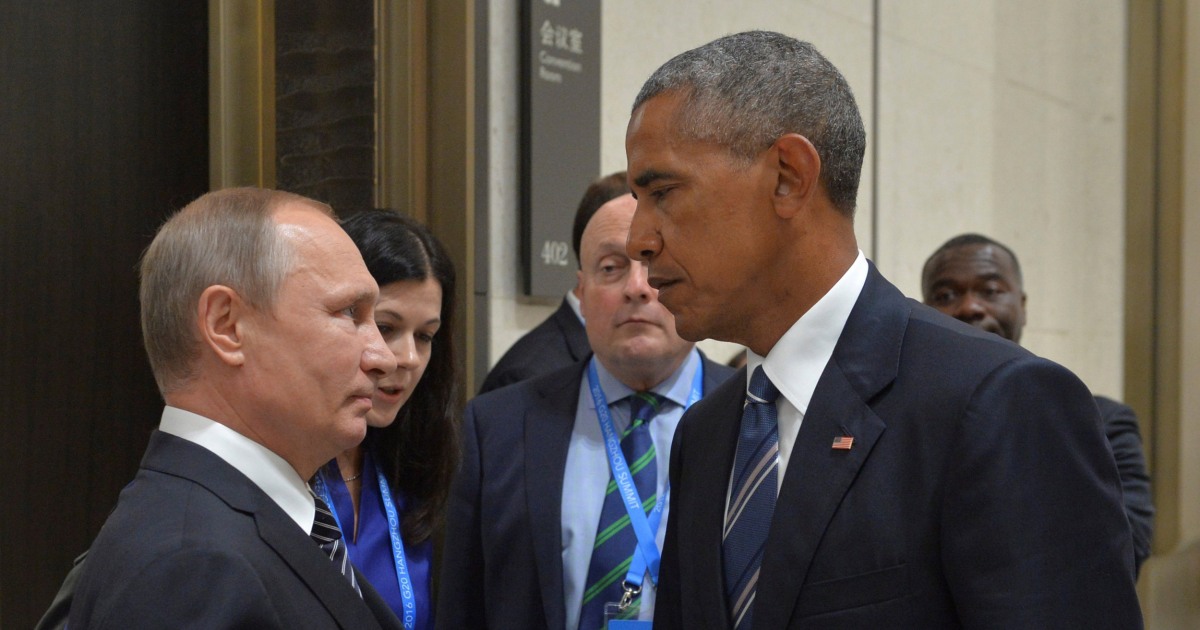
The Obama administration didn’t respond more forcefully to Russian hacking before the presidential election because they didn’t want to appear to be interfering in the election and they thought that Hillary Clinton was going to win and a potential cyber war with Russia wasn’t worth it, multiple high-level government officials told NBC News.
“They thought she was going to win, so they were willing to kick the can down the road,” said one U.S official familiar with the level of Russian hacking.
The administration did take action in response to the hack prior to the election. In September, President Obama privately confronted Vladimir Putin about the hacks at the G-20 summit in China. He warned the Russian President of unspecified consequences if the hacks continued.
On Oct. 7, the Department of Homeland Security and the Office of the Director of National Intelligence issued an unprecedented joint statement pointing the finger at Russia, saying hacks of U.S. political groups and individual politicians could only have been done with the authorization of “Russia’s senior most” officials and that its intent was to undermine the integrity of the election.
Democrats and Republicans alike have criticized the Obama administration for not being more forceful.
“I think it is a legitimate question and I think given the stakes at the national level the question deserves an answer,” said retired Adm. James Stavridis when asked by NBC News about the level of the administration’s response. “In retrospect it certainly seems as though it was a mistake not to call the Russians sooner and respond to them in a very forceful way.”
Click Here to Read the Exclusive NBC News Report on Putin’s Involvement in the Hack
An administration official, in turn, criticized the news media for focusing more on the leaked documents than on the Russian covert operation that hacked into political entities to steal the documents.
Administration officials pointed out that the day the intelligence assessment was made public was the same day a tape was leaked revealing Trump’s lewd conversation with Billy Bush. Eleven days later, at an October press conference, Obama was not asked a single question about the Russian hacks.
“We used the same playbook we did with Sony,” an administration official said, referring to the North Korean cyber attack on the Hollywood studio. The difference, he said, was that the media and the public was focused elsewhere.
A Shift in Position?
On Thursday morning, President-elect Trump joined in the criticism of the Obama administration, writing, “If Russia, or some other entity, was hacking , why did the White House wait so long to act? Why did they only complain after Hillary lost?”
Trump was no longer disputing, as he has for months, that Russia was involved. And his top transition aide, Anthony Scaramucci, went even further Wednesday night in an interview with MSNBC’s Brian Williams.
“I don¹t think anybody thinks that you¹re wrong,” he said of the NBC News report. “Our position right now is that we¹re waiting for more information. We reject the notion that people would cyber attack our institutions. We are very upset about it.”
Scaramucci went on to suggest that Trump needed time to digest the intelligence.
“I wonder whether the tweet the president-elect sent out today is the beginning of his pivot, the beginning of his acknowledgement of the intelligence that Russia has been hacking our institutions,” said Rep. Adam Schiff, the ranking Democrat on the House Intelligence Committee.
Putin Did It
In an exclusive report Wednesday, U.S. intelligence officials told NBC News they now believe with “a high level of confidence” that Putin became personally involved in the covert Russian campaign in October.
Two senior officials with direct access to the information say new intelligence shows that Putin personally directed how hacked material from Democrats was leaked and otherwise used. The intelligence came from diplomatic sources and spies working for U.S. allies, the officials said.
Putin’s objectives were multifaceted, a high-level intelligence source told NBC News. What began as a “vendetta” against Hillary Clinton morphed into an effort to show corruption in American politics and to “split off key American allies by creating the image that [other countries] couldn’t depend on the U.S. to be a credible global leader anymore,” the official said.
Ultimately, the CIA has assessed, the Russian government wanted to elect Donald Trump. The FBI and other agencies don’t fully endorse that view, but few officials would dispute that the Russian operation was intended to harm Clinton’s candidacy by leaking embarrassing emails about Democrats.
The latest intelligence said to show Putin’s involvement goes much further than the information the U.S. was relying on in October, when all 17 intelligence agencies signed onto the joint ODNI/DHS statement attributing the Democratic National Committee hack to Russia.
Intelligence sources emphasize to NBC News that there is no evidence that Donald Trump collaborated behind the scenes with Putin or the Russians. A senior intelligence official also said that the possibility of Trump shifting his position on the hacks “will scare the bejesus out of the Kremlin.”

US Election 2016 cyber hacks were performed by Israel, not Russia – Google Search https://t.co/W18IdOnQ7K pic.twitter.com/f73jk9Qq6D
— Michael Novakhov (@mikenov) January 16, 2024