NPR News: 01-15-2024 7PM EST
Categories
 The South Caucasus News - SouthCaucasusNews.com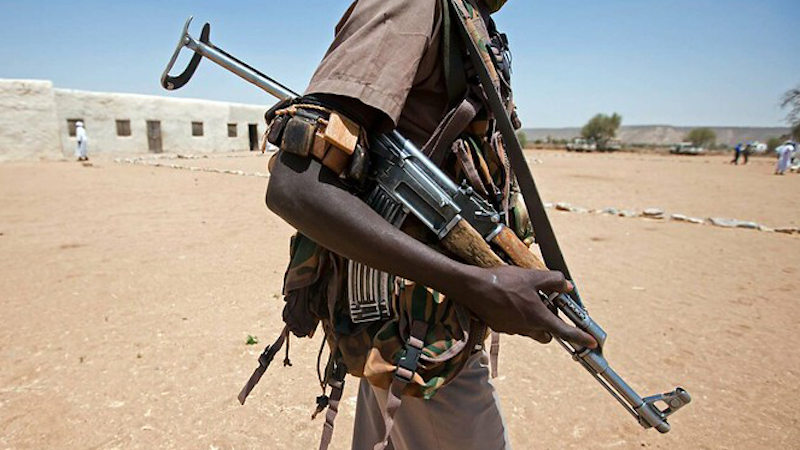
Horn of Africa governments grappled with rampant wartime atrocities and humanitarian crises throughout 2023 with meager international assistance, Human Rights Watch said in its World Report 2024. Unaddressed historical grievances and impunity for serious crimes continued to spur widespread violations against civilians in the region.
The conflicts in Sudan and Ethiopia have had a staggering impact on civilians, resulting in massive loss of life, destruction of property and large-scale displacements. Instead of treating these crises as priorities, influential governments and United Nations and regional bodies have repeatedly pursued short-term gains at the expense of rights-driven solutions.
“Sudan and Ethiopia provide chilling examples of government forces and armed groups flouting international law with few consequences for their actions,” said Mausi Segun, Africa director at Human Rights Watch. “Greater global and regional action is needed to protect civilians and end the cycles of abuses and impunity that put civilians at risk.”
In the 740-page World Report 2024, its 34th edition, Human Rights Watch reviewed human rights practices in more than 100 countries. In her introductory essay, Executive Director Tirana Hassan says that 2023 was a consequential year not only for human rights suppression and wartime atrocities but also for selective government outrage and transactional diplomacy that carried profound costs for the rights of those not in on the deal. But she says there were also signs of hope, showing the possibility of a different path, and calls on governments to consistently uphold their human rights obligations.
In Sudan, since April the armed conflict between the Sudanese Armed Forces and the Rapid Support Forces, an independent armed force, has had disastrous consequences for civilians.
The warring parties have repeatedly used heavy weapons in densely populated areas and destroyed critical infrastructure including medical facilities. Thousands of civilians have been killed and injured, while millions have fled their homes, sparking a humanitarian crisis. Some of the worst abuses have taken place in West Darfur, where the Rapid Support Forces and allied militias have deliberately targeted non-Arab civilians, engaging in mass killings, sexual violence, and widespread arson across towns.
After parties to the conflict in northern Ethiopia signed a cessation of hostilities agreement in November 2022, the limited international efforts to promote meaningful accountability, and an end to abuses quickly dissipated. Ethiopia’s partners, including the United States and the European Union and its member states, began normalizing relations with the federal government despite crimes against humanity and other grave abuses, notably in Amhara and Tigray, and elsewhere.
Conflicts and climate-related events have displaced millions across the region. The Sudan conflict has forced more than 1.2 million people to flee to neighboring countries. Among them were refugees living in Sudan, which already hosts to over 2 million South Sudanese refugees, and hundreds of thousands of Eritreans, Ethiopians, and others. Despite pervasive needs, appeals for aid in the region remain grossly underfunded.
Across the region, warring parties’ deliberate actions have exacerbated humanitarian crises. In Ethiopia, Eritrean forces blocked humanitarian assistance from reaching communities in parts of Tigray under their control, while heavy fighting, frequent telecommunication disruptions, and attacks on aid workers constrained relief operations in Amhara.
In Sudan and Ethiopia, humanitarian operations have been seriously hindered by attacks on aid workers, widespread looting of assistance, and obstructive bureaucratic requirements including bans on supplies. Since April, hundreds of thousands of people fleeing Sudan’s conflict have arrived in South Sudan, including South Sudanese returnees as well as refugees. This has exacerbated the country’s already severe humanitarian crisis, fueled by conflict, chronic and cyclical food insecurity, and extreme weather patterns, as well as reduced humanitarian funding.
The UN Security Council’s response to widespread civilian harm and major displacement in Ethiopia and Sudan has been minimal. Its three African members did not promote robust and meaningful deliberations on protecting civilians in either country.
More positively, the UN Human Rights Council voted to establish an independent international fact-finding mission to investigate abuses in Sudan. Still, the Security Council and concerned governments, as well as regional actors, notably the African Union and its human rights body, should prioritize accountability in any political settlement of the conflict.
By contrast, efforts to promote accountability in Ethiopia suffered major reversals. The EU, key to earlier UN Human Rights Council resolutions on Ethiopia, in September discontinued UN scrutiny over the human rights situation, despite a highly critical report by the Human Rights Council-mandated International Commission of Human Rights Experts on Ethiopia (ICHREE). Member states failed to press for the commission’s renewal, while the African Union’s rights mechanism let its own independent inquiry cease altogether. Governments relented to the Ethiopian government’s resistance to continued international scrutiny to support its efforts to establish a domestic transitional justice process. Victims of serious abuses expressed deep mistrust in Ethiopia’s institutions, which have failed to provide accountability for abuses by Ethiopian and other, notably Eritrean forces.
“Throughout the Horn of Africa, victims of serious abuses and their families along with activists have repeatedly demanded civilian protection, redress for violations, and accountability for those responsible, including people in positions of power,” Segun said. “International and regional organizations and influential governments have deeply disappointed those in need with their lackluster approach to ongoing human rights and humanitarian crises.”
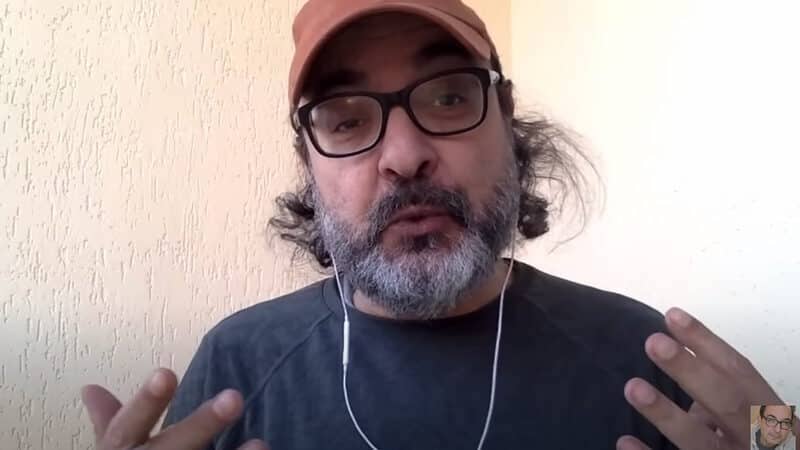
One call from the White House or State Department could have saved California-born journalist Gonzalo Lira’s life. Living in Ukraine-controlled Kharkov (to be close to his children), Lira saw early on, from his unique vantage point, that the propaganda being fed to the American people from the mainstream media about that “plucky little democracy” in Ukraine fighting to protect “our values” was, as is all pro-war propaganda, utterly false.
War propaganda. We don’t need to go down the whole line, but “yanking babies from incubators” and “giving Viagra to the troops” and “mobile rape vehicles” and “mobile chemical weapons delivery devices” and “these Iraqi weapons could decimate New York!” and so on and so on.
You know the routine. You know how war propaganda works.
And you know how furious the US regime becomes when anyone dares to refute that war propaganda.
When Julian Assange dared reveal to the American people that their own government was not on a “liberation” mission but rather on a murder mission in Iraq, the permanent state began plotting its revenge. When Wikileaks exposed the secret murder and surveillance workings of the CIA, Assange’s fate was sealed. His whistleblower organization became, in the words of neocon former CIA director Mike Pompeo, a “hostile intelligence service,” a determination Assange himself explained to Ron Paul Institute DC Conference attendees in 2017.
The life of American citizen and journalist Gonzalo Lira ended on Friday, all alone in a cold Ukrainian dungeon. Freezing, he slowly suffocated to death with a collapsed lung and double pneumonia. His body was swollen with systemic edema from fluid-filed heart and lungs. He was left to slowly die from October when he developed pneumonia, until December when his captors finally admitted that he was sick, to this past Friday, January 12th (yesterday), when, with no medical treatment, his 55 year old body finally gave out.
His young children are forever denied another day with their daddy.
He had been held in gulag conditions, incommunicado, for eight months, for the “crime” of, according to the US client state, “justifying Russia’s armed aggression against Ukraine.”
In other words, Gonzalo dared exercise the “free speech” Washington claims it is defending in Ukraine to tell the truth about what is actually going on in a country where billions of US dollars have simply “disappeared” and all opposition parties and media have been shut down. Where the Orthodox Church has been violently suppressed.
We are all – those of us who have come to realize that the government lies non-stop – Gonzalo Lira. (Though most of us are nowhere near as brave as he was.) We are all potentially targets of a murderous regime that will stop at nothing to keep its own war machine going at the expense of us all. And particularly anyone who calls out the lies.
I have been so utterly depressed since I heard of Gonzalo’s horrible, lonely death. I myself benefitted from his on-the-ground reporting when there was nothing coming out of Ukraine but MSM pro-war propaganda from Kiev.
One call from anyone in the United States government to Ukraine demanding that an American held for exercising free speech be released would have saved Gonzalo’s life. The US government and specifically the Biden regime knew it could save American citizen Gonzalo but it decided that it was better for him to die than to have any challenge to its narrative.
This article was published by RonPaul Institute
North Korea, which has long suffered a shortage of food and medicine, has made relatively fast progress in cranking out ballistic missiles and emerging as an arms supplier to one of the world’s major nuclear powers: Russia.
A joint statement issued on January 10 by eight countries—France, Japan, Malta, Slovenia, South Korea, Ukraine, the United Kingdom, and the United States—accuses Russia of launching “several waves of devastating aerial attacks against Ukraine, killing dozens of people and injuring hundreds more.”
“These heinous attacks were conducted, in part, using ballistic missiles and ballistic missile launchers procured from the Democratic People’s Republic of Korea” (DPRK or North Korea).
The export of these weapons from the DPRK to Russia, says the statement, “blatantly violates multiple UN Security Council resolutions that prohibit UN Member States from procuring arms or related materiel from the DPRK and prohibit the DPRK from exporting arms or related materiel”.
Additionally, Security Council resolutions also prohibit DPRK’s development of ballistic missile programs. These violations lead to further suffering of the Ukrainian people, support Russia’s brutal war of aggression, and undermine the global nonproliferation regime, the statement adds.
“Each violation makes the world a much more dangerous place. And a permanent Security Council member, (namely the Russian Federation), that willingly engages in these violations demonstrates a clear exploitation of its position”, the eight countries warn.
But despite multiple warnings, North Korea has openly violated UN resolutions, backed by two permanent members of the Security Council, namely China and Russia, while the US, UK and France, have thrown their protective arms around Israel facing charges of genocide in Gaza.
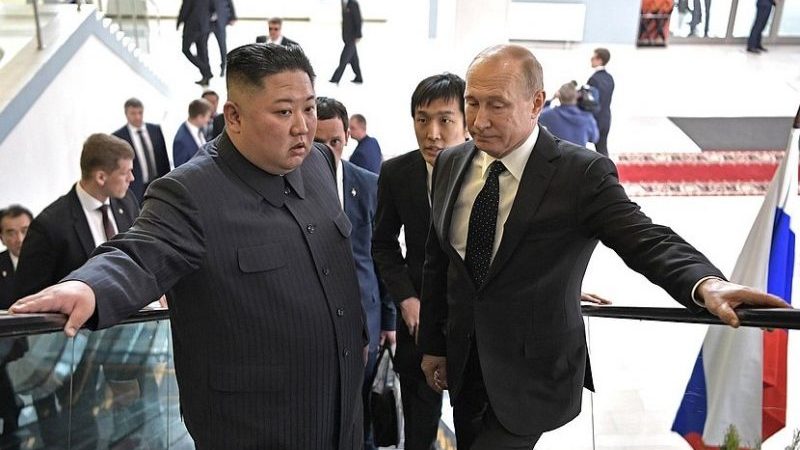
According to a September 13 report on Cable News Network (CNN), North Korean leader Kim Jong-un and Russian President Vladimir Putin, following intense speculation, met on September 13, to discuss a potential arms deal—one that could see Pyongyang provide weapons for Moscow to use against Ukraine.
Putin signaled a potential willingness to assist North Korea in developing its space and satellite program as he gave Kim a tour of Russia’s Vostochny space launch site ahead of the arms talks.
At the end of his visit, Kim was quoted as saying he would “always be standing with Russia”.
In its latest report of North Korea, the State Department says the U.S., in the past, has provided food and other emergency aid to North Korea during times of famine and natural disasters, upon request by North Korea.
The U.S. does not provide any direct aid to North Korea. Currently, there are a number of U.S. NGOs that travel to DPRK through private and faith-based donor support, providing aid to fight infectious diseases such as multi-drug-resistant tuberculosis and to improve farming practices and agricultural output in rural area.
In its 2023 Yearbook, the Stockholm International Peace Research Institute (SIPRI) said North Koreacontinues to prioritize its military nuclear programme as a central element of its national security strategy.
“While North Korea conducted no nuclear test explosions in 2022, it conducted more than 90 tests of missiles”. Some of these missiles, which include new ICBMs, SIPRI said, may be capable of carrying nuclear warheads.
SIPRI estimates that the country has now assembled around 30 warheads and possesses enough fissile material for a total of 50–70 warheads, both significant increases over the estimates for January 2022.
Meanwhile, in its World Report 2023, released on January 11 at a UN press briefing, Human Rights Watch (HRW) says North Korea remains one of the most repressive countries in the world.
“Ruled by third-generation authoritarian leader Kim Jong Un, the government responded to the Covid-19 pandemic with deepened isolation and repression, increased ideological control, and by maintaining fearful obedience of the population by using threats of torture, extrajudicial executions, wrongful imprisonment, enforced disappearances, and forced hard labor”.
HRW also points out that the North Korean government does not tolerate pluralism, bans independent media, civil society organizations, and trade unions, and systematically denies all basic liberties, including freedom of expression, peaceful assembly, association, and freedom of religion and belief.
“North Korean authorities routinely send perceived opponents of the government to secretive political prison camps (kwanliso) in remote regions where they face torture and other ill-treatment, starvation rations, and forced labor. Collective punishment is also used to silence dissent”.
The North Korean government, says the HRW report, failed to protect economic rights, resulting in violations of the right to health, food, and access to an adequate standard of living in 2022.
The impact of the nearly three-year-long Covid-19 nationwide country lockdown intensified as the country was hit by major droughts in May, and flooding in July and August.
Meanwhile, in May, North Korea imposed more severe lockdowns across the country after it announced North Korea’s first official Covid-19 case. The government continued to prioritize weapons’ development and conducted a record number of over 30 missile tests between January and October, said HRW.
In an academic analysis last November of the situation in North Korea, Jisun Yi, a Research Fellow at the Institute for National Security Strategy (INSS), said the global community has been actively monitoring food situations around the world and developing contingency plans for regions at risk of deteriorating food conditions.
However, in recent years United Nations agencies responsible for assessing global food security and planning food assistance have been unable to include North Korea in their monitoring processes. This is largely due to almost no access of the outsider to the country, especially since the outbreak of the COVID-19 pandemic.
“The country seems to be experiencing a ‘hidden food crisis’ where internal food conditions are rapidly worsening under tightened government controls but with little room for external actors to intervene”.
On another note, South Korea’s National Intelligence Service recently reported significant surges in starvation deaths, suicides, and violent crimes within the north. These disturbing numbers serve as a rough but non-negligible indication of a severe food problem in North Korea.
Above all, it underscores the crucial need for the outside world to recognize the country’s unique-type food crisis which has been characterized by multiple disconnections from international sanctions, border closures, and information blockades.
Thus, it is paramount for the global community to resume interest and devise methods to possibly monitor the ongoing situation in order to mitigate the likelihood of famine or famine-like conditions in North Korea, says the study.
By Baria Alamuddin
Amid the fog of the Gaza conflict, inspectors from the International Atomic Energy Agency warn that Iran has increased threefold its enrichment of uranium to near bomb grade.
France’s UN ambassador and US intelligence officials warn that Tehran is “a couple of weeks or so” from the final stage of enrichment of sufficient uranium for three nuclear weapons. This is a stark turnaround from a few months ago, when the US complacently believed it had reached a deal with Iran to curtail enrichment.
Tehran is meanwhile using its regional proxies to exacerbate conflict. My book published two years ago about Iran-backed transnational factions — “Militia State” — warned of the risks of allowing paramilitary entities to become established at major global economic chokepoints such as Bab Al-Mandab, the Strait of Hormuz, the eastern Mediterranean and the Arabian Gulf headwaters. As a result of Houthi attacks on shipping, Red Sea trade is down by around a third, seriously disrupting the global economy, with Arab states among the most affected.
Although British Foreign Secretary David Cameron argued that not acting would be accepting that such attacks could “virtually shut a vital sea lane with relative impunity,” the US and UK airstrikes strikes left at least 75 percent of the Houthis’ missile-firing capabilities intact, with Western intelligence struggling to identify further viable targets. In any case, Tehran has always been quick to resupply its proxies — in full view of US spy satellites — and the Houthis are battle hardened by decades of conflict.
The Biden administration’s delisting of the Houthis as a terrorist group is evidence of the chronic absence of strategic thinking that has plagued successive US administrations for decades. Largely symbolic retaliation by the West plays into the Houthis’ hands by raising their regional profile. A multinational coalition has been put together to protect shipping and counter the Houthi threat. The only Arab participant with observer status is Bahrain, which has long hosted the US Fifth Fleet.
Last week the spokesman for the Kataib Hezbollah faction in Iraq, Jafar Al-Husseini, threatened US bases throughout the Gulf region with attack, and Hashd Al-Shaabi militants have already staged dozens of attacks against US positions in Iraq and Syria, with escalating patterns of US retaliation. “We’re not interested in a conflict of any kind,” White House spokesman John Kirby said. But the US and its allies are alreadyembroiled in a Middle East conflict whether they like it or not. Israeli and American airstrikes in Syria, Iraq and Lebanon have killed dozens of Quds Force, Hezbollah and paramilitary personnel, including leadership figures.
The fundamental reason these vast Iran-backed paramilitary armies exist is to counter the presence of the US, and of Tehran’s other regional enemies — irrespective of how Arab nations become caught in the crossfire. If Hashd militias were to achieve their goal of forcing US troops out of Iraq it would offer expansionary opportunities for Daesh, which is already ruthlessly exploiting the Gaza bloodshed to recruit and reassert its global relevance.
Last week Daesh issued a grizzly video depicting its fighters in northern Cameroon slaughtering Christians. A Daesh commander stood over the corpses, inciting further such atrocities against “Jews and Christians” in order to “avenge the Muslims of Gaza.” This was just one of over 100 claimed worldwide attacks by the group, as part of what it alleges to be a campaign of “solidarity” with Gaza.
Such self-aggrandizing theatrics by the Houthis, Daesh, Iran, and the Hashd only distract attention from the carnage in Gaza. For the first time in months, news bulletins are focused on Yemen and regional geopolitics,and not the appalling suffering of Gaza citizens. What more could Israel possibly ask for?
Iran’s latest rush to acquire military nuclear capabilities is a further reminder of how much worse this conflict could get. Would America dare to threaten Tehran and its proxies if nuclear retaliation were a credible scenario? Israel also possesses nuclear capabilities, so if either side were backed into a corner, there are those who would countenance deploying such fearsome weapons. Indeed, in the immediate aftermath of the Oct. 7 attacks by Hamas, Israel’s justice minister horrifically proposed dropping a nuclear bomb on Gaza as a solution to the conflict.
More than 100 days into the war, the case for genocide made by South Africa at the International Court of Justice was detailed and convincing: the mass killing of over 23,000 Palestinians, with about 8,000 others buried under rubble, by Israel’s indiscriminate dropping of massive 2,000-pound bombs; about 10,000 children killed, over 60,000 injured and maimed; an entire population forcibly displaced, whole cities and refugee camps destroyed, and all Gaza’s hospitals put out of action. South Africa’s case also highlights the huge psychological impact and unimaginable trauma, with innumerable wounded children having no surviving family members to provide care and support, not to mention the impact of malnutrition and disease. This war has harmed the innocent, infinitely more than any losses incurred by Hamas.
Whatever the ultimate legal ruling, the fact that Israel has been brought to this court based on solid legal arguments for genocide damages Israel’s international reputation immeasurably and permanently — and this a country that was hitherto perceived as diplomatically untouchable.
Both the US and Iran claim they want an end to the bloodshed in Gaza and to prevent regionalization of the war, but many of their actions are pushing dangerously in the opposite direction. America with its huge influence over Israel wields the ultimate trump cards: Israel must be stopped in its tracks. If Tehran wishes to avoid the fires of this conflict arriving at its own door, it should urgently do its utmost to rein in its warmongering proxies. Instead of advancing its nuclear activities, it should be a foremost advocate for a region entirely empty of nuclear weapons — including Israel.
More hatred, more violence and more corpses benefit nobody, least of all Israel which is only further perpetuating this decades-old conflict. This is why many are looking to the International Court of Justice for a legal mandate demanding a halt to hostilities, at the very least. The killing must end, and quickly, before the mutual provocations of Israel and Iran’s proxies succeed in triggering something immeasurably worse.
• Baria Alamuddin is an award-winning journalist and broadcaster in the Middle East and the UK. She is editor of the Media Services Syndicate and has interviewed numerous heads of state.
The resolution, led by the activist shareholder organization Follow This, will be brought to a vote at Shell’s annual general meeting later this year.
The effort to ratchet up pressure on Shell’s climate strategy comes as CEO Wael Sawan seeks to boost the company’s profits, partly by slowing down investments in renewables and growing fossil fuel production.
The group of investors, which collectively hold around $4 trillion under management, include Amundi, Scottish Widows, Rathbones Group and Edmond de Rothschild Asset Management, Follow This said in a statement.
The resolution, which is similar to previous resolutions by Follow This, urges Shell to align its medium-term carbon emissions reduction targets with the Paris Climate Agreement, including emissions from fuels burnt by consumers, known as Scope 3 emissions.
Shell currently aims to halve emissions from its operations by 2030 and reduce the intensity of its overall emissions, including Scope 3.
Last year, a similar resolution submitted by Follow This won the backing of 20% of shareholders at the end of a raucous AGM where protesters tried to storm the stage.
“We urge Shell to set a credible Scope 3 absolute emissions target. This would demonstrate leadership, show Shell is serious about transitioning its business, and play a role in generating real world change,” said Diandra Soobiah, head of responsible investment at British pension scheme NEST.
Shell said in response that its climate targets are aligned with the 2015 Paris agreement to limit global warming to “well below” 2 degrees Celsius above pre-industrial levels by 2100.
“Shell’s Board has previously advised shareholders that the Follow This resolution was unrealistic and simplistic, that it would have no impact on mitigating climate change, have negative consequences for our customers, and was against the interests of the company and our shareholders,” Shell said in a statement.
Sawan, who took the helm in January 2023, said last year that Shell is changing its “pathway” towards meeting its ambition to become a net-zero carbon emitting company by 2050.
Shell will publish its first energy transition strategy update in early 2024, which will be brought to an advisory vote at the AGM, it said.
The resolution, led by the activist shareholder organization Follow This, will be brought to a vote at Shell’s annual general meeting later this year.
The effort to ratchet up pressure on Shell’s climate strategy comes as CEO Wael Sawan seeks to boost the company’s profits, partly by slowing down investments in renewables and growing fossil fuel production.
The group of investors, which collectively hold around $4 trillion under management, include Amundi, Scottish Widows, Rathbones Group and Edmond de Rothschild Asset Management, Follow This said in a statement.
The resolution, which is similar to previous resolutions by Follow This, urges Shell to align its medium-term carbon emissions reduction targets with the Paris Climate Agreement, including emissions from fuels burnt by consumers, known as Scope 3 emissions.
Shell currently aims to halve emissions from its operations by 2030 and reduce the intensity of its overall emissions, including Scope 3.
Last year, a similar resolution submitted by Follow This won the backing of 20% of shareholders at the end of a raucous AGM where protesters tried to storm the stage.
“We urge Shell to set a credible Scope 3 absolute emissions target. This would demonstrate leadership, show Shell is serious about transitioning its business, and play a role in generating real world change,” said Diandra Soobiah, head of responsible investment at British pension scheme NEST.
Shell said in response that its climate targets are aligned with the 2015 Paris agreement to limit global warming to “well below” 2 degrees Celsius above pre-industrial levels by 2100.
“Shell’s Board has previously advised shareholders that the Follow This resolution was unrealistic and simplistic, that it would have no impact on mitigating climate change, have negative consequences for our customers, and was against the interests of the company and our shareholders,” Shell said in a statement.
Sawan, who took the helm in January 2023, said last year that Shell is changing its “pathway” towards meeting its ambition to become a net-zero carbon emitting company by 2050.
Shell will publish its first energy transition strategy update in early 2024, which will be brought to an advisory vote at the AGM, it said.