Categories
South Caucasus News

“2 thousand bottles a month”. Story from Georgia about schoolchildren who do not use plastic bottles


School of the future

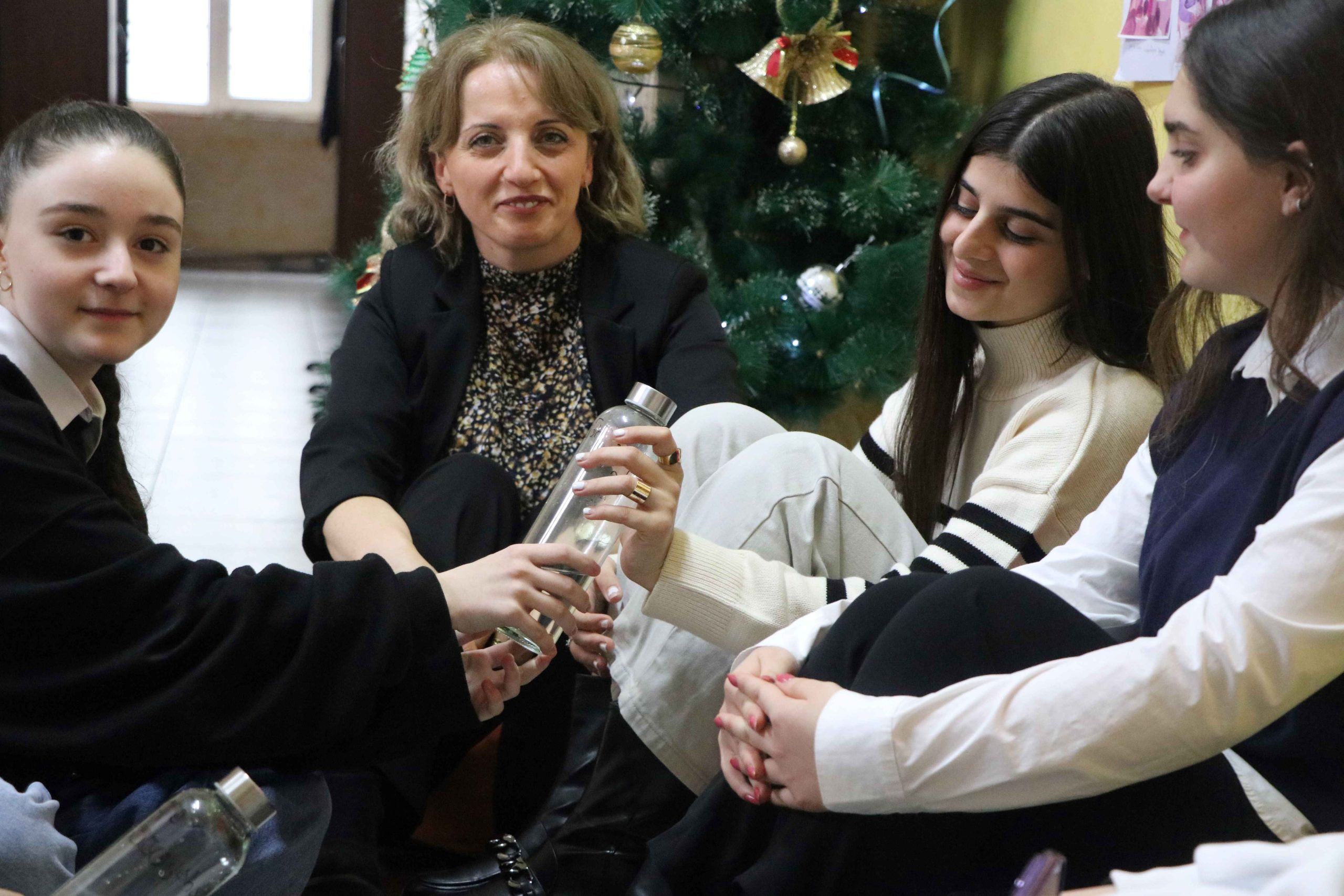
Students of the Batumi “School of the future” decided not to use disposable plastic bottles for drinking water anymore. Almost every student has their own glass bottle.

The Eco Club of the school came forward with the initiative to reject the use of plastic objects. Many more “green” initiatives have been implemented in the school thanks to this club.


In this report, we tell you where the idea came from to replace the water bottles in the school. And more importantly — how easy it was to change the behavior of students.

School of the Future was founded in Batumi in 2012 as a private school and now has about 300 students.

How did the idea of replacing plastic bottles come about?

There are only a few hours left until Christmas, but school halls are still crowded.

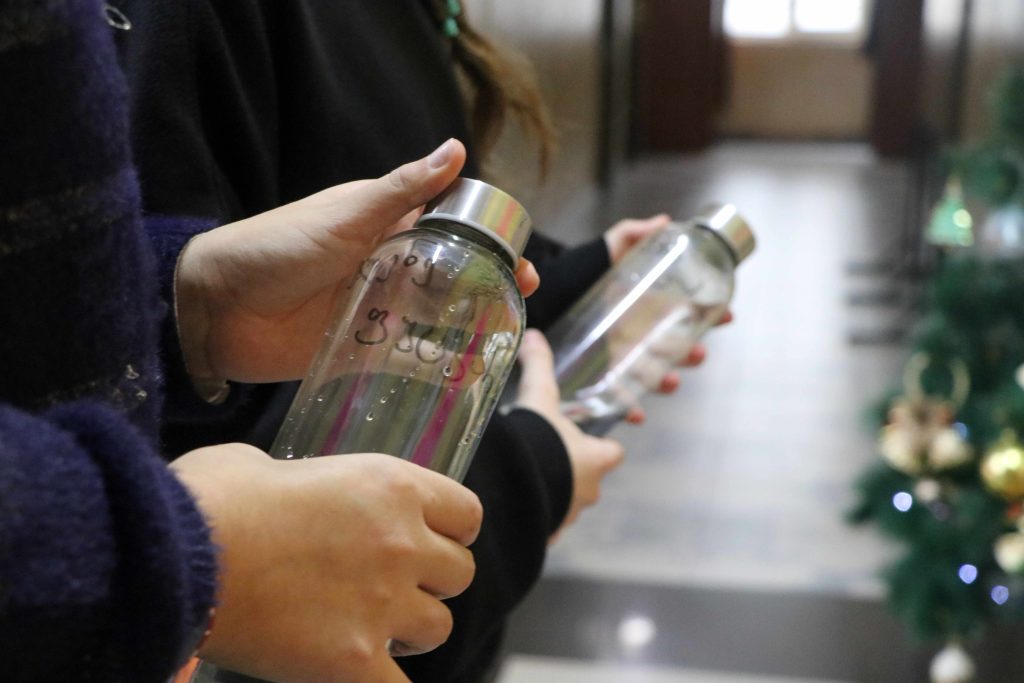
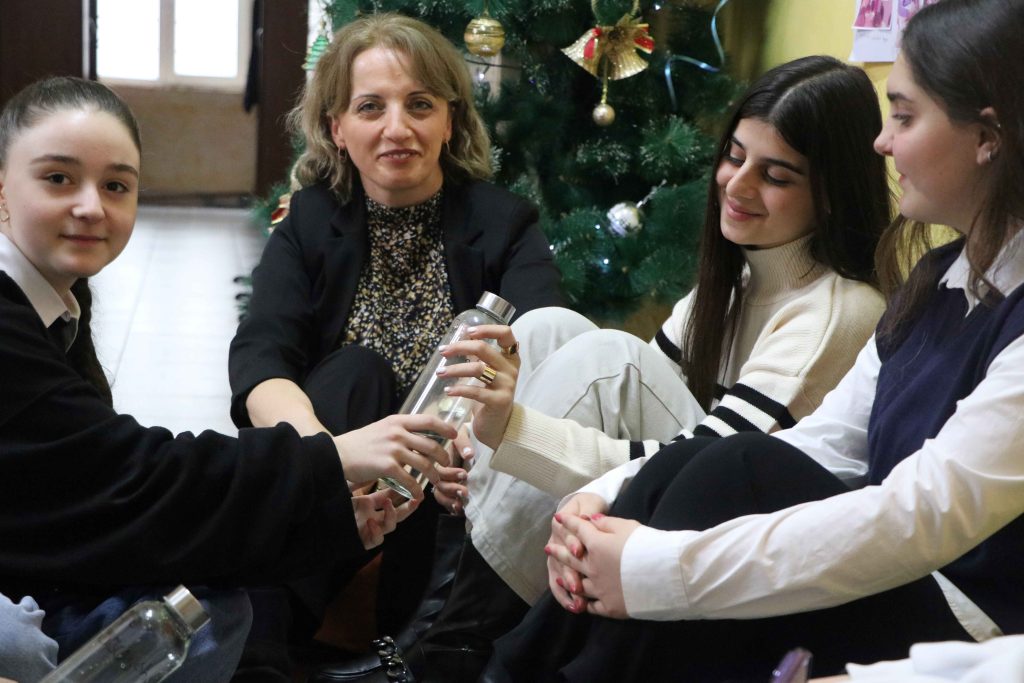
There is a line of students in the hall at the water fountain. Everyone has a glass bottle in their hand. The owner’s name and surname are written on each.
School of the future

One of the students tells me that they no longer buy drinking water from kiosks and just use their personal bottles.

The school administration explains that no one is officially prohibited from using plastic bottles at school. This decision was made by the students themselves.

The initiators of the changes were members of the school eco-club “Green Space”.

The club was founded by high school students three years ago, in 2020. Soon after its creation, the members of the eco-club made their first important decision.
School of the future

Participants collected information about the dangers of plastic. They analyzed data that there are hundreds of millions of tons of plastic waste in the world, which also form microplastic particles.

The children estimated that more than two thousand plastic bottles were thrown away at their school alone in a month, which then ended up in the ecosystem.

They shared this information with other students, turned to the school leadership and together decided that something needed to be done.
Now this small school has several hundred pieces of reusable tableware, and each student’s bottle has their first and last name written on it. Like conspirators, none of the students brings single-use plastic bottles to school anymore.

Ecoclub and its activities

Our visit to the school coincided with another presentation by the eco-club.

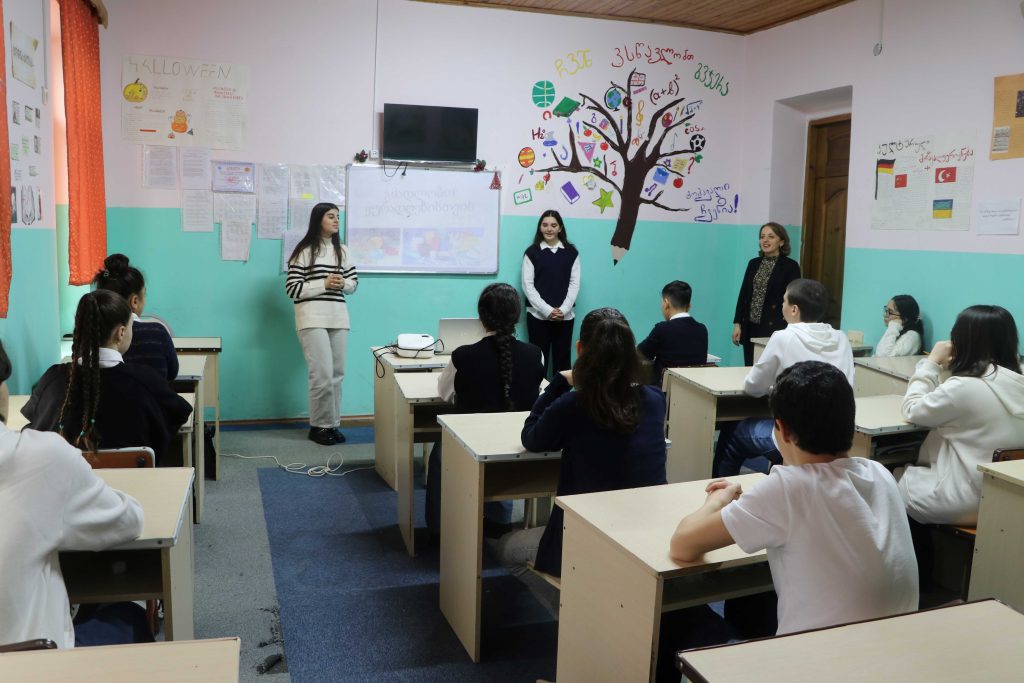
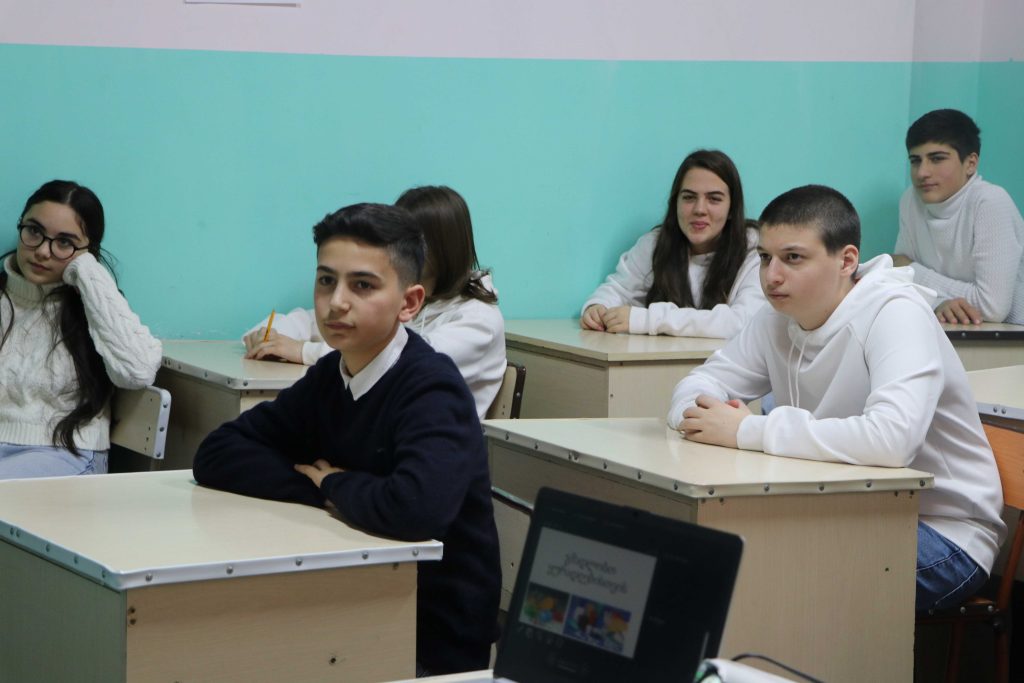
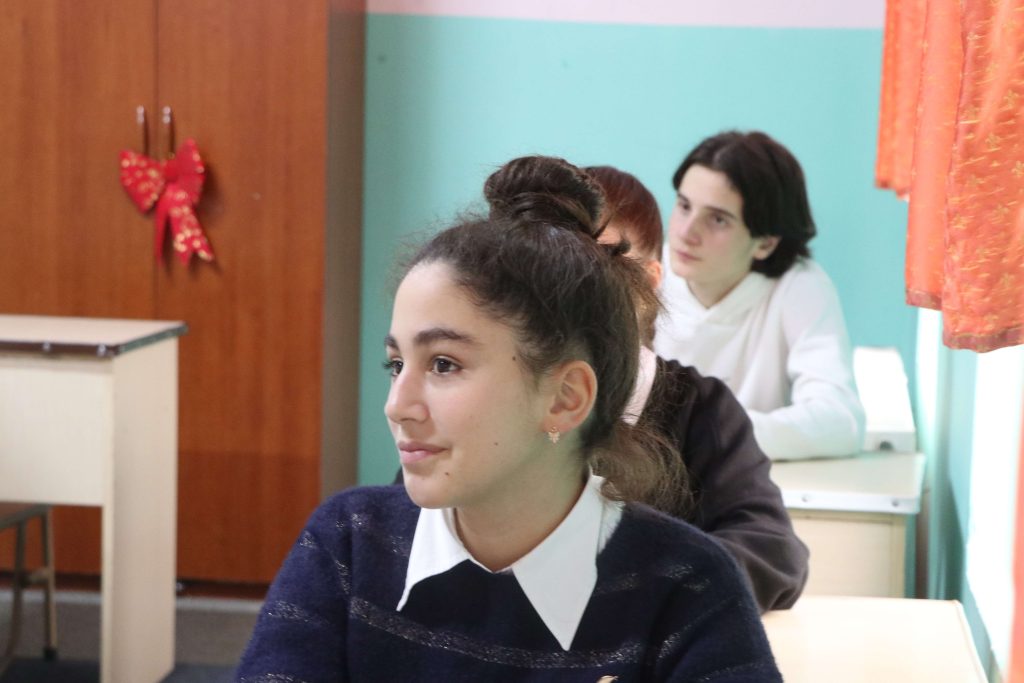
The presentation takes place in a small classroom on the top floor of the three-story school. There are about 20 children in the class and two leaders.

The presentation talks about the dangers of plastic, its uncontrolled use, environmental pollution and the benefits of recycling waste.
School of the future

“One plastic cup and bottle we use takes 450 years to decompose. Hundreds of thousands of discarded bottles and other plastic form plastic islands in the middle of the ocean. We have such information, we see it, but we still use plastic every day, and its amount does not decrease, but increases,” Tako Urushadze tells his classmates.​

“Most of the plastic ends up in the oceans and seas. Even here, in the Black Sea, in which we swim in the summer or whence we get fish. Some of the plastic breaks down and disperses into the air and water as particles and then enters our bodies.”

The monitor shows animals wrapped in garbage nets, or plastic islands formed in the oceans, plastic objects washed ashore that will not decompose for several centuries.
School of the future

Another presenter, Mariam, tries to describe in more detail how often, and sometimes just unnecessarily, we use plastic bags.

And then she talks about a way you can reduce plastic products, recycle and reuse plastic.

“I know I can change the environment” – Mariam’s experience

“I know that I can change the environment around me, and even if I can’t change it completely, I will still have an impact on this process, and I did,” says Mariam, a 12th grade student.
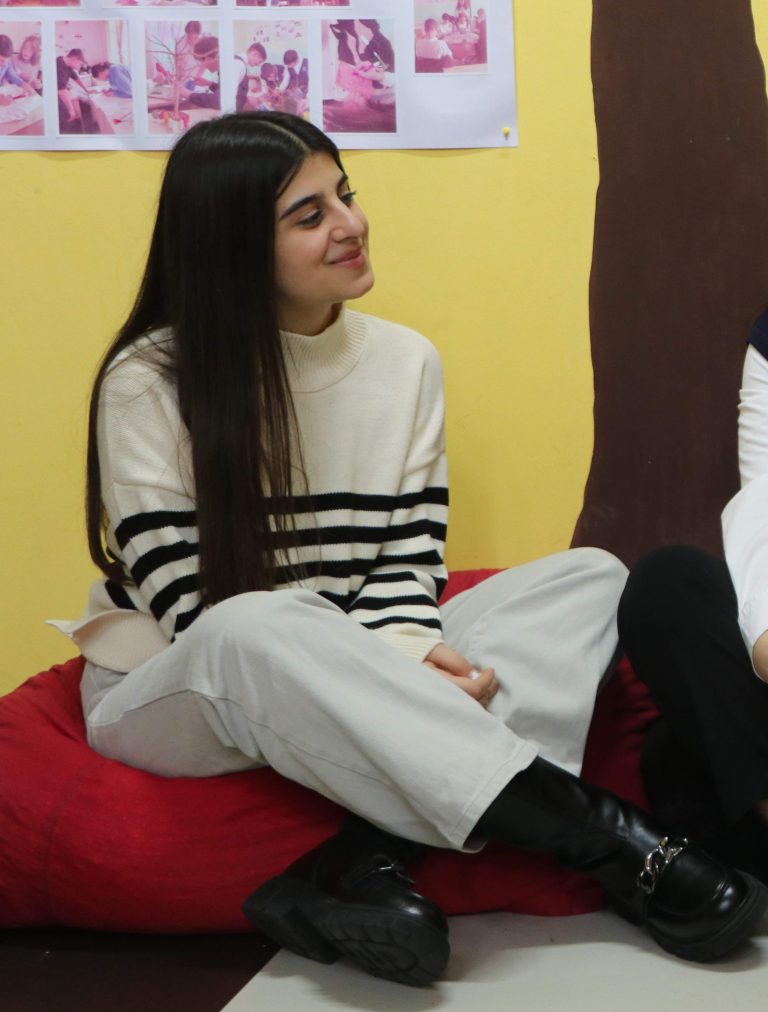
“Once in Batumi, in our area, the sewage system became clogged. It was full of plastic bottles and cups and other waste. Everyone threw their trash here. We thought the reason for this was that there simply weren’t enough trash cans in the area, so the people around had no other choice. We came up with the idea to solve the problem. Some of us went to the mayor’s office and wrote a statement. After some time they put out boxes for us.”

Marie considers it a personal victory and says the situation in her area has changed.

This year she graduates from school and will go to university. The club is worried about losing her.

She is one of those who has taken part in the activities of the club since its founding:

“I’m finishing school, but our club already has a lot of members and we have a lot of plans, so I will cheer for you from a distance and continue to share this experience elsewhere,” says Marie.

“Children should have the feeling that it depends on them what kind of environment we have”

“The first task is to make children feel that it depends on them what kind of living environment we have,” Lamzira Zoidze, a biology and natural science teacher at the Batumi School of the Future, tells us.

She tries to talk with students about their personal responsibilities.
School of the future

“The idea of creating a club came to me after the end of the coronavirus epidemic. After years of distance learning, I believe that non-formal education is the most effective way to increase children’s concern for the environment. I heard that the CENN organization was announcing a competition for eco-oriented schools, and we joined this process,” recalls the head of the eco-club.

She says they first started working in classrooms. The students were taught what ecology and biodiversity are. The children prepared presentations on air and water pollution, talked about the dangers of plastic pollution and gradually involved the whole school in green activities and awareness campaigns.
School of the future

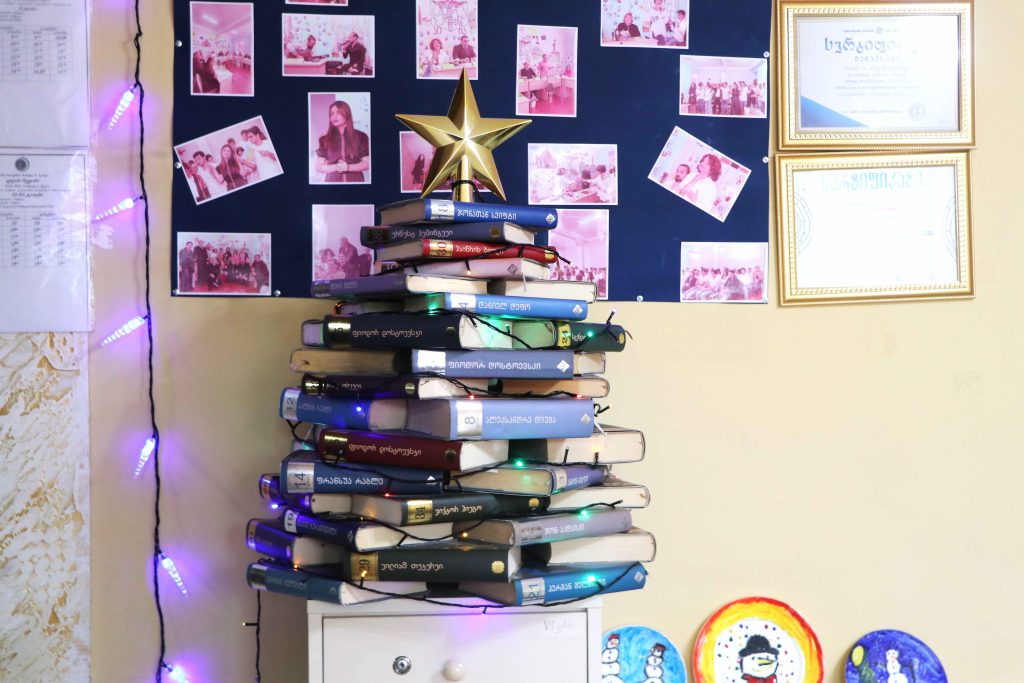
In the competition of the CENN organization, in which many eco-clubs throughout Georgia took part, they reached the finals. They are especially proud of this fact and hung their a certificate on the central wall of the school.

Members of the Batumi School of the Future carry out various kinds of actions — clean Batumi beaches, plant trees, and conduct seminars.

“These activities will definitely be imprinted on the child’s mind. Since he himself is involved in the process, he understands the problem differently and gets used to taking concrete steps to solve it. First of all, responsibility is formed. The child disseminates this information in the family, practically becoming an ambassador of the school in his microsociety. Maybe it doesn’t work so perfectly in all cases, but in the long run there will definitely be results,” Lamzira Zoidze says.

Students of the Batumi School of the Future have already mastered the basics of the circular economy and are trying to give new life to old things.

The students believe that they will be able to fight to preserve the environment of Batumi, even if not on a large scale.

School of the future


The story was created within the project “Empowering People for Circular Solutions in Georgia”, undertaken by CENN with the support of the USAID’s Economic Security Program.
Categories
South Caucasus News

“My goal is to stop waste and promote circular thinking” – Eka Asatiani


Eka Asatiani

Eka Asatiani

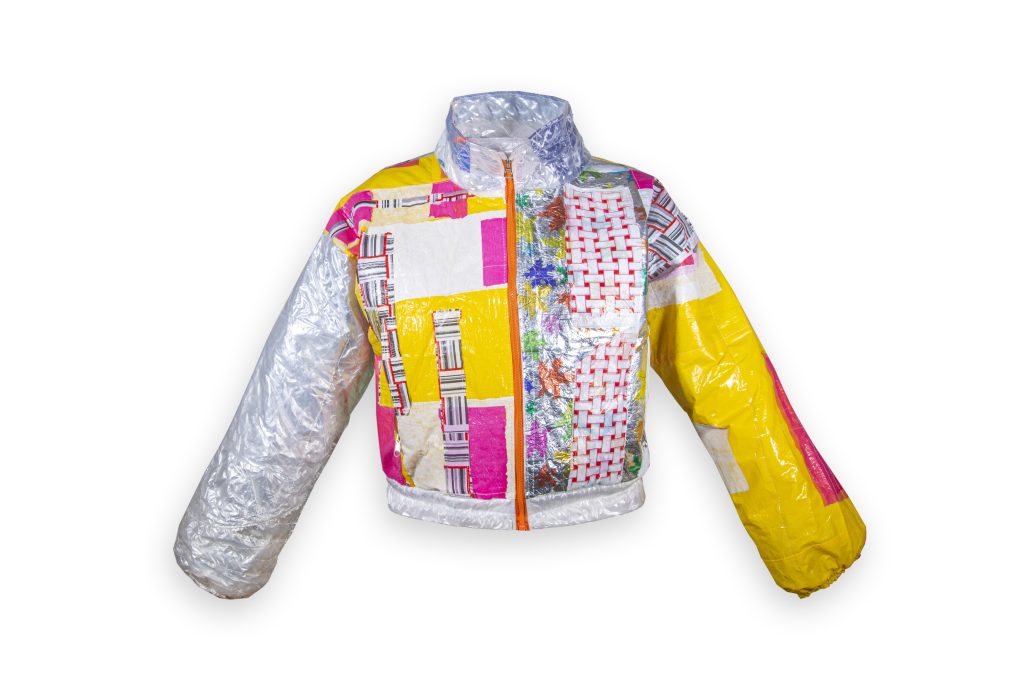
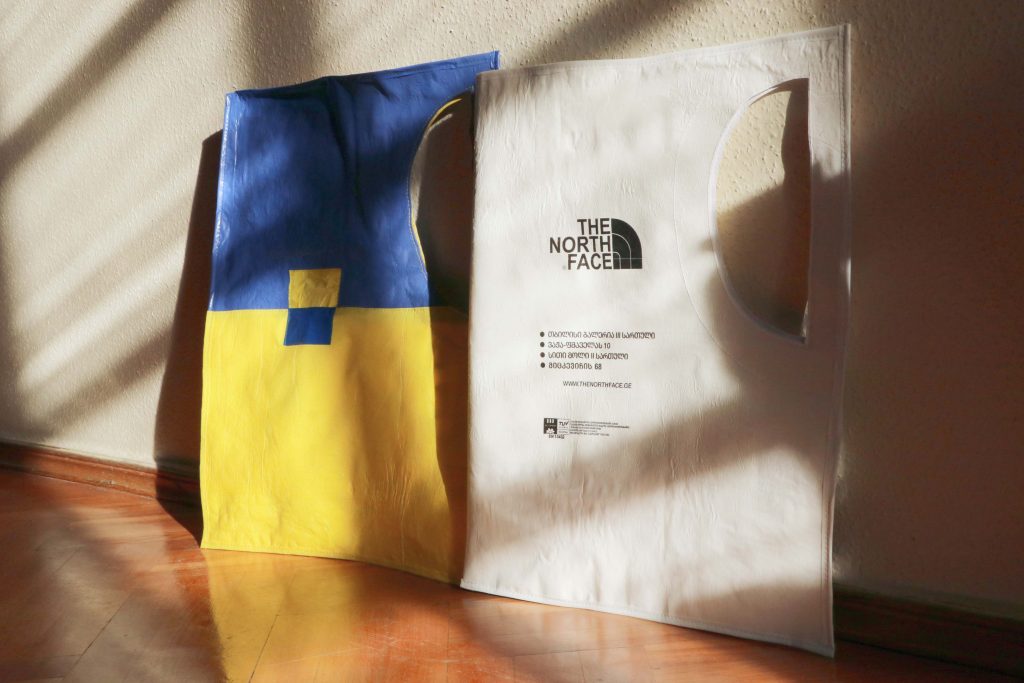
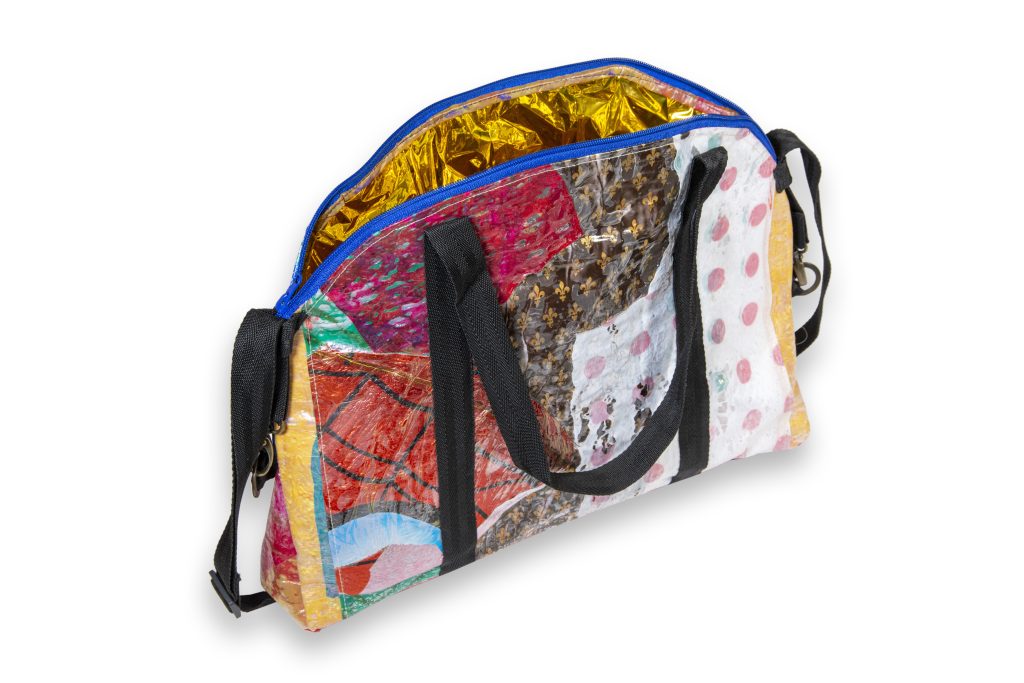
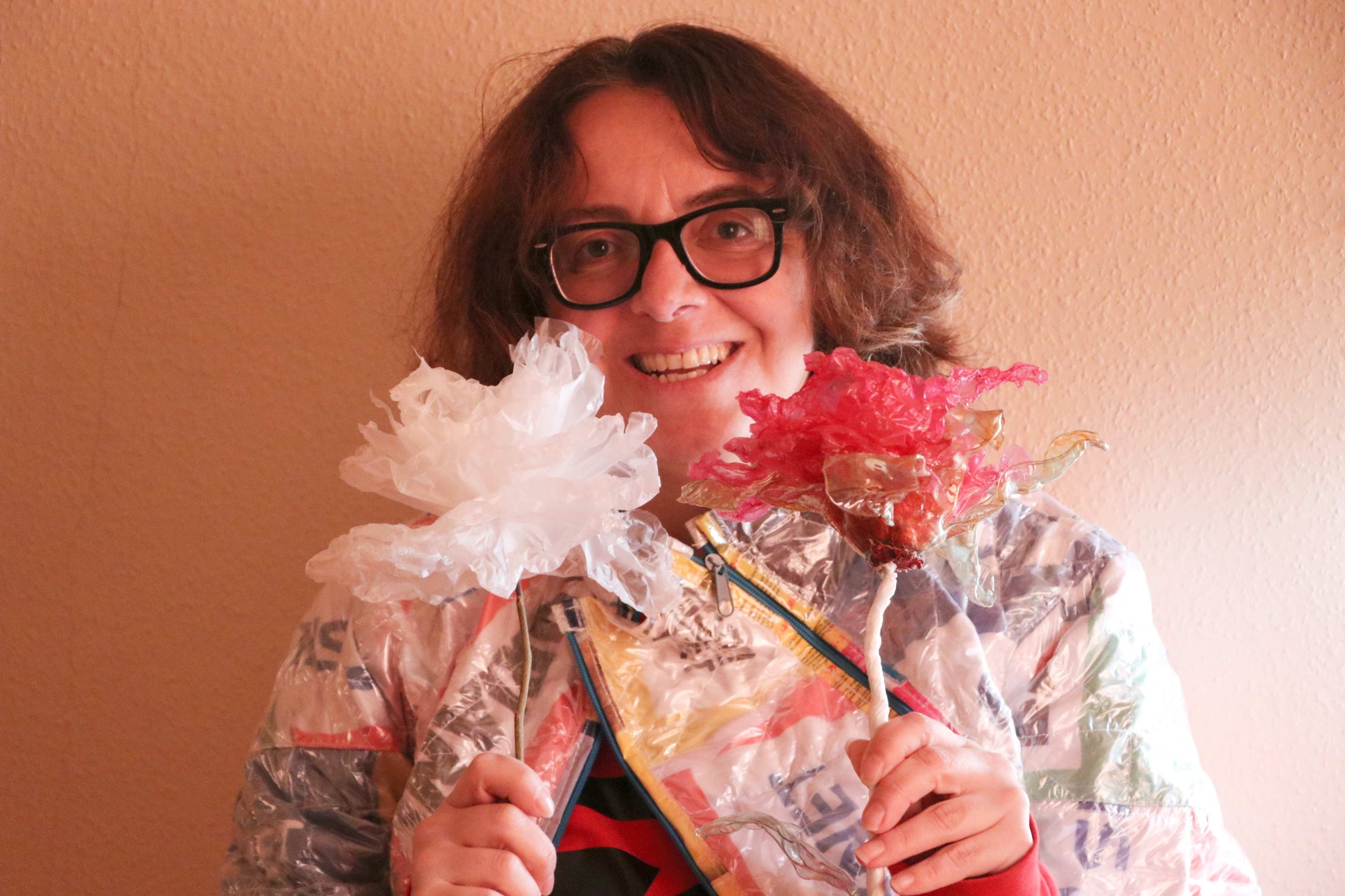
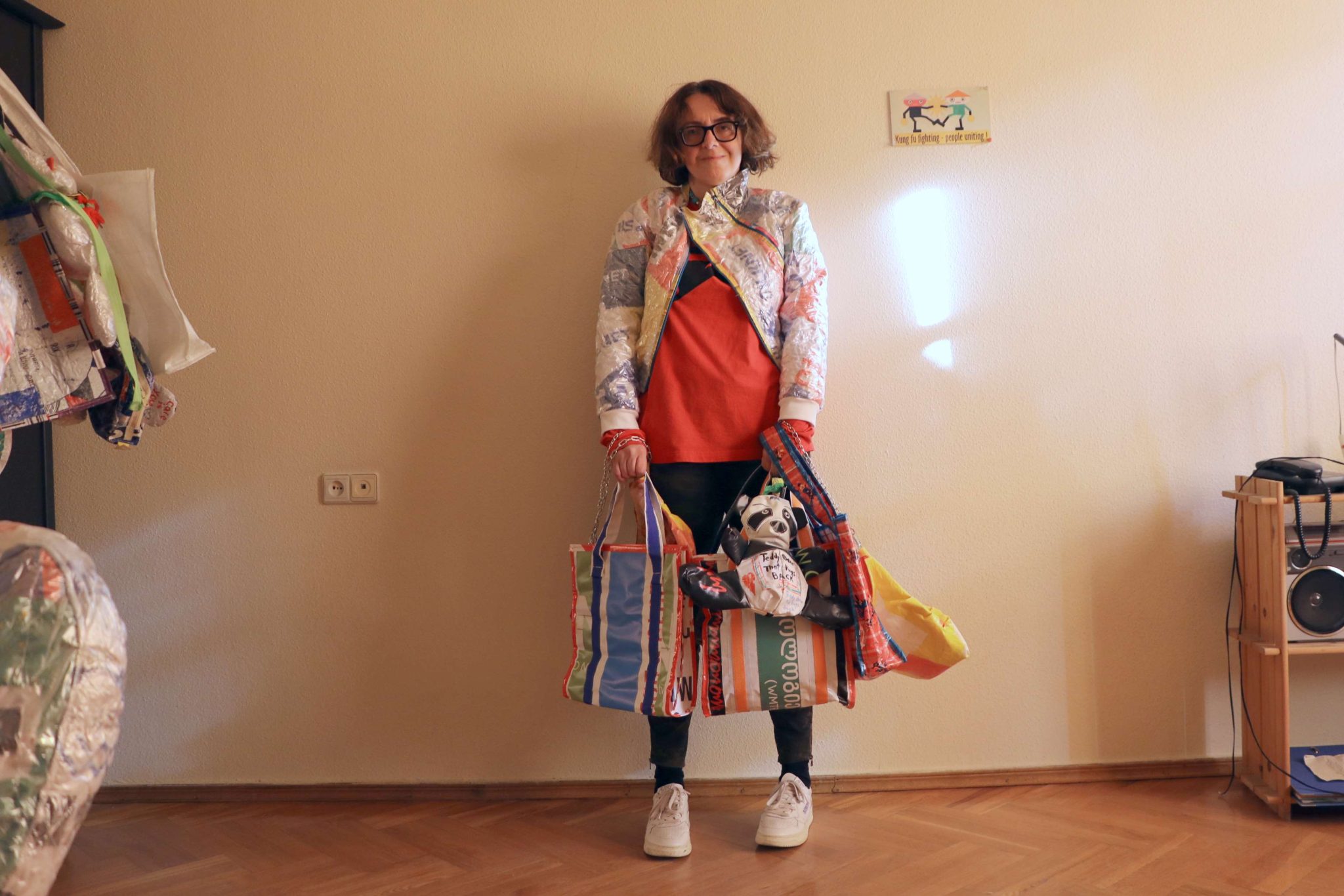
Bags, raincoats, hats, tablecloths are just a small list of unique design items that Eka Asatiani creates from plastic waste.

No two things are the same. And, at first glance, it is difficult to imagine that they are all made from discarded plastic bags, T-shirts, banners or plastic bottles.


Eka collects garbage herself, but friends and relatives also help out. Eka jokes: “I am a garbage woman, and my goal is to stop waste.”

This is both a protest and an attempt to set an example for others.

For Eka this is not a business. The things she creates are her means of communicating with the world around her. In this way she expresses her heartache and tries to make others think.

In this article we will tell you how the idea of turning plastic waste into unique things was born, how the Plasticwatcher.ge website came about, and why it is important that we start taking care of waste reduction.

“Who am I? Garbage woman”

“Who am I? Garbage woman. I collect garbage and create things, I arrest garbage,” Eka Asatiani tells me when I ask her to tell me a few words about herself.

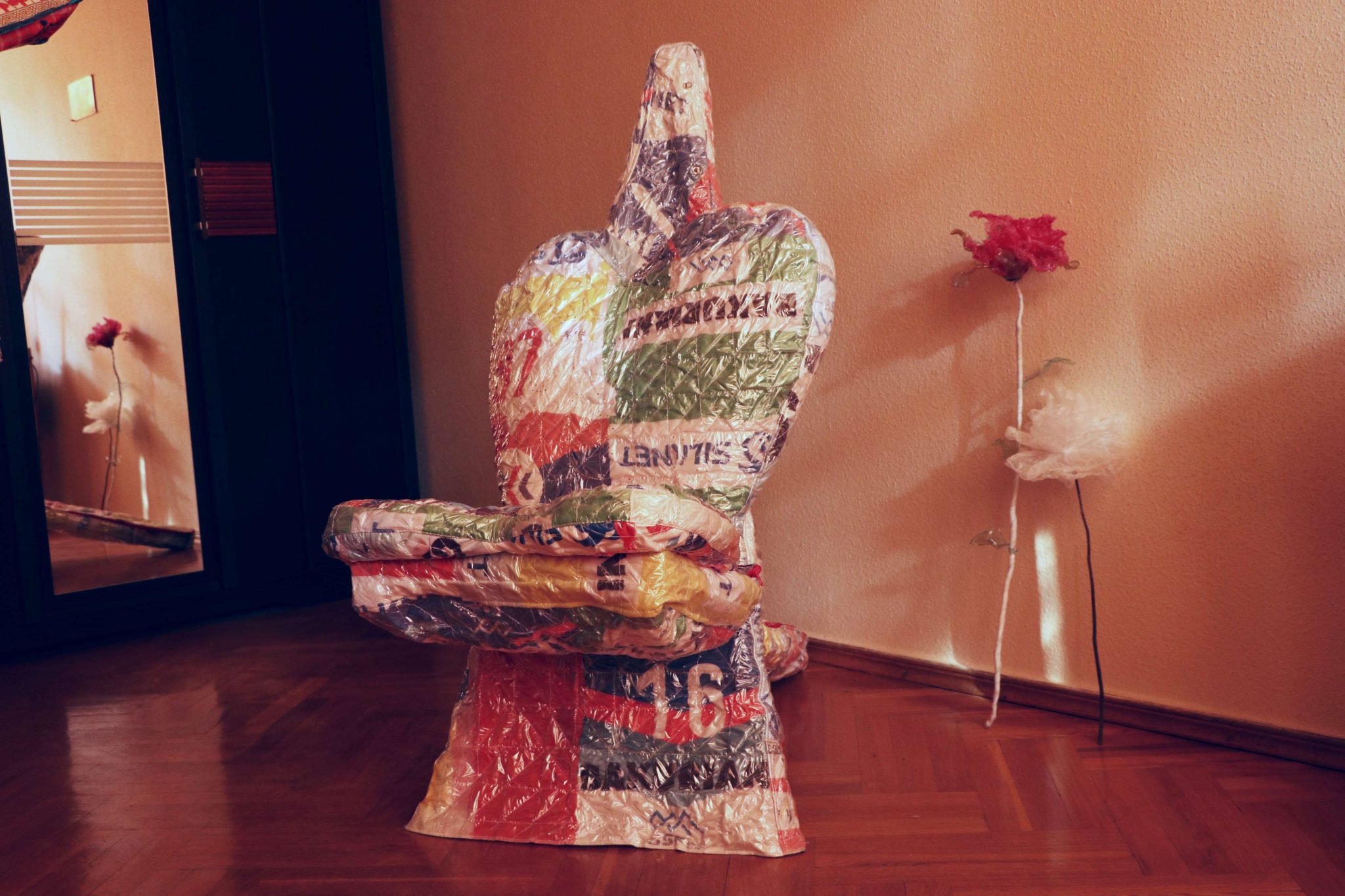
A chair made from trash. Photo: Nino Memanishvili/JAMnews. Eka Asatiani / Plasticwatcher.geA chair made from trash. Photo: Nino Memanishvili/JAMnews

We are in Tbilisi, in Eka’s house. In the middle of a small room, illuminated by the December sun, there are two original armchairs. Both are made from trash.

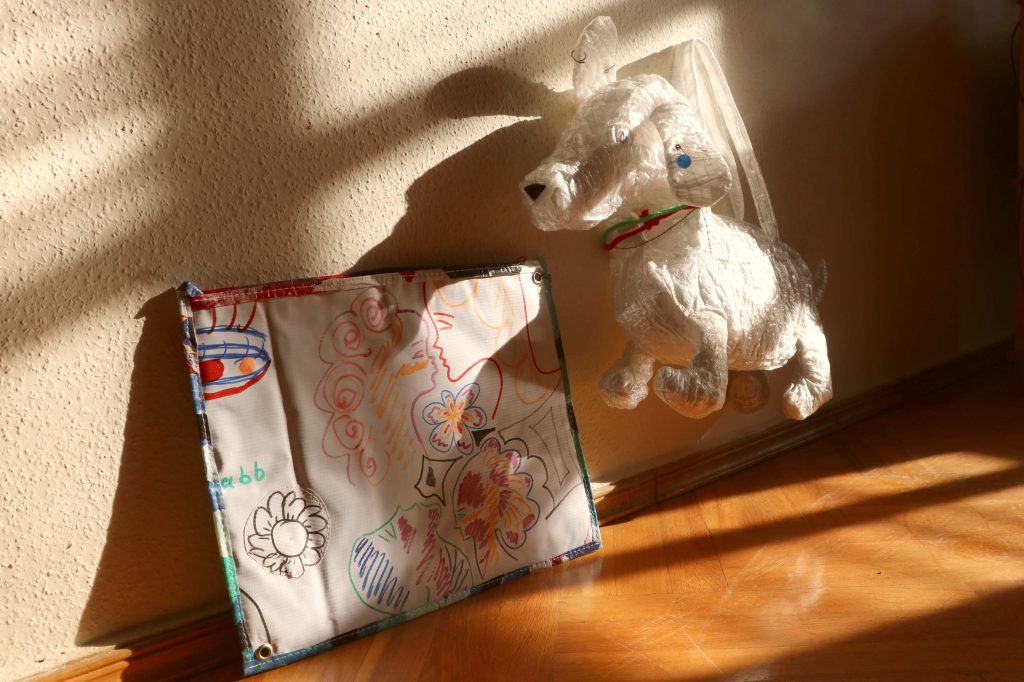
In the corner of the room is an old wooden rack filled with bags and other uniquely designed items. A dog-shaped bag is visible hanging on the hanger.

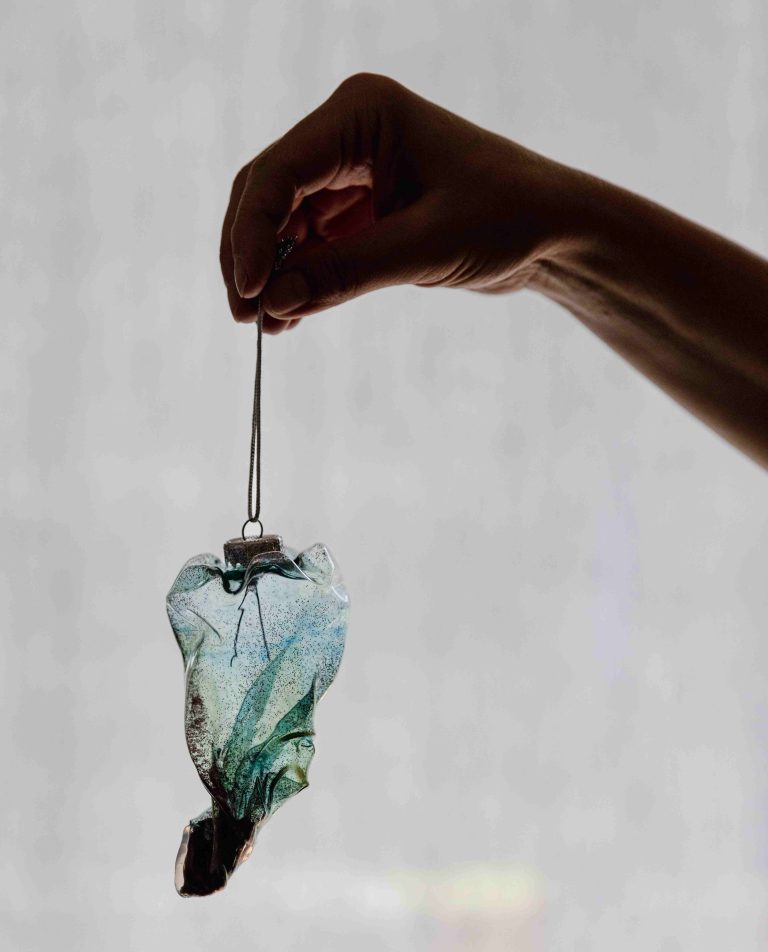
Christmas tree toy made from plastic bottles. Photo: Mariam MumladzeChristmas tree toy made from plastic bottles. Photo: Mariam Mumladze

I go to the kitchen to get a chair. On the table is a huge box of Christmas tree decorations made from plastic bottles.

How can you create such magic from those bags and bottles that we throw away dozens of times a day?

Eka Asatiani is not an ecologist or a designer. Her first profession is a philologist, specializing in English. She chose public administration as her second profession. Now she works at an international organization.

“I don’t like to lecture. I think that an example is more contagious, and I myself try to enjoy it,” Eka says at the beginning of the conversation:

“If at least one person likes my philosophy of life and asks me: “How do you live? How much trash do you accumulate? What are your daily choices?’ I’ll be happy.”

About 1.1 million tons of solid waste are generated annually in Georgia. Waste recycling continues to be a big problem in the country. Plastic bags even on trees, piles of plastic bottles in ravines and rivers can be seen in almost every corner of Georgia. Plastic makes up the largest share of trash accumulating on Georgia’s beaches. Lately we are increasingly hearing talk about waste sorting and recycling. Many organizations and volunteer groups have begun to sort garbage and reduce the amount of single-use plastic, but given the overall scale of the problem, this is still a drop in the bucket.

Her philosophy of life is to protect the environment from waste. This is a philosophy, a way of life, and a rule. Eka tries to stick to it with every step she takes.

For several years now she has been collecting plastic waste, recycling it and creating multifunctional items.

There are several reasons for her activity. First, this is a kind of protest:

“Since our country does not have a culture of sorting and recycling waste, I want to influence people in this way and make them think. A person can cause a lot of harm with one thoughtless act, such as buying water in a plastic bottle, which he then throws into the environment.”

And although Eka is not an ecologist by profession, she knows very well how a plastic bottle or plastic bag entering the environment breaks the chain of biodiversity:

“If environmental pollution continues at this rate, soil degradation is inevitable and hence this could have a very big impact on food security as well.”

How it all started

Eka loved to rearrange things since childhood:

“My mother worked abroad, and she brought me many clothes. I remember I always tried to change something. Then, when the borders opened, shops appeared and I became more interested in consumer behavior.”

Unique trash bag design. Photo: Nino Memanishvili/JAMnewsUnique trash bag design. Photo: Nino Memanishvili/JAMnews

Then she realized that beautiful clothes are more of a momentary pleasure. It leaves behind a huge negative impact on the environment, “so we have to go back to childhood.”

The fashion industry creates jobs, provides spectacle, dresses and entertains us. However, all this comes at a high cost to the environment. The fashion sector is considered the second most polluting industry. If large clothing and footwear manufacturers do not change anything, in the future they will be among the “creators” of environmental disaster.

Eka started collecting plastic waste and giving it a second life five years ago. At first she collected the garbage herself. Her morning began with a walk around the outskirts of Tbilisi:

“I started experimenting with bags and cellophane at home. I got pretty interesting material that could be used to make eco-friendly fashion items.”

Everything she has created so far is purely a product of her imagination. Having collected waste, she first thinks about what can be made from it, then creates a design and concept, and then, with the help of her colleagues, begins to create.

A cloak made from waste. Photo: Rusudan Dzigrashvili. Eka Asatiani / Plasticwatcher.geA coat made from waste. Photo: Rusudan Dzigrashvili

She herself discovered and studied these techniques. Eka says that this is all an experiment, some scraps need to be processed with a heat press, some need to be disassembled and converted into fabric.

Most importantly, none of her items is created simply.

Bags from old banner. Photo: Nino Memanishvili/JAMnewsBags from an old banner. Photo: Nino Memanishvili/JAMnews

She tries to create things that won’t end up in landfills because people will use them until they are no longer useful.

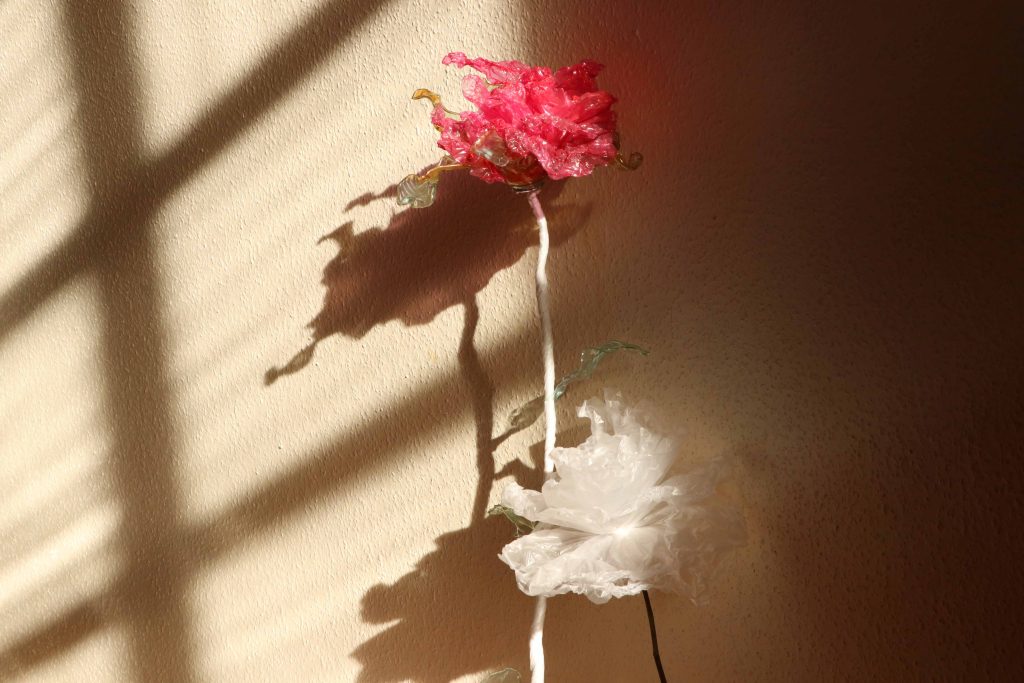
“It’s important to me that the waste lasts as long as possible. So I sometimes think that, for example, I will make a flower, and then three plastic bags will not end up in the soil. If I make a raincoat, I put a note on it that if it gets damaged, don’t throw it away, repair it, paint it, do embroidery, use tape and it will come back to life.”

This is the principle of the circular economy.

Plasticwatcher.ge and products from Eka outside Georgia

In 2019, Eka created the company Plasticwatcher.ge.

Plasticwatcher.ge collects/recycles used plastic bags and creates environmentally friendly products.

Bag from old banner. Photo: Nino Memanishvili/JAMnewsBag from old banner. Photo: Nino Memanishvili/JAMnews

Plasticwatcher.ge already has several awards. With a grant received from the Bank of Georgia, Eka bought the sewing machines she needed.

Flowers from plastic bags. Photo: Nino Memanishvili/JAMnewsFlowers from plastic bags. Photo: Nino Memanishvili/JAMnews

Plasticwatcher.ge also won the TBC Bank Business Award for “Outstanding Social Responsibility”, and the bank financed the creation of her website.

​Eka thought for a long time about what the site should be. It wasn’t supposed to be “educational”. According to Eka, it should be a space for communication and inspiration. Moreover, if someone wants to buy a product posted on this site, they should be able to do so easily and conveniently.

“I created this website to make it accessible all over the world,” Eka says.

And so it happened.

Plasticwatcher.ge was shortlisted for the Italian competition www.guiltlessPlastic.com. Eka’s things were exhibited in Milan. From there, her unique items began traveling around the world. Eka’s handicrafts went to America, Italy, England and many other countries.

Guiltless Plastic by Rossana Orlandi is an international project that aims to engage designers and creative communities around the world to give a second life to plastic and other types of waste.

Reduce, reuse and recycle polyethylene and other waste into sustainable fashion – that’s Eka’s motto, and it’s the first thing you see when you visit the site.

“We are trying to protect the environment from pollution from plastic bags and household product packaging waste. It is important that people around us understand the sad consequences of uncontrolled release of waste into the environment. They must cultivate a culture of waste sorting,” Eka writes on her website.

Bag from old banner. Photo: Nino Memanishvili/JAMnewsBag from an old banner. Photo: Nino Memanishvili/JAMnews

Plasticwatcher.ge already has its own network of volunteers – strangers, families who collect waste for Eka, as well as her friends, companies and organizations.

“When I first started doing this, I was like, ‘Wow, you’re doing this?’ Now everyone is used to it and expects what will happen next,” she says, and shows me a raincoat made from plastic bags and other garbage.

Anyone can buy items created by Eka through Plasticwatcher.ge. Plasticwatcher also has an Instagram page.

What will happen next

“My plan is to participate in many events, to show people what I do. I want them to remember that when they have trash in their hands, they can do something with it.”

In the future, she is thinking of organizing an educational space, where people go and see the magic that can be created from waste.

Eka hasn’t counted how many things she’d created so far, but she estimates she’s recycled about half a ton of waste so far.

“I want to promote the circular economy and bring this way of thinking to people. The way we live now – you buy something, use it and throw it away – is in a linear economy. The circular economy makes many tasks easier, and doing business with this approach is fun and interesting.”

A circular economy is a system that aims to eliminate waste and continuously use resources that have already been consumed. The main principles of the circular economy are reuse, recycling, repair and rehabilitation, that is, all those methods that make a specific item or material usable again.​

“I’m also a human being, not an angel, but I try to make all my behavior, all my purchases conscious,” she says. For example, even when buying clothes she will prefer good, high-quality clothes that she will use for many years. And if, for example, the furniture is broken, she thinks about how to reuse it instead of discarding it.

Eka knows that five people cannot change everything, but she is confident that if there is a desire to sort and recycle waste, then opportunities for it will appear.

Eka Asatiani


The story was created within the project “Empowering People for Circular Solutions in Georgia”, implemented by CENN with the support of the USAID’s Economic Security Program.

Categories
South Caucasus News

How the influx of Russian citizens has affected the Armenian real estate market


The impact of Russians moving

The impact of Russians moving

The impact of the Russian-Ukrainian war on life in Armenia, particularly the country’s economy, is assessed differently by the government and independent experts, but all agree that a certain percentage of economic growth has been a result.

We made an attempt to find out what impact the large-scale relocation of Russian citizens to Armenia has had on the Armenian real estate market.

It turned out that a significant part of Russians do not intend to stay in Armenia for a long time and are looking for opportunities to decamp for other countries, so pros and cons are likely to be temporary.


Rising apartment rents

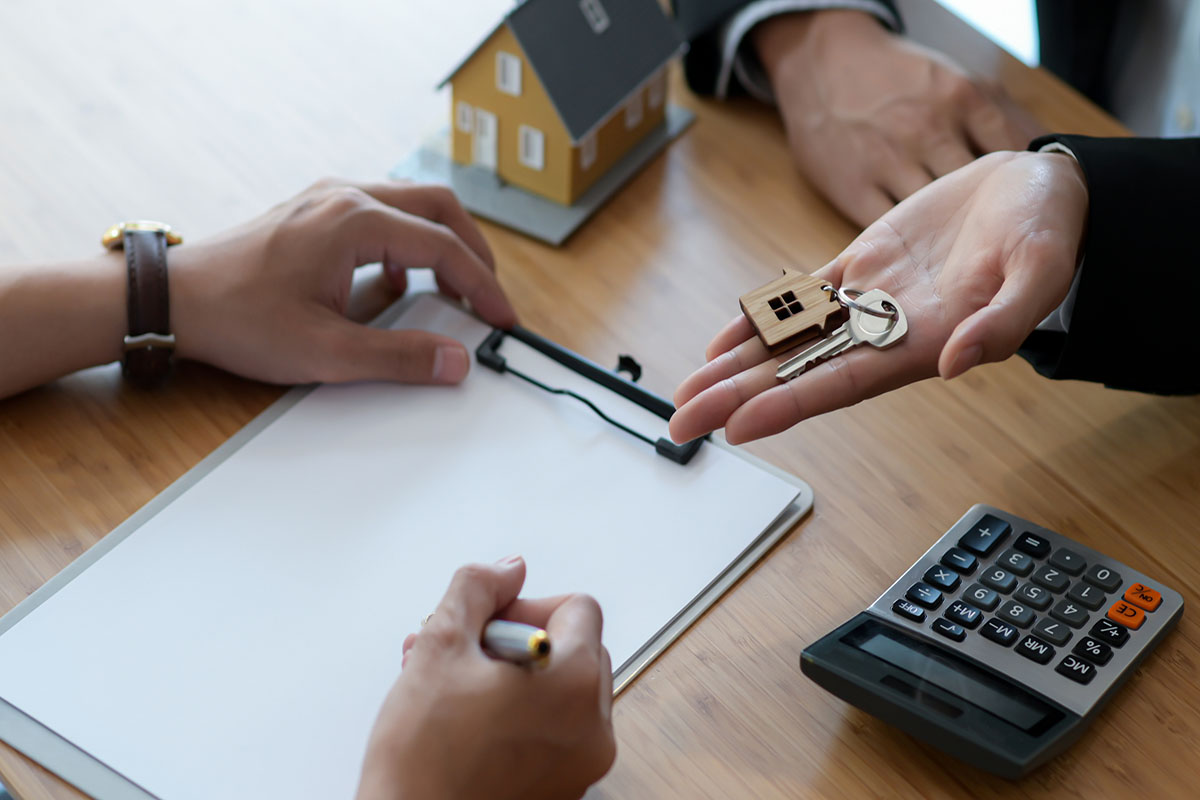
Anna lives in Yerevan in a rented apartment. She is one of many who have experienced the inconvenience of the arrival of a large number of Russian citizens in Armenia. In March 2022, when the influx began, the owner of the apartment first demanded double the rent — instead of 100,000 drams [about $200], he asked for 200,000 [about $500], and then he kicked her out of the apartment altogether.

“He only gave me a week to vacate the apartment. Since I did not have a lease agreement with the owner, I had to comply. I found myself on the street and had to ask acquaintances to put me up while I found another apartment. It is clear that I was evicted, as Russians who had moved to Armenia were given more expensive accommodation.”

How the influx of re-locations has affected the rental market

There is no official data on how much the prices for renting apartments and private houses have increased in Armenia.

“The Cadastral Committee does not analyze rental rates. Firstly, because of the small number of registered transactions, and secondly, due to the fact that unrealistic amounts of rent are indicated in the contracts,” Aram Gugarats, deputy chairman of the committee, says.

The state has almost no control over the rental market. According to the current legislation, when renting out housing, the owner must pay income tax of 10 percent of the transaction amount, but most people do not document the transaction and pay nothing to the state treasury.

Realtors say that the Russian-Ukrainian war has significantly affected the real estate market in Armenia, and moreso rents than sale prices.

“Due to the influx of Russians, rents went up two to three times. And only in the last five-six months, together with the departure of some Russians from the country, the emergence of more profitable offers in the primary real estate market, as well as a decrease in demand, the rental prices have slightly decreased,” economist Suren Parsyan says.

How the influx of Russians affected housing prices

The arrival of Russians due to the Ukrainian war ranks third in terms of the impact on real estate market prices, according to economist Armen Ktoyan. He gives priority to the law on the return of income tax on mortgage payments, or rather, the approaching deadline for its abolition in the capital.

According to this law, if an apartment in a new building is purchased from the developer itself, the mortgage interest is paid from income tax withheld from the salary. It went into effect in 2015. Initially, the purpose of the program was to support people with small and medium incomes so that they could buy apartments, as well as to stimulate the construction of new buildings.

Then both the authorities and experts started talking about the fact that the concentration of construction in Yerevan does not contribute to the development of the regions. It has already been decided that from 2025 the law on income tax refund for mortgage loans will no longer be in force in the capital. This led to increased demand and higher prices.

“In any case, the influx of Russians can be considered one of the main factors of price increase, and this applies to both rent and prices of real estate for sale,” Ktoyan says.

As a result, due to the influx of thousands of migrants, as well as internal factors, the price of 1 square meter in apartment buildings in Yerevan increased by 13.9 percent in 2022 compared to 2021. Whereas in 2021, compared to 2020, the prices decreased slightly, but by 0.02 percent.

The growth of housing prices in the regions in 2022 was more significant. There, prices increased by 18.9 percent compared to 2021. Despite this, housing is cheaper in the regions than in the capital.

In 2022 the most real estate transactions were concluded in Yerevan, 33.5 percent of all transactions in Armenia.

“Since January 2022, we have periodically recorded an increase in prices and the number of transactions in the real estate market. This trend continued in July-August 2023 as well. This is explained, in particular, by the growing demand of solvent buyers,” Aram Ghugarats, deputy chairman of the Cadastral Committee, says.

Few Russians buy real estate in Armenia

Since 2022, the interest of Russians in real estate in Armenia has generally increased. But the number of housing transactions is generally low.

Last year they purchased 1,207 real estate properties in Armenia, 62 percent of the total number of transactions made by foreign citizens.

In 2022 Russians purchased 31 percent more real estate compared to the previous year, the highest percentage increase in the last five years.

In 2021 and 2020, Russian citizens purchased 833 and 767 apartments/houses — 52.4 percent and 56 percent, respectively, of the total number of real estate purchases by foreigners.

In the first half of 2023, Russian citizens purchased 579 properties, 64.6 percent of the total number of transactions registered by foreigners.

The number of housing purchase transactions by Russians is very small and in proportion to how many of them are in Armenia now.

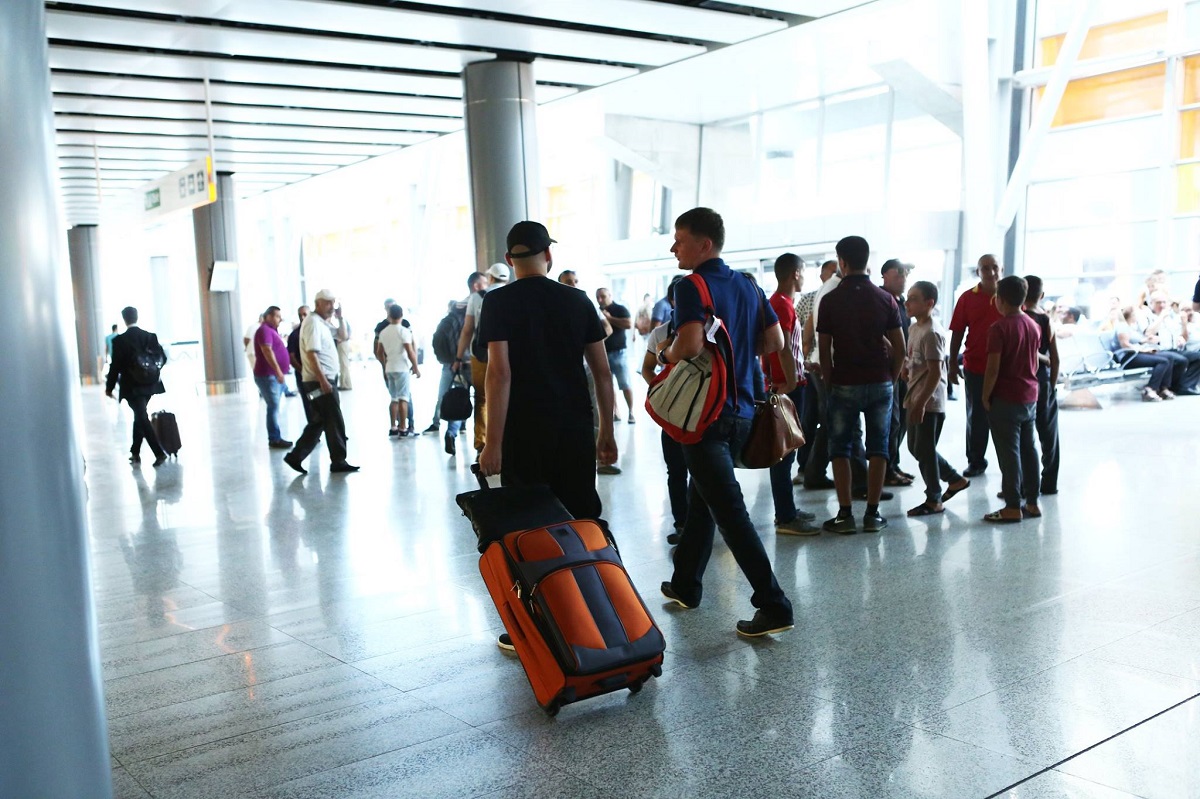
According to Armenia’s National Security Service, as of June 30, 2023, 133,352 people had entered the country and stayed for 28 days or more since the start of the Russian-Ukrainian war.

Most buyers are Armenians by nationality

“The Real Estate Cadastral issues indicators based on the buyer’s citizenship, without fixing nationality. But in the process of working with clients we realize that a significant part of buyers are Armenians who are Russian citizens.

Many of them came to Armenia when the Russian-Ukrainian war started, fearing mobilization. And since the mentality of Armenians is that an Armenian should have a house in Armenia, they started buying real estate in their homeland,” Andranik Arutyunov, director of Silver Rea real estate agency, says.

The agency he heads has helped many Russians to buy housing as well. Arutyunov conditionally divides them into two groups:

“The first group includes those who bought real estate to live in. The second group includes those who considered the purchase from the point of view of investing their money. They bought one or more apartments, private houses in order to rent them to other re-locants at high prices”.

According to the Cadastral Committee, Russian citizens are more interested in apartments. In 2022, more than half of the housing they purchased (55.6 percent) were apartments.

“From an economic point of view, Armenia is not interesting to Russians”

The number of transactions for the purchase of business premises is much smaller. In 2022, Russian citizens bought in Armenia

  • 11 industrial premises (14 in 2021),
  • 52 public buildings (43 in 2021),
  • 4 agricultural land plots (in 2021 – 3).

“This means they only needed housing. Most of them are not interested in Armenia from an economic point of view,” Arutyunov says.

Armenian experts believe that this is explained by the professional peculiarities of a significant part of migrants. They can afford to work remotely, from anywhere, as well as easily move to another country.

In this context, acquiring industrial or public premises makes no sense. Some of the newcomers have opted to rent office space rather than buy, so that they can leave for another country without delay if necessary.

In 2022, 4,736 public buildings were leased to Russians, about 500 more than in 2021. In 2021, 350 more public buildings were rented than in 2020.

“When the Russian-Ukrainian war started, the vast majority of first stream re-locants were IT specialists. We said even then that Armenia could not associate long-term plans with them. When moving from one country to another, they need to take only a laptop with them,” economist Nairi Sargsyan says.

“Armenia is a transit country, especially for IT specialists”

Oleg (name changed) is a programmer. He moved from Russia to Yerevan in May 2022 and plans to leave soon.

He pays 320,000 drams [about $800] a month for an apartment in the central part of the city. He says he was lucky to find housing at a time when prices in Armenia stabilized a bit.

He complains that not only housing is expensive in Yerevan, but also food and clothes:

“When we compare the rental prices in Yerevan with some European countries, it turns out that it is about 18 percent cheaper there.”

Oleg considers the biggest advantage of Armenia for himself and his colleagues to be the tax benefits:

“However, this is not enough to consider Armenia as a place of permanent residence. Armenia is a transit country, especially for us, representatives of the IT sphere.”

Oleg says he decided to leave Armenia owig to tension on the border and the possibility of Armenian-Azerbaijani military clashes:

“I could have considered staying longer if the Armenian government would have finally started to control the real estate rental market. If rents were reduced by 50 percent.”

But so far this is not expected, and Oleg’s family is discussing a list of possible countries to move to.

Housing prices have become unaffordable for Karabakh Armenians resettled in Armenia

Now high prices have hit the pockets of Karabakh Armenians who have resettled in Armenia. After Azerbaijan’s military operation in Nagorno-Karabakh on September 19, 2023, more than 100 thousand people came to Armenia. It is very difficult for them to find rented accommodation, as there are almost no vacant apartments and houses — at least in the capital, and they now have to pay three times more than in 2020.

“For many of them it is an unaffordable sum. Unlike Russians who came to Armenia, most of whom are people with high incomes. It is normal for Russians to rent a place for 800-1000 dollars,” Arutyunov says.

Armenia failed to retain the majority of Russian migrants

According to the data provided by the Statistical Committee of Armenia,

In 2022

  • 1,129,829 Russian citizens entered Armenia,
  • 1,064,680 left.

In the first half of 2023

  • 776,623 entered Armenia,
  • 753,141 people left.

Exodus-22 social research team conducted a survey among Russians who moved to Armenia in 2022. And it turned out that the majority, namely 57 percent, intend to leave.

“Considering and analyzing the conditions in neighboring countries, relocants noticed that the situation in Georgia is more favorable for them. As a result, most of them have already moved. Armenia has not been able to retain Russian relocants, unlike Georgia, which has complicated relations with the Russian Federation,” economist Nairi Sargsyan says.

Controversy over impact of war in Ukraine on economic growth

To what extent did the Russian-Ukrainian war affect Armenia’s economic growth rate? Experts’ opinions and the government’s calculations differ greatly.

In 2022, Armenia’s economic growth in Armenia amounted to 14.2 percent. The government declared the result unprecedented, as growth of seven to nine percent was projected. By comparison, growth in 2021 was 5.8 percent. The best performance in the last five years was in 2019 at 7.6 percent.

The Ministry of Finance reports that they conducted a serious study. According to its results, five to six percent of economic growth is directly related to the consequences of the Russian-Ukrainian war — a large-scale influx of migrants, a sharp increase in the export of goods from Armenia to the Russian Federation, and a large inflow of capital and companies from Russia.

However, economist Nairi Sargsyan believes that the economic growth registered in the country is almost entirely due to the Russian-Ukrainian war:

“The Armenian government has done nothing for economic growth. The economic activity is entirely due to the influence of the Russian-Ukrainian war, the relocation of migrants to the country and the arrival of a large number of tourists.”

Economist Armen Ktoyan is of the following opinion:

“I would say that the impact is at least five to six percent. This is the lowest figure we can field. Perhaps the real figure is higher — seven percent.”

In fact, the government estimates that only 35 percent of economic growth is due to the impact of the Russia-Ukraine war, while experts estimate that the figure ranges from 50 to 100 percent.


The investigation was conducted by the Women Investigative Journalists Network (WIJN) with support from International Media Support (IMS).

Follow us Twitter | Facebook | Instagram

The impact of Russians moving


Categories
South Caucasus News

Arms and ammunition found in Jabrayil


During the preventive measures held by the officers of Jabrayil District Police Department, 3 submachine guns, 1 machine gun, 1 grenade launcher, cartridges and other ammunition were discovered.

Categories
South Caucasus News

Türkiye working on possible Erdogan-Putin meeting


The meeting between the presidents of Russia and Türkiye, Vladimir Putin and Recep Tayyip Erdogan, is being worked out through diplomatic channels, the Administration of the President of Türkiye said, Report informs via Russian media.

Categories
South Caucasus News

Iran says Red Sea developments outcomes of Israeli occupation, war against Gaza


Iranian Foreign Ministry spokesman Nasser Kanaani said on Monday the recent developments in the Red Sea are the outcomes of Israel’s occupation of the Palestinian territories and the ongoing conflict against Gaza over the past three months.

Making the remarks at a weekly press conference, Kanaani added the war had had consequences in the region, and “if it goes on, the consequences will continue.”

Commenting on the ongoing tour of the region by U.S. Secretary of State Antony Blinken and the claim of sending an indirect message to Iran during the trip, he noted Iran had not seen effective steps by the United States and some of its Western allies to stop the Israeli “war crimes (against Gaza)” and prevent the expansion of the conflict in the region.

He added that the international community saw the contradiction between the words and actions of certain Western states, emphasizing that while raising the issue of insecurity in the region, they still stoke instability in it.

Kanaani called on the United States and some European countries to pay attention to the roots of the crisis and stop their support for Israel if they sought to resolve the crisis.

Israel has been fighting with Hamas in the Gaza Strip since Oct. 7, after the group launched a surprise attack on southern Israel that killed about 1,200 people. Israel has so far killed more than 23,000 Palestinians, according to Gaza-based Health Ministry.

In response to the Israeli airstrikes on Gaza and “in solidarity with the Palestinians,” the Yemen-based Houthis have launched attacks on commercial vessels in recent weeks, primarily near Bab el-Mandeb.


Categories
South Caucasus News

Robert Kennedy Jr. pledges to do everything to peacefully restore Armenian sovereignty over Artsakh


US Presidential candidate Robert Kennedy Jr. has pledged to do everything to peacefully restore Armenian sovereignty over Artsakh.

“I will do everything in my power to peacefully restore Armenian sovereignty over Artsakh,” Robert Kennedy Jr said, speaking in Southern California.

“I will do everything in my power to peacefully restore Armenian sovereignty over #Artsakh.” – @RobertKennedyJr speaking tonight in Southern California pic.twitter.com/124iiKR6dF

— ANCA (@ANCA_DC) January 9, 2024

Last month Robert F. Kennedy, Jr. pledged that his administration would mobilize the international community to sanction Azerbaijan, secure the safe return of Armenians to their Artsakh homeland, and support their right to self-determination.

In a 2.5-minute video statement titled “RFK Jr. On How to Avert War in Armenia,” the presidential candidate stressed, “I want to commit this country to the restoration of the sovereignty of Armenia and Artsakh, and to the restoration of its territory. Instead of starting another war somewhere, I want to stop one.”


Categories
South Caucasus News

Armenia, Azerbaijan agree to hold border delimitation meeting – ARMENPRESS


Armenia, Azerbaijan agree to hold border delimitation meeting  ARMENPRESS

Categories
South Caucasus News

Newspaper: Yerevan mayor unaware that Karabakh has been de-Armenianized?


default.jpg


Categories
South Caucasus News

Armen Grigoryan. There is agreement that Armenia-Azerbaijan border delimitation commissions will meet in late January


default.jpg