
Iranian-German Citizen Temporarily Released From Evin Prison ایران اینترنشنال
Day: January 9, 2024
From Conventional Armed Forces in Europe (CFE) Treaty earlier this year, the United States and its NATO counterparts opted to rescind their involvement in the treaty. The principal political decision-making body of the alliance, the North Atlantic Council, officially conveyed this decision on November 7. It articulated that, effective December 7; the alliance would “suspend the operation of their obligations to the treaty.”
This course of action was prompted by Russia’s earlier pronouncement on the same day, confirming the completion of its withdrawal process initiated on June 29, 2023. Preceding this, Moscow had already ceased its active participation in the Joint Consultative Group’s weekly meetings pertaining to treaty implementation on two occasions—December 12, 2007, and March 11, 2015.
Following Russia’s formal announcement in May 2023 of its decision to exit the North Atlantic Treaty Organization (NATO), citing objections to NATO nations allegedly contributing to the conflict in Ukraine and expressing openness to the inclusion of Finland and Sweden as new members, subsequent developments underscored the geopolitical ramifications. The aforementioned decision to withdraw from NATO did not effectuate alterations in Russia’s military posture. Russia, in its official communication, asserted the nullification of the 1990 Budapest accord on conventional armaments holdings and the 1996 CFE-1A pact as integral components of its treaty withdrawal.
The territorial deployment of Russian forces in border regions with Europe to both the north and south had been circumscribed by the stipulations of these accords. Moscow contended that the inflexibility of the treaty in accommodating modifications to the delineation of blocs (east and west) and its failure to accommodate new members, including the Baltic states, were key grievances. Despite the amendment of the CFE in 1997, the NATO countries refrained from ratifying the revised version, persisting instead with the outdated 1990 provisions rooted in the conventional arms balance between NATO and the erstwhile Warsaw Pact. This protracted discord prompted Russia to declare a moratorium on the implementation of the treaty’s terms in 2007. The culmination of these events signifies a pivotal juncture in the geopolitical landscape, with Russia’s withdrawal from both NATO and key arms control agreements reshaping the dynamics of Euro-Atlantic security.
Notwithstanding the evolution of geopolitical realities, particularly the integration of the majority of the erstwhile Eastern Bloc nations into NATO, Moscow underscored a fundamental constraint of the treaty—its incapacity to accommodate alterations to the predefined delineation of blocs (east and west), with countries being designated and fixed. The Comprehensive Forces Europe (CFE) Treaty underwent an amendment in 1997, seeking to address contemporary geopolitical dynamics.
Regrettably, the NATO member states refrained from endorsing the revised iteration of the treaty, choosing instead to adhere steadfastly to the antiquated provisions established in 1990, grounded in the conventional arms equilibrium between NATO and the defunct Warsaw Pact. This sustained incongruity in the interpretation and application of the treaty compelled Russia to declare a moratorium on its implementation in 2007, signaling a protracted period of discord and highlighting the persistent challenges in achieving consensus on arms control frameworks within the Euro-Atlantic security architecture.
Following the suspension of treaty implementation with Russia on November 22, 2011, by the 22 NATO signatories—comprising Belgium, Bulgaria, Canada, Czech Republic, Denmark, France, Germany, Greece, Hungary, Iceland, Italy, Luxembourg, the Netherlands, Norway, Poland, Portugal, Romania, Slovakia, Spain, Turkey, the United Kingdom, and the United States—a distinct delineation in the application of treaties emerged. Despite the suspension with Russia, these NATO members continued to honor treaties with seven other parties: Armenia, Azerbaijan, Belarus, Georgia, Kazakhstan, Moldova, and Ukraine.
The prevailing perspective among the majority of allies posited that Belarus was facilitating Russia’s access to information acquired under the treaty, thereby mitigating the perceived significance of the suspension with Russia. This nuanced approach in treaty enforcement underscores the complex dynamics and strategic considerations that influenced the divergent treatment of signatory states within the NATO alliance.
The United States State Department, articulating its rationale, released a statement asserting that the decision not to perpetuate adherence to a treaty from which Russia had disengaged was a strategic imperative. The suspension of obligations under the Comprehensive Forces Europe (CFE) Treaty was deemed essential to fortify the alliance’s deterrence and defense capabilities. This strategic recalibration is anticipated to alleviate constraints on planning, deployment, and exercises, thus fostering a more agile and responsive security posture. The 1990 agreement, widely regarded as a cornerstone of European security, instituted equitable limitations on the deployment of conventional weapons for both NATO and Warsaw Pact nations. Its implementation resulted in the dismantling of over 72,000 components of NATO and Soviet military equipment, thereby mitigating the Soviet Union’s erstwhile quantitative dominance in conventional weaponry across Europe. The suspension of CFE Treaty obligations is emblematic of the evolving dynamics in Euro-Atlantic security architecture, signaling a departure from established norms in response to contemporary geopolitical realities.
Amidst Russia’s complete withdrawal from the Conventional Armed Forces in Europe (CFE) Treaty and NATO’s subsequent decision to cease participation in the agreement, the meticulously constructed and decades-long conventional arms control system in Europe stands on the precipice of collapse. The ramifications of this decision are multifaceted, as the cessation of implementation by NATO allies entails a comprehensive discontinuation of key activities:
The annual exchange of military data, encompassing organizational details and geolocation of military forces from the defense ministry down to individual battalions, along with unit-specific possession of battle tanks, armored personnel carriers, artillery pieces, combat aircraft, and attack helicopters.
The issuance of alerts regarding significant military deployments within, out of, or into the treaty’s applicable zone. First, The submission or approval of requests for inspections. Second the Participation in Joint Consultative Group meetings in Vienna.
Despite the withdrawal from the CFE Treaty, NATO allies underscore their unwavering commitment to effective conventional weapons control, considering its paramount importance in maintaining Euro-Atlantic security. This commitment extends beyond individual ally security to encompass the broader security of the alliance, thereby fortifying the collective defense and deterrent posture. Allies affirm their intention to continue discussing and evaluating the implications of the evolving security landscape on their strategy and alliance security. NATO serves as a pivotal forum for close interaction and in-depth deliberation on weapons control initiatives among allies.
The decision to discontinue participation in the CFE Treaty is part of a broader trend of unraveling arms control agreements between the United States and Russia. Recent actions include President Putin’s revocation of Russia’s approval of the Comprehensive Nuclear Test Ban Treaty and the withdrawal from the New START Treaty, the last remaining arms control agreement between the two nations. Against the backdrop of heightened tensions over Ukraine, both countries withdrew from the Intermediate-range Nuclear Forces Treaty in 2019, accusing each other of violations. These developments underscore the complex interplay of geopolitics and arms control, shaping the contemporary security landscape in the Euro-Atlantic region.
The NATO allies’ decision to suspend their treaty commitments holds implications for Euro-Atlantic security that require further examination. From a practical standpoint, the suspension will eliminate constraints and notification procedures that US Army Europe and Africa have consistently opposed regarding the entry of partner forces into Romania and Bulgaria. In the political realm, this development marks the closure of another chapter in the dwindling portfolio of open arms control accords within the Euro-Atlantic region.
The statement released by Russia on November 7 emphasizes the futility of clinging to outdated agreements that fail to align with the evolving geopolitical landscape. As this pressure mounts and casts uncertainty on the continued viability of the Vienna Declaration, questions arise about the future of arms control in the region, signaling a potential shift towards a post-arms control era. The suspension of treaty commitments by NATO countries necessitates a scholarly exploration of future developments in the domain of arms control agreements. Given the evolving geopolitical landscape, there is a compelling need to critically assess existing treaties and contemplate the prospect of novel agreements that can more effectively address contemporary security challenges. The discontinuation of certain arms control measures prompts an intensified examination and discourse concerning the viability of other agreements, including the Vienna Document. This underscores the imperative to anticipate broader implications for regional and international security and engage in substantive dialogues aimed at formulating a future arms control architecture that is both adaptive and efficacious.
About the authors:
- Dr Abida Rafique, Research Officer, CISS AJK, abi186@yahoo.com
- Nazia Sheikh, Research Officer, CISS AJK, nsheikh536@gmail.coom
In the last quarter of 2023 there was a strong stance and objective desire to establish Quadrilateral Security Dialogue in ASEAN specifically in Philippines. Last November 24, 2023, the Department of Justice conveyed the intention of the negotiating panel to replicate the Reciprocal Access Agreement between Japan and Australia (“RAA”). US Embassy Political Affairs representatives affirmed on this agreement while leveraging with South Korea (1) and UK. (2)
On UK, to recall Undersecretary for Civil, Veterans, and Reserve Affairs (USCVRA) Pablo M. Lorenzo who was welcomed Baroness Goldie DL, the United Kingdom (UK)’s Defense Minister of State for the Indo-Pacific, during the latter’s visit to the Department of National Defense (DND) last October 16, 2023. (3)
Is it noteworthy that Baroness Goldie’s official trip to the Philippines is the first by a British defense minister in the last several decades. Secretary of National Defense (SND) Gilberto C. Teodoro, Jr. also met the British minister during her visit to the DND via virtual means.
Japan Defense Agenda as Starter and Snowball Effect
Following the recent successful State Visit to the Philippines of Japan’s Prime Minister Kishida Fumio, Secretary Gilberto C. Teodoro, Jr. held talks with Japan’s State Minister of Defense Miyazawa Hiroyuki during the 10th ADMM-Plus in Jakarta.
Secretary Teodoro and State Minister Miyazawa welcomed the two Leaders’ announcement to strengthen Philippines-Japan strategic partnership through formal negotiations for the proposed Reciprocal Access Agreement (RAA), as well as the finalization of discussions for the Official Security Assistance (OSA) grant, among others.
On RAA, which will be one of the centerpiece of discussion among core four (4) member states some other time, the general approach of the RAA is that visiting forces remain subject to the law of the sending state while within the receiving state.
Article XXI of the RAA provides that the receiving state shall have criminal jurisdiction over the members of the Visiting Force and Civilian Component with respect to offenses committed within the Receiving State and punishable by the laws of the latter.
However, the Sending State shall have primary right to exercise jurisdiction over its own members in relation to offenses (a) solely against he property of security of the Sending State, or solely against the property of another member of the Visiting Force of the Civilian Component; or (b) arising out of nay act or omission done in performance of officials duties.
Under the Annex to Article XXI, a Party shall not be obliged to assist Japanese authorities in instances where there is a “sufficient likelihood” of vising forces and civilian component members facing the death penalty and where the Party considers such assistance would be inconsistent with its obligations under applicable international agreements existing at the time of entry into force of the RAA.
This was the compromise reached by Japan with UK and Australia on the issue of death penalty. The Record of Discussion provide for the consideration made regarding Article XXII, among which is that one Party may provide assurances not to impose the death penalty. However, the Record is not legally binding, as it expressly states.
It should be noted, however, that withholding assistance does not necessarily protect visiting forces and civilian component members in all instances.
Agreement in toto to the provisions acknowledging Japan’s criminal jurisdiction will also be acquiescence to the possible imposition of capital punishment upon Philippine members. This may construed as a derogation from Philippine policy, as shown by our ratification of the International Covenant and Political Rights (“ICCPR”) and its Second Optional Protocol.
Meanwhile, there is a proposed plan for further meetings with US, Japan, Philippines, and Israel along with Australia. Philippines has been busy engaging with its ASEAN (4) and Asian counterparts to establish Indo-Pacific rim influence led by US; at least in bilateral mode of strategy before multilateral ones.
For an instance, DND Sec. Gilberto C. Teodoro, Jr. met with Republic of Korea (ROK) Vice Minister of National Defense Kim Seon-ho on the sidelines of the 10th ADMM-Plus in Jakarta last November 15. In that meeting, Sec. Teodoro recognized that the ROK is an important partner in the Armed Forces of the Philippines (AFP) Modernization Program. Recalling the already robust defense industry cooperation between the two countries, both sides sought to further enhance bilateral defense relations through increased training and education exchanges as well as personnel interactions at all levels.
Moreover, Secretary, Teodoro met with Singapore’s Minister of Defense, Dr. Ng Eng Hen, on the sidelines of the 17th ASEAN Defense Ministers’ Meeting (ADMM) in Jakarta, Indonesia. Commending Singapore’s initiatives in developing intelligence capacities of regional states against terrorism and violent extremism, Secretary Teodoro expressed the Philippines’ readiness in leading the Counter-Terrorism Information Facility (CTIF) in 2024, as well as its continued participation at the Information Fusion Center (IFC). The two ministers recognized the nascent development of areas affected by terrorism.
Both Ministers also recognized the strong people-to-people relations between the Philippines and Singapore, as exhibited by the substantial number of Filipino professionals who contribute to Singapore’s workforce across different sectors. Relatedly, Minister Ng remarked about the huge economic potential of the Philippines as well as its unique and diverse geography, which would contribute more to ASEAN’s economic growth.
Both sides looked forward to future engagements, as Sec. Teodoro extended an invitation for Minister Ng to visit the Philippines in 2024.
Furthermore, on the planned US-RP strong stance on WPS and SCS issues before laying down card with Japan and Australia, the Philippines has been negotiating with US since 3rd Quarter of 2023. In fact, U.S. Secretary of Defense Lloyd J. Austin III and Philippine Secretary of National Defense Gilberto Teodoro Jr., met on the sideline of abovementioned or so called the margins of the ASEAN Defense Ministers’ Meeting-Plus.
The Secretaries welcomed the historic momentum in U.S.-Philippine ties and discussed their mutual commitment to strengthening the U.S.-Philippine alliance, which has upheld peace and security in the Indo-Pacific region for over seventy years. They reaffirmed their countries’ shared vision of a free and open region grounded in transparency, the rule of law, respect for sovereignty, and the peaceful resolution of disputes.
Secretary Austin reiterated President Biden’s message that the U.S. defense commitment to the Philippines is ironclad, and emphasized that the United States stands shoulder-to-shoulder with the Philippines in defending its sovereign rights and jurisdiction in its Exclusive Economic Zone.
- The Secretaries discussed the importance of preserving the rights of all nations to fly, sail, and operate safely and responsibly wherever international law allows. In this context, they denounced the recent harassment by vessels from the People’s Republic of China (PRC) towards Philippine Coast Guard and resupply vessels conducting lawful resupply operations around Second Thomas Shoal, as well as dangerous operational PRC maneuvers against U.S. aircraft and ships lawfully operating in the South China Sea.
- Taking note of the concerns expressed about the PRC’s recent harassment by a growing number of foreign governments globally, they also emphasized that the 2016 Arbitral Tribunal Ruling is final and binding on the Parties and called on the PRC to abide by its obligations under international law. The Secretaries reaffirmed that the Mutual Defense Treaty extends to both countries’ armed forces, public vessels, and aircraft—including those of its Coast Guard—anywhere in the Pacific, to include the South China Sea.
- The Secretaries highlighted the recent progress the two countries have made to modernize the alliance, enhance interoperability, and address new and emerging challenges. On this note, they welcomed progress in implementing the Enhanced Defense Cooperation Agreement (EDCA), including the recent completion of a $24 million upgrade to the runway at Basa Airbase, and pledged to further accelerate EDCA implementation. They committed to explore further opportunities to strengthen bilateral operations and planning, including through the upcoming Balikatan 2024 exercise, and noted their desire to expand multilateral activities with like-minded partners. The Secretaries reaffirmed their commitment to the expeditious conclusion of a General Security of Military Information Agreement (GSOMIA), as well as the bilateral Philippines Security Sector Assistance Roadmap. Secretary Austin welcomed the updates shared by Secretary Teodoro on the Philippines’ Horizon III modernization plan and reiterated the U.S. commitment to supporting Philippine defense modernization.
Recently, the Philippine Marine Corps and United States Marine Corps are holding Exercise KAMANDAG, which stands for Kaagapay ng mga Mandirigma ng Dagat, from November 9 to 20, 2023. The bilateral exercise aims to further enhance cooperation and interoperability among participating forces.
Activities such as KAMANDAG allow the Philippines to achieve various mutual objectives with its security allies and partners. During the dedication ceremony for the rehabilitated runway at Basa Air Base in Floridablanca, Pampanga on November 6, 2023, Sec. Teodoro, Jr. reiterated that the country is not engaging in aggression against anyone, but the Department is duty-bound to protect norms of international law.
The Basa Air Base Runway rehabilitation project is the largest project under the Enhanced Defense Cooperation Agreement (EDCA) with the United States, amounting to over PHP1.3 Billion.
On Australia and Philippines, there as a Joint Statement of Secretary of National Defense Gilberto C. Teodoro, Jr., and Australian Deputy Prime Minister and Minister for Defence Richard Marles MP on the Philippines-Australia Maritime Cooperative as way forward in West Philippine Sea (WPS).
*Ideas and/or views expressed here are entirely independent and not in any form represent author’s organization and affiliation.
Notes:
- 12th Seoul Defense Dialogue, Seoul International Aerospace and Defense Exhibit as one of the manifestations. Senior Undersecretary Irineo C. Espino, Undersecretary of National Defense, led the Department of National Defense (DND) delegation at the 12th Seoul Defense Dialogue (SDD) and Seoul International Aerospace and Defense Exhibit (ADEX), which were convened on October 17-22, 2023 in Seoul, Republic of Korea (ROK). The SDD is a high-level multilateral consultative platform which facilitates discussions on current and emerging security issues among more than 50 participating countries. Meanwhile, the Seoul ADEX is one of the most comprehensive aviation and aerospace exhibitions in the region, bringing together around 100 to 500 exhibitors from across the world annually. During the occasion, Senior Undersecretary Espino was able to engage with current and potential defense industry partners in the Armed Forces of the Philippines (AFP) Modernization Program.
- The Department of National Defense (DND), headed by Dir. Christine June P. Cariño of the Office for Cybersecurity and Information Management, received a delegation from the United States, composed of representatives from the US National Security Council (NSC), Joint US Military Assistance Group-Philippines (JUSMAG-P), and the US Embassy in Manila. The primary objective of the US delegation’s visit to the DND was to explore avenues for enhancing collaboration in the fields of cyber security and defense.
- British Defense Minister for the Indo-Pacific reaffirms commitment to UK-PH defense cooperation
- Nov. 28, 2023 – Secretary of National Defense (SND) Gilberto Teodoro, Jr. keynoted the 22nd General Assembly of the Veterans Confederation of ASEAN Countries (VECONAC), hosted by the Veterans of the Philippines (VFP) at Sofitel Philippine Plaza, where he encouraged the veteran leaders from 10 Southeast Asian countries to promote regional peace and stability. He graced the occasion as the esteemed guest of honor and speaker, imparting wisdom and vision to the ASEAN military veterans. The assembly hall became a convergence point for veterans, delegates, and guests hailing from Brunei, Cambodia, Indonesia, Laos, Malaysia, Myanmar, Philippines, Singapore, Thailand, and Vietnam. The opening ceremony not only marked the official commencement of the assembly but also served as a catalyst for meaningful dialogues, collaborations, and the forging of bonds that transcend borders.
By Christopher M. Blanchard
Since 2011, conflict between the government of Syrian President Bashar al Asad and opposition forces seeking his removal has displaced roughly half of the country’s population and killed over half a million people. Five countries operate in or maintain military forces in Syria: Russia, Turkey (Türkiye), Iran, Israel, and the United States.
The United States supports a negotiated political settlement to the Syria conflict in accordance with U.N. Security Council Resolution 2254 and seeks the enduring defeat of the Islamic State (IS, aka ISIS/ISIL). U.S. policymakers work to address threats posed by IS remnants and detainees, counter Al Qaeda, facilitate humanitarian access to Syria, and manage Russian, Turkish, and Iranian challenges to U.S. operations.
Earthquakes in February 2023 and resurgent Russia-backed government attacks on rebel held areas of northwest Syria have created additional humanitarian needs. Following the October 2023 terrorist attacks in Israel and Israel’s military operations in Gaza, Iran-backed militia have attacked U.S. military personnel in Syria, prompting U.S. response strikes.
Areas of Control
The Asad Government
The Asad government—backed by Russia, Iran, and aligned Syrian and foreign militia forces—controls about two thirds of Syria’s territory, including most major cities. In 2021, President Asad won a fourth seven-year term; U.S. officials described the election as “an insult to democracy.” Some armed resistance to Asad’s rule remains, but the Arab League and some Arab states have normalized relations with the government and engage Asad and his senior officials directly.
Kurdish-Arab Military and Civilian Authorities
After the defeat of the Islamic State by the largely Kurdish U.S.-backed Syrian Democratic Forces (SDF), Kurdish authorities and their Arab partners in northeast Syria established the Autonomous Administration of North and East Syria (AANES), also known as the Self Administration of Northeast Syria (SANES). The SDF and its political wing (the Syrian Democratic Council, SDC) play a leading role in the AANES, whose leaders have stated that it is not aligned with either the Asad government or with opposition forces.
Turkey has clashed with the main Kurdish group within the SDF because of its links with the Kurdistan Workers’ Party (PKK), a U.S.-designated Foreign Terrorist Organization (FTO). Turkish strikes in Syria following an October 2023 PKK attack in Turkey damaged civilian infrastructure in areas under AANES control. Some Arab tribal forces have taken up arms against the SDF since August 2023, with reported Syrian government support.
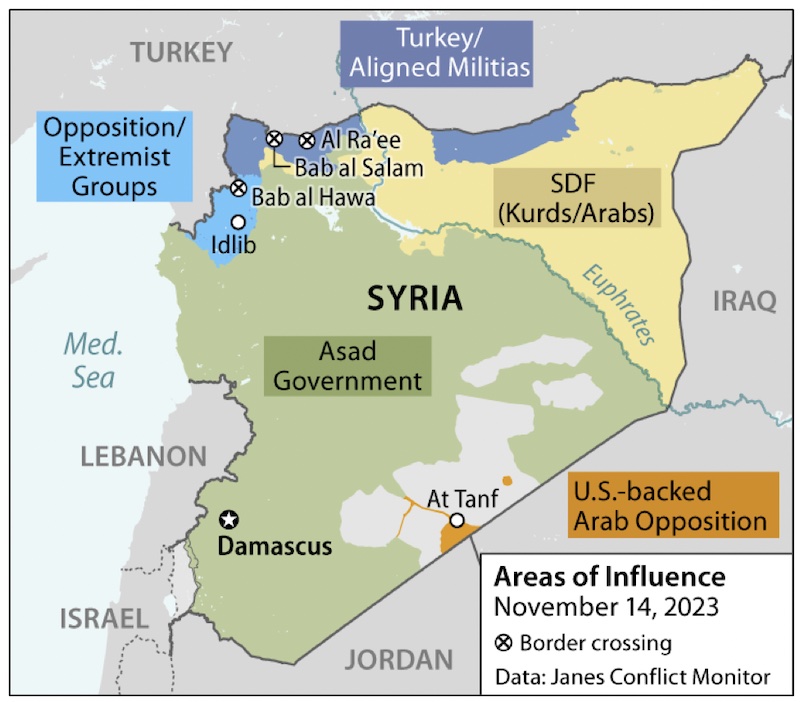 Syria: Areas of Influence. Credit: CRS, using ESRI and U.S. State Department data.
Opposition and Extremist Forces
Opposition-held areas of northwest Syria are administered by the Syrian Salvation Government (SSG). The SSG was established in 2017 and is affiliated with Hayat Tahrir al Sham, which is an FTO due to its links to Al Qaeda. Many residents of this area have been displaced from areas of Syria now under Asad control, and an estimated 75% depend on U.N. assistance to meet their basic needs.
Turkish Forces and Aligned Militias
Turkish-held areas of northern Syria include territories occupied by Turkish forces in cooperation with Syrian Arab proxy forces. In these areas, Turkey has established local councils subordinate to the Turkish provinces they border, with Turkish provincial governments overseeing the provision of some basic services.
The Islamic State
U.S. military officials assess that the Islamic State operates as a cohesive, low-level insurgency, targeting Asad government forces in southwest Syria and the central Syrian desert, and the SDF in northern and eastern Syria.
Islamic State Detainees. The SDF continues to hold about 10,000 IS fighters in 26 detention facilities across northern Syria. In January 2022, U.S. forces joined SDF forces in a lengthy battle to retake a prison seized by IS fighters. The SDF also retains custody of up to 47,000 people linked to the Islamic State (mostly women and children) at the Al Hol IDP camp. U.S. officials assess that the Islamic State “views its fighters in detention and the population in the Al Hol displaced persons camp as keys to its resurgence.” In the Senate, the committee-reported FY2024 foreign aid appropriations bill (S. 2438) would direct $25 million to the Administration’s Al Hol Action Plan.
2023 Earthquakes
In February 2023, successive 7.8 and 7.5 magnitude earthquakes struck southern Turkey near the Syrian border, resulting in over 47,000 fatalities across both countries. Within Syria, the northwest—including areas controlled by opposition and extremist groups, and by Turkish-backed Syrian militia forces—was most impacted. The United States mobilized $251.5 million in humanitarian assistance to earthquake-affected populations in Syria in FY2023.
U.S. Policy
The Biden Administration identifies four policy priorities in pursuing a political settlement to the conflict as envisioned in Resolution 2254: (1) sustaining the U.S. and coalition campaign against the Islamic State; (2) supporting local ceasefires; (3) expanding humanitarian access; and (4) pressing for accountability and respect for international law while promoting human rights and nonproliferation, including through the imposition of targeted sanctions.
U.S. Military Presence: Operation Inherent Resolve
U.S. forces have operated inside Syria since 2015 pursuant to the 2001 and 2002 Authorizations for Use of Military Force (AUMF), amid ongoing debate in Congress about the authorization for U.S. operations in Syria. U.S. operations in Syria as part of Operation Inherent Resolve (OIR) seek “the enduring defeat of the ISIS.” About 800 U.S. troops are based in Syria to conduct counter-IS operations and support U.S. partner forces in pursuing their own counter-IS operations. Most U.S. forces are deployed in what military officials term the Eastern Syria Security Area, in support of the SDF. Some U.S. troops support the Syrian Free Army at the At Tanf garrison in south east Syria, which is located along a transit route between Iraq and Syria used by both IS fighters and by Iran-backed militias.
Since 2015, CENTCOM has conducted periodic military strikes in Syria outside the framework of OIR, including on targets linked to Al Qaeda, Syrian government chemical weapons-related targets, and Iran-backed militias—some of which have used Syria-based facilities to monitor and target U.S. forces in Syria and Iraq.
Since October 2023, the U.S. military has conducted strikes on facilities in eastern Syria associated with Iran’s Islamic Revolutionary Guard Corps and affiliated militias in response to attacks by Iran-backed militias on U.S. forces in Syria and Iraq. Strikes have targeted U.S. forces at At Tanf, near the Euphrates River valley, and in far northeast Syria.
U.S. Policy Tools
Syria Train and Equip Program
The Syria Train and Equip program, authorized by Congress in 2014 and funded via the Counter-ISIS Train and Equip Fund (CTEF), seeks to make partner forces in Syria capable of defeating the Islamic State. U.S. partner forces consist of the SDF and the SFA. U.S. military officials assess that the SDF “has the ability to successfully execute unilateral operations but relies on Coalition for some capabilities.” U.S. military officials assessed in June2023 that the SFA “primarily relies on Coalition support, including through CTEF, to carry out its mission to counter ISIS activities and provide Coalition force protection.”
FY2023 Funding and FY2024 Proposals. The FY2023 Consolidated Appropriations Act (P.L. 117-328 and accompanying explanatory statement) made $475 million available for CTEF, including $160 million for Syria. It also directed the rescission of $65 million in prior year CTEF funds. The President requests $156 million in FY2024 CTEF funds for Syria programs. The House-passed
defense appropriations bill (H.R. 4365) would provide the requested amount and recommends the rescission of $50 million in FY2023 appropriated funds, with the House Armed Services committee noting its concern about the accountability of funds allocated for partner force stipends in Syria. The Senate committee-reported version (S. 2587) would provide $146.2 million in FY2024 CTEF funds for Syria programs, and the Senate Armed Services Committee’s report expresses concern about the “makeshift” nature of some SDF-run detention facilities.
Sanctions
The United States maintains sanctions on Syria relating to its support for terrorism, interference in Lebanon, use of chemical weapons, and human rights violations. U.S. Department of the Treasury compliance guidance states that the United States “remains committed to ensuring that humanitarian assistance flows to the Syrian people.”
Humanitarian Assistance
The United States is the largest donor of humanitarian assistance to the Syria crisis, allocating nearly $17.2 billion since FY2012 for humanitarian efforts in Syria and in neighboring states that host Syrian refugees. In October 2023, U.N. officials estimate that more than 15 million Syrians required humanitarian or protection support.
Cross-Border Assistance. The Asad government in November 2023 extended permission to the United Nations to deliver cross-border aid to opposition held areas of northwest Syria using the Bab al Hawa and Al Ra’ee crossings until February 13, 2024. The U.N. Security Council had provided a mandate for cross-border aid with notification to (rather than the permission of) the Asad government from 2014 until July 2023, when Russia prevented the mandate’s reauthorization.
Stabilization Assistance
The United States has provided more than $1.3 billion in stabilization assistance for non-regime-held areas of Syria since 2011. The State Department describes stabilization assistance in northeast Syria as a counterweight to the influence of the Islamic State. The FY2023 Consolidated Appropriations Act (P.L. 117-328) provides funds under titles III and IV of Division K of the act “notwithstanding any other provision of law, for non-lethal stabilization assistance for Syria, including for emergency medical and rescue response and chemical weapons investigations.” The House-passed version of the FY2024 foreign assistance appropriations bill (H.R. 4665) would prohibit the use of funds made available by the act in Asad-controlled areas.
Issues for Congress
Congress may consider whether increased violence within Syria, more frequent attacks on U.S. forces in Syria, and developments in regional conflicts are affecting U.S. goals for Syria and whether or how U.S. military operations in Syria, Syria-related diplomacy, and/or humanitarian and stabilization operations should adapt. Congress may address Syria issues in foreign assistance and defense appropriations and authorization legislation for FY2024.
- About the author: Christopher M. Blanchard, Specialist in Middle Eastern Affairs
- Source: This article was published by the Congressional Research Service (CRS)
By Wang Zheng
This year marks the 10th anniversary of the launch of China’s Belt and Road Initiative (BRI). Proposed by President Xi Jinping in 2013, the BRI has become China’s flagship foreign policy to realise the Chinese vision of a “global community of shared future.”[1] At the third BRI Forum in Beijing in October 2023, President Xi announced that China has signed BRI-related memoranda with over 150 countries and 30 international organisations and established more than 20 multilateral platforms to facilitate the development of the BRI projects worldwide.[2] The BRI’s coverage has also expanded from traditional physical infrastructure to health, clean energy, digital economy, and people-to-people exchanges.[3]
Among the BRI’s new development trends, the Digital Silk Road (DSR) has become a key pillar of the initiative, especially against the backdrop of the intensifying U.S.-China technological rivalry. Given the geographic proximity and close economic ties between China and Southeast Asia, regional states have been major recipients of China’s DSR investments in recent years. However, systematic DSR development analysis in Southeast Asia is still rare. To fill this gap, this report evaluates the DSR’s progress in Southeast Asia between 2017 and 2023 and analyses the major challenges China faces in pushing the DSR forward in the region, with data collected from various sources including Chinese government reports and state media releases, the IISS’s China Connects dataset, the Submarine Cable Almanac, and the websites of Huawei and ZTE.
THE DSR: WHAT’S IN A NAME?
The DSR, initially launched as the digital aspect of the BRI in 2015, was officiated by President Xi at the BRI Forum in 2017.[4] Later, at the fourth World Internet Conference in 2017, China, Laos, Saudi Arabia, Serbia, Turkey, Thailand, and the United Arab Emirates jointly signed the BRI Digital Economy International Cooperation Initiative, marking a new chapter of the DSR’s development.[5] The DSR was promoted as a stand-alone initiative at the second BRI Forum in 2019 and has since become a critical part of China’s foreign policy agenda.[6] Amid the global COVID-19 pandemic, the DSR’s vital role was further enhanced since it allowed China to transcend the physical barriers of national boundaries and maintain the steady growth of the BRI projects overseas without suffering significant losses of investments.[7] According to the White Paper on the BRI released recently, by the end of 2022, China had inked 17 DSR-specific cooperation agreements and 30 e-commerce memorandums globally and signed the Memorandum of Understanding on Strengthening Investment Cooperation in the Digital Economy with 18 countries and regions.[8]
Overall, the DSR’s status elevation in China’s global strategy is primarily shaped by two factors. The push factor is the rapid growth of China’s digital economy in recent years, driving its tech companies to explore overseas markets. According to the BRI Digital Trade Development Index Report 2022 released by Huaxin Institute, a state-affiliated think tank, the scale of China’s digital economy has reached 45.5 trillion yuan (US$6.37 trillion) by 2022, accounting for 49.8 per cent of China’s GDP, with a year-on-year increase rate of 16.2 per cent.[9] The pull factor is China’s perception of a “digital gap” in developing countries that impedes the growth of the digital economy in these countries. China recognises that underdeveloped digital infrastructure in many developing countries has hindered them from participating in the global wave of digital transformation.[10] Thus, the DSR represents China’s systematic efforts to fill the “digital gap” by building and upgrading recipient countries’ digital infrastructure.
The concept of the DSR is somewhat ambiguous due to the lack of an official definition. A major consensus among China scholars is to treat the DSR as an “umbrella branding effort and a narrative for Beijing to promote its global vision across a range of technology areas and projects.”[11] Thus, the DSR involves normative components beyond the export of digital infrastructure. One example is the “China Solution” to global cyber governance that Beijing has actively promoted recently.[12] The core component of the solution is “cyber sovereignty”, which means that “all countries have their rights to choose their own path of network development and governance model and to equally participate in international governance in cyberspace.”[13] The “China Solution” triggers Western concerns over the export of “digital authoritarianism” through big data and surveillance technologies.[14] However, research shows that “the demand for these technologies and how they are used depend more on local political conditions than Chinese grand strategy.”[15] In addition, China has also made headways in global technological standard-setting through international and regional standard-setting organisations and overseas digital infrastructure investments,[16] owing to its advantages in advanced technologies such as 5G and AI.
It is worth noting that while the DSR emerged as a part of the BRI, it differs from the BRI in that state-owned companies are major BRI stakeholders whereas the DSR’s main stakeholders are private tech companies such as Huawei, Tencent, Alibaba, and ZTE, which often gain policy support to expand their overseas business.[17] Moreover, Chinese tech companies’ entry into overseas markets has long predated the DSR’s emergence.[18] Thus, the geopolitical impulse behind the DSR should not be exaggerated as it signifies more of a continuation and expansion of China’s ongoing strategy to broaden the global market for its tech companies and reinforce China’s technological global leadership.[19] This nuanced perspective contrasts with the portrayal often made by Western observers, who depict the DSR as China’s concerted state-led efforts to reshape the global digital order.[20]
INSTITUTIONALISING DSR COOPERATION IN SOUTHEAST ASIA
Southeast Asian countries have long been the major recipients of Chinese tech companies’ investments branded under the DSR banner. To facilitate the DSR’s development in the region, China has sought to institutionalise the DSR through various channels, including establishing DSR-specific mechanisms and institutions, organising DSR-related events, and providing technology-training sessions. These efforts are mainly led by local governments, universities and private companies. The central government in Beijing plays a supportive role by providing inter-governmental frameworks on various aspects of digital economy cooperation, especially through ASEAN-China mechanisms.
Thus far, China has established multiple mechanisms and institutions to facilitate regional DSR investments. Key mechanisms in this regard include the ASEAN-China Initiative on Enhancing Cooperation on E-Commerce (2023),[21] Action Plan on Implementing the ASEAN-China Partnership on Digital Economy Cooperation (2021-2025) (2022),[22] China-ASEAN Digital Economy Partnership Initiative (2020),[23] ASEAN-China Cyber Dialogue Mechanism (2020 and 2022)[24] and ASEAN-China Smart City Cooperation Initiative (2019).[25] Besides, China is negotiating with ASEAN countries to upgrade the ASEAN-China Free Trade Agreement (ACFTA 3.0), which will focus on three emerging domains: digital economy, green economy, and supply chain industries.[26]
As for institutions, a key example is the China-ASEAN Information Harbor (CAIH) established by China’s Guangxi autonomous region in 2016 to transform Guangxi into a “digital hub” connecting China and ASEAN.[27] More recently, multiple companies and NGOs from China and ASEAN jointly launched the ASEAN-oriented “Digital Silk Road” Think Tank Alliance in September 2022 to enhance ASEAN-China cooperation on digital transformation.[28] In April 2023, the Malaysia-based venture capital firm Kairous Capital announced the launch of the Malaysian-China Digital Cooperation Council, which aims to “facilitate long-term cross-border collaboration between Malaysian and Chinese companies in the areas of technology and innovation.” [29]
Additionally, China has organised multiple seminars and forums to support the DSR’s development in Southeast Asia. In June 2020, Zhejiang University hosted the “Digital Silk Road” Online Seminar attended by government officials, scholars, and business elites from 16 countries, including Indonesia, Singapore, Malaysia and Thailand.[30] In November 2020, the CAIH co-hosted the China-ASEAN Information Harbor Forum themed “Digital Silk Road, The Road Ahead,” which aimed to “build a mutually beneficial and win-win cooperation platform and promote the ASEAN-China digital economy industry cooperation.”[31] In December 2022, China Daily and the ASEAN-China Center co-hosted a seminar themed “Digital Economy Ties, A New Chapter in Smart City,” where representatives from China and ASEAN exchanged views on promoting cooperation on digital economy and smart cities.[32]
Western scholars have recently attributed Chinese tech companies’ success in Indonesia to their localisation strategies, which include providing cybersecurity training sessions to local government officials, professionals and college students.[33] For instance, in 2021, Huawei launched a five-year digital literacy training course for 100,000 government officials and a digital talent training programme for over 30 universities in Indonesia.[34] More broadly, through its “Seeds for the Future” programme initiated in 2011, Huawei has trained over 3,000 university students from more than 108 countries (including Southeast Asian ones).[35]
TRACKING THE DSR’S PROGRESS IN SOUTHEAST ASIA (2017-2023)
This section tracks the DSR’s progress in Southeast Asia from 2017 to 2023. It first provides an overview of the DSR’s development in Southeast Asia as of 2020 with data from the China Connects dataset. Then, it analyses the DSR’s progress in building digital infrastructure and platforms in the region since 2020, using data from the websites of Huawei and ZTE, the Submarine Cable Almanac, and relevant media releases.
DSR’s Progress in Southeast Asia (2017-2020)
Constructed by the International Institute for Strategic Studies (IISS), the China Connects dataset contains a list of the DSR projects across 173 countries up to December 2020, which fall under the following categories: 5G, academic programs, data center, e-commerce, e-governance, fibre optic network technology, fintech, people-to-people exchange programmes, satellite technology, security information system, smart city, submarine and overland fibre optic cables, telecom, and transfer of knowledge/technology.[36] This section extracts data for all Southeast Asian countries, including 176 projects, to analyse the DSR’s progress in the region by 2020.
The analysis indicates that all Southeast Asian countries received China’s DSR investments between 2017 and 2020. Figure 1 shows the geographical distribution of the DSR projects in the region. Indonesia, Singapore and Malaysia remain the top three destinations of China’s DSR investments in Southeast Asia, collectively securing 52.3 per cent of all DSR projects. China’s DSR investments in Laos and Brunei are comparably marginal. Figure 2 shows the distribution of the DSR projects by type. It indicates that China’s DSR investments in Southeast Asia are clustered in five areas: Telecom, 5G, Data Centre, Fintech, and E-commerce.
Figure 1: Distribution of DSR Projects in Southeast Asia by Country
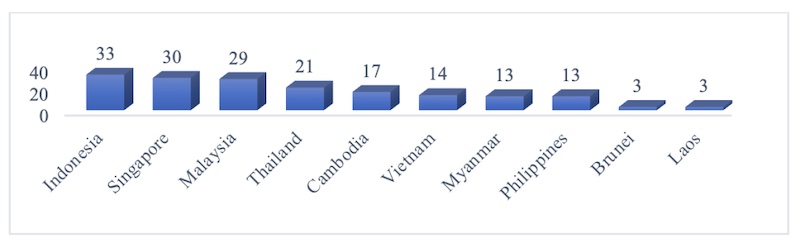
Figure 2: Distribution of DSR Projects in Southeast Asia by Type
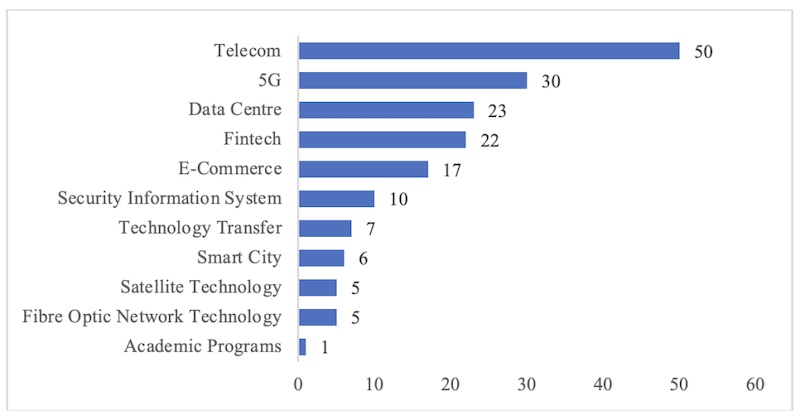
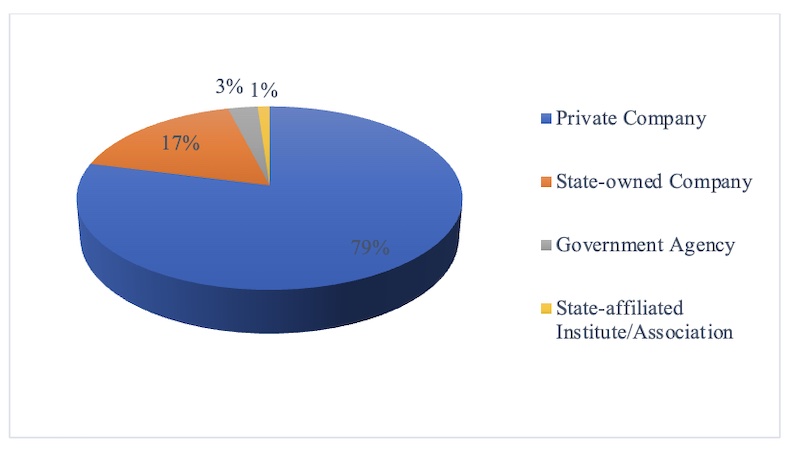
Table 1 shows the parent entities of China’s DSR projects in Southeast Asia by 2020, which can be classified into four categories: private company, state-owned company, government agency, and state-affiliated institute/association. As shown in Table 1, Huawei, Alibaba, and ZTE are the major entities spearheading China’s DSR projects in the region. Figure 3 shows the distribution of these entities by type: private companies (79%), state-owned companies (17%), government agencies (3%), and state-affiliated institute/associations (1%). The prevalent participation of Chinese private companies in the DSR stands in contrast to the predominant role of Chinese state-owned companies in the BRI in general.
Table 1: Parent Entities of China’s DSR Projects in Southeast Asia
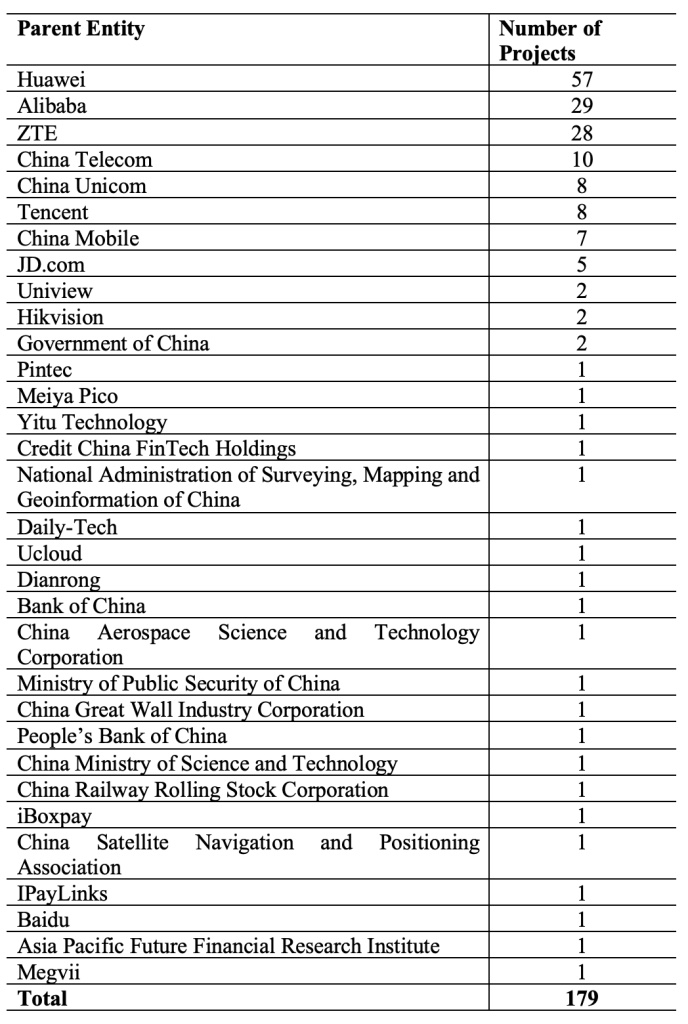
Figure 3: Parent Entities of China’s DSR Projects in Southeast Asia by Type
 Recent Development of the DSR in Southeast Asia (2020-2023)
This section provides an update on the progress of China’s DSR investments in Southeast Asia in 5G, fibre optic cables, and cross-border e-commerce between 2020 and 2023. Huawei and ZTE have made decent strides in expanding their business in Southeast Asia’s fast-growing 5G market since 2020. Huawei’s key achievements include 1) building ASEAN’s first 5G smart hospital in Thailand;[37] 2) providing Smart Railway Solutions for the China-Laos Railway;[38] 3) signing multiple MoUs with local telecommunication service providers in Indonesia;[39] 4) launching its first “3AZ” data centre in Indonesia;[40] and 5) planning to build a cybersecurity centre in Malaysia.[41] Similarly, ZTE has signed multiple 5G-related MoUs with local 5G service providers in Malaysia[42] and Indonesia[43]and launched a new data centre in Indonesia.[44] In addition, China Mobile, the world’s largest telecommunication service provider, and GDS, China’s leading data centre operator, have also set foot in Southeast Asia’s 5G market.[45] Table 2 shows the distribution of 43 data centres built by Chinese tech companies in Southeast Asia based on latest available data. It indicates that most data centres are hosted by Singapore (32.5%), Indonesia (25.6%), Malaysia (16.3%), and Thailand (14.0%).
Table 2: Distribution of Data Centres Built by Chinese Tech Companies in Southeast Asia
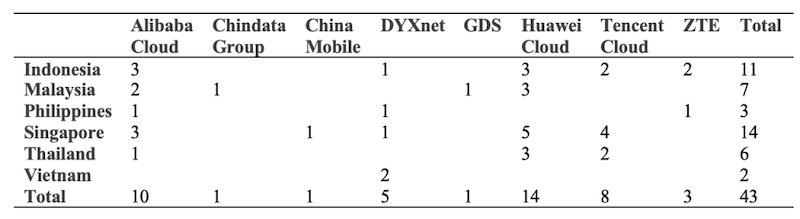 (Data Source: Official websites of DYXnet, GDS, Huawei Cloud, ZTE, Alibaba Cloud, and Tencent Cloud and news reports from sciencechina.com, caixingglobal.com, thetechcapital.com, South China Morning Post, sina.com, and chinadevelopment.com)
Fibre optic cables play a crucial role in ensuring the smooth transfer of telecommunication signals; thus, Chinese tech companies such as HMN Tech and China Unicom have invested vastly in building cross-land and submarine cables globally. China reportedly has constructed 34 land cables and multiple submarine cables with neighbouring countries.[46] In May 2022, the SEA-H2X Submarine Cable, a project initiated by China Unicom, started construction and is expected to operate in 2024. China Unicom also invested in the Asia Direct Cable (ADC), which began construction in 2020. Once completed, these cables will help integrate Southeast Asian countries into the Asia-Pacific cable network.[47] HMN Tech, formerly owned by Huawei, has also been actively involved in submarine cable construction in Southeast Asia. Table 2 lists selected HMN-involved submarine cable projects in Southeast Asia, which are either at the planned stage or in service now, including domestic and cross-border submarine cable projects within or through the region. HMN’s role in these projects also varies – as system supplier, system installer, or both.
Table 3: Selected HMN-Involved Submarine Cable Projects in Southeast Asia
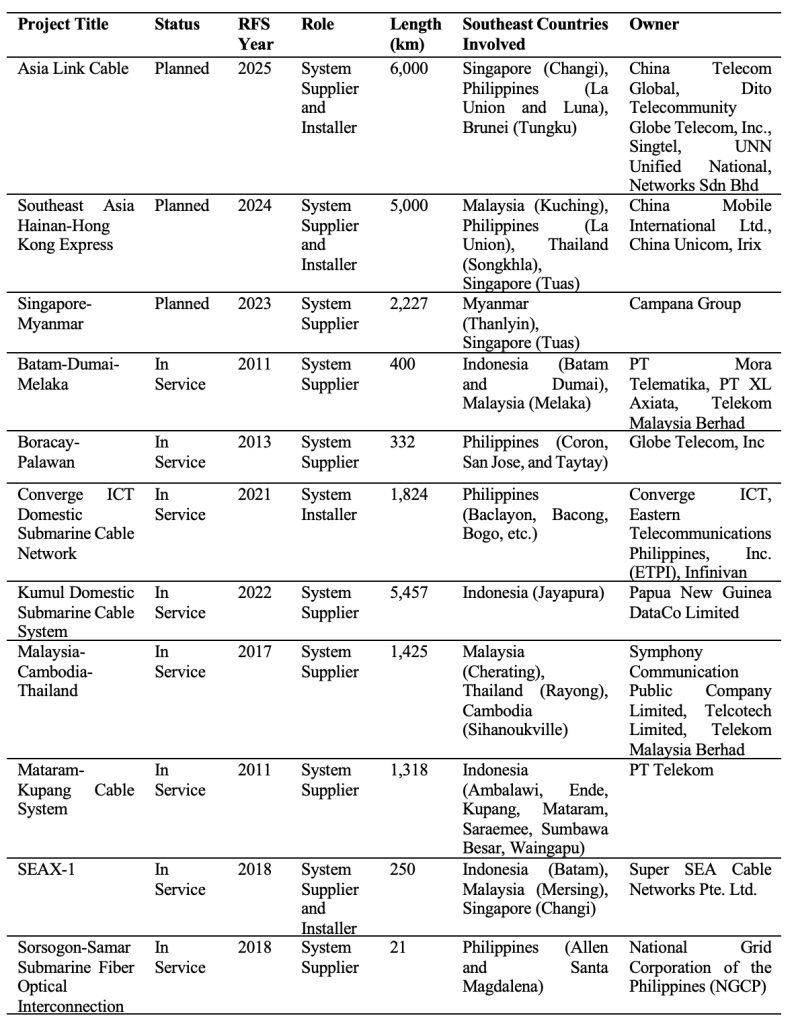 (Data source: Compiled from Submarine Cable Almanac May 2023[48])
Aside from building digital infrastructure, Chinese companies have stepped up their efforts to engage in Southeast Asia’s e-commerce market. In July 2023, Alibaba, China’s largest e-commerce company, invested US$845 million into Lazada, a Singapore-based online retailer firm.[49] TikTok, a short-video app owned by ByteDance, announced its plan to invest in its online shopping app TikTok Shop in Indonesia.[50] However, TikTok faced a major setback after the Indonesian government banned sales on social media platforms.[51] To secure its business in Indonesia, Tiktok recently revealed that it will invest US$1.5 billion to acquire Tokopedia, Indonesia’s largest e-commerce owned by PT GoTo Gojek Tokopedia.[52] Temu, a Chinese shopping app owned by PDD, entered the Philippines’ digital market in August 2023.[53]
CONCLUSION
Notwithstanding the DSR investments’ progress in Southeast Asia, China faces multiple challenges in pushing the DSR forward. Domestically, China must reconcile the growing tensions between the state and private tech companies, which stem from Beijing’s tightening restrictions over the private tech sector[54] and private tech companies’ quest for profits while complying with and taking advantage of state policies. Such inconsistencies are more pronounced in the context of the DSR, given its involvement in the cross-border flow of capital and technology.[55] For Southeast Asian countries hosting Chinese tech companies, their concerns may be aggravated when Chinese companies “support, assist and cooperate with the state intelligence work” in compliance with China’s National Intelligence Law,[56] which could involve the transfer of critical data back to China and potentially undermine the cybersecurity of host countries. While Beijing has recently lifted some of the restrictions to revive the tech sector, the practical effects of such policy support remain to be seen.[57]
Regionally, China needs to recognise the agency Southeast Asian countries exercise in navigating its DSR engagements. In practice, Southeast Asian countries have adopted different approaches to handle China’s increasing digital engagements in the region,[58] and such decisions are shaped more by domestic economic and security concerns than external geopolitical factors.[59] Indonesia’s recent legal pushback against social media’s interference with e-commerce is a good example. This means that when China’s digital presence is perceived as a major threat rather than a powerful supplement to local economic growth, regional states have the levers to restrict China’s digital engagements through legal and political channels.
Internationally, the DSR’s future in Southeast Asia will be determined by China’s ability to secure dominant positions in frontier technologies such as 5G and AI, and growing shares in the region’s digital market amid the intensifying U.S.-China tech rivalry. Despite China’s increasing representation in certain international standard-setting bodies including the 3rd Generation Partnership Project (5G)[60] and ISO/IEC JTC 1/SC 41(AI),[61] Western countries still generally dominate the standardisation of frontier technologies.[62] Moreover, Chinese tech companies must continue to compete with their U.S. counterparts, whose collective market share accounts for roughly 70% of the region’s digital market.[63] The DSR’s prospects in Southeast Asia is further complicated by the US’ escalating blockage of key technologies to China[64] in the face of Huawei’s recent chip breakthrough.[65] The growing US-China strategic competition heightens the risks of tech-bifurcation and the dilemmas Southeast Asian countries face in their strategic technological choices.
- About the author: Wang Zheng is Associate Fellow with the ISEAS – Yusof Ishak Institute and a Ph.D. candidate in political science at the University at Albany, State University of New York.
- Source: This article was published by ISEAS – Yusof Ishak Institute
ENDNOTES
For endnotes, please refer to the original pdf document
By Gary Grappo
Israel continues to battle Hamas in Gaza, where questions linger over how long its forces will take to genuinely subdue Hamas’s stubborn resistance. However, other troubles hover over the Jewish State or lie just below the horizon. How much attention Israel is giving to these remains unclear. But they exert outsize influence over the outcome of the conflict itself.
When Israel launched its offensive in Gaza shortly after Hamas’s savage attacks on southern Israel, it may not have been fully aware of the challenges this military operation would bring. That includes both the time it will take its forces to demilitarize Hamas, i.e., eliminate its capability to threaten Israel, and remove it as the governing authority over the densely populated strip of land and its 2.2 million Palestinian inhabitants. While Hamas’s authority over Gaza has been nearly neutralized, Israeli authorities have made it abundantly clear that neutralizing Hamas’s military capabilities will be a months-long struggle, perhaps extending to the end of 2024 or beyond.
Hamas has had 16 years to entrench itself, literally and figuratively, in Gaza. Its sophisticated social, organizational and infrastructure network is extensive and deep. Furthermore, stepped-up recruitment and training have increased the ranks of Hamas combat forces to more than 30,000.
Israel has claimed to have killed some 8,000 of Hamas fighters. Yet Hamas fatalities are only a third of the number killed by Israeli forces in Gaza. This figure is approximately 22,300 and does not include theestimated 7,000 that still lie buried and unrecovered in Gaza’s sprawling mounds of collapsed building rubble. Moreover, Israeli Defense Force (IDF) bombings and artillery shelling have devastated Gaza’s landscape. About 300,000 of this strip’s housing stock of some 440,000, or 70% percent, and some 18% of its building structures are destroyed. The Wall Street Journal characterized Gaza as a “modern-day Dresden,” a reference to the leveling of this German city by the mass bombing of allied aircrafts in World War II.
Israel’s Critics Rising
Beyond the continuing struggle against Hamas, Israel must also contend with an increasingly vocal international community outraged by what it sees as the disproportionate loss of human life and destruction. There have been multiple calls for immediate ceasefires by UN members and even within the UN Security Council. Israel has rebuffed these calls because it sees a ceasefire as inherently advantageous to Hamas. It argues that a ceasefire would preserve Hamas forces and presence in Gaza and, therefore, be tantamount to awarding this terrorist organization a victory. Israel’s biggest and most important supporter, the United States, agrees with this Israeli assessment and has blocked various UN Security Council resolutions calling for a ceasefire.
However, America’s support for Israel not only in the UN but also on the battlefield with weapons and munitions has caused problems for itself. American policy on the matter has put it at odds with most of the international community and led to claims of hypocrisy and double standards. American critics point out that the US calls for condemnation of Russian aggression against Ukraine but neglects Palestinian cries for support in its struggle against “Israeli aggression.”
Since coming into office three years ago, the US administration of President Joe Biden has exerted supreme effort to move America back into the good graces of its allies and the international community, especially the Global South. The Biden administration is making amends for the twin foreign policy disasters of earlier this century: Iraq and Afghanistan. US support for Israel may now be earning America another black eye in international affairs precisely at a time it can least afford it.
However, the goodwill Biden earned in Israel at the start of the conflict may now be paying off. He is responding not only to international pressure but also to domestic pressures, including within his own Democratic party in an election year. Now, Biden and his team are ratcheting up pressure on Israel to rein in its Gaza onslaught. For instance, they are asking Israel to hit targets more precisely and cut down collateral casualties. Israel’s announcement earlier this month to withdraw five troop brigades from the battle zone is due in part to American counsel. Going forward, Israeli forces must find a way to do more in Gaza with less. The IDF has to find a way to achieve its aims using less aerial and artillery bombardment, fewer troops, and most importantly, fewer Palestinian casualties.
Regional Challenges Abound
While the much-feared multi-front war has fortunately failed to materialize, Israel finds itself (or its allies, principally the US) increasingly engaged in security operations elsewhere in the Middle East. Violence has increased steadily in the West Bank as Palestinian attacks and disturbances have become more brazen and frequent at a time when Israel cannot afford to be drawn away from its operations in Gaza. Efforts to quell the West Bank violence have led to the deaths of some 320 Palestinians. This latest uprising is unquestionably stimulated and promoted by Hamas, which has a limited but active presence in the West Bank. Hezbollah has also stirred the pot because it sees disruptions as integral to Iran’s “Axis of Resistance” plan to foment and elevate instability in and around Israel. Among West Bank Palestinians there is also palpable frustration with Palestinian Authority (PA) President Mahmoud Abbas. They are tired of the woefully corrupt, inept and disordered PA, and Abbas’s Fatah party, which have little to show for their 18 years of governance.
Aside from Gaza, Israel’s major concern in its immediate region is Hezbollah. Armed activity, including skirmishes along the Israel-Lebanon border and cross-border artillery shelling, has increased since October 7. While both sides want to avoid an all-out conflict, as occurred in 2006, their behavior to date suggests that the risk of escalation is rising. Israel’s risky January 2 drone attack to take out Hamas Deputy Chief Saleh Al Arouri in Beirut could have been just the match to light up a major eruption between Israel and Hezbollah. For now, Hezbollah Secretary General Hassan Nasrallah has ruled that out, pledging only retributive “punishment” for the attack. But border tensions remain dangerously high.
In addition to the West Bank and Hezbollah in southern Lebanon, Israel faces growing attacks from Iran’s “Axis of Resistance” proxies in Syria and Iraq. They are increasingly attacking US troops. In the Red Sea, Houthi rebels threaten shipping passing through the world’s main commercial thoroughfare between Asia and Europe. A US-led, 14-nation coalition, Operation Prosperity Guardian, issued a warning January 3 to the Yemen-based Houthis to halt their attacks on commercial vessels or face unspecified consequences. These are likely to entail armed strikes against Houthi bases in Yemen, potentially reigniting and even expanding that nation’s nearly nine-year civil war. Until recently, this war had shown promising signs of coming to some closure, at least as far as foreign involvement was concerned.
As far as Israel is concerned, the Houthis are not an immediate threat. The IDF has indeed launched defensive rockets to down some Houthi missiles headed to Israel but Israeli conflict with the Houthis is eminently manageable for now and unlikely to increase.
While the Houthis are an irritation, its puppet master is a major threat. Iran has used proxies to orchestrate an effective distraction for Israel, which drains the country and its closest ally and supporter, the US. By sending naval ships to the Red Sea, America is now fighting battles on Israel’s behalf. Unquestionably Iran’s intention is to present the Islamic Republic as the region’s genuine leader. Iran will decide to escalate, or de-escalate, the conflicts in southern Lebanon and the Red Sea in accordance with its national interests. Neither the US nor Israel has figured how to neutralize Iranian influence and power in the region. But one thing is clear: increased US military activity will have unpredictable consequences throughout the region and in the US. This is particularly relevant during an already politically and emotionally fraught US election year.
And Problems Closer to Home
Israel’s formidable external challenges may pale in comparison to its internal problems. Prime Minister Benjamin Netanyahu faces growing unpopularity at home. Some polls indicate that as many as 70-80% want him to resign after the war. In fact, only 15% want Netanyahu to keep his job after the war.
Netanyahu has also suffered a constitutional setback. On January 1, the Israeli Supreme Court’s historic ruling overturned the Netanyahu government’s contentious judicial reforms. The court struck down the law challenging the “reasonableness” standard, casting more dark shadows over Netanyahu’s leadership. While his early exit in the midst of the Gaza war seems unlikely, it cannot be dismissed, especially if the court finds Netanyahu guilty of the charges involving bribery, fraud and breach of trust charges.
Even more important than Netanyahu is the biggest question looming over Israel: What happens “the day after?” At present, the embattled prime minister has stated that Israel will be responsible for maintaining Gaza’s security after the war. That will be costly after a war that is estimated to cost Israel 2.00% of its GDP in 2024. This isn’t a responsibility that Israel could or would want to shoulder indefinitely. So, if not Israel, then who? Netanyahu has rejected any security role for the PA’s security forces, which admittedly cannot even police the West Bank effectively.
There is also the related question of governing Gaza with Hamas out of the picture. Palestinians and the international community will unquestionably reject that role for Israel. This idea smacks of settlement or even annexation, two words that enrage both groups. Note that Israel is unlikely to want to take on the task of governing Gaza either. Running this over-populated, now impoverished stretch of land with a wrecked economy that has effectively been leveled will be an unimaginably herculean task. Imagine the costs and the headaches associated with building and operating hospitals, schools, roads, water, sewers and more. Think of hiring all the local staff to carry out these and so many other public administration tasks. This would be a thankless task and a nightmare for Israeli administrators.
Managing the Day After: America Has Some Advice
There hasn’t been much public talk within Israel about how the country will deal with Gaza once the war is over. Defense Minister Yoav Gallant recently presented his vision of the day after with Israel assuming control of security and an “Israeli-guided” Palestinian body running day-to-day administration. According to Gallant, the US and other countries would oversee rebuilding.
Gallant’s plan, which isn’t yet official Israeli policy, may be a start but will require further fleshing out within Israel and among the broader international community. The US, other countries and, most importantly, the Palestinians will need to sign off on this or any other approach if it is to work.
For both security and administration, Israel will have no choice but to turn to the international community, starting with the US. Washington will have a lot to share from its experiences in Iraq and Afghanistan. The Israelis would be well advised to pick the Americans’ brains for what to do and, even more importantly, what not to do, which the US learned the hard way.
Rebuilding Gaza will ultimately prove to be a task too expansive and expensive for just the US, already saddled with the accumulated debt of failed nation-building experiments in Iraq and Afghanistan. Enter the Europeans and the Arab countries. Their participation will be necessary, especially in financing the reconstruction of Gaza’s razed landscape. Without their willing and active participation, Gaza will not recover, and Israel will remain with an impoverished neighbor it can’t support with an increasingly hostile and largely young population on Israel’s borders.
No country, including the US, is likely to pony up anything close to what Gaza will require without a firm commitment from Israel to accept a separate, independent state for the Palestinian people. Recognizing and accepting that reality after the last 15-plus years of fruitlessly trying to dodge or ignore it, may be the biggest challenge for the people of Israel and their leadership.
And even with an Israeli acceptance of two states, questions of governance in the future Palestinian state and who are to be Israel’s negotiating partners will be difficult to answer. Hamas, as presently conceived and organized, is unacceptable and the PA lacks the resources, leadership, competence and trust of the Palestinian people. Clearly, a lot of work will need to be done and the Palestinians will need considerable help from the international community to make the two-state solution a reality.
The two-state solution and the various questions it entails can no longer be kicked down a dead-end road.
The views expressed in this article are the author’s own and do not necessarily reflect Fair Observer’s editorial policy.
- About the author: Gary Grappo is a former US ambassador and a distinguished fellow at the Center for Middle East Studies at the Korbel School for International Studies, University of Denver. He possesses nearly 40 years of diplomatic and public policy experience in a variety of public, private and nonprofit endeavors. As a career member of the Senior Foreign Service of the US Department of State, he served as Envoy and Head of Mission of the Office of the Quartet Representative, the Honorable Mr. Tony Blair, in Jerusalem. Grappo held a number of senior positions in the State Department, including Minister Counselor for Political Affairs at the US Embassy in Baghdad, US Ambassador to the Sultanate of Oman, and Charge d’Affaires and Deputy Chief of Mission of the US Embassy in Riyadh, Saudi Arabia. From 2011–13, he was President and CEO of The Keystone Center. He currently serves as CEO of Equilibrium International Consulting, providing analysis and policy guidance on foreign affairs to businesses, institutions and the media. Grappo is the former chairman of the Board of Directors at Fair Observer.
- Source: This article was published by Fair Observer