
Day: January 8, 2024
The visit by External Affairs Minister S. Jaishankar to Russia on December 24-29 presented an extraordinary spectacle reminiscent of the halcyon days of Indo-Soviet relations. There was an unnameable ecstasy in Jaishankar’s words on Russian soil. He even took a walk on the Red Square in the middle of Russian winter. But the minister is anything but a sentimental diplomat, who can handle emotions not necessarily as encumbrance but turning them instead into great optics.
This Russia visit will stand out in Jaishankar’s diplomatic career drawing comparison alongside his stellar role in elevating the India-US relationship to a crescendo. The paradox is, Jaishankar’s mission quintessentially aimed at strengthening India’s strategic autonomy in a complex international environment. An apt metaphor will be of a cruise ship caught in the storm (but not sunk) and in distress searching for a harbourage it is familiar with.
Plainly put, Jaishankar’s Moscow trip aimed to create space for Indian diplomacy. The chronicle of India-Russia relationship is replete with similar situations. The UN Security Council resolutions on plebiscite in Kashmir, 1956 Hungarian uprising, Prague Spring, birth of Bangladesh, Soviet intervention in Afghanistan — the list includes some fateful moments in modern history.
If the past two years have seen the US-Indian relationship soaring high and then nosediving shortly thereafter, the main reason is to be found in the Biden administration’s growing frustration that Modi Government refused to join the West’s caravan to sanction Russia, India pragmatically increased its oil imports from Russia by leaps and bounds, which became a major source of budgetary support but moderated the bite of West’s ‘sanctions from hell’ against Russia and indirectly contributed to the phenomenal recovery of the Russian economy, which is registering currently an impressive 3.5% growth this year. India-Russia bilateral trade has since registered a massive increase from an insipid level to touch $50 billion in 2023.
Somewhere along the line, as it happens, the headiness of success inebriated the Indian decision makers, as they sought to gravitate toward the western camp for creating an even more beneficial matrix of ‘cooperation’. There is nothing wrong in pursuing a balanced policy in self-interest, but in this case, the strategy was fundamentally flawed as it was predicated also on the notion that Russia was destined to lose the war in Ukraine. The Indian establishment drew hasty conclusions from the military setbacks suffered by Russian forces in the early phase of Ukraine war. The famous remark that ‘this-is-not-en-era-of-wars’ typified that surreal outlook.
The Americans, of course, were elated that India was showing the middle finger at Russia’s ‘special military operation’ and word went around the global commons that India was ‘distancing’ from Russia. That period of the US-Indian bromance lasted for almost an year until the middle of 2023 when Russian forces returned to the battlefield in Ukraine with a brilliant strategy of attritional war, went on to crush Kiev’s ‘counteroffensive,’ and eventually seized the initiative as summer turned into autumn last year.
Meanwhile, three things happened. First, it was becoming apparent that the countries of the Global South were lock, stock and barrel ditching the US and drifting toward the Russia-China axis, which of course put India in a quandary, as it also aspired to be the leader of the so-called Global Majority.
Second, the western narrative on Ukraine began fraying at the edges and signs of ‘war fatigue’ appeared in Europe and the US. Third, most important, the Biden administration had a profound rethink on ties with China, which were in a free fall, and from June onwards, top US officials began knocking at the door in Beijing seeking greater predictability in their relationship and pressing for a summit between President Biden and President Xi Jinping.
Suffice to say, the climate of US-China relations has improved since the summit in San Francisco in November. But the turnaround inflicted a collateral damage on Delhi — it diminished India’s worth to Washington as ‘counterweight’ to China. Curiously, the shift in the geopolitics of the Far East also happened to coincide with the current acrimony that erupted over alleged Indian plots to kill American and Canadian citizens.
Enter Russia. Sensing that the US-Indian bromance was heading south, Russia began lionising Modi. Last month, with an eye on Washington, Putin showered fulsome praise on Modi for refusing to be “frightened, intimidated or forced to take any actions, steps, decisions that would be at variance with the national interests of India and the Indian people.”
New Delhi expects that the US will be bogged down in its domestic politics through 2024. With US-China tensions easing, the Indo-Pacific strategy is in the back burner and consequently, the US has no reason to fawn over India. Nonetheless, this is not the end of the Indian-American saga. Once the next US administration settles in, there will be renewed efforts in Delhi to pick up the threads. Make no mistake, for the Indian elites, the US remains the most consequential partner and it is guaranteed that Washington will reciprocate.
For the present, though, the fact that Russia has gained the upper hand in the war in Ukraine also means that India has no more requirement to do tight-rope walking vis-a-vis Moscow’s rupture with the West. Thus, the annual India-Russia summit is going to be resumed in 2024 after a two-year break. India is also in a better position to push back the US criticism on human rights issues now that Washington has lost the moral high ground over Israel’s war crimes in Gaza. Overall, it is payback time for the Modi government. Jaishankar is savouring every moment of it even after his return from Moscow.
The bottom line is that India and Russia have expanded their agenda on the templates of geopolitics and strategic interests to mutual benefit. Going forward, beyond the optics, the efficacy and sustainability of the optics will be severely put to test at the BRICS summit in Kazan in October, which Putin will be chairing.
Bellwether to be watched
The big question is whether India will show the presence of mind to hit the US’ core interests by going along with the creation of a BRICS currency to challenge the dollar and the US-dominated international financial and trade architecture, a project which carries Putin’s imprimatur and aims at conclusively demolishing America’s exceptionalism and global hegemony — and it enjoys China’s support, too. Interestingly, the Global Times has featured an extraordinary commentary against this tumultuous geopolitical backdrop praising the Modi government sky-high for its policies. Has the time come for dusting up the Russia-India-China (RIC) format? There are no easy answers.
Equally, another bellwether to be watched is the trajectory of Russian-Indian defence cooperation, which has been historically the anchor sheet of the two countries’ strategic relationship. Take away the defence ties and India-Russia ties become an empty husk. That is why the US has been persistently demanding that India reduces its arms purchases from Russia as a mark of alignment with the West and in the spirit of deepening ‘interoperability’ with American weaponry.
However, at the joint press conference with Jaishankar following the talks in Moscow, Foreign Minister Sergey Lavrov dropped a bombshell. He disclosed that the discussions covered “prospects for military-technical cooperation, including joint production of modern weapons.” Lavrov added:
“We made progress in this area as well. Our interaction is strategic in this respect. Strengthening this cooperation meets the national interests of our states and helps maintain security in Eurasia. We have respect for our Indian colleagues’ efforts to diversify ties in military-technical cooperation. We also understand and are willing to support their initiative to manufacture combat hardware under the ‘Make in India’ programme. We are ready to interact with them in this respect.” [Emphasis added.]
The outstanding performance of Russian weaponry in the Ukraine war and the overall surge of the Russian defence industry in the past year would put Russia in a strong position to regain its footing as India’s number one partner by far in military technology. The trajectory on this front will provide conclusive evidence of a new thinking in Delhi with regard to the geopolitics of the India-Russia-US triangle.
This article was published by Indian Punchline

Ethnic rebels have overrun a key military command center in northern Myanmar, taking control of the city of Laukkai and accepting the surrender of hundreds of soldiers, in what analysts called a stunning blow to the junta’s grasp on power in the region.
Fighters with the Myanmar National Democratic Alliance Army, or MNDAA, stormed the junta’s Kokang regional command center, the largest base in northern Shan state near the Chinese border late on Thursday, prompting soldiers in the facility to lay down their arms, despite the military’s attempt to defend the facility from afar with artillery fire and airstrikes.
Zachary Abuza, a professor at the National War College in Washington and an adjunct at Georgetown University who writes commentaries to Radio Free Asia, called the MNDAA’s occupation of the Laukkaing Regional Operation Command “a significant development” in the conflict between the military and anti-junta forces.
“This was the regional operational command headquarters, and that [the military] surrendered in the end without a shot being fired is both very significant and telling that the regime could not support them beyond airstrikes,” he said in comments emailed to RFA.
The MNDAA seized control of the facility in Kokang’s capital Laukkai despite military assets that included heavy weapons, armored vehicles and a vast stockpile of arms and ammunition, as well as soldiers from the junta’s 55th Division. The division was recently mobilized to contend with an ethnic offensive that has made significant gains in Shan state since its launch in late October.
A source close to the command of the junta’s Laukkaing Department, who spoke on condition of anonymity due to security concerns, confirmed to RFA Burmese on Friday that the MNDAA is now in complete control of Laukkai.
There are seven military battalions under the Regional Operation Command in Laukkai, and sources estimate that up to 2,000 soldiers and pro-junta militia fighters were based there.
The MNDAA, the Ta’ang National Liberation Army and the Arakan Army together are known as the Three Brotherhood Alliance of ethnic armies, which launched Operation 1027 against the military in late October and has since reportedly captured 10 townships in northern Shan state and seized control of more than 200 junta camps.
On Friday, the Three Brotherhood Alliance claimed that “around 2,389 troops and their families” had surrendered to its forces following the attack on the Laukkaing Regional Operation Command, without providing a breakdown of the figures, in a post to the social media platform X.
Troops withdraw to Lashio
A source with knowledge of the situation, who also declined to be named, said that following the surrender junta troops and their family members were sent to Lashio, the largest city in northern Shan state and the headquarters of the military’s Northeast Command, located some 200 kilometers (125 miles) northeast of Mandalay. Further details were not provided.
Videos of junta soldiers surrendering to the MNDAA quickly made the rounds on social media, and a resident who lives near the border with China identified the location as Laukkai.
“The videos show junta soldiers handing over their arms and surrendering before leaving by car with their family members,” the resident said. Some of the soldiers were allowed to leave using their motorbikes, while their families were transported by trucks and private cars.”
Members of pro-junta channels on the social media platform Telegram claimed that the military had not entirely evacuated the Laukkaing Regional Operation Command, and that family members and injured soldiers from the base’s medical facility were taken to Lashio with the assistance of area charity groups.
Telephone and internet services have been cut off in the region, making it difficult to obtain information about the situation there.
Neither the military nor the MNDAA have issued an official statement about the surrender in Laukkai, and attempts by RFA to contact spokesmen for both factions went unanswered Friday.
Junta under pressure in Kokang
The junta has been under pressure to arrest members of the Kokang region administration for their suspected involvement in online scam syndicates and had recently replaced Myint Swe, the chairman of the Kokang Self-Administered Zone, as the region is officially known.
It was unclear whether the shake up had any bearing on the recent fighting and the junta’s readiness to defend the base in Laukkai.
The MNDAA made several moves in the lead up to Thursday’s seizure.
On Oct. 27, the date of the launch of Operation 1027, the ethnic rebels blocked all routes leading to Laukkai and on Dec. 5 seized a military outpost located just over 3 kilometers (2 miles) from the Laukkai Regional Operation Command. The MNDAA also occupied the villages of Yan Long Keng and Tar Shwe Htan near Laukkai, essentially surrounding the operation command base.
A military observer in Shan state told RFA that while the military carried out airstrikes and artillery attacks to defend the base, it was unable to deploy reinforcements or send military supplies to troops inside the facility, who surrendered without putting up a fight.
“In my opinion, the decision to surrender was made solely by the Regional Operation Command,” said the observer, who also spoke on condition of anonymity. “They might have discussed a possible retreat of the military forces, after which arms and equipment were handed over to the MNDAA.”
Aung Myo, a former military officer and a political commentator, noted that the Regional Operation Command in Laukkai was a base camp, which limited the junta’s ability to respond to the attack.
“The operational command, which also housed families, was not a combat position on the frontlines,” he said. “Even though the soldiers could have fought back, they had to consider the security of their family members. It was a poor military strategy to establish the base there in the first place.”
An earlier attack by anti-junta forces on the base on Nov. 12 resulted in the surrender of 129 soldiers and 262 of their family members.
Shortly after the surrender of military forces in Laukkai on Thursday, the Three Brotherhood Alliance launched an attack on Hopang township in the Wa Self-Administered Region, located around 6.5 kilometers (4 miles) away from the town of Chinshwehaw in Shan’s Laukkaing township, according to a resident. The MNDAA had taken control of Chinshwehaw after the launch of Operation 1027.
“Armed clashes started around 3:00 a.m., after which [anti-junta forces] carried out a search of the area for policemen, soldiers, militia fighters and members of online scam gangs,” the resident said.
A resident of nearby Pang Long township said that on Friday, members of the United Wa State Army – Myanmar’s largest ethnic army that in November had vowed to remain neutral amid Operation 1027 – occupied Pang Long and Hopang under MNDAA protection. The two townships are connected to UWSA territory.
‘No control of northern Shan’
Abuza, of the National War College, called it wise for the MNDAA to allow an orderly withdrawal of junta troops from Laukkai to Lashio on Thursday, which he said “seems to be the SAC’s new defensive perimeter,” using the junta’s official name, the State Administration Council. “They are acknowledging that they have no ability to control northern Shan State.”
“It will be interesting to see if the Three Brotherhood Alliance now moves on Muse, which would give them substantial control over border trade with China,” he added. Muse sits opposite the town of Ruili in China’s Yunnan province and is a major hub for commerce between the two countries.
Abuza noted that the loss of the base in Laukkai would lead to “a significant loss of revenue” for the junta, including its ability to pay for border guards forces, and suggested that the MNDAA will move quickly to hunt down scam operators and individuals on China’s wanted list “to prove to Beijing that they are a legitimate partner worthy of support.”
Junta chief Senior General Min Aung Hlaing personally led the military’s occupation of Laukkai as regional commander in 2009, seizing the city from an outnumbered contingent of MNDAA soldiers without firing a shot.
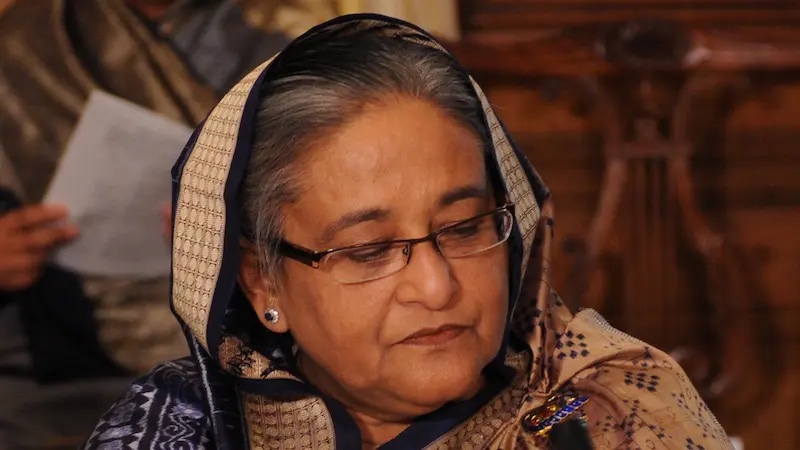
Prime Minister Sheikh Hasina and her Awami League party will return to power for an unprecedented fourth consecutive term in Bangladesh after being declared the winner of Sunday’s general election, which drew a low turnout amid an opposition boycott.
Early Monday (local time), preliminary results released by the Election Commission showed that the Awami League had won at least 222 out of 300 parliamentary seats, enough to form a super majority and again govern the South Asian nation of 170 million people.
With more than 294 seats declared, the Jatiya Party – an ally of the ruling party and the only other notable party contesting the election – won only 11, while independent candidates aligned with the Awami League secured victories in 61 parliamentary constituencies.
The result effectively rubber-stamped an outcome that had been predicted long before, after the main opposition Bangladesh Nationalist Party (BNP) and its allies declared they were boycotting the country’s 12th general election. Thiers was an act of protest against Hasina’s refusal to give in to their demand that she step aside to allow a neutral caretaker administration to oversee the election.
Polling centers closed at 4 p.m. local time on Sunday, with more than half of the country’s nearly 120 million eligible voters choosing to stay at home.
Voter turnout was estimated to be around 40%, said chief election commissioner Kazi Habibul Awal, which was still a significant jump from 26% an hour earlier.
Local media reported instances of ballot stuffing – some of which were canceled by the election commission.
Hasina, 76, cast her ballot at Dhaka City College Center in the capital as soon as polls opened at 8 a.m.
“Your vote is very valuable,” she said after voting, accompanied by her daughter and sister. “We fought a lot for the right to vote, and I hope that all the people of the country will come to vote at the polling centers. Bangladesh will continue its democratic trend.”
The parliamentary election, which is the 12th since Bangladesh fought a bloody war for independence from Pakistan in 1971, has been overshadowed by political unrest and mass arrests in the run-up to the vote.
Tens of thousands of opposition leaders and activists – including the BNP’s secretary general and other top leaders – have reportedly been arrested since Oct. 28 alone, when the party staged the last in a series of rallies demanding a neutral caretaker government be put in place to oversee the polls.
At least 39 people – mostly from the opposition – have died in political violence since then.
The BNP, which called for nationwide strikes at the weekend, said the opposition boycott had been successful.
“The whole world has seen that this is a sham election,” spokesman Abdul Moyeen told journalists. “All major parties have snubbed the elections.”
Scattered incidents of violence were reported across the country on Sunday.
Police said Zillur Rahman, a 40-year-old supporter of the Awami League, was killed by supporters of a rival independent candidate outside a polling center in Mirkadim municipality, south of Dhaka.
Another man, Nawab Al, 60, reportedly died in a scuffle outside a voting station in Debidwar, Comilla district, according to The Daily Star, quoting police.
Elsewhere, three people were injured by a homemade bomb detonated at a polling center in the Dhaka neighborhood of Hazaribagh, said Bachchu Mia, the chief police officer at Dhaka Medical College Hospital.
Police in the port city of Chittagong said they had fired shotguns to break up a rally of up to 60 opposition members who had blocked a road using burning tires, adding that no one was injured, AFP news agency reported.
Some 800,000 police and armed forces personnel have been deployed to safeguard law and order for the general election.
‘No point’
By 3 p.m. – an hour before polls closed – turnout across the nation was just 27.15%, according to Election Commission secretary Jahangir Alam.
Abdus Sattar, a resident of Dhaka’s Shaheenbag neighborhood, said he would not participate because the election was uncompetitive.
“I came here to see how the vote is going,” Sattar told BenarNews. “I will not vote as there is no point. The ruling party is already the winner.”
But other voters took the opportunity to cast a ballot. Anwar Hossain, who was voting in the Dhaka-12 constituency in Shaheenbag, said he supported the ruling Awami League.
“This government has done a lot of development for the country,” Hossain, 42, told BenarNews.
Kakoli Begum, 55, from the Dhaka-16 constituency, said voting was the only way to change the government.
“The election commission assured us that there would be fair polls. So I came here to vote,” she told BenarNews. “There is no violence, but the presence of voters is very thin.”
In recent months, the United States and other Western countries have ramped up calls to demand that free and fair elections be held in Bangladesh. Washington has threatened visa restrictions on Bangladeshis whom it suspects of undermining the legitimacy of the vote.
But Hasina, the daughter of the country’s founding father, has largely ignored the pressure.
Since 2009, she has presided over a crackdown on dissent, notably against opposition parties and civil society.
Under her watch, local and international advocacy groups, including Human Rights Watch, have documented alleged abuses by Bangladesh authorities, including mass arbitrary arrests, enforced disappearance, torture, extrajudicial killings, and widespread repression.
Hasina also acknowledged that her 14-year interrupted rule may have been flawed.
“If I’ve made any mistakes along the way, my request to you will be to look at the matter with the eyes of forgiveness,” BSS quoted her as saying.
“If I can form the government again, I will get a chance to correct the mistakes. Give me an opportunity to serve you by voting for the ‘Boat’ in the January 7 election,” she said, referring to her party’s symbol.
For many voters, the cost of living is a key concern. Food inflation has been stubbornly high in recent months, while power cuts and fuel-price hikes have added to consumer woes.
Until relatively recently, Hasina had presided over one of the region’s best-performing economies, largely on the back of the country’s booming textile and garment industry.
But Bangladesh’s post-pandemic recovery stuttered, and it was forced to approach the International Monetary Fund for a bailout.
In December, the IMF board agreed to provide Bangladesh with $4.7 billion of loans to stabilize the economy, which has come under pressure from currency depreciation and a decline in foreign exchange reserves.
Sunday’s one-sided election sets the stage for more violence in the post-voting period because of growing discontent with the incumbent government and high inflation, the International Crisis Group said in a report on Thursday.
By Jaya Ramachandran
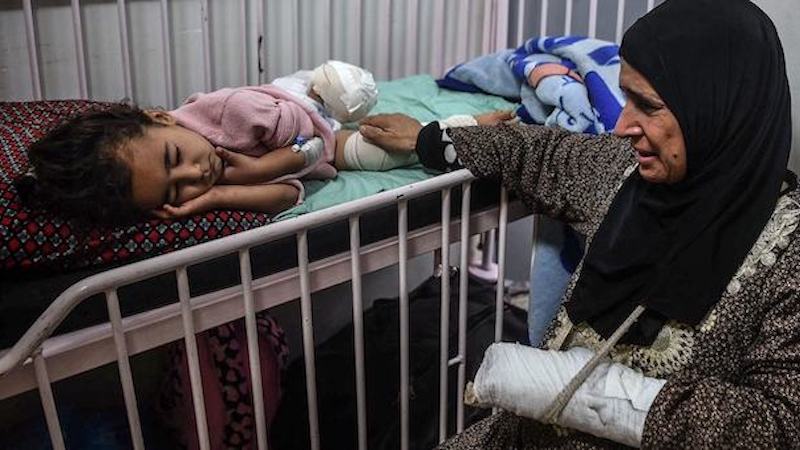
The UN’s migration agency IOM has launched an urgent appeal for $69 million to support its response to escalating and critical humanitarian needs in the Occupied Palestinian Territories (OPT) and neighbouring countries affected by the ongoing hostilities in Gaza.
In a statement on 5 January, IOM said that hundreds of thousands of civilians need aid desperately. But getting help to them continues to be hampered by “long clearance procedures for humanitarian aid trucks at the border (and) the intense ground operation and fighting”.
“Frequent disruption” to communication networks has also prevented humanitarian aid coordination, the UN agency said, and resulted in “insecurity, blocked roads and scarcity of fuel”.
IOM noted that outside Gaza, the deteriorating security situation along border areas between Israel and Lebanon has forced some 76,000 people from their homes in southern Lebanon.
Since war broke out in the aftermath of the Hamas-led terror attack in southern Israel, hospitals and other vital medical infrastructure in Gaza and the West Bank have been attacked nearly 600 times, according to the UN health agency.
The latest data on healthcare attacks from the World Health Organization (WHO) shows that some 613—606 in Gaza and seven in the West Bank—people have died within health facilities in the Occupied Palestinian Territory (OPT) since 7 October 2923. More than 770 have been injured.
WHO spokesperson Christian Lindmeier condemned the continuing fighting and bombardment and said that the “ongoing reduction of humanitarian space plus the continuing attacks on healthcare are pushing the people of Gaza to breaking point”.
As cases of diseases rise, nutrition plummets and the escalation in hostilities approached the fourteenth week, children in the Gaza Strip faced a deadly triple threat to their lives, added Lindmeier.
“Thousands of children have already died from the violence, while living conditions for children continue to rapidly deteriorate, with increasing cases of diarrhoea and rising food poverty among children, raising the risk of mounting child deaths.”
Hundreds of facilities affected
WHO’s online platform covering raids on healthcare counted 304 strikes in the Gaza Strip since 7 October. The attacks affected 94 health care facilities (including 26 hospitals damaged out of 36) and 79 ambulances. In the West Bank, 286 attacks caused seven deaths and 52 injuries. Some 24 health facilities were affected, along with 212 ambulances.
The head of the UN Children’s Fund UNICEF stated that children in Gaza “are caught in a nightmare that worsens with every passing day”. “Young lives are “increasingly at risk from preventable diseases and lack of food and water. All children and civilians must be protected from violence and have access to basic services and supplies.”
Catherine Russell noted that cases of diarrhea in children under five increased from 48,000 to 71,000 in just one week starting 17 December, equivalent to 3,200 new cases of diarrhea per day.
She said the significant increase indicated child health in Gaza is “fast deteriorating”. Before the escalation in hostilities, an average of 2,000 cases of diarrhea in children under five were recorded per month.
Relief effort obstructed
A statement released on 4 January by Eri Kaneko, spokesperson for aid coordination office OCHA, echoed repeated concerns by humanitarians that the speed and volume of relief is being continually hampered by conditions on the ground.
“The UN and our humanitarian partners are committed to and continue to do all they can to meet the growing needs in Gaza. However, the operating environment and response capacity continue to be hindered by security risks, mobility constraints, delays, and denials”, Ms. Kaneko said.
“Multiple inspections, long queues of trucks and difficulties at crossing points continue to hamper operations. Inside Gaza, aid operations face constant bombardments, with aid workers themselves killed and some convoys having been shot at.”
The OCHA official made clear other challenges include poor communications, damaged roads and delays at checkpoints. “An effective aid operation in Gaza requires security, staff who can work in safety, logistical capacity and the resumption of commercial activity.”
142 UNRWA staff killed
Meanwhile, the UN agency providing help to Palestinians, UNRWA, said that the total number of staff killed since the beginning of hostilities stands at 142.
The UN Relief and Works Agency for Palestine Refugees also reported that since 7 October last year, up to 1.9 million people have been displaced across the Gaza Strip, some multiple times.
This number represents over 85 per cent of the population of the Gaza Strip, UNRWA said, adding that families have been forced to move “repeatedly in search of safety”.
Nearly 1.4 million internally displaced persons (IDPs) now shelter in 155 UNRWA facilities across all five governorates of the Gaza Strip.
This figure includes 160,000 in the north and Gaza City, according to data last revised shortly after the escalation began.
Another 500,000 people “are in close vicinity of these installations and receiving assistance” from UNRWA, the UN agency said in an update.
By Chung-min Tsai and Yves Tiberghien
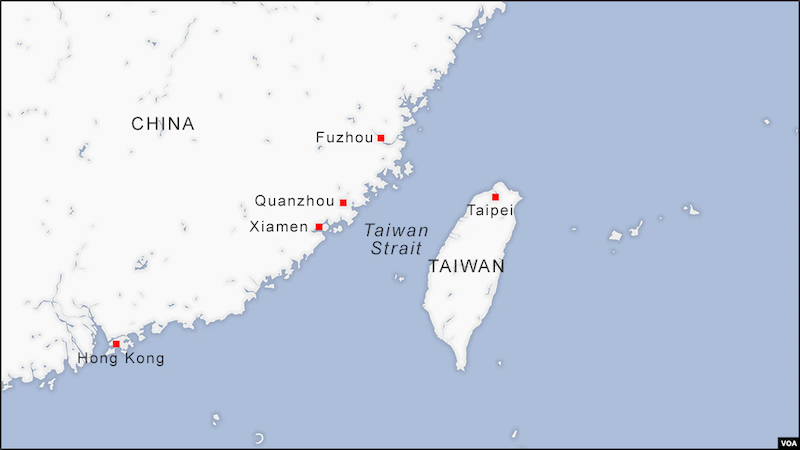
Taiwan’s three-way presidential and legislative election campaign has entered a vital phase leading up to final rallies on 12 January and the vote on 13 January. With Taiwan at the heart of strategic tensions in Asia, the whole world is watching how Taiwanese voters react. Yet the dominant features of the campaign so far are the stability and resilience of Taiwan’s democratic and political processes, policy convergence on core strategic questions across parties and the focus of the campaign on socio-economic issues, not the contest in the Asian geopolitics.
Cross-strait relations do affect almost every dimension of policy in Taiwan, but they are not the key issue at the top of Taiwanese voters’ minds in 2024.
The state of the presidential race is now clear — no further polling is allowed before the final vote. Lai Ching-te (of the Democratic Progressive Party, DPP, or green camp), vice president under current President Tsai Ing-wen, leads the polls with support between 30.9 and 40 per cent across the latest range of polls (with a median support rate of 35.5 per cent). Lai’s main challenger, Hou Yu-ih (of the Kuomintang, KMT, or blue camp) has between 24.1 and 38 per cent (with median support at 31 per cent), about 5 points behind Lai. The third candidate, Ko Wen-je (of the Taiwan People’s Party, TPP, or white camp), a colourful no non-sense former Taipei city mayor, has between 18.9 and 25.2 per cent (or a median of 22 per cent) support.
One week before the vote, undecided voters represent around 15 per cent of the electorate and where they go will be decisive. In particular, young urban voters prefer the frank speech and creative solutions presented by Ko Wen-je. But his chances of winning are slim, given his lack of of core support. If they stick to Ko, don’t vote, or split equally among Lai and Hou, Lai looks very likely to win.
A possible path to victory for the KMT’s Hou would be a scenario in which undecided voters and some TPP supporters resort to strategic voting against the DPP (a protect-blue and ditch-white strategy, baolan qibai). The three-way contest exposes the high cost of the inability of KMT and TPP to come to a pre-election agreement, despite trying very hard.
In the legislative race, pre-election forecasts suggest that no party is likely to win a majority (of 57 seats out of 113) in the Legislative Yuan. The KMT appears likely to win most seats (possibly between 50 and 55), followed by the DPP (40 to 48, down from 61 in 2020). That will put the TPP in a position of kingmaker in the Legislative Yuan with 10 to 12 possible seats.
A key trend has been the drop in the popularity of the DPP compared to the election in 2020 (when President Tsai was re-elected with 57.1 per cent of the vote against the KMT’s 38.6 per cent) or even in 2016 (when the DPP had 56.1 per cent of the vote against the KMT’s 31 per cent).
Underlying social and economic frustrations, post-COVID fatigue, encourage at least a plurality of voters to want a change in the governing party. Anxieties about economic prospects and incomes, increases in rents and real estate (squeezing young people’s livelihood), energy insecurity, and inequality dominate the political drift away from the government.
Pressure from China on reunification and rising US-China tensions remain a concern. In a Tianxia Zashi poll of August 2023, 46 per cent of voters worried about a possible war within the next five years. Yet, most voters don’t act based on this underlying concern, or indeed react to continuous military incursions from the mainland, as they have been a constant for decades. And, whereas the Hong Kong issue was a factor in the 2020 election, it has not been during this campaign.
Indeed, on cross-strait relations and defence, the three party platforms have converged toward similar positions. All three parties support increasing the military budget from 2.4 to 3 per cent, a target the United States has been pushing. All three parties support the expansion of mandatory military service for young men from 4 months to 1 year (already legislated and coming into effect this month).
The DPP promises to seek more dialogue with the mainland, while the KMT promises an elevated defence posture to accompany its own plan for more dialogue. The TPP promises the middle ground between the DPP and KMT. Only the KMT still supports the 1992 consensus (that both Taiwan and China agree that there is only one China but disagree about what it is). Yet even the KMT has downplayed that consensus, since only 30 per cent of voters now support it.
This doesn’t mean that China will react equally to the three parties after 13 January. Because of Lai’s past declarations in favour of independence (despite striking a more pragmatic chord over the past year) his victory will likely see a tough reaction from Beijing.
The robust US-Taiwan relationship is likely to remain on its current path if Lai is elected. A Hou victory would lead the United States to watch closely Taiwan’s next moves with the mainland. Despite being a flashpoint in East Asian geopolitics, Taiwan’s stance on international affairs is more reactive than proactive, hence the election’s more inward-looking focus.
The last week of the campaign could be decisive. But what stands out so far is the remarkable resilience of Taiwan’s democratic institutions and the trust that the electorate’s put in them. As Taiwanese carry on with a cool pragmatism and sense of their own identity, the storm surrounding their future continues to rage threateningly outside.
About the author
- Chung-min Tsai is a professor of political science at the National Chengchi University and at the Taipei School of Economics and Political Science, National Tsing Hua University.
- Yves Tiberghien is a professor of political science at UBC, a Harvard Academy Scholar, and visiting professor at the Taipei School of Economics and Political Science.
Source: This article was published by East Asia Forum