NPR News: 01-06-2024 10AM EST
Categories
 The South Caucasus News - SouthCaucasusNews.com
Color revolutions are political term used to describe turbulent political events: mass street protests and riots in order to achieve a revolutionary change of government. Some revolutionary upheavals are successful and some remain only attempts. However, so far they have taken place in a number of countries at the end of the 20th and the beginning of the 21st century.
Color revolutions broke out in the countries of the former Soviet Union, in the Balkans, in the Middle East, and more recently in other places such as Iran and China. The most popular revolutions ares: the Pink Revolution in Georgia in 2003, the Orange Revolution in Ukraine in 2004, the Tulip Revolution in Kyrgyzstan in 2005, and the Euromaidan Revolution in Ukraine in 2014. Some observers called the events a revolutionary wave whose beginnings can be traced back to 1986 and the Philippine Yellow Revolution.
The world we live in is changing more and more from day to day and so are the means of political struggle. Conquering power by military means is to some extent obsolete because people no longer have the will to die in the trenches like they used to. Classic wars are expensive and long and are being replaced by more subtle ways of conquering a certain area. One of the most important is the colored revolution. Under the guise of a democratic uprising, the removal of an unskilled government or a coup d’etat is actually being carried out.
Most often, external powers (without exception, the West) sponsor, plan, organize and implement “revolutions”. The role of external forces in colored revolutions is crucial and without them they cannot arise. These are revolutions mostly in name only. In fact, it is a sophisticated form of warfare, often an international conflict, although the legal profession does not (yet) recognize it as such.
Regime change has been an important feature of US foreign policy for decades, beginning with the overthrow of the Syrian government in 1949. Since then, it has been estimated that the CIA has overthrown or attempted to overthrow over 50 governments, although it has admitted only 7 cases. Color revolutions are an integral part of US foreign policy that seeks regime change in hostile countries.
In addition to the CIA, the State Department, the Pentagon and various US and domestic non-governmental organizations are most often engaged. In the last decade, a long list of countries with relatively stable political systems experienced colorful revolutions. Somewhere they were more and somewhere less successful: Egypt, Tunisia, Syria, Libya, Russia, Ukraine, Belarus, China, Iran, Venezuela. The regime change scenarios in all these countries show striking similarities.
The same patterns are persistently repeated, which cannot be mere coincidence. Egypt and Ukraine are very different, but the January 25 revolution in Egypt in 2011 and the Euromaidan revolution in 2014 are so similar that even the behavior of the revolutionaries was the same: moderate Islamists in Egypt and radical nationalists in Ukraine.
Even Western media today point out that color revolutions (which are described as technologies aimed at exporting democracy through civil disobedience) have become so sophisticated that their methods have turned into guidelines for changing political regimes. Initially, the color revolution was presented as a non-violent overthrow of the government including a change of political regime. Over time, the definition became broader: almost all coups started with peaceful protests and demonstrations, but only one out of five coups passed without casualties.
The true definition of color revolutions would be that they are technologies for creating a coup and gaining control of the political situation in a certain country from abroad, under conditions of political instability, with pressure on the government through political blackmail using the youth protest movement as a means. The goal of every color revolution is a coup d’etat, or the conquest and maintenance of power by force. Despite the great differences between the countries where revolutions break out (geopolitical, social, economic and other), they all fall under the same scheme that includes the pattern of organizing a protest movement, transforming that movement into a political crowd and using the newly formed popular mass against the existing government as a means of political blackmail.
Color revolutions do not represent the soft power of a state, as the American political scientist Joseph Nye claims. If it were so, it would mean that the color revolutions are a progressive step forward in the fight against authoritarian regimes.
However, they are no less dangerous than local civil wars that arose due to authentic local reasons. That is precisely such revolutions are often the triggers of wars – for example in Syria, Libya and Ukraine. Color revolutions are very often instruments for the destruction of democratic governments in transition. In revolutions, government is the goal and political change is the goal. It would be fair to say that the Americans have not only created a political model for export but also special means to break (un)democratic systems if necessary. They represent a hard power that is admittedly softer than wars (between countries).
In order for revolutions to be successful, the necessary conditions for their emergence must first be created. The first and basic condition is political instability in the country, which is accompanied by a crisis of the current authorities. Political instability can be created due to electoral fraud, poor economic conditions in the country, dissatisfaction of certain groups such as farmers or artisans, school workers or medical personnel, etc. If the political situation is stable, destabilization must be created in an artificial way.
The characteristic features of revolutions are: political blackmail and the movement of young dissidents. For example country A and country B are in a diplomatic conflict over certain political issues such as borders or control over some resources. Country A wants to obtain certain concessions from country B and decides to use the colored revolutionary movement to exert pressure and achieve its political goal. The movement of young dissidents can most often be created through the student population and the dissatisfaction of students due to exorbitant tuition fees, poor conditions in canteens, overcrowded dormitories. Students organize street protests that easily destabilize the state and can incite rebellion in other layers of society.
There are two diametrically opposed explanations why revolutions break out. According to the first, spontaneous uprisings arise from social conflicts of different groups, which leads to protests and rebellion. Non-democratic, poverty, religious and ethnic differences are mentioned as reasons. Indeed, in all countries, differences between social groups exist, but they are not the cause of revolution in themselves, but these differences only accelerate and facilitate the process of a colored revolution. For instance, Libya was a country with many privileges for its population, in Egypt there were subsidies for bread that prevented hunger, the standard of living in Tunisia (the most democratic of all authoritarian African countries) was close to southern France and higher than southern Italy, Assad’s Syria implemented liberal reforms. So, this is evidence that the theory of spontaneity is not valid.
According to another opinion, the revolutions were staged and planned in detail. The same characteristics and scenarios were repeated in countries that have almost nothing in common. Although colored may resemble classical revolutions, they are not. Any resemblance is superficial. Real revolutions are spontaneous and come at some point in historical development, while colored revolutions are staged and carefully planned.
The staged scenario of color revolutions is based on the Anglo-Saxon philosophy of democratization designed to export the democratic political model and democratic institutions around the world. Wherever they emerge, one should look for traces of the Western mentality. Everything follows the same pattern. There is always a youth movement, revolutionary leaders are always similar, and revolutions lack content or revolutionary ideology. It is about the people suddenly rebelling against “evil dictators” and apart from general calls for democracy, everything else is lacking or non-existent. This shows that the Americans and other foreigners behind the revolutions do not know the mentality and psychology of the native population very well.
According to Gene Sharp, an American expert on non-violent struggle and a kind of father of colored revolutions, colored revolutions are led by the principle that power structures (the government) rely on their subjects (the people) – the obedience of the people enables the rulers to rule the country. If the subordinates do not submit to the authorities, the authorities lose their power in the state. According to Sharp, classical color revolutions consist of three stages. The first stage includes the creation of an “underground” movement of cells that together form a network of those dissatisfied with the ruling regime. Members are recruited with big slogans and calls to action. A network of mostly young disaffected suddenly leaves anonymity and appears on the streets of big cities in response to a certain signal. The protests want to present themselves as something spontaneous, but in fact everything was prepared earlier.
Most often, protests erupt due to some reason, such as the questionable irregularity of elections (Serbia 2000, Georgia 2003, Ukraine 2004, Russia 2012), a shocking and unexpected event, for example, the self-immolation of a seller in Tunisia in 2010, or Ukraine’s delay in the implementation of the Association Agreement EU 2013. Members of underground cells become the initiators of the rebellion. Protests, gatherings, marches, setting up fences follow. The people realize that the government may be legal but it is illegitimate and forms an anti-government movement that becomes the driving force of the future revolutionary regime change. Of course, the initiators of the protest do everything carefully and organize the majority who really believe in the proclaimed ideals. People wouldn’t be so rampant in the streets knowing they were tools in the hands of the CIA or MI6. A political crowd forms and protests last for days or weeks in the main city squares.
In the second stage, the goal is to discredit defense, security and law and order bodies through strikes, civil disobedience, riots and sabotage. Protesters are occupying city squares and streets that they do not want to leave until their demands are met. The protestors are organized by the logistics network. In the name of the masses, the protesters give an ultimatum to the government and threaten mass uprisings if they are not satisfied. The government has two choices: retaliate with force or accept the demands. The third and final phase follows, which entails the “non-violent” overthrow of the government. In fact, it is about open attacks on authorities and the occupation of government buildings, institutions and other components or symbols of government. A kind of civil assault on the “organism” of the existing political order. If the government strikes the protesters with force, the media will accuse it of crimes and killing peaceful protesters, while if it agrees to concessions, it will be swept away very quickly because the protesters will not agree to compromises.
The events in Egypt and Ukraine that overthrew Hosni Mubarak and Viktor Yanukovych are incredibly similar, which is not a coincidence but proof that they followed the same pattern. The nature of the unrest, which turned into mass protests, was the same. The well-organized protesters were supported by Islamist and nationalist paramilitary groups. This was followed by the encirclement of government institutions and the occupation of key points. The protesters were supported by a mainstream media war from the West.
The ideological ferocity of the radicals was striking, and they were excellently equipped with weapons and military equipment. In both cases, the “rebellious people” faced weak, indecisive and corrupt authorities that hesitated to take decisive action: use force against armed protesters. Both Mubarak and Yanukovych trusted the West to save them, and it was the same West that was behind the whole story.
Even when revolutions succeeded, they rarely brought progress, freedom and democracy. The much-vaunted color revolutions like the Pink Revolution in Georgia, the Orange Revolution in Ukraine, and the Tulip Revolution in Kyrgyzstan did not improve democracy and the state of freedom and human rights.
The question arises why the revolutions failed and did not achieve their purpose? Quite simply, the rule of law never took hold. Too often, governments that came to power through color revolutions have behaved above and with little regard for democratic standards much like their undemocratic predecessors. For example in Georgia, the new authorities were very bad at protecting property rights, Ukraine was inevitably gripped by an atmosphere of revenge, and in Kyrgyzstan, the new authorities behaved like a fiefdom. Although the new authorities swore their commitment to democracy and the rule of law, all the “diseases” and flaws of the previous regimes were repeated again and again.
The supporters, the people who ultimately enabled the revolutions to succeed, made the crucial mistake of seeing the revolutions as the pinnacle of democracy and falling into complacency instead of demanding the creation of strong institutions. However, it would be better if the people refused to participate in such revolutions right from the start.
The real goal of color revolutions is to replace governments that have bad relations with the US or other Western powers. Once the revolution was carried out, the new authorities would be friendly towards America and put themselves under the protection of the USA. This means that Americans would gain access to oil, gas and other natural resources and strategic areas. Then all the talk about democracy and human rights would die. Nobody mentions today the state of human rights in Libya, Georgia, Ukraine, Egypt. It is a modern occupation and an aggressive policy that, instead of tanks, bombers and cannons, solves everything through uprising. Foreign embassies, secret services and NGOs carry out their tasks with the help of domestic protesters. It is a much cheaper solution than a real interstate war, which is limited by the conventions of the United Nations.
For instance, Euromaidan revolution in Ukraine 2013-14 cost 5 billion USD, which is a much cheaper Western conquest of Ukraine than an eventual military invasion. The fact that the Russo-Ukrainian war followed (which turned into a proxy war between Russia and NATO) is a separate story. Color revolutions are a modern type of aggression that international law does not recognize (yet). Where the people understood what it was about, such as Russia in 2012, Iran in 2009 and China in 1989/2014, revolutions have not succeed. In the Middle East and Ukraine, unfortunately, the color revolutions turned into endless local wars that brought permanent instability to those areas.

By Can Kasapoğlu
Through its Yemeni proxy the Houthis, Iran can successfully target global supply chains, threatening freedom of navigation and maritime security with strikes in the Bab al-Mandab.
The multinational effort to thwart these disruptions, Operation Prosperity Guardian, has failed to establish credible deterrence in the Red Sea, as Houthi attacks on commercial vessels have led shipping companies to suspend their operations there.
Data and experience gleaned from the Houthis’ attacks allow Iran’s Revolutionary Guard Corps to hone its operations, while the presence of an Iranian spy vessel in the region presages an intensifying campaign.
To effectively safeguard maritime security and global trade, the United States and its allies should target the critical capabilities of the Houthi forces and deter Iran from escalation.
Since mid-November 2023, the Houthi militia, Iran’s proxy in Yemen, has launched a disruptive campaign against maritime traffic through the Bab al-Mandab, a critical chokepoint connecting the Red Sea to the Gulf of Aden and the Indian Ocean beyond. Houthi strikes have endangered traffic through the Suez Canal, so many leading shipping companies have suspended their activities in the region.
To address this worsening situation, in mid-December 2023, a US-led multinational coalition launched Operation Prosperity Guardian. Saudi Arabia and Egypt are notably absent from this coalition, with Bahrain the sole Gulf country currently supporting the effort.
Despite the naval buildup, Operation Prosperity Guardian has been unable to stop the Houthi attacks. Although Washington and London have pressed Tehran to rein in the Houthis, Iran has boldly turned down this diplomatic request, while the Houthi leadership has made menacing threats against US Navy assets in the region.
The failure to establish credible deterrence has emboldened Iran, and the Houthi threat is only growing.
Houthi aggression marks the most serious threat to maritime shipping and trade in decades. Between seven to nine million barrels of oil navigate the Bab al-Mandab every day. The Suez Canal is also a major trade route, ensuring economic transactions among Asia, Europe, and North Africa. Altogether, about 12 percent of global maritime trade moves from the Bab al-Mandab to the Suez Canal every year, including some 30 percent of annual global container trade, worth around $1 trillion.
Already, Houthi attacks have caused major companies to halt their operations in the Red Sea. These companies shepherd a large portion of international maritime traffic, with the Maersk Group accounting for 19.7 percent, CMA CGM 18 percent, and Hapag Lloyd AG 8 percent of overall global shipping. Most of these multinationals have suspended their Red Sea operations and re-routed their northbound and southbound vessels, which has delayed estimated arrival times as container ships navigate longer routes around the Cape of Good Hope. The deteriorating security situation has triggered a rapid increase in insurance costs, placing an additional burden on maritime trade. The tense situation threatens global supply lines that are already struggling to recover from pandemic-era disruptions.
Unchecked, the Iran-backed Houthi aggression could catalyze catastrophic outcomes across multiple continents. In 2021, when the 1,300-foot Ever Given cargo vessel became stuck in the Suez Canal, an estimated $10 billion worth of cargo was lost every day. The situation unfolding in the Bab al-Mandab is more serious than that incident by several orders of magnitude.
Maintaining free maritime navigation is a geopolitical imperative for the United States and its allies. This strategic priority was highlighted in the 2022 US National Security Strategy, which stated that “the United States will not allow foreign or regional powers to jeopardize freedom of navigation through the Middle East’s waterways, including the Strait of Hormuz and the Bab al-Mandab.” The North Atlantic Treaty Organization’s Strategic Concept further declares that member nations will deter and defend against all threats in the maritime domain, uphold freedom of navigation, secure maritime trade routes, and protect main lines of communication.
Houthi information operations suggest that the militia, in coordination with Iran, has intentionally positioned itself as the most active and dangerous member of the so-called Axis of Resistance. The militia’s rhetoric has recently ranged from threatening Israel to openly challenging the US military.
The Houthi militia launched its current campaign of attacks in November 2023, when it deployed an air-mobile tactical assault team to capture the Galaxy Leader cargo ship near the Yemeni port city of Hodeida. In early December 2023, the USS Carney successfully saved several commercial platforms from a massive Houthi missile and drone barrage.
Between November 19 and December 31, 2023, the Houthis conducted 23 major attacks on global trade and shipping activity. These attacks demonstrated the Iran-backed long-range strike capabilities of the Houthi forces, centered on missile warfare and drone warfare assets, as well as asymmetric naval warfare platforms like those used by Iran’s Revolutionary Guard.
The anti-ship ballistic missile (ASBM) is one notable offensive asset that the Houthis employ. Acquired via Iranian know-how derived from illegal military transfers, Houthi forces have launched ASBMs at passing vessels on several occasions, marking the first publicly known combat use of the munition. While the precise anti-ship ballistic missiles used in the strikes remain unidentified, open-source intelligence assessments suggest that the Houthis operate two principal ASBM systems: the Asef, an anti-ship derivative of Iran’s Fateh-313 tactical ballistic missile, and the Tankel, the anti-ship variant of Iran’s Raad-500 Zohair tactical ballistic missile. These assets possess roughly 280 miles and 310 miles of range, respectively. The Asef, which closely resembles the Iranian Khalij Fars missile, has a large warhead that weighs 1,400 pounds (650 kilograms). The Houthis also possess a smaller ASBM, al-Falaq, derived from the Iranian Fateh-110 tactical ballistic missile.
The Houthi use of Iran-sponsored ASBM systems should be of grave concern to the US and its allies. Ballistic missiles lack the maneuverability and sea-skimming features that a high-end anti-ship cruise missile can offer. Anti-ship ballistic missiles, however, possess one advantage cruise missiles lack: they travel at high speeds. Some even can leave and then re-enter the atmosphere, and they attack targets with overwhelming velocity. They are difficult to intercept and carry devastating warheads.
Because ships are moving targets, an ASBM, especially one lacking high-end technological features, can often fail to strike a target set with precision. This is why a kill chain—especially drone surveillance over the target area married to sharp signals intelligence—is essential for a successful hit. In a narrow naval setting, an area salvo from multiple ASBMs augmented by loitering munitions and anti-ship cruise missiles can improve the Houthi forces’ odds of a successful strike.
The Hormuz-1 and the Hormuz-2 baseline is another Iranian system worth monitoring for potential transfers to Yemen. Derived from Iran’s family of solid-propelled tactical ballistic missiles, the Hormuz-1 and Hormuz-2 are reportedly anti-radiation ASBM assets that can reach up to Mach 5 speed. The anti-radiation ASBM configuration turns one of the vessel’s most critical defensive sensors, its powerful radar system, into a weakness: as the hostile missile targets radar emission sources, a targeted warship can deactivate its radar to evade a lock.
In the last days of 2023, Houthi forces launched ASBMs against the Maersk Hangzhou container vessel. Following the interception of the missiles by the USS Gravely and the USS Laboon, Houthi speedboats engaged the container vessel, closing to within meters of the ship. In response, the US Navy’s helicopters destroyed at least three Houthi platforms, causing the death of ten militia fighters. Houthi spokesmen responded with threatening rhetoric, portraying the incident as an extension of the ongoing war in Gaza.
Iran is the supplier of the Houthis’ drone and missile warfare capabilities. But in addition to weapons systems, Iran is providing key intelligence to the militia. Open-source evidence suggests that Iran’s Revolutionary Guard has been passing critical intelligence, surveillance, target acquisition, and reconnaissance (ISTAR) data to its Yemeni proxy. One crucial asset in this effort is the Iranian vessel Behshad. Nominally, Behshad is a cargo vessel: its International Maritime Organization (IMO) ship identification number is 9167289, and it is currently located in the Red Sea. In reality, the platform is a high-end intelligence asset that replaced another Iranian ship, the Saviz, several years ago.
Naval warfare occurs in a highly time-sensitive arena. Real-time intelligence means everything in a theater where nearly all the targets are mobile and difficult to strike. The success of Houthi raiding parties and long-range strike capabilities depends on the flow of high-end ISTAR data from the Behshad.
Complicating matters even further, Tehran has also sent the IRIS Alborz to the Red Sea. This surface combatant is an Alvand-class frigate equipped with Noor anti-ship missiles and other weapons systems, and it was last dispatched to the Gulf of Aden amidst the conflict in Yemen in 2015. Should the Alborz actively assist Houthi piracy activity, she could find herself a legitimate target for the US-led coalition patrolling the waters.
Stabilizing global shipping lanes in the Bab al-Mandab will require the United States to plot a different course of action than the one it has taken thus far. To do this, it should take several important steps.
Operation Prosperity Guardian needs new rules of engagement. Missile and drone warfare require an offense-dominant regime. Piracy likewise favors the offense. The Houthis may miss nine out of every ten ships they attack, but one successful hit could be enough to disrupt maritime trade in a critical transit area. The US-led effort in the region should become more than a naval air and missile defense campaign tasked with responding to stress calls from civilian vessels. Establishing credible deterrence requires that the operation take offensive action and preventive military measures against the Houthis’ critical capabilities. While the US Navy’s recent elimination of three Houthi speedboats could serve as an important turning point, it should be the beginning rather than the apogee of the coalition’s pivot to a more offensive orientation.
The US and its allies should do more to deter Iran. A credible deterrence strategy should deter the puppet master and the puppet simultaneously. Open-source defense intelligence suggests that the Iranian Revolutionary Guard Corps has been more effective in equipping the Houthis over the last two years, beginning in 2022 with its transfer of high-end systems that allowed the Houthis to launch medium-range ballistic missiles at Israel. Unchecked, Tehran will only continue to boost its proxies in Yemen. Iran can use the Houthis’ position overseeing a critical maritime chokepoint to continue to threaten global trade and security. As such, the US and its allies should do more to deter Tehran and the Houthi militia alike.
The Biden administration should redesignate the Houthis as a foreign terrorist organization. In 2021, the Biden administration revoked the designation of the Houthis as a foreign terrorist organization (FTO). While the dire humanitarian situation in Yemen was portrayed as the chief reason for this decision, the administration’s desire to hew to the misguided Iran policy bequeathed to it from the Obama administration likely played a major role in the decision. Redesignating the Houthis as a terrorist organization would send a strong signal to regional allies and foes alike that Washington is serious about fighting the militia.
The US should do more to address the security concerns of its Gulf partners and allies. Saudi Arabia is concerned that a tough response to the Houthi threat could lead to a reloaded war along its border with Yemen, a concern shared by Washington’s other Gulf allies. To address this concern, the Biden administration should supply its allies and partners in the Gulf with adequate military capabilities, including offensive countermeasures. Simultaneously, it should signal that any hostile proxy campaigns by Iran in the region would not go unpunished. Addressing the concerns of its regional partners would help Washington counter Chinese influence in the region while simultaneously striking the Houthi militia and its backers in Tehran.
By Colonel Balak Singh Verma
Complex global security concerns, exemplified by events like the Hamas attacks on Israel raise security demands for a robust C4ISR (Command, Control, Communications, Computers, Intelligence, Surveillance, and Reconnaissance) network as a backbone, facilitating real-time intelligence and decision-making.
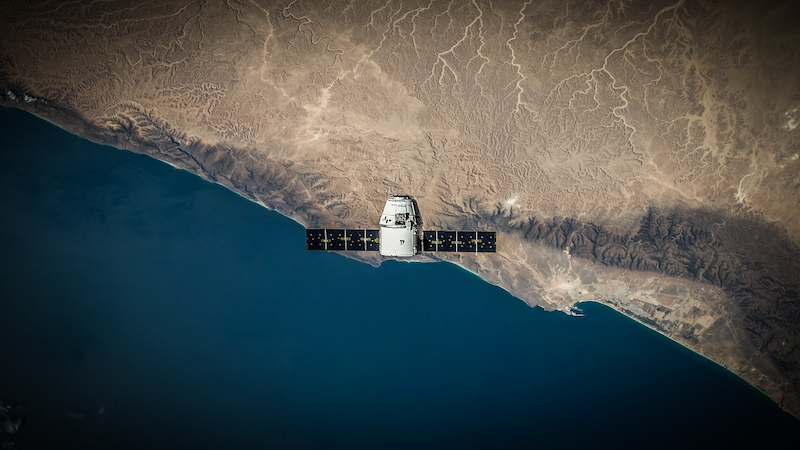
To address these challenges, space-based assets have emerged as indispensable tools, providing invaluable capabilities for secure military operations. Simultaneously, India’s nascent but burgeoning private sector space players represent a dynamic force inching to contribute to the nation’s defence needs, making it a pivotal player in the unfolding space security strategy. The framework for this strategy not only encompasses technical aspects but also requires a well-coordinated, whole-of-nation approach, bringing together civil, defence, industry, academia, and think tanks to ensure India’s space security is comprehensive and resilient.
In the complex landscape of space operations and formulation of a clear national security perspective for space utilisation, it is vital to clarify and differentiate between two seemingly similar yet fundamentally distinct terms: “militarisation” and “weaponisation” of space. These terms often cause confusion and impact the approach of various forums when discussing the use of space for defence purposes. Militarisation refers to the deployment and utilisation of space-based assets in support of non-aggressive, peacekeeping, or defensive military operations. Importantly, it does not involve the deployment of weapons in space for offensive actions.
Weaponisation, on the other hand, involves the use of space assets specifically designed for offensive measures, including the deployment of weapons such as anti-satellite (ASAT) missiles, directed energy weapons (DEW), or other counter-space weapons. It represents a more aggressive posture, with the potential to turn space into a battleground. Understanding the difference between these two terms is essential as one goes about formulating space laws and policies that enhance space security. This has prompted space support measures for enhancing combat readiness, and counter-space measures for safeguarding our assets, thereby accentuating the need for a robust National Space Security Policy.
The National Space Security Policy will play a pivotal role in shaping India’s stance on secure and peaceful space utilisation for national security while underscoring the commitment to avoid the first initiation of force in space. Formulation of this policy will necessitate redefining the strategic security framework and concept of operations to yield the desired results for strategic applications of space. It lays the groundwork for a coordinated and effective approach to space activities that are critical for India’s defence and maintaining harmony and peaceful coexistence in the realms of outer space.
The Indian Space Policy unveiled on 20 April 2023, elaborates plans for end-to-end commercial space activities by private enterprises, from launching satellites and rockets into space to operating ground stations. However, the Indian Space Policy does not cover space security aspects exclusively tailored for defence applications. The National Space Security Policy will redefine the nation’s approach to peaceful space utilisation with unambiguous and firm security considerations. Enhancing India’s defence space preparedness will subsequently necessitate bolstering space security policy with defence space doctrine and strategy. In times of crisis, seamless coordination among various stakeholders of space is essential, and this coordination can be achieved through the Union War Book[i][ii], which should clearly define the roles and responsibilities of various civil-defence space players.
The next pertinent question in the formulation of the policy is, “tagging of satellites as military, civil or dual-use”. The complexity involved in tagging satellites accordingly is a global challenge, and India should navigate this complexity by prioritising dual-use satellites, building consensus, and maintaining a transparent and adaptive approach to space policy. This approach will help India leverage advantages and flexibility while contributing to a more stable and peaceful space environment.
Space is a strategic and limited resource, and its judicious national utilisation must reflect this status. The notion of restricting ownership of space-based assets for the exclusive use of specific organisations ultimately places all users at a disadvantage. India’s current economic climate, characterised by unwavering efforts in nation-building, does not permit the luxury of selective use of space-based assets in departmental silos. Therefore, the concept of segregation and classification of space assets as civil and defence assets results in a suboptimal and detrimental approach.
Consider this scenario: 10 satellites with similar payloads individually used by 10 different organisations in sun-synchronous polar orbit (SSPO) result in revisit times exceeding a week. However, when the same fleet is utilised collaboratively by all users, the revisit time can be reduced to hourly intervals, amplifying the potential manifold.
The advantages offered by dual-use space assets are not confined to military applications alone; they also positively impact the economy by concurrently meeting the requirements of both civil and commercial sectors.
The basic operational necessity of any space user can be categorised as customised quality end-product and timely delivery. While the former lies in the domain of research to craft a suitable payload, the latter demands a quantitative enhancement, thereby improving the revisit timings. Therefore, ISRO should continue research yielding futuristic technology and handover the same to private players once matured, for cyclostyling. Targeted research to meet space defence gaps needs to be adopted by the Defence Research and Development Organisation (DRDO) on the double, which might need initial handholding from veteran ISRO technocrats.
Planning the ownership and management of space infrastructure warrants careful consideration. The gestation periods for space assets are protracted, often taking decades to achieve full operational effectiveness. Therefore, a multi-service provider approach is ideally suited to meet the multi-user needs of a country with such vast human resources and security conundrums. Incorporating dual or multi-functional satellite fleets can significantly reduce gestation periods and quantitative gaps. A model consisting of government-private collaboration in a 30:70 ratio forms a robust setup, ensuring critical consistency and economy as well. The burgeoning private space sector in India is dynamic, proactive, and enthusiastic. All it requires to achieve self-reliance is a well-defined policy framework to establish an assembly line for niche satellite productions. A vital aspect of this concept is to channelise industry into their niche proficiency to avoid duplication and waste of effort. The Indian Space Association (ISpA) and NewSpace India Limited (NSIL) together may need to take on this task and bind the industrial talent and resources in specified domains, accruing optimal employment and utilisation.
To ensure secure delivery of the end product for the strategic community, algorithms governing these systems need to feature multiple encryption layers, meticulously crafted by subject matter expert government organisations. It guarantees a wide range of operational flexibility in the utilisation of privately-owned and sustained satellite networks, effectively meeting all strategic requirements. It is crucial that while highly secure customised ground and user segment infrastructure is owned by the users themselves; encrypted high-value finished products are delivered by private space players equipped with artificial intelligence and integrated tools to cater to the tailor-made requirements of strategic users.
To fortify India’s national defence capabilities in space, the architectural review of the Space Commission, comprising representatives from all stakeholders responsible for planning, designing, developing, executing, and sustaining strategic space requirements from a national security perspective, is essential.
At present, various organisations, both civil and defence handle the role of planning, design, development, and execution independently in a fragmented manner, often with limited and ambiguous responsibilities, resulting in a disjointed national approach. To holistically develop space for national security, CDS must form part of the Space Commission and facilitate lateral and vertical linkages with all civil-defence space stakeholders. This approach streamlines efforts, reduces redundancies, and ensures a unified and coordinated national approach to scalability and standardisation in space. To bolster the effectiveness of holistic defence operations based on space technology, there is an emergent and immediate need to evolve space functional units and subsequently expand the Defence Space Agency (DSA) into the Indian Defence Space Command (INDSPAC).
India’s venture into space security, intertwined with defence readiness, necessitates a comprehensive and well-structured national strategy. This strategy should leverage a holistic national approach integrating space for strategic, civil, and commercial purposes. Taking cues from other leading space-faring nations, India must accrue benefits from close collaboration between industry and defence to customise tailored solutions for military needs. Regular and inclusive interactions of defence with industry, academia, think tanks, space domain experts, and friendly foreign countries will result in shaping and executing the long-term national space roadmaps in a timebound manner. A reappraisal of the space budget for integrated use, civil-defence space architecture coupled with defence space research will yield the desired impetus to the overall national security matrix.
[i] The Union War Book of India is a document outlining the response and functions of the government during war. States also have their state war books.
By Pizaro Gozali Idrus
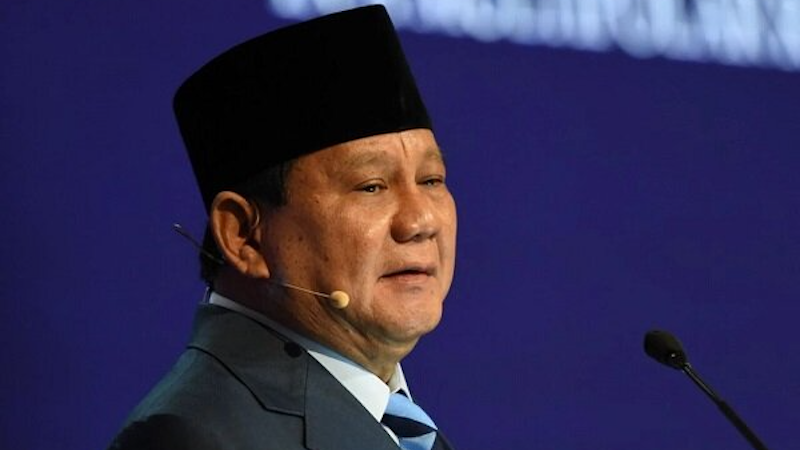
Indonesian Defense Minister Prabowo Subianto, who leads the polls for next month’s presidential vote, received a mixed report card from experts for his job leading the country’s defense and security sectors, with a few missteps and some essential modernization of the arsenal.
His performance as defense czar of Southeast Asia’s largest country will be one of the subjects discussed in the second presidential debate Sunday by the two other hopefuls, as the candidates are set to expound on their vision for Indonesia’s national security.
The Defense Ministry has faced difficulties in fulfilling the minimum essential forces (MEF) target for the military, mainly due to limited funds, said Khairul Fahmi, an expert from the Institute for Security and Strategic Studies in Jakarta.
“However, Prabowo has demonstrated his seriousness and vision by following a master plan and a business plan for the MEF program,” Khairul said.
MEF defines the basic level of defense capabilities that Indonesia, a sprawling archipelago, needs to protect its sovereignty and interests.
In November, the government increased its defense budget by 20% next year – to U.S. $25 billion from $20.7 billion – most of which will be used to procure major weapon systems from abroad.
Since taking office in 2019, Prabowo, a former army general, has crisscrossed the globe, traveling to China, France, Russia, Turkey and the United States, seeking to buy warplanes, ships, tanks and other weapons.
Under his stewardship, the Defense Ministry has also sought to acquire new military hardware including patrol boats and submarines as well as surveillance and territorial defense capabilities including radars, drones and other detection devices.
“It is still too soon to call it a success, but it is a good start,” Khairul said.
Still, it is unlikely the 100% minimum essential forces goal by 2024 would be achieved, while the nation’s maritime and air defense is even now insufficient, said Beni Sukadis, a military analyst from Marapi Consulting, a think-tank.
“There has to be a breakthrough in buying defense equipment that matches the current threats, such as fish theft and territorial violations by Chinese and other vessels,” Beni told BenarNews.
Meanwhile, Ganjar Pranowo, one of Prabowo’s two rivals in the Feb. 14 general election, has said that at Sunday’s debate he would reiterate his criticism of a controversial deal signed last June to spend millions of dollars buying used military aircraft.
“We cannot claim to have a strong defense while buying used aircraft,” local media quoted Ganjar as saying.
This deal is what analysts called a misstep that was not in line with the priority needs of the armed forces.
But this week, Prabowo spokesman Dahnil Anzar Simanjuntak told a TV talk show that the defense and finance ministries had decided to postpone the June 2023 decision to buy 12 used Mirage 2000-5 jets from Qatar for U.S. $734.5 million, because of fiscal constraints.
“To fill the gap in air defense during the waiting period, we decided to retrofit our old fighter-jets, and this is the best option available at the moment,” Kompas.com quoted Dahnil as saying on Thursday.
Retrofitting involves adding new or modified parts to a product that didn’t exist when it was manufactured. However, back in June, Sukamta, a member of a parliamentary defense affairs commission, said he feared the second-hand warplanes would be too costly to maintain, with even spare parts difficult to source.
One analyst said the acquisition of the jets from Qatar, which were offered to Indonesia as a grant in 2009, had been rejected by then-Defense Minister Juwono Sudarsono.
“I don’t really know if the staff at the Defense Ministry is aware of this,” Broto Wardoyo, an international relations expert at the University of Indonesia, told BenarNews.
Prabowo had earlier defended the decision, saying the Mirage jets had 15-20 years of service left and that they were in high demand.
The other presidential hopeful, former Jakarta Gov. Anies Baswedan, would aim to procure more effective and efficient weapons systems, rather than just large-scale ones, if elected, a member of his campaign team told local media on Wednesday.
As defense minister, Prabowo has been a vocal advocate of his country’s non-aligned stance amid a new Cold War and regional competition between rival superpowers.
“We respect the United States, China and other countries,” Prabowo said in September, echoing the foreign policy doctrine that has guided the world’s fourth most populous country since its independence.
“Indonesia’s position is very clear: We are non-aligned.”
U.S.-China competition for primacy in Southeast Asia and tensions related to the disputed South China Sea have led to a few other nations in the region adopting a similar stance.
While Indonesia is not a territorial claimant in the South China Sea, its exclusive economic zone (EEZ) overlaps Beijing’s claims in the waterway. And bilateral diplomatic tensions have arisen in recent years with Chinese fishing boats and coast guard ships encroaching on Indonesia’s EEZ.
The U.S. and China don’t see eye to eye in their response to Russia’s military action in Ukraine either, and Indonesia has not taken sides in the conflict, until, that is, Prabowo suggested an ill-considered plan at the Shangri-La Dialogue defense meeting in Singapore last June.
He provoked a backlash at home and abroad for his plan to end the war in Ukraine, after he suggested creating a demilitarized zone and letting people in “disputed” areas decide their fate through a United Nations referendum.
Prabowo is currently leading in most opinion polls, followed by Ganjar and Anies. Jokowi is constitutionally barred from seeking a third term.
The Defense Ministry touted several achievements under Prabowo’s leadership.
Among them were creating a military reserve, improving military education institutions and meeting 63% of the minimum essential force goal, the ministry said in a statement in response to a BenarNews request for comment.
The ministry also said it had bought defense equipment, such as frigate warships, submarine rescue vehicles, Rafale fighter jets, Airbus A-400M transport aircraft and C-J 30J-30 Super Hercules transport aircraft.
Nazarudin Latif in Jakarta contributed to this report.
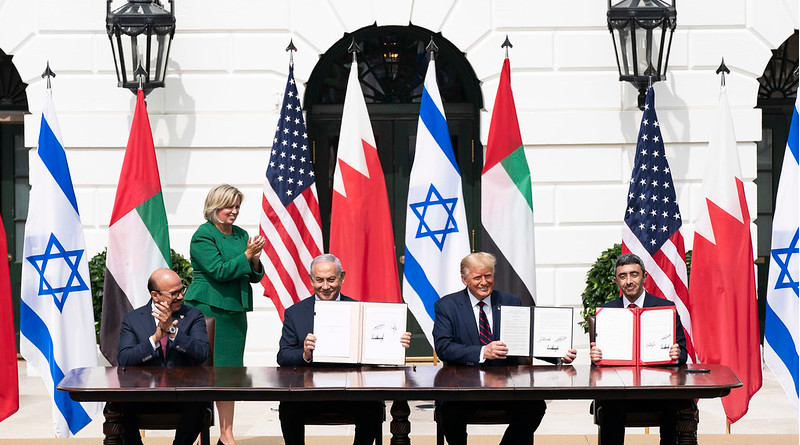
On December 4, Time magazine published an article under the title “It’s time to scrap the Abraham Accords”. The author, Sara Leah Whitston, a director of a body called Democracy for the Arab World Now (DAWN), argued that the Hamas attack of October 7 proved that the assumption on which the Abraham Accords were conceived – that the Palestinian issue was no longer important in Israel’s relationships in the region – was wrong. She maintained that conditions for the Palestinian people had worsened since the Accords were signed, and that the Gaza war has projected the Palestinian issue back to the forefront of global concerns. When signing the Accords, she claimed, the Arab leaders involved “hailed the agreement as a means to encourage and cajole Israel to take positive steps toward ending its occupation and annexation of Palestinian territory.” And now, she wrote, “because continued Arab adherence to the Accords signals continued support for Israel,” DAWN is calling on the Abraham Accords countries to withdraw from the agreement.
Both her assumptions and her conclusions are quite incorrect. The Israel-Palestine dispute had no bearing on the negotiations leading to the Abraham Accords and is unrelated to them. The purpose of the Accords is to advance regional security and stability; pursue regional economic opportunities; promote joint aid and development programs; and foster mutual understanding, respect, co-existence and a culture of peace.
All the Arab leaders concerned have indicated that normalizing relations with Israel has not affected their support for Palestinian aspirations. There is a brief reference to this in the Bahrain agreement, while the Morocco document mentions “the unchanged position of the Kingdom of Morocco on the Palestinian question.” Sheer logic dictates that none of the signatories perceives their support as involving the elimination of Israel. Since October 7 none of the four Abraham Accord signatory states has indicated any desire to withdraw from the Accords.
Sudan is in the throes of a devastating civil war. Government forces are on the back foot, as the paramilitary Rapid Support Forces (RSF) continues its advance. On December 19 it captured Sudan’s second largest city, Wad Madani. The future of Sudan, and with it the future of its normalization with Israel, hangs in the balance.
In the other Accord countries – the United Arab Emirates (UAE), Bahrain and Morocco – public opinion undoubtedly favors Hamas, deplores the high civilian death toll in Gaza and calls for a ceasefire. As a result all three states have been walking a tightrope as regards their official attitude toward the Israel-Hamas conflict. All the same, the Accords are holding firm.
At one time it seemed as though Bahrain might be wavering. On November 2, Bahrain’s parliament issued an unusual statement saying that the ambassadors of Israel and Bahrain had each left their posts and economic ties had been cut.
“The Zionist entity’s ambassador has left Bahrain,” parliamentarian Mamdooh Al Saleh said in parliament, “hopefully not to return.”
But the parliament has no responsibility for foreign affairs, and it soon became clear that Bahrain-Israeli diplomatic and economic relations were intact. Israel issued a statement confirming that relations were stable, and one from Bahrain’s government mentioned simply that the envoys had left, without giving any reason.
Iran has long been engaged in stirring up Bahrain’s Shi’ite population against the Sunni monarchy. But Bahrain is home to the US Navy Fifth Fleet, and close US relations through the Accords are a vital bulwark against Iran and too valuable to abandon. They also bring Bahrain closer to the wealthy UAE. So Bahrain is content to perform its balancing act – on the one hand seeking to keep the deal intact; on the other needing to reflect its disagreement with Israel’s military campaign in Gaza.
The other two Abraham Accord states face the same problem.
Despite internal and international pressure over the mounting toll of the war in Gaza, the UAE does not plan to break diplomatic ties with Israel. It has sponsored two resolutions within the UN Security Council of which it is currently a member. The first, calling unequivocally for a ceasefire, was vetoed by the US. The second, after days of intense diplomatic effort, concentrated on enhancing the flow of humanitarian aid to the population of Gaza, and was approved on December 22.
As well as maintaining its links with Israel, media reports indicate that the UAE has been working to moderate public positions taken by Arab states, so that once the war ends there is the possibility of a return to a broad dialogue. In addition the UAE has been in talks with Qatar about the possibility of a further Qatari-brokered deal involving the release by Hamas of some hostages in return for a break in the fighting.
The Accords were partly based on a shared concern over the threat posed by Iran. Despite an effort at rapprochement early in 2023, the UAE continues to sees Iran as a threat to regional security. So there seems no prospect of an end to UAE-Israel diplomatic ties. They represent a strategic priority for the Emirates.
As for Abraham Accords signatory Morocco, Hamas leader Khaled Meshaal recently scored a resounding own goal. On November 19, speaking from his luxury villa in Qatar, he addressed the Moroccan people by way of a video. Urging them to cut ties with Israel and expel its ambassador, he declared: “Morocco can correct its mistake,” and called on Moroccans to take to the streets.
The reaction was an outburst of fury on social media from Moroccans condemning the intervention as a breach of the kingdom’s sovereignty. There have indeed been a wave of public demonstrations in Morocco supportive of the Palestinians and condemning the suffering of the Gazan population, but it is a curious fact of Moroccan life that they are all organized with the state’s blessing. The government provides logistical and security arrangements for demonstrators every weekend, and itself calls for de-escalation, access to humanitarian aid, and the protection of civilians in line with international law.
On the other hand, Morocco has not the slightest intention of withdrawing from the Abraham Accords. This became clear on November 11 when, at the Islamic-Arab summit in Riyadh, Morocco together with Saudi Arabia, the UAE, Bahrain, Sudan, Mauritania, Djibouti, Jordan, and Egypt, blocked a proposal to cut ties with Israel.
So in complex and shifting circumstances the Abraham Accords seem in good health. They may yet come into their own in helping rebuild Gaza once the war has ended. That is when, in the recent words of Jared Kushner, one of their architects. they may become “more important than ever”.
|
|||||||||||||||||||||||||||||||||||||||||||||||||||||||||||||||||||||||||||||||||||||||||||||||||||||||||||||||||||||||||||||||||||||||||||||||||||||||||||||||||||||||||||||||||||||||||||||||||||||||||||||||||||||||||||||||||||||||||||||||||||||||||||||||||||||||||||||||||||||||||||||||||||||||||||||||||||||||||||||||||||||||||||||||||||||||||||||||||||||||||||||||||||||||||||||||||||||||||||||||||||||||||||||||||||||||||||||||||||||||||||||||||||||||||||||||||||||||||||||||||||||||||||||||||||||||||||||||||||||||||||||||||||||||||||||||||||||||||||||||||||||||||||||||||||||||||||||||||||||||||||||||||||||||||||||||||||||||||||||||||||||||||||||||||||||||||||||||||||||||||||||||||||||||||||||||||||||||||||||||||||||||||||||||||||||||||||||||||||||||||||||||||||||||||||||||||||||||||||||||