
Day: January 5, 2024
Categories
NPR News: 01-05-2024 9AM EST
AUKUS, the trilateral pact between the United States, the United Kingdom, and Australia, was a steal for all except one of the partners. Australia, given the illusion of protection even as its aggressive stance (acquiring nuclear-powered submarines, becoming a forward base for the US military) aggravated other countries; the feeling of superiority, even as it was surrendering itself to a foreign power as never before, was the loser in the bargain.
Last month, Australians woke up to the sad reminder that their government’s capitulation to Washington has been so total as to render any further talk about independence an embarrassment. Their Defence Minister, Richard Marles, along with his deputy, the Minister for Defence Industry Pat Conroy, preferred a different story. Canberra had gotten what it wanted: approval by the US Congress through its 2024 National Defense Authorization Act (NDAA) authorising the transfer of three Virginia class nuclear-powered submarines to the Royal Australian Navy, with one off the production line, and two in-service boats. Australia may also seek congressional approval for two further Virginia class boats.
The measures also authorised Australian contractors to train in US shipyards to aid the development of Australia’s own non-existent nuclear-submarine base, and exemptions from US export control licensing requirements permitting the “transfer of controlled goods and technology between Australia, the United Kingdom, and the United States without the need for an export license.”
For the simpleminded Marles, Congress had “provided unprecedented support to Australia in passing the National Defense Authorization Act which will see the transfer of submarines and streamlined export control provisions, symbolising the strength of our Alliance, and our shared commitment to the AUKUS partnership.”
Either through ignorance or wilful blindness, the Australian defence minister chose to avoid elaborating on the less impressive aspects of the authorising statute. The exemption under the US export licensing requirements, for instance, vests Washington with control and authority over Australian goods and technology while controlling the sharing of any US equivalent with Australia. The exemption is nothing less than appropriation, even as it preserves the role of Washington as the drip feeder of nuclear technology.
An individual with more than a passing acquaintance with this is Bill Greenwalt, one of the drafters of the US export control regime. As he told the Australian Broadcasting Corporation last November, “After years of US State Department prodding, it appears that Australia signed up to the principles and specifics of the failed US export control system.” In cooperating with the US on this point, Australia would “surrender any sovereign capability it develops to the United States control and bureaucracy.”
The gem in this whole venture, at least from the perspective of the US military industrial complex, is the roping in of the Australian taxpayer as funder of its own nuclear weapons program. Whatever its non-proliferation credentials, Canberra finds itself a funder of the US naval arm in an exercise of modernised nuclear proliferation. Even the Marles-Conroy media release admits that the NDAA helped “establish a mechanism for the US to accept funds from Australia to lift the capacity of the submarine industrial base.” Airily, the release goes on to mention that this “investment” (would “gift” not be a better word?) to the US Navy would also “complement Australia’s significant investment in our domestic submarine industrial base.”
A few days after the farcical spectacle of surrender by Australian officials, the Congressional Research Service provided another one of its invaluable reports that shed further light on Australia’s contribution to the US nuclear submarine program. Australian media outlets, as is their form on covering AUKUS, remained silent about it. One forum, Michael West Media, showed that its contributors – Rex Patrick and Philip Dorling – were wide awake.
The report is specific to the Navy Columbia (SSBN-826) Class Ballistic Missile Submarine Program, one that involves designing and building 12 new SSBNs to replace the current, aging fleet of 14 Ohio-class SSBNs. The cost of the program, in terms of 2024 budget submission estimates for the 2024 financial year, is US$112.7 billion. As is customary in these reports, the risks are neatly summarised. They include the usual delays in designing and building the lead boat, thereby threatening readiness for timely deployment; burgeoning costs; the risks posed by funding the Columbia-class program to other Navy programs; and “potential industrial-base challenges of building both Columbia-class boats and Virginia-class attack submarines (SSNs) at the same time.”
Australian funding becomes important in the last concern. Because of AUKUS, the US Navy “has testified” that it would require, not only an increase in the production rate of the Virginia-class to 2.33 boats per year, but “a combined Columbia-plus-Virginia procurement rate” of 1+2.33. Australian mandarins and lawmakers, accomplished in their ignorance, have mentioned little about this addition. But US lawmakers and military planners are more than aware that this increased procurement rate “will require investing several billion dollars for capital plant expansion and improvements and workforce development at both the two submarine-construction shipyards (GD/EB [General Dynamics’ Electric boat in Groton, Connecticut] and HII/NSS [Huntington Ingalls Industries’ Newport News Shipbuilding]) and submarine supplier firms.”
The report acknowledges that funding towards the 1+2.33 goal is being drawn from a number of allocations over a few financial years, but expressly mentions Australian funding “under the AUKUS proposed Pillar 1 pathway,” which entails the transfer component of nuclear-powered submarines to Canberra.
The report helpfully reproduces the October 25, 2023 testimony from the Navy before the Seapower and Projection Forces Subcommittee of the House of Armed Services Committee. Officials are positively salivating at the prospect of nourishing the domestic industrial base through, for instance “joining with an Australian company to mature and scale metallic additive manufacturing across the SIB [Submarine Industrial Base].” The testimony goes on to note that, “Australia’s investment into the US SIB builds upon on-going efforts to improve industrial base capability and capacity, create jobs, and utilize new technologies,” and was a “necessary” contribution to “augment VACL [Virginia Class] production from 2.0 to 2.33 submarines per year to support both US Navy and AUKUS requirements.”
The implications from the perspective of the Australian taxpayer are significant. Patrick and Dorling state one of them: that “Australian AUKUS funding will support construction of a key delivery component of the US nuclear strike force, keeping that program on track while overall submarine production accelerates.”
The funding also aids the advancement of another country’s nuclear weapons capabilities, a breach, one would have thought, of Australia’s obligations under the Treaty of Non-Proliferation of Nuclear Weapons. Defence spokesman for the Australian Greens, Senator David Shoebridge, makes that very point to Patrick and Dorling. “Australia has clear international legal obligations to not support the nuclear weapons industry, yet this is precisely what these billions of dollars of AUKUS funding will do.”
The senator also asks “When will the Albanese government start telling the whole truth about AUKUS and how Australians will be paying to help build the next class of US ballistic missile submarines?”
For an appropriate answer, Shoebridge would do well to consult the masterful, deathless British series Yes Minister, authored by Antony Jay and Jonathan Lynn. In one episode, the relevant minister, Jim Hacker, offers this response to a query by the ever-suspicious civil service overlord Sir Humphrey Appleby on when he might receive a draft proposal: “At the appropriate juncture,” Hacker parries. “In the fullness of time. When the moment is ripe. When the necessary procedures have been completed. Nothing precipitate, of course.” In one word: never.
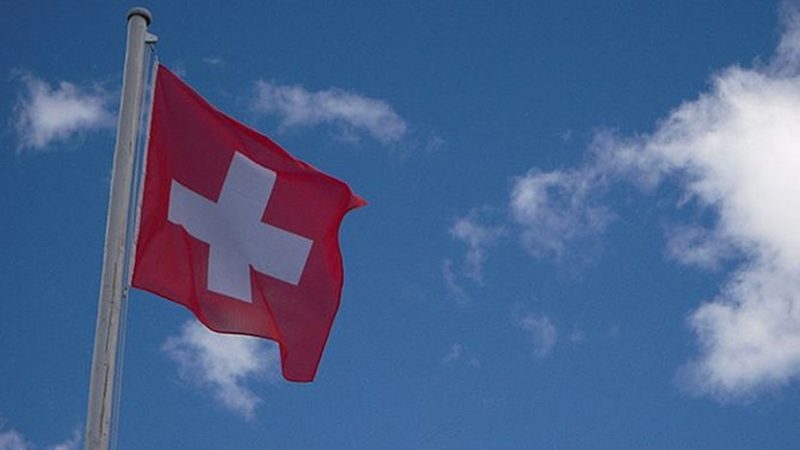
By Thomas Greminger and Jean-Marc Rickli
In 1956, former American Secretary of State John Foster Dulles stated that “neutrality has increasingly become an obsolete conception.”1 Dulles’s statement seemed to be vindicated after the end of the Cold War as only a handful of countries in Europe identified themselves as neutral. Whereas in the past Belgium, Cyprus, Finland, Ireland, Luxembourg, Malta, the Netherlands, Portugal, Spain, and Sweden adopted neutrality, only two countries in Europe—Austria and Switzerland—are considered permanent neutral states under international law after the Cold War. Together with Sweden and Finland, Austria although maintaining a constitutional basis for its neutrality, became a non-allied state when it joined the European Union (EU) on January 1, 1995.
With Finland having just joined NATO and Sweden about to do so, these two countries are definitely leaving the camp of the neutral and non-allied European states. Thus, Switzerland remains the only permanent neutral state in Europe with no commitment towards the EU and its Common Foreign and Security Policy (CFSP), as the core substance of Austria’s “Neutrality Act equals the status of a non-allied country”2 since Vienna joined the EU. Considering the renewal of the discussion on the relevance of neutrality in European security following the Russian invasion of Ukraine, this article sheds light on the contemporary relevance of the concept. It will do so by first looking at the conceptual and strategic meaning of neutrality, then reviewing the evolution of Switzerland’s understanding and practice of neutrality, and finally recasting the relevance of neutrality, especially regarding Ukraine, in today’s geopolitical and geostrategic environment.
Neutrality As a Small State’s Strategic Option
Though the United States has been tempted at times in its history—notably at the beginning of World War I—by the adoption of a policy of neutrality, the consistent use of neutrality is typically a foreign and security posture of small states. Small states can be defined as states having limited abilities to mobilize resources, which can be material, relational, or normative. 3 In short, small states have a deficit of power in terms of their capabilities as well as in terms of their relationship to others—i.e., the lack of power they can exert. Power represents the ability to remain autonomous while influencing others.4 The ability of states to achieve their foreign and security objectives ultimately depends on the exercise of these two dimensions. 5 Foreign and security policy outcomes of small states must therefore be understood and analysed along this continuum between autonomy and influence.6
Due to their lack of resources, small states lack the power to set agendas and thus have a limited capacity to influence or modify the conduct of others. They also have limited powers to prevent others from affecting their own behaviour.7 It follows that for small states the security and foreign policy objective is to minimize or compensate for this power deficit.8 This translates into three broad security policy orientations. Small states can favour either influence, or autonomy, or try to simultaneously play with both through hedging.9
When a small state chooses to maximise its influence, it is adopting a foreign and security strategy based on alignment by joining either an alliance or a coalition. An alliance is a “formal association of states bound by mutual commitment to use military force against non-member states to defend the member states’ integrity.”10 NATO through its collective defense clause in Article V of its charter is the epitome of a military alliance. A coalition is a looser form of association that does not entail a formal security pact; the countries that joined the United States in the war against Iraq in 1990–1991 or in 2003 joined a U.S.-led coalition.11
In terms of alliance or coalition behaviour, small states can either ally with (band wagoning) or against (balancing) threats.12 Whereas band wagoning is driven by the opportunity for gain, balancing is pursued by the desire to avoid losses.13 In this case, an alliance is a tool for states for balancing when “their resources are insufficient to create an appropriate counterweight to the hegemonial endeavours of one state or a group of states.”14 Alignment and more particularly alliance policy provide small states with the protection and the dissuasion exerted by a great power, but at the expense of their autonomy. This is the biggest risk for small states, as alliance commitments entrap small states with the policy of their larger partner and force them to fight wars that are not in their direct interests. In addition, since protection by the bigger partner can never be taken for granted, alliance policies are fraught with uncertainty as well.15 It follows that entrapment and the loss of strategic autonomy are inherent risks for small states adopting a foreign and security strategy relying on alignment.
In situations of mature anarchy—that is, when the international system reaches a certain degree of institutionalisation—small states can use a different type of alignment strategy which mainly relies on exerting influence within an international or regional organisation.16 The United Nations (UN) through the Article 2(4) of its Charter calls on all its member states “to refrain in their international relations from the threat or use of force against the territorial integrity or political independence of any state.” This principle, which reinforces states’ sovereignty, has always represented a strong motivation for small states to join the UN. However, the lack of enforcement power of the organisation due to the veto power of the five permanent members of the Security Council makes the UN very often more a symbolic tool for small states’ foreign policy than an effective means to guarantee their security. This is especially the case in the current international environment, which is growing increasingly polarised and where multilateralism is increasingly under pressure.
However, the true power of international organisations is not so much in their protection of small states as in their ability to provide small states with ways to exert influence over their larger partners. Regulations, norms, and decision-making procedures in international organisations contribute to constraining larger states and therefore offer small states increased room for manoeuvre. This, combined with negotiations and leadership skills, can provide small states with maximal influence within international organisations if small states use them within the right coalition.17 Small states can also use their reputation and perceived neutrality within international organisations to be norms entrepreneurs with the objective that the internationalization of their norms will compel other states to adopt them without external pressures on the one hand, and on the other, that great powers’ policy will be influenced in directions that support small states’ national interests.18 A traditional example of norms entrepreneurship has been the active promotion of peace by the Nordic states as a cornerstone of their foreign and security policies.19
When a small state decides to prioritise autonomy in foreign and security policy, it can adopt a defensive security strategy that favours sovereignty. In this case, its security does not rely on the protection of major powers. This provides small states with more room of manoeuvre to stay out of others’ wars but at the expense of being abandoned by great powers in times of threats to their security.20 This strategic option is characterized by the adoption of a policy of neutrality.21
Neutrality can be defined as a “foreign policy principle whose purpose is the preservation of the independence and sovereignty of small states through non-participation and impartiality in international conflict.”22 The law of neutrality has been codified in three conventions: Paris (1856), the Hague (1907), and London (1909). The law of neutrality recognises three basic obligations for the neutral states—abstention, impartiality, and prevention—but solely during wartime and only in case of interstate conflicts.23 Thus, neutral states must not provide military support either directly (troops) or indirectly (mercenaries) to the belligerents. They must treat the belligerents impartially regarding the export of armaments and military technology, which means that they must apply equally to all belligerents the rules set up by themselves regarding their relations with the belligerents. Finally, the neutrals are obliged to maintain their territorial integrity and defend their sovereignty by any means at their disposal to prevent the belligerents from using their territory for war purposes. It is important to note that in case of intra-state war or civil war, the law of neutrality does not apply and therefore the neutral state’s scope of action is unhindered and left to its own discretion.
As the law of neutrality only applies in wartime, if a state chooses to opt for neutrality also in peacetime it acquires the status of permanent neutral.24 In this case, customary law provides the permanent neutral state with an additional duty which pertains to the impossibility of joining a military alliance.25 This stems from the principle that a permanent neutral state “must not put itself in a position where in the event of a future conflict it could be led to violate the obligations arising from its neutral status.”26 In case of a military alliance, an attack against a partner would require military support on behalf of the alliance member and this would therefore breach the first duty of a neutral state, namely the duty not to participate in an armed conflict.
Except for this provision, the peacetime neutral state’s behaviour is not subjected to any legal constraints. Each neutral state is therefore free to determine the content of its neutrality policy defined as “the set of measures which a permanently neutral state takes on its own initiative and regardless of obligations relating to neutrality law in order to guarantee the effectiveness and credibility of neutrality.”27 The overarching goal of a peacetime policy of neutrality is therefore to build up credibility so as to ensure that neutrality in war is possible by convincing other states of its own capacity and willingness to remain neutral in the event of future armed conflicts. This is best achieved by the adoption of a comprehensive approach that coordinates all the political instruments of the neutral state: foreign and security policy, diplomacy, trade, and economic policy.28
This concept of not being a member of a military alliance is also commonly attached to non-alignment or military non-alignment.29 Historically, however, non-alignment unlike neutrality is not a legal concept but a political one that meant adopting a policy aimed at avoiding entanglement in the superpower conflicts of the Cold War.30 This understanding was formalised by the creation of the Non-Aligned Movement at the 1961 Belgrade Conference, and it notably included India, Indonesia, Egypt, Ghana, and Yugoslavia, among many others.
A third strategic option for small states is opting to forego the “security benefits of strong alignment in return for increased policy autonomy” by adopting a hedging strategy.31 Hedging is “a class of behaviors which signal ambiguity regarding great power alignment, therefore requiring the (small) state to make a trade-off between the fundamental (but conflicting) interests of autonomy and alignment.”32 Whereas neutrality and alignment imply an unequivocal identification of the threats, hedging best addresses situations when small states face risks that are multifaceted and uncertain. These situations arise when the identification of friends and foes is difficult and adopting an alliance strategy could thus mean losing independence—or worse, inviting unwanted interference from the great powers. The alternative of adopting a non-aligned position in this situation would run the risk of putting the small state at a disadvantage if the great power gains pre-eminence in the future.
It follows that in these situations, small states are likely to pursue simultaneous strategies of “return-maximising and risk contingency.”33 This is best achieved by band wagoning with a regional power while simultaneously balancing the risk through a bilateral alliance with the hegemon or the superpowers in the international system or with the regional power’s adversaries. The function of bilateral alliances is to hedge against regional hegemons so as to prevent them from dominating as well as to limit the domestic influence of regional allies.
One could say that Qatar during the Qatar crisis (2017-2021) used a hedging strategy by allying with Turkey against the UAE and Saudi Arabia while maintaining a good relationship with the United States. Hedging is therefore a strategy that seeks “to offset risks by pursuing multiple policy options that are intended to produce mutually counteracting effects, under the situation of high-uncertainties and high stakes.”34 The ultimate objective of hedging is to reconcile “conciliation and confrontation in order to remain reasonably well positioned regardless of future developments.”35
Due to their deficit of power, small states cannot adopt offensive strategies that combine exerting influence while guaranteeing autonomy as their security doctrine. This configuration of power is what makes states great powers, as only they have the power to influence the structure of the international system while guaranteeing their own security.36 Or as Morgenthau stated, “a great power is a state which is able to have its will against a small state […] which in turn is not able to have its will against a great power.”37 Although small states can sometimes use offensive strategies if they are confronted with smaller states, the core of their global security strategies is nonetheless modelled on alignment, defense, or hedging. These strategies are the only way to compensate for their power deficit vis-à-vis more powerful states.
This brief overview of small states’ strategic options shows that neutrality is only one security posture for small states. Dulles’ statement was vindicated in the last three decades because, unlike the Cold War, “smaller states may now choose to involve themselves on an a la carte basis in a wide range of security commitments with an emphasis upon their own security requirements and those in the immediate vicinity.”38 Nonetheless, some small states decided to retain neutrality as the core of their security policy. The next section will examine the case of Swiss neutrality.
Swiss Neutrality over Time
As the sum of all the actions taken by the state to maintain and promote the credibility and effectiveness of its status as a neutral in the international community, the Swiss neutrality policy has undergone many evolutions since its inception.39 As a response to global geopolitical developments, Switzerland has updated its policy of neutrality, a core instrument of its foreign and security policy, to fit the evolution of the geopolitical context while best protecting its national interests.
Swiss neutrality is widely attributed as beginning with its de facto application after its defeat in 1515 at the battle of Marignano. In 1815, neutrality was officially established at the Congress of Vienna and recognized by the European powers.40 This enshrined the concept of permanent armed neutrality, meaning that “Switzerland remains neutral in any armed conflict between other states, whoever the warring parties are, whenever and wherever a war breaks out,” as well as the fact that Switzerland’s neutrality is based on its willingness to use force to protect its territorial integrity and neutral rights.41
The First and Second World Wars entrenched this concept, while also seeing Switzerland evolve into a place for belligerent states to continue diplomatic relations, a base for humanitarian operations, and a conduit for the continuation in trade of certain essential materials.42 During the Cold War, Swiss neutrality was ensured by dissuasion—convincing potential invaders that the cost of invasion outweighed the benefits. This put autonomy, and the armed forces, at the center of Swiss neutrality. Operating under a strict interpretation of the concept, Switzerland’s neutrality policy spelled out that the country would refrain from entering into any military alliance or agreement on collective security so as to never expose itself to the risk of being pulled into a conflict.
With the collapse of the Soviet Union, the imminence and proximity of the Cold War threats disappeared and gave way to local and regional conflicts. In addition, European security became increasingly institutionalised through the development of cooperative security architectures. This meant that Switzerland very quickly encountered a dilemma: to maintain its traditional security through armed neutrality and isolation, as had been the predominant practice in the preceding decades, or through increased cooperation in the emergent European security architecture.43 The 1990s were therefore characterized by a series of readjustments of Swiss neutrality practices and doctrine. For example, Switzerland imposed economic sanctions for the first time in 1991 against Iraq—aligning itself with United Nations (UN) Security Council resolutions on non-military sanctions—all the while denying coalition flights the right to fly over Swiss airspace. This led the Swiss government to publish a report on neutrality in 1993 which underlined that the “traditional concept of security through neutrality and independence” was to be supplemented with “security through cooperation.”44 Swiss security policy would rely on two pillars: a national conception based on permanent neutrality through national defence and an international dimension based on solidarity through peace promotion.45
While permanent neutrality was maintained, the report stated that “neutrality needs to be interpreted in light of the requirements of international solidarity and should be used to serve the international community and world peace.”46 The new understanding of the application of neutrality was thus reduced in the sole case of interstate wars that occur outside Chapter VII of the UN Charter. This instigated a still-ongoing period of greater involvement in global affairs on the part of Switzerland, joining the North Atlantic Treaty Organization (NATO) Partnership for Peace (PfP) and the Organisation for Security and Cooperation in Europe (OSCE) in 1996. In 1998, Switzerland would partially align itself with EU sanctions on Yugoslavia.47 Overflight and passage through Swiss territory would, however, have to wait the cessation of hostilities and the adoption of UN resolution 1244. Lacking a UN mandate, the operation of the U.S.-led coalition forces in Iraq in 2003 fell under the traditional application of neutrality, and the Swiss government banned all overflights except for humanitarian and medical purposes.48
The early 2000s cemented Switzerland’s orientation toward greater involvement in global affairs, notably with its accession to the UN in 2002 and the articulation of “active neutrality.”49 This resulted from an understanding that national realities were increasingly determined by foreign developments, which required Switzerland to enhance its influence and engage in multilateral cooperation.50This is concomitant with an uptick in interoperability goals with NATO forces. Still constrained by political realities, these interoperability goals mainly concerned the less controversial air forces due to political sensitivity regarding participation of ground forces.51 In 2011, Switzerland set in motion an accession to the UN Security Council with a non-permanent seat for the 2023-2024 term. This prompted the Federal Council to release a report on the candidature in 2015 which in part assessed the compatibility of a UN Security Council seat with Swiss neutrality. The report concluded that not only had other neutral states such as Austria and Finland already served terms in the Security Council—thereby setting a historical precedent—but also that a seat on the Security Council would “open up special opportunities for Switzerland to contribute to peace and security worldwide on the basis of its independent foreign policy,” with its neutrality even serving as an advantage.52
The report further adds that coercive measures taken by the Security Council would be in line with Swiss neutrality. As the Security Council members are not state parties to a conflict, but “guardians of the world order tasked with preserving and restoring peace,” the principle of neutrality is not applicable to coercive measures adopted by the Security Council.53 As the highest body through which to achieve collective security, Switzerland’s ascension to the Security Council (confirmed as of 2022) represents the culmination of Switzerland’s efforts to be an active partner in global governance and to shape the events around it.54
Considering Switzerland’s different reactions in 2014 and 2022, the conflict in Ukraine offers an interesting case that underlines the dynamic nature of neutrality policy, affected by both domestic and international contexts. When Russia annexed Crimea in 2014, Switzerland did not align itself with EU and U.S. sanctions, but it did take steps to make sure sanctioned individuals and institutions could not use Switzerland to circumvent those sanctions.55 At the time, Switzerland was chairing the OSCE and was therefore playing a central role in conflict management. Hence, the prevailing thought was that strict neutrality should be observed, lest Switzerland negatively affect its position and credibility as mediator. Switzerland’s requirement of remaining impartial as chair of the OSCE and the lower severity of the breach of international law—compared to 2022—coupled with Russia’s relative openness to a diplomatic solution all contributed to the Swiss decision not to impose sanctions.56
The February 2022 invasion of Ukraine represents a fundamental shift in European security and constitutes a severe breach of international law. Indeed, a 2022 complementary report analyzing the consequences of the Ukraine war on Swiss security policy—building on observations made by a 2021 Federal Council Security Policy Report which noted that “the security situation has become more unstable, unclear and unpredictable worldwide and also in Europe”—concludes that war reinforces these security trends which have already been apparent for some time, and that these trends are now even more considerable and far-reaching across the globe due to the war in Ukraine.57
The reality is that not only geopolitics, but the entire dynamic of the security policy landscape of international politics, is affected. The Russian invasion of Ukraine is certainly only the beginning of a larger “Cold War 2.0,” and could even be considered as an inflection point for the global order.58 In Europe, the consequences of this invasion—notably Germany’s decision to raise its defense budget by €100 billion and Sweden’s and Finland’s decisions to join NATO—are clear indications of paradigm changes towards replacing cooperative security through alliance and a move away from the peace dividend period.59
These alignments in Europe sparked a nation-wide debate over the extent to which Switzerland should align itself with the condemnation of Russia and how far—if at all—it should go in support of Ukraine. The severity of Russia’s actions against Ukraine, coupled with strong support of Ukraine from the Swiss population as well as predictable international pressures, led the Swiss government to align with the EU’s sanctions package.60 Indeed, a survey shows that support for sanctions is high among the Swiss population, standing at 77 percent.61
In line with its domestic law regarding the export of war materiel, the Swiss government, however, refused to allow the transfer of war materiel manufactured in Switzerland to Ukraine from a third party. This inevitably revitalized discussions on Swiss security policy, and the way in which neutrality fits in this newly “degraded” European context.62
The reality that armed conflict in Europe is no longer something from the past, as well as the lessons learned regarding how to survive a potential invasion, are leading Switzerland to re-evaluate some core tenets of its security policy, with consequences for the discussion on neutrality. While support for neutrality was still very high at 89 percent in July 2022 and 91 percent in January 2023, it is nonetheless lower than in 2021, representing the first decline in 20 years, and thus shows that Swiss people have become more critical towards neutrality and more open towards international cooperation.63 Unlike Sweden and Finland, who have applied for NATO membership, the Swiss government reaffirmed that “a membership of NATO, which would mean the end of neutrality, is not an option for Switzerland.”64 This is also supported by two thirds of the Swiss population, while at the same time a majority of Swiss—55 percent—are in favour of a rapprochement with NATO, for the first time.65
In a way, the complementary 2022 report shows that the war in Ukraine is revitalizing the concept of armed neutrality, highlighting the importance of the armed forces in maintaining Swiss sovereignty. The self-defence requirement directly stems from the law of neutrality. Yet, more important, the report acutely highlights the importance of international support and cooperation to repel an invasion. Indeed it finds that it is very likely that in case of armed aggression, Switzerland would have to rely on international military cooperation, and this must be exercised and prepared in peacetime.66 An increase in international defence and security cooperation is therefore becoming central to Swiss security policy.
In a sense, the Swiss approach to neutrality since the February 2022 Russian invasion of Ukraine can be subsumed as a continuation of armed neutrality while simultaneously preparing for a world in which territorial integrity could be violated, and once attacked, the legal obligations of neutrality become obsolete. This entails a need to ensure broader interoperability of forces with neighbours and likeminded nations as well as the existence of pre-existent, and stronger, channels of cooperation, notably with NATO and the EU. While interoperability with NATO forces has been on the agenda since the late 1990s, it was mainly limited to technical elements and mainly at the tactical level.67 The 2022 report suggests broadening interoperability to more domains relevant to defence and security policy by—among other things—exploring the possibility of participating in NATO exercises pertaining to collective defence.68
Extending Switzerland’s participation in NATO exercises was one of the topics discussed by Swiss Defense Minister Viola Amherd when she met NATO’s Secretary General, Jens Stoltenberg, on 22 March 2023.69 From a conceptual perspective, the main consequence of the war in Ukraine for Swiss security and defence policy has been a gradual move towards a hedging strategy combining both maintenance of sovereignty through armed neutrality while guaranteeing that military cooperation is possible if the country should be attacked and no longer be in a position to defend itself alone. Domestically, the contentious nature of this interpretation has led discussions around a revised conception of neutrality—“cooperative neutrality.” However, the results of these discussions are so far inconclusive, and the Swiss Federal Council elected to maintain its view of neutrality policy outlined in 1993.
Internationally, some voices have argued that Switzerland’s reaction to the Ukraine war represents the end of its neutrality.70 With the sanctions on Russia, Switzerland would presumably have created a precedent and broken with long-standing traditions. Russia, for example, refused to accept Swiss proposals to act as a mediator between Russia and Ukraine, with the Russian foreign ministry spokesperson—referring to Swiss adoption of EU sanctions against Russia—stating that “Switzerland has unfortunately lost its status of a neutral state.”71Additionally, some have pointed to the seeming inconsistencies in Swiss neutrality policy, as exemplified by the decision to impose economic sanctions on Russia, but a refusal to accept the transfer of Swiss ammunitions to Ukraine from third parties (notably Germany).72
A careful review of the history of Swiss neutrality shows that Switzerland has not broken with its tradition and is acting in line with its neutrality policy outlined in 1993. In fact, as seen, the imposing of sanctions due to a severe breach of international law has a precedent. Swiss neutrality policy stipulates that when used against states breaking the peace or violating international law, economic sanctions “have the function of restoring order and thus serve the peace.”73Such measures “are in accordance with the spirit of neutrality”74 and in line with the law of neutrality, which does not regulate economic sanctions. As stated in a 1993 Swiss White Paper on neutrality, the Hague convention “does not require equal treatment and leaves the neutral state free to conduct its international economic relations as it sees fit.”75 As such, there is no express requirement to observe economic neutrality.76 In fact, Switzerland has implemented 28 different sanctions packages since its first sanctions in 1990. As of the end of 2022, Switzerland had 24 ongoing sanctions packages, stemming from both UN Security Council resolutions and in line with EU sanctions packages.77
The direct transfer of weapons or ammunition, however, is a breach of the international law of neutrality, and the export and re-export of weapons and ammunition produced in Switzerland to a country involved in an international armed conflict is prohibited by Swiss domestic law under the Swiss War Material Act (art. 22a, al 2, let. a).78 Hence, Switzerland has in fact broken neither legal nor self-imposed rules of neutrality with its actions regarding the February 2022 invasion. Furthermore, as seen, neutrality in Switzerland has never been, and will never be, an absence of values or opinion. Switzerland’s choice was based on its assessment of the severity of Russia’s violation of international lawand what this meant not only for the international community, but for Swiss security as well. 79 However, the decisions of the Swiss government to refuse the requests of Germany, Spain, and Denmark to re-export weapons and ammunitions towards Ukraine have led to intense international pressure on Switzerland, as well as heated domestic debates in the Swiss Parliament.80 Yet, the latter has so far refused to change the current legislation81 even though a recent survey showed that a small majority (55 percent) of the Swiss population would be in favor.82 To understand this, one has to look at the domestic function that neutrality plays in a country.
Neutrality and its Cultural Identity Function
The war in Ukraine has opened several conversations about the relevance of Switzerland’s neutrality. Aside from the commentaries regarding the supposed novelty of Switzerland’s 2022 sanctions on Russia, some have questioned the relevance of Switzerland’s neutrality considering Sweden’s and Finland’s paths towards NATO membership. Phrases such as “the end of neutrality” are circulating around Europe and experts are juxtaposing Sweden’s and Finland’s decisions to abandon neutrality with Switzerland’s maintenance of neutrality.83Such a direct comparison is of little value, as neutrality cannot be understood only as a security policy instrument.
To understand the transformation of the practice of neutrality, one needs to understand not only the geopolitical context of each neutral state, but also its national cultural identity.84 Each country has its own strategic culture and perceives threats through theses lenses differently depending on its own unique vicinity to, relationship with, and ability to address each of these threats as well as its historical and cultural context. Thus, Sweden, Finland, and Switzerland, as well as other neutral countries, all perceive and react differently to the war in Ukraine and the changing world order partly because of their historical legacy. Some, for instance, argue that Sweden and Finland in fact gave up on neutrality a long time ago, with the discussions starting between Swedish political parties as long as 20 years ago.85 Part of Sweden’s and Finland’s decision also has to do with the relationship between the two nations and their proximity to each other, not just their proximity to Russia.
When Finland submitted a report to parliament on “fundamental changes” in the foreign and security policy environment following Russia’s invasion of Ukraine, the authors weighed the strength of their move to join NATO if it was combined with that of Sweden and found additional benefits from its move to join NATO: “Should Finland and Sweden become NATO members, the threshold for using military force in the Baltic Sea region would rise, which would enhance the stability of the region in the long term.”86 Vice versa, Finnish strategy was significant for Sweden in its decision to join NATO, with experts crediting the interwoven political and military relationship between the two as a motivation that weighed heavily on Swedish policymakers and experts. “To be outside the alliance in the event of a Finnish membership would […] be completely untenable for political, geostrategic, and purely military reasons.”87
For Switzerland, the role of neutrality as an identity provider as demonstrated by its constant very high approval among the Swiss population is key to understanding Swiss neutrality policy. Swiss political identity implies being neutral.88 It therefore follows that changes to neutrality policy are not only a function of changes in Switzerland’s external international environment, but also of cultural and identity variables, which sometimes may constrain the course of action available to Switzerland to advance its foreign and security policy, even amidst widespread governmental and institutional support. For example, in 1994, the Swiss voters rejected a government initiative to supply peacekeeping forces for United Nations operations around the world because of concerns over the permanent maintenance of Swiss neutrality.89 This law had broad government and parliamentary support and would have increased the flexibility of Swiss security policy.90 However, the Swiss population’s traditional interpretations of neutrality policy, as well as doubts about the effectiveness of UN peacekeeping operations trumped the government’s security policy plans.91
Conclusions and Lessons for Ukraine
The war in Ukraine has opened a global conversation around neutrality on multiple levels concerning both existing neutral countries such as Switzerland and as a tool for small states in conflict resolution. Neutrality is a dynamic concept among small states’ strategic options. It is a tool of foreign and security policy which leaves the neutral state with a lot of room for maneuver to conduct its neutrality policy and ensure its security, while respecting the law of neutrality and therefore bolstering the international credibility of its neutral status.
Neutral states are very well positioned to offer an alternative route for solutions, especially when bloc formations begin to loom and two sides seem to split—the so called “good offices.” Neutral states can offer a contact, space, and even grounds for negotiation whenever the time for talks does come around.92Switzerland is uniquely positioned to strongly advocate for respect of international law as well as international principles and commitments while keeping channels for exchange between non-like-minded actors open.93 This is particularly important as we see the escalation of tensions between Russia and Ukraine spiral into potential use of nuclear weapons—with each further escalation the demand for risk-reducing measures grows, and this is an area where Switzerland can be particularly strong in a way many other nations in Europe cannot. 94
The case of Switzerland exemplifies the ability to dynamically adapt a country’s perception of how it understands, projects, and continues to maintain its neutrality in shifting geostrategic environments. With the 2022 invasion of Ukraine, arguably one of the largest geopolitical tremors since the end of the Cold War, Switzerland continues to apply its neutrality in a way which maximizes its security, defends its interests and sovereignty, supports international law, and promotes peace. This will remain true for the future, as ultimately, neutrality as a tool of security policy is and always remains a conversation between the Swiss government and its population, cutting deep to the core of Swiss identity. As shown by the broad support for both sanctions (75 percent) and neutrality (91 percent), while Switzerland adjusts its security policy with more hedging elements, the Swiss population is not prepared to touch the legal core of neutrality.95
The war in Ukraine has also revived the conversation around Ukrainian neutrality as a possible way forward in peace negotiations and exit strategy for Moscow and Kyiv. This article has shown that neutrality is a way for small states to navigate contested geostrategic environments but also notes that a single model of neutrality does not exist and cannot be imported. Ukrainian neutrality would have to be uniquely customized to suit Ukrainian cultural and political contexts, as well as its grand strategy, while simultaneously balancing the specific security concerns of both sides. This means that a model of neutrality for Ukraine would need to be negotiated from scratch to fit Ukrainian security requirements as well as its national identity and grand strategy.
Some have argued that such a new, uniquely fitted model of neutrality could even help Ukraine establish a new, non-partisan national identity as it becomes no longer “East or West,” but a neutral European country which can begin to strategically and culturally reposition itself.96 This will prove to be very difficult, as both Russia and Ukraine have laid out hard, and opposing, proposals with non-negotiables on both sides that need to be navigated if neutrality is to be an option. If neutrality is to even be considered as an exit strategy, a solution is needed which takes into account and compromises between these proposals and which treads the line between indivisibility of security and a freedom of security posture.
An option often seen appropriate to address these concerns is the Austrian model. Austria utilized a constitutional commitment to neutrality and a non-aligned foreign policy in order to slowly regain its sovereign status after World War II. Ukraine would have to engage in such a non-alignment neutrality policy by “self-limiting” and agreeing not to join NATO. At the beginning of the war, this seemed like a particularly likely route, especially when President Zelensky announced in March 2022 that he had come to accept that NATO membership for Ukraine is unlikely, even if Ukraine were to maintain its right to apply firmly engrained in its constitution as it currently is.97 It is also clear from the Kyiv Security Compact that Ukraine wanted a harder approach to the protection it was previously granted. It deemed the Budapest Memorandum “worthless” and lacking sufficient legally and politically binding measures to deter Russian aggressions and declared that a repetition of Russian attacks like 2014 and 2022 could occur again if Ukraine is not provided with effective security guarantees.98 This priority is further strengthened by the fact that Ukraine had previously adopted a non-aligned status which served little to its benefit. For neutrality to be considered a worthwhile security policy option by both the Ukrainian government and population, this conundrum would have to be solved as a priority and is very likely to face opposition from Moscow.
There is an argument to be made that this is where Ukraine’s model of neutrality must diverge from the pre-existing ones in Austria, Switzerland, or elsewhere.99Experts have argued that the reason Austria did not receive security guarantees is because it did not need them: “Austria does not need security guarantees because there is no big threat to Austria. […] Therefore, membership in a collective defense system is not necessary.”100 The Russian aggression against Ukraine and Moscow’s unilateral and unlawful annexation of four Ukrainian provinces, followed by President’s Zelensky’s announcement of Ukraine’s plans to officially apply to NATO, has significantly complicated the situation. 101
Whatever the model, or the way in which it manifests itself, neutrality remains a relevant security policy instrument in today’s geopolitical and geostrategic environment. However, as the Swiss model shows, for neutrality to work, it cannot be a quick fix. Neutrality must be seen as an acceptable solution for all the belligerents and great powers to serve a useful security function in the international system (for instance, good offices or negotiation space), while its operationalization is perceived as powerful enough to deter potential aggressions, and domestically supported by the majority of the neutral state’s population.
About the authors: Ambassador Thomas Greminger is Director of the Geneva Centre for Security Policy. Dr. Jean-Marc Rickli is Head of Global and Emerging Risks at the Geneva Centre for Security Policy.
Source: This article was published in PRISM Vol. 10, No. 3, which is published by the National Defense University.
Notes
1 Dulles, John Foster Dulles (1956). ‘The Cost of Peace’, Department of State Bulletin, 34, 999-1000.
2 Krüger, Martin (2003). “Austria”, in Ojanen Hanna (ed). Neutrality and Non-Alignment in Europe Today”, Helsinki, The Finnish Institute of International Affairs, pp. 9-13. The same observation applies to Ireland and Malta. Other self-declared neutral states in Europe include the Vatican, San Marino, the Liechtenstein, and Moldova.
3 Rickli, Jean-Marc (2008). “European Small States’ Military Policies after the Cold War: from Territorial to Niche Strategies”, Cambridge Review of International Affairs, vol. 21, number 3, September, pp. 307-325, https://www.tandfonline.com/doi/abs/10.1080/09557570802253435.
4 Goetschel, Laurent (1998). “The Foreign and Security Policy Interests of Small States in Today’s Europe”, in Small states inside and outside the European Union, edited by Laurent Goetschel. Dordrecth, Kluwer Academic Publishers, pp. 13-31; Archer Clive, Bailes Alyson, and Wivel Anders (2014). Small States and International Security: Europe and Beyond. London: Routledge.
5 Mouritzen, Hans and Anders Wivel (2005). The Geopolitics of Euro-Atlantic Integration. London: Routledge.
6 Rickli, Jean-Marc (2016). “The political rationale and implications of the United Arab Emirates’ military involvement in Libya”, in Dag Henriksen and Ann Karin Larssen (eds.). Political Rationale and International Consequences of the War in Libya. Oxford: Oxford University Press, pp. 134-154; Rickli, Jean-Marc and Al-Mezaini, Khalid (2017). “Theories of Small States’ Foreign and Security Policies and the Gulf States”, in Al-Mezaini, Khalid, and Rickli, Jean-Marc (eds.). The Gulf Small States: Foreign and Security Policies. London: Routledge, pp. 8-30.
7 Fendius Elman, Miriam (1995). “The Foreign Policies of Small States: Challenging Neorealism in Its Own Backyard”, British Journal of Political Science, 25, Issue 2, pp. 171-217.
8 Goetschel, Laurent (1998). “The Foreign and Security Policy Interests of Small States in Today’s Europe”, in Small states inside and outside the European Union, edited by Laurent Goetschel. Dordrecth, Kluwer Academic Publishers, pp. 13-31; Archer Clive, Bailes Alyson, and Wivel Anders (2014). Small States and International Security: Europe and Beyond. London: Routledge.
9 Mouritzen, Hans (1997). External Danger and Democracy: Old Nordic Lessons and New European Challenges (Aldershot: Ashgate) pp.101-106; Wivel, Anders (2005). “The Security Challenge of Small EU Member States: Interests, Identity and the Development of the EU as a Security Actor”, Journal of Common Market Studies, 43, Issue 2, pp. 393-412; Rickli, Jean-Marc and Al-Mezaini, Khalid (2017). “Theories of Small States’ Foreign and Security Policies and the Gulf States”, in Al-Mezaini, Khalid, and Rickli, Jean-Marc (eds.). The Gulf Small States: Foreign and Security Policies. London: Routledge, pp. 8-30.
10 Reiter, Erich, and Heinz Gärtner (2001). Small States and Alliances. Heildelberg: Physica-Verlag.
11 Rickli, Jean-Marc (2016). “New Alliances Dynamics and their Impact on Small GCC States”, Third World Thematic, Issue 1, Vol. 1, pp: 1-19, https://www.tandfonline.com/doi/abs/10.1080/23802014.2016.1188023.
12 Walt, Stephen M. (1987). The Origins of Alliances (Ithaca; London: Cornell University Press).
13 Schweller, Randall L. (1994). ‘Bandwagoning for Profit: Bringing the Revisionist State Back In’, International Security, 19: 1, 72-107.
14 Müller, Harald (2002). “Security Cooperation,” in Handbook of International Relations, edited by Carlsnae, Walter, Risse, Thomas, and Simmons, Beth A. London: Sage, pp. 369-391.
15 Wiberg, Hakan (1996). “Security Problems of Small Nations”, in Werner Bauwens, Armand Clesse, and Olav Knudsen (eds.), Small States and the Security Challenge in the New Europe. London: Brassey’s, pp. 21-41.
16 Keohane, Robet O. and Martin, Lisa (1995). “The Promise of an Institutional Theory,” International Security, vol. 20, no. 1, pp. 39-51.
17 Thorhallsson, Baldur (2012). “Small States in the UN Security Council: Means of Influence?,” The Hague Journal of Diplomacy, vol. 7, pp. 135-160.
18 Keck, Margaret E. and Kathryn Sikkink (1998) Activists Beyond Borders : Advocacy Networks in International Politics (Ithaca, N.Y. ; London: Cornell University Press.
19 Björkdahl, Annika (2013). “Ideas and Norms in Swedish Peace Policy”, Swiss Political Science Review, vol. 19, issue 3, pp. 322-337.; Björkdahl, Annika (2008). “Norm Advocacy A Small State Strategy to Influence the EU”, Journal of European Public Policy, vol. 15, issue 1., pp. 135-154; Crandall, Matthew and Collin Allan (2015). “Small States and Big Ideas: Estonia’s Battle for Cybersecurity Norms,” Contemporary Security Policy, vol. 36, issue 2, pp. 346-368.
20 Bailes, Alyson, Rickli Jean-Marc and Thorhallsson Baldur (2014). “Small States, Survival and Strategy”, in Archer Clive, Bailes Alyson and Wivel Anders, Small States and International Security: Europe and Beyond. London: Routledge, pp. 26-45.
21 Reiter, Dan (1996). Crucible of Beliefs: Learning, Alliances, and World Wars. Cornell: Cornell University Press; Rickli, Jean-Marc (2010). The Evolution of the European Neutral and Non-Allied States’ Military Policies after the Cold War 1989-2004. PhD Dissertation, University of Oxford; Rickli, Jean-Marc (2004). “The Western Influence on Swedish and Swiss Policies of Armed Neutrality during the Early Cold War”, in Schwok René (ed.). Interactions Globales—Global Interactions. Genève: Institut Européen de l’Université de Genève, pp. 117-134, https://www.files.ethz.ch/isn/30044/26_schwok.pdf.
22 Rickli, Jean-Marc (2010). “Neutrality Inside and Outside the EU: A Comparison of the Austrian and Swiss Security Policies after the Cold War”. in Steinmetz, Robert, Baldur Thorhallsson, and Wivel Anders (eds). Small States in Europe: Challenges and Opportunities. Aldershot: Ashgate, pp. 181-198.
23 Schindler, Dietrich. (1992). “Changing Conceptions of Neutrality in Switzerland”, Austrian Journal of Public and International Law, vol. 44, 105–116.
24 Bindschedler, Rudolf L. 1976. “Neutralitätspolitik und Sicherheitspolitik”. Österreichische Zeitschrift für Aussenpolitik, 6, 339–354.
25 Rickli, Jean-Marc (2010). “Neutrality Inside and Outside the EU: A Comparison of the Austrian and Swiss Security Policies after the Cold War”, in Steinmetz, Robert, Thorhallsson, Baldur, and Wivel Anders (eds). Small States in Europe: Challenges and Opportunities. Aldershot: Ashgate, pp. 181-198.
26 Federal Department of Foreign Affairs (2005). ‘Neutrality under Scrutiny in the Iraq Conflict: Summary of Switzerland’s Neutrality Policy During the Iraq Conflict in Response to the Reinmann Postulate (03.3066) and to the Motion by the Svp Parliamentary Group (03.3050). 2 December 2005’, Bern.
27 Ibid.
28 Ojanen, Hanna, Gunilla Herolf, and Lindahl Rutger (2000). Non-Alignment and European Security Policy: Ambiguity at Work (Helsinki: Finnish Institute of International Affairs).
29 Agius, Christine, and Devine, Karen (2011). “Neutrality: A Really Dead Concept? A Reprise”, Cooperation and Conflict, vol. 46, issue 3, pp. 263-284.
30 Raymond, Gregory A. (1997). “Neutrality Norms and the Balance of Power”, Cooperation and Conflict, vol. 32, issue 2, pp: 123-146; Vukadinovic, Radovan (1989). ‘The Various Conception of European Neutrality’ in Haltzel, Michael H. and Joseph Kruzel (eds). Between the Blocs: Problems and Prospects for Europe’s Neutral and Nonaligned States. Cambridge: Cambridge University Press, pp. 29-46.
31 Lim, Darren J., and Cooper, Zack (2015). “Reassessing Hedging: The Logic of Alignment in East Asia,” Security Studies, vol. 24, pp. 696-727.
32 Ibid.
33 Kamrava, Mehran (2013). Qatar: Small State, Big Politics. New York: Cornell University Press.
34 Cheng-Chwee, Kuik (2008). “The Essence of Hedging: Malaysia and Singapore’s Reponse to Rising China,” Contemporary Southeast Asia, vol. 30, no. 2, pp: 159-185.
35 Tunsjø, Øystein (2013). Security and Profit in China’s Energy Policy: Hedging Against Risk. New York: Columbia University Press.
36 Reiter, Dan (1996). Crucible of Beliefs: Learning, Alliances, and World Wars. Cornell: Cornell University Press.
37 Morgenthau, Hans (1948). Politics Among Nations: The Struggle for Power and Peace. New York: Knopf, pp 129-130.
38 Duke, Simon (2001). “Small States and European Security”, in Reiter, Erich, and Gärtner Heinz (eds.). Small States and Alliances. Heildelberg: Physica-Verlag, pp. 39-50.
39 Conseil Fédéral (2022). “Rapport Complémentaire au rapport sur la politique de sécurité 2021, sur les conséquences de la guerre en Ukraine”. Rapport du Conseil fédéral. Berne. https://www.newsd.admin.ch/newsd/message/attachments/73031.pdf.
40 Andrey, Marjorie (2010). “Security Implications of Neutrality: Switzerland in the Partnership for Peace Framework”. Connections, vol 9. No 4, pp. 83-96.
41 Federal Department of Foreign Affairs (2022). “Swiss Neutrality”. Federal Department of Foreign Affairs, March 3, 2022, https://www.eda.admin.ch/eda/en/home/foreign-policy/international-law/neutrality.html.
42 John Dreyer and Neal G. Jesse (2014). “Swiss Neutrality Examined: Model, Exception or Both?” Journal of Military and Strategic Studies, vol 14, No.3.
43 Rickli, Jean-Marc (2010). The Evolution of the European Neutral and Non-Allied States’ Military Policies after the Cold War 1989-2004. PhD Dissertation, University of Oxford; Wyss, Marco (2011). “Military Transformations in Europe’s Neutral and Non-Allied States”, RUSI Journal, vol 156, issue 2, pp. 44-51.
44 Federal Council (1993). ‘White Paper on Neutrality: Annex to the Report on Swiss Foreign Policy for the Nineties of 20 November 1993’, Bern.
45 Ibid.
46 Ibid.
47 While Switzerland largely applied the first economic sanctions package of the EU, it refused to impose an oil embargo on Yugoslavia.
48 Federal Department of Foreign Affairs (2005). “Neutrality under Scrutiny in the Iraq Conflict: Summary of Switzerland’s Neutrality Policy During the Iraq Conflict in Response to the Reinmann Postulate (03.3066) and to the Motion by the SVP Parliamentary Group (03.3050). 2 December 2005”, Bern.
49 Möckli, Daniel (2003). ‘The Long Road to Membership: Switzerland and the United Nations’, in Gabriel, Jürg Martin and Thomas Fischer (eds). Swiss Foreign Policy 1945-2002 (London: Palgrave), pp. 46-73.
50 Wenger, Andreas (2003). ‘Swiss Security Policy: From Autonomy to Co-Operation’, in Gabriel, Jürg Martin (ed.). Swiss Foreign Policy, 1945-2002 (Basingstoke: Palgrave MacMillan), 23-45 and Swissinfo. “La Suisse doit accroitre son influence dans le monde. ” Swissinfo, 21 August, 2006, https://www.swissinfo.ch/fre/politique/la-suisse-doit-accro%C3%AEtre-son-influence-dans-le-monde/234612.
51 Rickli, Jean-Marc (2010). The Evolution of the European Neutral and Non-Allied States’ Military Policies after the Cold War 1989-2004. PhD Dissertation, University of Oxford; and Dreyer, John, and Jesse, Neal G. (2014), “Swiss Neutrality Examined: Model or Exception or Both”, Political Science Faculty Publications 21.
52 Federal Council (2015). “Switzerland’s candidature for a non-permanent seat on the United Nations Security Council for the 2023-2024 term”. Report of the Federal Council in response to Parliamentary postulate 13.3005, submitted by the Foreign Affairs Committee on the National Council on 15 January 2013. Bern.
53 Ibid.
54 Federal Department of Foreign Affairs. “Switzerland on the UN Security Council.” Federal Department of Foreign Affairs. Web, accessed October 13, 2022, https://www.eda.admin.ch/eda/en/fdfa/foreign-policy/international-organizations/un/switzerland-commitment/UNO-Sicherheitsrat.html.
55 Copley, Caroline, and Oliver Hurt. “Switzerland treads careful path over Russia sanctions.” Reuters, March 26, 2014, https://www.reuters.com/article/us-ukraine-crisis-swiss-sanctions-idUSBREA2P11020140326.
56 Foulkes, Imogen. “Swiss Sanctions Dilemma Over Russia”. BBC, August 19, 2014, https://www.bbc.com/news/business-28833360.
57 Federal Council (2022). “Rapport Complémentaire au rapport sur la politique de sécurité 2021, sur les conséquences de la guerre en Ukraine”. Rapport du Conseil fédéral. Bern, 7 septembre, https ://www.fedlex.admin.ch/eli/fga/2022/2357/fr.
58 Greminger, Thomas (2022). “Ich habe zwölf Jahre lang versucht, genau diesen Krieg zu verhindern”. Geneva Centre for Security Policy, April 19, 2022, https://www.gcsp.ch/global-insights/ich-habe-zwolf-jahre-lang-versucht-genau-diesen-krieg-zu-verhindern; Cheatham, 2022, https://www.usip.org/publications/2022/04/look-neutrality-now-and-after-ukraine-war; Envisioning Peace in a Time of War. Werther-Pietsch (ed.) 2022.
59 Lynch, Lily (2022). “Joining the West”, Friedrich Ebert Stiftung IPS, June 16, 2022, https://www.ips-journal.eu/topics/future-of-social-democracy/joining-the-west-5995/.
60 Greminger, Thomas (2022). Speech “Remarks on Neutrality” GCSP Russia NATO Dialogue, March 24, 2022.
61 Swissinfo. “War in Ukraine leads Swiss to rethink Security Issues”. Swissinfo,July 14, 2022, https://www.swissinfo.ch/eng/war-in-ukraine-leads-swiss-to-rethink-security-issues/47751972.
62 Federal Council (2022). “Rapport Complémentaire au rapport sur la politique de sécurité 2021, sur les conséquences de la guerre en Ukraine”. Rapport du Conseil fédéral. Bern, 7 septembre, https://www.fedlex.admin.ch/eli/fga/2022/2357/fr, https://www.newsd.admin.ch/newsd/message/attachments/73031.pdf.
63 Swissinfo. “War in Ukraine leads Swiss to rethink Security Issues”. Swissinfo, July 14, 2022, https://www.swissinfo.ch/eng/war-in-ukraine-leads-swiss-to-rethink-security-issues/47751972; and Conseil fédéral. “Etude « Sécurité 2023 » : faible majorité en faveur d’un rapprochement avec l’OTAN- regard plus critique sur la neutralité”, Berne, 16 March 2023, https://www.admin.ch/gov/fr/accueil/documentation/communiques.msg-id-93735.html.
64 Federal Council (2022). “Rapport Complémentaire au rapport sur la politique de sécurité 2021, sur les conséquences de la guerre en Ukraine”. Rapport du Conseil fédéral. Bern, 7 septembre, p. 19, https://www.fedlex.admin.ch/eli/fga/2022/2357/fr.
65 Conseil fédéral, “Etude « Sécurité 2023 » : faible majorité en faveur d’un rapprochement avec l’OTAN- regard plus critique sur la neutralité”, Berne, 16 March 2023, https://www.admin.ch/gov/fr/accueil/documentation/communiques.msg-id-93735.html.
66 Federal Council (2022). “Rapport Complémentaire au rapport sur la politique de sécurité 2021, sur les conséquences de la guerre en Ukraine”. Rapport du Conseil fédéral. Bern, 7 septembre, p. 18, https://www.fedlex.admin.ch/eli/fga/2022/2357/fr.
67 De Gruyter, Caroline. “Switzerland flirts with NATO”. Foreign Policy, May 5, 2022. https://foreignpolicy.com/2022/05/05/switzerland-nato-cooperation-russia-ukraine-war-neutrality/ ; Rickli, Jean-Marc (2010). The Evolution of the European Neutral and Non-Allied States’ Military Policies after the Cold War 1989-2004. PhD Dissertation, University of Oxford.
68 Federal Council (2022). “Rapport Complémentaire au rapport sur la politique de sécurité 2021, sur les conséquences de la guerre en Ukraine”. Rapport du Conseil fédéral. Bern, 7 septembre, p. 23, https://www.fedlex.admin.ch/eli/fga/2022/2357/fr; https://www.newsd.admin.ch/newsd/message/attachments/73031.pdf.
69 Keystone/ATS. “Swiss Defense Minister Says NATO Open to Closer Ties”, Swissinfo, 22 March 2023, https://www.swissinfo.ch/eng/politics/swiss-defence-minister-says-nato-open-to-closer-ties-/48383436.
70 Jones, Sam. “Swiss break neutrality tradition to match EU sanctions on Russia”, Financial Times. 28 February 2022, https://www.ft.com/content/80c268fa-61d4-42ac-a9f4-310f12678c43.
71 Reuters. “Russia says Swiss “no longer neutral”, can’t act as go-between with Ukraine.” Reuters, August 11, 2022, https://www.reuters.com/world/europe/russia-says-switzerland-cannot-represent-its-interests-ukraine-2022-08-11/.
72 Mudge, Robert. “Is Switzerland right to prevent the delivery of ammunition to Ukraine?” DW. April 26, 2022, https://www.dw.com/en/is-switzerland-right-to-prevent-the-delivery-of-ammunition-to-ukraine/a-61597284.
73 Federal Council (1993). ‘White Paper on Neutrality: Annex to the Report on Swiss Foreign Policy for the Nineties of 20 November 1993’. Bern.
74 Ibid.
75 Ibid.
76 Ibid.
77 Secrétariat d’Etat à L’économie. “Sanctions de la Suisse”. Web. Accessed October 20, 2022, https://www.seco.admin.ch/seco/fr/home/Aussenwirtschaftspolitik_Wirtschaftliche_Zusammenarbeit/Wirtschaftsbeziehungen/exportkontrollen-und-sanktionen/sanktionen-embargos/sanktionsmassnahmen.html.
78 See https://www.fedlex.admin.ch/eli/cc/1998/794_794_794/en. It is worth noting that some Swiss politicians argue that the government could invoke article 184.3 of the Constitution to bypass any legislation if the interests of the state are superior. See Mudge, Robert. “Is Switzerland right to prevent the delivery of ammunition to Ukraine?” DW. April 26, 2022, https://www.dw.com/en/is-switzerland-right-to-prevent-the-delivery-of-ammunition-to-ukraine/a-61597284.
79 Greminger, Thomas. “Remarks on Neutrality”, Geneva Centre for Security Policy. 24 March 2022.
80 Solomon, Erika. “War in Ukraine Puts Centuries of Swiss Neutrality to the Test”, New York Times, 12 March 2023, https://www.nytimes.com/2023/03/12/world/europe/swiss-neutrality-russia-ukraine.html, See also Frammery, Catherine. “La neutralité suisse ne plait pas aux medias occidentaux”, Le Temps, 17 March 2023, https://www.letemps.ch/opinions/revues-presse/neutralite-suisse-ne-plait-aux-medias-occidentaux.
81 Courrier International. “La Suisse doit-elle en finir avec sa neutralité militaire“, Courrier International, 2 April 2023, https://www.courrierinternational.com/article/controverse-la-suisse-doit-elle-en-finir-avec-sa-neutralite-militaire.
82 Le Temps. “55% des Suissesses et des Suisses pour la réexportation d’armes vers l’Ukaine,” Le Temps, 5 February 2023, https://www.letemps.ch/suisse/55-suissesses-suisses-reexportation-darmes-vers-lukraine.
83 DW, “The End of Neutrality—Finland Joins NATO”. DW, 9 May 2022, https://www.dw.com/en/the-end-of-neutrality-finland-joins-nato/video-63025700.
84 Rickli, Jean-Marc (2010). The Evolution of the European Neutral and Non-Allied States’ Military Policies after the Cold War 1989-2004. PhD Dissertation, University of Oxford; and Beyer, Jessica L., and Hofmann, Stephanie C. (2011). “Varieties of Neutrality: Norm Revision and Decline”, Cooperation and Conflict, vol. 46, issue 3, pp. 285-311, https://www.jstor.org/stable/45084644.
85 Braw, Elisabeth. “Sweden, Finland Gave Up Neutrality a Long Time Ago” Defense One. 26 April 2022, https://www.defenseone.com/ideas/2022/04/sweden-finland-gave-neutrality-long-time-ago/366128/. Winnerstig, Mike. “From Isolationist Neutrality to Allied Solidarity: The Swedish Road to NATO Membership”. International Center for Defense and Security. 26 September 2022, https://icds.ee/en/from-isolationist-neutrality-to-allied-solidarity-the-swedish-road-to-nato-membership/.
86 Ministry of Foreign Affairs of Finland. “Government report discusses changes in Finland’s security environment”. 13 April 2022, https://um.fi/current-affairs/-/asset_publisher/gc654PySnjTX/content/valtioneuvoston-ajankohtaisselonteossa-kasitellaan-suomen-turvallisuusympariston-muutosta.
87 Ibid.
88 Rickli, Jean-Marc (2010). “Neutrality Inside and Outside the EU: A Comparison of the Austrian and Swiss Security Policies after the Cold War”. in Robert Steinmetz, Baldur Thorhallsson, and Anders Wivel (eds). Small States in Europe: Challenges and Opportunities. Aldershot: Ashgate, pp. 181-198.
89 Ammann, Kathrin, and Julie Hunt. “What is the role of Swiss Military observers?” Swissinfo, May 29, 2020, https://www.swissinfo.ch/eng/politics/international-day-of-un-peacekeepers_30-years-since-swiss-military-observers-first-worked-with-the-un/45790958.
90 Rickli, Jean-Marc (2010). The Evolution of the European Neutral and Non-Allied States’ Military Policies after the Cold War 1989-2004. PhD Dissertation, University of Oxford.
91 Ammann, Kathrin, and Julie Hunt. “What is the role of Swiss Military observers?” Swissinfo, May 29, 2020, https://www.swissinfo.ch/eng/politics/international-day-of-un-peacekeepers_30-years-since-swiss-military-observers-first-worked-with-the-un/45790958.
92 Rickli, Jean-Marc, in Inside Geneva Podcast. “Inside Geneva: Neutrality, NATO, and the new world order”. SwissInfo. 31 May 2022, https://www.swissinfo.ch/eng/inside-geneva–neutrality–nato–and-the-new-world-order–podcast–international-relations/47635778.
93 Greminger, Thomas, in Cafiero, Giorgio. “Why Switzerland is breaking away from 500-year-old neutrality”. TRT World. 12 September 2022, https://www.trtworld.com/opinion/why-switzerland-is-breaking-away-from-500-year-old-neutrality-60704.
94 Wenger, Andreas, in Elhardt, Christoph. “Neutrality is only one means among many”. ETH Zürich, 9 May 2022, https://ethz.ch/en/news-and-events/eth-news/news/2022/05/neutrality-is-only-one-means-among-many.html.
95 Szvircsev Tresch, Wenger, Andreas, De Rosa, Stefano, Ferst, Thomas, Rizzo, Emanuela, Robert, Jacques, and Roost, Till. Studie Sicherheit 2023: Aussen-, Sicherheits- und Verteidigungspolitische Meinungsbildung im Trend. Militärakademie (MILAK) an der ETH Zürich und Center for Security Studies (CSS), ETH Zürich, Birmensdorf und Zürich, 16 March 2023, https://www.newsd.admin.ch/newsd/message/attachments/76327.pdf.
96 Gady, Franz-Stefan. “Austrian Neutrality: A model for Ukraine”. The National Interest, 6 March 2014, https://nationalinterest.org/commentary/austrian-neutrality-model-ukraine-10005.
97 Musumeci, Natalie and Shull, Abbie. “Ukraine’s Zelensky says he has ‘cooled’ on joining NATO and is open to discussions about control of Russian-backed separatist regions”. Business Insider. 8 March 2022, https://www.businessinsider.com/ukraines-zelensky-says-he-has-cooled-on-joining-nato-2022-3?r=US&IR=T.
98 Rasmussen, Anders Fogh, and Yermak, Andril. “The Kyiv Security Compact”. Working Group on International Security Guarantees for Ukraine, 13 September 2022.
99 Bondolfi, Sibilla. “Wanted: politically convenient definition of ‘neutrality’”. SwissInfo, 17 July 2022, https://www.swissinfo.ch/eng/wanted–politically-convenient-definition-of–neutrality-/47745756.
100 Gärtner, Heinz, Hyden-Price Adrian, and Reiter, Erich. “Small States and Alliances”. Physica 2001.
101 Harding, Luke, and Koshiw, Isobel. “Ukraine applies for Nato membership after Russia annexes territory”. The Guardian, 30 September 2022, https://www.theguardian.com/world/2022/sep/30/ukraine-applies-for-nato-membership-after-russia-annexes-territory. Szvircsev Tresch, T., Wenger, A., De Rosa, S., Ferst, T., Rizzo, E., Robert, J., Roost, T. (2023). Sicherheit 2023. Bericht zur Medienkonferenz vom 16.03.2023 – Aussen-, Sicher- heits- und Verteidigungspolitische Meinungsbildung im Trend. Militärakademie (MILAK) an der ETH Zürich und Center for Security Studies (CSS), ETH Zürich, Birmensdorf und Zürich
![Zimbabwean businessman Strive Masiyiwa delivers remarks alongside Secretary of State Antony J. Blinken and Assistant Secretary for African Affairs Molly Phee at the U.S.-Africa Leaders Summit Foreign Ministers Dinner at the Department of State on December 14, 2022. [State Department photo by Freddie Everett/ Public Domain]](https://www.eurasiareview.com/wp-content/uploads/2024/01/b-5.jpg)
By Michael Walsh and Charles A. Ray
The Integrated Country Strategy for Zimbabwe (ICS Zimbabwe) declares that “Zimbabwe’s strategic importance to the United States is as a potential growth hub for southern Africa.” This is a remarkable conclusion to draw for a country that currently ranks near the very bottom of the DHL Global Connectedness Index—a major index that measures globalization based on international trade, capital, information, and people flows. This not only begs the question of under what conditions would Zimbabwe emerge as a growth hub for Southern Africa, but also whether it would be in the national interest of the US government to help Zimbabwe achieve that outcome. The ICS Zimbabwe fails to shed light on those questions. The embassy should be encouraged to answer them. Below is a list of some possible starting points for bringing about that state of affairs.
Recommendation #1: The ICS Zimbabwe should be amended to further develop the concept of Zimbabwe as a growth hub for Southern Africa.
In the Chief of Mission Priorities, the ICS Zimbabwe refers to Zimbabwe as a “potential growth hub for southern Africa,” and this is described as strategically important to the US government.
Nowhere in the ICS is it shown that Zimbabwe has the potential to become a growth hub or why this outcome would be strategically important to Washington.
Moreover, this is a perplexing observation given that Zimbabwe is a landlocked country currently ranked 160 out of 171 countries on DHL’s Global Connectedness Index 2022. This places it below all its neighbors, as well as impoverished Sub-Saharan African countries such as Sierra Leone and Gabon.
There is a clear and present need to define these terms and their relationships more fully. Fortunately, other actors have done so:
- Network theorists have defined a hub as a highly connected node in a group of interconnected nodes.
- The World Bank defines economic growth as the increase in the value of goods and services produced by an economy over time.
- The Southern African Development Community (SADC) is composed of Angola, Botswana, Comoros, Democratic Republic of Congo, Eswatini, Lesotho, Madagascar, Malawi, Mauritius, Mozambique, Namibia, Seychelles, South Africa, United Republic Tanzania, Zambia, and Zimbabwe. This collective of countries is commonly understood to be Southern Africa.
The US Embassy Harare should borrow from these concepts. This would provide a way to conceptualize the “growth hub for southern Africa” as an SADC member state that is highly interconnected with other SADC member states through linkages that drive positive change in volume of output or in the real expenditure or income of their populations.
Recommendation #2: The ICS Zimbabwe should contain a detailed explanation of the conditions under which it would be (and would not be) in US national security and foreign policy interests for Zimbabwe to become a growth hub for Southern Africa.
The government of Zimbabwe has strong relationships with major-power competitors of the United States and other authoritarian revisionist states who have expressed a manifest desire to change the world order.
The ICS Zimbabwe acknowledges that China has “expanded its influence” in Zimbabwe, and this is providing Beijing with “near-unfettered access to Zimbabwean natural resources,” including base minerals that are critical to the global clean-energy transition.
At the same time, the ICS declares that the Zimbabwean economy is currently functioning “for the benefit of a privileged few, including the president, his family, senior military officials, and a small group of elite ruling party and private sector actors.”
In this context, there is a need to make clear the conditions under which the transformation of Zimbabwe into a growth hub for Southern Africa would contribute “to local job creation, greater transparency, local economic development, citizen empowerment, gender equality, climate-smart solutions, and improved labor and environmental standards,” among other things.
In parallel, there is a need to identify the conditions under which the transformation of Zimbabwe into a growth hub for Southern Africa would support the administration’s policy of focusing on the transnational aspects of corruption.
One cannot assume that the transformation of the country into a regional growth hub would be of much benefit to ordinary Zimbabweans. It could very well fuel the spread of corruption and widen the already massive inequities that exist across the country.
Recommendation #3: US Embassy Harare should seek to partner with the government of Zimbabwe to develop a stand-alone roadmap for Zimbabwe to become a growth hub for Southern Africa.
In coordination with appropriate US government departments and agencies, the US Embassy Harare should develop a roadmap for American and Zimbabwean policymakers that depicts a strategic pathway for transforming Zimbabwe into a growth hub for Southern Africa, in a way that simultaneously advances US national security and foreign policy interests and SADC economic prosperity and opportunity.
This roadmap should clearly describe the resources, activities, outputs, short-term objectives, and long-term goals that would advance a “shared vision of a better, more sustainable, healthier, and more prosperous future” through transforming Zimbabwe into a growth hub for Southern Africa.
These activities should include specific risk management approaches that will be used to try to achieve the conditions necessary for the transformation of Zimbabwe into a growth hub for Southern Africa to be aligned with US national security and foreign policy interests over the coming decades.
Recommendation #4: The State Department should involve Congress early in the planning process to ensure congressional support and resources to pursue the transformation of Zimbabwe into a growth hub for Southern Africa as a US national security interest.
The transformation of Zimbabwe into a regional growth hub would be a resource-intensive, long-term goal that would require political and budgetary support over a span of time that likely exceeds the life-span of a single ICS.
The State Department would need to involve relevant committees of Congress in the early stages of the planning process to garner the support needed for a robust pursuit of this policy goal.
Congress would likely be receptive to innovative approaches for partnering with a country known to have large deposits of rare earth metals that are used in the manufacture of electronics, batteries, and magnets. Members do not want these important resources to fall under the control and direction of major-power competitors.
However, Congress would likely be sensitive to the costs and risks of pursuing such a long-term goal with a government that has long been hostile to US interests.
The views expressed in this article are those of the author alone and do not necessarily reflect the position of the Foreign Policy Research Institute, a non-partisan organization that seeks to publish well-argued, policy-oriented articles on American foreign policy and national security priorities.
About the authors:
- Michael Walsh is a Senior Fellow in the Foreign Policy Research Institute’s Africa Program.
- Charles A. Ray, a member of the Board of Trustees and Chair of the Africa Program at the Foreign Policy Research Institute, served as US Ambassador to the Kingdom of Cambodia and the Republic of Zimbabwe
Source: This article was published by FPRI

By Lawrence W. Reed
If you’ve ever visited London, you most likely noticed Nelson’s Column, the majestic monument to Britain’s greatest naval hero. It resides in Trafalgar Square, a short walk from Parliament. If you’ve never visited London, you probably know of it anyway, because both the man and the monument are famous the world over.
You might even have heard of a recent clamor about it all. Some people—none of whom ever accomplished half as much for Britain as Nelson did—want to tear it down. It’s another sorry episode in cancel culture, but this one has what appears to be a happy ending. Let’s look at the man, the accusation, and the truth—in that order.
The Man
Horatio Nelson was born on September 29, 1758, in Burnham Thorpe in the County of Norfolk, England. Whenever I’m asked what laudable celebrities share my birthdate, Nelson is at the top of my list (along with Ludwig von Mises).
At the tender age of 12, Nelson joined a Royal Navy expedition to the Arctic, where he was charged by an enormous polar bear. The young man stood his ground fearlessly. It proved to be a harbinger of the uncommon courage that would be a hallmark of his 47-year life.
During the war with Revolutionary France, Nelson put himself on the front lines of every naval battle in which he figured—one of many reasons he was adored by the men who served under him. At Corsica in 1794, he was blinded in one eye for life. At Tenerife in 1797, a cannon ball nearly tore off his right arm, which necessitated amputation at the elbow. He was scarred in the face in 1798 at the Battle of the Nile.
At Copenhagen in 1801, Nelson was urged to retreat. Sensing he could still win the battle, he raised his telescope to his blind eye and declared, “I do not see the signal.” He continued to press the attack. That moment gave rise to a phrase we still use today, namely, to “turn a blind eye” to unwanted information.
By his men, Nelson was admired for more than courage. He treated them with uncommon respect and kindness. A true leader, he never asked them to do anything he wouldn’t do himself. He had remarkable “emotional intelligence,” an uncanny ability to “read” both his own sailors and the enemy’s.
He is best known in history for the successful engagement that cost him his life, the Battle of Trafalgar in October 1805. Britain placed its confidence in Nelson as it faced down an imminent invasion by the combined naval forces of Spain and France under Napoleon Bonaparte.
Outnumbered 27 ships to 33, his last word to his men (by signal flag) before the firing started was the immortal expression, “England expects every man to do his duty.” He then sailed perpendicular to the French and Spanish fleet to “break the line”—a daring maneuver for its day. Struck by a sniper from an enemy ship, he died shortly thereafter, but not before learning that the battle was won. Napoleon would never again threaten an invasion of Britain.
So, you can see why the British people gratefully erected Nelson’s Column in Trafalgar Square in 1843.
The Accusation
Tarnishing the Nelson legacy in recent years is the claim that he supported slavery. In an August 22, 2017, article in The Guardian, British writer and broadcaster Afua Hirsch called for the naval hero’s monument to be pulled down. Why? Because Nelson, she wrote, was “what you would now call, without hesitation, a white supremacist.” In righteous indignation, this confident cancel culture warrior declared:
While many around him were denouncing slavery, Nelson was vigorously defending it. Britain’s best known naval hero—so idealized that after his death in 1805 he was compared to no less than “the God who made him”—used his seat in the House of Lords and his position of huge influence to perpetuate the tyranny, serial rape and exploitation organized by West Indian planters, some of whom he counted among his closest friends.
Left-wing activists and academics joined in Hirsch’s condemnation of Nelson, hoping the Column’s days would be numbered.
The Truth
Adolf Hitler intended to succeed where Napoleon failed a century and a half before. His plans to invade England included a stated intent to move Nelson’s Column from London to Berlin. Thankfully, his designs were thwarted as thoroughly as truth is now decimating the anti-Nelson fanatics.
A genuine historian—one who examines the evidence and ignores bumper stickers—just blew a massive hole in Hirsch’s boat. Christopher Brett in his October 2023 book, Nelson and the Slave Trade, provided conclusive proof that the information on which Hirsch based her allegation was—drum roll, please—forged. That’s right—false, cooked up, fabricated, all in the hope that suckers who don’t do their homework would fall for it.
Hirsch did—hook, line, and sinker.
Adding to earlier evidence from Nelson authority Martyn Downer, Brett reveals that pro-slavery letters the admiral allegedly wrote were forged and doctored by slave-owning Caribbean planters. They wanted to use the admiral’s reputation to stop a bill outlawing the slave trade (which passed, incidentally, in 1807). Nelson, conveniently, had gone to his reward and couldn’t respond.
In an interview with Ed Baker for The Telegraph, Brett says:
Nelson’s sole motivation was duty to his country and everything must be understood with that in mind.
Other evidence shows that Nelson actually freed slaves, argued against the Barbary slave trade and supported proposals for slaves to be replaced with paid labour.
The accusation that he used his role in the Lords to support slavery does not stand up to scrutiny—he spoke only six times and never mentioned it.
And the charge of him being a “white supremacist” is based on zero evidence. He had black sailors in his navy as well as freed slaves who were paid the same as everyone else…
The last person’s hand he shook on land before departing on his final voyage was that of a black sailor—a friend of his.
Brett’s new book, Nelson and the Slave Trade, is a masterpiece of demolition. It leaves no doubt about the utterly erroneous claims against the great man. If anyone should be canceled, it’s Afua Hirsch, at least until she can muster the integrity to issue an apology.
Slavery is a blot on the history of mankind, but it didn’t begin with the British in the 17th and 18th centuries. Its origins date back thousands of years and involve countless countries and peoples (see recommended readings below). London abolished the slave trade in 1807 and slavery itself in 1833. Thereafter, the British Navy did more to stop the evil business than any other armed force in the world.
The Nelson Column must stand. Cancel culture and its twin evil of presentism must be torn down.
- About the author: Lawrence W. (“Larry”) Reed is FEE’s Interim President, Humphreys Family Senior Fellow, and Ron Manners Global Ambassador for Liberty. Reed previously served as president of FEE from 2008-2019 after serving previously as chairman of its board of trustees in the 1990s and both writing and speaking for FEE since the late 1970s.
- Source: This article was published by FEE
By Alex Willemyns
Russian forces have for the first time fired North Korean-made ballistic missiles into Ukraine, a White House spokesman said Thursday.
Pyongyang “recently provided Russia with ballistic missile launchers and several ballistic missiles,” and Moscow appeared to have twice test-fired the missiles into Ukrainian territory, said John Kirby, the spokesman for the White House’s National Security Council.
Kirby said the first launch took place Saturday and “appears to have landed in an open field in the Zaporizhzhia region.” The second took place on Tuesday, “launched multiple North Korean ballistic missiles into Ukraine, including as part of this overnight aerial attack.”
“We’re still assessing the impacts,” he said. “We expect Russia and North Korea to learn from these launches, and we anticipate that Russia will use additional North Korean missiles to target Ukraine’s civilian infrastructure and to kill innocent Ukrainian civilians.”
He said the missiles had a range of about 900 kilometers (about 550 miles) and called the supply of the weapons “a significant and concerning escalation” in North Korea’s support for Russia.
“In return for its support, we assess that Pyongyang is seeking military assistance from Russia, including fighter aircraft, surface-to-air missiles, armored vehicles, ballistic missile production equipment or materials, and other advanced technologies,” Kirby said.
The spokesman said that the United States would unveil new sanctions against some of the people responsible for the transfer of the North Korean weapons and that American diplomats would raise the “illegal” provision of the weapons in a U.N. Security Council session.
U.S. officials have for months warned of the budding ties between Moscow and Pyongyang, both of whom have been on the receiving end of a slew of heavy-hitting and isolating U.S.-led sanctions.
North Korean leader Kim Jong Un and Russian President Vladimir Putin met in Russia in a high-profile meeting in September and South Korea’s spy agency in November said that it believed North Korea had already shipped more than a million artillery shells to Russia.
Also in November, a Russian soldier appeared to debunk the denials from Mosow and Pyongyang of any such transfers occurring, posting images of himself posing in front of North Korean-made rockets.
The United States says the arms transfers violate multiple U.N. Security Council resolutions against dealings with the Pyongyang regime, all of which Moscow voted in favor of at the time.
“Missing” Jeffrey Epstein tapes puts pressure on FBI https://t.co/IlvjknjfDf
— Newsweek (@Newsweek) January 4, 2024
Prime Minister Benjamin Netanyahu met with US Special Presidential Envoy Amos Hochstein and made it clear Israel is committed to bringing about a fundamental change on its border with Lebanon, so residents of the north will return to their homes and live in safety and security. pic.twitter.com/bxZrHQfcsT
— Prime Minister of Israel (@IsraeliPM) January 4, 2024