Categories
South Caucasus News

Malaysia: Is Anwar’s Retrospective Anti-Corruption Drive Worth The Political Instability? – Analysis


Malaysia: Is Anwar’s Retrospective Anti-Corruption Drive Worth The Political Instability? – Analysis

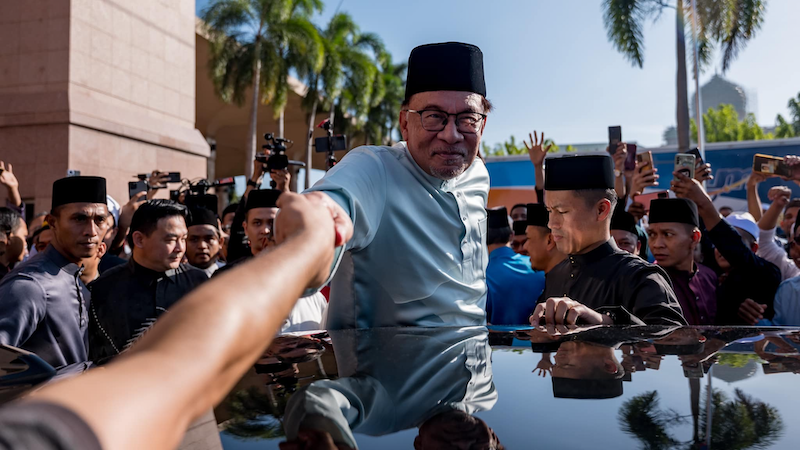
Malaysia's Prime Minister Anwar Ibrahim. Photo Credit: Malaysia PM Office

When former finance minister Daim Zainuddin failed to explain the sources of his wealth, the Malaysian Anti-Corruption Commission (MACC) seized control of the iconic Ilham Tower in Kuala Lumpur, owned by the Daim family. With new names being leaked out as people of interest to the MACC, many senior political and business people shuddered with fear, they might be next.

The seizure of Ilham Tower originated from the investigation of transactions dating back to 1997, based upon the ‘Pandora Papers’ that show RM 2.3 billion trail of concealed financial transactions through a web of offshore accounts. This action was taken under the MACC Act 2009, which brings into question the legality of the seizure, as the transactions were retrospective to the piece of legislation being used. 

Tun Daim has claimed the actions taken against him is just plain political persecution, bringing much conjecture around KL, as to whether the Ilham Tower seizure is genuinely part of Anwar’s anti-corruption crusade, part of a pre-emptive move to shore up his government, or motivated by revenge and retribution. This move could easily backfire, further isolating him even further in the ‘Malay electorate’ he desperately wants to win over.

This all comes at the back of the charges against former prime minister Muhyiddin Yassin, where the High Court found four abuse of power charges defective, and dismissed. In addition, the pursuit of Tun Daim contrasts with the dismissal not amounting to an acquittal (DNAA) of 47 breath of trust and money laundering charges against UMNO president and deputy prime minister Ahmad Zahid Hamidi last year. This supports the allegations of selective prosecution made by the opposition.

Part of a coordinated defence of the Madani government

There appears to be a coordinated attack upon the opposition. Anwar’s strategists maybe believe that attack on the opposition is the best defence of the government. The defection of 5 MPs who pledged support for Anwar, while remaining members of Bersatu, not only shores up Anwar’s parliamentary numbers, but makes Muhyiddin look like his leadership is crumbling, where Bersatu’s representation in parliament has been whittled down from 31 to 26 seats.

Actions always lead to reactions

The happenings of the last week led to the possibility that pursuing those who are still powerful with lawfare on decades old issues, will lead to these powerful people plotting their own attacks upon the Anwar government to bring back a period of political instability.

This is where the alleged meetings among a number of politicians across various parties, including PBB, GPS and UMNO MPs on the government side in Dubai last week has led to speculation of some sort of attempt to bring down the Anwar government, in favour of a new government comprising of PAS, Bersatu, UMNO, with the support of the East Malaysian parties. The presence of the YDPA in Dubai at the same time on official duties, helped to create an even more sinister appearance, even though it was unknown whether the parties even met the YDPA.

Just rumours alone are enough to create political instability.

The reaction from the Community Communications Department (J-Kom) deputy director-general Ismail Yusop played up the issue.  Ismail said such discussions were acts of betrayal, a malicious political conspiracy, and an act of treason, where Anwar should act decisively, was enough to create more damage. Ismail Made the government look hypocritical. 

Ismail’s comments implied that such a move is backed by powerful political figures who are providing the financial support to induce MPs to switch their allegiances, in what has been dubbed the ‘Dubai move’.

What could happen next?

However, this time round, any ‘Dubai move’ cannot resemble the ‘Sheraton move’ that dislodged Pakatan Harapan from office in February 2020. Carrying a batch of Statutory Declaration (SDs) to the Istana just wont work this time around. There is no Covid-19 pandemic, no emergency, so the YDPA would with little doubt allow the parliament to deal with the issue, particularly with less than one month of his tenure left as king.

Based upon past moves to oust previous administrations, any move to bring down a government on the floor of the Dewan Rakyat will require politicians to come out of the dark, directly into the light and proactively advocate a no confidence motion. Most individual MPs will shy away from this, as they will feel very uncomfortable playing direct and public roles. It’s much easier for MPs to sign an SD and let others deal with the matter. 

Calling for a motion of no confidence in the prime minister directly would be risky. That’s why there has never been one before. Most moves against a prime minister have always used the YDPA’s office, using SDs as proof of a majority. 

If there was any call for a motion of no confidence against the prime minister, be rest assured the government will play every parliamentary trick they know to avoid one. 

This indicates the Dubai move will be difficult to implement, as it would most probably cause ripples within UMNO, and PBB would have to play a very pro-active role in the toppling of Anwar, that it would not be prepared to do. 

If the objective of the so called ‘Dubai move’ was to give the appearance of political instability, it achieved that goal. If the ‘Dubai move’ is intended to be the start of the downfall of Anwar, it better have a very good strategy in place.

However, if there was a vote of no confidence, and Anwar lost the vote. He would either have to resign as prime minister, and/or advise the YDPA to call a general election. If no other MP could show he or she could command the confidence of at least 112 MPs in the Dewan Rakyat, there would be little choice but to have a general election. 

Goad for an early election?

The only way Anwar can be deposed is most probably through an early general election. With the unpopularity of the Anwar government, this is something the Pakatan Harapan components of the coalition would fear most. In addition, UMNO would most likely be desecrated, so will resist any calls for a general election. 

The likely outcome if any general election was called, would be a reply of the 2022 election, only UMNO and PH would have much fewer seats. This would place the East Malaysian parties in the king maker role. 

Any general election will most probably lead to a Malay-centric coalition, with Sabah and Sarawakian support. Sarawak would head towards a ‘defacto-independence’ or autonomy by taking control of more infrastructural assets and power, at a state level. The Federation of Malaysia will look more like a marriage of convenience, than a united nation.

The solution to potential political instability might not rest with party politics, the parliament, and the people. Anwar’s anti-corruption crusade may have to make compromises for the sake of stable government. Otherwise, we could see the fall of the Anwar government. 


Categories
South Caucasus News

Behind The Freedom: Slavery Of The 21st Century – Analysis


Behind The Freedom: Slavery Of The 21st Century – Analysis

slavery human rights human trafficking

In the 21st century, where human rights are seemingly at a high level, paradoxically, modern slavery is still present all over the planet, hidden in the shadow of the great achievements of humanity.

Although traditional slavery was formally banned in most of the world back in the 19th century, various forms of forced labor, merciless exploitation of workers, sexual slavery and human trafficking survive and, moreover, experience an increase, thus posing a serious challenge to the international community. Modern slavery appears in almost every country and it crosses ethnic, cultural and religious barriers without much question.

50 million slaves in 2023

In May of last year, the international human rights group that fights for the abolition of modern slavery, “Walk Free”, published the Global Slavery Index, which provides frightening data. Since its last report in 2018, the 2023 report estimates that an additional 10 million people have fallen victim to modern slavery, bringing the total number of people living in slavery to 50 million.

Of those 50 million people who are deprived of their freedom, 28 million of them are subjected to forced labor while 22 million live in forced marriages. Every fourth enslaved person is a child, while women and girls make up 54% of the enslaved. Experts from the “Walk Free” organization claim that there was an increase in numbers due to the coronavirus pandemic, the worsening of climate change, the growth of conflicts and the increase in consumerism in the world. At the same time, they point out that the growth of slavery is the result of the failure of national governments and the leaders of large multinational companies because both groups did not recognize the problem and act.

Definition of modern slavery

This organization describes modern slavery as: “a set of specific legal terms including forced labour, debt slavery, forced marriage and practices similar to slavery, and human trafficking. Although modern slavery is not defined by law, it is used as an umbrella term that draws attention to the similarities in these legal concepts.

Modern slavery is a hidden crime that affects all countries of the world. We find it in many industries, including clothing, mining and agriculture, and in many contexts, from private homes to settlements for internally displaced people and refugees. Modern slavery affects all of us, from the food we consume to the goods we buy.”

Worrying situation and dangerous trends

Unsurprisingly, countries with poor human rights records lead the ranks of modern slavery. From the first to the tenth place, the countries with the highest level of slavery per capita are: North Korea, Eritrea, Mauritania, Saudi Arabia, Turkey, Tajikistan, UAE, Russia, Afghanistan and Kuwait. However, when countries are judged by numbers alone, the world’s largest democracy, India, has the most people trapped in modern slavery, followed by China, North Korea, Pakistan, Russia, Indonesia, Nigeria, Turkey, Bangladesh and the US.

The authors of the report point out that six of those ten countries are members of the elite club of the 20 most developed countries in the world, the G20. It is estimated that these countries (India, China, Russia, Indonesia, Turkey, USA) together annually export goods worth 468 billion dollars that are potentially produced by forced labor. These goods include electronics, machinery, clothing, palm oil and solar panels. The figure is $100 million higher than the last report in 2018. “From the cotton on the shirt on your back, to the phone in your hand, to the solar panels we all want to put on our roofs, there is a trace of extreme exploitation of modern slavery in our world of tens of millions of people” , said Grace Forrest, founder of Walk Free.

In the past five years, four more countries (Australia, France, Germany and Norway) have introduced modern slavery laws that force major companies to examine their supply chains and eliminate slavery when found. An additional 15 countries have criminalized human trafficking, bringing the total to 137, and nearly 150 countries now have modern action plans against slavery, the report said. Although there has been some progress, global crises have forced millions more into slave labor. For example, the spike in demand for medical products during the pandemic, combined with the shutdown of many businesses and sudden job losses, created an environment conducive to worker exploitation.

The difficult economic situation has forced some families to send their children to work or sell their daughters into child marriages, in order to earn money and have one less mouth to feed. War conflicts forced many people to leave their homes and seek their fortune as refugees in new countries where they became victims of human traffickers.

Types of slavery

The most important types of modern slavery are: forced labor, human trafficking, sexual abuse, child enslavement, forced marriage, hereditary slavery, unbearable work in global supply chains, work in quarries and mines, and digital slavery. People are often forced to work under threats, exposed to mental and physical violence, or are restricted or deprived of their freedom.

This form of slavery often involves working in harsh conditions with little or no compensation. Workers do not have the freedom to leave their jobs because they will not receive a salary that, although miserable, is the property of the employer until the end of the agreed period, or they have to repay their debt to the employer through hard work, or they are migrant workers whose documents are with the employer. Most often, it happens in agriculture,construction and the textile industry. 86% of cases of forced labor occur in private companies.

Migrants are particularly vulnerable to forced labor and human trafficking, whether due to irregular or poorly managed migration or unfair and unethical employment practices. According to the International Labor Organization (ILO), migrant workers are more than three times more likely to be in forced labor than other non-migrant workers. It is striking that more than half (52%) of all forced labor takes place in upper-middle or high-income countries.

Exploitation of women and children

Human traffickers falsely recruit workers by offering them tempting and interesting jobs, while in reality they want to deprive them of their freedom to do hard manual work. Sexual abuse involves forcing individuals to participate in sexual activities without their consent, such as forced prostitution, sex slave trade, or forced marriage. 4 out of 5 sexually exploited persons are women.

Children are a particularly vulnerable group, exposed to forced labor or sexual exploitation. Children often work in clothing and shoe factories, in the fields, but they are also sometimes involved in wars and armed conflicts as cannon fodder. Every eighth person who is forced to work is also a child under 18 years of age. Many of the children who work in Turkish textile factories are immigrants who fled Syria with their families. They usually work 8 to 12 hour shifts, 6 or 7 days a week for only $15 a day.

Forced marriage refers to a situation where people are forced into marriage without their consent, often as a result of family pressure or economic dependence. Forced marriages often involve children who cannot give their consent but are forced into marriage by their parents or a third party. The vast majority of forced marriages, more than 85%, are prompted by family pressure.

Although about two-thirds (65%) of forced marriages occur in Asia and the Oceania region, when the population sizes of the regions are taken into account, the rate of forced marriages is highest in the Arab states where 4.8 people out of every 1,000 in the region are in a forced marriage. A quarter of all forced marriages take place in upper-middle or high-income countries. Hereditary slavery occurs in some societies, especially in certain parts of Africa, where it can be passed down from generation to generation.

People who come from slave families inherit the status of slaves, even though such practices violate international human rights laws. It is often about the fact that the father, the head of the family, had to borrow some money, which he has to repay through forced labor. Such debt repayment is usually lifelong and passed down from generation to generation.

Slavery in the name of profit

Slavery can exist within global supply chains of certain goods, where workers, often in developing countries, can be exposed to poor working conditions and low wages without being able to leave their jobs. Large multinational corporations are moving their factories to countries such as China, India, Vietnam, Bangladesh due to cheap labor. The cheapness of labor often means that workers do not have the right to dignity – to take a break and eat hot meal, no unpaid overtime.

At the same time, workers cannot give up their jobs because of the living costs of supporting their families. When working in mines and quarries, workers are very often exposed to difficult working conditions for low wages and may suffer punishments from employers if there is a lack of productivity or rebellion. Digital slavery is manifested in ICT technologies where workers have to work long hours, have low wages and are not allowed to quit. Some of the big world companies that, according to sources, use slave labor are Coca-Cola, Nestle, Apple, Microsoft, Samsung, Zara, H&M, Adidas, Puma, Nike, Nissan, Toyota and others.

North Korea

With 2.6 million people in forced labor (every 10th person), North Korea is the world’s leading country in modern slavery. It the only country in the world that has not explicitly criminalized any form of modern slavery. The state is the main initiator of slavery, unlike most states where the slavery is initiated by private companies. Human exploitation takes many different forms in the DPRK, such as compulsory participation in grueling labor campaigns called “battles” that can last up to a hundred days. Children are also forced to work in agriculture. Refusal to participate in such work can result in punishments. Unemployment is also punishable by imprisonment in a labor camp for three months or up to three years.

In numerous cases, workers had to pay to be hired just to avoid prison, while turning to black market trade to survive. The conditions in the North Korean prison system correspond to those of slaves. North Korean women face the risk of being trafficked and sold as brides to China. Government officials force women into sexual slavery. On many occasions, North Korean migrants in China and elsewhere have had to send most of their earnings back home to help sustain the Kim regime. United Nations reports have listed slavery among the crimes against humanity occurring in the “hermit kingdom”. Revenue from North Korean slave labor is diverted to finance and develop North Korea’s nuclear and ballistic programs.

Eritrea

In Eritrea, 90 people per 1000 are subjected to slavery. The Eritrean Research Institute for Policy and Strategy (ERIPS) notes that, historically, “the Eritrean government has made minimal efforts to prevent human trafficking and has continued to subject its citizens to forced labor by forcing them under penalty of indefinite or otherwise compulsory military service and citizen militia.”

To be born in Eritrea under the rule of totalitarian President Isaias Afwerki is to risk a life of slavery. Afwerki’s regime even tried to profit from the sale of children in the past. The situation has worsened in recent years as Afwerki sent not only Eritrean men and children to Ethiopia’s conflict-ridden Tigray province, but also forced several thousand Somali men to fight in Tigray as part of a deal between him and Somali President Mohamed Farmaaj.

Mauritania

In Mauritania, 32 people per 1000 live as slaves. It is precisely the country that was among the last to abolish slavery. Mauritania serves as the border between the Arab and Arab-Berber peoples of North and West Africa. Unfortunately, although Mauritania abolished slavery in 1981 and criminalized it twice in 2007 and 2015, modern slavery still exists. Penalties for slavery range from 10 to 20 years, but few are convicted.

Since the criminalization of slave ownership, only a few slave owners have been sentenced to long prison terms. In Mauritania, slavery has the so-called movable form, in which people are considered legal property and can be owned, bought and sold. Enslaved people are retained on a hereditary basis, with their children also considered the property of the enslaver. As a result, the enslavers, who are predominantly Arab-Berbers or Arabs, usually force the enslaved people to do housework, keep livestock and work the land. Unfortunately, enslaved people in Mauritania are also often subjected to sexual and physical abuse by their masters and sometimes with children born (the father is a slave owner) remain in slavery for life.

Saudi Arabia

In Saudi Arabia, there are 21 enslaved people per 1000 inhabitants. The Saudi monarchy is known to be one of the biggest violators of human rights, which is not surprising since it follows the Wahhabi legal school of Islam, which is very rigorous. In Saudi Arabia and other Gulf states, a legal framework known as the kafala system defines the relationship between immigrant workers and their employers. In the kafala system, the government grants individuals or companies sponsorship licenses that they use to hire foreign labor. These permits give employers control over the legal status of their employees. Economic growth in the Arab Gulf countries has spurred the implementation of this system, and many argue that it benefits local businesses and spurs development.

Unfortunately, the kafala system is notorious for encouraging abuse of workers due to the unlimited power of state-empowered sponsors. Workers must obtain the sponsor’s permission to change workplaces or work locations, terminate employment, enter and exit the country, and are often subject to harsh daily rules set by sponsors. For example if the worker leaves the place of employment without permission, his sponsor has the legal right to terminate his legal status, which can result in imprisonment or deportation. Abuses include living in unsanitary conditions, starvation, overwork and imprisonment.

Precisely because of its characteristics, many analysts call the kafala system another name for modern slavery. In similar conditions, 6,500 foreign workers from India, Bangladesh, Pakistan, Nepal and Sri Lanka who were building stadiums for the 2022 World Cup lost their lives in Qatar.

Conclusion

The fight against modern slavery requires cooperation at the global level. The key is to enforce stricter laws and apply them consistently in order to punish offenders and discourage them from committing crimes again. However, this is not enough. Education is essential to raise awareness of this problem, both among potential victims and among consumers who often unwittingly support a supply chain that includes forced labor by purchasing products from reputable brands.

Civil society organizations play a key role in providing support to victims, but also in calling on authorities and corporations to take responsibility. It is important to work on improving working conditions, promoting fair wages, strengthening workers’ rights, and encouraging sustainable but above all humane, morally and ethically acceptable practices in business. Ultimately, solving the problem of modern slavery requires a comprehensive approach that includes legislative measures, education, support for victims and changes in the political and economic structures of states and international organizations. Only through joint efforts can we build a world in which all workers have the right to freedom, dignity and well-paid work regardless of their origin and the type of work they do.

Categories
South Caucasus News

Gaza: What Went Wrong And How To Fix It – OpEd


Gaza: What Went Wrong And How To Fix It – OpEd

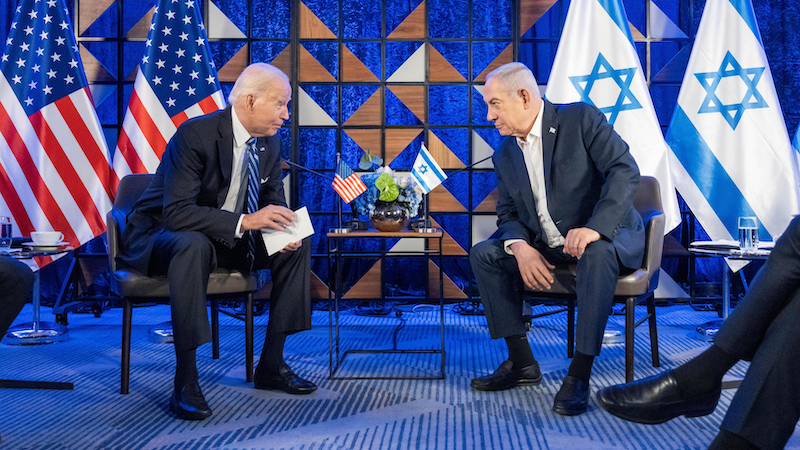
US President Joe Biden with Israel's Prime Minister Benjamin Netanyahu. Photo Credit: The White House, X

By Faisal J. Abbas

As we reflect on some of the tragic events of 2023 and how they could have been averted, one cannot help but remember a quote by the late British Prime Minister Winston Churchill. This is because he was spot on when he said: “You can always count on Americans to do the right thing — after they have tried everything else.”

The ongoing catastrophe in Gaza is a case in point. Rather than listening to the advice of its long-standing friends and partners in the region, the US administration opted to go with biased, bottomless support for Israel, which many politicians and observers are accusing of committing genocide. The conflict has now been raging for almost three months and more than 21,000 Palestinians have been killed, mostly civilians and particularly women and children. Meanwhile, the majority of Israeli hostages are unreleased and the Hamas leadership remains at large.

Needless to say, this whole conflict could have been avoided if Washington had just listened to the repeated Saudi advice. This was highlighted in the first Ministry of Foreign Affairs communique following Oct. 7. It stated that this explosion of violence was precisely what Riyadh predicted would happen as a result of the continued illegal occupation of Palestinian land and intimidation of the Palestinian people, especially by the current far-right Israeli government.

Also, had a two-state solution — an initiative led by the Kingdom since the Madrid Peace Conference of 1991 — been reached, then we might have averted the current crisis. Critics will say “but if anyone is to be blamed, it is the Palestinians,” adding the cliched — although somewhat true — statements of “they (Palestinians) never miss an opportunity to miss an opportunity,” and “how can Israel negotiate with them if the Palestinians themselves are divided?”

Fair enough, but the Israelis are not innocent either. The constant building of illegal settlements and violations of international law every time negotiations were ongoing did not help. Not to mention the now open secret of Prime Minister Benjamin Netanyahu’s survival policy of torpedoing any attempt to negotiate a Palestinian state by constantly undermining the legitimate Palestinian Authority in the West Bank and empowering Hamas, an entity it declares a terror group, in Gaza to further the internal Palestinian rifts and support the tainting of the just Palestinian cause with an extremist ideology.

So, where did the Americans go wrong? It started with the abominable early declaration that there were no red lines for Israel and the vetoing of a UN Security Council ceasefire resolution. Putting aside the horrific civilian death toll in Gaza, the massive humanitarian crisis and the severe devastation these positions have caused, the US administration has now contributed, if not absolutely guaranteed, that extremism and hatred will breed for generations to come. Not just in Gaza, but around the world.

After all, how do you expect a child who lost a parent, or both, a limb or his/her family to feel when they grow up? For all they know, they were out playing when the house they lived in was bombed indiscriminately.

Should Hamas not bear the responsibility for that, critics will ask, while adding that, if they (Hamas) did not do what they did on Oct. 7, this war might have not erupted. That could be an argument, but that child will certainly not engage in it. After all, the child did not see Hamas killing his or her parents. The child saw an Israeli plane dropping a bomb on his/her home, on a hospital and the local school. And then he/she would be told that, had Israel not been occupying Palestinian lands, Hamas would not have existed.

Then you have what my colleague Mina Al-Oraibi recently described, in an Arabic Asharq Al-Awsat column, as “the freefall of Western ideals.” This could not be any more obvious than when US Secretary of State Antony Blinken criticized Israel for not doing more to avoid targeting civilians, while in the month that followed the State Department itself bypassed Congress twice to ensure more weapons sales to Israel.

Then, when the Houthis (whose slogan has always been “Death to America … curse the Jews”) started attacking ships in the Red Sea as retaliation for what is going in Gaza, all of a sudden the US woke up to that threat. Even though the Saudi-led coalition in Yemen had been warning of it for eight years. Most recently, Yemeni Foreign Minister Ahmad Awad bin Mubarak told Asharq Al-Awsat’s Badr Al-Qahtani that “we have repeatedly warned of the danger of allowing an armed ideological group to undermine security and stability and threaten international navigation.”

It is ironic that the same legislators who removed the Houthis from terror lists and banned the sale of weapons to Saudi Arabia and criticized it for a war waged at the request of the legitimate, UN-backed government of Yemen are now wanting the Kingdom to join its Red Sea coalition. Alas, that ship has sailed. The hopes in the Kingdom are now focused on the ongoing truce in Yemen and the hope that it might turn into a permanent peace deal in the near future.

So, what next? Obviously, one wishes the advice was taken seriously at an earlier stage. Particularly because, as early as last September, there were serious talks of a Saudi-Israeli normalization deal that would have guaranteed the rights of Palestinians to their state. The longer the war continues and the higher the death count rises, the harder it becomes to achieve regional peace (let us not forget that Saudi Arabia also brings its Muslim and Arab League clout). This is because, naturally, the Palestinian demands will change and the cost to Israel is going to increase.

The immediate advice is for the Biden administration to listen to Thomas Friedman, who says America should give Israel some tough love. The White House should realize that the only person benefiting from the prolonging of the war is Netanyahu. This is a politician who I believe belongs behind bars, whether he is found guilty of corruption or held accountable for the undisputed crimes against humanity committed in Gaza.

A ceasefire must be agreed, hostages must be freed and an international aid effort to rebuild and treat the wounded in Gaza must be mobilized immediately. After that, there might still be hope for talks to continue. The Palestinians must also play ball and form a unified government under the legitimate authority in the West Bank.

Let us be hopeful that 2024 can see the end of hostilities and the birth — or at least the embryonic stages — of a Palestinian state.

  • Faisal J. Abbas is the editor-in-chief of Arab News. X: @FaisalJAbbas

Categories
South Caucasus News

Can We Reduce Health Care Costs With Better Primary Care? – OpEd


Can We Reduce Health Care Costs With Better Primary Care? – OpEd

medicine doctor nurse insurance

Primary care is the only health care component where an increased supply is associated with better population health and more equitable outcomes.

That’s the conclusion of a report by the National Academies of Sciences, Engineering, and Medicine. The report went on to say we need better primary care—where doctors with different skills share information and work in teams.

Here is what the report didn’t say: The reforms it called for happen naturally when markets are free to meet consumer needs.

Consider a Restaurant Analogy

Every restaurant engages in bundled pricing. Descriptions of food items appear on a menu with prices next to them. The food bundles change over time, depending on consumer preferences and competition from rivals. Every restaurant also makes some items available for free—such as salt and pepper, bread and butter, cloth napkins, a slice of lemon and sugar for your iced tea, sugar and cream for your coffee, etc.

Now suppose the government imposes emergency price controls on restaurants. An edict says the restaurant cannot charge customers for anything that isn’t already priced on the menu and it can’t raise those prices even though inflation is pushing up the cost of everything the restaurant offers.

What would the restaurant owners do?

To have any hope of staying in business, the first step would be to get rid of all the freebies. So, if you want salt and pepper with your entrée, or lemon and sugar for tea, you would have to bring all those items with you.

Then, the restaurant would try to reduce food costs—say, by serving smaller portions or providing lower quality fare. Then, it would try to cut staff. That might mean longer waits for your food and maybe a glass of wine that arrives when you are halfway through your meal.

Absent price controls, upscale restaurants offer coordinated service. Order a drink at the bar and the item will automatically appear on the check the waitress brings to your table at the end of your meal. Flag down any of the support staff and whatever you request will also appear on your bill, delivered by someone else. Coordinated service means that whatever you communicate to one server is automatically shared with all the other servers.

With price controls, however, coordinated service involves a cost without any corresponding revenue. Coordination tends to get dropped when the restaurant is forced to minimize the cost of service.

All this means that restaurant visits under price controls would become a very different dining experience for customers. In fact, it wouldn’t be all that different from a trip to a doctor’s office.

Consider the Doctor’s Office

The other day I was at the Subaru dealership in Dallas, having my car repaired. I was struck by how spacious and comfortable the waiting area was. In addition to simple creature comforts, the facility offered free coffee, free soft drinks and free snack items including peanuts, candy, cookies and nutrient bars.

By contrast, a typical doctor’s office is quite spartan. The seating is usually austere, the flooring is low-budget (if there is carpeting, it is probably worn), and there are no free drinks or free food. If there is a restroom, it is probably located somewhere else in the building.

Like the price-controlled restaurant, doctors cannot afford to offer uncompensated services. Nor can they raise their fees. The only way they can pay the rent and other costs is by seeing more patients and spending less time with each of them.

Doctor fees are essentially set by Medicare and by insurance company bureaucracies that tend to pay the same way, usually at some multiple of what Medicare pays. All told, Medicare has 10,000 specific tasks it pays doctors to do. If doctors do something that is not on Medicare’s list, they receive nothing—regardless of how beneficial the task is for patients.

While the list of tasks seems voluminous, there are many important services that aren’t on it. For example, until the Covid pandemic forced a change, doctors didn’t get paid for consulting with their patients by phone, email or Zoom. Even today, they don’t get paid for helping patients find a low-cost outlet to buy drugs or obtain an MRI scan.

The bundles of services offered at the doctor’s office are determined by government edict, not by supply and demand.

If a patient has five chronic conditions, the doctor isn’t paid full price unless she schedules five separate visits. And the doctor gets nothing for consulting with other doctors who are specialists in their patients’ medical conditions. There is no financial reward for coordinated care.

Unlike a free-market restaurant, doctors are not free to reprice and rebundle what they offer—when technology changes or medical science progresses. That basically means doctors are not free to serve their patients the way lawyers, accountants, investment advisors and other professionals serve their clients.

Put differently, they are not free to practice medicine the way they would like to and the way they were trained to when they were in medical school.

Direct Primary Care Is Different

Virtually every patient-pleasing deviation from what I just described has emerged outside the third-party payer system, with its Medicare-imposed pricing. What we used to call “concierge” medicine is now called direct primary care (DPC), and the price has come way down. Instead of fee-for-service payment, patients pay a monthly fee (say, $50 a month for a mother and $10 for her child) for all primary care. Patients are usually able to reach their doctor by phone at nights and on weekends as an alternative to visiting the emergency room.

The DPC market is booming, and employers are enrolling their employees. The whole process would be easier if the employer could put funds in a Health Savings Account and let the employee pay the monthly fee to the DPC of his or her choice. This is one of several public policy changes I recommend to help the market work better.

Medici Is Also Different

Medici is an Austin-based company that operates on the premise that employers can lower their health care costs with high-quality primary care. Among their offerings:

  • More time with the patient: whereas a typical primary care practitioner sees from 3 to 5 patients an hour, Medici says its doctors see 1 to 2.
  • Easier access to care: Medici encourages patients to see their doctors virtually from the comfort of their home or place of work.
  • Faster access to care: Whereas it normally takes patients 3 weeks or more to see a doctor, Medici boasts that its patients can access their “concierge portal” in less than 2 minutes, receive an urgent care consultation in 10 minutes, and receive a PCP or specialist consultation the same or next day.
  • Coordinated care: A woman with poorly controlled type 2 diabetes, obesity and moderate hypertension could be supported by a collaborative team that includes a primary care provider, a lifestyle medicine physician, a diabetic educator/health coach, an endocrinologist and a cardiologist.

Interestingly, Medici only employs doctors it judges to be empathetic. It cites the book Compassionomics for the claim that there is a 51% decrease in specialist referrals and a 41% decrease in diagnostic referrals (labs, imaging, etc.) when patients feel they are receiving compassion from their doctors.

Lessons

We need more Medicis. We need more direct primary care. And we need more experimentation with ways to produce low-cost, high-quality primary care by operating outside the traditional third-party-payer system.

This article was also published in Forbes


Categories
South Caucasus News

How Is Central Asia Responding To The Israel-Hamas War? – Analysis


How Is Central Asia Responding To The Israel-Hamas War? – Analysis

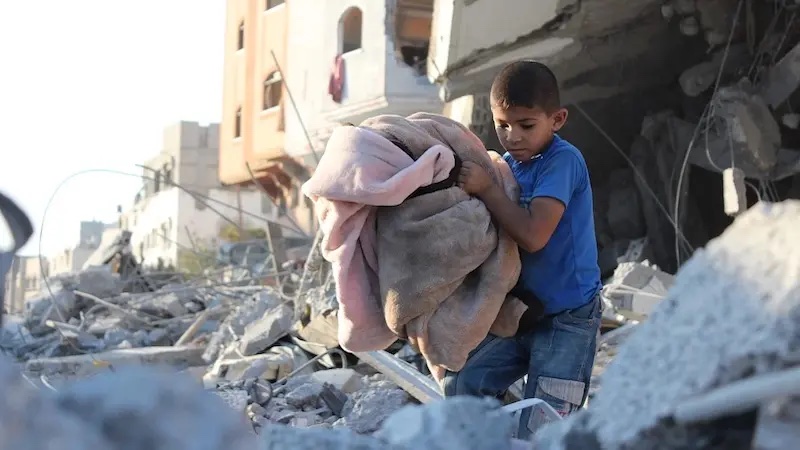
Gaza child boy Palestine

Israel’s counterattack on the Gaza Strip, in retaliation for the Oct. 7 attack by the Islamic Resistance Movement (“Hamas”), has caused allegedly 20,000 deaths among Palestinian civilians. Every country in the Muslim world has seen popular rejection of Israel’s assault, and the Central Asian republics are no exception. 

The Central Asian people identify with their Muslim co-religionists and may also be upset to see Palestinians living under a security regime that reminds them of their experience under the Russian and Soviet empires. 

Protests in support of Palestinians were organized in Kyrgyzstan, Kazakhstan and Uzbekistan, but they were peaceful and not well attended — and the authorities want to keep it that way. Also in Uzbekistan, RFE/RL’s Uzbek Service found the Telegram and Instagram apps were used to provide information on boycotting Israeli products, though the effort misfired when it claimed the soap powder “Ariel” was named after former Israeli prime minister Ariel Sharon.  

Central Asian governments are right to be alert to public disorder in the wake of the Hamas attack on Israel. In Russia’s Dagestan, police had to respond when a crowd stormed an airport looking for passengers from Israel on an arriving flight. The region’s governments are speaking out in defense of the Palestinians caught between the Hamas and Israeli forces, providing financial aid and, at the United Nations (U.N.), voting in favor of support for the Palestinian people.   

The governments’ concerns are as follows: 

Public order. The administrations want to ensure citizens’ passions aren’t vented on the streets, and avoid outbreaks like the unrest in Kazakhstan in February 2022 following the de-control of prices for vehicle fuel. The violence was quelled by local police and military and Russian troops.  

Other outbreaks of violence happened in the Republic of Karakalpakstan in July 2022 in response to proposed changes to Uzbekistan’s constitution that would eliminate the republic’s secession rights; and in the Kyrgyz Republic,which experienced outbreaks of political violence in 2005, 2010 and 2020.  

Fundraising to benefit Palestinians. The governments will likely encourage monetary donations to legitimate charities that will aid Palestinians displaced by Israeli attacks. They can do this by insisting funds flow through the mosques, all government controlled, to ensure the funds are delivered to the deserving, and that the donors or intermediaries aren’t targeted by the United States or the European Union (EU) for money laundering or support to terrorism.

Foreign fighters. Central Asian governments are sensitive to signs of radicalization because their citizens were among the foreign fighters in the Syrian Civil War and war in Iraq. Ensuring that the boys stay at home is a priority for the republics that are already concerned about identifying returning foreign fighters. Stopping the problem at the source will ensure no hiccups in relations with the U.S. and the EU, and Israel, which has embassies in Uzbekistan, Kazakhstan and Turkmenistan.  

In addition, China would demand that local volunteers are stopped lest any eventually wind up fighting with the separatist East Turkestan Islamic Movement. In May 2023, the leaders of China and the republics met at the inaugural China-Central Asia summit, opening the door to increased Chinese investment in the region and giving the local governments a way to balance against the U.S., EU and Russia. If the republics can’t stop local volunteers to fight in Gaza in support of Hamas, Beijing must reevaluate its partners’ suitability as investment destinations. 

Increased influence of local Islamist groups. Local Islamist groupsassociated with al Qaeda, the Islamic State, and Hayat Tahrir al-Sham took advantage of the Israeli attack on Gaza and took to social media to extol the Hamas fighters, callin for Muslims to engage in missionary activity, donate money to them (cryptocurrency preferred), and participate in jihad. Islamists were active on Telegram channels, which reach are popular in Central Asia, to spread audio and video messages, though at a cost, as local governments can easily monitor them. 

In response to the Islamists, local imams announced their support for the Palestinians but warned citizens about falling prey to propaganda. Abror Mukhtar Aliy, an outspoken member of the Muslim Board of Uzbekistan, encouraged youth not to go to Palestine to fight with Hamas. He declared that Uzbek Muslims should only follow fatwas of the Muslim Board of Uzbekistan, which previously urged Muslims not to get involved in the Russia-Ukraine war, as fighting would be against their Islamic faith as their only obligation was to defend their homeland.  

Visits to Saudi Arabia for Hajj and Umrah by Uzbeks have climbed in recent years. In the Islam Karimov era, only 5,000 Uzbeks made the annual Hajj; now the number is 15,000 to 17,000. Previously, only 2,000 performed Umrah every year; now the number is about 140,000. This trend will probably be replicated in all the republics as the Central Asian people may grow closer to their religion in response to the attack on the Palestinians.  

What is happening in Israel and Gaza is a tragedy, but there is opportunity here for many in Central Asia. 

Concerned Muslims can write, speak and donate funds to support the Palestinians.  

Governments can ensure their citizens’ donations to the Palestinians get in the right hands and that local financial institutions are not sanctioned by the West, continue to vote for Palestine at the U.N., and continue to consider Hamas as the resistance, while quietly hewing to international sanctions on the group. (Only the U.S., EU, Australia, Canada, Japan and the United Kingdom consider Hamas a terrorist organization.)  

The local Islamists will make a few bucks but hopefully will not get much accomplished, as the republics may respond with increased coordination among their security services and with their U.S. and European counterparts. 

Local imams can continue their mutually beneficial relationships with the governments as they try to regain influence lost to Soviet atheism and the hardline polities of former Uzbek president Islam Karimov. Governments will cooperate with the imams, all of whom are state officials, as the capitals are conscious of the region’s Islamic heritage but must also secure the modernizing, secular state structure. 

This article was published at The Hill


Categories
South Caucasus News

Sen. Bob Menendez took luxury watches, gold bars to help pal cut deal with Qatari investors, feds say – Yahoo News Australia


Sen. Bob Menendez took luxury watches, gold bars to help pal cut deal with Qatari investors, feds say  Yahoo News Australia

Categories
South Caucasus News

Bob Menendez accused of aiding Qatar in new allegations – Yahoo News


Bob Menendez accused of aiding Qatar in new allegations  Yahoo News

Categories
South Caucasus News

US Senator Menendez helped businessman with Qatar investment -prosecutors – WHBL


US Senator Menendez helped businessman with Qatar investment -prosecutors  WHBL

Categories
South Caucasus News

Democratic Sen. Robert Menendez now accused of accepting bribes to benefit Qatar – WLOS


Democratic Sen. Robert Menendez now accused of accepting bribes to benefit Qatar  WLOS

Categories
South Caucasus News

Prosecutors say Sen. Menendez cashed in by linking Qatari royal family member with NJ businessman – ABC 6 News KAAL TV


Prosecutors say Sen. Menendez cashed in by linking Qatari royal family member with NJ businessman  ABC 6 News KAAL TV