
Categories
South Caucasus News

Evidence Points To Misfired Rocket Causing Deadly Gaza Hospital Blast, Says HRW


Evidence Points To Misfired Rocket Causing Deadly Gaza Hospital Blast, Says HRW

The explosion that killed and injured many civilians at al-Ahli Arab Hospital in Gaza on October 17, 2023, resulted from an apparent rocket-propelled munition, such as those commonly used by Palestinian armed groups, that hit the hospital grounds, Human Rights Watch said Sunday. While misfires are frequent, further investigation is needed to determine who launched the apparent rocket and whether the laws of war were violated.

At 6:59 p.m. that day, a type of munition that Human Rights Watch has not been able to conclusively identify hit a paved area inside the hospital compound, between a parking lot and a landscaped area where many civilians congregated to seek safety from Israeli strikes. The Ministry of Health in Gaza reported that 471 people were killed and 342 injured. Human Rights Watch was unable to corroborate the count, which is significantly higher than other estimates, displays an unusually high killed-to-injured ratio, and appears out of proportion with the damage visible on site.

“The Human Rights Watch review of videos and photos suggests that on October 17 a rocket struck the al-Ahli hospital grounds,” said Ida Sawyer, crisis and conflict director at Human Rights Watch. “The victims and families of those killed or injured while seeking safety at the hospital deserve a full investigation to determine what happened and who was responsible.”

The Ministry of Health in Gaza said Israel was responsible for the explosion. The Israeli military said the explosion resulted from an Islamic Jihad rocket that misfired. The decades-long failure of both Israeli and Palestinian authorities to credibly and impartially investigate alleged violations of international humanitarian law underscores the need for an independent investigation into the incident, which could be conducted by the United Nations Commission of Inquiry, and for all parties to fully cooperate.

Human Rights Watch investigated the explosion by reviewing publicly available photos and videos, analyzing satellite imagery, interviewing five witnesses to the incident and its aftermath, reviewing analyses published by other organizations, and consulting experts. The remote analysis assessed the explosion and the damage on site, as well as several possible trajectories of the objects visible on videos taken at the time of the attack, which also showed the moments before and after the explosion at the hospital.

“There was nowhere to walk, because there were body parts everywhere and people injured and dying,” a journalist who arrived at the hospital an hour after the blast told Human Rights Watch. “The people at the scene were mainly children, older people, women.”

There are no known images of any munition remnants publicly available, and Human Rights Watch was unable to visit the scene, preventing conclusive identification of the munition.

However, the sound preceding the explosion, the fireball that accompanied it, the size of the resulting crater, the type of splatter adjoining it, and the type and pattern of fragmentation visible around the crater are all consistent with the impact of a rocket.

Evidence available to Human Rights Watch makes the possibility of a large air-dropped bomb, such as those Israel has used extensively in Gaza, highly unlikely. The Israeli military has dropped thousands of such bombs across the Gaza Strip since October 7.

Gaza authorities appear to be in possession of remnants that would help make a conclusive determination of the munition that exploded at al-Ahli hospital. A photo taken the evening of the explosion shows employees of the Explosive Ordnance Department, a specialized Gaza police unit, working on the crater. A witness who was at the hospital on the evening of the explosion told Human Rights Watch that employees of “the Ministry of Interior took all the shrapnel that was on the site.”

A Hamas official said the remnants would “soon be shown to the world.” More than a month after the events, this has not happened. Ghazi Hamad, a senior Hamas leader and deputy minister in the Hamas-led Gaza governing authority, told the media on October 22 that “the missile has dissolved like salt in the water.… It’s vaporized. Nothing is left.” Human Rights Watched noted that substantial portions of munitions typically survive a detonation, even if parts of munitions are designed to break apart and may be made unrecognizable by thermal damage.

On November 25, Bassam Naim, head of the political and foreign relations department of Hamas, responded to several of the questions about the October 17 explosion that Human Rights Watch had sent to the Ministry of Interior in Gaza. He said that the ministry’s investigation of the strike had been slowed by the ongoing hostilities but that “the preliminary information we have definitively points to Israel’s responsibility.” He said that Israeli authorities warned the hospital to evacuate “hours” before the explosion and claimed that “no Palestinian resistance faction – to our knowledge – has among its weapons a projectile or a rocket of the destructive power capable of killing a large number of people as the bomb used in this incident of targeting” the hospital.  

Human Rights Watch found that a rocket such as the larger types fired by Palestinian armed groups could inflict a high number of casualties if it struck with some of its propellent remaining in a courtyard packed with people and flammable materials. All hospitals in northern Gaza, including al-Ahli, had received general orders to evacuate on October 13 and the days that followed.

Naim did not respond to several specific questions, including about the munition remnants and military operations by Palestinian armed groups on the evening of the explosion. However, he said that Hamas, in coordination with the relevant authorities, would provide all evidence “as soon as possible” and that Hamas welcomes independent investigations into the incident.

Gaza authorities and Israel should publicly provide all information that they hold regarding the incident, in particular evidence concerning the munition remnants. Medical records showing the types of injuries sustained by the victims, subject to privacy and confidentiality protections, and other types of evidence such as unpublished videos of the explosion, could also shed light on the cause of the explosion.

Israeli forces have carried out repeated, apparently unlawful attacks on medical facilities, personnel and transport during the current hostilities, which Human Rights Watch has documented. The World Health Organization (WHO), as of November 24, had documented 187 attacks on health care in Gaza since October 7, which damaged 24 hospitals, according to data shared with Human Rights Watch. The WHO has said that, as a result of the hostilities, the majority of hospitals in Gaza were no longer functioning.

Since October 7, Palestinian armed groups have unlawfully launched thousands of rockets at Israeli communities, causing death, injuries, and property damage.

The Independent International Commission of Inquiry on the Occupied Palestinian Territory, including East Jerusalem, and Israel, established by the UN Human Rights Council in 2021, has a mandate to “to investigate, in the Occupied Palestinian Territory, including East Jerusalem, and in Israel, all alleged violations of international humanitarian law and abuses of international human rights law leading up to and since 13 April 2021.” On October 10, the Commission of Inquiry announced that it is “collecting and preserving evidence of war crimescommitted by all sides since 7 October 2023.”

International humanitarian law, or the laws of war, grants special protection to hospitals and other medical facilities, the injured and sick, as well as medical staff and transport: they must be protected and respected in all circumstances.

States should suspend military assistance and arms sales to Palestinian armed groups, including Hamas, so long as they continue to systematically commit attacks amounting to war crimes against Israeli civilians. Governments should suspend military assistance and arms sales to Israel so long as its forces commit widespread, serious abuses amounting to war crimes against Palestinian civilians with impunity.

“The explosion at al-Ahli hospital is one of scores of strikes damaging medical facilities across Gaza that have killed civilians and medical professionals and denied many Palestinians access to desperately needed medical care,” Sawyersaid. “Authorities in Gaza and Israel should release the evidence of munition remnants and other information they have regarding the al-Ahli hospital explosion to allow for a full investigation.”
Categories
South Caucasus News

Peace Unattainable Without Victory In Ukraine – Analysis


Peace Unattainable Without Victory In Ukraine – Analysis

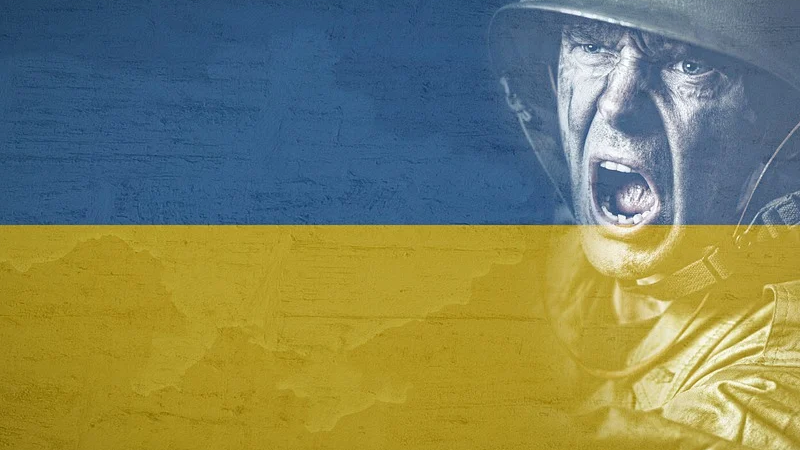
Flag Ukraine War Peace Soldier Country Map

By Vladimir Socor

The West’s inadequate arming of Ukraine predetermined costly failures for Kyiv’s counteroffensive. The effort to dislodge Russian forces from their entrenched positions in southeastern Ukraine has become a difficult endeavor both militarily and politically (Euromaidan Press, November 6). Kyiv felt obligated to meet unrealistic expectations and, in particular, to demonstrate that it deserved continuing Western support amid growing signs of fatigue and distraction. In this sense, Ukraine’s counteroffensive became “not only a military but also a political operation” (Dzerkalo Tyzhnia, November 5).

Rather than turning the war from positional to maneuver warfare as intended, some observers conclude that the Ukrainian counteroffensive seems to have reached a deadlock, thus prolonging the positional war. This is an interim outcome that need not be final. It has become a self-fulfilling prophecy, however, for proponents of a negotiated solution to the war premised on the existing frontlines.

Amid a cacophony of recommendations to “end the war,” three concepts stand out. Each is inspired by past models: informally “freezing” the conflict (post-Soviet model); officially drawing a demarcation line across Ukraine (Korea model); or guaranteeing a rump Ukraine’s security, possibly by the North Atlantic Treaty Organization (NATO), without prejudicing Kyiv’s right to regain its Russian-occupied territories in the future (West Germany model).

These three concepts imply trading Ukrainian land for a Russian hybrid “peace.” They presuppose partitioning Ukraine effectively without a treaty and even continuing to recognize the country’s territorial integrity, however ineffectual (Georgia post-2008 and Ukraine post-2014 model).

Frozen Conflict Model

Ukraine does not have the option to “freeze” the war unilaterally, nor to initiate a bilateral “freeze” with Russia. The Kremlin’s objectives in Ukraine are unlimited, amounting to the destruction of this state. Moscow continually reaffirms these objectives, along with suggestions to negotiate on this basis.

Major Ukrainian battlefield victories could hypothetically make Russia amenable to a temporary or local “freeze,” but any arrangement with Moscow would be hybrid by nature. Even during the lifetime of the Minsk “armistice” (September 2014–February 2022), Russia continuously fueled low-intensity warfare, punctuated by high-intensity phases, to pressure Kyiv and ultimately the West into political concessions. As NATO Secretary-General Jens Stoltenberg has again remarked, Ukraine cannot afford to stop fighting for its existence (Focus, November 17). Following the stalling of Ukraine’s counteroffensive, President Volodymyr Zelenskyy has found it necessary to say “never again” about Minsk-type arrangements (President.gov.ua, November 5, 10).

Korea Model

Analogies between the Korean armistice and any conceivable armistice in Ukraine are untenable (Valdaiclub.com, October 2023). Ukraine is an independent state, its territorial integrity and borders enjoying full international recognition. The West’s declared rationale for supporting Ukraine in this war is the inadmissibility of territorial conquests and border changes through force by Russia. Ceding Ukrainian territories to Russia under the guise of an armistice-in-place would nullify that rationale. The Korean peninsula, however, had been a Japanese possession, was divided into occupation zones at the end of World War II, and practically divided into two states before the outbreak of the Korean War. The 1953 armistice sealed that pre-war situation.

South Korea opposed the partition. US military commanders co-signed it, alongside China and North Korea, ending the hostilities. An armistice in Ukraine, however, would be inconceivable without Kyiv’s free consent. And Washington has no intention to become a party, let alone a guarantor, to an armistice in Ukraine.

North Korea continued to exist as a state, not being annexed by a nearby great power. Ukraine’s relinquished eastern territories, however, would not become a state but merely parts of Russia (see EDM, June 5).

US Admiral (ret.) and former Supreme Allied Commander Europe James Stavridis (among others) considers applying the Korea model in Ukraine. (Stavridis had previously proposed a freedom-of-navigation operation in the Black Sea; see EDM, July 31.) In the Korea model, however, Washington guarantees South Korea’s security by treaty, with powerful forces based in the country and naval forces stationed in that theater. The United States and NATO do not offer anything comparable to Ukraine, whether on land or in the Black Sea, to mitigate the consequences of ceding Ukrainian territories to Russia.

West Germany Model 

Accepting a rump Ukraine into NATO is an idea that surfaces from time to time. Most recently, it came from the alliance’s former Secretary-General Anders Fogh Rasmussen. An aide to the incumbent Stoltenberg had launched such a proposal in August, generating much controversy (Ukrinform, August 14-17). This idea broadly follows the model of West Germany’s accession to NATO in 1955. The allies explicitly excluded the Soviet occupation zone from the purview of NATO guarantees, but they fully recognized Germany’s right to become reunited in the future. A solution of this type would supposedly enable a neo-containment of Russia along the frontlines in Ukraine, akin to the containment along the “central front” in Germany.

This analogy is amiss, however. Germany had been partitioned as a retribution measure, whereas Ukraine is a victim of aggression, necessitating not retribution but a remedial settlement. East Germany was nominally a state in its own right, neither annexed to the Soviet Union nor de-nationalized. Hence, the two German states could ultimately reunify. By contrast, Ukraine’s Russian-occupied territories have been directly annexed to Russia and are being de-Ukrainianized and Russified. Furthermore, the United States and other NATO powers maintained a large military presence in West Germany, whereas NATO and Washington avoid any intentions to put boots on the ground in Ukraine (see EDM, June 5).

Past models of managing conflicts with Russia are not applicable to the ongoing war in Ukraine. Engaging in any negotiations with Moscow so long as Russian forces occupy parts of Ukraine would be a self-defeating proposition. Defeating Russia on the battlefield in Ukraine is the only available means to avoid another protracted conflict with disruptive ripple effects throughout Europe’s security, economic, and political order.

  • About the author: Vladimir Socor is a Senior Fellow of the Washington-based Jamestown Foundation and its flagship publication, Eurasia Daily Monitor (1995 to date), where he writes analytical articles on a daily basis. An internationally recognized expert on the former Soviet-ruled countries in Eastern Europe, the South Caucasus, and Central Asia, he covers Russian and Western policies, focusing on energy, regional security issues, Russian foreign affairs, secessionist conflicts, and NATO policies and programs. Mr. Socor is a frequent speaker at U.S. and European policy conferences and think-tank institutions; as well as a regular guest lecturer at the NATO Defense College and at Harvard University’s National Security Program’s Black Sea Program.
  • Source: This article was published by The Jamestown Foundation’s Eurasia Daily Monitor Volume: 20 Issue: 179

Categories
South Caucasus News

Private Medical Care Still Is A Better Deal Than Government Care – OpEd


Private Medical Care Still Is A Better Deal Than Government Care – OpEd

Most people have a negative view of business monopolies. Whether for allegedly exploiting workers, causing inefficiency, or crowding out potential challengers, most government-granted monopolies undoubtedly hurt entrepreneurs and customers.

This basic distrust of monopolization disappears as soon as one enters the floors of the United States Senate or Congress. Government-forced monopolization arises in virtually every industry, but nowhere is it as costly as in healthcare.

Just like the government gives special privileges to big tech companies and massive pharmaceutical firms, the state also has an affinity for big hospitals over smaller independently run clinics. Consider that one of the largest government-funded medical programs (Medicare) would pay private clinics nearly 80 percent less than if the same services were billed by a hospital outpatient facility.

In 2010, independent doctors provided an average set of Medicare services to their patients valued at $141,000 per year, according to a study published in Health Services Research. However, if a hospital outpatient facility had billed for these same services, the gross revenue would have been $240,000. This gap is only increasing, widening by nearly 20 percent in just six years.

What separates Medicare payouts in small private practices from huge government-favored hospital centers can be generalized in two words: facility fees. Every time you visit one of these large centers to get a procedure done, it is billed as an “HOPD,” or hospital-based outpatient department.

When it comes to HOPDs, Medicare not only pays a fee for what the doctor has done but also gives some cash on top for facility maintenance. Private practices do not receive this extra cash for their facilities.

With these double payments, it’s no wonder why more and more doctors are choosing to forgo private practice in favor of employment by these huge firms. In 2019, a supermajority (76 percent) of physicians were employed by hospitals, many by huge healthcare firms. As a result, hospitals face less competition, and the quality of care decreases as prices increase. Monopolies like these simply aren’t good in medicine.

These extra handouts to large hospitals only contribute to the ever-increasing costs of healthcare in the United States. Nearly every minimally invasive procedure would cost less when performed by a private doctor or ambulatory surgery center (which specializes in providing care for individuals staying in the center for less than twenty-four hours) than a hospital.

Colonoscopies, for instance, are 60 percent more expensive in a hospital when compared to an ambulatory surgery center. Other crucially important procedures, such as mammography and cataract surgery, are 32 percent and 56 percent costlier, respectively.

Government policies have contributed to the trend of hospital and doctor consolidation, furthering this decline in healthcare options and rapid rise in prices. The “minimum loss ratio” embedded within the Affordable Care Act rigs the playing field in favor of large, consolidated firms.

The minimum loss ratio rules make it more likely for insurers to merge to have a better mix of products that meet the minimum loss ratio requirements (like sharing expenses) or just to save money on administration through the principle of economies of scale.

Following government regulation is generally quite expensive up-front. These are costs large firms can immediately take care of, while small firms must struggle initially, thus artificially limiting competition. Certificate of need laws also artificially limit an independent doctor’s ability to compete, thus driving up costs and reducing a patient’s healthcare options.

A mess caused primarily by the government can be cured with less government. Congress can start by eliminating programs that have been ineffective at addressing the nation’s health concerns. These publicly funded programs kill two birds with one stone by demanding payment while crowding out the private market (lowering the quality of care, thus harming patients’ health) and by being coercively funded through massive budgets (thus hurting the nation’s economic health).

Reforms to the current Medicare system may be a short-term solution to this problem, one that both sides of the political aisle could agree on. Such reforms could include site-neutral payments, where the state stops favoring large medical corporations with extra payouts. It could even the playing field between large organizations and smaller practices while reducing the national debt by approximately $279 billion. However, only widespread privatization would truly give the power to physicians.

As long as the medical bureaucracy exists in Washington, truly individualized, free-market healthcare will be opposed by a myriad of special interests. Trade (more so lobbying) groups like the American Hospital Association, the Federation of American Hospitals, and the Association of American Medical Colleges have reacted negatively every time the idea of expanding neutral payments has been brought up in Congress.

Government courts have a history of siding with these trade groups, although a growing number of congressmen and even Supreme Court justices see the advantages the system has for taxpayers, patients, and even doctors. In 2021, the Supreme Court decided to side with independent doctors and taxpayers by rejecting the American Hospital Association’s pleas to subsidize their inflated, out-of-control procedure prices.

While this is a step in the right direction, America is miles away from competitive private healthcare. Certificate of need laws, medical patents, physician licensing requirements, and numerous other regulations make it more challenging for Americans to access high-quality medical care.

When an independent physician or researcher wants to compete with a government-backed colleague, state regulators will ensure they fail. Anesthesiologists from across the country faced this issue when the Federal Trade Commission sued US Anesthesia Partners (as well as their private equity partner, Welsh, Carson, Anderson & Stowe) for alleged “anti-competitive practices.” In reality, the firm expanded anesthesia access to thousands of people across nine states, particularly serving low-income communities.

Even European nations are seeing the benefits of cutting publicly funded healthcare and embracing private enterprise. Private healthcare providers in Norway, such as Aleris, have garnered the support of 643,000 Norwegians, with membership growing daily. Over eight thousand doctors have eagerly flocked to the private group too. Numerous studies have also confirmed that privately owned and financed groups (like Aleris) are more efficient than their public counterparts.

While the increased presence of private equity in healthcare management and the more-competitive policies of site-neutral payments are nice, they should not be the final step to curing America’s healthcare ills. Physicians will never truly be independent or free until the healthcare market is truly privatized. When that day comes, America’s healthcare workers will be unshackled, and our markets will become competitive.

This article was also published at the Mises Institute


Categories
South Caucasus News

Civil War In Myanmar: Internal And External Sources Of Sustenance – Analysis


Civil War In Myanmar: Internal And External Sources Of Sustenance – Analysis

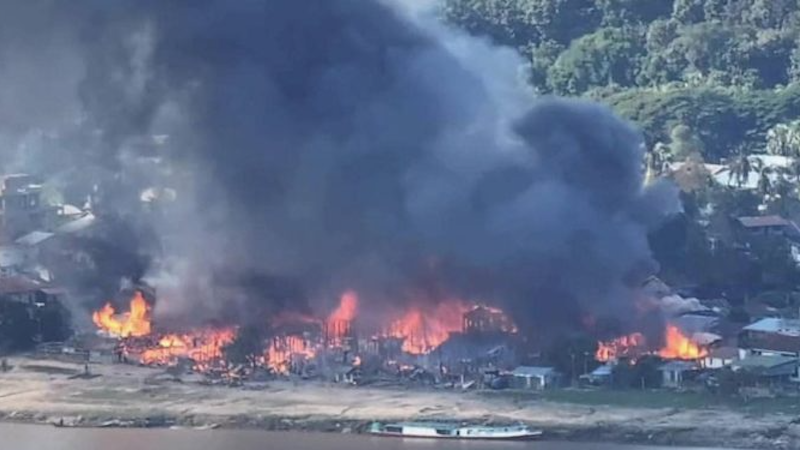
Tigyaing town in Sagaing Region after an attack carried out by the Myanmar military on 12 November 2023. Photo Courtesy: Irrawaddy

Introduction

Myanmar’s military wants to continue with its authoritarian model, whereby they continue to be politically paramount. This effectively translates into dominating and dictating the pace of democracy in the country, controlling while seeming to have withdrawn. This objective led it to declare the parliamentary elections held in 2020 as marred by fraud, thus appearing as the champion of clean and representative governance.

In reality, the opposition’s National Unity Government (NUG) led by the National League of Democracy (NLD), which swept the 2020 parliamentary elections, represents the voice of the people of Myanmar, who want the country to emerge out of the stranglehold of the military. The military’s proposed election is all about installing a facade, that will represent its interests, whereas the NLD-led opposition’s avowed objectives are to guide Myanmar to viable democracy, featuring civilian leadership and a military in its expected place guaranteeing security. Objectives of both parties, hence, are antithetical and irreconcilable.

Intense Violence

Not surprisingly, then, the last 32 months in Myanmar – those since the coup of February 2021 – have been marked by intense violence. Both the opposition and the military seem to have underestimated the strategy and conviction of the other. The initial response of the NLD to the coup was to organize a civil disobedience movement, in which people were encouraged to rally and protest peacefully in support of the opposition. Appealing to the good sense of the military and forcing it to reverse its decision was the intent. A robust military response led to the formation of People’s Defence Force (PDF) groups to fight fire with fire. Simultaneously, the military erred in judging the effectiveness of opposition adaptation to the requirements of an emerging civil war. A key determinant was the success of the NLD-led opposition groups in linking to the longtime, collective armed opposition posed by the battle-hardened ethnic armed organisations (EAOs). This negated any hope the military might have had of quickly stabilising the country.     

The course correction by both parties, following the early misreckoning, forms the basis of the ongoing violence. The military’s no-holds-barred response has been characterized by a lashing out: arrests and detention of opposition leaders and activists, violent raids, and air and artillery strikes over the PDF safe havens and EAO strongholds in a no-barred response. The most recent night-time air strike and artillery firing on 9 October claimed the lives of more than 30 civilians in the Kachin village of Mung Lai Hkyet. Returning the blows, the opposition PDFs and EAOs combined have assassinated officials and government functionaries associated with or sympathetic to the military, have ambushed military convoys, and have targeted police and military posts. Between 15 to 19 October, at least 29 soldiers were killed in separate attacks in the Shan and Mon states and Bago, Mandalay, Magwe, and Sagaing regions. The opposition’s response has been able to limit the military’s territorial control to mostly the urban centres, while allowing the EAOs and PDFs to dominate vast swathes of land in the borderlands. 

The ongoing confrontation has received three types of responses from different sets of regional as well as global actors, which can be described as follows. 

(i) Active Connivance: The military has been the beneficiary of wide-ranging military, logistical, and diplomatic assistance from a group of nations including China, Russia, India, and Thailand. While the opposition has struggled to arrange for finances and logistical supplies to add momentum to its war efforts, the military has continued to receive arms and ammunition supplies from external supporters. It has been shielded from censure in the United Nations by China and Russia. India has trained its officials and has offered it help in holding the elections. Thailand’s posture has been among the most disappointing, given the ideological and practical stakes, but the long history of Thai corrupt involvement in Myanmar is hardly something that will be overcome until the civil war becomes worse.  

(ii) Detached Activism: The U.S. and its allies have continued to impose sanctions on the military’s officials. These have had little practical effect but appear to allow a claim of action. The United Nations has repeatedly mentioned the ‘war crimes’ and ‘crimes against humanity’ by the military but, beyond this, has done little of practical value to assist the Opposition. Pragmatism can be advanced for this posture, a wariness that any military assistance to the opposition could aggravate the violence even as those most affronted by the latest round of military dictatorship in Myanmar find themselves caught in a situation of strategic over-reach. The result is that Western countries have stuck to a largely moralistic position of criticising the military and imposing ineffective sanctions, while doing little else to add to the potency of the Opposition to win the confrontation.     

(iii) Attentive Immobility: The Association of South East Asian Nations (ASEAN), of which Myanmar is a member, could potentially have played a decisive role in the country’s state of affairs. However, contrary to the posture, say, of the African Union, which suspended Niger from the organization following the military coup there in July 2023, the ASEAN members have failed to take a united stand on Myanmar. While the organization remains attentive to happenings in the country, has condemned violence and loss of civilian lives, and tried to lay a roadmap for the restoration of democracy, it has largely failed to play a meaningful role in demanding restoration of democracy. Members have pursued independent politics, thereby posing questions regarding the existence (or the absence) of an organizational stance. This, too, given the state of corrupt, authoritarian politics in some of the members (Cambodia comes readily to mind), is hardly surprising.

Protracted Conflict

The specter of a frozen conflict seems to loom. From a fatalistic perspective, all conflicts go through cycles of origin, escalation, and resolution. However, some conflicts, like the ongoing one in Myanmar, can demonstrate an element of longevity or even perpetuity. The following five contextual reasons could be relevant to understanding the phenomenon in Myanmar and also in theatres such as Ukraine, where one party initiates the conflict with the hope of overwhelming its adversary quickly, but fails to achieve the goal even after a prolonged period. 

(i) Proportional Abilities: Conflicts tend to end quickly when one of the parties has or gains the ability to mount a disproportionate and decisive armed campaign against the adversary. That has not been the case in Myanmar. Despite losses suffered, the opposition PDFs and EAOs have been able to meet the military’s might through adaptation and control over territory. This does not necessarily add to the likelihood of victory but can draw out the conflict.

(ii) A Stalemate of Perception: Conflicts, also fought in the mental arena of opponents, tend to continue as long as parties have conviction in their agenda, and more importantly, faith in their ability to prevail over the other. At the moment, neither the military, due to the significant war-fighting wherewithal at its disposal, nor the Opposition, due to the expansion of territory under its control, assess the tide of the confrontation to be against them.     

(iii) No Meeting Ground: The objectives of the military and the Opposition, as mentioned before, are irreconcilable. There is no middle ground between the discordant demands of the Opposition that the military should go back to the barracks and the military’s objective of perpetuating its occupation of the seat of power. The military is determined to crush the ‘terrorism’ of the opposition, whereas, for the Opposition, any compromise constitutes a rolling back of democracy and acceptance of the military’s illegal supremacy, forever. This effectively shuts down any role of a mediator.  

(iv) Undisrupted Sources of Sustenance: The supply chain of logistics plays a key role in prolonging the duration of conflicts. The military’s war chest has received a constant supply of arms and ammunition. According to the UN, the coup group,  between February 2021 and May 2023, imported arms and raw materials worth $1 billion to manufacture weapons. Russia supplied advanced weapons systems worth $406 million and China another $267 million. On the other hand, the opposition has relied on the traditional supply chains of the EAOs for its weapons. In terms of the availability of manpower and finances, both sides seem to have managed their requirements well. While China and Russia support the military regime diplomatically – and China is deeply involved in the United Wa State Army (UWSA) rump statelet – the Opposition seems to have been able to successfully convert the sympathies of its well-wishers abroad into some level of tacit support. 

(v) The Age of Social Media: Winning an armed conflict kinetically is no longer guaranteed to the stronger party kinetically. Access to the internet, especially social media platforms, can enhance the capacities of the weaker party in asymmetric battle, especially as the ongoing crimes that are the norm for Myanmar’s military are exposed. Further, networks of cooperation, communication, and assistance enable political and logistical assistance, as well as international pressure upon the perpetrator (Arquilla’s netwar in 2023). The Opposition in Myanmar, despite its comparative military weakness, seems to have used this approach to its advantage to not only stay in the game but to position itself in such a manner as to offer hope of advancement. 

A Windshear Alert 

Thus, the trajectory of the civil war, often thought to favour the military if protracted, appears to have shifted somewhat to the Opposition’s favour. Ever since 27 October, when three EAOs—the Myanmar National Democratic Alliance Army (MNDAA), the Ta’ang National Liberation Army (TNLA), and the Arakan Army (AA)—launched Operation 1027, substantial areas in northern Myanmar bordering China have slipped out of military control. As days progress, a growing number of military posts have been overrun by the Three Brotherhood Alliance. Whether the momentum of this newfound operational approach of launching a united onslaught can be maintained remains to be seen. Still, it does highlight the vulnerability of the military when pitted against a more united and hence formidable opposition. It also has lessons for the countries that have built their foreign policy towards Myanmar by placing blind faith in the military’s perpetual dominance.           

References

Assistance Association for Political Prisoners (Burma), https://aappb.org/.  

United Nations Human Rights Special Procedures, “The Billion Dollar Death Trade: The International Arms Networks That Enable Human Rights Violations in Myanmar”, May 2023, https://www.ohchr.org/sites/default/files/documents/countries/myanmar/infographic-sr-myanmar-2023-05-17.pdf

“Operation 1027 in Visualizations”, Irrawaddy, 11 November 2023. 

Khin Nadi, “How ASEAN’s Failed ‘Five-Point Consensus’ Has Let Down the People of Myanmar”, The Wire, 19 May 2022, https://thewire.in/south-asia/how-aseans-failed-five-point-consensus-has-let-down-the-people-of-myanmar

  • About the author: Dr. Bibhu Prasad Routray is the Director of Mantraya.
  • Source: This analysis has been published as part of Mantraya’s ongoing “Fragility, Conflict, and Peace Building” project. All Mantraya publications are peer-reviewed.

Categories
South Caucasus News

India’s BRICS Quandary Deepens – OpEd


India’s BRICS Quandary Deepens – OpEd

The inevitable is finally, inexorably, happening as the government’s 9-year old strategy to isolate, demonise and brand Pakistan as a state sponsoring terrorism collapses in front of the global community. Pakistan just showed the middle finger at New Delhi by formally applying for BRICS membership. 

One would presume that Islamabad’s able diplomats did the necessary legwork and tested the waters before despatching the formal application. This comes in the wake of the initiative by South African President Cyril Ramaphosa to convene a BRICS Extraordinary Joint Meeting on the Middle East Situation in Gaza on 21 November 2023 where External Affairs Minister S. Jaishankar stood in for PM Modi. 

Indeed, Jaishankar’s remarks were notable for their avoidance of any censuring of Israel for its barbaric attack on Gaza as “collective punishment” for the Hamas attack of October 7, which India thoroughly condemned as an abhorrent act of terrorism. Jaishankar instead characterised Israel’s bombing of Gaza as the “ongoing Israel-Hamas conflict in Gaza”! 

He altogether ignored the key issue of an immediate ceasefire. On the whole, Jaishankar’s remarks almost entirely reflected the stance of the Biden Administration. But what took the breath away was the parting kick he gave to the BRICS audience by stating that “The international community is today facing a very complex situation that has many dimensions. We have to address them all; and yet, have to prioritise.” (The BRICS Extraordinary Joint Meeting failed to adopt a joint statement, as originally promised.)  

Quite possibly, Jaishankar’s jab was intended at Russia — he is terrific at shooting arrows from behind the tree — and it was duly noted in Moscow. Everything in diplomacy has a context, right? 

When Pakistan’s caretaker Prime Minister Anwaarul Haq Kakar met with Russian President Vladimir Putin in Beijing on the sidelines of the Third Belt and Road Forum on October 18 to discuss a host of issues, including Middle East, terrorism, and food security, he was the third Pakistani premier to meet with the Russian president over the past year amid growing economic and diplomatic ties between the two countries.

On 16th November, the  Russian Deputy Foreign Minister Mr. Vershinin visited Pakistan to conduct the bilateral counter terrorism cooperation dialogue; the Russian side has invited Muhammad Kamran Akhtar, Director General in the foreign ministry for arms control and disarmament for talks in Moscow on “strategic stability”; besides, the Russian deputy foreign minister has invited the Additional Secretary (Europe) of the Ministry of Foreign Affairs which is equivalent to Deputy Foreign Minister, to visit Russia in the middle of December “to exchange views on diverse relations between Russia and Pakistan.” 

Most certainly, the Pakistan-Russia bilateral consultations have noticeably intensified in the recent weeks. That follows the emergence of a virtual US-Indian quasi-alliance as a veritable geopolitical reality. Russia is moving fast in the direction of “de-hyphenating” its respective relationships with India and Pakistan. 

From the Russian viewpoint, Pakistan ceased to be on its crosshairs a long time ago but out of deference to Indian sensitivity, it kept that relationship on the back burner. But this may no longer be so. From a Russian perspective, Pakistan is a more representative member of the Global South today than India, which has bandwagoned with the US across the board.  And Pakistan’s “authenticity” should be, unsurprisingly, a major consideration for Russia’s current external strategies. 

There is no question that Pakistan is a sincere votary of multipolarity in the international system. Pakistan no longer seeks to build on its credentials as a  “major non-NATO ally” [MNNA] of the United States. Curiously, a Bill was introduced in the US Congress at the beginning of this year by Andy Biggs, a lawmaker who is a member of the Republican Hindu Caucus from Arizona. The Bill says that for Pakistan to keep the MNNA status, the US President must submit a certification to the Congress that Islamabad has met certain conditions. But Islamabad couldn’t care less. 

Russia certainly takes note of Pakistan’s credentials to be an active  member of the BRICS, and in all probability, Islamabad proceeded with a formal application of membership after consultations with Moscow. Pakistan enjoys the backing of China as well as some of the new members who will be inducted in January — Saudi Arabia, Iran and the UAE, in particular. 

India faces a Hobson’s choice. Technically, Delhi has a free choice to reject Pakistan’s application but it is delusional to think that multiple choices exist. Blocking Pakistan’s application on account of alleged support of terrorism will only be seen as an act of petulance in such extraordinary times when India also finds itself on a hot tin roof. 

Close on the heels of Canada’s allegation of Indian involvement in the killing of Khalistani separatist Nijjar comes the reported US demarchewith the Indian government, levelling a similar allegation — as per a disclosure by the FT, which is widely regarded as close to the Biden Administration. 

In an interview with the BBC two days ago, the FT reporter repeated his claim that a team from Washington had visited Delhi to counsel India to refrain from any such criminal act. He said what remains unknown at this point in time is only as to whether the alleged operation was called off at the last minute or whether FBI successfully aborted it. 

Such western media coverage is highly damaging to India’s self-projection as a staunch follower of international law and an abiding loyalist of the “rules-based order.” In the present case, it may look as if India is throwing stones at Pakistan from a glass house. 

Why is there such a groundswell of opinion in favour of Pakistan within the BRICS tent? Simply put, a perception has gained ground, which has been assiduously propagated by the western media, to the effect that Modi government is a reluctant member of the BRICS grouping.

Arguably, the more BRICS endeavours to remodel the US-dominated financial and trade architecture, the greater becomes India’s reservations about the grouping. The heart of the matter is that India is no longer enamoured of the BRICS as a vehicle challenging the US-dominated international institutions when Delhi is content with being a status quoist so long as Washington embraces it as its “indispensable partner”.

This contradiction is not easy to resolve. Logically, India no longer belongs to the BRICS. But quitting BRICS is also non-option, as India gains out of its membership — although it is hardly making any significant contribution to the advancement of the grouping. The good thing about Pakistan’s BRICS membership will be that it tilts the balance within the grouping in favour of a transformative agenda, and makes it more homogenous.  

This article was published at Indian Punchline


Categories
South Caucasus News

NPR News: 11-26-2023 7PM EST


NPR News: 11-26-2023 7PM EST

Categories
South Caucasus News

Jackets Headed Back to NCAA Tournament – Georgia Tech Yellow … – Georgia Tech


Jackets Headed Back to NCAA Tournament – Georgia Tech Yellow …  Georgia Tech

Categories
South Caucasus News

No. 1 Georgia, No. 8 Alabama Follow Different Paths to SEC … – U.S. News & World Report


No. 1 Georgia, No. 8 Alabama Follow Different Paths to SEC …  U.S. News & World Report

Categories
Audio Review - South Caucasus News

Church Official Says Kidnapped German Priest Freed in Mali


German missionary Father Hans Joachim Lohre who was kidnapped in Mali’s capital Bamako last year has been freed by his captor, a church official told Reuters on Sunday.

Patient Nshombo of the Missionaries for Africa told Reuters by telephone that Lohre had been released.

“Yes, he has been freed, but we have to wait for further details from the authorities,” Nshombo said.

The government of Mali did not immediately respond to a request for comment. A spokesperson for the German foreign office declined to comment.

Lohre, who had been living in Bamako for 30 years, was meant to celebrate Mass on a Sunday morning in the Malian capital last year when his colleagues noticed that his car remained parked in front of his house and his telephone was switched off.


Categories
South Caucasus News

Church Official Says Kidnapped German Priest Freed in Mali


German missionary Father Hans Joachim Lohre who was kidnapped in Mali’s capital Bamako last year has been freed by his captor, a church official told Reuters on Sunday.

Patient Nshombo of the Missionaries for Africa told Reuters by telephone that Lohre had been released.

“Yes, he has been freed, but we have to wait for further details from the authorities,” Nshombo said.

The government of Mali did not immediately respond to a request for comment. A spokesperson for the German foreign office declined to comment.

Lohre, who had been living in Bamako for 30 years, was meant to celebrate Mass on a Sunday morning in the Malian capital last year when his colleagues noticed that his car remained parked in front of his house and his telephone was switched off.