
Day: November 25, 2023
Categories
NPR News: 11-25-2023 6PM EST

Recently, morning omelets and holiday dinners have gotten more expensive. One likely cause is bird flu, outbreaks of which led to the deaths of millions of chickens and turkeys from infection or culling in 2022, according to the U.S. Department of Agriculture, and which still demands rigorous monitoring of wild populations. Now, reporting in Environmental Science & Technology Letters, researchers have developed a method that detected infectious bird flu virus in wetlands frequented by waterfowl.
Wild birds represent a significant reservoir of avian influenza virus. While some viral strains don’t cause disease, the highly pathogenic avian influenza (HPAI) form can spread quickly and is often fatal. It spreads from wild birds that shed the pathogen through their feces into the environment, including the wetlands they inhabit. Detecting bird flu in these waters has proven challenging because infectious virus concentrations are often too low to be detected by most methods, leaving a significant gap in our understanding of viral transmission. To address this problem, Laura Hubbard at the U.S. Geological Survey and colleagues devised a multistep process to concentrate and identify infectious virus in environmental samples.
They tested their protocols on surface water samples taken twice in the spring of 2022 from four wetlands and a lake in Iowa. The team identified strains of infectious virus in samples from all four wetland sites in April, but not from the lake. Detection rates were significantly lower, however, when they tested the water samples for viral RNA (11.1%) using standard diagnostic protocols than when the same samples were inoculated into eggs and avian influenza virus was isolated and confirmed (66.7%). The researchers say these results highlight the need for improved RNA detection techniques to reduce the risk of false negatives.
Sequencing showed that most of the detected viral strains present in the water samples had low pathogenicity. One sample included HPAI, however, marking the first time this strain has been detected in a U.S. waterway, the researchers say. Just five weeks later, though, they did not detect avian influenza virus in any samples from the same sites despite previous research that demonstrated viral persistence for months in similar environments. The researchers suggest that the apparent absence of virus could be due to many environmental factors, including fewer waterfowl being present in May and substantially warmer water temperatures influencing virus survival.
Although further research is required to better understand the persistence and potential transmissibility of bird flu in wetlands, the researchers say the detection of HPAI virus and other strains highlights possible risks to wild and domestic fowl, other animals and even humans, who use these waterways recreationally. They also suggest that regular monitoring and early detection could help mitigate costly viral transmission and the rising cost of eggs and poultry.

Worldwide, coastal river deltas are home to more than half a billion people, supporting fisheries, agriculture, cities, and fertile ecosystems. In a unique study covering 49 deltas globally, researchers from Lund University and Utrecht University have identified the most critical risks to deltas in the future. The research shows that deltas face multiple risks, and that population growth and poor environmental governance might pose bigger threats than climate change to the sustainability of Asian and African deltas, in particular.
“We can clearly show that many risks are not linked to climate. While climate change is a global problem, other important risk factors like land subsidence, population density and ineffective governance are local problems. Risks to deltas will only increase over time, so now is the time for governments to take action”, says Murray Scown, associate senior lecturer, Lund University Centre for Sustainability Studies, and lead author.
Collapse of delta environments could have huge consequences for global sustainable development. In the worst-case scenario, deltas could be lost to the sea; other consequences are flooding, salinization of water, which affects agriculture, coastal squeeze, and loss of ecosystems.
The study, published in Global Environmental Change, looked at five different IPCC scenarios for global development in 49 deltas all over the world, including famous deltas such as the Nile, Mekong, and Mississippi, but also more understudied deltas such as the Volta, Zambezi and Irrawaddy deltas. The research identifies possible risks to deltas stretching 80 years into the future. The researchers based their analysis on 13 well-known factors affecting risk in deltas and drew upon unique models to identify which of these risks are most likely to endanger different deltas in the future. Risk factors include increasing population density, urban development, irrigated agriculture, changes to river discharge, land subsidence and relative sea-level rise, limited economic capacity, poor government effectiveness, and low adaptation readiness.
Population density, land subsidence and ineffective governance are high risk factors
The analysis shows that there are some risks that are more critical to deltas than others – in all of the five future scenarios. These include land subsidence and relative sea-level rise, population density, ineffective governance, economic capacity, and crop land use.
For some deltas, physical risks are especially pronounced. Land subsidence is, for example, the highest risk factor for the Mekong delta in Vietnam. Extreme sea levels are among the most concerning risk factors for deltas in China, on the Korean peninsula, and in the Colorado (Mexico) and Rhine (Netherlands) deltas.
In the Nile (Egypt), Niger (Nigeria), and the Ganges (Bangladesh) deltas, it is increasing population density that is of most concern under certain scenarios. For other deltas, it is the lack of economic capacity and government effectiveness to manage risks, for example in the Irrawaddy (Myanmar) and Congo (Angola and Democratic Republic of the Congo) deltas.
“Analysed all together, we can see that the Asian mega-deltas are at greatest risk, with potentially devastating consequences for millions of people, and for the environment. They are under pressure from population growth, intense agricultural land use, relative sea-level rise, and lagging adaptation readiness”, says Murray Scown.
Local and global approaches and a mixture of hard and soft adaptation can mitigate risks
“Instead of sitting back, governments need to think long-term, and put plans in place to reduce or mitigate risks. In the Mekong delta, for example, the Vietnamese government are making strong efforts to restrict future groundwater extraction in the delta to reduce land subsidence and salinization”, says Philip Minderhoud, assistant professor at Wageningen University and Research.
The researchers highlight that a mixture of hard (“grey”) and soft (“green”) adaptation approaches will be required to manage and mitigate delta risks. They include both hard infrastructures, like sea walls to stop the sea inundating the delta, and soft approaches using nature-based solutions. One example is the Dutch experience of creating room for the river in the Rhine delta, by lowering floodplains, relocating levees, and using spaces that are allowed to flood for grazing. Initiatives to build up delta surfaces by allowing rivers to flood and deposit sediment on the delta to maintain elevation above sea level are also promising, notes Frances Dunn, assistant professor at Utrecht University.
“By looking at the deltas together, like we have in this study, we want to highlight what can happen on a global scale if we do not address delta risk both on a local and global level. The study can also complement studies on individual deltas, and identify efforts needed connected to less studied deltas such as the Saõ Francisco or Volta delta”, says Maria Santos, professor at the University of Zurich.

A red wine may pair nicely with the upcoming Thanksgiving meal. But for some people, drinking red wine even in small amounts causes a headache. Typically, a “red wine headache” can occur within 30 minutes to three hours after drinking as little as a small glass of wine.
What in wine causes headaches?
In a new study, scientists at the University of California, Davis, examined why this happens – even to people who don’t get headaches when drinking small amounts of other alcoholic beverages. Researchers think that a flavanol found naturally in red wines can interfere with the proper metabolism of alcohol and can lead to a headache. The study was published in the journal Scientific Reports.
The headache culprit: Quercetin, a flavanol
This flavanol is called quercetin and it is naturally present in all kinds of fruits and vegetables, including grapes. It’s considered a healthy antioxidant and is even available in supplement form. But when metabolized with alcohol, it can be problematic.
“When it gets in your bloodstream, your body converts it to a different form called quercetin glucuronide,” said wine chemist and corresponding author Andrew Waterhouse, professor emeritus with the UC Davis Department of Viticulture and Enology. “In that form, it blocks the metabolism of alcohol.”
Acetaldehyde toxin buildup leads to flushing, headache, nausea
As a result, people can end up accumulating the toxin acetaldehyde, explains lead author Apramita Devi, postdoctoral researcher with the UC Davis Department of Viticulture and Enology.
“Acetaldehyde is a well-known toxin, irritant and inflammatory substance,” said Devi. “Researchers know that high levels of acetaldehyde can cause facial flushing, headache and nausea.”
The medication disulfiram prescribed to alcoholics to prevent them from drinking causes these same symptoms. Waterhouse said that’s because the drug also causes the toxin to build up in the body when normally an enzyme in the body would break it down. About 40% of the East Asian population also has an enzyme that doesn’t work very well, allowing acetaldehyde to build up in their system.
“We postulate that when susceptible people consume wine with even modest amounts of quercetin, they develop headaches, particularly if they have a preexisting migraine or another primary headache condition,” said co-author Morris Levin, professor of neurology and director of the Headache Center at the University of California, San Francisco. “We think we are finally on the right track toward explaining this millennia-old mystery. The next step is to test it scientifically on people who develop these headaches, so stay tuned.”
Sunlight increases headache-causing flavanol in grapes
Waterhouse said levels of this flavanol can vary dramatically in red wine.
“Quercetin is produced by the grapes in response to sunlight,” Waterhouse said. “If you grow grapes with the clusters exposed, such as they do in the Napa Valley for their cabernets, you get much higher levels of quercetin. In some cases, it can be four to five times higher.”
Levels of quercetin can also differ depending on how the wine is made, including skin contact during fermentation, fining processes and aging.
Clinical trial on wine headaches
Scientists will next compare red wines that contain a lot of quercetin with those that have very little to test their theory about red wine headaches on people. This small human clinical trial, funded by the Wine Spectator Scholarship Foundation, will be led by UCSF.
Researchers said there are still many unknowns about the causes of red wine headaches. It’s unclear why some people seem more susceptible to them than others. Researchers don’t know if the enzymes of people who suffer from red wine headaches are more easily inhibited by quercetin or if this population is just more easily affected by the buildup of the toxin acetaldehyde.
“If our hypothesis pans out, then we will have the tools to start addressing these important questions,” Waterhouse said.
Funding for this initial investigation came from people who supported the project via 2022 Crowdfund UC Davis.
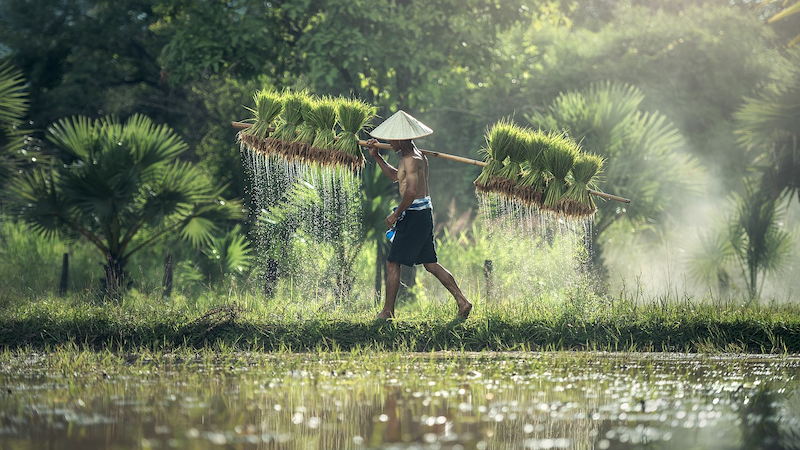
A global study of major crops has found that farmworkers are being increasingly exposed to combinations of extreme heat and humidity during planting and harvest seasons that can make it hard for them to function. Such conditions have nearly doubled across the world since 1979, the authors report, a trend that could eventually hinder cultivation.
The most affected crop is rice, the world’s number one staple, followed closely by maize. As temperatures rise, the trend has accelerated in recent years, with some regions seeing 15-day per-decade increases in extreme humid heat during cultivation seasons.
The study appears in the journal Environmental Research Communications.
“If this affects humans’ ability to grow food, that’s serious,” said lead author Connor Diaz, who did the research as a Columbia University undergraduate student with scientists at the university’s Lamont-Doherty Earth Observatory. “The global food chain is all connected, and the danger is, this will impact crop production.”
Higher temperatures alone are oppressive, but high relative humidity greatly increases the effects. We cool our bodies by expelling sweat, which contains excess body heat; then, when the sweat evaporates, that heat is carried away. But the more the air is laden with moisture, the less efficiently evaporation can take place—the reason muggy days feel so bad. High humidity is especially prevalent in major tropical and subtropical crop regions in river deltas and near coasts, which supply plenty of moisture for the air to soak up.
Multiple recent studies have already documented increases in extreme combinations of heat and humidity across the world. A 2021 study by Columbia scientists found that the number of city dwellers exposed to extreme humid heat has tripled since the 1980s, affecting more than a fifth of the world population. A 2020 study also out of Columbia found that potentially fatal heat-humidity combinations previously not predicted to appear until mid-century are already popping up in many areas. The new study is the first to look at the effects on farmworkers specifically during cultivation seasons.
Combined heat and humidity are gauged on the “wet bulb” scale, which factors in air temperature, water-vapor content and wind conditions. The authors of the new study define 27 degrees Centigrade wet-bulb as the point where farmworkers will begin struggling. Depending on the exact combination of conditions, this would be equivalent to between 86 and 105 degrees F on “real feel” heat indexes used by popular media.
Some earlier studies have defined 30C wet bulb—roughly 106F or more “real feel”—as extreme for everyday tasks, but farmworkers toiling under direct sun many hours a day may crumble well before that.
The new study found that many major agricultural regions already experience three months of 27C conditions or worse during the year as a whole. These include the Amazon, northern Colombia and parts of Mexico; the coasts of the Red Sea and Persian Gulf; southeast Asia; and much of Malaysia and Indonesia. Countries that see two months or more include Senegal, Ivory Coast, Nigeria, Cameroon and the northern region of Australia.
On shorter time scales, during the crucial planting and harvest seasons, close to half of the world’s rice cropland is already subject to extreme conditions at some point each year, according to the study. For maize the number is about a third. (That rice is more affected is not a surprise, said Diaz; it is generally grown in water-saturated conditions in already hot climates, while maize is often raised in drier, more northerly regions.)
For rice, the highest farmworker exposure is in Bangladesh, with more than 60 days of high humid heat during cultivation seasons. Other regions with high exposure include Vietnam’s Mekong Delta, Myanmar’s Irawaddy Delta, much of Indonesia and Malaysia, parts of coastal Mexico, and the Amazon. For the maize seasons, the highest potential worker exposure encompasses much of Pakistan, the Mekong Delta, northern Colombia, Venezuela, the Philippines, and parts of coastal Mexico and coastal Iran.
The researchers identified 10 other major crops affected to lesser but significant extents, including sorghum, soybeans, potatoes, millet and yams.
“In places like the Amazon, these conditions are already common, and sadly, people have adapted to it, because they have to,” said study coauthor Mingfang Ting, a climate scientist at Lamont-Doherty. She noted that areas with the worst heat and humidity tend to be the same ones where conditions are worsening the fastest. If the same rates of increase continue in coming decades, she said, people may not be able to cope any longer. “The curve is going up so fast. It’s the trend that really makes it worse,” she said.
So far, the bulk of research on the future effects of climate change on food production has focused on the crops themselves, especially the results of dry heat and drought. But a 2021 paper led by Purdue University predicts that if average global temperatures go up by 3 degrees C—which some scientists think may happen this century—it would reduce agricultural laborers’ work capacity by 30% to 50% and lead to substantial increases in food prices. That study does not explicitly take in the added effects of high humidity.
Another recent paper looking at heat risk to the over 1 million hired agricultural workers in the United States found that they are already 20 times more likely to die of illnesses related to heat stress than U.S. civilian workers overall. Apart from the nature of their work, their risks are compounded by poverty and lack of access to health care, the study says—conditions that are common in many of the areas covered by the new heat and humidity study.
The most common means of adapting to rising temperatures in the U.S. and most other countries has been to shift work hours into the night. Allowing workers to reduce their pace and effort, and increasing break times can also help, and some U.S. states and countries such as Spain have mandated such measures. But these efforts reduce worker productivity, which may feed into higher food prices. And fancier adaptations, like air-conditioned retreat spaces and air-conditioned tractors are simply not feasible in much of the world.
“The issue of heat and humidity takes on a whole new dimension when you think about someone who has to work outside all day long under the sun,” said Diaz. Many receive a piecework rate, or are simply trying to raise enough to subsist on, he points out. “That kind of incentive pushes people to work harder and longer than is safe, and people will pay,” he said.

Quinoa and many other extremely resilient plants are covered with strange balloon-like ‘bladders’ that for 127 years were believed to be responsible for protecting them from drought and salt. Research results from the University of Copenhagen reveal this not to be the case. These so-called bladder cells serve a completely different though important function. The finding makes it likely that even more resilient quinoa plants will now be able to be bred, which could lead to the much wider cultivation of this sustainable crop worldwide.
Looking through a microscope, it resembles a water balloon. Or a piece of glass art. But it’s just a so-called bladder cell. If you wondered what it was for, you wouldn’t be the first. For 127 years, even the brightest minds in plant biology believed that the fluid-filled bladders covering the leaves, clustered flowers and stems of a range of hardy plants were something completely different from what they now turn out to be.
The discovery was made thanks to a new piece of research from the University of Copenhagen that completely contradicted the researchers’ expectations. The new insight can probably be used to expand the cultivation of a particularly nutritious and climate-resilient crop.
“Quinoa has been touted as a future-proof crop because it is rich in proteins and highly tolerant of drought and salt, and thus climate change. Scientists believed that the secret to quinoa’s tolerance was in the many epidermal bladder cells on the surface of the plant. Until now, it was assumed that they served as a kind of salt dump and to store water. But they don’t, and we have strong evidence for it,” says Professor Michael Palmgren from the Department of Plant and Environmental Sciences.
Bulwark against pests
Three years ago, a research group led by PhD student Max Moog and his supervisor Michael Palmgren began studying the epidermal bladder cells of quinoa plants in ways that had never been used before. The hope was to understand the plant’s mechanisms for making it resilient to salt and drought.
To this end, the researchers cultivated mutant plants without bladder cells to compare their reactions to salt and drought with those of wild quinoa plants covered with bladder cells.
To their surprise, the researchers discovered that bladder cells have no positive influence on the plant’s ability to tolerate salt and drought. On the contrary, they seem to weaken tolerance. Instead, bladder cells serve as a barrier against pests and disease.
“Whether we poured salt water on the mutant plants without bladder cells or exposed them to drought, they performed brilliantly and against expectations. So, something was wrong. On the other hand, we could see that they were heavily infested with small insects – unlike the plants covered with bladder cells. That’s when I realized that bladder cells must have a completely different function,” says Max Moog, now a postdoc at the Department of Plant and Environmental Sciences and first author of the study, which has been published in the journal Current Biology.
When the researchers analyzed what is hidden inside the bladder cells, they did not find salt as expected – despite having added added extra salt to the plant. Instead, they found compounds that repel intruders.
“We discovered that bladder cells act as both a physical and chemical barrier against hungry pests. When tiny insects and mites trudge around on a plant covered with bladder cells, they are simply unable to get to the juicy green shoots that they’re most interested in. And as soon as they try to gnaw their way through the bladder cells, they find that the contents are toxic to them,” says Michael Palmgren.
Among other things, the epidermal bladder cells of quinoa contain oxalic acid, a compound also found in rhubarb, which acts as a deadly poison on pests.
The experiments also demonstrated that the bladder cells even protect quinoa against one of the most common bacterial diseases in plants, Pseudomonas syringae. This probably happens because the bladder cells partially cover the stomata on the plant’s leaves, a point of entry for many bacterial invaders.
“Our hypothesis is that these bladder cells also protect against other plant diseases like downy mildew, a fungal disease which severely limits quinoa yields,” says Max Moog.
The key to extra tolerant ‘super-quinoa’
There are thousands of varieties of the South American crop, and the density of bladder cells on the plant’s surface varies from variety to variety. But there is much to suggest that density determines how effective a safeguard the bladder cells are.
“Quinoa varieties with a higher density of bladder cells are most likely more robust against pests and diseases. On the other hand, they may be slightly less tolerant of salt and drought. And vice versa. These variations don’t change the fact that quinoa is generally very resistant to salt and drought. But the explanation must be found somewhere other than in the bladder cells,” says Max Moog, continuing:
“Due to efforts to expand quinoa cultivation around the world, the new knowledge can be used to adapt the crop to various regional conditions. For example, southern Europe has very dry conditions, while pests are a bigger problem than drought in northern Europe. Here in northern Europe, it would make sense to focus on quinoa varieties that are densely covered with bladder cells.”
According to Michael Palmgren, the new results provide a concrete recipe for how to breed “super-quinoa” relatively easily:
“Thus far, these bladder cells have been ignored in the breeding of quinoa. If you want a crop that is extra resistant to pests and diseases, but is still tolerant of salt and drought, one can opt to breed varieties that are densely covered with bladder cells. So, we may now have a tool that allows us to simply cross-breed our way to an extra tolerant ‘super-quinoa’,” says Michael Palmgren.
The research results add a new dimension to our knowledge about quinoa. Until now, very little was known about how the plant defends itself against attacks from hostile organisms.
“Now we know, quinoa isn’t just tolerant of non-biological stressors like drought and salt, but also of biological influences such as pests and pathogenic bacteria. And at the same time, we’ve found the secret of these odd-looking bladder cells. This research is an example of how what’s established doesn’t always turn out to be what’s true,” concludes the professor.