
Categories
South Caucasus News

How Should Delhi And Male Approach The Maldivian Conundrum? – Analysis


How Should Delhi And Male Approach The Maldivian Conundrum? – Analysis

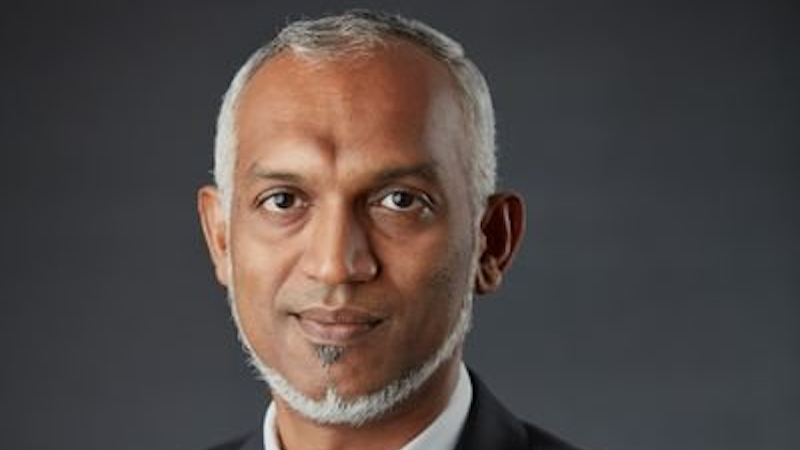
Maldives' Dr. Mohamed Muizzu. Photo Credit: Mohamed Muizzu, X

Recognition of ground realities will help the two countries overcome challenges to the relationship  

India is now facing a conundrum in the Maldives, a strategically located island nation in the Indian Ocean. A pro-Chinese President, Dr. Mohamed Muizzu, is in power having beaten his pro-Indian predecessor Ibrahim Solih in the October 2023 Presidential election.

President Muizzu is to correct some of the controversial pro-India policies of the Solih government and look more towards China for fresh economic deals if not security deals. 

The fresh deals are likely to be in the field of infrastructure as is the case in other South Asian countries looking to improve their infrastructure. 

The Problem

One of the most challenging problems that India is facing is the Maldives government’s determination to get India to withdraw its military helicopters, the Dornier surveillance aircraft and the auxiliary military personnel stationed in the archipelago. 

According to the Indians, these aircraft are stationed for the benefit of Maldivians. They reconnoitre the territorial waters of the Maldives to spot smugglers, illegal fishers and terrorists. The choppers are also used to evacuate patients from remote islands in medical emergencies. 

But the Maldivians wonder why the Maldivian National Defence Force (MNDF) could not be trained to use them and allowed to operate them independently. They suspect a hidden agenda, a suspicion that is at the root of the “India Out” campaign launched when Abdulla Yameen’s Progressive Party of the Maldives (PPM) was in power earlier.

As expected, the Muizzu government has formally requested India to withdraw its military personnel. This was conveyed by President Muizzu to the Indian Minister of Earth Sciences, Kiren Rijiju, during a meeting held at the President’s Office on Saturday. 

Rijiju represented India at the President’s inauguration on November 17.

Earlier, in response to Indian Foreign Minister S.Jaishankar’s greetings on his assuming office,  the new Maldivian Foreign Minister Moosa Zameer said that his government is committed to a “mutually beneficial and calibrated” relationship with India. It is “calibration” which will rankle New Delhi. 

President Muizzu has repeatedly said that in foreign affairs his principal concern will be to safeguard the Maldives’ sovereignty and independence and avoid giving the impression that he is under the tutelage of any foreign power.

Details of Indian Military Presence 

The new Maldivian government has formally announced the presence of 77 Indian soldiers in the Maldives to operate the helicopters and Dornier aircraft. 

The government has also said that the previous Solih regime had entered into over 100 agreements related to foreign relations with the Indian government outside of development initiatives.

At the first media briefing since the Presidential inauguration, the Under-Secretary for Public Policy in the President’s Office, Mohamed Firzul Abdulla Khaleel, provided details of the Indian soldiers’ and presence and responsibilities.

24 Indian military personnel are stationed to operate and manage one helicopter gifted by the Indian government; 25 officers are here to operate the Dornier aircraft and 26 others operate the additional helicopter gifted by the Indian government. In addition, there are two soldiers stationed for repairs and maintenance work. 

Khaleel provided details of the work done by the helicopters and Dornier aircraft in the past five years. These included 661 medical evacuations; 220 surveillance operations; 100 search missions; plus defence training, Covid sample collection and transportation, VIP services, and air crew transfers

“These operations brought notable benefits to locals as well. However, Maldivian citizens do not want the permanent residency of foreign soldiers in the country for any given purpose, which is the basis on which the President will execute his policies,” Khaleel emphasized. 

He noted that the current administration will begin efforts to alter and amend provisions in agreements with India that are detrimental to the Maldives. He said that the government is now collecting information and documents pertaining to the agreements.

100 Agreements

“Based on the information we have gathered and verified so far, we can attest that the previous administration had entered into over 100 bilateral agreements with India. I would like to point out that this number excludes agreements for urban development,” Khaleel said.

He further said government needs additional time to research the documents related to all the agreements the previous government entered with India. 

“President Muizzu has already begun efforts to make necessary amendments to the said agreements to ensure preservation of Maldivian sovereignty,” Khaleel said.

During President Solih’s regime time, the “India Out” campaign dimmed because his predecessor Yameen was discredited and sent to jail for high corruption. 

But the campaign might be revived now if Muizzu fails to get the Indians to remove their military presence or to come to a compromise that he can sell to his electorate.

Bid for Balance 

However, when seen in the light of Muizzu’s utterances during the election campaign, it can be surmised that he will follow a balanced and neutral policy. He had said more than once that his government would not be seen to be “too close or too far away from any important foreign power.” 

This pledge arose from a realization that his party leader and former President Abdulla Yameen was seen as being too close to China and too hostile to India when he was President of the Maldives. Because of his angularities, Yameen earned the hostility of India and its ally the US.  

Ibrahim Solih succeeded in ousting Yameen in the election because he promised to correct the pro-Chinese tilt. But Solih erred by identifying himself too closely with India. He was voted out in October 2023 partly because he swung to the Indian side totally giving the public the impression that he was eating out of India’s hands. Maldivians’ pride was hurt.

Muizzu has now promised to follow a policy that would seem to be neither too close nor too distant from any power, as he put it. The powers in question being India and China. This is based on the belief in the Maldives, and indeed in the rest of South Asia, that small and less-endowed countries need the support of all powers to maintain their independence and sovereignty as well as to grow economically. There is also an aversion to getting embroiled in foreign powers’ rivalries.

The Muizzu regime would also like India to finish the projects it had undertaken as per schedule. To compete with China in the Maldives and the rest of South Asia, India will have to take decisions on economic matters faster, and more importantly, implement projects that are undertaken on schedule. New Delhi should be sensitive to the demand for the prompt implementation of projects. 

Head-on Clash Discounted

However, political sources in Maldives say that Muizzu would not clash with India head-on, but try to come to a mutually acceptable arrangement. The sources point out that Muizzu is not as stubborn and one-track minded like Yameen but is someone who will listen and bend to reason.

Muizzu is not expected to discount India’s genuine concern about its security in the Indian Ocean region, especially where the Maldives is located. One end of the Maldivian archipelago is only a hop, step and jump from Minicoy, an Indian island that is part of the Lakshadweep group. 

The Maldivian President cannot be oblivious of the fact that China has an ambition to dominate the Indian Ocean pushing India and the US to the margins.  Its “research” vessels, which India and the US suspect to be “spying” vessels, scour the Indian ocean off Sri Lanka. According to Sunday Times there is a request for the visit to Sri Lanka of a third research vessel the Xiang Yang Hong 03.  This will ruffle feathers in India and the US.   

Apart from the geopolitical compulsion to accommodate India, Muizzu will also have to take into account the very close people-to-people relations between the Maldives and India. Many of the daily needs of the Maldivians come from India. For the ordinary Maldivians, India is also the nearest place for specialized medical treatment.

Moreover, India had given billions of dollars in aid during the Solih regime and undertaken many projects which have to be completed. India has also been the “first responder” giving vital help every time there was an emergency in the Maldives.

Categories
South Caucasus News

Rigging Avian Ballots: New Zealand’s Bird Of The Century Competition – OpEd


Rigging Avian Ballots: New Zealand’s Bird Of The Century Competition – OpEd

They can be a serious lot in New Zealand.  They got upset at – forgive this author such reference – the use of a rule in cricket back in February 1981 which led to expressions of misty anger from the Prime Minister of the day, Robert Muldoon.  While permissible within the laws of cricket, sides are generally not meant to bowl underarm.  This, Greg Chappell’s Australians did.  “I thought it most appropriate that the Australian team was dressed in yellow,” Muldoon fumed.  

Recently, mild tempers were stirred by what could be regarded as a form of ballot interference, this time regarding the vote for the country’s most famous Bird of the Year competition.  On this occasion, the competition, run by the conservation group Forest and Bird since 2005, had an elevated importance, being badged as a vote to identify New Zealand’s Bird of the Century.

While electoral and voter interference has become the stuff of mania since the 2016 US election, inducing fits of spluttering concern against those mischievous meddlers in Moscow and Beijing, some New Zealanders could be justified in showing irritation at the vigorous, external advocacy by the Anglo-American comedian, John Oliver, for the pūteketeke.  Also known as the Australasian crested grebe, Oliver had detected a loophole in the voting rules, which permitted anyone with a valid email address to cast a vote.

Oliver made a stirring promotional pitch on Jimmy Fallon’s The Tonight Show, and expressed admiration on his own HBO show Last Week Tonight.  “They are weird puking birds with colourful mullets.  What’s not to love there?”  He also admired their “mating dance where both grab a clump of wet grass and chest bump each other before standing around unsure of what to do next.”  

If billboards and an advertising campaign are measurements of love, then Oliver had it in feathery abundance as the bird’s self-appointed campaign manager.  Billboards celebrating his special avian choice made their appearance in Wellington, Paris, Tokyo and Mumbai celebrating this “Lord of the Wings”.

The comedian’s background in this enterprise was, in many ways, fitting.  Both the United Kingdom and the United States have made it something of a corrosive specialty swaying foreign elections and doctoring ballots over the decades.  “This is what democracy is all about,” declared Oliver, “America interfering in foreign elections.”  

Nor was Oliver venturing into a competition of virginal innocence.  Fraud and idiosyncrasy have been prevalent themes.  In 2018, 300 fraudulent votes were cast by Australians attempting to rig the result in favour of the shag.  In 2019, accusations were made that Russian votes (of course) had played a spoiling role, though a spokesperson for Forest and Bird, Megan Hubscher, regarded them as legitimately cast by Russian ornithologists.  “New Zealand actually shares birds with Russia,” she plausibly reasoned.  In 2020, 1,500 fraudulent votes were cast for the kiwi. The following year, the competition was won by the long-tailed bat, prompting calls that the election had been stolen.

The voting that followed in 2023 was truly global in nature: 350,000 ballots cast from almost 200 countries during a frenzied bout of campaigning.  At one point, the voting verification system crashed, delaying the result by two days.  

There were also instances of blatant voter fraud.  A supporter of the eastern rockhopper penguin (“hipster penguin” to Oliver) cast 40,000 votes for the bird.  Another, based in Pennsylvania in the US cast 3,403 votes, with one arriving every three seconds.  Both mercifully failed in having their efforts count.

The number for the pūteketeke was a lopsided tally of 290,000 votes, leaving the kiwi in second place with a paltry 12,904.  The next three placements were the kea, kākāpo and the fantail.  Nicola Toki, the chief executive of Forest and Bird, was gingerly diplomatic about the result.  She described the pūteketeke as being “an outside contender for Bird of the Century but was catapulted to the top spot thanks to its unique looks, adorable parenting style, and propensity for puking.”  Toki and her colleagues were “not surprised these charming characteristics caught the eye of an influential bird enthusiast with a massive following.”  

The incoming New Zealand Prime Minister, Christopher Luxon, did not seem too troubled either. “Congratulations to the campaign manager @iamjohnoliver [John Oliver] and all those who gave their support to the pūteketeke,” he posted on the platform formally known as Twitter. 

Many did not share that view.  Umbrage was taken at Oliver’s derisory remark at one of the country’s most recognised birds, the kiwi, as “a rat carrying a toothpick.”  Supporters of the kākāriki karaka, or orange-fronted parakeet, countered with their own billboard campaign sporting such lines as, “Dear John, don’t disrupt the pecking order.”

While the whole thing seemed like an indulgence, notably given the daily news digests of war, famine and societal failure, Toki could take heart at a bird campaign that had been globalised.  At home, the country’s native species (politicians, take note) are struggling; 80 percent have made their way to the dreaded threatened species list, and the Department of Conservation is having its budget cut.  “We promised controversy but didn’t quite expect this!  We’re stoked to see the outpouring of passion, creativity and debate this campaign has ignited.”  Sadly, passion and awareness are not always politically convertible currencies.


Categories
South Caucasus News

Converts To Judaism In Orthodox And Reform Jewish Law


Converts To Judaism In Orthodox And Reform Jewish Law

Laws Relating to Converts By Eliezer Melamed (Israeli Orthodox)

If a German or an Arab seeks to join the Jewish people, even if he is the son of a fierce anti-Semite, we should accept him and love him like any other Jew. Moreover, we should love him even more than other Jews, in keeping with the commandment to “love the convert, for you too were strangers in the land of Egypt (Deuteronomy 10:19).”

The Torah states that whoever grieves a convert transgresses three prohibitions (Baba Metzia 59b). Firstly, it is written “Do not grieve one another” (Leviticus 25:17), and this applies to all Jews, including the convert. In addition, the Torah adds two more prohibitions against grieving the convert: “You shall not wrong a stranger, nor oppress him; for you were strangers in the land of Egypt” (Exodus 22:20) and, “If a stranger sojourns with you in your land, you shall not wrong him. But the stranger who dwells with you shall be to you as one born among you, you shall love him as yourself; for you were strangers in the land of Egypt; I am the Lord your God.” (Leviticus 19:33-34) 

In a positive sense as well, we are twice commanded to love the convert (Rambam, Hilchot Deot 6:4). Firstly, we must love the convert like any other Jew, as it is written, “Love your fellow as yourself ” (Leviticus 19:18). And again, regarding a convert in particular, it is written, “Love the stranger, for you were strangers in the land of Egypt” (Deuteronomy 10:19).

And what could be more fitting and correct than to show the convert added affection, for of his own volition did he leave his people and his homeland in order to join the nation of Israel. The Almighty Himself loves the convert, as it is written, “He loves the convert to give him food and clothing” (Deuteronomy 10:18). May we all merit to love and embrace the convert, to accept him warmly and by doing so to unveil the incredible uniqueness of the Jewish people.

Jewish law’s attitude to the conversion process appears, at first glance, to be one of double standards. On the one hand, there is enormous respect and love for the convert who has left his people and his country in order to join the Jewish people; on the other hand, there is an attempt to dissuade him from converting. 

But the truth of the matter is that Jewish law’s attitude to the convert is completely positive. The only reason that Judaism seeks to dissuade the convert is in order to see if he sincerely wishes to join the Jewish people, or if this is just a passing desire which will disappear in a few years. (Also, since Jews do not believe that all non-Jews need to become Jewish in order to be saved or go to heaven, we do not push conversion on those who are not interested.)

Therefore the Code of Jewish Law (Shuchan Aruch) rules (Yoreh Deah 268:2) that when a non-Jew comes before a rabbi and requests to convert, the rabbi must say to him: Why do you want to convert? Don’t you realize how much the Jewish people suffer in this world? Are you not aware that anti-Semites persecute us and try to destroy us? Why, it was only several decades ago that the terrible Holocaust took place, and before that there were countless pogroms. Even today there is much anti-Semitism in the world. And all of this is because we are Jewish. So why do you want to join our suffering nation? If you desire to attain a higher level of righteousness and morality, you should be aware that a non-Jew too can be righteous and can even reach a level of divine inspiration. 

If he says, “Despite this I desire to join you; my only concern is that I may not be worthy,” he is immediately accepted, and the second stage of the conversion process begins. He is taught the fundamentals of Jewish faith, the prohibition against idolatry, and a number of other laws. Then he is told, “You should know that so long as you are not Jewish it is permissible for you to labor on the Sabbath and to eat pork or other non-kosher animals. When you convert, however, all of these things become forbidden, and if you violate the Torah you will be punished.” If he agrees and accepts this upon himself, he is converted.

One important question is, how many laws must the convert be taught before he is asked if he is ready to accept upon himself the commandments of the Torah? Another question is, should he be told in detail the Torah punishments applying to one who violates the commandments?

It is clear to all that there is no need to teach him the entire Torah. It is sufficient to teach him some of its foundations, and if he accepts them, it is already possible to convert him. This is what is written in the Code of Jewish Law (Shulchan Aruch, Yoreh Deah 268:2): “He is taught some of the minor commandments and some of the major commandments, and he is taught some of the punishments for violating the commandments,” but, “we do not overburden him and we are not overly strict with him.” The reason for this is that even if he is sincere, if he is suddenly confronted with all of the stringencies and fine details, he will recoil and change his mind about converting.

The essence of converting to Judaism is to accept upon oneself the yoke of the Torah and the commandments before a rabbinic court. However, as we have learned, it is not necessary to teach a convert before conversion all of the details of the Torah and its commandments. Rather, he is taught the fundamentals, and if he demonstrates a willingness to accept the Duties of the Torah, he is converted immediately, and then continues to study and to grow as a Jew.

This practice has its source in three Talmudic anecdotes in Shabbat 31a: Once, a non-Jew came before Shammai the Elder and said to him, “I wish to convert, but I will only do so on the condition that you teach me the entire Torah on one foot.” Shammai pushed him away, reasoning that it is impossible to teach a person the entire Torah on one foot. 

But the same person came to Hillel the Elder, and Hillel agreed to convert him, saying, “That which is undesirable to you, do not do to your fellow. This is the entire Torah, the rest is all commentary. Now go study” (Shammai thought a fixed minimum of study was required for everyone. He would not do a quick conversion. Hillel realized that some people need a lot of time and some very sincere people need only a short time. Most people need months of dating before knowing they are in love, but for a few, it is love at first sight.)


A second non-Jew came before Shammai the Elder and asked, “How many Torahs do you have?” “Two,” answered Shammai, “One is written, and another which is oral.” The non-Jew said, “I can accept the written one, but I cannot accept the oral one. Convert me on the condition that you teach me only the written Torah.” Shammai scolded him and sent him away. 

He went to Hillel, and Hillel converted him. Hillel started teaching him and finally convinced him to believe in the Oral Torah. (Just as Chabad does not use an all or nothing demand, but works with any Jew for years, Hillel also did not reject any potential convert with an all or nothing demand. Hillel converted the non-Jew who afterwards began to follow the oral Torah more and more.) 


A third non-Jew came to Shammai the Elder and said, “I would like you to convert me on the condition that I be able to wear the clothes of the High Priest.” Shammai the Elder immediately pushed him away, for a convert cannot become a Priest. (This is obvious. Shammai thought the potential convert’s desire to “wear the clothes of the High Priest” was an indication of a personality tending toward extreme piety, and that was undesirable in a convert or any other Jew.) The same person came to Hillel and said to him, “I would like you to convert me on   condition that I be able to wear the clothes of the High Priest,” and Hillel accepted him and converted him.

Yet the law says if a non-Jew is not ready to accept upon himself all of the commandments, it is forbidden to convert him. How, then, did Hillel convert the second non-Jew who only agreed to fulfill the written Torah?  How did Hillel accept the third person who wished to convert on condition that he be allowed to wear the clothes of the High Priest? After all, it is forbidden for any non-Kohen Jew, including a convert, to wear the clothes of the High Priest.


Hillel understood that these three different non-Jews had pure and good intentions, and only lacked the ability to express themselves in a fitting manner. He was certain that when it came down to it, they would continue to learn Torah and fulfill all of the commandments (Tosafot, Yevamot 109b, s.v. “Rah”). 

From here we learn that it is unnecessary to learn all of the Torah’s laws before converting; it is sufficient that the rabbinic court reach the conclusion that a convert earnestly intends to join the Jewish people and accept upon himself the Yoke of the Torah  (Beit Yosef 268, end). The sages teach (Shabbat 31a) that years later these three converts happen to be together in one place, and they said, “In his strictness, Shammai sought to drive us out of the world; in his humility, Hillel brought us under the wings of the Divine Presence.” 

However, if the prospective convert is sincere in his intention to keep the commandments but the rabbinic court suspects him of being insincere, the court causes damage to the convert and should be punished. (for example, when our forefathers refused to accept Timna. She was hurt and distanced herself from the Jewish people, and gave birth to Amalek, who as an adult attacked the Jewish people greatly.) Sanhedrin 99b)


If a rabbinic court accepts somebody who does not intend to keep the commandments, they may cause great damage to the Jewish people. (This is false. Great harm only occurs to the Jewish people when a rabbinic court doesn’t accept someone. The Talmud says Jews suffered the great damage of being enslaved in Egypt because Abraham failed to give some non-Jews an opportunity to convert. (Neddarim 32a)  

The possibility of some harm from accepting converts was only true after Roman law made it illegal for someone to convert to Judaism. As late as 1749 a Polish Count, Valentine Potocki, who had secretly converted to Judaism, was burned alive in the center of Vilna.

Modern Anti-Semitism is rooted in political and racist ideology; and the church today is not what it was in the past. Making it easier to become Jewish shows that Jews are not anti-gentile and that we welcome non-Jews into the Jewish community.  Thus, Rabbi Eleazar taught, “The Holy One exiled Israel among the nations only in order that proselytes might be multiplied among them.” (Pesachin 87b) 

t is true that there were many more converts to Judaism in diaspora Jewish communities than in the land of Israel. The strong anti-Roman feelings of many Jews in the land of Israel not only flared into two disastrous revolts, in 66-70 CE and again in 132-135 CE, but also must have expressed itself among some Jews in ongoing suspicion and hostility toward non-Jews who had converted as well as  those who were interested in becoming Jewish. 

Rabbi Eleazar’s teaching that gaining converts was so important that God sacrificed Jerusalem and the Holy Temple in order to multiply converts is amazing. Of course, it is possible that Rabbi Eleazar was simply trying to make the best of a bad thing. But he must have thought making converts was of extraordinary importance. Perhaps Rabbi Eleazar thought that if the Jewish people were much more numerous (like the stars in the sky or the sand on the beach) we would be a lot less likely to be defeated and oppressed by others. 

Thus, the failure to make large numbers of converts in the past led to subsequent vulnerability of the Jewish people. According to Eliezer Malamed the few negative statements in the Talmud about converts are not racist, but refer to people where there is evidence, not just suspicion, that they are insincere.) This is why (two) sages say (Yevamot 109b): “Evil will come upon those who accept [insincere] converts,” and “[Insincere] converts are as burdensome to Israel as a sore” (ibid., Tosafot). (Thus, all non-Jews who desire to convert should be considered sincere unless there is evidence that their motives are bad.)


Two matters must be clarified by the rabbinic court before it can accept a convert: 1) Does the convert earnestly intend to join the Jewish people, or (is there evidence that) he harbors ulterior motives? 2) Is the convert indeed ready to accept upon himself the Yoke of the Torah and its commandments?


When it is clear to the rabbinic court that the answer to these two questions is affirmative, the main part of the conversion process is complete, and the rabbinic court proceeds to carry out the practical aspects of the conversion. Just as the Jewish people entered a covenant with the Almighty via three acts – circumcision, ritual immersion, and sacrifice – so must the non-Jew who seeks to join us enter the covenant of the Jewish people via circumcision, ritual immersion, and sacrifice. Since the Holy Temple no longer exists, Jewish law rules that it is possible to convert without offering a sacrifice.

So, from a legal point of view, the rabbinic court’s main consideration is whether or not the prospective convert is indeed ready to accept the Torah and its commandments. If the rabbinic court is uncertain about the veracity of the convert’s intentions, it is unable to convert him. However, if after the rabbinic court becomes convinced that the convert’s intentions are pure and goes ahead and converts him, then the convert begins to neglect the Torah, he nonetheless continues to be considered Jewish. Just as a Jew who does not yet observe all of the commandments of the Torah is nonetheless considered Jewish, so a convert who subsequently neglects the Torah remains Jewish.

Defining the Acceptance of the Commandments.
 We have learned that it is impossible to accept a convert so long as he is unwilling to accept the Duty of the Torah and its commandments. However, there is no need to teach him all of the complexities of the law, because even a convert whose intentions are pure is liable to recoil and reverse his intentions if he hears at once all of the details of the Torah and its commandments.


Rather, we teach him the essentials, beginning with commandments relating Jewish faith, and, conversely, the prohibition against idolatry. Thereafter, we move on to commandments which tell us how to behave toward others, and then we teach him the fundamental laws relating to the Sabbath, family purity, and kosher diet.


What about someone who is prepared in principle to accept the Duty of the Torah and its commandments, but believes that from time to time he will have to transgress some of the commandments?  

Strictly speaking, it is clear that there is no dispensation for desecrating the Sabbath, even occasionally; neither is it permissible even in difficult conditions to eat forbidden foods. Nonetheless, the imminent Rabbi Chaim Ozer Grodinski, holds that it is possible to convert such a person. This is because we relate to the acceptance of commandments in principle. In principle, the convert has agreed to take upon himself observance of the commandments, and it is only on occasion that he believes he will transgress. (After all, no human, Jew or non-Jew, is perfect, and as Solomon advices us, ” Do not be overly righteous, and do not make yourself excessively wise.”

Although there are important authorities who disagree with the opinion of Rabbi Grodinski in practice, many  others follow his ruling. Thus, if it is clear to a rabbinic court that a convert accepts the commandments in principle, it is possible to convert him (or her). (Indeed, it is a Mitsvah.)


This article was translated from the first chapter in a book Laws Relating to Converts by Eliezer Melamed. His book is one in a popular Israeli Orthodox Judaism series “Pininei Halacha”. I have added additional comments in parenthesis as an American Reform Rabbi who in the Midrash that teaches us, “When a person wants to become part of the Jewish people, we must receive him or her with open hands so as to bring that person under the wings of the Divine Presence” (Leviticus Rabbah 2:9).     


Categories
South Caucasus News

Robert Reich: The Connection Between Neofascism And Capitalism – OpEd


Robert Reich: The Connection Between Neofascism And Capitalism – OpEd

As an ever-greater portion of the nation’s total wealth goes to the top, it’s hardly surprising that ever more of that wealth is corrupting American politics. 

In the 2020 presidential election cycle, more than $14 billion went to federal candidates, party committees, and Super PACs — double the $7 billion doled out in the 2016 cycle. 

Total giving in 2024 is bound to be much higher.

Most of that money is not supporting American democracy. Increasingly, it is supporting Donald Trump and his anti-democracy allies. 

There is a certain logic to this. 

As more and more wealth accumulates at the top, the moneyed interests fear that democratic majorities will take it away through higher taxes, stricter regulations (on everything from trade to climate change), enforcement of anti-monopoly laws, pro-union initiatives, and price controls. 

So they’re sinking ever more of their wealth into anti-democracy candidates.

Donald Trump is going full fascist these days, and gaining the backing of prominent billionaires. 

On Veterans Day, Trump pledged to “root out the communists, Marxists, fascists and the radical left thugs that live like vermin within the confines of our country,” whom he accused of doing anything “to destroy America and to destroy the American dream.” (Notably, he read these words from a teleprompter, meaning that they were intentional rather than part of another impromptu Trump rant.)

Days before, Trump claimed that undocumented immigrants were “poisoning the blood of our country.” The New York Times reports that he’s planning to round up millions of undocumented immigrants and detain them in sprawling camps while they wait to be expelled. 

Trump has publicly vowed to appoint a special prosecutor to “go after” President Joe Biden and his family, and has told advisers and friends that he wants the Justice Department to investigate officials who have criticized his time in office. 

This is, quite simply, full-throated neofascism. 

Who’s bankrolling all this? While Trump’s base is making small contributions, the big money is coming from some of the richest people in America. 

During the first half of the year, multiple billionaires donated to the Trump-aligned Make America Great Again Inc. Super PAC.

Phil Ruffin (net worth $3.4 billion), the 88-year-old casino and hotel mogul, has given multiple $1 million donations. 

Charles Kushner (family net worth $1.8 billion), the real estate mogul and father of Jared, who received a late-term pardon from Trump in December 2020, contributed $1 million in June. 

Robert “Woody” Johnson (net worth $3.7 billion), Trump’s former ambassador to the United Kingdom and co-owner of the New York Jets, donated $1 million to the MAGA PAC in April.

And so on. 

But Trump is not the only extremist pulling in big dollars. Nikki Haley — who appears moderate only relative to Trump’s blatant neofascism — proclaimed in her campaign launch that President Biden is promoting a “socialist” agenda.

During her two years as U.N. ambassador under Trump, Haley was a strong proponent of his so-called “zero tolerance” policy, under which thousands of migrant children were separated from their parents and guardians. She supported Trump’s decision to pull out of the U.N. Human Rights Council and to withdraw from the Iran nuclear deal.

Though she briefly criticized Trump for inciting the mob that attacked the U.S. Capitol on January 6, 2021, Haley soon defended Trump and called on Democratic lawmakers to “give the man a break” when they impeached him for a second time. 

Haley recently told Kristen Welker of NBC’s “Meet the Press” that while Trump’s floating the idea of executing retired General Mark Milley might be “irresponsible,” it does not disqualify him from running for the White House again.

Haley’s billionaire supporters include Stanley Druckenmiller, Eric Levine, and Republican megadonor Ken Griffin. 

Notably, Haley has also gained the support of JPMorgan Chase’s chief executive, Jamie Dimon, who’s about as close as anyone in America comes to being a spokesperson for the business establishment. Dimon admires Haley’s recognition of the role that “business and government can play in driving growth by working together.”

The moneyed interests have been placing big bets on other Trumpist Republicans. 

Peter Thiel, the multibillionaire tech financier who once wrote that “I no longer believe that freedom and democracy are compatible,” contributed more than $35 million to 16 federal-level Republican candidates in the 2022 campaign cycle, making him the 10th largest individual donor to either party. 

Twelve of Thiel’s candidates won, including Ohio’s now Senator J.D. Vance, who alleged that the 2020 election was stolen and that Biden’s immigration policy has meant “more Democrat voters pouring into this country.”

Republican House Majority Leader Steve Scalise is creating a new fundraising committee that will be soliciting contributions of up to $586,200 a pop. 

Elon Musk is not a major financial contributor to Trump nor other anti-democracy candidates, but his power over one of the most influential megaphones in America gives him inordinate clout — which he is using to further the neofascist cause. 

Witness Musk’s solicitude of Trump, his endorsement of antisemitic posts, his embrace of Tucker Carlson and white replacement theory, and his avowed skepticism toward democracy. 

Democracy is compatible with capitalism only if democracy is in the driver’s seat, so it can rein in capitalism’s excesses. 

But if capitalism and its moneyed interests are in charge, those excesses grow to the point where they are able to extinguish democracy and ride roughshod over the common good. 

Hence the reason Trump’s neofascism, and the complicity of today’s Republican Party with it, are attracting the backing of some of the richest people in America. 

What’s the alternative? A loud pro-democracy movement that fights against concentrated wealth at the top, enormous CEO pay packages, a politically powerful financial sector, and tax cuts for the wealthy and large corporations. 

And fights for higher taxes on the top (including a wealth tax) to finance Medicare for all, affordable housing, and accessible child care and elder care. 

The willingness to make this a fight — to name the moneyed interests backing neofascism, explain why they’re doing this, and mobilize and energize America against their agenda and in favor of democracy — is critical to winning the 2024 election and preserving and rebuilding American democracy. 

Biden and the Democrats must take this on, loudly and clearly. (Incidentally, Biden’s age — Happy 81st, Joe! — would be far less of an issue if he showed the grit and guts to do this.)

This article was published at Robert Reich’s Substack


Categories
South Caucasus News

U.S. stresses importance of direct Armenia-Azerbaijan talks


Categories
South Caucasus News

Senator Marco Rubio: US taxpayer dollars should not be going towards Azerbaijan


default.jpg


Categories
South Caucasus News

Qarabağ bölgəsində Ermənistanın qeyri-qanuni hərbi fəaliyyəti və növbəti hərbi cinayət planları ilə bağlı antiterror tədbirlərindən sonra aşkar edilmiş yeni faktlar barədə Xarici İşlər Nazirliyinin və Müdafiə Nazirliyinin birgə mətbuat məlumatı


Qarabağ bölgəsində Ermənistanın qeyri-qanuni hərbi fəaliyyəti və növbəti hərbi cinayət planları ilə bağlı antiterror tədbirlərindən sonra aşkar edilmiş yeni faktlar barədə Xarici İşlər Nazirliyinin və Müdafiə Nazirliyinin birgə mətbuat məlumatı

20 noyabr 2023-cü il tarixində Azərbaycan Respublikasının Xarici İşlər Nazirliyində Silahlı Qüvvələr tərəfindən həyata keçirilən antiterror tədbirlərindən sonra Qarabağda aşkar edilmiş Ermənistanın qeyri-qanuni hərbi fəaliyyəti və planlaşdırdığı növbəti hərbi cinayətlərə dair yeni faktlarla bağlı Xarici İşlər Nazirliyinin və Müdafiə Nazirliyinin birgə mətbuat brifinqi keçirilib.
Mətbuat brifinqində Azərbaycan Respublikasında akkreditə olunmuş diplomatik korpus, hərbi attaşelər, habelə yerli və beynəlxalq media nümayəndələri iştirak ediblər.
Brifinqdə Xarici İşlər Nazirliyinin Mətbuat xidməti idarəsinin rəisi, mətbuat katibi Ayxan Hacızadə və Müdafiə Nazirliyinin Mətbuat xidmətinin rəisi Anar Eyvazov çıxış ediblər.
Çıxışlar zamanı, həm Ermənistanın ərazilərimizi işğal altında saxladığı 30 ilə yaxın müddət ərzində, həm də post-münaqişə dövründə beynəlxalq ictimaiyyətin diqqətinin Azərbaycan ərazilərində sülh və təhlükəsizliyə hədə törədən Ermənistan silahlı qüvvələrinin mövcudluğuna, həmçinin mina təhdidinə cəlb edildiyi xatırlanıb. 44 günlük Vətən müharibəsindən sonra Azərbaycan Ordusunun mühəndis bölmələri tərəfindən bölgədə aparılan işlər nəticəsində ərazilərimizdə 10000-dən çox piyada əleyhinə mina, 3000-dən çox tank əleyhinə və 12000-dək partlamamış döyüş sursatının aşkarlandığı və neytrallaşdırıldığı bildirilib.
Ermənistanın beynəlxalq hüquq normalarına, habelə Avropada adi silahlı qüvvələr haqqında Müqavilənin müddəalarına zidd olaraq, beynəlxalq təşkilatları, o cümlədən aidiyyəti BMT və ATƏT strukturlarını məlumatlandırmadan bölgədə külli miqdarda hərbi texnika və sursat yerləşdirdiyi qeyd olunub. Bu pozuntuların qarşısının alınması barədə Azərbaycanın çağırışlarına baxmayaraq, beynəlxalq ictimaiyyətin məsələyə biganəliyinin bölgədə gərginliyi daha da artırdığı vurğulanıb.
Azərbaycan ərazilərində eyni zamanda, silah-sursatın yenidən modifikasiyası və xarici ölkələrə ötürülməsi kimi qeyri-qanuni fəaliyyət həyata keçirildiyi diqqətə çatdırılıb. Ermənistanın post-münaqişə dövründə də Laçın yolunda sərhəd-buraxılış məntəqəsinin təsis edilməsinə qədər silah və texnikanı, yeni istehsal olunmuş minaları ərazilərimizə ötürməkdə davam etdiyi qeyd olunub. Bununla bölgədəki mülki obyektlərə, hətta təyyarələrin təhlükəsizliyinə, habelə aparılan genişmiqyaslı yenidənqurma fəaliyyətinə hədə törədildiyi vurğulanıb.
Cari ilin 19-20 sentyabr tarixlərində 24 saatdan az müddətdə antiterror tədbirlərindən sonra bölgədə mina təmizləmə fəaliyyəti, habelə kommunikasiya xətlərinin və yeni təchizat yollarının bərpası məqsədilə Müdafiə Nazirliyinin digər aidiyyəti qurumlarla apardığı fəaliyyətin ərazilərimizdəki dəhşətli hərbiləşmənin miqyasını bir daha göstərdiyi vurğulanıb. Aparılan işlər nəticəsində ərazilərimizdə böyük bir hissəsi mülki infrastrukturlarda yerləşdirilən hərbi maşınlar, müxtəlif çaplı silahlar və sursatların aşkarlandığı bildirilib. Xüsusilə, “Kornet” və “Faqot” tank əleyhinə idarə olunan raket sistemlərinin, 2021-ci il istehsalı olan TOS-1A tipli reaktiv yaylım atəşi sistemlərinin raketlərinin aşkarlandığı qeyd olunub. Bununla yanaşı, son 30 il ərzində Ermənistanın Xankəndidə hərbi texnika və dronların modifikasiyası ilə məşğul olan hərbi istehsalat mərkəzində apardığı fəaliyyət barədə məlumat verilib.
Brifinq zamanı, həmçinin bölgədəki hərbiləşmənin miqyasını göstərən görüntülər təqdim olunub. Ermənistanın ərazilərimizdə mülki əhaliyə və hərbçilərə kustar üsulla hazırlanmış dronlardan keçirilən təlimlərinin və Azərbaycanın mülki obyektlərinin hədəf alındığı barədə kadrların əks olunduğu antiterror tədbirlərindən sonra aşkar edilmiş videolar nümayiş etdirilib.
Brifinqə qatılan şəxslər antiterror tədbirlərindən sonra ərazidən müsadirə edilmiş modifikasiya olunmuş silahlar, dronlar, 2021-ci il istehsalı olan sursatlar və minaların nümunələri ilə tanış olublar.

Qarabağ bölgəsində Ermənistanın qeyri-qanuni hərbi fəaliyyəti və növbəti hərbi cinayət planları ilə bağlı antiterror tədbirlərindən sonra aşkar edilmiş yeni faktlar barədə Xarici İşlər Nazirliyinin və Müdafiə Nazirliyinin birgə mətbuat məlumatı


Categories
South Caucasus News

Joint press release of the Ministry of Foreign Affairs and the Ministry of Defense regarding new facts of illegal military activities and planning of another military crimes by Armenia exposed following the anti-terror measures in Garabagh region


Joint press release of the Ministry of Foreign Affairs and the Ministry of Defense regarding new facts of illegal military activities and planning of another military crimes by Armenia exposed following the anti-terror measures in Garabagh region

On November 20, 2023, a joint press briefing of the Ministry of Foreign Affairs and the Ministry of Defense regarding new facts of illegal military activities and planning of another military crimes by Armenia exposed following the anti-terror measures by the Armed Forces in Garabagh region was held at the Ministry of Foreign Affairs.
Press briefing was attended by diplomatic corps accredited to the Republic of Azerbaijan, military attaches, as well as representatives of local and international media.
Aykhan Hajizada, Head of the Press Service Department, Spokesperson of the Ministry of Foreign Affairs of the Republic of Azerbaijan and Colonel Anar Eyvazov, Head of the Press Service of the Ministry of Defense delivered speeches.
During the speeches, it was recalled that for almost 30 years of Armenian occupation and the post-conflict period, Azerbaijan has regularly brought the presence of the Armenian armed forces threatening peace and security in the territories of Azerbaijan, as well as the landmine threat into the attention of the international community. Detection and removal of more than 10000 anti-personnel, 3000 anti-tank mines and up to 12000 unexploded devices as a result of the activities carried out by the engineer-sapper units of the Azerbaijan Army in our territories after the 44-day Patriotic War was noted.
It was mentioned that contrary to the norms of international law, as well as the provisions of the Treaty on Conventional Armed Forces in Europe, Armenia has deployed a large amount of military equipment and ammunition in the region without informing international organizations, including the relevant UN and OSCE structures. It was emphasized that notwithstanding the calls of Azerbaijan to stop these violations, the indifference of the international community to this challenge has increased the tensions in the region.
At the same time, Azerbaijani territories were illegally used for activities such as re-modification and transfer of ammunition to foreign countries by Armenia. It was noted that Armenia continued to transfer weapons and equipment and newly produced landmines to our territories even in the post-conflict period until the establishment of a border checkpoint on the Lachin road. Moreover, civilian objects in the region, even the safety of aircraft, as well as large-scale reconstruction activities were targeted.
On September 19-20, 2023, after anti-terror measures carried out for less than 24 hours, landmine clearance activities in the region, as well as the undertakings carried out by the Ministry of Defense with other relevant agencies in order to restore communication lines and new supply routes, once again demonstrated the scale of the terrible militarization in our territories. It was noted that as a result of the measures, military vehicles, various weapons and ammunition were detected in our territories, a large part of which were placed in civilian infrastructures. In particular, it was noted that the “Kornet” and “Fagot” anti-tank guided missile systems, 2021-produced munitions for anti-tank guided missiles, and TOS-1A heavy flamethrower system missiles were exposed in the region. At the same time, information was provided about the activities carried out by Armenia in Khankendi over the past 30 years at a workshop engaged in the modification of military equipment and drones.
During the briefing, images were also presented demonstrating the scale of militarization in the region. Videos which were discovered after the anti-terror measures reflecting the training of civilians and military personnel with workshop modified drones, and the targeting of civilian objects in Azerbaijan were demonstrated.
The participants of the briefing got acquainted with samples of modified weapons, drones, 2021-produced ammunitions and landmines, confiscated from the territory following the anti-terror measures.

Joint press release of the Ministry of Foreign Affairs and the Ministry of Defense regarding new facts of illegal military activities and planning of another military crimes by Armenia exposed following the anti-terror measures in Garabagh region


Categories
South Caucasus News

Ceasefire to be announced in coming hours — sources


A Hamas official said Tuesday that a ceasefire agreement with Israel will be announced in the coming hours in Qatar.

The official, who requested to remain anonymous, told Xinhua, “We are close to reaching an agreement in the coming hours, and the movement has delivered its response to the mediators.”

Another Hamas source said, “The agreement will be announced in Qatar, and it may be soon, and its success is linked to the commitment of the Israeli side.”

The ceasefire deal, said the sources, will last for five days and includes the release of 50 civilians and foreign nationals held by Hamas in exchange for the release of 300 Palestinian detainees, including children and women, held by Israel.

The deal also includes the entry of 300 trucks of food, medical and fuel aid into the Gaza Strip.

The sources indicated that the release of prisoners will take place in stages, at a rate of 10 Israeli prisoners per day compared with that of 30 Palestinian prisoners.


Categories
South Caucasus News

Azerbaijan, Saudi Arabia sign MoU on anti-corruption cooperation – News.Az


Azerbaijan, Saudi Arabia sign MoU on anti-corruption cooperation  News.Az