Participants of the Non-Aligned Movement Conference in Baku on Advancing the Rights and Empowerment of Women have adopted a declaration following the event
 The South Caucasus News - SouthCaucasusNews.com
This past Saturday witnessed a series of statements from both Yerevan and Baku, reaffirming their dedication to achieving peace and recognizing the historic opportunity to end their enduring enmity.
In Yerevan, during the autumn session of the OSCE Parliamentary Assembly, Armenian leaders delivered a series of significant, at times contradictory,…
Spikes in casualties, attacks on schools and shelters, including the death of a UN worker, and crippling fuel shortages blocking aid deliveries rippled across Gaza over the weekend, as the World Health Organization (WHO) helped to evacuate 31 babies in critical condition at the besieged Al-Shifa Hospital and the UN chief called for a humanitarian ceasefire amid the ongoing Israel-Palestine crisis.
Top UN officials echoed that call to improve conditions for Gaza’s 2.3 million people, 1.7 million of which have been displaced since the 7 October Hamas attack in Israel resulted in the killing of 1,200 Israelis and capture of 240 hostages. Since then, more than 11,000 people have been killed in besieged Gaza.
“This war is having a staggering and unacceptable number of civilian casualties, including women and children, every day,” UN Secretary-General António Guterres said in a statement on Sunday. “This must stop. I reiterate my call for an immediate humanitarian ceasefire.”
Volker Türk, UN High Commissioner for Human Rights (OHCHR), said in a statement on Sunday that: “The horrendous events of the past 48 hours in Gaza beggar belief.”
“The killing of so many people at schools turned shelters, hundreds fleeing for their lives from Al-Shifa Hospital amid continuing displacement of hundreds of thousands in southern Gaza are actions which fly in the face of the basic protections civilians must be afforded under international law,” Mr. Türk said, stressing that failing to adhere to these rules may constitute war crimes.
According to the UN agency for Palestine refugees (UNRWA), which issued its latest situation report on Sunday, nearly 884,000 internally displaced persons are sheltering in 154 UNRWA installations across all five governorates of the Gaza Strip.
“Just getting into one of the shelters makes you burst into tears,” an UNRWA employee said. “Children looking for food and water and standing in queues for over six hours just to get a piece of bread or a bottle of water. People are literally sleeping on streets here in Khan Younis as thousands keep escaping from the north.”
In less than 24 hours, two UNRWA schools sheltering displaced families were hit, causing “many deaths” and injuries, mostly of women and children, in addition to other deadly incidents across Gaza and the West Bank against the backdrop of soaring humanitarian needs, UNRWA said.
Mr. Türk said at least three other schools hosting displaced Palestinians have also been attacked.
“This must stop,” he said. “Humanity must come first. A ceasefire – on humanitarian and human rights grounds – is desperately needed. Now.”
Philippe Lazzarini, who heads UNRWA, said in a statement on Sunday that the attacks are “just cruel”.
“I watched with sheer horror reports from an attack on the Al-Fakhoura UNRWA school-turned-shelter in northern Gaza,” he said.
Classrooms sheltering displaced families were hit and at least 24 people were reported killed in the strike. Up to 7,000 people were in the school at the time, the UNRWA chief said. On Friday, following strikes on the UNRWA Al-Falah/Zeitoun school in Gaza City, ambulances could not reach the school,where 4,000 people were sheltering.
By Radhicka Kapoor
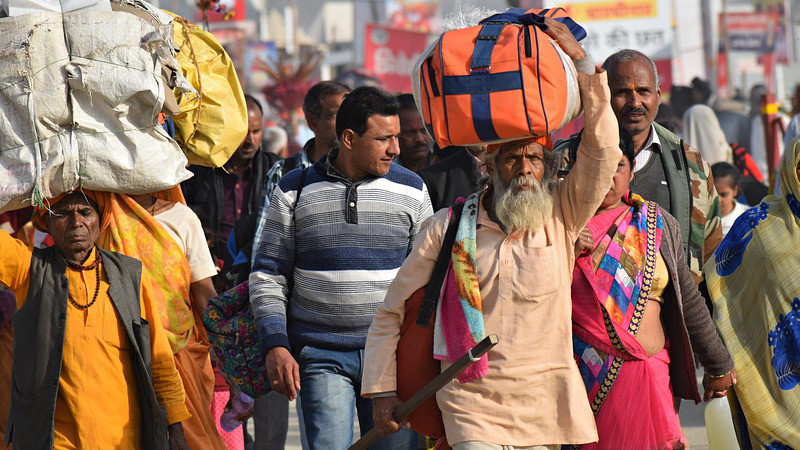
India has recently become the world’s most populous country, with 68 per cent of its population working age individuals between the ages of 15 and 64. This demographic structure — often referred to as a demographic dividend — has the potential to generate very high economic growth if India can create productive employment opportunities for its large working age population.
But data from labour force surveys indicates that this is a big challenge for the economy at present. Some 45 per cent of the workforce continues to toil on farms in the agricultural sector, while in the non-agricultural sector, 74 per cent of workers are employed in low-paying informal work in microenterprises. Indeed, among young people aged between 15 and 29 years, approximately 28 per cent are engaged as ‘unpaid helpers in household enterprises’. And here too, the agriculture sector remains the principal source of employment, accounting for 36 per cent of employed youth.
India will need a radical reorientation of its growth strategy if it is to address the challenge of productive job creation and harness its demographic dividend, making the growth process more employment-intensive. The Indian experience shows that growth alone cannot be the principal instrument of job creation, as it is the sectoral composition of growth that determines the quantity and nature of employment opportunities created. India’s idiosyncratic structural transformation from agriculture to services — leapfrogging the phase of manufacturing growth — has generated limited opportunities for well-paid employment for those at the lower end of the education and skills ladder.
This contrasts with China’s experience, with its rapid decline in the employment share of low-productivity agriculture and boom in labour-intensive manufacturing for export. Between 1978 and 2010, the share of employment in Chinese agriculture declined from 70.5 per cent to 36.7 per cent. In India, the corresponding shares declined at a slower pace from 71.1 per cent to 51.3 per cent during the same period.
The sluggish pace of structural change continues to pose a challenge for the Indian economy. While high end-services, in particular IT and finance, will remain an important source of employment for the highly skilled and educated, generating productive employment for the relatively low-skilled will require making industrialisation, in particular labour-intensive manufacturing, a central focus of a national growth strategy.
Such a strategy will not only generate employment, but also enhance the earnings of those at the bottom of the income distribution who have a high marginal propensity to consume. A boost in domestic demand can create a virtuous circle of consumption of manufacturing goods and industrial development, accelerating the growth of output and employment in the manufacturing and services sector.
India must embrace a two-pronged approach to achieve labour-using industrialisation — 1), encouraging the entry of more formal firms into labour-intensive sectors and 2), raising the competitiveness and productivity of the many small and medium enterprises that dominate labour-intensive industries. The former merits special attention as international firms look to the Indian market as a way to diversify their businesses and investments beyond China.
Apart from addressing infrastructural bottlenecks, regulatory impediments and India’s complex tariff structure, attracting global investments requires strengthening fundamentals of the economy, in particular human capital. Despite improvements over the years, India’s literacy rate is still only about 74 per cent for the population aged above 15 years, compared with almost 97 and 95 per cent for China and Indonesia respectively. Data from the Annual Survey of Education Report conducted over the past 15 years show that learning outcomes leave much to be desired, often impeding the ability of young job seekers to attain the jobs they desire. These challenges are exacerbated by technological developments which reshape labour markets not only by making some jobs obsolete and creating new ones, but also retooling existing jobs that require new skill combinations.
Against this backdrop, policymakers need to adapt education and skilling systems to ensure that Indian labour can meet the complex and evolving skills demanded by an ever-changing world of work.
Over and above all these factors, India will not be able to realise its demographic dividend unless it is able to bring more women into the labour force and into productive employment. At present, India’s female labour force participation rate stands at 37 per cent, with 64 per cent of all employed females in the agriculture sector. Bringing more women into gainful employment not only requires addressing regressive social and cultural norms, but also investment in childcare service provision, health, education and technology and infrastructure services that allow more time for market work.
While it is important to bring more women into the labour force, it is equally important to improve their access to decent, productive and well-paying employment opportunities. India must adopt a macro-policy framework that supports gender-equitable inclusive growth and more jobs for women.
Harnessing India’s demographic dividend requires correcting the imbalances in the country’s structural transformation, in particular the failure of the labour intensive manufacturing sector to become an engine of job growth. Labour should be recognised as more than a mere factor of production whose cost has to be pushed down, but as human capital that must be nurtured to realise the potential of India’s demographic sweet spot.
About the author: Radhicka Kapoor is Professor at the Indian Council for Research on International Economic Relations (ICRIER).
Source: This article was published by East Asia Forum
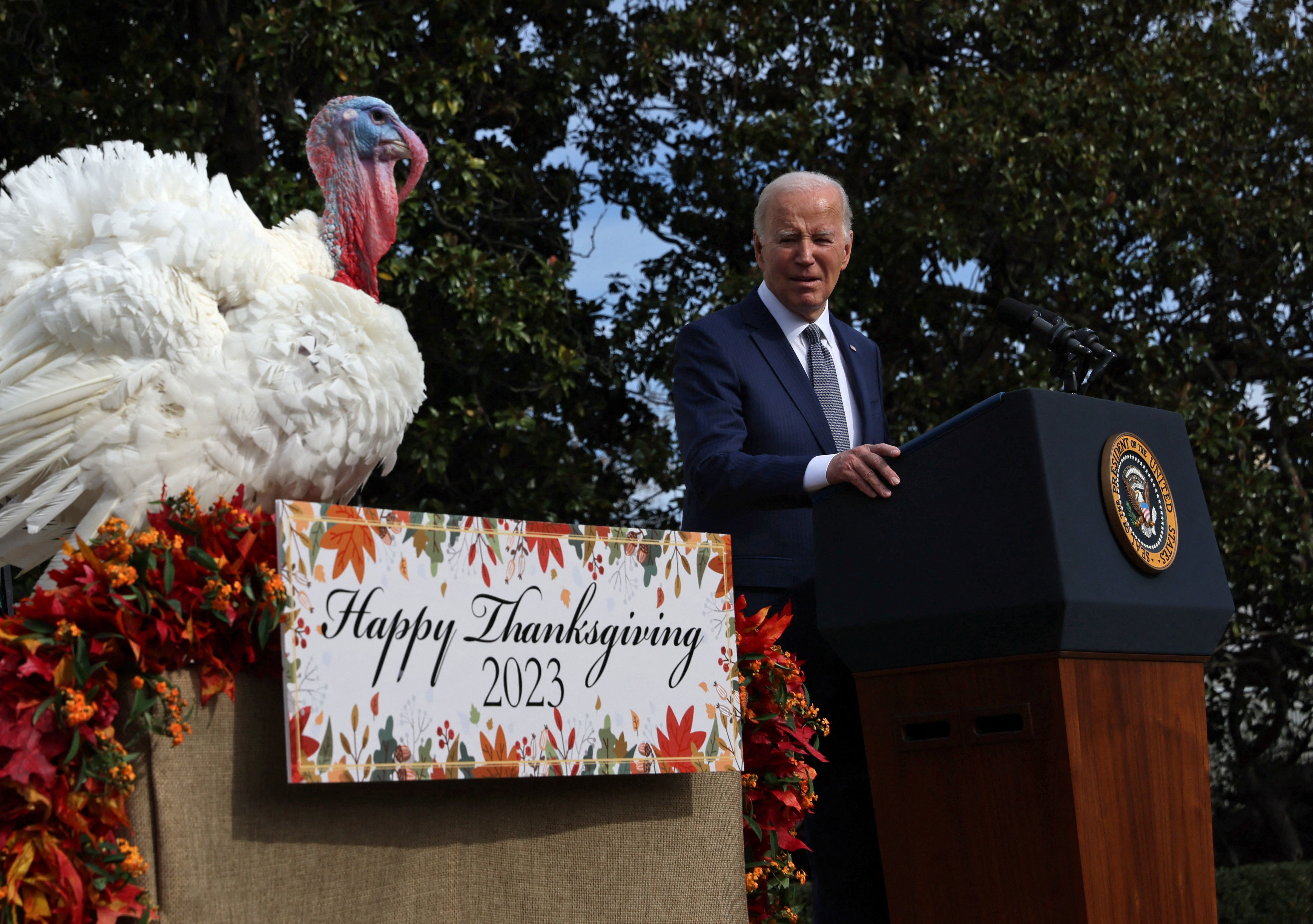
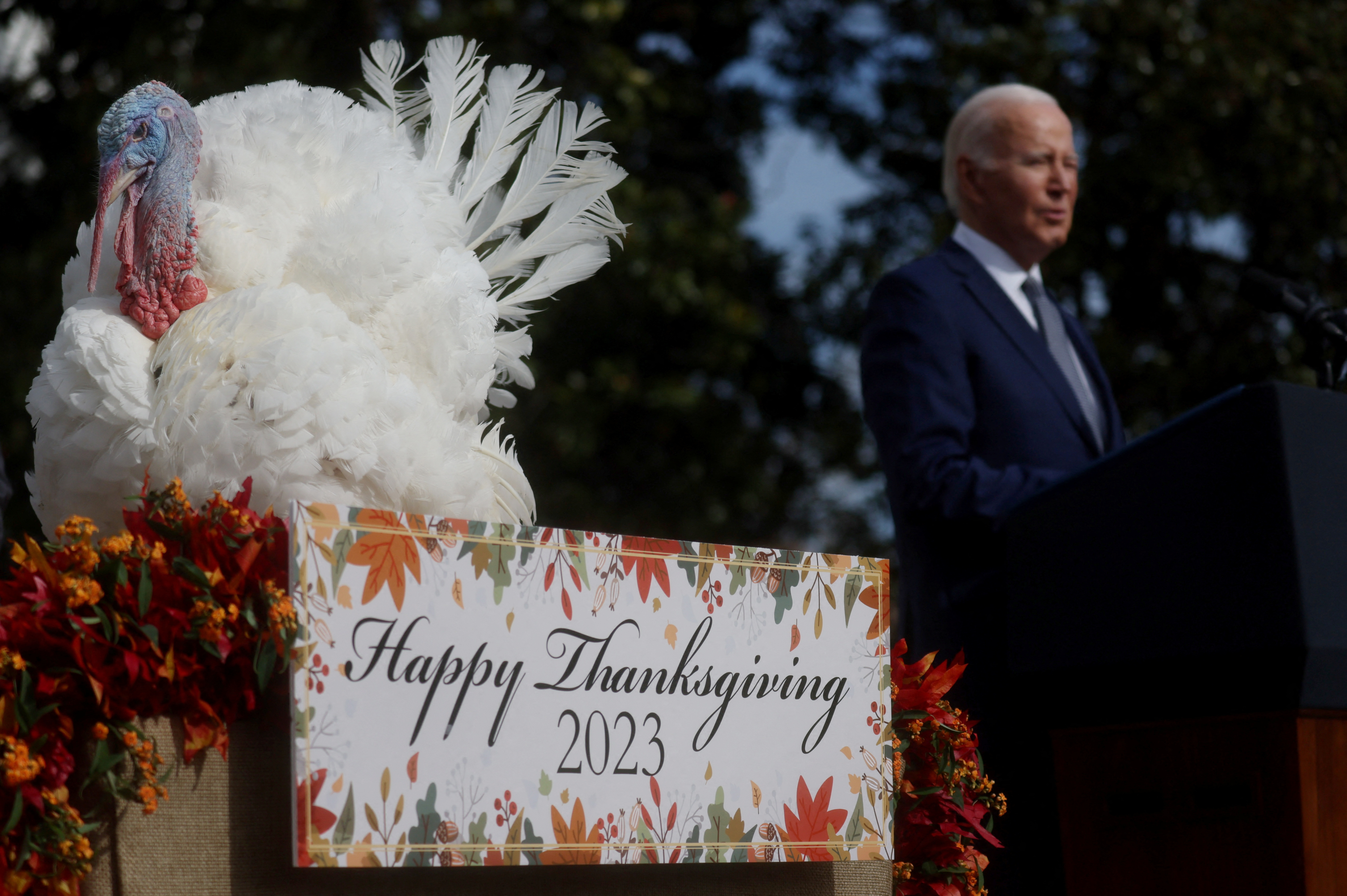
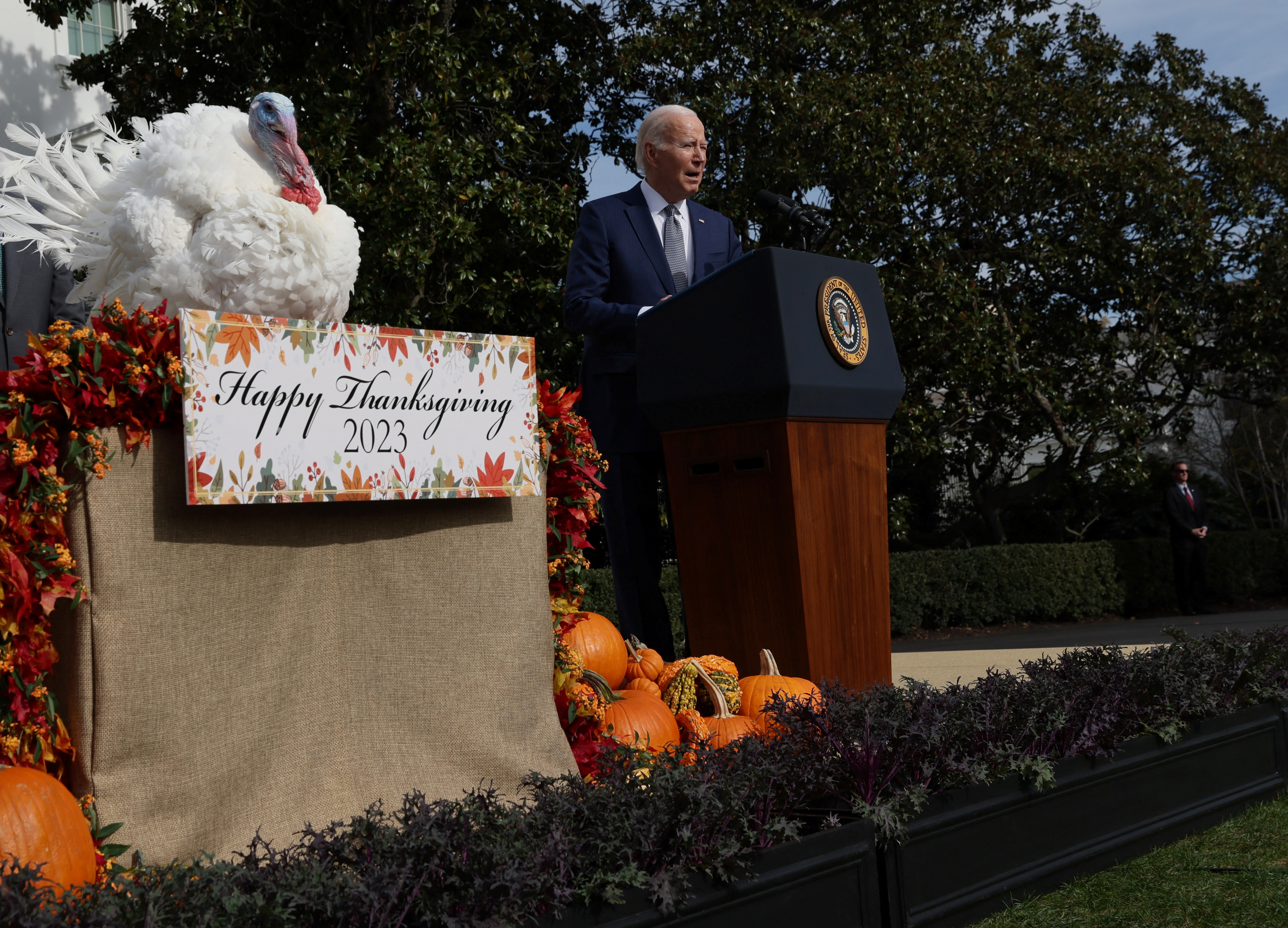
U.S. President Joe Biden pardoned two enormous white-plumed turkeys from Minnesota on Monday, granting Liberty and Bell freedom from Thanksgiving dinner tables as Americans prepared for their annual feasts.
With schoolchildren squealing in delight from the audience on the South Lawn of the White House, Biden took part in an annual tradition that goes back decades.
“These birds have a new appreciation for the words ‘let freedom ring,'” said Biden.
Liberty weighed in at 42.5 pounds (19.3 kg) while Bell weighed 42.1 pounds.
“That’s a big bird, man,” Biden said of Liberty as the turkeys gobbled.
The two turkeys had spent the night in tranquility at the Willard Hotel not far from the White House.
They were raised in Willmar, Minnesota, under the direction of the National Turkey Federation. The turkeys will “retire” to the University of Minnesota’s College of Food, Agricultural and Natural Resource Sciences in St. Paul.
Millions of turkeys will be roasted in Thanksgiving ovens across the country on Thursday and drenched in gravy, accompanied by a variety of side dishes including holiday staples like stuffing, potatoes, cranberry sauce and green bean casserole.
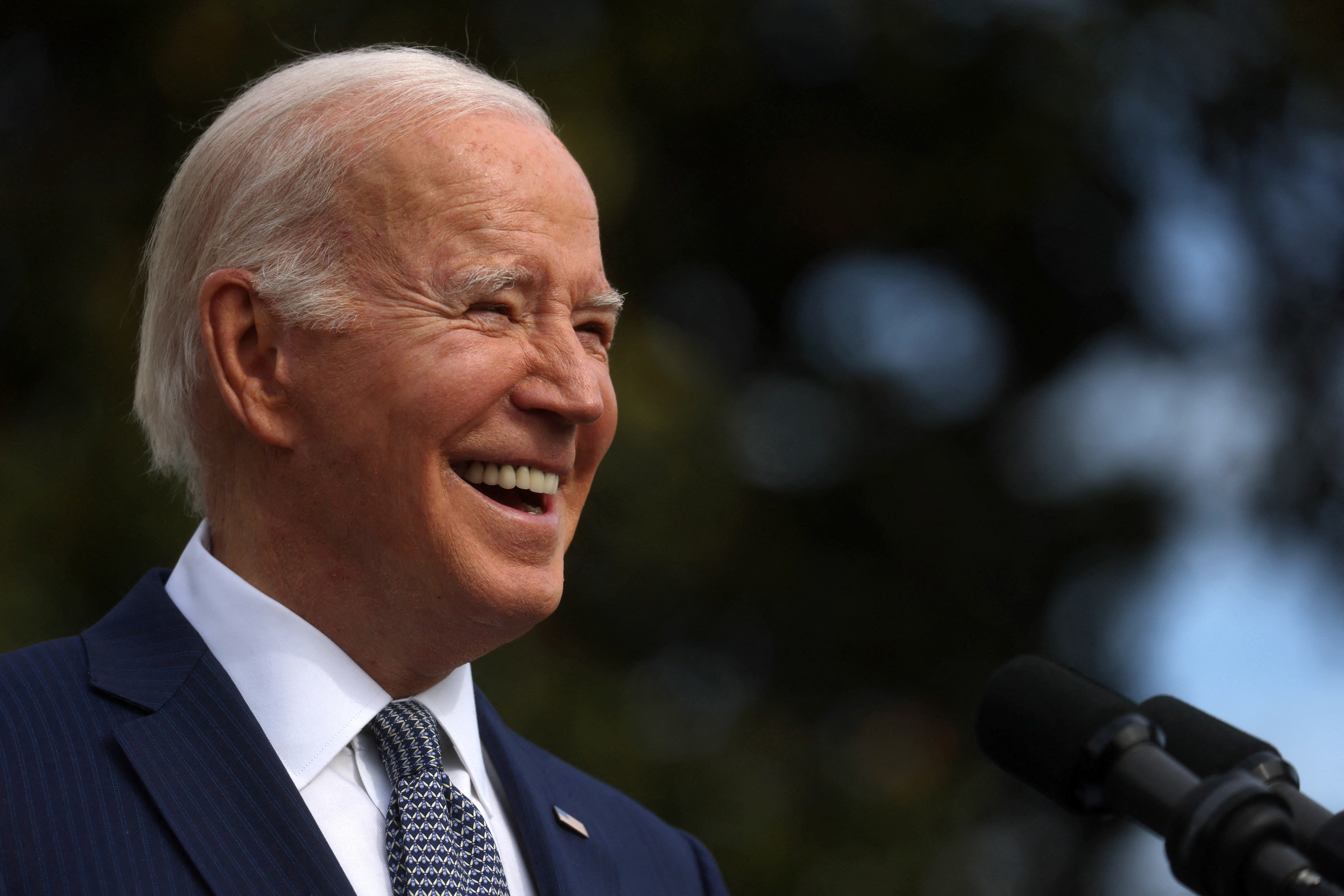
Biden noted that while it was his birthday as well on Monday, he was not around for the first such turkey pardoning event 76 years ago.
“I want you to know I wasn’t there at the first one. I was too young to make it up,” he said.
Biden turned 81 years old on Monday.