
IDF lookouts warned commanders about Hamas but were told to stop bothering them: report Business Insider
Day: November 19, 2023
By Can Kasapoğlu
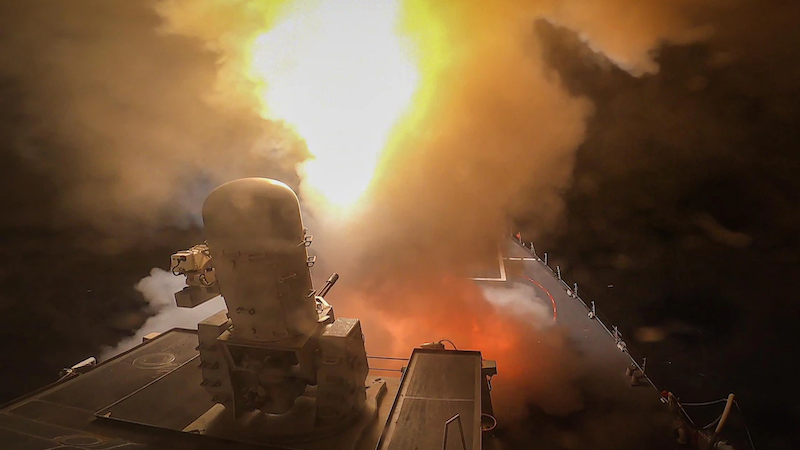
The Houthis launched missiles from Yemen from an operational range of almost 1,000 miles and downed a US drone. The escalating tensions are presaging a larger threat ahead.
The Arrow defensive strategic weapon system saw its true combat debut against a ballistic missile, likely scoring an exoatmospheric kill. The previous record of the Arrow baseline was in 2017 against a Syrian S-200 interceptor missile.
The Israel Defense Forces’ (IDF) Gaza campaign has entered its third and main military phase. Subsequently, the question of who will rule Gaza after Hamas will likely shape the core political objectives of the unfolding combat operations.
Hezbollah showed signs of gradually intensifying its combat engagement, though the rhetoric of its leader, Hassan Nasrallah, remains restrained thus far.
1. The Houthis’ Emerging Missile Warfare Edge is a Cause for Concern
While the IDF’s large-scale ground incursion in Gaza naturally makes the headlines, the Houthis’ missile warfare campaign targeting Israel from Yemen illuminates a potentially significant security trend in the Middle East.
Since the outset of the war in Gaza, the Houthis have assumed an increasingly active role, attempting to hit Israeli territory with missile and drone salvos. The preparedness and resolve of the Houthi combat formations, backed by Iran’s Revolutionary Guards, also showcases Tehran’s growing ambitions for its Yemeni proxy.
The missile portfolio of the launches portends a new era in the region. In a recent attack, Houthi forces launched a medium-range ballistic missile from Yemen toward the Israeli city of Eilat, covering an impressive distance of at least 1,600 kilometers (roughly 990 miles). The range was a milestone for the Houthis, and probably the longest-range ballistic missile strike launched from a ground battery in the Middle East. Moving forward, the Houthis present a threat that bears monitoring.
2. The Arrow Missile Defense System Debuts in Action
The Houthis’ launch also highlighted the first successful interception by Israel’s Arrow missile defense system. While the details on the possible exoatmospheric interception remain unclear, the Arrow 2 Block-4 series was reportedly the defensive strategic weapon employed by the IDF. The state-of-the-art ballistic missile defense system is known for its high-altitude interception capabilities and its ability to target missiles with multiple warheads.
It is not the Arrow family’s first rodeo. A few years ago, the Arrow 2 family previously intercepted a Syrian S-200 surface-to-air missile (SAM) attempting to prey on Israeli Air Force jets in Syria. Thus, the recent interception marks the Arrow’s combat debut against ballistic missiles.
Missile warfare is an offense-dominant segment of military science, as a statistical assessment of Yemeni missile launches reveals. Between March 2015 and April 2020, for example, the Gulf Arab coalition’s strategic defensive weapons systems scored more than 162 intercepts of Houthi ballistic missiles. Still, while the Saudi and Emirati air and missile defenses performed well, they could not prevent every attack—some of which led to high casualty counts—and could not, despite their superior air forces, eliminate all Houthi ground launchers.
So far, Israel’s missile defenses have prevented the Houthis’ ballistic missiles from scoring a successful hit. But even one unsuccessful interception could result in a completed strike on a major population center. Given the heavy combat payload of ballistic missile warheads and the high velocity of the weapon, this could be a potentially catastrophic outcome.
3. A Tale of Two Parades: Iran Continues to Supply the Houthis’ Long-Range Strike Capabilities
To develop a thorough understanding of the improvement in the Houthis’ long-range strike capabilities, one must only examine a pair of military parades put on by Iran and its proxy organization in Yemen in 2022 and 2023.
In September 2022, the Houthi militia and Iran held large-scale military parades showcasing their combined, and quickly improving, missile warfare prowess. A technical assessment of the parades irrefutably shows that the Houthi weapons—some subsequently used against Saudi Arabia and the United Arab Emirates—were for the most part copies of existing Iranian systems. This suggests how Tehran has used its missile war against its Gulf Arab geopolitical competitors as a laboratory to test-run solutions for future conflicts.
During the September 2022 parade, the Houthis displayed several previously undisclosed missile systems, also likely of Iranian origin. These included the Karar, which resembles the Iranian Fateh-110 solid-fueled ballistic missile; the Aasif, an anti-ship variant of the Fateh-110 that possesses an electro-optical homing seeker and closely resembles the Iranian Khalij Fars; and the Hatem, which features a range of 1,450 kilometers (roughly 900 miles) and mimics the solid-fueled Iranian Kheibar Shekan, introduced in early 2022 and one of the newest systems in Iran’s arsenal.
During the parade, the Houthis also introduced a new liquid-fueled ballistic missile named the Faleq. Like other assets in its arsenal—including the Burkan-2H, Burkan-3, and Zulfiqar—the Faleq is allegedly an exact copy of the modified Iranian-made liquid-fueled Qiam-2 baseline. The differentiating factor is the Faleq’s detachable, finned reentry vehicle, which enhances precision, aligning it with the latest technology in Iran’s arsenal of liquid-fueled short-range ballistic missiles.
All the hardware in the Houthis’ September 2022 parade showcased a shift in Iran’s military support for its Yemeni proxies in two key ways. First, it indicated Iran’s willingness to share its advanced missile technologies—like the Faleq and Hatem missiles, which have new advancements in homing guidance and maneuverable reentry—with the Houthis. Before the 2022 parade, analysts thought Iran would be more reserved in its technology and capability transfers to its militias. This seems to have changed.
Second, the missiles displayed in the parade presaged a drastic change in Iran’s approach to supplying weapons to its regional partners. Until then, Iran traditionally supported its proxy network through the production of more rudimentary systems in the proxy’s home country. This strategy was complemented by the smuggling of disassembled Iranian stocks of more complex arms. The appearance of large and advanced ballistic missiles in the September 2022 Houthi showcase suggested that Iran was in business with more serious intentions than ever before.
A second Houthi military parade, in September 2023, confirmed these trends. Among the showcased missile systems, Aqeel, a precision-guided derivative of Iran’s medium-range Qiam ballistic missile baseline, stood out. Differing from most missiles previously used in Yemen, Aqeel marked a significant boost in the Houthis’ long-range missile capabilities. The parade also showcased the second version of Iran’s Qiam, featuring terminal guidance characteristics. During the group’s 2023 parade, the Houthis introduced another alarming missile: the liquid-propelled Toufan. This missile is centered on Iran’s Ghadir baseline and comes with a modified warhead configuration and a range of up to 2,000 kilometers (roughly 1,240 miles).
It is not only the ballistic missile that has given a boost to the Houthis’ combat range. Other alarming solutions that the Houthis showcased in their September 2023 parade included various versions of the Quds cruise missile, including the new Quds 4, with potential range enhancements. Remarkably, two other Quds models in the group’s possession also feature advanced targeting: the Sayyad has an 800-kilometer (roughly 500-mile) range with radar guidance for naval strikes, while the Quds Z-0 can effectively destroy both land and naval platforms.
In February 2023, Tehran broke its long silence on the provenance of the Quds missile, acknowledging its similarity to the Iranian Paveh missile. The Paveh, showcased during a Russian defense minister’s visit to Iran in the summer of 2023, and later at Tehran’s own annual military parade in September of that year, is distinctively designed for canister launches. Open-source intelligence has confirmed that the Quds 4, which was derived from the Iranian Paveh, recently crashed in Jordan after it was intercepted on its way to Israel.
4. The Houthis Downed a US Unmanned Aircraft
On November 8, the Houthis downed an American MQ-9 Reaper unmanned aerial vehicle (UAV) off the Yemeni coast. While the Pentagon claimed that Houthi forces tried to capture the downed drone, its explanation also highlighted that the UAV crashed in the Red Sea, which reduced the chances of its recovery.
The incident escalated regional tensions amidst the United States maritime and aerial reinforcements recently arrived in the Red Sea. At present, the US maintains a robust presence in the strategically pivotal Red Sea corridor, with carrier strike group deterrents involved. A few weeks ago, the Arleigh Burke–class destroyer USS Carney intercepted a barrage of missiles and drones unleashed by the Iran-backed Houthis. It is not clear whether the long-rangesalvo was intended to hit Israeli or American assets.
5. The Chinese Navy’s Posturing Continues in the Middle East
In October, the Chinese Ministry of Defense announced that the People’s Liberation Army Navy’s (PLAN) 44th Escort Task Force had berthed at Abu Dhabi, the strategic hub of the United Arab Emirates. Accompanied by the UAE Navy, the PLAN contingent, including the warships Zibo, a Type 052DL destroyer, and Jingzhou, a 054A Frigate, executed a coordinated entry into Port Zayed alongside the supply ship Qiandaohu. The port visit attracted several high-profile attendees from the UAE. With the recent arrival of the Chinese reliever task force naval group—including the missile destroyer Linyi, the missile frigate Urumqi, and the supply ship Dongpinghu—China’s maritime presence in the Middle East had markedly increased by October.
At first glance, the rotation of the 44th and the 45th naval groups appeared to be just another round in the PLAN’s overseas deployment in the region, which is often ostensibly for counter-piracy and maritime security efforts. At a minimum, the deployment enables Beijing to rotate vessels and show its flag in the Middle East.
More alarmingly, these Chinese engagements—along with similar naval exercises with Iran, Pakistan, and Russia—hint at grander objectives. China’s promotion of a maritime silk road is not merely a commercial goal, but also a strategic ambition, designed to link naval diplomacy with the geopolitical aims of its Belt and Road Initiative.
The People’s Liberation Army’s 2017 establishment of a military logistics hub in Djibouti illustrates these ambitions in action. After initially downplaying the Djibouti hub as an assistance center for anti-piracy operations, Beijing later openly classified the development as a military outpost. The expansion of this base to accommodate China’s naval assets underscores its pivot away from anti-piracy toward broader military ambitions. Beijing’s clear intent to establish a more permanent stance in the Indian Ocean and the Persian Gulf shows that its Djibouti base is merely an inaugural step, with future facilities underway.
Beijing’s twofold push, blending commercial ventures with military expansionism, has highlighted the importance of the Red Sea as a potential arena for future great power competition.
6. Gaza War Update: Battlefield Geometry and Assessment
In response to the October 7 attacks, the Israel Defense Forces have launched a wide-ranging and large-scale campaign into Gaza. So far, the available indicators, including the writings of the Israeli policy community, suggest that the incursion is designed to put a decisive end to Hamas rule in Gaza, reversing the status quo of almost two decades there.
From early to mid-November, the clashes between the Israel Defense Forces and Palestinian Islamic Jihad and Hamas have taken place at a high operational tempo. The IDF has launched a three-axis incursion into Gaza from the northeast, northwest, and east. Tens of thousands of Palestinian civilians have fled to the southern part of the strip from the northern sector via a corridor opened by the IDF. The character of the conflict continues to be shaped by the dynamics of urban warfare, the deliberate use of civilian infrastructure by Palestinian Islamic Jihadand Hamas, and overwhelming Israeli airpower.
Gaza’s largest healthcare facility, Al-Shifa Hospital, also serves as a critical command-and-control node for Hamas, and is currently witnessing heavy combat and casualties. Geospatial intelligence suggests that clashes are taking place a few hundred meters from the hospital area at the time of writing. Israeli intelligence claims that Hamas is using the hospital as a shield to hide command posts and tunnel entry points.
These latest developments illuminate how the ongoing war in Gaza has evolved in three main stages. In the initial stage of the conflict, the IDF positioned ground forces around Gaza while boosting training and combat readiness. In the meantime, Israeli aerial units flew at a very demanding sortie-per-day ratio, executing near-continuous strikes over the Gaza Strip. Their target setincluded both surface-level and underground hubs. During this phase, rocket fire from Gaza into Israeli territory persisted, with over 8,500 rockets fired between October 7 and October 31, some penetrating as far as Tel Aviv, with around 10 percent breaching Israel’s Iron Dome defenses. By November 9, some 9,500 rockets rained down onto Israel. Roughly 3,000 of those were launched on October 7, which is a telling stat that explains the overwhelming character of the terror plot.
In subterranean warfare, Israel’s primary focus during the conflict’s initial phase was to dismantle Gaza’s extensive tunnel network, utilized by Hamas and Palestinian Islamic Jihad’s armed wing, the Saraya al-Quds, for logistics, command and control, and combat operations. The IDF also targeted and neutralized key figures within the Hamas command hierarchy, including high-ranking intelligence officials and tactical commanders. These actions clarify that the IDF’s center of gravity assessment for the Hamas–Palestinian Islamic Jihad coalition revolved around the groups’ tactical- and operational-level command.
The second phase of Israel’s operations, spanning three nights between October 25 and October 27, witnessed IDF infantry, armor, and engineering incursions into Gaza. These operations, though they led to some Israeli casualties, laid the groundwork for the third, large-scale phase of the campaign to follow.
This phase began in late October and continues today. It has been characterized by a larger IDF deployment and intensified supporting fire, with Israeli forces maintaining their positions in Gaza. Within six days of the commencement of this third phase, the Israel Defense Forces tactically penetrated Gaza from three vectors, with their initial push observed in the northwestern coastal sector, also known as the Beit Lahia corridor. Subsequently, the northeastern front opened, referred to as the Beit Hanoun approach. Later, an eastern ingress near Gaza City opened—the Johr al-Dik passage, which has effectively bisected Gaza into northern and southern halves.
The initial phase of the IDF’s advance through open terrain bordering dense urban areas was marked by dynamic artillery strikes that neutralized numerous underground explosive devices. This area was underlain by a complex network of tunnels with multiple exit points, from which Hamas triggermen engaged in asymmetric tactics, on occasion enveloping the IDF from rear positions. Throughout the war, tactical teams from the Saraya al-Qudsand Hamas have also launched numerous attacks utilizing tandem-charged rocket-propelled grenades (RPGs), mostly of the Yassin type, from elevated positions. After some initial weeks of moderate combat, the conflict intensified sharply, as Israeli forces approached urban settlements. This continued until secondary IDF echelons started meticulously searching the terrain for clandestine access points to the tunnel network, which they have been attempting to destroy in an effort to thwart the operational capabilities of Hamas and the Saraya.
Providing an accurate number of casualties among Hamas and Saraya fighters remains a difficult task, due largely to the unreliable nature of official reports from the organizations themselves, which often inflate military losses by combining them with civilian casualties. Yet indicators suggest that the number is high. Notably, the IDF has killed a substantial number of Hamas combatants in their underground complex using munitions designed to penetrate the surface before detonation.
As the IDF ground forces press forward, the air component of their attack continues to intensively engage targets across the Gaza Strip, with a particular focus on the northern sector. These operations revolve around targeting Hamas leadership, with over a dozen high-ranking figures confirmed killed to date. By early November, the IDF had shelled 12,000 discrete sites, using a diverse arsenal ranging from bunker-buster munitions and conventional aerial bombs to precision-guided missiles from UAVs and anti-tank missiles from rotary-wing platforms.
Within Israel, although the majority of Israeli Arabs have either expressed opposition to Hamas or remained silent, a minority has exhibited some support for the terror group, leading to the arrests of 27 people for supporting terrorism, while other Hamas sympathizers in Israel have faced lesser consequences like the termination of their employment. And while the situation on the battlefield is still developing, open-source intelligence reports that almost all Israelis who lost their lives within Israel’s borders during the October 7 terror attacks have been found, though some have yet to be identified.
Currently, the confirmed initial death toll on the Israeli side from the attacks of October 7 exceeds 1,400, including hundreds of military personnel, with injuries reported in the thousands. As of the time of writing, over 195,000 Israelis living in the border region between Gaza and Lebanon have also been internally displaced.
7. Envisioning the Day after Hamas
Presuming Israel’s ground offensive in Gaza yields an eventual victory, the important consideration of what a post-Hamas Gaza looks like will loom large.
Even if the senior leadership of Hamas—who do not live in Gaza—is eradicated, would the IDF occupy and administer Gaza indefinitely, likely engaging in continuous counterinsurgency efforts? If not, withdrawing without political closure could ignite an internecine struggle for power, leaving a vacuum that could be filled by remnants of Hamas or by its more-radical counterpart, Palestinian Islamic Jihad. Moving forward, this will be the main non-military problem Israel will need to solve.
8. Will Hezbollah Maintain Its Surprisingly Low Profile?
Recent days have witnessed a gradual increase in Hezbollah’s military activity. Its drone and rocket attacks are intensifying. Nevertheless, at the time of writing Iran’s largest proxy remains half-committed, at best, to the fight. During his Friday sermon on November 3, Hassan Nasrallah, the group’s secretary-general, stated that the ongoing war has been completely a Palestinian effort, though he did not exclude the possibility of a prolonged conflict with potentially serious regional consequences. Thus far, Nasrallah’s rhetoric has been somewhat restrained.
Following the evacuation of Israeli civilians from the area along the Israel-Lebanon border, the IDF’s posture there shifted from defensive to offensive operations, as it targeted Hezbollah’s anti-tank missile units with a combination of manned aircraft, drones, tanks, and artillery. Palestinian factions in Lebanon, especially the Saraya al-Quds of Palestinian Islamic Jihad, have also engaged in the conflict, leading to fatalities among their ranks.
Simultaneously, Iran-backed groups have been targeting the American military presence deployed in eastern Syria and Iraq. It remains to be seen if these attacks will elicit a more significant deterrent response from the US.
About the author: Can Kasapoğlu is a Senior Fellow at the Hudson Institute
Source: This article was published by the Hudson Institute
By Edit Morin-Kovács
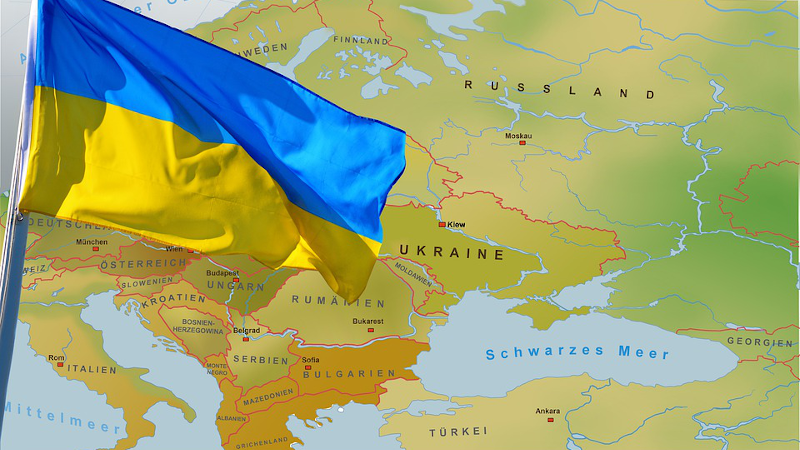
The liberal peacebuilding model has unquestionably been one of the primary approaches to building peace in the post-cold war era. It is founded on two ideas: that conflicts are less likely to occur in liberal states that uphold democratic systems, minimize state intervention and support individual freedoms; and that the path to sustainable development involves strengthening the interplay between peace, democracy and a market economy. Can any insights from its application be useful for Ukraine’s stabilization and recovery once the war there ends?
Memorable conversations
When we reflect on the lessons of history, certain conversations tend to stand out more prominently. These discussions leave a lasting impression on us due to the quality of the engagement, the depth of connection between participants and the significance of the outcomes.
For me one such conversation took place in 2015, involving Ukrainian stakeholders and monitors from South East European countries who were part of the OSCE Special Monitoring Mission in Ukraine. It delved unexpectedly deep, transcending boundaries, ideologies and historical divides. What made it particularly poignant was the shared experience of war, displacement and human suffering, and of the profound effects these things have on every facet of life. At that time, the possibility of Russian tanks advancing towards Kyiv was a distant yet hauntingly plausible scenario, a shared fear that resonated with some. Looking back, the conversation echoed the words of Yugoslav writer and Nobel laureate Ivo Andrić: ‘Between the fear that something would happen and the hope that still it wouldn’t, there is much more space than one thinks.’
Eight years later, in May 2023, at the Stockholm Forum on Peace and Development, this lived and shared experience served as the starting point of a panel discussion hosted by the Dag Hammarskjöld Foundation titled ‘Ukraine and Lessons Learnt from the Western Balkans’. The discussion included researchers, policymakers and practitioners from South Eastern Europe. By this time, more than one year had passed since the full-scale Russian invasion of Ukraine on 24 February 2022, leading to an ongoing war with far-reaching global repercussions. In this conversation, a vibrant debate emerged about the concept of liberal peacebuilding.
Liberal peacebuilding: still relevant?
The liberal peacebuilding model, which was shaped by the United Nations Secretary-General’s 1992 report An Agenda for Peace, has become one of the dominant approaches to promoting peace over the past 30 years, extending its reach around the world. Its effectiveness has largely hinged on factors such as the acceptance of its principles by local stakeholders; the careful consideration of cultural, historical and sociopolitical factors during international interventions; and a willingness to adapt based on feedback and results. Additionally, the geopolitical context has played a crucial role in determining its success.
Dilemmas, limitations and controversies have, however, emerged regarding the model’s effectiveness and legitimacy; for example in Afghanistan, Sierra Leone, Somalia and Sri Lanka. In these and several other places, Western norms of democracy, good governance and market economics did not align well with local dynamics and historical contexts, resulting in a lack of local ownership and the exclusion of marginalized groups—exacerbating existing social divisions and inequalities.
In 2023, as we witness the erosion of democracy and the rules-based world order and a world increasingly divided and polarized due to tectonic geopolitical changes, the future of liberal peacebuilding appears uncertain. The UN Secretary-General’s 2023 New Agenda for Peace, which supports a broader UN reform agenda, still promotes the liberal peace theory, but its applicability in these new realities remains a topic of debate.
Mixed lessons from the Western Balkans
The dissolution of Yugoslavia and the conflicts in the Balkans during the 1990s presented the international community with the challenge of addressing conflicts, managing crises and understanding the various phases of the conflict cycle in a post-cold war environment. At that time, there was a spirit of cooperation and solidarity, and the central theme was that building liberal states would bring enduring peace to the war-torn Balkan regions.
What is the result nearly 30 years down the line? A mixed picture. While conflict has been reduced, ethnic tensions and nationalism persist in some areas, flaring up frequently and very recently in Kosovo’s flashpoint Mitrovica/Mitrovicë area. The region has not reverted to war, but significant shortcomings remain. The focus on what type of states to build has often overshadowed addressing the root causes of conflicts. Rapid elections were prioritized over their long-term consequences, reinforcing elites being perceived as corrupt and ethno-nationalist. Rapid reforms were carried out within a weak rule of law and legitimized by these elections. Quick economic reforms took precedence over the potential consequences of privatization, dismantling public goods and assets, impeding progress, perpetuating inequality and contributing to social tension and unrest, as seen for example in the 2014 protests in Bosnia and Herzegovina. Despite democratic progress, challenges related to the rule of law and corruption persist, and economic progress remains uneven to date.
While the prospect of European Union integration has driven reform and development in the region since the 2000s, progress has stalled in recent years. Croatia and Slovenia are the only countries with full EU membership, and negotiations with North Macedonia only began in 2022. The EU Commission has only recently, in its 2023 Enlargement Package and Growth Plan for the Western Balkans, recommended that the Council opens accession negotiations with Bosnia and Herzegovina, offering the same path in parallel to Moldova and Ukraine and candidate status to Georgia. In the Western Balkans, while trust in the EU remains strong (except in Serbia), fatigue and scepticism about membership itself is growing, providing space for other actors like Russia to strengthen and China to exert influence.
Turning lessons into questions for Ukraine and beyond
In Ukraine, the liberal peacebuilding approach was in play between 2014 and 2022. This period saw a gradual partial transformation of the institutional, social, political and economic landscape as Ukrainian citizens rebuilt their lives and communities. To some extent, it was a rehearsal for a similar transformation at a much greater scale that will inevitably happen when there is peace again. When peace becomes a more tangible goal, it is essential to ensure that efforts to achieve short-term stability do not overshadow long-term peacebuilding efforts that consider the diverse needs of communities affected differently by the prolonged conflict.
What can the international community do? It should continue to stand in solidarity with Ukraine, offering support to local stakeholders. At each step, it must question how pre-existing methods of operation will impact Ukraine’s long-term roadmap. Set at the intersection of cultures and paradigms mirroring global agendas, the question arises: How far can the liberal peacebuilding model be extended within Ukraine? Furthermore, how far east of Ukraine and how far south, globally? And if it does not prove effective, what alternatives exist?
Lessons provide insights, but their real value lies in the questions they generate and the impact these questions drive. Where do the countries of South Eastern Europe see themselves in the next 30 years? Where will Ukraine be in the next 30 years? Will there be a continued commitment to the ideals of liberal peace, the liberal world order and, consequently, liberal peacebuilding interventions? Meanwhile, the conversation continues. In the words of Dag Hammarskjöld: ‘The pursuit of peace and progress cannot end in a few years in either victory or defeat. The pursuit of peace and progress, with its trials and its errors, its successes and its setbacks, can never be relaxed and never abandoned.’
About the author: Edit Morin-Kovács leads the multilateralism program of the Dag Hammarskjöld Foundation.
Source: This article was published by SIPRI

By Jon Miltimore
In November 2021, former US Representative from Georgia Bob Barr wrote a little-noticed political column claiming that buried inside President Joe Biden’s $1 trillion bipartisan infrastructure legislation was a dangerous provision that would go into effect in five years.
“Marketed to Congress as a benign tool to help prevent drunk driving, the measure will mandate that automobile manufacturers build into every car what amounts to a ‘vehicle kill switch,’” wrote Barr, who was the Libertarian Party’s nominee for president in 2008.
Like most Americans, I had never heard of this alleged “kill switch” until a few days ago when Representative Thomas Massie, a libertarian-leaning Republican, proposed to strip the mandate’s funding.
“The right to travel is fundamental, but the government has mandated a kill-switch in new vehicles sold after 2026,” said Massie. “The kill-switch will monitor driver performance and disable cars based on the information gathered.”
Nineteen Republicans joined all but one Democrat in opposing Massie’s amendment, which failed.
True or False?
The claim that the feds would mandate that every new motor vehicle include technology that could disable the vehicle seemed ludicrous. So I started Googling.
To my relief, I saw several fact-checkers at legacy institutions had determined the “kill switch” mandate was not true.
“Our rating: False,” said USA Today.
“ASSESSMENT: False,” said the Associated Press.
“We rate it Mostly False,” concluded PolitiFact.
(Snopes, a reliably left-leaning fact check group, was a little less conclusive, saying the claim was a “mixture” of true and false.)
Unfortunately, my relief evaporated once I looked at the bill itself.
Sec. 24220 of the law explicitly states: “[T]o ensure the prevention of alcohol-impaired driving fatalities, advanced drunk and impaired driving prevention technology must be standard equipment in all new passenger motor vehicles.”
The legislation then goes on to define the technology as a computer system that can “passively monitor the performance of a driver of a motor vehicle” and can “prevent or limit motor vehicle operation if an impairment is detected” (emphasis added).
How the system will make this determination is unclear, as is the government’s potential role in apprehending suspected drunk drivers (more on that later).
But the law’s language could not be more clear: New motor vehicles must have a computer system to “monitor” drivers, and the system must be able to prevent vehicle operation if it detects impairment.
“No Mention in the Bill of a ‘Kill Switch’”
How fact-checkers determined the “kill switch” narrative to be false is odd, especially since the articles don’t deny Barr’s central claim: The legislation mandates a computer system that will monitor driving performance and be able to disable motor vehicles.
The Associated Press conceded the law would “prevent or limit motor vehicle operation” if the system suspects the driver is impaired, even “disable a vehicle from being operated.” So did USA Today and PolitiFact.
To arrive at their conclusion that this car-killing mechanism is just a fantasy, fact-checkers resorted to sleight of hand. A common tactic was to debunk social media posts that were actually false or unfounded, like the popular claim that the systems would be required to alert law enforcement if the drivers were deemed impaired.
“None of the technologies currently in development would notify law enforcement,” the Associated Press assured readers.
In an odd bit of uniformity, each of the fact-checkers said spokespeople for groups who support the system, such as MADD (Mothers Against Drunk Driving), told them they would never support giving law enforcement access to the system.
My personal favorite, however, was PolitiFact.
“[We] found no mention in the bill of a ‘kill switch,’” PolitiFact concluded.
The idea that the absence of the words “kill switch” in the bill is evidence that a disabling mechanism doesn’t actually exist in the legislation is nothing short of gaslighting.
‘Secure in Persons and Effects’?
The unpleasant truth is that lawmakers slipped into a massive spending bill a mandate that stands to require all new vehicles to have AI-driven technology that can disable your vehicle if the technology determines you’ve had one beer too many. And fact-checkers are using headlines to make it sound as if the legislation does no such thing.
It’s true there is currently no mechanism in the legislation that would require law enforcement to be notified if drivers are suspected of inebriation. But the Associated Press notes that the law “leaves most of the details up to NHTSA” (the National Highway Traffic Safety Administration) to determine at a future date.
From my reading of the bill, there is nothing in the legislation that would prevent NHTSA from requesting or receiving this data. Does anyone believe that in 2027, if the NHTSA requested that system manufacturers turn over the information they collect, it would be told no? Don’t bet on it. The Twitter Files show how quick companies comply when the feds come knocking on their door to retrieve their data, and just how little they care about the privacy of Americans.
And that word — privacy — barely appears in any of the three “fact-checks.” (The single instance is when a MADD spokesman assured readers that the organization remains committed to driver privacy, even though it was supporting a computer system that spies on drivers.) The notion that a system that “passively monitors” drivers might infringe the privacy of Americans doesn’t even seem to have crossed their minds.
Maybe this shouldn’t be surprising. In a world where traffic cameras, license plate readers, NSA mass surveillance, intelligence-gathering “fusion centers,” and widespread warrantless searches are ubiquitous, privacy might seem like a quaint idea. But it’s one the Framers of the American system took seriously.
“The right of the people to be secure in their persons, houses, papers, and effects, against unreasonable searches and seizures, shall not be violated,” the Fourth Amendment to the Constitution reads.
I’m not a constitutional scholar, but it seems to me that the federal government’s requiring automobile manufacturers to install a system that spies on its driver — and disables his car if transgressions are suspected — hardly meets this constitutional standard.
I also suspect mandating the installation of this technology is something Americans of all political stripes would overwhelmingly oppose on principle — put aside for now the immense cost on new vehicle purchases it will add — if they knew about it, which is no doubt why the provision was surreptitiously slipped into a $1 trillion spending bill.
The True Purpose of the Surveillance State
Then again, maybe Americans wouldn’t care if they knew about federal legislation that mandates tech to disable their cars if it suspects that last glass of wine — which you may or may not have had — put you over the limit.
As Robert E. Wright has pointed out, once upon a time, Americans considered spying an invasion of privacy, but those days are mostly gone. Increasingly, many take an “I have nothing to hide” approach. Few seem to realize they are almost certainly breaking laws each day unknowingly, and I’m not talking about driving 65 in a 55 mph zone.
In his popular book Three Felonies a Day, author Harvey A. Silverglate noted that the typical American commits just that: three felonies per day (four, if you see a felony and don’t report it, which is also a crime).
Over the last century, the Land of the Free has slowly transformed into a land governed by endless laws, largely by cracking down on vices instead of actual crimes, creating a society that would render us all criminals if our behavior were constantly observed. Meanwhile, the state has steadily expanded its use of mass surveillance, largely under the pretext of fighting “terror.”
This is a toxic mixture, yet most people seem largely oblivious to the danger it poses. Americans love citing 1984, but it seems few have actually read it. If they had, they’d realize that the terror of living under a surveillance state was the primary theme of George Orwell’s masterpiece, which was inspired by actual totalitarian states.
A simple glimpse into the history books reveals few things are quite as terrifying as a surveillance state. (To experience a taste, I recommend Florian Henckel von Donnersmarck’s fantastic 2006 German film The Lives of Others.) It’s chilling even to imagine what the Stasi or NKVD could do with modern surveillance technology.
The United States is not a totalitarian state, but its growing efforts to control information — which have grown more obvious and ambitious — show that it’s not a neutral bystander, either. Those in government have their agendas, and they are not known for playing nice with those who cross them (just ask Edward Snowden and Julian Assange).
Which brings us to the raison d’être of mass surveillance.
“The asymmetry of the surveillance state belies its true purpose: to protect the government, not the people,” writes Wright.
Once one understands this, it becomes clear why many see grand potential in a law that requires every single new motor vehicle in the country to be monitored and potentially disabled by a computer — and why rent-a-cop fact-checkers would go through such contortions to downplay this dystopian mandate.
About the author: Jonathan Miltimore is the Managing Editor of FEE.org. His writing/reporting has been the subject of articles in TIME magazine, The Wall Street Journal, CNN, Forbes, Fox News, and the Star Tribune.
Source: This article was published by AIER

With Malaysia’s huge leap of 40 places on the World Press Freedom Index earlier this year, the Fahmi Fadzil, the Communication and Multimedia Minister in the new Anwar Ibrahim government boasted of the administration’s commitment to media freedom and a good atmosphere for journalists.
Malaysia had jumped an unprecedented 40 places in the Reporters Without Borders Press Freedom Index, being ranked 73 out of 180 countries, the best in the region. Malaysia under previous administrations had a reputation for prosecuting journalists and activists, forcing them to incur massive legal expenses and possible bankruptcies. The police often carried out searches of media outlets, and expelled foreign journalists, who were critical of the government.
Prime minister Anwar Ibrahim went on record saying that “journalists in the country should feel free to report the news in the new era if it involves criticizing the prime minister and the leadership”.
Qualifications brought in
Before the state elections held last August, the government said that anybody bringing up issues concerning race, religion, and royalty (the 3Rs) would be investigated by the police for possible sedition and criminal defamation. The prime minister himself went into an outburst at a student who asked about the quota system for places at public universities. Anwar brought up the issue of the so-called ‘social contract’ as a reason this issue shouldn’t be discussed or challenged.
The 3Rs and ‘social contract’ were used as tools of censorship by the Mahathir government back in the 1980s.
Clandestine media repression going on today
A number of activists and news portals talking and writing about corruption issues concerning government contracts awarded to companies, and land swaps utilized as the terms of payment, found themselves with defamation letters of demand and suits for civil defamation. These threats were launched by corporations against individuals and news portals that are only surviving financially on a marginal basis.
Consequently, a number of online news portals made informal and ‘secret agreements’ with these companies not to mention the issue in future or carry any material criticizing their corporations and activities. Online new portals have complied, as most cannot financially defend any legal action, even though it may be frivolous and supercilious.
Media discussion on corporate dealings with government that appears to be outside normal government guidelines and opaque has mostly disappeared in the Malaysian media.
The practice of self-censorship by news portals is now at an all time high.
At the same time, a number of online news portals and bloggers have been illegally blocked by the Malaysian Communications and Multimedia Commission (MCMC). Sites like Utusan TV, Malaysia Today, Wee Choo Keong, and the Malaysian Chronicle, and Malaysia Now have all been blocked. Investigation of these blocks by Wee Choo Keong indicated the MCMC was behind these blocks, although the MCMC has either denied or remained silent over the issue. Some of these blocks have been intermittent, where some internet service providers (ISPs) would spasmodically allow access. The Author’s site Murray Hunter has been blocked since October 7. The responsible minister Fahmi Fadzil has also ignored media questions on this issue.
These blocks break national laws as the site owners have not been notified and given any reasons for the blocking of their sites.
Forcing collaboration of social media platforms
Meanwhile, activists are finding their posts on social media platforms like Facebook and YouTube are either, restricted or pulled down. Even posts on the ‘liberal’ Twitter (X) are being restricted. Some posts have been restricted to the point that nobody actually is reading them. This is being undertaken on the pretext of preventing fake-news, mis and dis-information. Those posting to social media are not informed if their posts are being restricted, particularly those at the request of the MCMC.
The government has admitted its working with social media to roll out more censorship. The Malaysian government has even gone to the extent of taking legal action against Meat and Tik Tok for failing to take down ‘undesirable content’. These threats were withdrawn when both social media platforms agreed to cooperate.
The Communications and Digital minister Fahmi said his ministry is looking at steps to strengthen compliance with the law on social media platforms. These include holding social media companies accountable for what is on their platforms, and licensing platforms, and users.
Cancelling press passes
Not all censorship has been covert. The government just recently revoked the press passes of two journalists covering the national parliament. These journalists work for Harakah, the official organ of the opposition Parti Islam Se-Malaysia (PAS).
Media repression in Malaysia has returned to the times of former prime minister Mahathir Mohamed in the early 2000s and former prime minister Najib Razak after 1MDB reports where published in the media. It clearly apparent Malaysia’s miraculous rise in the Press Freedom Index will be very short lived.

While it is at times problematic to draw parallels between European and Asian regional histories, the history of Poland proves an excellent heuristic for global audiences seeking to understand the trajectory of Cambodia. Both states have found themselves in a vulnerable geographical position, often crushed between different imperial conquests or foreign incursions. When considering Polish history, for example, one of the first incidents that comes to mind is the country having been crushed between the Soviet Union and Germany during the second World War. Cambodia has been caught in a similar in-between space throughout the decades and centuries, changing hands between various occupiers throughout its history.
Unlike Poland, however, which saw the fall of its autocratic regime to peaceful revolution in 1989, Cambodia has never quite been able to escape autocracy. Cambodia’s present hereditary autocratic regime, laden with paranoia, exists as a continuation of its past as a country subject to foreign conquests, occupations, and manipulations. It is this history, and the ensuing distrust inherent in its political system, that has influenced the governing Cambodian People’s Party (CPP) to engage in character assassination as a principal tactic to undermine its rivals.
North American observers tend to castigate the United States for Cambodia’s historic and geographic situations – often pointing to United States intervention in Cambodia during the Vietnam War, particularly the seeding of landmines across Cambodian territory. Critics of American foreign policy in particular tend to place the blame for these actions on the now-centenarian former National Security Advisor and Secretary of State Henry Kissinger, who served during the Nixon and Ford administrations. However, American involvement in Cambodia simply functioned as one intervention among several, and was considerably less direct than those interventions which book-ended it: significantly, French colonialism and a period of military occupation by Vietnam.
In 1863, Cambodia became a French colonial protectorate. This situation lasted for 90 years, with Cambodia’s position as a French colony concluding in 1953. The retreat of French colonial power in Southeast Asia led to the emergence of the Khmer Rouge, a radical agrarian Communist organization. At around roughly the same time, the United States backed a puppet regime ruled by the autocrat Lon Nol, in hopes of stemming the tide of Communism in Cold War Asia. Lon Nol, however, was ultimately ousted by the Khmer Rouge in 1975, fleeing toward a life of exile in the United States.
The rule of the Khmer Rouge under the dictator Pol Pot, known by the nickname “Brother Number One”, is generally considered by historians to be the most traumatic point in Cambodia’s recent history. Between 1975 to 1979, bloody political purges in Cambodia by the Khmer Rouge led to between 1.5 million to 3 million deaths. The Khmer Rouge, however, were eventually ousted by the Vietnamese, who fought a brief war against the Khmer Rouge in Cambodia that began in 1978 and led to a continuing military occupation of the country up to 1989. This period was followed by United Nations intervention, which entailed the oversight of a transitional government in Cambodia. It was this period that saw the rise of Hun Sen, the Cambodian People’s Party autocrat who recently, in August 2023, ceded power to his son, Hun Manet. This hereditary model, along with character assassinations of rival parties and political figures, shows that Cambodia is far from any meaningful state of democracy.
Up until the 1980s, Cambodia’s trajectory mirrors that of Poland – a country that has faced “twenty to well over two hundred, invasions, wars […] or foreign operations.” Poland, however, has benefitted from the collapse of Communist autocracy and integration within the European Union. Cambodia, however, has taken a different path – while it is a member of ASEAN, as a bloc ASEAN is significantly less tied-together than the European Union, focused principally on discussions of trade and secondarily on security. Additionally, cultural and civilizational divides remain firmer in Southeast Asia than in Europe.
Cambodia, however, can not be said to have benefitted from the period of transitional governance that gave rise to the hereditary one-party dictatorship of Hun Sen and his family. Although Cambodia is ostensibly a democracy per its constitution, the country has experienced over three decades of governance by the same family and political party. According to the U.S. Library of Congress, the sole challenger to the Cambodian People’s Party is the Cambodian Rescue Party, which has been relegated to a weak and ineffectual status. Visitors to Cambodia will notice massive state-sponsored billboards advertising the glory of the Cambodian People’s Party dotting the country’s national highways, while those advertising the Cambodian Rescue Party are smaller, and have often been anonymously defaced.
Historically, Cambodia and Poland found themselves in similar geopolitical positions. Both were governed by foreign powers for much of their history, typically by way of military occupations resulting from their weak geostrategic location. Both experienced the horrors of war and autocratic rule during the 20th century – Poland’s experience in World War II with competing claims between the Soviet Union and Nazi Germany; Cambodia’s experience as a proxy in the Vietnam War and its subsequent occupation by Vietnam; and both countries’ periods of authoritarian Communist rule, which in each case ended on drastically different terms.
Where the paths diverge is in Cambodia’s position as a developing country that does not benefit from Poland’s location or ability to integrate into a regional organization such as the European Union (of which Poland has been a member since 2004). The view of Cambodia, particularly post-conflict, as a country in need of help may have rubbed salt on the wound through a transitional period that empowered Hun Sen – and whose lasting effects can be seen to this day in the accession of Hun Manet. Up to a point, Cambodia can be considered Asia’s Poland. Although after that point, the path that it has followed differs greatly.
Michael Novakhov’s favorite articles on Inoreader

Save
Israel and Hamas are close to agreement on a U.S.-brokered deal that would free dozens of women and children held hostage in Gaza in exchange for a five-day pause in fighting, say people familiar with the emerging terms.
The release, which could begin within the next several days — barring last-minute hitches — could lead to the first sustained pause in conflict in Gaza.
A detailed, six-page set of written terms would require all parties to the conflict to freeze combat operations for at least five days while an initial 50 or more hostages are released in smaller batches every 24 hours. It was not immediately clear how many of the 239 people believed to be in captivity in Gaza would be released under the deal. Overhead surveillance would monitor movement on the ground to police the pause.
The stop in fighting is also intended to allow a significant increase in the amount of humanitarian assistance, including fuel, to enter the besieged enclave from Egypt.
“We’ve made some progress recently and have been working hard to advance this, but it remains a volatile situation,” an administration official said Saturday on condition of anonymity. After this article was initially published, National Security Council spokesperson Adrienne Watson tweeted that there was “no deal yet but we continue to work hard to get a deal.”
The outline of a deal was put together during weeks of talks in Doha, Qatar, among Israel, the United States and Hamas, indirectly represented by Qatari mediators, according to Arab and other diplomats. But it remained unclear until now that Israel would agree to temporarily pause its offensive in Gaza, provided the conditions were right.
A spokesperson for the Israeli Embassy in Washington said late Saturday that “we are not going to comment” on any aspect of the hostage situation.
Concern about the captives — two of whom Israel said were found dead — along with the rising number of Palestinian civilian casualties have steadily increased pressure on Prime Minister Benjamin Netanyahu’s government. More than 100 countries — but, notably, not the United States — have called for a full and immediate cease-fire.
The decision to accept the deal is difficult for Israel, said one person familiar with the situation who, like others, spoke on the condition of anonymity to discuss sensitive negotiations. While there is strong domestic pressure on Netanyahu to bring the hostages home, there are also loud voices in Israel demanding that the government not barter for their release.
In public remarks, Israel has remained unyielding, while acknowledging the pressure it is under. On Friday, Israeli National Security Council head Tzachi Hanegbi told reporters that the war cabinet had unanimously agreed that a limited cease-fire could occur only after “a massive release of our hostages … and it will be limited and short, because after that we will continue to work towards achieving our war goals.”
In fiery comments Saturday, Netanyahu said the offensive would continue, even as he defended a decision last week to allow the first steady fuel transfers into Gaza since the start of the war. As Israel has pursued its Gaza offensive, it has cut off all but minimal deliveries of the food, water, fuel and medicine that the enclave’s 2.3 million people depend upon for survival. “For international support to continue, humanitarian aid is essential,” he said. “Because of that, we accepted the recommendation to bring fuel into Gaza.”
Netanyahu spoke as thousands of hostage family members and their supporters ended a five-day march from Tel Aviv to Jerusalem to demand government action, with many saying that the lives of innocent Israelis were worth any short-term deal the government has to make to secure their release.
After initial hesitation, the Biden administration, under its own domestic pressure between advocates of unstinting support for Israel’s war aims and concern over the humanitarian crisis in Gaza, has fully backed a temporary pause in the fighting.
Beginning with President Biden’s trip to Tel Aviv a week after the war began, and followed by multiple visits from Secretary of State Antony Blinken and other senior officials, the administration has pushed hard with Netanyahu to understand that it is losing the narrative high ground as more Palestinians die. The death toll in Gaza is now reportedly more than 11,000.
The administration’s highest priority, however, has been freeing the nine Americans and one permanent U.S. resident among the hostages. “I think we need a pause,” Biden said two weeks ago at a campaign event. “A pause means time to get the prisoners out.”
A week later, asked about reports he had pushed for a three-day stop in the fighting, Biden said he had asked Netanyahu for “an even longer pause.” In his news conference Thursday after meeting with Chinese President Xi Jinping, he said that the hostages were “on our mind every single day,” and that he was working on a way to “have a period of time where there’s a pause long enough” to let them be released.
U.S. officials have said they believe a pause would allow Hamas to gather the hostages and arrangements could be made to escort them safely through the battlefield. It was not clear that the Americans or other foreigners would be included in the initial tranche of releases. The hope is that if the release of women and children is successful, other groups of captives will then follow.
Brett McGurk, the White House National Security Council’s top Middle East official, is on an extended trip to the region to try to solidify the hostage release plan, including meetings in Israel and Qatar. Speaking at an international security conference Saturday in Bahrain, McGurk said that negotiations have been “intensive and ongoing.”
The freeing several weeks ago of an American mother and daughter — among the four captives who have been released since the war began — during a brief pause to allow international humanitarian workers to escort them, provided a “track” for “what we hope will be a much larger release.”
McGurk told the conference that Hamas’s release of a “large number” of the hostages, believed to total 239, “would result in a significant pause in fighting and a massive surge of humanitarian relief. Hundreds and hundreds of trucks on a sustained basis entering Gaza from Egypt.” When the hostages are released, he said, “you will see a significant, significant change.”
It was “reasonable,” McGurk said, “to pause the fighting, release the hostages, the women, the children, the toddlers, the babies, all of them.” The initial deal does not include civilian men or Israeli military personnel, a number of whom are women, among the captives.
Those remarks drew an angry response from Jordanian Foreign Minister Ayman Safadi, who interpreted them as signaling that a pause allowing humanitarian relief would come only after the hostages were released unconditionally by Hamas. “There’s a lot of negotiations,” Safadi said, “but Israel is taking 2.3 million Palestinians hostage … and denying them food and water and by this war.”
An administration official said any assumption that the United States was conditioning aid on the release of hostages had “grossly misinterpreted” McGurk’s remarks. “Any type of hostage deal would likely result in an increase of humanitarian aid,” the official said. The United States, the official noted, has continuously pushed for an increase of humanitarian assistance to civilians in Gaza.

Israel, the United States and Hamas have reached a tentative agreement to free dozens of women and children held hostage in Gaza in exchange for a five-day pause in fighting, the Washington Post reported on Saturday, citing people familiar with the deal.
As part of the detailed, six-page agreement, all parties would freeze combat operations for at least five days while “an initial 50 or more hostages are released in smaller groups every 24 hours”, the Post reported. Hamas took about 240 hostages during its Oct. 7 rampage inside Israel that killed 1,200 people.
The newspaper said overhead surveillance would monitor ground movement to help police the pause, which also is intended to allow in a significant amount of humanitarian aid.
There was no immediate comment from the White House or the Israeli prime minister’s office on the Post report.
The hostage release could begin within the next several days, according to people familiar with its the agreement.
Israel, the United States and Hamas have reached a tentative agreement to free dozens of women and children held hostage in Gaza in exchange for a five-day pause in fighting, the Washington Post reported on Saturday, citing people familiar with the deal.
As part of the detailed, six-page agreement, all…
The invaders do not stop trying to besiege the town of Avdiivka in Donetsk region as the Russian military command is replenishing the depleted assault units.
 image/jpeg 630_360_1617786260-827.jpg
image/jpeg 630_360_1617786260-827.jpgКто стоит за организацией протестов, кофейный конфликт на Манхэттене, еврейский след в высокой моде.
#ньюйоркnewyork #протесты #chloe #кофе
00:10 Матрасы Марты Минухин на Таймс-сквер
01:45 География пропалестинских протестов
03:55 Еврейский антисионизм
06:00 Израильско-палестинский конфликт в кафе
10:40 Настоящее имя основательницы модного дома Хлое
16:16 Наказание студентов Колумбийского университета
17:10 Гитарист Гари Лукас из Вест-Виллидж
23:25 Семейная кофейня на Брайтоне
28:15 Установка главкой елки у Рокфеллер-центра
*******************
Новости, аналитика, репортажи о США, России и странах постсоветского пространства на страницах «Голоса Америки»: www.golosameriki.com.
Подпишитесь на наш канал в YouTube: http://bit.ly/37ZNXwA
Наши страницы в соцсетях:
Facebook: https://www.facebook.com/golosameriki
Instagram: https://www.instagram.com/golos_ameriki
Twitter: https://twitter.com/GolosAmeriki
VKontakte: https://vk.com/golosameriki
Telegram: https://t.me/GolosAmeriki
«Голос Америки» – самая крупная международная мультимедийная новостная организация в США, которая производит контент на 45 языках мира для более чем 280-миллионной аудитории. Созданный в 1942 году, «Голос Америки» обеспечивает всеобъемлющее, правдивое и независимое освещение новостей и событий.
«Голос Америки» производит контент для диджитал-платформ, ТВ и соцсетей. Наши новости доступны через мобильные приложения:
iOS: http://apple.co/2FP5qcD
Android: http://bit.ly/3890jjt
С помощью бесплатного стримингового приложения «Голоса Америки» VOA+ вы сможете посмотреть наши телепередачи, документальные проекты, вебкасты и авторские колонки ведущих, а также прямые трансляции важных событий в жизни США с синхронным переводом на русский язык. Приложение не содержит рекламы и не требует создания аккаунта.
Приложение VOA+ доступно для скачивания на Apple TV, планшетах (iPad) и мобильных телефонах (iPhone), а также SmarTV на платформе Android TV, планшетах и мобильных устройствах Android, Samsung TV, LG TV и Amazon Fire.
Скачать VOA+ для мобильных устройств Apple: https://apps.apple.com/us/app/voa/id1532399606
Скачать VOA+ для мобильных устройств с Android: https://play.google.com/store/apps/details?id=com.twentyfouri.bbg.voiceofamerica
«Голос Америки» финансируется американскими налогоплательщиками в рамках Агентства США по глобальным медиа.
Редакционная независимость и выполнение миссии «Голоса Америки» гарантируется законом, который защищает журналистов от возможного давления со стороны политиков или государственных чиновников.
Trump crosses a crucial line The Atlantic
Khamenei urges Muslim states to cut political ties with Israel The Jerusalem Post
Putin seeks cooperation with China on military satellites, prospective weapons South China Morning Post
15 Russian ships destroyed in Black Sea, Ukrainian military claims
Ukraine’s military claimed it had destroyed a total of 15 Russian naval vessels in the Black Sea since the start of the war.
Another 12 had been damaged, the military said.
Dmytro Pletenchuk, a navy spokesperson, described Ukraine as the “driver of a new type of naval warfare” having forced Russia to move its naval forces into more difficult positions, as a result of attacks by Kyiv.
The military’s operations carried out in the Black Sea so far have included strikes on the Russian Black Sea Navy headquarters in Sevastopol, and the shipyard in Kerch, which damaged a vessel that had not officially joined the fleet.
Attacks have also targeted warships near annexed Crimea, including a large landing vessel and a submarine.
Ukraine’s EU membership talks ‘at risk’ after ‘reality check’ over war support
A European Union decision to launch membership talks with Ukraine are “at risk”, a senior official said.
Amid regular assurances that the EU would support Ukraine for “as long as it takes” in the face of Russian aggression, the official said the latest discussions in the bloc over further support to Kyiv were a “reality check”.
“Leaders… were realising it’s quite expensive,” they said.
The unnamed official is involved in preparing a summit in Brussels of the EU 27 member states’ national leaders from 14-15th December.
“How do we pay for this?” the official added.
In a potential further blow, the official said there is no agreement to grant Kyiv a further €50bn (£43m).
This comes after a proposal by the bloc’s executive European Commission to revise the bloc’s long-term budget to assign another €50bn for Ukraine through to 2027 was criticised from several sides.
“We cannot allow Ukraine to go bankrupt, it’s not an option for us. But it’s not easy,” the official said.
Finland provides Ukraine with new military aid package
President Volodymyr Zelenskyy has thanked the president of Finland for providing Ukraine with a new military package.
The latest defence package is worth €100m (£87m).
This brings the total of military aid provided by Finland up to €1.5bn (£1.3bn).
“This support strengthens not just Ukraine but also the security of Finland and the rest of our Europe,” Mr Zelenskyy said in a statement on social media.
Thousands of citizens without electricity across Ukraine
Thousands of citizens across Ukraine are without electricity because of shelling and problems at power plants, the Ukrainian government has said today.
Some customers have also been left without gas due to the conflict.
Here is a breakdown of the situation in the different regions across the country:
More than 28,000 customers were cut off from electricity supply due to shelling in Kherson, the Ukrainian government said.
The government added more than 700 customers remain without power due to flooding caused by the explosion at the Kakhovka Dam back in June.
Around 122 settlements remain without power in this eastern region, the government said.
More than 17,600 customers remain without power in the region.
Power companies have restored electricity to 950 customers overnight.
Residents of one of the villages bordering Russia were also left without gas after a medium-pressure gas distribution pipeline was damaged.
Around 150 customers are without gas supply due to damage to gas equipment by a car.
Another 85 customers are without natural gas for technical reasons.
More than 13,000 customers were left without electricity in the region.
In addition, 1,000 customers remain disconnected. Power companies were able to restore electricity to 14,600 customers over the course of today.
Territorial map released by UK’s Ministry of Defence
The UK’s Ministry of Defence has today released an up-to-date territorial map of the situation in Ukraine.
It labels the locations where Russian forces have grouped, where Ukrainian troops are likely to attack and the territory taken by Russia since last year.
Ukrainian power plants need missile defence systems to operate safely – energy company boss
Ukraine’s largest private energy company has said its power plants need more missile defence systems to operate safely, according to its CEO.
“We cannot protect ourselves against ballistic missiles if we don’t have air defence systems,” Maxim Timchenko, CEO of DTEK, said today.
Hundreds of transformers, miles of cables and thousands of diesel generators have been supplied to Ukraine from Europe and members of the Soviet Union and the ex-Communist bloc since the start of the war.
This has provided critical light and heat to the country throughout winter, when temperatures regularly fall below freezing.
“I know that our president and our government have been doing everything that they can to bring the message that we need this equipment to protect our energy system,” Mr Timchenko said.
Every one of DTEK’s 13 power stations supplies energy to more than seven million Ukrainian families.
Each has come under fire from Russia, which has targeted the country’s power grid.
As a result 50% of the company’s capacity has been damaged, destroyed or occupied, causing blackouts, Mr Timchenko said.
Power units in eight out of the 13 stations have been restored and two are under repair.
In pictures: Russian delegation leaves North Korea
Earlier this week, we reported that Alexander Kozlov, Russia’s natural resources minister, was in North Korea.
During his visit, he held talks with Tok Hun, North Korea’s prime minister.
It comes as Moscow and Pyongyang have been stepping up cooperation following their leaders’ summit in September.
Having arrived in North Korea on Tuesday, Mr Kozlov and other Russian senior officials were pictured leaving the country last night.
The two countries have denied accusations from the US that they have agreed an arms deal for use in the war in Ukraine.
‘Big mistake’: Kremlin responds to Finland barricading crossings
Following on from our post below, the Kremlin has accused Finland of choosing a path of confrontation with Russia.
In reaction to Finland planning to put barricades at four crossings on its shared border, Dmitry Peskov, Kremlin spokesperson, said the country was making a “big mistake”.
Helsinki claims Moscow is to blame for an influx of migrants as tensions between the two countries deteriorated after Finland joined NATO.
“(One can) only express deep regret that the Finnish authorities have taken the path of destroying bilateral relations,” Russian state news agency TASS quoted Mr Peskov as saying.
He said the two countries always had mutually beneficial and respectful relations.
“Russia has never in modern history threatened Finland, we had no reason for any confrontation. Now they have chosen this path. From our point of view, this is a big mistake,” he said.
Finland to block border crossings to stop migrants ‘sent by Russia’
Finland has said it will place barriers at four crossings on its border with Russia from midnight.
It comes after the country accused Russian authorities of funnelling migrants to the crossing in retaliation for its decision to increase defence cooperation with the US.
The Kremlin firmly denies the accusation.
The Finnish Border Guard said barriers will go up at four of the nine crossings, to “prevent entry”.
Some 300 asylum seekers, mostly from Iraq, Yemen, Somalia and Syria, have arrived in Finland this week, according to the Border Guard.
Nearly 100 of those had entered from Russia by midday today alone, according to officials.
From Saturday asylum seekers arriving via Russia will only be allowed to hand in their applications at two northern border crossings, at Salla and Vartius, Matti Pitkaniitty, Border Guard’s head of international affairs, said.
Yesterday, Ursula von der Leyen, European Commission president, thanked the Finnish authorities for protecting the bloc’s external border.
“Russia’s instrumentalisation of migrants is shameful,” she said.
The border crossings set to be blocked at midnight include:
- Vaalimaa
- Nuijamaa
- Imatra
- Niirala
Zelenskyy praises ‘strength’ of Ukrainian troops on river bank
Volodymyr Zelenskyy has released images of Ukrainian troops on the banks of the Dnipro river.
In a post on X, formely Twitter, the Ukrainian president thanked them for “their strength and for moving forward”.
Earlier today, the Ukrainian Marines said they had a series of successes in the territory, had established several bridgeheads and carried out more operations on the eastern side of the river.
Andriy Kovalyov, general staff spokesperson, said troops managed to “knock out” Russians from their positions on the left bank of the river and consolidate there.
“One of the main goals of this combat work is to push the enemy as far as possible from the right bank to protect the Ukrainian civilian population, in particular Kherson, from constant Russian shelling,” he said.
Russia has made no immediate statements in reaction to the Ukrainian reports today.
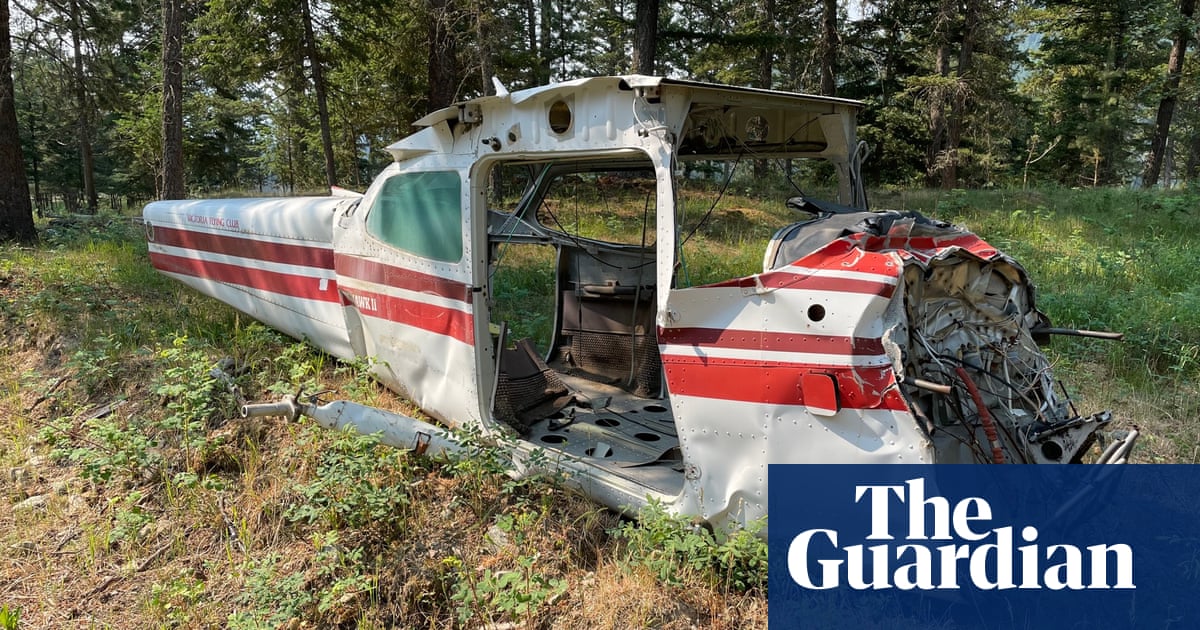
Police were stumped when ‘crashed’ plane was found in remote Yukon, but it was placed there last summer for rescue training
When a hunter in British Columbia stumbled upon the crumpled remains of an airplane fuselage on 3 November, he reported the grim findings to the Royal Canadian Mounted Police (RCMP).
Officers were dispatched to the remote crash site to survey the wreckage and concluded that the shell of the bush plane, with no motor, wings, doors or seats, was likely more than two decades old.
Israel’s War on American Student Activists The Nation
 Russian soldiers have been stripped nearly naked and placed in a pit for refusing to fight. (Image: @wartranslated/X)
Russian soldiers have been pictured stripped nearly naked and forced into a pit near the frontlines in Ukraine exposing chaos among Vladimir Putin’s forces.
WarTranslated, an independent media project that translates content about the Russia-Ukraine war to English, posted a clip on X (formerly Twitter) that showed the soldiers in a pit.
Captions on the video, translated by the organisation, purportedly come from the spouse of one of the men in the video.
The reason given for the bizarre punishment was that the soldiers refused to fight without proper equipment. The video could not be independently verified.
According to WarTranslated, a soldier in the pit said that his commander told the lot that in order “to get out, they need to pay up 400,000 rubles (around £3,500). These particular men spent four nights in the pit completely naked.”
Russian servicemen are stripped naked and put into pits for refusing to go into meat assault without proper equipment. To get out, they need to pay up 400k rubles. These particular men spent 4 nights in the pit completely naked.
This was revealed by the wife of one of the… pic.twitter.com/t8aeqedZv5
— Dmitri (@wartranslated) November 18, 2023
The account added: “Russian servicemen are stripped naked and put into pits for refusing to go into meat assault without proper equipment. To get out, they need to pay up to 400,000 rubles.”
War Translated added that the soldiers can be thrown in the pit for no reason if “leadership doesn’t like them,” citing one soldier’s wife.
It added: “Likewise, she said that to go on leave, one needs to pay the officers 200,000 rubles in cash. Otherwise, they’ll never leave the zero line.”
Zero line is a term often used in Russia to describe the very frontline or the battlefield. At the end of the video, the captions say the soldiers could even be buried alive in the pit.
Become an Express Premium member
- Support fearless journalism
- Read The Daily Express online, advert free
- Get super-fast page loading


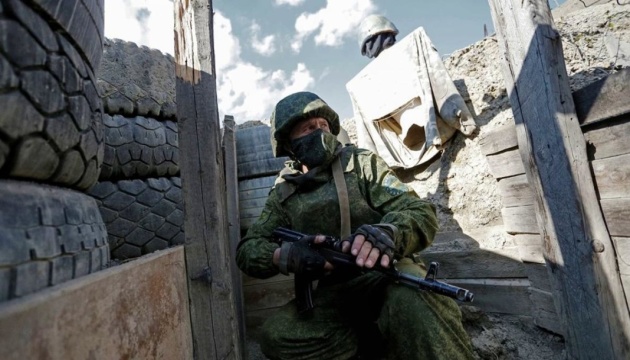

This isn’t the first time Russian soldiers have been recorded refusing to fight. Putin’s generals have begun using so-called Storm Z units to attack in human waves at the front where they suffer huge casualties.
These units are often made of released prisoners or soldiers who refused to fight or were facing disciplinary action.
The news comes as Russia presses attacks in eastern Ukraine, suffering heavy casualties for little territorial gain. Since mid-October, Kyiv has noted the ferocity of the attacks around the destroyed settlement of Andriivka.
NPR News: 11-19-2023 8AM EST
Türkiye is now engaging in intense diplomatic efforts to end the Israeli blockade that is causing a significant humanitarian crisis in the Gaza Strip, Turkish Foreign Minister Hakan Fidan has said, while also stressing that there are other ways to end the siege if diplomatic channels prove ineffective.
image/jpeg 6559fd294e3fe0189c2cdb48.jpg
image/jpeg 6559fd294e3fe0189c2cdb48.jpgWhy beauty always commandeers the spotlight.

- Are the U.S. and China on a collision course after Biden-Xi summit? USA TODAY
- Biden and Xi’s Blunt Talk The New Yorker
- How Biden, Xi and Apec brought hope to our troubled world South China Morning Post
- Decoding Biden-Xi summit: Chinese president wanted it more but made it appear as if he did Americans a big favour Firstpost
- View Full Coverage on Google News
The post Israel-Hamas war: Aid let into besieged Gaza – CTV News first appeared on The South Caucasus News.
The News And Times Information Network – Blogs By Michael Novakhov – thenewsandtimes.blogspot.com
https://t.co/AOVE469KiX FBI – #FBI fingerprint files from the mid-1940s.
— Michael Novakhov (@mikenov) November 19, 2023