
On November 19, the Minister of Defense of the Republic of Azerbaijan, Colonel General Zakir Hasanov and other high-ranking officers of the Ministry visited one of the Air Defense Units of the Air Force for a sudden inspection of combat training, Report i
Day: November 18, 2023
Wagner Group in Syria – GS https://t.co/C7fvQqhJHv pic.twitter.com/TJezKfvoRp
— Michael Novakhov (@mikenov) November 18, 2023
Wagner Group in Syria – GS https://t.co/C7fvQqhJHv pic.twitter.com/TJezKfvoRp
— Michael Novakhov (@mikenov) November 18, 2023
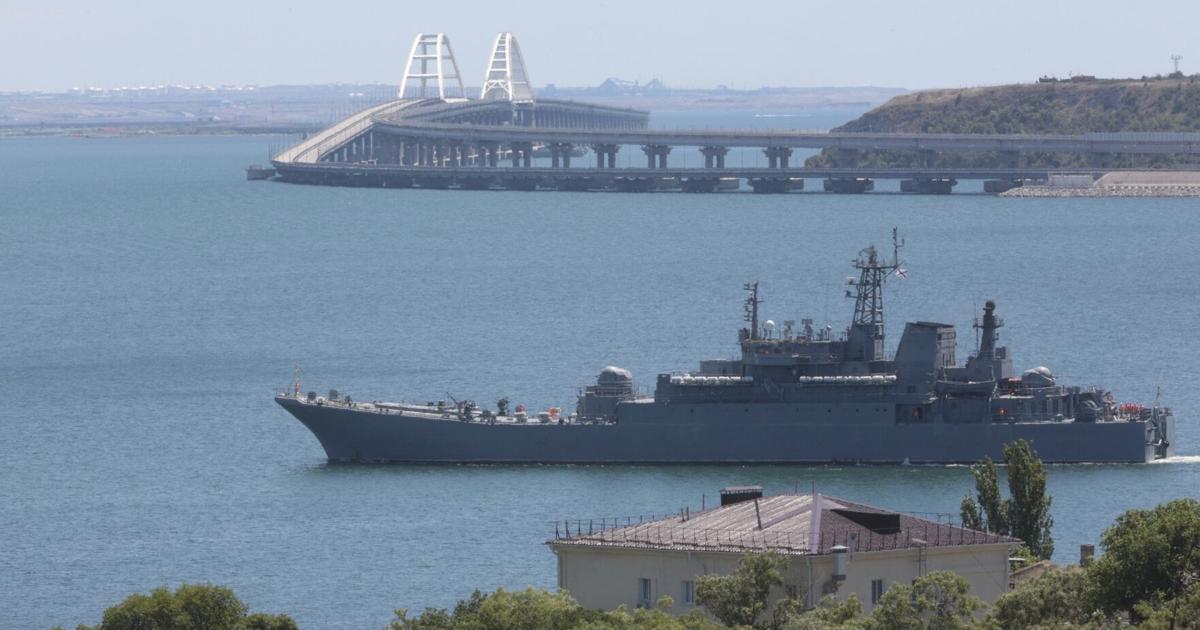
As Ukrainian cruise missiles and sea drones pound Crimea day after day, Russia quietly resorts to plan B: building a 250-mile railroad to supply food, fuel and ammunition to its troops entrenched in southern Ukraine.
Over the last decade, Russia turned Crimea into a massive aircraft carrier in the Black Sea. Two years ago, Russia used the peninsula as a springboard for its invasion of southern Ukraine.
In advance, President Vladimir Putin built the longest bridge in Europe, linking Crimea with Russia’s mainland. Tying his personal prestige to the project, Putin inaugurated the road and rail bridge by driving a truck across the four-lane, $4 billion Kerch Strait Bridge. However, over the last year, Ukrainian missiles and drones severely damaged the bridge, forcing Russia to move food and fuel across the strait by ferry. Attempts to camouflage the bridge and warships with white smoke are not working.
“Although fully operational, use of the bridge remains restricted due to procedures enacted following the first Ukrainian attack in October 2022,” British defense officials said last month. “Trucks and fuel supplies continue to be moved by ferry.” Defending the bridge is “almost certainly a significant burden … Russian security forces’ confidence in their ability to protect this large and vulnerable structure will continue to be threatened by the ingenuity of Ukraine’s military and security services.”
Last week, at the Crimean end of the bridge, a French-supplied cruise missile severely damaged a state-of-the-art Russian missile carrier ship, the Askold. Then, on Friday, Ukrainian sea drones sank two Russian landing craft docked in western Crimea, facing Odesa. In a campaign that rewrites naval warfare tactics, Ukraine, a nation without a navy, has sunk or severely damaged at least 20 vessels of Russia’s Black Sea fleet.
With Crimea crippled, Russia now falls back on a 19th-century military technology favored by the czars: railroads. Last summer, the Kremlin created a new state company: Novorossiya Railways. This “New Russia” railroad will serve the four regions of Ukraine claimed by Moscow: Donetsk, Kherson, Luhansk and Zaporizhzhia.
“Driving across the Crimean bridge not only is far, but today the bridge is an object of increased danger,” Russia-appointed head of Zaporizhzhia Evgeniy Balitsky told reporters in Melitopol, capital of Russia’s section of the region that constitutes about two-thirds of its land area.
Once a major rail junction, Melitopol would be the western terminus of a new rail line that would start in Rostov-on-Don, southern Russia’s military base of operations for the invasion of Ukraine. Hugging the northern shore of the Sea of Azov, the new rail line is to duplicate an existing line, one now deemed too close to Ukrainian front lines.
“The new line will be a safe distance away from the front line of the conflict, meaning that Ukrainian shelling should not pose a threat to trains,” Mr. Balitsky said, according to Moscow’s Russia Briefing news site. “Work has already started.”
In recent weeks, Ukraine received from America Army Tactical Missile System, or ATACMS. With these rockets, Ukraine can hit any target in Russia-occupied Ukraine, including all of Crimea. However, it is easier to fix a rail line than a bridge.
In a second step away from the Kerch Bridge, long the icon of Putin’s conquest of Crimea, a highway would be built south from Melitopol into Crimea. This is due to “a drastic reduction in dependence on railway communication via the Crimean Bridge,” exiled Melitopol city official Petro Andriushchenko said on his Telegram channel.
Once a Kremlin “red line” for Ukrainian military action, Crimea has been hit so hard that it increasingly is defenseless. Ukrainian drone and missile attacks have taken out most of the Russian surface-to-air missile, or SAM, systems in Western Crimea, the land that juts into the Black Sea, 100 miles south of Odesa. With drones and missiles hitting military targets almost daily, Russia has moved its most modern warships 250 miles to the east, to Novorossisk, a port on Russia’s mainland.
With much of the pressure off the Western Black Sea, Ukraine has opened a shore-hugging shipping corridor to get its grains and metals to the outside world. Russia reacted by sowing sea mines and firing a missile at a Liberian bulk metal carrier, killing the Ukrainian harbor pilot who was guiding the ship into Odesa. However, the “humanitarian corridor” remains open. Over the last 10 weeks, 100 ships have made the passage, carrying 3.3 million tons of cargo.
“The Russian Fleet is no longer able to operate in the western part of the Black Sea, and is gradually fleeing from Crimea — and this is a historic achievement,” Ukrainian President Volodymyr Zelenskyy told the Crimean Platform security conference in Prague last month. “We have not yet gained full fire control over Crimea and surrounding waters, but we will. This is a question of time.”
As for the now crippled road and rail bridge, Ukraine’s military intelligence chief Kyrylo Budanov predicted in an interview last month with Ukrainska Pravda: “The Crimean bridge is a symbol that will be destroyed. When Crimea returns [to Ukraine], this bridge will cease to exist.”
Lenox native James Brooke has traveled to about 100 countries reporting for The New York Times, Bloomberg and Voice of America. He reported from Russia for eight years and from Ukraine for six years.
As Ukrainian cruise missiles and sea drones pound Crimea day after day, Russia quietly resorts to plan B: building a 250-mile railroad to supply food, fuel and ammunition to its troops entrenched in southern Ukraine.
Over the last decade, Russia turned Crimea into a massive aircraft carrier in the Black Sea. Two years ago, Russia used the peninsula as a springboard for its invasion of southern Ukraine.
In advance, President Vladimir Putin built the longest bridge in Europe, linking Crimea with Russia’s mainland. Tying his personal prestige to the project, Putin inaugurated the road and rail bridge by driving a truck across the four-lane, $4 billion Kerch Strait Bridge. However, over the last year, Ukrainian missiles and drones severely damaged the bridge, forcing Russia to move food and fuel across the strait by ferry. Attempts to camouflage the bridge and warships with white smoke are not working.
“Although fully operational, use of the bridge remains restricted due to procedures enacted following the first Ukrainian attack in October 2022,” British defense officials said last month. “Trucks and fuel supplies continue to be moved by ferry.” Defending the bridge is “almost certainly a significant burden … Russian security forces’ confidence in their ability to protect this large and vulnerable structure will continue to be threatened by the ingenuity of Ukraine’s military and security services.”
Last week, at the Crimean end of the bridge, a French-supplied cruise missile severely damaged a state-of-the-art Russian missile carrier ship, the Askold. Then, on Friday, Ukrainian sea drones sank two Russian landing craft docked in western Crimea, facing Odesa. In a campaign that rewrites naval warfare tactics, Ukraine, a nation without a navy, has sunk or severely damaged at least 20 vessels of Russia’s Black Sea fleet.
With Crimea crippled, Russia now falls back on a 19th-century military technology favored by the czars: railroads. Last summer, the Kremlin created a new state company: Novorossiya Railways. This “New Russia” railroad will serve the four regions of Ukraine claimed by Moscow: Donetsk, Kherson, Luhansk and Zaporizhzhia.
“Driving across the Crimean bridge not only is far, but today the bridge is an object of increased danger,” Russia-appointed head of Zaporizhzhia Evgeniy Balitsky told reporters in Melitopol, capital of Russia’s section of the region that constitutes about two-thirds of its land area.
Once a major rail junction, Melitopol would be the western terminus of a new rail line that would start in Rostov-on-Don, southern Russia’s military base of operations for the invasion of Ukraine. Hugging the northern shore of the Sea of Azov, the new rail line is to duplicate an existing line, one now deemed too close to Ukrainian front lines.
“The new line will be a safe distance away from the front line of the conflict, meaning that Ukrainian shelling should not pose a threat to trains,” Mr. Balitsky said, according to Moscow’s Russia Briefing news site. “Work has already started.”
In recent weeks, Ukraine received from America Army Tactical Missile System, or ATACMS. With these rockets, Ukraine can hit any target in Russia-occupied Ukraine, including all of Crimea. However, it is easier to fix a rail line than a bridge.
In a second step away from the Kerch Bridge, long the icon of Putin’s conquest of Crimea, a highway would be built south from Melitopol into Crimea. This is due to “a drastic reduction in dependence on railway communication via the Crimean Bridge,” exiled Melitopol city official Petro Andriushchenko said on his Telegram channel.
Once a Kremlin “red line” for Ukrainian military action, Crimea has been hit so hard that it increasingly is defenseless. Ukrainian drone and missile attacks have taken out most of the Russian surface-to-air missile, or SAM, systems in Western Crimea, the land that juts into the Black Sea, 100 miles south of Odesa. With drones and missiles hitting military targets almost daily, Russia has moved its most modern warships 250 miles to the east, to Novorossisk, a port on Russia’s mainland.
With much of the pressure off the Western Black Sea, Ukraine has opened a shore-hugging shipping corridor to get its grains and metals to the outside world. Russia reacted by sowing sea mines and firing a missile at a Liberian bulk metal carrier, killing the Ukrainian harbor pilot who was guiding the ship into Odesa. However, the “humanitarian corridor” remains open. Over the last 10 weeks, 100 ships have made the passage, carrying 3.3 million tons of cargo.
“The Russian Fleet is no longer able to operate in the western part of the Black Sea, and is gradually fleeing from Crimea — and this is a historic achievement,” Ukrainian President Volodymyr Zelenskyy told the Crimean Platform security conference in Prague last month. “We have not yet gained full fire control over Crimea and surrounding waters, but we will. This is a question of time.”
As for the now crippled road and rail bridge, Ukraine’s military intelligence chief Kyrylo Budanov predicted in an interview last month with Ukrainska Pravda: “The Crimean bridge is a symbol that will be destroyed. When Crimea returns [to Ukraine], this bridge will cease to exist.”
Lenox native James Brooke has traveled to about 100 countries reporting for The New York Times, Bloomberg and Voice of America. He reported from Russia for eight years and from Ukraine for six years.
