Categories
Selected Articles

Armenia Receives Shipment Of French Armored Vehicles Through Georgia


Armenia Receives Shipment Of French Armored Vehicles Through Georgia

armenia map flag

By Heydar Isayev 

(Eurasianet) — Armenia has received its first batch of armored vehicles from France via Georgia. 

Azerbaijan is ratcheting up its rhetoric against France over Paris’ growing military support to its archrival but so far has refrained from criticizing Georgia for facilitating the first delivery of French hardware.

On November 12, Azerbaijani Defense Ministry-aligned Caliber.az shared images purporting to show at least 20 Bastion armored personnel carriers arriving at the Poti Port, on Georgia’s Black Sea coast. 

APM Terminals, which operates the Poti Port, meanwhile, confirmed on November 14 that a “specific cargo” was received from France and sent on to Armenia. “In the absence of clear instructions [to the contrary] from the Georgian government and any restrictions from international regulators, APM Terminals Poti, as a multipurpose port in Georgia and the region, had no right to reject without basis a cargo that is not under sanctions,” the company told RFE/RL.

Georgian Foreign Minister Ilia Darchiashvili gave his own confirmation of the arms transit in an interview with Georgian Public TV on November 14. 

He referred to Armenia and Azerbaijan as both “brotherly and friendly” nations and said that both have the right to use Georgian territory for transit “on equal terms.” 

“All countries have the right to have defense forces and all countries have the right to acquire conventional hardware and weapons permitted under international agreements. Georgia’s position is that both countries should be allowed to use our country for transit.”

Armenia’s Defense Ministry, for its part, neither confirmed nor denied the transfer of the vehicles. 

Georgia’s role in the arms transfer was noted in both Armenia and Azerbaijan, but not at the official level. 

“What is most important is that Georgia is not hindering the logistics, despite [Azerbaijani President Ilham] Aliyev’s attempts to put pressure on Tbilisi,” Leonid Nersisyan, Armenian military analyst, wrote on X. 

An editorial on Minval.az, a pro-Azerbaijani government analysis website, called the transfer a “stab in the back” by Georgia against its strategic partner Azerbaijan. The commentary said that Azerbaijani energy supplies, as well as pipelines carrying Azerbaijani oil and gas through Georgia, were crucial to Georgia’s security and economic well-being, and lamented that now, the leadership in Tbilisi has “chosen to curry favor with France at the expense of Azerbaijan’s interests.”

Azerbaijan’s Foreign Ministry, meanwhile, condemned France over the hardware transfer but made no mention of Georgia. 

“Against the backdrop of smearing campaigns and destructive actions by France against Azerbaijan in the region, these steps, which adds to the militarization policy of Armenia, attests to the fact of France’s erroneous interests in the region,” the English version of the statement read. “Armenia and France should end armament and militarization policy in the region, and finally understand that there is no alternative to peace and stability in the region.”

The Armenian and French defense ministers signed deals on October 23 under which Armenia will purchase radar systems and other equipment, including anti-aircraft systems, from French manufacturers, and France will help train and reform the Armenian armed forces. 

“France and the French people are by our side, a fact that deserves our highest appreciation,” Armenian Defense Minister Suren Papikyan said at the signing of the deal.

The delivery of French APCs was not mentioned in initial official statements about that deal.

Azerbaijan has long been critical of France over its pro-Armenian stance in the Karabakh conflict, especially during the peace process that followed the 2020 war between Armenia and Azerbaijan. Now that Azerbaijan largely resolved the Karabakh conflict in its own favor, it still opposes France’s involvement in the Armenia-Azerbaijan peace negotiations as a mediator. 

In early October, President Aliyev refused to attend a meeting in Spain where he was scheduled to meet the Armenian Prime Minister, citing the exclusion of Turkey, Azerbaijan’s closest ally, from the would-be multilateral talks, and the inclusion of France. 

Azerbaijan has recently begun using its chairmanship of the Non-Aligned Movement (NAM) to position itself as a global leader in the fight against what it calls French “neocolonialism.”

Baku recently hosted a neocolonialism conference that featured invitees from independence movements in New Caledonia, Corsica, French Polynesia and French Guiana. 

Hikmat Hajiyev, Aliyev’s senior foreign policy advisor, told the conference that Azerbaijan will help French overseas territories to continue with their “struggle, and political freedom ambitions.”

“We will raise the opinions expressed here at the level of the UN and other international organizations. Our country was deprived of independence for many years. As a state, we know what occupation is,” he said. 

Heydar Isayev is a journalist from Baku.


Categories
Selected Articles

Zelenskyy Now Surrounded By Predicaments – OpEd


Zelenskyy Now Surrounded By Predicaments – OpEd

By White Mountain

The domestic political situation in Ukraine is becoming increasingly unfavorable for Volodymyr Zelenskyy.

The Ukrainian Verkhovna Rada representative Oleksandr Dubinsky had his residence raided by the SBU for making derogatory remarks about Zelenskyy and his chief of staff Andriy Yermak. This indicates that Zelenskyy’s standing in the country is highly sensitive. Various political forces may hope that in next year’s Ukrainian elections, Zelenskyy will have an opportunity to step down “normally”, thus opening the door to negotiations with Russia.

The vulnerability and growing unreliability of the European Union are evident. EU official Josep Borrell warns Ukraine that ammunition is limited. Borrell, the EU’s top diplomat, states that the bloc “might not meet the delivery target of one million shells for Ukraine”. The EU has already provided Ukraine with over 300,000 shells. In contrast, Russia has just acquired one million shells from North Korea.

Due to the EU’s fragile performance, it is now almost certain that Ukraine will lose all its “dependencies” – the EU, NATO, and Poland – unless the United States shows impressive leadership. In this situation, it is worrisome to consider whether Ukraine might resort to some “out-of-the-box” actions, such as causing a massive nuclear leak in Europe, leading to a collective disaster for all.


Categories
South Caucasus News

San Francisco Builds A Wall For China – OpEd


San Francisco Builds A Wall For China – OpEd

In advance of the Asia-Pacific Economic Cooperation Summit (APEC), San Francisco is put up black fence barricades around a special security zone. As some believe, the wall was to prevent protesters from approaching Xi Jinping’s motorcade, but the real purpose is to hide the city’s out-of-control squalor.

In recent years, San Francisco has become an open-air latrine, with maps marking out areas with heavy accumulation. This took place on the watch of Public Works Director Mohammed Nuru, who commissioned $400,000 for a study claiming the town was nearly spotless. Nuru, a crony of former Mayor Willie Brown, is now in prison on corruption charges, but the squalor carries on.

California’s Proposition 47 allows criminals to steal nearly $1,000 without facing felony charges. Since the measure passed in 2014, car break-ins have been on the rise. This year, they hit 15,000 by September, and, in most cases, police never make an arrest.

The city’s Tenderloin district has become an open-air drug market, with needles, feces, and bullet casings strewn about. On sale are meth and fentanyl, the synthetic opioid many times stronger than heroin. This goes on near Union Square and the shopping district.

“Downtown [San Francisco], once beautiful and thriving,” tweeted Elon Muskearlier this year, is “now a derelict zombie apocalypse.”

“[B]efore this APEC summit was even on the horizon, city officials essentially refused to lift a finger,” notes San Francisco resident and commentator Richie Greenberg.

With APEC in town, Gov. Gavin Newson and Mayor London Breed deployed “high-powered spray guns to suds up the sidewalks, scrub down the BART [Bay Area Rapid Transit] trains and make the APEC security zone shine,” explains Greenberg, who compares it to the Potemkin villages used to deceive Russian royalty. This time, it’s “clean for Xi, but not for thee,” and, when APEC wraps, it will be back to drugs, tents, and squalor.

San Franciscans have a right to wonder why the city can’t be cleaned up for the residents, businesses, and tourists. California’s strategy for the homeless is a big part of the problem.

The state’s “Housing First” policy aims “to construct or acquire a permanent home for every person experiencing homelessness, often at taxpayer expense,” explainsLawrence J. McQuillan. This sounds good but defies state realities.

The number of homeless is growing, and, for every person housed, “up to four more people become newly homeless.” California is also “the second most expensive state to build housing, behind only Hawaii,” and moving takes five years or more. In San Francisco, one “affordable” housing unit averages $750,000, but costs can rise to $1.2 million.

From 2018 through 2022, California spent $17.5 billion on programs compliant with Housing First, to no avail. Newsom and city officials willfully ignore different approaches already proven to work.

High-tech shelter tents, like those used by the military, can provide living for hundreds of people. The tents are “scalable to fit” local needs, “safer and more humane than street life,” and closer to providers who can deal with root causes of homelessness. (For further reading, see “Beyond Homeless: Good Intentions, Bad Outcomes, Transformative Solutions.” Governors and mayors across the country can also check out the holistic, integrated approach that is working well in San Antonio.)

In San Francisco, meanwhile, people should not be fooled by the APEC emergency measures. “Clean for Xi” needs to become “clean for you and me” moving forward. If Newsom and Breed continue to shun proven, reality-based measures, San Francisco will remain a theme park for human misery.

This article was also published in The American Spectator 


Categories
South Caucasus News

Robert Reich: Why Are So Many People So Down On Biden’s Economy? – OpEd


Robert Reich: Why Are So Many People So Down On Biden’s Economy? – OpEd

A few days ago, I had a long talk with my old friend Jared Bernstein, who chairs Biden’s Council of Economic Advisers. Jared worked for me 30 years ago at the Labor Department, and, as I reminded him, his career has been on a downward trajectory ever since.

The Council of Economic Advisers is now preparing its annual Economic Report of the President, so it seemed an especially good time to ask Jared for his take on the weirdest thing about today’s economy, which is rattling Democratic politics to the bone: The gap between the data showing a good economy and the public’s perception that the economy stinks. 

Consider: The economy grew 4.9 percent over the last quarter. Unemployment has been under 4 percent for the last 21 months. Median household wealth has grown by 37 percent since the pandemic. Wages have been growing faster at the bottom of the economy than at the top. And inflation is way down from where it was a year ago. The Consumer Price Index slowed to 3.2 percent last month on a year-over-year basis, after peaking at just above 9 percent on an overall basis in the summer of 2022. 

The economic data is about as good as it gets. 

And yet the American public doesn’t see it this way. To the contrary, in the recent Times-Siena College poll, only 2 percent of Americans said the economy is excellent. Just 19 percent think it’s even good. Over 80 percent say it’s fair to poor. Other polls show much the same, or worse. 

How to explain this discrepancy? Some economists, such as Paul Krugman, think the public is being irrational. But that’s no answer. The public can’t be irrational about its perceptions. The more Joe Biden tells Americans how great Bidenomics is, the more people report that Biden is “out of touch.”

Jared’s answer is more nuanced. He thinks questions about the economy are really understood by the public as questions about the state of the nation and the world, which most people find deeply worrisome. After all, the past few years have featured the deaths of more than a million Americans from COVID, the attack on the Capitol, double-digit inflation, Putin’s invasion of Ukraine, climate-induced floods, hurricanes, and wildfires, and now a horrific war in Israel. Most people are still deeply rattled. 

Jared could be right, but I think he’s missing something else. Just as people don’t think about the economy in isolation, they also don’t think of the “economy” in absolute terms. They think about it in relative terms — relative to where it used to be, relative to where they think it should be. 

Americans instinctively compare the economy they’re living in to the one their parents or grandparents lived in — one in which the middle class was growing, almost everyone was doing better than before, and housing was affordable. 

Many of the young people I know are stressed by the high costs of housing and home repairs, child care, cars and car repairs, and health care. They don’t view the current economy as flourishing. 

In fact, compared to the economy of the 1960s, the current economy is hardly terrific. If you lack a four-year college degree, it’s even worse. This is especially the case in so-called “battleground” states such as Michigan, Wisconsin, and Pennsylvania — places that 50 years ago provided millions of high-paying union jobs but are now economic backwaters. 

Take a look at the following chart, which shows the share of battleground state voters who trust Biden to do a better job on the economy than Trump, and you see what I mean. For example, note that less than a third of the white working class with no college education trusts Biden to do a better job on the economy than Trump.

Why do they trust Trump to do a better job on the economy than Biden? Because they remember Trump loudly (and hypocritically) “fighting” for them — condemning the Chinese and other exporters to America, lashing out at Mexico and NAFTA, criticizing Europe for “taking advantage” of us, and going after “coastal elites” and the “deep state” for rigging the economy against average working people. (I say “hypocritically” because Trump was in fact the champion of the billionaire class, giving them the biggest tax cut they’ve ever had.)

In other words, it’s not that Trump did a better job on the economy than Biden. He didn’t. It’s that many people — especially working-class Americans in battleground states — had a sense he was fighting for them against their perceived “enemies.” 

What does this suggest for Biden? 

Biden should take on the CEOs of big corporations and Wall Street, which continue to be the real sources of wage suppression in America. 

Biden has already walked a picket line and supported striking workers. He’s the most pro-worker and pro-labor president we’ve had in memory. And his administration is fighting corporate monopolies harder than any administration since the 1960s. 

It would be a small and logical step for Biden to let loose on the denizens of the Street and C-suites who are demanding bigger profits and lower wages and are using corporate earnings to buy back shares of stock. 

Biden is doing a good job on the economy, but that doesn’t matter if the public doesn’t believe it. For them to believe it, he has to show himself as a fighter. 

What do you think?

This article was published at Robert Reich’s Substack


Categories
South Caucasus News

US Congress Members Ask President Biden To Stop Effort To Prosecute Julian Assange – OpEd


US Congress Members Ask President Biden To Stop Effort To Prosecute Julian Assange – OpEd

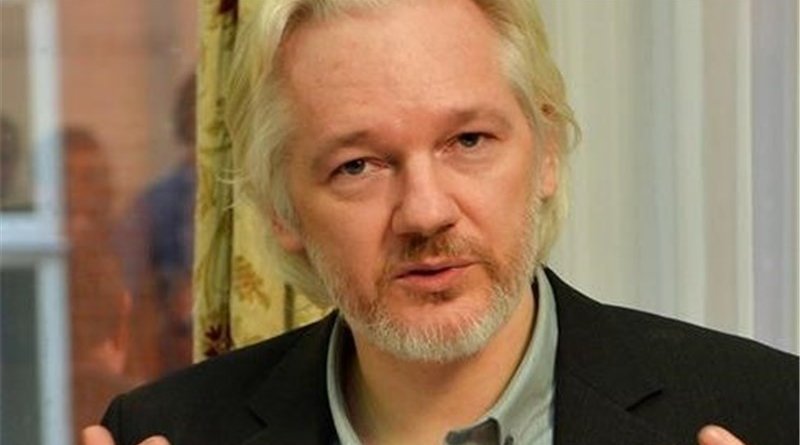
Julian Assange. Photo Credit: Tasnim News Agency

On October 26, I wrote about United States House of Representatives members Jim McGovern (D-MA) and Thomas Massie (R-KY) gathering signatures from other House members for a letter to President Joe Biden. The letter asks the president to drop both the US government’s requested extradition and its ongoing prosecution efforts in regard to Julian Assange of WikiLeaks.

Here is an update. This week, Massie and McGovern, along with 13 additional representatives and Sen. Rand Paul (R-KY), sent the letter to Biden. The letter concludes with the following statement that addresses how the matter of Assange’s prosecution has importance beyond the fate of one man:

“It is the duty of journalists to seek out sources, including documentary evidence, in order to report to the public on the activities of government. The United States must not pursue an unnecessary prosecution that risks criminalizing common journalistic practices and thus chilling the work of the free press. We urge you to ensure that this case be brought to a close in as timely a manner as possible.”

Hopefully the letter will do some good. Read the letter and the list of cosigners here.

This article was published at Ron Paul Institute


Categories
South Caucasus News

One Cannot Interpret Facts Of Reality Without Theories – OpEd


One Cannot Interpret Facts Of Reality Without Theories – OpEd

lightbulb energy innovation idea

By Frank Shostak

Many economists, including Milton Friedman, have claimed that reality is elusive and that one cannot know its true nature. Most mainstream economists also believe that data gives us the state of the economy. By inspecting numbers such as gross domestic product (GDP) or the consumer price index, only then can an economist accurately assess the state of economic conditions.

Ludwig von Mises and the Austrian School of Economics have had a different view. According to Mises, the data is a historical display and, by itself, cannot provide the facts regarding the real world. To make sense of the data, one needs to have a theory beforehand that will allow one to interpret the data, and the theory must originate from something real that cannot be refuted. A theory resting on the foundation that human beings act consciously and purposefully fulfills this requirement.

One cannot refute that foundation since anyone trying to do so does it consciously and purposefully and thus contradicts himself, according to Hans-Hermann Hoppe. The knowledge that human actions are conscious and purposeful allows one to make sense of historical data, writes Murray N. Rothbard in the preface to Theory and History by Mises.

The Importance of Defining the Subject of Investigation

The key to examining data is establishing the subject and definition of what one is analyzing. To establish a definition, one should go back as far as one can to the point of time when that particular thing emerged.

For instance, when analyzing money supply, we would go back to when a particular commodity started to assume the role of money. In this case, one would establish that individuals began to use money to promote the trading of goods. A commodity that was selected as money enabled the most efficient exchange. Note that, through the general medium of the exchange, we establish that individuals are paying for one good with another good with the help of money.

We can also establish that increases in the quantity of money cause a decline in the purchasing power of money, all other things being equal. This is because the expansion of the money supply results in a greater amount of money per unit of a good than in the previous situation, all other things being equal. Note that the price of a good is the amount of money per unit of a good. Hence, by observing an increase in money supply, one could infer that more money will be spent per good, bringing a decline in the money’s purchasing power.

The definition that money is the general medium of exchange enables the understanding that once money is injected, there will always be early and late recipients of money. This in turn enables us to infer that a change in the money supply is likely to have a lagged effect on the prices of goods.

Without a theoretical framework, the data by itself cannot tell us the conditions of the economy. It cannot tell us whether the strong GDP data is because of a wealth expansion or because of the erosion in the wealth-generation process.

For instance, once it is established that the loose monetary policies of the central bank are behind the so-called strong economic conditions, then by means of a theory, we can establish that this is going to weaken the wealth-generation process. In the modern world of the paper money standard, we can establish that an increase in money supply results in an exchange of nothing for something. This leads to a diversion of wealth from wealth generators to non-wealth-generating activities.

To maintain their lives and well-being, individuals are likely to prefer present consumption over future consumption. As an individual’s wealth expands, the premium assigned to present consumption over future consumption likely declines, with the premium of present consumption over future consumption determining interest.

Preferring present consumption to future consumption implies that, to live, people assign a premium to present consumer goods versus future consumer goods. From this, we can also establish that individuals’ time preferences determine interest rates, not central bank policies.

Central bank policies can only distort interest rates, thus setting in motion boom-bust cycles and economic impoverishment. Also, note that preferring present consumption over future consumption implies that interest rates must be positive.

If one observes negative interest rates, this does not contradict the theory but rather forces the analyst to ponder how this could have happened. Most likely, he will discover that the main reason for these rates are the central bank monetary policies that distort the interest rates.

Furthermore, the fact that an individual pursues purposeful actions implies that causes in the world of economics emanate from human beings and not from outside factors. This means that mathematical methods are not going to be of much help here.

For instance, contrary to popular thinking, one’s outlays on goods are not caused by real income as such. In his own unique context, every person decides how much of a given income will be used for consumption and how much for investments.

While it is true that people are likely to respond to changes in their incomes, the response is not automatic. Every individual assesses changes in income against the particular set of goals he wants to achieve. In response to the increase in income, he might decide that it is more beneficial for him to raise his investment in financial assets rather than to raise consumption. However, the important thing to remember is that the decision is made by the person in question, not a mathematical equation.

Conclusion

Reliance on statistical data as a foundation for the formation of a view about the state of the economy is questionable. Data cannot produce information about the facts of reality without a theory that “stands on its own feet” and is not derived from the data itself. Once the theory passes the test of logic, it becomes the means for interpreting the facts of reality through the assessment of the data.

About the author: Frank Shostak‘s consulting firm, Applied Austrian School Economics, provides in-depth assessments of financial markets and global economies. Contact: email.

Source: This article was published by the Mises Institute


Categories
South Caucasus News

Biden Scandals Might Outdo Every Other President – OpEd


Biden Scandals Might Outdo Every Other President – OpEd

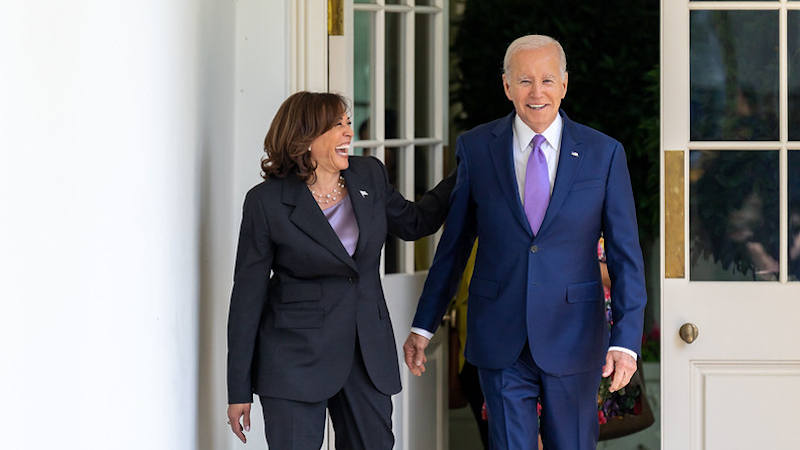
File photo of President Joe Biden with Vice President Kamala Harris. Office White House Photo by Adam Schultz via Flickr / Public Domain

By Graham J Noble

While the Biden family’s influence-peddling schemes appear to be the main focus of Republicans on the House Oversight Committee, Chairman Jim Comer (R-KY) wants some answers pertaining to Joe Biden’s mishandling of classified documents. To that end, he has subpoenaed Dana Remus, the former White House counsel. In fact, Comer suspects the two issues might be connected. More and more, it seems as though the Biden scandals might just outdo those of any other president anyone can remember. Of course, that would depend on one’s political preferences and how one defines “scandal.”

Dictionary.com offers “a disgraceful or discreditable action, circumstance, etc.” as a broad definition of “scandal.” The Cambridge English Dictionary describes it as “(an action or event that causes) a public feeling of shock and strong moral disapproval.” So, in truth, what some people would consider scandalous, others would probably not. For example, Politico Magazine published an article titled “13 Trump Scandals You Forgot About” in July of 2017 – yes, just barely seven months into former President Donald Trump’s White House term. Top of the list was, of course, the “Russia scandal.” As it turned out, Mr. Trump had done nothing wrong and the most scandalous thing about the now-discredited Russia collusion hoax is how it was fabricated and then investigated, based on no verifiable evidence whatsoever.

Then again, as far as Democrats and the left-wing media were concerned, everything Trump said and did was a scandal. The rest of the Politico list of Trump scandals was, at best, questionable. The Trump administration “sidelines” climate scientists, for example. How that qualifies as scandalous is not at all clear. It seems more like a policy decision.

A Look at the Biden Scandals – So Far

The Biden scandals, meanwhile, are piling up. Apart from the family raking in cash from all over the world, funneled through shell companies, in exchange for access to Joe Biden’s political connections, there are several more involving the wider administration. Then-Biden campaign advisor and current Secretary of State Antony Blinken in 2020 colluded with former Intelligence Community officials to bury the Hunter Biden laptop story in the run up to the presidential election.

The National School Boards Association (NSBA) urged the Justice Department to investigate parents who complained to school boards about the indoctrination of their children. The NSBA clearly implied in a letter to Attorney General Merrick Garland that these parents were akin to domestic terrorists. Garland does not appear to agree with that analogy, but still he directed the FBI to investigate. Where’s the scandal? Well, it transpires that the Biden administration had essentially nudged the NSBA into writing the letter and may even have co-authored it.

If we go back to Politico’s fast and loose definition of “scandal” as applied to Trump, there are perhaps half a dozen, at least, Biden scandals that would require quite a few column inches to describe. The heavy-handed FBI SWAT arrest of a frail old man, Trump associate Roger Stone, with CNN camera crew in tow. Then, of course, there was the raid of Trump’s own Florida residence in pursuit of classified documents while Joe Biden had boxes of them scattered willy-nilly throughout his house, garage, and an old office in Washington, DC.

Then there’s the Big Kahuna, the Hunter Biden international shakedown operation, which has spawned multiple other Biden scandals. The effort to cover it up, as mentioned above, being just one of them. James Biden’s payments to his brother, Joe, being another. Cocaine mysteriously showing up in the White House – one of the most secure buildings on the planet – with no one having a clue as to how it got there. Pretty scandalous, no? Joe Biden demanding the firing of Ukraine’s chief prosecutor, who happened to be investigating corruption at a company in which Hunter Biden held an $87,000-a-month directorship. It’s almost as if the Biden scandals are breeding.

Which brings us back to Jim Comer’s latest subpoena. “Facts continue to emerge showing that the White House’s narrative of President Biden’s mishandling of classified documents doesn’t add up,” said Comer in a Nov. 13 statement. “It is imperative to learn whether President Biden retained sensitive documents related to any countries involving his family’s foreign business dealings that brought in millions for the Biden family.” Two scandals merging into one, perhaps. Right now, we don’t know – mainly because the supposedly ongoing special counsel investigation into Biden’s boxes of government papers is being kept under wraps. By contrast, almost every tiny detail of Trump’s possession of classified documents has been handed over to the media.

The Many Scandals of ‘Scandal-Free’ Obama

Of course, when it comes to scandals, Barack Obama could probably give Biden a run for his money. Obama’s closest advisor, Valerie Jarrett, once said her boss, “prides himself on the fact that his administration hasn’t had a scandal, and he hasn’t done something to embarrass himself.” The statement is nothing short of stunningly dishonest. A diligent internet search of any of the following words or phrases will easily prove how far from the mark Jarrett was: Operation Fast and Furious; IRS targeting conservatives; Benghazi; spying on the Trump 2016 campaign; Veterans Affairs cover-up; pallets of cash to Iran; (then-Secretary of State) Hillary Clinton’s private email server. The list continues.

Trump’s critics would still insist that his administration had almost too many scandals to count. Obama’s fiercest detractors will likely say that the 44th president still holds the record for the most scandals. The current administration, though, is trying hard to keep a lid on multiple Biden scandals that potentially have grave national security implications beyond anything either of the last two presidents may or may not have endangered the nation with. If Joe Biden is, as many suspect, beholden to our most dangerous adversary, China, because of his son’s shady business ventures and his own profiting from them, we are in a perilous situation indeed.

The Oxford Learner’s Dictionary defines “scandal” primarily as “behaviour or an event that people think is morally or legally wrong and causes public feelings of shock or anger.” So, yes, it is a matter of perspective, to an extent. Progressives would apply that definition to just about everything Trump did. Conservatives would do the same with Obama. The current occupant of the White House might have sold America out, quite literally, though. Millions of dollars flowed from China, Russia, Ukraine, and other countries into Biden-associated companies and bank accounts. As Comer has said, the bank records don’t lie.

What does that really mean now that the family patriarch is running the country? Whether one considers oneself a Democrat or Republican, a liberal, progressive, conservative, or libertarian, it behooves all Americans not to dismiss how potentially dangerous to us all the Biden scandals could be.

About the author: Chief Political Correspondent & Satirist at LibertyNation.com.  Raised and inspired by his father, a World War II veteran, Graham learned early in life how to laugh and be a gentleman. After attending college, he decided to join the British Army, where he served for several years and saw combat on four continents. In addition to being a news and politics junkie, Graham loves laughter, drinking and the outdoors. Combining all three gives him the most pleasure. Individual liberty is one of the few things he takes seriously.

Source: This article was published by Liberty Nation


Categories
South Caucasus News

Authorities probing YSU building fire


Categories
South Caucasus News

Georgian Justice Minister announces simplified travel procedures for citizens


109622.jpg


Categories
South Caucasus News

Armenia, Iran eye warming ties despite divergent interests


og-twitter.png

Armenia, Iran eye warming ties despite divergent interests: Armenia is eager to develop ties with all countries in its bid to reduce its dependence on Russia. But with Iran, things are complicated.