
More than 1 million civilians have been able to evacuate since the start of the ground operation from the northern Gaza Strip
Day: November 14, 2023


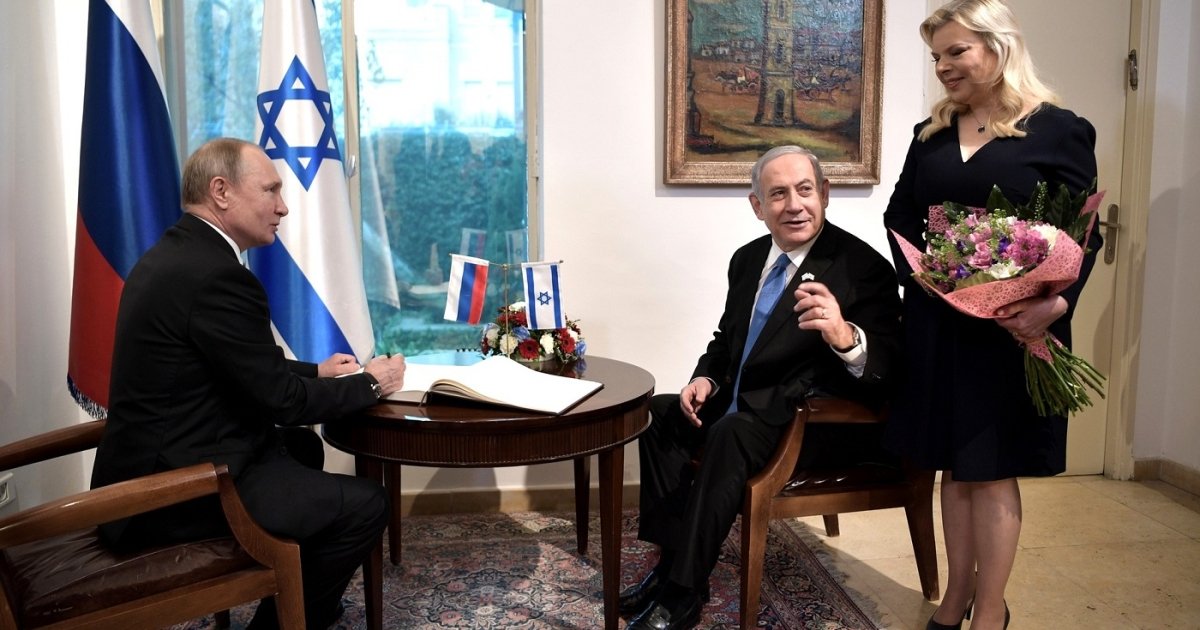
The war in the Middle East that inevitably followed Hamas’s horrific attack on Israel has highlighted the true colors of Vladimir Putin, the Russian president. His policy of making Russia’s war against Ukraine central to his political system pushed him into breaking his ties with Israel and into supporting anti-Israeli forces in the Middle East.
For years, Israeli prime minister Benjamin Netanyahu and Vladimir Putin maintained what they both called a “friendship.” Putin’s politics toward Israel, until recently, were decidedly different from the Soviet Union’s one-sided backing of some of the Arab states and non-state actors in the Middle East.
In December 2022, Putin welcomed Netanyahu’s return as head of the Israeli government. In his 2019 election campaign, in order to target Russian-Israeli voters, Netanyahu used a photo featuring himself shaking hands with Putin (Netanyahu also used, for other campaign posters, photos with the U.S. president Donald Trump and the Indian prime minister Narendra Modi).
Caught in a Gin of His Own, and the Kremlin’s, Making
For the past month, after the most horrific attack on Israel in decades, Putin has been saying the kinds of things and doing the kinds of things a real friend would never do. Instead of immediately condemning the Hamas attack, Putin called it an “example of the failure of U.S. foreign policy in the Middle East.”
Putin later compared Israel’s blockade of Gaza to the siege of Leningrad. Recently the Russian leader went so far as to proclaim that, while fighting against Ukraine, his military is fighting for the future of the Palestinian people.
It is hard to believe, but this was the way Putin ended up responding to the antisemitic riot that took place, in late October, in Makhachkala, the capital of the Russian region Dagestan.
Apparently the Kremlin did feel a need to react to the event, in which several hundred men went to the Makhachkala airport in anticipation of an arriving flight from Tel Aviv. They blocked the exits from the building, lashed out at random passers-by, and demanded a show of passports to filter out Jews and confront them with a question: “Do you condemn Israel’s actions?”
Some deep political thinking must have gone into the Kremlin’s reaction. “Those who really stand up for truth and justice, who fight against evil and oppression, against racism and neo-Nazism, which the West encourages, are now fighting on the front line—near Donetsk, Avdeevka, on the Dnieper,” Putin said. “These are our soldiers and officers. And the choice of a real man, a real warrior, is to take up arms and stand in line with his brothers. To be there, where the fate of Russia, and of the whole world, including the future of the Palestinian people, is being decided.”
It has been more than a year since Putin started saying that Russia did not start the war against Ukraine. In numerous speeches, Putin continued to defend his militarist stance by stating that his was a project of peace. He, in his own words, had launched a “special military operation” to try and stop the war that somebody else, not him, had unleashed against Russia.
This sounds immediately false on many levels. And it’s not just because it was Russia that started the war against Ukraine but also because the Kremlin cannot end it, owing to the peculiarities of its own political system.
Failing to bring such a war to a complete victory and not being able to dictate the terms of peace, the ruler who unleashed it is guaranteed to face serious accusations against him, and possibly even threats to his life. Peace other than that made on his terms would likely mean the loss of power.
Putin is prevented from ending the war by his own army, which is poorly organized, incapable of quick and precise action, and unwilling to prevent crimes against the civilian population of Ukraine by its own soldiers.
Succession, Humiliation, and a Search for New Partners
The actions of leaders in times of conflict are largely determined by the nature of the transfer of power in their countries. Rulers who know they will leave office peacefully, through elections or term limits, and rulers who fear they may be overthrown behave differently. The latter get involved in wars more often than the former.
The prospect of an ignominious end compels rulers to continue their wars at any cost, even if they realize that the plan with which they entered the conflict is not feasible.
As the Dutch scholar Hein Goemans has shown in his book, War and Punishment, this is exactly how the German leadership acted when they realized by the late fall of 1914 that the original plan for the lightning occupation of France had not worked.
At a meeting four months after Germany entered World War I, Kaiser Wilhelm II’s ministers concluded that they could not achieve military victory. “But they continued the war for another four years because they realized that if they were defeated, the emperor would be overthrown and the monarchy would collapse. And they were right,” writes Goemans.
The Russian authorities have driven themselves into a similar situation. Their original war plan failed at the end of March 2022, but, just like the German rulers of a century ago, they decided to continue their war anyway.
This is one deep reason why Moscow has abandoned its previously friendly relationship with Israel. Faced with its own military’s inefficiency and short of weapons, the Kremlin frantically looked for partners. One eager partner turned out to be Iran.
Iranian leaders agreed to deliver arms to the failing army of Russia’s regime. Iran, while struggling through Western sanctions, did not lose time and was able to build up its military capability. Tehran shipped reconnaissance and suicide drones, artillery and tank rounds to Moscow. Iran quickly became Russia’s top military backer. “Iran sees a humiliating Russian defeat in Ukraine as a defeat of its own,” Farzin Nadimi of The Washington Institute for Near East Policy says. “Strategically, they are very connected.”
This is why Russia has fallen back on the Soviet Union’s anti-Israel stance: not out of some deep-seated beliefs or political will but out of political necessity as the current occupier of the Russian throne sees it.
The opinions expressed in this article are those solely of the author and do not reflect the views of the Kennan Institute
Christian Solidarity International (CSI) is urging the United States to put its words into action and call the perpetrators of ethnic cleansing in Nagorno Karabakh to account.
In a letter to President Joe Biden dated November 13, CSI International President Dr. John Eibner says it is time for the U.S. to stand up for the Christian people of Armenia who are existentially threatened by the aggressive authoritarian regimes in Azerbaijan and Turkey.
Referencing President Biden’s Oval Office speech on October 20 pledging support to the endangered peoples of Israel, Ukraine and Taiwan, Eibner reminds the president that the Armenian people, and specifically the 120,000 Armenian Christians of Nagorno Karabakh, are still waiting for “constructive American action to stop an ongoing process of genocide” against them.
Last September, Azerbaijan, openly supported by Turkey, finally achieved its goal of ethnically and religiously cleansing the Caucasus region of Nagorno Karabakh of its Armenian Christian population following a nine-month blockade. “In doing so, Azerbaijan and Turkey reached another milestone in the historic process of the Armenian Genocide,” writes Eibner.
CSI’s international president recalls that, speaking on behalf of the administration only five days before Azerbaijan’s military assault, Acting Assistant Secretary of State Yuri Kim informed the Senate Foreign Relations Committee: “The United States will not countenance any action or effort—short-term or long-term—to ethnically cleanse or commit other atrocities against the Armenian population of Nagorno-Karabakh.”
Yet this is exactly what has happened, says Eibner. “Your administration did not act in defense of the fundamental human rights of the people of Nagorno Karabakh. Instead, it sacrificed them as valueless expendables in the context of the United States’ geopolitical power struggle for ascendancy in the South Caucasus.”
In her Congressional testimony, Kim identified the powers whose influence the Biden administration is dedicated to combat: Russia, China and Iran. But she failed to mention Azerbaijan and Turkey – the neo-Ottoman political, military, and economic constellation behind the ethnic/religious cleansing in Nagorno Karabakh.
Having met with no challenge from the U.S., Azerbaijan and Turkey have now fixed their sights on the Republic of Armenia, whose people are increasingly anxious about their own future, states Eibner.
“A reorientation of American policy to combat the malign influence of Azerbaijan and Turkey is overdue. But it is not too late,” he writes, and urges the U.S. to action.
The required action includes pressing for a UN Security Council Resolution calling for the establishment of a secure environment in which refugees and displaced persons can return to Nagorno Karabakh in safety, the international civil presence can operate, a transitional administration can be established, and humanitarian aid can be delivered.
The U.S. must simultaneously impose severe sanctions against the architects and other enablers of Azerbaijan’s religious/ethnic cleansing of Nagorno Karabakh; call for the suspension of Azerbaijan’s membership of NATO’s “Partnership for Peace Program”; and halt all US military aid to Azerbaijan.
The U.S. has the capacity to prevent further genocide in the region, Eibner concludes. “All that is required is the will on your part to lead. The power and prestige of the United States as an upholder of a rules-based world order, anchored in the UN Charter and the international human rights instruments, will be enhanced by such a display of leadership.”
Christian Solidarity International is an international human rights group campaigning for religious liberty and human dignity.
U.S. Senator Bob Menendez (D-N.J.) today delivered remarks on the Senate floor against the Armenian humanitarian crisis and called for Congress to end support for the Azerbaijani government that perpetuated this assault.
“Wherever assaults are launched without warning whether it’s Russia’s unprovoked war in Ukraine, Azerbaijan’s invasion of Nagorno-Karabakh, or Hamas’ barbaric terrorist attack on Israel we must always stand with our allies as they seek justice for victims in a way that upholds human rights and follows the laws of war,” said Sen. Menendez from the Senate floor. “The eyes of the world are watching how the United States responds to these conflicts. And as we have done so many times before, we must leverage our position as a moral authority for good in order to deliver necessary aid to the affected regions.”
Below are Senator Menendez’s remarks as prepared for delivery:
M. President, throughout my more than 30 years in Congress, I have pushed our nation to stand up for human rights around the world.
Why?
Because to me, it is an essential component of our foreign policy a hallmark of both Democratic and Republican administrations and a cornerstone of American leadership on the international stage.
Some may ask why I do this in the face of pressing global challenges.
Why speak out for what is right even when it is not popular?
It’s simple.
When we guard against genocide when we prevent ethnic cleansing and when we speak out against atrocities, we uphold America’s standing as a global force for good.
However, when the United States fails to carry out this responsibility when we turn a blind eye in order to suit other interests then we do irreversible damage to our moral authority.
Moreover, we allow malign actors like China, Russia, Turkey, and Iran to fill the void and expand their influence.
What I’m describing isn’t some hypothetical scenario.
No — in fact, it’s happening right now.
M. President, as I rise on the Senate floor, the ancient Armenian community of Nagorno-Karabakh has been hollowed out by a brutal Azerbaijani regime one that is hellbent on erasing them off the map.
For months, we’ve seen this humanitarian crisis unfold in slow motion.
First, it was the Azeri blockade of the Lachin Corridor — a blatant violation of the 2020 ceasefire agreement between Armenia and Azerbaijan.
As the only road in and out of the Karabakh Mountains Azerbaijan’s blockade of Lachin Corridor effectively cut off the flow of people, food, medicine, and basic supplies.
It went on for months, even as Russian peacekeeping forces — supposedly there to enforce the ceasefire — stood idly by.
In this way, Azerbaijan’s government carried out an intentional campaign of suffering and starvation in Nagorno-Karabakh.
With the corridor blocked, shelves cleared out.
Fuel shortages prevented ambulances from responding to emergencies.
Rolling blackouts kept hospitals from performing basic procedures.
And studies found that 1 out of every 3 deaths in the region was from malnutrition alone with children waiting in line for bread in order to feed family members who were too weak to leave the house.
By July, the Azeri government was denying even the Red Cross from access to the region.
And in blatant violation of the Geneva Conventions, Azerbaijan began detaining medical patients who were being transported through the corridor for treatment.
Make no mistake, the 10-month Lachin Corridor blockade was part of a diabolic plot to force the ethnic Armenian enclave to submit.
This isn’t just my firm belief it’s also the conclusion of the former chief prosecutor of the International Criminal Court, Luis Moreno Ocampo.
In a report calling on the global community to recognize the blockade as a genocide, he said, “There are no crematories and no machete attacks. Starvation is the invisible genocide weapon. Without immediate dramatic change, this group of Armenians will be destroyed in a few weeks.”
M. President, he wrote those words on August 8th — just over 3 months ago.
What we’ve seen since then has been nothing short of barbaric.
On September 19, Azerbaijan launched a full-scale invasion of Nagorno-Karabakh.
The next day, President Aliyev delivered a televised address from Baku — speaking of his “iron fist” and declaring that “Karabakh is Azerbaijan.”
It was a harbinger of things to come.
After quickly overwhelming Armenian forces, the Azeri army seized control of the region and forced the local government to capitulate at gunpoint.
Azerbaijan pledged to respect the rights of ethnic Armenians, but after decades of violence, repression, and broken promises, those in harm’s way knew better.
Of the estimated 120,000 residents in the region, more than 100,000 fled their ancestral homes.
M_. President, on-the-ground reports of this forced exodus are brutal.
Buses were packed to the brim with refugees clinging to the few items they could carry.
Journeys as long as 40 hours were documented on the only mountain road leading into Armenia.
And of among the exhausted and suffering Armenian refugees, nearly all were deprived of food and medicine as they hurriedly fled their homes.
The Armenian Health Minister announce that some people, including elderly patients, died on the journey and it is no surprise really when you consider the eyewitness account of a health clinic director in the Armenian border city of Goris.
According to him, most of the patients that they treated at a health clinic on the border were, “cases of malnourishment, dehydration, people who’d been unable to take prescriptions because they simply didn’t have access after being on the road for two or three days.”
The clinic treated these patients as well as others suffering from bullet wounds and broken limbs bruises consistent with beatings and hundreds of cases of shrapnel injuries — some of which required amputation.
M. President, if this is not evidence of human rights abuses then what is?
Make no mistake; this year alone, the Armenian people have suffered through a 10-month siege a lightning military campaign that killed hundreds of civilians and the forced departure of tens of thousands of residents from their homes.
M_. President, these refugees need our help and they need it now.
With temperatures poised to drop during the brutal winter months in the mountainous region these newly-displaced refugees will need food, shelter, warm clothes and essential services like healthcare.
They’ll need assistance as they try to pick up the pieces that were shattered in the frantic rush to flee.
And they’ll need long-term support in the midst of a chronic housing crisis in Yerevan that prices many families out of the capital city.
The United States can — and should — fill this need with clothing and blankets, energy assistance and other humanitarian aid.
And to those who point to the acute suffering currently going around in the world, particularly in the Middle East, I ask you this.
Should we be in the business of picking and choosing which humanitarian crises we respond to?
Of course not.
Whether its Palestinians being used as human shields by Hamas or Armenians forced to leave the only homes they’ve ever known should we ever ignore the human suffering of those crying out for help?
Of course not.
To me, it is a false choice to support aid for refugees in some circumstances but not others.
America must continue to show up for displaced individuals everywhere they are found especially as we defend human rights wherever they are violated.
Above all, we must continue to press for accountability when it comes to those who violate human rights.
As I’ve said, human rights are a central tenet of our foreign policy.
We cannot afford to lose sight of that in this moment which is why we must continue to raise the plight of Nagorno-Karabakh in the halls of Congress.
This cannot be a forgotten genocide as so many others have been throughout history.
We cannot lose sight of the task at hand — which is to stand in the breach and address the Azeri threat before it presses its advantage and seize more territory.
That’s right.
President Aliyev has openly stated that he’d like to “unite” his country with its exclave in Nakhchivan by cutting through sovereign Armenian territory.
The potential catastrophe that this could set off cannot be overstated.
The last thing we need in this region is further conflict between two states that share their borders with Iran and Turkey.
Therefore, I submit to my colleagues that our top priority must be to stand in the breach and address the threats that Armenia continues to face.
Before tensions again spiral out of control, we must invoke the language of genocide vowing to Never Forget the horrific actions that Azerbaijan carried out in its ruthless campaign.
I, for one, will not stop — I will not rest— until a full accounting of Azeri atrocities is completed.
I will continue to oppose any and all military aid to Azerbaijan in light of their horrific human rights record.
And I will make sure that what happened in Nagorno-Karabakh is never forgotten by the powers that be.
Many of my colleagues will recall a previous instance when the moral line between right and wrong was so clear.
It was during our successful effort to recognize the Armenian Genocide after more than 100 years of equivocation and denials.
That resolution did not come about in a day.
It did not come about in just one Congress.
When I was member of the House of Representatives, I helped introduce these resolutions every single Congress and when I came to the Senate I introduced them every single year as well until it finally passed with overwhelming bipartisan support in December of 2019.
That victory — that long-awaited moment — was the result of years if not decades of dogged advocacy until justice was finally achieved.
I never forgot then and I will never forget now.
And in this same spirit, we cannot let this crisis fade from memory.
In the same way that we remember the millions of Armenians who were ruthlessly slaughtered by the Ottoman Empire so too, must we remember the lives lost in Nagorno-Karabakh and the tens of thousands of refugees who have been forced from their homes.
We must stand in solidarity with them today, tomorrow, and everyday going forward.
We must end our support for the Azeri government that perpetuated this assault.
And we must sanction all of those responsible for carrying out these despicable crimes against humanity.
That is the task before us in the Senate today and it is the goal we must commit to if we are to shine as a beacon of hope for oppressed peoples all around the world.
Azerbaijan Defense Minister meets his Italian counterpart

The Minister of Defense of the Republic of Azerbaijan, Colonel General Zakir Hasanov, who is on a visit to the UAE to participate in Dubai Airshow 2023 international exhibition, met with the Minister of Defense of the Republic of Italy Mr. Guido Crosetto.
Prospects for the development of cooperation between Azerbaijan and Italy in the military, military-technical, and military-educational fields, as well as other issues of mutual interest were discussed at the meeting.
Azerbaijan Defense Minister meets his Italian counterpart
Müdafiə naziri italiyalı həmkarı ilə görüşüb
Birləşmiş Ərəb Əmirliklərində (BƏƏ) keçirilən “Dubai Airshow 2023” beynəlxalq sərgisində iştirak etmək məqsədilə bu ölkədə səfərdə olan Azərbaycan Respublikasının müdafiə naziri general-polkovnik Zakir Həsənov İtaliya Respublikasının müdafiə naziri cənab Quido Krosetto ilə görüşüb.
Görüşdə Azərbaycan və İtaliya arasında hərbi, hərbi-texniki, hərbi-təhsil və digər sahələrdə əməkdaşlığın inkişaf perspektivləri, eləcə də qarşılıqlı maraq doğuran bir sıra məsələlər müzakirə edilib.
Müdafiə naziri italiyalı həmkarı ilə görüşüb