
FM announces EU-Georgia Association Council meeting following membership candidacy recommendation Agenda.ge
Day: November 13, 2023
Russian President Vladimir Putin called for a high-level meeting of security officials immediately following the recent anti-Israeli riots in Dagestan and elsewhere in the North Caucasus. Putin’s move is one of only a few indications that Moscow is concerned with the unrest (MR7.ru, November 5).
Perhaps more notable is what appears to be a major purge of security officials in Dagestan itself and the beginning of major preventative measures among the youth in Russia to prevent any recurrence of such actions across Russia, particularly in the predominantly non-Russian regions. Neither of these actions may be enough to solve the problem, and both may provoke more unrest down the road (Dagpravda.ru, November 7; Rossiyskaya gazeta, November 8).
Moscow is clearly trying to present itself as being on the right side of condemning anti-Semitism. Russian officials have taken this opportunity to exploit these outbursts to tighten control over a long-restive region. In addition, these moves clearly reflect unease in the Kremlin. There is fear that the situation in the North Caucasus and other non-Russian regions is rapidly coming to a boil. Putin’s bargain with regional elites, in which they are given subsidies and some autonomy in exchange for preventing violence, is breaking down due to the Kremlin’s failures and weaknesses. The anti-Semitic, anti-Israeli attacks in the North Caucasus could well be followed by attacks on ethnic Russians and Russia itself, especially as the war in Ukraine grinds on, a war in which North Caucasians and non-Russians have suffered large and disproportionate losses (see EDM, Window on Eurasia, November 1).
Dagestan has long been marked by protests against official actions. The region is the most Muslim and ethnically diverse non-Russian republic in Russia. This past summer, Dagestanis staged demonstrations against the Putin regime’s inability to provide water and air conditioning, blocking highways and demanding that Makhachkala address their needs (Window on Eurasia, August 20, 30).
These protests have grown into something more serious for the Kremlin. The war against Ukraine has left Dagestan deeply divided. Although many of its impoverished people have been willing to fight for Moscow in exchange for high pay, others oppose the war. The region has already lost more men than it did during the entirety of the Soviet Union’s Afghan war. The Dagestanis increasingly suspect Moscow of using non-Russians, especially Muslims like themselves, as “cannon fodder” on the Ukrainian battlefield (see EDM, September 29, 2022; Istories.media, EDM, February 14).
Immediately following the riots on October 28 and 29, Makhachkala followed Moscow’s lead in presenting its explanation of the situation. Dagestani officials declared that outside agitation from Ukraine or the West fomented these events and that Dagestani society was peaceful and not at risk of destabilization, despite evidence to the contrary. They played down the events themselves and initially charged those involved with only administrative violations rather than crimes. This message simultaneously highlighted calls from local activists to the Muslim establishment in Dagestan to treat the protesters leniently and their own desire to minimize the situation.
Moscow initially supported this approach (Kavkaz uzel, November 2). Some smaller protests, however, have continued. Under pressure from Moscow, Makhachkala began arresting more people and charging them with crimes that are likely to lead to serious time behind bars. Even these steps, however, have not been enough to satisfy many commentators. Both Moscow and Makhachkala have changed course and adopted much tougher responses (Kavkaz uzel, November 1, 2 [1], [2], 3 [1], [2], 4).
More than 200 Dagestanis have been arrested and criminally charged for their roles in the anti-Israeli demonstration at the Makhachkala airport. Two senior siloviki have been dismissed and charged as well. Rumors are spreading that more officials will be purged, including the head of the republic’s Federal Security Service (FSB) branch and Sergey Melikhov, the ethnic Russian head of the regional government (Kommersant, November 7). As often happens with these cases in Russia, the disgraced officials were nominally removed for corruption. The timing of their dismissals, however, suggest that they were ousted because they failed to prevent the riots and then failed to come down on them hard enough to satisfy Moscow (Russki criminal, June 30; Izvestiya, November 5; MK.ru, November 6; Novyye izvestiya, November 7; Regionalnyye kommenyarii, November 8).
Makhachkala announced that it is adopting a new plan to fight extremism among young people in Dagestan (MK.ru, November 6; Vmeste-RF, Rossiyskaya gazeta, November 8). This move suggests that the dismissal of senior officials is only the first step in broader changes to better secure the region. Dagestani officials, almost certainly at Moscow’s behest, organized the All-Russia Forum for Prophylactic Actions Against the Spread of the Ideology of Terrorism and Extremism on November 6. The event attracted 150 people from across the Russian Federation and called on them to take action in the wake of the events in Makhachkala. This is likely an indication that the Kremlin does not view what happened in Dagestan as an isolated case (Dagpravda.ru, November 7).
Such prophylactic measures are designed to prevent a repetition of the events in Makhachkala and any moves that could transform into anti-Russian actions. Similar actions are taking place in several of the other North Caucasian republics, where support for the Palestinians and hostility toward Israel are high. Some regional officials canceled portions of the Russian National Unity Day commemorations on November 4 to avoid these gatherings leading to more protests against Israel and the Jews (Fortanga.org, November 6). In Ingushetia, Russian siloviki began to arrest people who displayed anti-Israeli and anti-Semitic attitudes (T.me/fortangaorg, November 1). Ingush head Mahmoud-Ali Kalimatov announced that the region was adopting a preventative program against extremism, lest related public sentiments grow into violent riots (Fortanga.org, November 2).
Amid growing international conflict, these events reveal important information regarding the Kremlin’s mental state. The official moves from the Putin regime have not attracted the same level of attention as the events at Makhachkala airport and the anti-Semitic, anti-Israeli protests in the North Caucasus. Moscow’s actions may, nevertheless, prove to be at least as important as the events themselves. The Kremlin’s response demonstrates that, all claims to the contrary, Moscow is far more worried about these events than it has let on and is now prepared to respond with increased repression. Russian officials have seemingly decided that these problems are not confined to Dagestan but extend across the non-Russian regions. Putin’s “bargain” of allowing regional elites to take the lead in suppressing dissent has effectively broken down. To regain control, Putin would have to intervene more directly, despite the very real risk that this will stretch Moscow’s coercive resources to a breaking point and potentially exacerbate the already tense situation.
This article was published by The Jamestown Foundation’s Eurasia Daily Monitor Volume: 20 Issue: 174
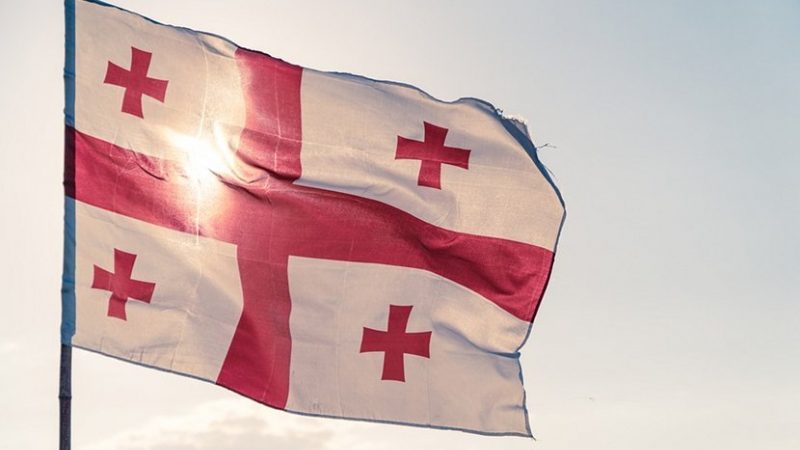
(Eurasianet) — The European Commission’s provisional endorsement of Georgia’s EU chances contained a not-so-subtle message couched in diplomatic jargon: Tbilisi must forge stronger national consensus on European, liberal values for the country to remain a viable candidate for EU membership. It is not immediately clear whether the governing Georgian Dream party got the point.
The commission recommendation, issued November 8, said Georgia could become eligible for EU candidate status “on the understanding that a number of steps are taken.” Another document issued in 2022 identifies 12 conditions that must be met for Georgia to continue on its accession path. An overarching condition, outlined in the commission’s key findings this year, is that the government and political opposition in Tbilisi need to take steps to heal a deeply polarized society.
“The reform process has been hampered by continuing political tensions, deep polarization, the absence of constructive engagement between political parties and the challenges of building consensus on key matters of national interest,” the commission stated in its assessment of the country’s political climate.
The chief catalyst for polarization has been the Georgian Dream government’s embrace of illiberal policy positions, underscored by its failed attempt to push through legislation in the spring of 2023 that would have placed severe restrictions on non-governmental organizational activity. Amid the government’s steady drift away from liberalism, President Salome Zourabichvili has emerged as the representative voice of opposition and a prominent advocate of the liberal values embedded in the EU’s structure.
In the aftermath of the European Commission announcement, Zourabichvili held out an olive branch to the Georgian Dream. Casting the commission’s recommendation as a rejection of “Russian occupation,” the president said Georgia had no alternative other than full integration into the European system. “Any other path leads to slavery,” she stated.
Zourabichvili also noted that she would be attending in a peace forum in Paris on November 10 along with her main political antagonist, Prime Minister Irakli Garibashvili. She went on to express hope that their joint presence would “establish an example of depolarization.”
A November 8 statement issued by civil society activists in Tbilisi who are generally critical of government policies echoed a desire for a greater degree of political harmony. “The common national goal – to become a member of the European Union – transcends all political and other differences,” the statement read. “Today, we must unite our voices for the future.”
Garibashvili and other top government officials have yet to reciprocate when it comes to sending signals about political conciliation. Following a November 9 meeting with French President Emmanuel Macron, Garibashvili’s office issued a statement that glossed over the European Commission’s conditionality, noting brusquely that Georgia “expects [candidacy] status to be granted by the European Council in December.”
Meanwhile, Macron reinforced the EU message to Georgia, writing in a Facebook post. “Unite your efforts for advancement. France stands with you.”
During a news conference on November 8, Garibashvili heaped scorn on Georgian Dream’s political opponents, some of whom have described the commission’s recommendation as an endorsement of the large majority of the Georgian people’s desire for EU membership, in spite of obstructionist government policies. The premier maintained the government deserved sole credit for Georgia’s EU advancement.
“The radical opposition has done nothing on our country’s path to European integration,” Garibashvili said. “I repeat, if anyone, any government, ruler, has done anything tangible, it is Georgian Dream’s government.”
Garibashvili went on to suggest that Georgia had already largely fulfilled the 12 conditions outlined by the European Commission for candidate status. “We have been working round the clock to deliver on the 12 recommendations, [conditions],” Garibashvili said. “We saw a report, which is clearly and vividly positive. This [EU] decision is based on the achieved results. “
The commission’s key findings, however, differed sharply from Garibashvili’s assessment of the government’s performance.
The commission noted that “substantive cross-party work in Parliament was hampered by limited inclusion (by the ruling party) of the opposition in drawing up legislation.” Brussels also emphasized that “several key issues remain to be addressed, notably discrimination on grounds of sexual orientation and gender identity, as well as the independence, accountability, and transparency of the judiciary.”
The commission’s findings also made clear that media freedom in Georgia was hampered by government-driven “intimidation and physical and verbal attacks” on journalists, and Georgia’s foreign policy priorities were out of sync with the EU’s, especially when it comes to the Ukraine war.
“Georgia did not align with the EU’s restrictive measures (sanctions) regarding Russia, including airspace closure,” the commission findings flatly stated.
Reading between the lines of the EU epistle to Georgia, it is clear Georgian Dream must make drastic policy corrections in order to satisfy Brussels.

Armistice Day is one of those disturbing occasions of the year when humanity’s folly is laid bare. It should be an occasion to remind said humanity about the stupid waste occasioned by war and its war-crazed planners who generally elude the dock; instead, it’s an occasion to extol its virtues and remind the reactionaries that war can be a mighty fine thing to pursue in the name of an ideology, cock-eyed belief or a sense of self-worth. Unquestioning solemnity, medals and tears are the order of the day, the ritualistic plat du jour.
These occasions are never challenged, nor impugned. The origins of the war that gave name to the occasion are simplified, if they are ever mentioned. And never shall that injunction be violated. That is certainly the view of Suella Braverman, the UK Home Secretary who must be increasingly getting under the skin of the British Prime Minister, Rishi Sunak.
Being a cut and dried jingo, Braverman treats Armistice Day as the sort of occasion to be revered and kept in aspic. No politics should ever enter unless she politicises it, nor criticism about war and its viciousness be permitted. Peaceniks are especially reviled. Remember debts and lost lives; never ask why those debts were incurred in the first place.
There is then a supreme irony in terms of Braverman’s views on peace protests that take place on Armistice Day, one which, by definition, involved the laying down of arms and the cessation of conflict. But that is the lot of the war loving demagogue in search of votes: irony is rarely acknowledged.
In a throat grabbing exercise of some ferocity against the vast sea of protests against the Israel-Hamas War, Braverman took to The Times to attack marches running into the hundreds of thousands as an unquestioned “assertion of primacy by certain groups – particular Islamists”. She was particularly beside herself that they should take place on, of all days, November 11.
For the Home Secretary, these were unquestionably “hate” marches that would be more commonly associated with the lusty sectarians of Northern Island. Even worse were those selective senior officers in the Metropolitan Police picking favourites when it came to protests. “Right-wing and nationalist protestors who engage in aggression are rightly met with a stern response yet pro-Palestinian mobs displaying almost identical behaviour are largely ignored, even when clearly breaking the law?” By the time Braverman had finished her bulldozing, she had insulted the whole constituency of Northern Ireland, mocked those favouring the Palestinian cause for freedom, and lacerated the operational independence of London’s own police forces.
The sense about Braverman making her own unilateral dash in all of this was confirmed by a spokesperson for Sunak. The article, we are told, was not “cleared” by Number 10 ahead of time. Editorial suggestions made by the PM’s office were roundly ignored. As for the Saturday protest, Sunak had met the Met Police Commissioner Sir Mark Rowley ahead of time to discuss security regarding the march. Neither thought it problematic that it should take place, given that the protests would avoid the Whitehall area and stay away from The Cenotaph, where the customary, holy delusions were to take place.
Her views have certainly struck a satisfactory note for some, suggesting that such feigned outrage might have some political weight among the spectral majority populists always love screeching about. “In her comments about the pro-Palestinian Armistice Day protests and the actions of the police, Suella Braverman, the Home Secretary, was bravely stating what the majority of the country thinks,” wrote one reader of The Daily Telegraph.
The Daily Mail agreed, expressing fury at the “soft policing of these protests” packed with “snarling bigots” contemptuous of Britain’s glorious history of war. Tory deputy chair Lee Anderson affirmed the position, claiming the Home Secretary was merely “guilty of saying what most of us are thinking”.
These were certainly not the views shared by a number of Conservatives. Lord Soames, for one, opined that, whether in agreement or not with the pro-Palestinian protests, they should go ahead. “It’s nowhere near the Cenotaph. It’s in the afternoon and most of these people, 90% of those people are not there to make trouble.”
Ex-cabinet minister Baroness Warsi firmly insisted that Braverman be sacked. “She’d been briefed by the Met of what the route of the march was going to be, and the fact that they didn’t have concerns at this stage, she has now made this a live political issue because that’s the way she operates, right?” As a result, patriots had turned into arsonists. “They set this country alight, they pit community against community, they create these fires. And that is not the job of a government.”
Dominic Grieve, who served as attorney general between 2010 and 2014, had one line of advice for Sunak: “The best thing the Prime Minister can do for us is to ensure that there is a new home secretary (before Sunday).” That she remains in office suggests not just Sunak’s absence of backbone, but Braverman’s imminent bid for his job. To now sack her would be something the newly minted martyr would be able to dine out on for months to come, all the time plotting for a Number 10 bid.
Deputy Speaker of the Armenian National Assembly Hakob Arshakyan, along with Ambassador Extraordinary and Plenipotentiary to Syria Tigran Gevorgyan, met with representatives of the Syrian Armenian community and religious leaders.
During the meeting, the current situation in the region was discussed, the necessity of joint efforts to overcome the external and security challenges facing Armenia was emphasized.
A number of official meetings are also planned during the visit to Damascus.