
Putin to Hold Call-In Show, Annual Press Conference in ‘Combined … The Moscow Times
Day: November 13, 2023
On 26 October, a Hamas delegation headed by politburo member Mousa Abu Marzouk turned up in Moscow for talks that – according to Russian readouts – focused on the safety of Russian citizens in Gaza and the release of hostages. The Russians kept tight-lipped about the real purpose of the visit. The simultaneous presence in Moscow of Iran’s deputy foreign minister, Ali Bagheri Kani – who also met Hamas – suggested a troubling degree of coordination between Hamas on the one hand, and Russia and Iran on the other. The Israelis were quick to lodge a protest with Moscow.
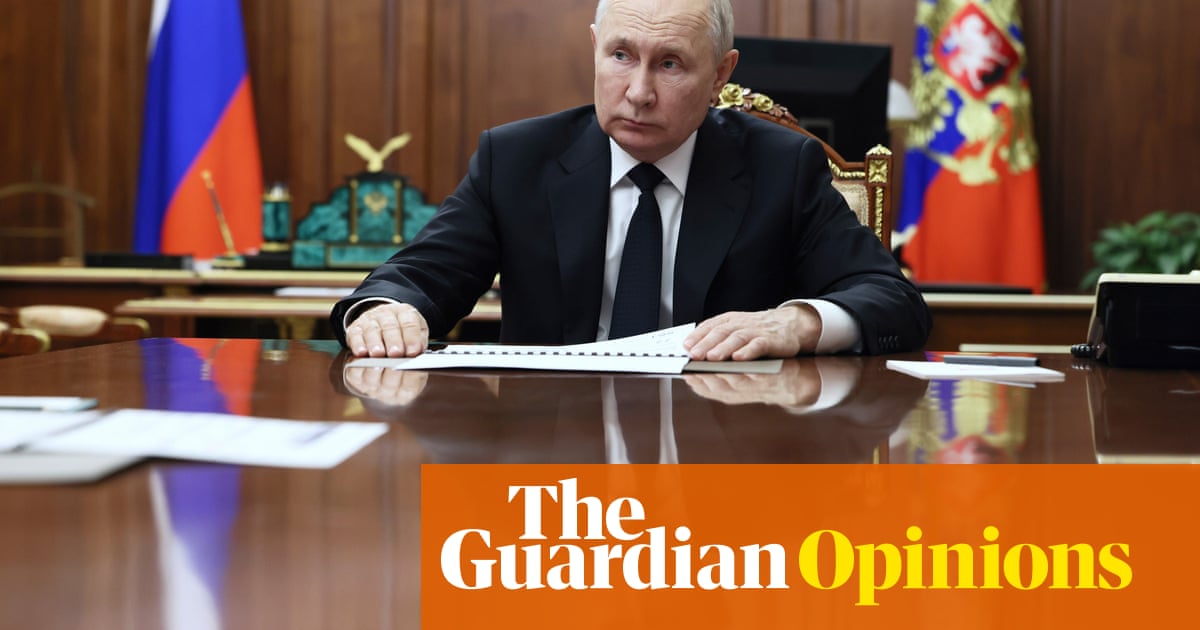
Feting Hamas just weeks after its terrorist raid on Israel is part and parcel of Vladimir Putin’s deliberate strategy of bolstering Russia’s waning influence in the Middle East. Deft diplomacy and cynical opportunism can help the Kremlin carve out a role for itself in a region long deemed essential to Russia’s great power ambitions. It would not be the first time.
Russia’s involvement in the Middle East has a long history. During the cold war, Moscow worked to turn Arab nationalism to its own strategic purposes; that is, to undermine western alliances and win clients among up-and-coming Arab states. In the mid-1950s, the Soviet Union extended military aid to Egypt, and later to Syria and Iraq. In 1956 Moscow skilfully used the British-French-Israeli invasion of the Suez canal zone in Egypt to advertise its support for the cause of Arab liberation and to distract attention from the Soviet invasion of Hungary.
After the Soviet Union’s allies suffered a crushing defeat in the 1967 Arab–Israeli war, the Soviets broke off diplomatic relations with Israel but increased their support of the Arabs, rebuilding Egyptian and Syrian armies virtually from scratch. But for all their military aid, what the Soviets really wanted was a comprehensive peace settlement through a Soviet-American agreement, where the US “delivered” Israel, while the Soviet Union “delivered” the Arabs.
Only there was a small problem: neither Israel nor the Arabs were cooperating. Nor did the US seem eager to deal. The Soviets were barely forewarned of Egypt’s and Syria’s decision to go to war with Israel in 1973. The Yom Kippur war left the Soviet leader, Leonid Brezhnev, deeply dissatisfied with his Arab friends. “Fuck them!” Brezhnev was reported as saying. “We’ve been offering them a reasonable way all these years. But no, they wanted to have a fight.”
In the aftermath, Egypt’s president, Anwar Sadat, pursued rapprochement with the US and then with Israel, a policy that led to the signing of the Camp David accords in 1978 and the return of Sinai to Egypt. The Soviets fumed at what to them looked like a break in the united Arab front; they worried, in particular, about the unresolved Palestinian question.
The 1970s were the high point for Moscow’s standing in the Middle East. Its influence there was largely a function of the Soviet ability to furnish a wide-ranging clientele with military aid. Its advocacy on behalf of the Palestinians (including consistent support for Yasser Arafat) helped sustain the Soviet Union’s reputation in the region, even if it was tarnished by the Soviet invasion of Afghanistan in December 1979.
The end of the cold war witnessed a sea-change. Having shed its pretensions to superpower status, Moscow saw its influence in the Middle East dissipate. It was only with the beginning of the Syrian civil war that Putin saw opportunities for a comeback. His successful backing of Syria’s dictator, Bashar al-Assad, despite the latter’s use of chemical weapons against his own people, was a pointer to Russia’s increasing relevance.
The protracted quagmire of the war in Ukraine has weakened Russia’s ability to meddle in the Middle East (though it retains its naval base at Tartus and an airbase in Latakia, both in Syria). Understanding Russia’s role in Syria as a check on Iran’s influence, Benjamin Netanyahu has tried to maintain a balancing act between supporting Ukraine and maintaining a working relationship with the Kremlin. And Putin, vitally interested in keeping Israel neutral in the Ukraine war, has been careful not to upset Netanyahu. The Hamas attack has blown up this uneasy equilibrium.
Yet today, unlike in the late 1960s and the early 1970s, Russia is not a superpower that can project force across the region and sustain a wide-ranging clientele through military and economic aid.
What Putin can do is leverage his relationship with Iran and Syria, and Russia’s contacts with Hamas, to insert Russia into the peace process in the Middle East. Asked whether Russia could mediate in the conflict, Putin claimed recently that it can, relying on its traditional relations with the Palestinians, and good relations with Israel. By finding a place for itself at the high table of Middle Eastern politics, Putin hopes to regain some of the international stature he had lost by invading Ukraine.
At the very least, he can win the sympathy of regional powerbrokers by championing the Palestinian cause. He has tried to do this by refusing to blame Hamas, and by sponsoring a (failed) ceasefire resolution at the UN security council. Given the scope of Israel’s military operations in Gaza, it won’t be hard for the Russians to deflect any further criticism of their war in Ukraine by pointing to the smoking ruins of the Palestinian enclave.
Precisely because Russia is no longer a superpower, it has little credibility to lose. Its assets in Syria notwithstanding, it does not have to become embroiled in a widening war. Rather, Putin can do what the Soviets did in the 1956 Suez crisis: cheer from the sidelines and score moral victories.
This does not mean that Putin wants an escalation. A broader war that embroils Russia’s key partner, Iran, carries significant risks for Russia too. But, unlike the heyday of Moscow’s involvement in the Middle East, Putin’s decisions have limited bearing on how the current crisis unfolds.
There is one immediately tangible way a war in the Middle East would benefit Putin: by potentially raising the price of oil. So far, the impact has been limited, but we may not have yet seen the worst of it. Russia could yet earn significant dividends on the new woes of a long-suffering region.
-
Sergey Radchenko is Wilson E Schmidt distinguished professor at the Henry A Kissinger Center, Johns Hopkins School of Advanced International Studies in Baltimore
Sacrificing pawns and bishop, Putin moves his chess game to mittlespiel njjewishnews.timesofisrael.com

As Russia’s invasion of Ukraine nears the end of its second year, a conclusion to the conflict seems as distant as ever.
Kyiv’s counteroffensive has failed to decisively break through the Russian Army’s prepared defenses in Ukraine’s southern and eastern regions. Meanwhile, the Kremlin is digging in for a long war and assumes it can outlast the West’s interest and Ukraine’s will to fight.
Without a firm U.S. commitment and strategy to see the war to a victorious conclusion, Putin’s prediction that he can outlast Ukraine and the West may come to pass.
During the summer and fall of 2023, the scale of Russia’s societal, financial and political mobilization to support the war effort became apparent. Under the draft budget passed by the Russian State Duma on Oct. 26, defense spending for 2024 will rise by 68 percent to the equivalent of $115 billion, making up almost a third of total spending.
This explosion in military spending will help buoy the Russian economy for the long haul, even if Russia’s predicted 2024 economic growth rate of 2.3 percent (per the estimate of the Russian Ministry of Economic Development) will be accompanied by the inflationary effects of high social and military spending.
Under the public prodding of President Vladimir Putin, Russia’s defense industry has expanded the production of key munitions and equipment for a long campaign.
Despite initial disruptions to defense production brought on by Western retaliatory sanctions following Russia’s February 2022 invasion of Ukraine, Moscow is reportedly “on track” to manufacture 2 million artillery shells a year. To circumvent challenging U.S. sanctions on the export of critical electronics and chips to Russia, it has turned to creative import workarounds to acquire the critical components it lacks the ability to produce domestically.
Russia is also forging ahead with plans to produce 6,000 Iranian-developed drones in Tatarstan that would be necessary to sustain Russia’s air bombardment campaign against Ukrainian civilian and military targets and to import massive amounts of munitions from North Korea.
Rather than attempting a risky total mobilization of Russia’s population, the Kremlin has continued to choose a more sustainable strategy of partial mobilization to support a long war.
In September 2022, the Kremlin announced a “partial mobilization” program to replace and refine a disjointed shadow mobilization strategy, which avoided a single large manpower push with an eye on long-term viability. With the assassination of Yevgeny Prigozhin in August, the Kremlin power vertical’s most significant “ultra-patriot” challenger from within the ruling elite has been removed. The Wagner boss had already been sidelined after his June mutiny, but his death likely gives the Kremlin reason to believe that it can continue to prosecute the war on its terms without fear of intra-elite challenges for the foreseeable future.
Just as Russia’s logistical legwork to support a long war takes shape, the domestic and international factors that enable sustained U.S. support for Ukraine are weakening. Hamas’s bloody October attack on Israel and Israel’s ground operation in Gaza has already knocked Ukraine out of the headlines. As the U.S. responds to Iranian proxy attacks on its forces and shift forces into the wider Middle East, the threat of an expanding conflict threatens to absorb Washington’s bandwidth.
Encouragingly, the House has resolved its leadership crisis through Rep. Mike Johnson’s (R-La.) selection to lead the chamber. He promised in an Oct. 26 interview that America would not abandon Ukraine. Despite his previous opposition to Ukraine aid legislation as well as the White House and Senate’s preference for a combined Ukraine, Israel, Taiwan and border security package, Johnson plans to “marry” Ukraine aid with border security in a bid to secure their passage together.
No matter how this strategy is received by the conference, Johnson will need to delicately thread a needle of legislative priorities (including passing the fiscal year 2024 budget) to push Ukraine’s aid package across the finish line, all while wrangling a Republican Conference whose interest in providing a large aid package to Ukraine is decidedly mixed.
Nonetheless, Russia’s war effort still faces substantial obstacles. While Russia has boosted its military industry, its economy is distorted by the demands of wartime mobilization. Despite the absence to date of decisive breakthroughs in Ukraine’s counteroffensive, Kyiv’s forces continue to inflict losses on Russian forces and reach into Russia’s rear areas with long-range fires. Ukraine and its Western partners have already demonstrated remarkable staying power in this conflict.
However, staving off defeat will require Washington to provide a sustained flow of aid to Ukraine in pursuit of defined aims, no matter how domestic imperatives and events elsewhere in the world may demand attention elsewhere. Otherwise, the Kremlin’s long bet on Western loss of interest in Ukraine could pay off.
Wesley Culp is a research assistant for defense strategy and great-power competition at the American Enterprise Institute. He can be found on Twitter @WesleyJCulp.
Copyright 2023 Nexstar Media Inc. All rights reserved. This material may not be published, broadcast, rewritten, or redistributed.