Greek Defense Minister Nikos Dendias attended the concert of the National Philharmonic Orchestra of Armenia at Megaron Concert Hall in Athens, Greece.
“It was with great pleasure that I attended with my wife and the Ambassador of Armenia, Mr. Tigran Mkrtchyan the great concert of the National Philharmonic Orchestra of Armenia, for the 120th anniversary of the birth of the leading Armenian composer Aram Khachaturian,” Mr. Denidias said in a post on X .
Με ιδιαίτερη ευχαρίστηση παρακολούθησα με την σύζυγό μου και τον Πρέσβη της Αρμενίας, κ. @TMkrtchyan, σήμερα, στο Μέγαρο Μουσικής, τη μεγάλη επετειακή συναυλία της Εθνικής Φιλαρμονικής Ορχήστρας της Αρμενίας, για τα 120 χρόνια από τη γέννηση του κορυφαίου Αρμένιου συνθέτη Αράμ… pic.twitter.com/X86jNC89N9
Under the direction of Artistic Director and Chief Conductor Eduard Topchyan, the orchestra performed a program of works by Aram Khachaturian and Sergei Rachmaninoff.
The concert was a resounding success, with the audience giving the orchestra a standing ovation.
WASHINGTON (AP) — The U.S. carried out an airstrike on a weapons warehouse in eastern Syria used by Iranian-backed militias, in retaliation for what has been a growing number of attacks on bases housing U.S. troops in the region for the past several weeks, the Pentagon said.
In Wednesday’s strike, two U.S. F-15 fighter jets dropped multiple bombs on a weapons storage facility near Maysulun in Deir el-Zour that was known to be used by Iran’s Revolutionary Guard, U.S. officials said.
“The President has no higher priority than the safety of U.S. personnel, and he directed today’s action to make clear that the United States will defend itself, its personnel, and its interests,” Defense Secretary Lloyd Austin said in a statement.
A military official told reporters in a call that people were seen at the warehouse during the day as the U.S. military watched the site for hours, but the number decreased to about “a couple” overnight when the strike occurred. The official said the strike triggered secondary explosions, indicating the presences of weapons, but the U.S. believes that no civilians were killed and any people at the warehouse were tied to the Revolutionary Guard or militia groups.
The strike, said a senior defense official also on the call, was aimed at “disrupting and degrading the capabilities of groups directly responsible for attacking U.S. forces in the region” by specifically targeting facilities associated with the Revolutionary Guard. Both officials spoke on condition of anonymity to provide an assessment of the strike.
The precision strike, said the defense official, was deliberate and designed not to escalate the conflict in the region. The military official said a deconfliction phone line linking U.S. military personnel to Russian forces in Syria was used to let them know about the attack.
This is the second time in less than two weeks that the U.S. has bombed facilities used by the militant groups, many operating under the umbrella of the Islamic Resistance in Iraq, which U.S. officials say have carried out at least 40 such attacks since Oct. 17.
That was the day a powerful explosion rocked a Gaza hospital, killing hundreds and triggering protests in a number of Muslim nations. The Israeli military has relentlessly attacked Gaza in retaliation for the devastating Hamas rampage in southern Israel on Oct. 7.
Israel denied responsibility for the al-Ahli hospital blast, and the U.S. has said its intelligence assessment found that Tel Aviv was not to blame. But the Israeli military has continued a ferocious assault on Hamas, with ground troops now deep inside Gaza City in a war that has a staggering death toll of more than 10,000 Palestinians, two-thirds of them women and children, according to the Health Ministry of the Hamas-run territory.
The latest U.S. strike was designed to take out supplies, weapons and ammunition in an effort to erode the abilities of the Iranian-backed militants to attack Americans based in Iraq and Syria. And it reflects the Biden administration’s determination to maintain a delicate balance. The U.S. wants to hit Iranian-backed groups suspected of targeting the U.S. as strongly as possible to deter future aggression, possibly fueled by Israel’s war against Hamas, while also working to avoid further inflaming the region and provoking a wider conflict.
Similar U.S. airstrikes on Oct. 27 also targeted facilities in Syria, and officials at the time said the two sites were affiliated with Iran’s Revolutionary Guard. When asked why those locations in Syria were chosen — since many of the attacks have happened in Iraq — officials said the U.S. went after storage sites for munitions that could be linked to the strikes on U.S. personnel.
The U.S. has often avoided bombing sites in Iraq in order to lessen the chances of killing Iraqis or angering Iraq’s leaders.
While officials have said the strikes are meant to deter further attacks, they have not had that effect. Rocket and drone attacks have occurred almost daily, although in nearly all cases they have resulted in little damage and few injuries.
Asked about that, the senior defense official acknowledged that the initial U.S. strike in October did not convince Iran to direct its proxies to stop the attacks. But, the official said, the strikes show America’s willingness to use military force.
According to the Pentagon, a total of 45 personnel have been injured and all of those were in attacks on Oct. 17 and 18. Of those, 32 were at al-Tanf garrison in southeastern Syria, with a mix of minor injuries and traumatic brain injuries, and 13 were at al-Asad air base in western Iraq, with four cases of traumatic brain injury and nine of minor injury. One person was injured at Irbil air base in Iraq.
The Pentagon has faced repeated questions about whether deterrence against Iran and its proxies is working because the attacks have only increased.
At the same time, the department has moved a number of air defense systems and other forces into the region to beef up protection for U.S. forces. And on multiple occasions, the systems have intercepted incoming strikes. According to a U.S. official, the number of ships in the Middle East has more than doubled, the number of Patriot air defense missile systems has about tripled, a few more fighter jet squadrons have been added and hundreds of additional troops have been deployed to the region. The official spoke on condition of anonymity to discuss force numbers not yet made public.
President Joe Biden is struggling to both “speak softly and carry a big stick,” as attacks on American forces in the Middle East mount and Israeli troops press their devastating assault on the Gaza Strip despite growing concern in the U.S.
Deputy Pentagon Press Secretary Sabrina Singh told reporters on Thursday that there have now been at least 46 separate attacks on American forces in the region since the latest Israel-Hamas conflagration began—24 in Iraq and 22 in Syria.
At least 56 U.S. personnel have been injured, with one civilian contractor killed. The USS Carney has intercepted Houthi missiles and drones in the Red Sea off the Yemeni coast, and an American MQ-9 Reaper drone was shot down in the same area.
Attacks involving American forces are being carried out by Iranian-aligned militias in Iraq, Syria, and Yemen. U.S. airstrikes targeted—for the second time in the past month—Iranian-linked sites in Syria on Thursday in response to the recent operations. But U.S. “self-defense” strikes have not stemmed the violence.
Tehran’s network of Middle Eastern partner forces has intensified activity following Hamas’ infiltration attack into southern Israel on October 7, in which more than 1,400 people were killed and some 242 people taken back into the Gaza Strip as hostages. Newsweek has contacted the Iranian Mission to the United Nations by email to request comment.
More than 11,000 Palestinians have been killed there amid Israel’s unprecedented assault, according to the Associated Press citing data from the Gaza Health Ministry. The campaign has outraged the Islamic world, unsettled many of Israel’s Western allies, and sparked fresh clashes in the Israeli-occupied West Bank. There, at least 153 Palestinians have been killed by the IDF and extremist Israeli settlers, per Associated Press figures.
The Biden administration is resolutely defending Israel’s right to retaliate against Hamas, while also reportedly pushing their allies to wrap up the Gaza operation quickly before the conflict spreads. The White House is also struggling to defend its image as a neutral arbiter in the decades-long Israeli-Palestinian conflict, able to deliver a two-state solution long considered defunct.
“The U.S. is trying to limit any regional involvement as Israel continues its operation in Gaza,” Mohanad Hage Ali, the deputy director for research at the Malcolm H. Kerr Carnegie Middle East Center, told Newsweek.
In the eyes of Iran and its regional allies, “the U.S. is playing a vital role in the conflict,” Ali added. “It’s supplying Israel with important intelligence, providing needed weapons, and also taking part in planning and implementing the military operations.”
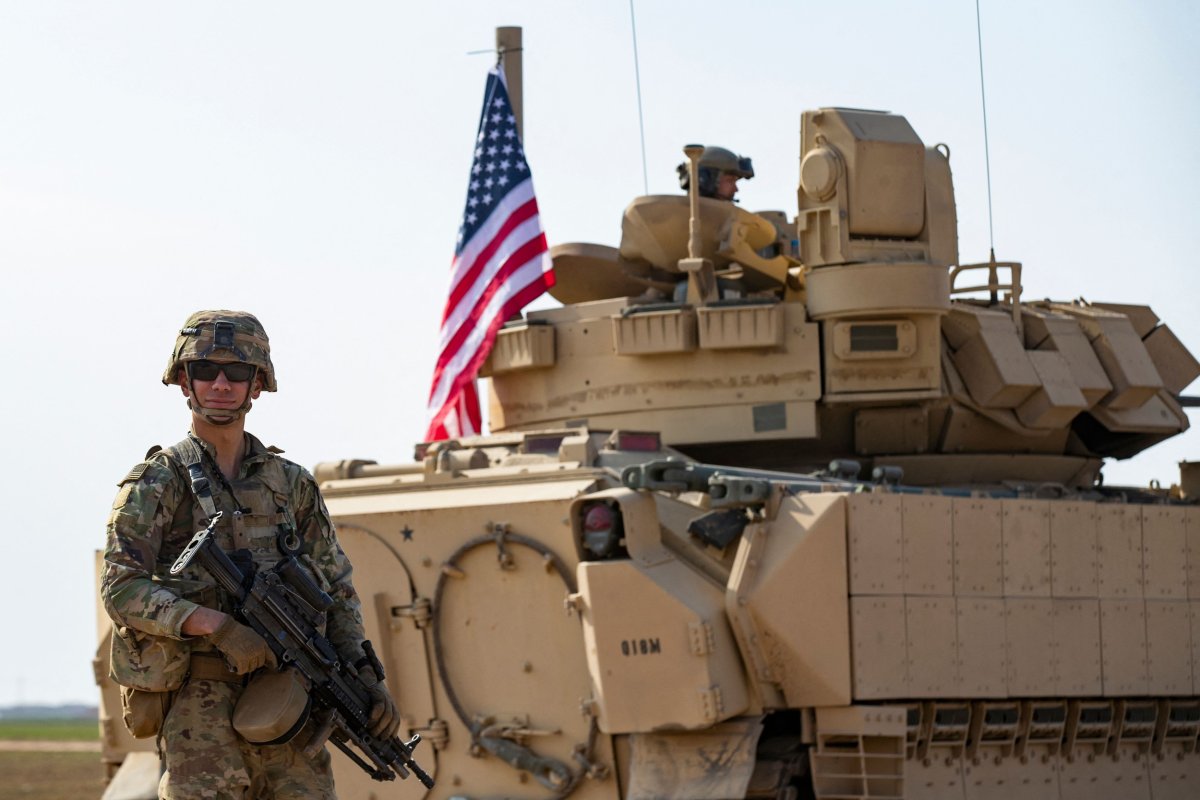
An American soldier stands next to an armored personnel carrier near the town of Tal Hamis, southeast of the city of Qameshli in Syria’s northeastern Hasakah governorate, on January 26, 2023. Attacks on U.S. bases in Iraq and Syria have intensified amid Israel’s latest war on Gaza. DELIL SOULEIMAN/AFP via Getty Images
The U.S. also wants Israel to allow pauses in the fighting to let humanitarian aid into the impoverished and war-torn 141-square-mile statelet. Some 2.3 million Palestinians have been withering there under an Israeli-Egyptian blockade, successive IDF assaults since 2005, and authoritarian Hamas rule since 2007.
In a statement sent to Newsweek on Friday, the Mercy Corps humanitarian organization said that pauses in the IDF offensive “will not provide a sufficient respite from the bombardments, ease the impacts of the imposed siege, or deliver the safety guarantees that both civilians and humanitarian organizations need.”
“Only a sustained ceasefire, agreed to by all parties, will meaningfully mitigate the tragic humanitarian crisis in Gaza, and allow organizations like Mercy Corps to deliver lifesaving assistance desperately needed by 2.3 million people who continue to be trapped under heavy bombardment, cut off from food, water and medicine.”
The deepening crisis threatens to knock the Biden administration’s foreign policy off balance, even as it grapples with a sclerotic Russia-Ukraine war and looks ahead to the 2024 presidential election.
The ramifications of Israel’s war on Hamas, Ali said, will reverberate across the Middle East for some time to come, destabilizing U.S.-led Western efforts to pacify and disengage from a region where successes have been fleeting and failures numerous.
“It’s going to be beyond what comes out of Hezbollah and its allies in the region,” Ali said. “The impact it’s having on new generation of Arabs and Muslims across the region, I think will have an impact definitely beyond this specific moment.
“I think the scale is so big in such a short period of time, it definitely will reverberate and stay with us,” Ali added. “I think U.S. and Western interests definitely should be of concern… They should be worried about what comes next after this.”
Newsweek is committed to challenging conventional wisdom and finding connections in the search for common ground.
Newsweek is committed to challenging conventional wisdom and finding connections in the search for common ground.
Housing problem for the Karabakh people in Armenia
The Karabakh War of 2020 and the September 2023 hostilities have dramatically altered life in the southern, Syunik region of Armenia. This is especially true for the economic development of the region, the ability of local residents to earn and support their families.
The situation in Syunik has been particularly aggravated since May 2021, when Azerbaijan’s armed forces invaded Armenia’s sovereign territory. The region lost dozens of hectares of land that was used for agriculture. Another part is under the direct aim of the Azerbaijani military. While the main occupation of the population here is farming and cattle breeding.
At the same time, many former residents of Nagorno-Karabakh have settled in this area – those who moved here after the war in 2020 and those who were forced to leave their homeland in September 2023.
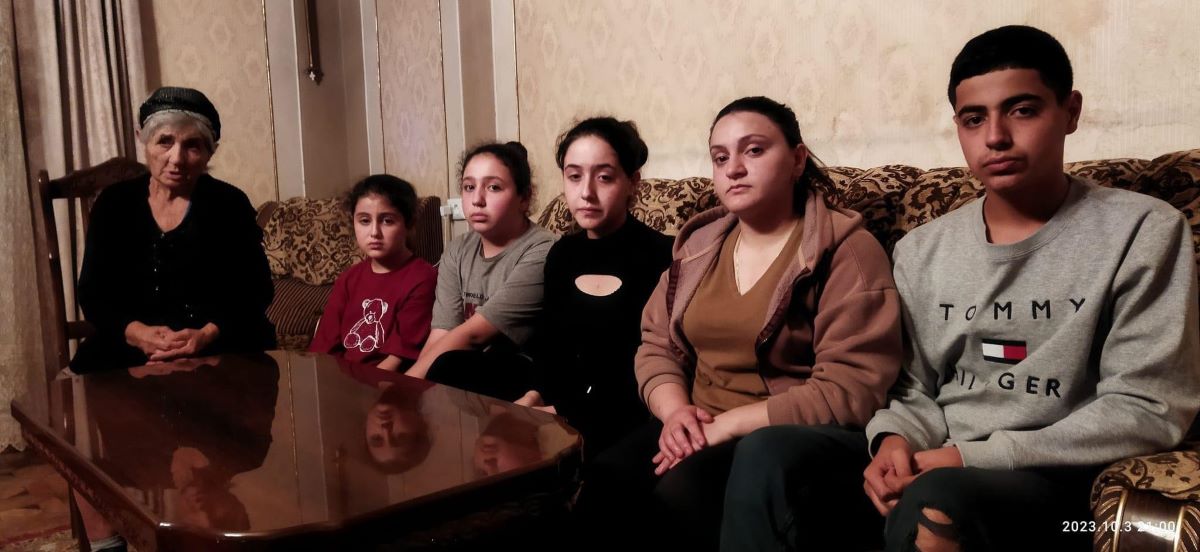
JAMnews presents a series of articles about the residents of Syunik and their problems. This article is about the large Badalyan family from NK, who now live in a small house in the village of Nerkin Khndzoresk.
The family of 53-year-old Marine has been living in the village of Nerkin Khndzoresk for 3 years. Her son Armen, his wife and 5 children live with her in the only room of a small house. The youngest, Koryun, was born in September 2022. Her cat with three kittens also lives here.
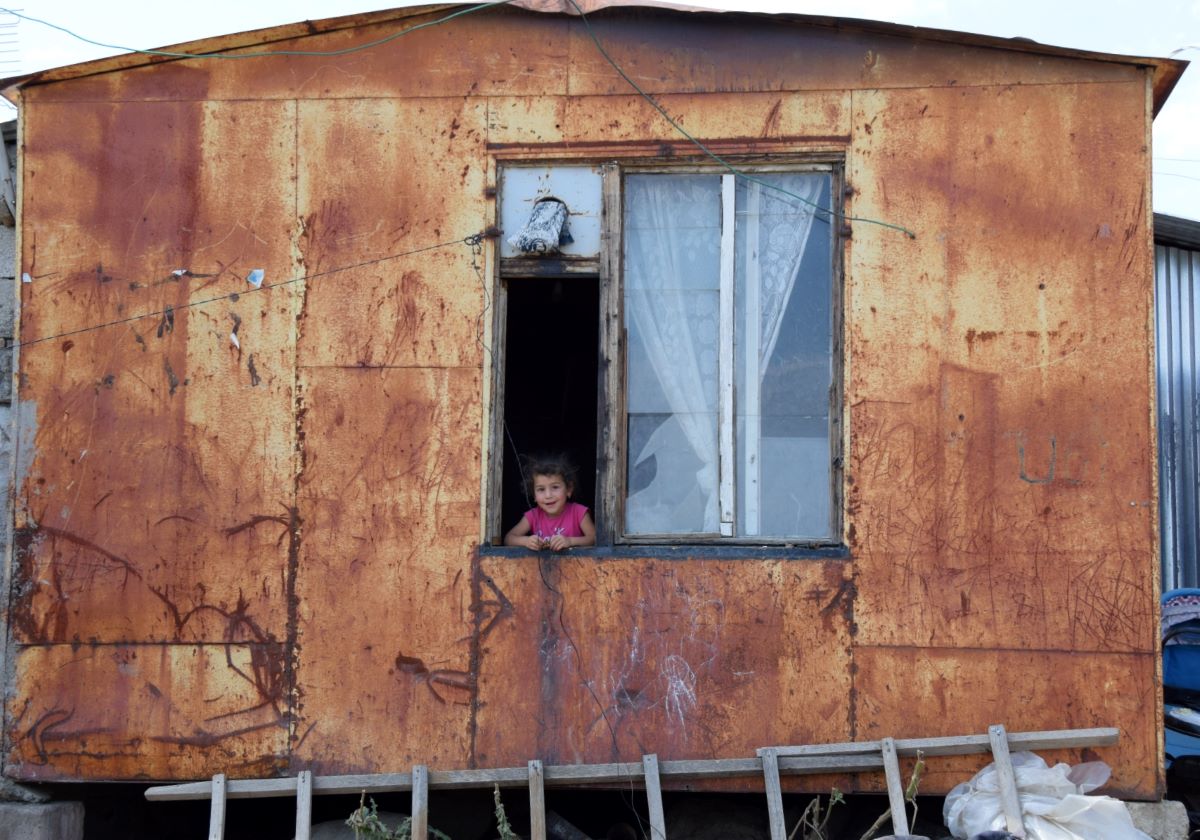
The youngest member of the family. Photo: JAMnews
The Badalyans are one of thousands of families who had to leave everything behind and move to Armenia during the 44-day war in 2020. They could not return as their settlements came under Azerbaijani control.
Marine tells the story of how her family moved from the Armenian town of Artik to Nagorno-Karabakh:
“In 1997, with my husband and two sons, we decided to move to Nagorno-Karabakh. It was difficult to live in Artik, my husband was ill and ,y eldest son had a disability. We had to sell our house to pay for his treatment. We moved to the Kashatagh region of Nagorno-Karabakh, to the village of Gala; we thought that we would live here for a few years and come back. But there I realized that I was in the right place, I was home. And we didn’t come back.”
She says the happiest years of her life were spent in Gala. Her son got married, four grandchildren were born, they planted a garden, built a house. They did not live richly, but happily. The grandchildren had everything they dreamed of. One room in the house was set aside just for their toys. And now they have a few toys given to them by neighbors, and they play with kittens and chickens.
Granddaughter Mariné plays with a kitten. Photo: JAMnews
Marine thanks the villagers of Nerkin Hndzoresk for taking them in, helping them as much as they could, providing them with the house where they now live, and one hectare of land free of charge.
“But still, home is where your heart is, and our hearts stayed in Gala. We had no intention of leaving during the war. Only I, my daughter-in-law and her grandchildren, and a neighbor stayed in the village. And we left without taking anything with us, at the last minute, when an airplane was shot down near the village.”
“The important thing is that the kids don’t go hungry.”
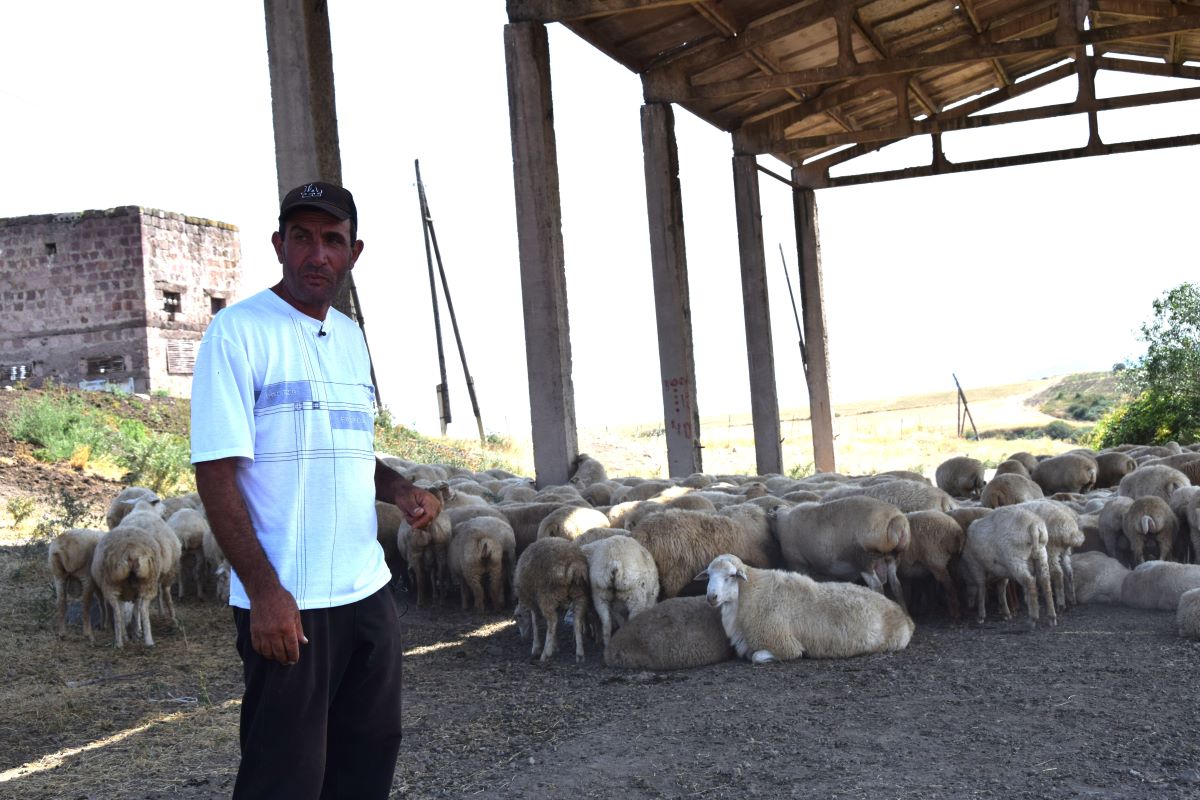
The decision to move to Inner Khndzoresk was not accidental. Her daughter-in-law, Lusine, is from this village, and Armen has been working here as a shepherd for 10 years.
Arthur and Lusine. Photo: JAMnews
The family of seven lives on Armen’s salary of about 100,000 drams ($240); 70,000 ($190) is the allowance given to the children.
According to Marine, part of the money is spent on paying off a loan for a washing machine and an electrically heated water tank:
“And when we pay back the debts accumulated over the month, we are left with empty pockets again. We barely survive. The main thing is that the children do not go hungry.
Badalyan’s house in Nerkin Khndzoresk. Photo: JAMnews
According to official data, after the 2020 war, 950 families (3,600 people) were forced to leave the Kashatagh region of the unrecognized NKR alone, where Marine’s family lived. In general, more than 90 thousand people found temporary shelter in Armenia. But 70% returned to NK after the end of hostilities, as Russia deployed its peacekeeping contingent here, whose obligations included ensuring the security of the population.
For those who had nowhere to return, in 2022 the Armenian government approved a program of state support. Under this program, they are allocated certificates for the purchase of housing.
As of December 2022, 3200 families were considered beneficiaries of the program. Of these, 2231 families have received a certificate. It is not known how many have managed to solve their housing problems.
It is also unclear how the issue of providing housing to more than 100 thousand Armenians who left NK for Armenia after September 19, 2023 will be resolved.
The amount pledged in the certificate is not enough to purchase housing
Many people, with certificate in hand, are unable to buy an apartment, as the amount stipulated therein is insufficient.
The maximum amount for buying an apartment in Yerevan is 8 million drams ($20,000). It is not enough to buy a one-room apartment on the outskirts of the capital. The value of 1 square meter of real estate in the capital varies between 206,000-796,000 drams ($515-1990). Over the past year, prices in different quarters of the city have increased by 4.1-16.6%.
10 million drams ($25,000) is allocated for purchasing housing in Armenia’s provinces. But here too, housing prices have risen recently.
The tourist town of Tsakhkadzor is traditionally the most expensive. In December 2022, 1 square meter here cost an average of 394,000 drams ($985). The second place is occupied by Abovyan, where the price of 1 square meter is 250,500 drams ($626).
The most the government is ready to pay to families who will settle in border settlements is 14 million drams ($35,000). Strange as it may seem, prices have also increased significantly here. In Syunik region they have increased by 14% on average, in Kapan and Sisian cities to 19.3%. The price of 1 square meter here is 161,500 drams ($403).
Even in the town of Jermuk, which was under active shelling by Azerbaijan in September 2022, the price of apartments went up by 13.5% compared to last year. 1 square meter costs 117,000 drams ($292).
In the border region of Tavush, prices have increased by 10-20%. The most expensive apartments are in Dilijan. One square meter costs 166,000 drams ($415).
In the bordering Gegharkunik area, the prices increased within 7-25%, reaching 75,200 drams ($188) per square meter in the town of Gavar.
But it is not only prices that frighten people who have just survived the horrors of war. They do not agree to living in the border zone, possibly being in the epicenter of hostilities again.
Another problem associated with certificates is that their validity period is only 90 calendar days from the date of issue. During this time their owners need to have time to solve not only technical problems related to the purchase and sale of housing, but also to collect and submit to the bank all the necessary documents.
And this becomes a problem for those who left their homes during the war and were not able to bring any documents with them, not even an ID card. There are people who had to hide for 24 hours in shelters from where they were taken to Armenia. There are also cases of people who lost their documents on the way.
Their recovery in Armenia is complicated by the fact that not all the database in NK has been digitized, as well as problems with the integrity of the archives.
The Badalyans don’t have all the documents in hand either
As compensation, the Badalyan family even received two housing purchase certificates from the state, one for Marine and the other for Armen’s family with many children. The maximum amount of 14 million drams was given to each of them, as they decided to settle in Nerkin Hndzoresk, a border town.
Armen has already found two suitable houses. One of them also has a stable where he can keep animals. The house is being sold for 16 million drams ($40,000), but that doesn’t scare him. If he makes money, he will find a way to do it.
The certificates are available, the houses are also available, but the family continues to live in the house, as Marine and her son did not bring the necessary documents with them.
Armen says that despite all the difficulties, his heart is calm.
“Thank God, the whole family left Karabakh, everyone got to Armenia alive and healthy. We brought our life. Isn’t that not enough? And many didn’t manage to do it.”
He looks at the houses that may soon become his property and thinks about what work to do first to pay the full price.
But Mariné doesn’t hope for anything. The issue with the documents has not been resolved yet, and the certificate is about to expire.
Arthur’s children. Photo: JAMnews
This publication was produced with the financial support of the European Union. Its contents are the sole responsibility of EU4IM’s beneficiary MediaGET/JAMnews and do not necessarily reflect the views of the European Union
The World Health Organization (WHO)has warned that the Al-Shifa Hospital, the largest and most important medical facility in the Gaza Strip, is no longer functioning due to the ongoing Israeli attacks and the lack of fuel, water, and electricity.
The hospital, which was already overwhelmed with thousands of injured and displaced Palestinians, was hit by massive attacks.
Doctors and aid workers have expressed shock and outrage at the attacks on healthcare facilities, which are supposed to be protected under international law.


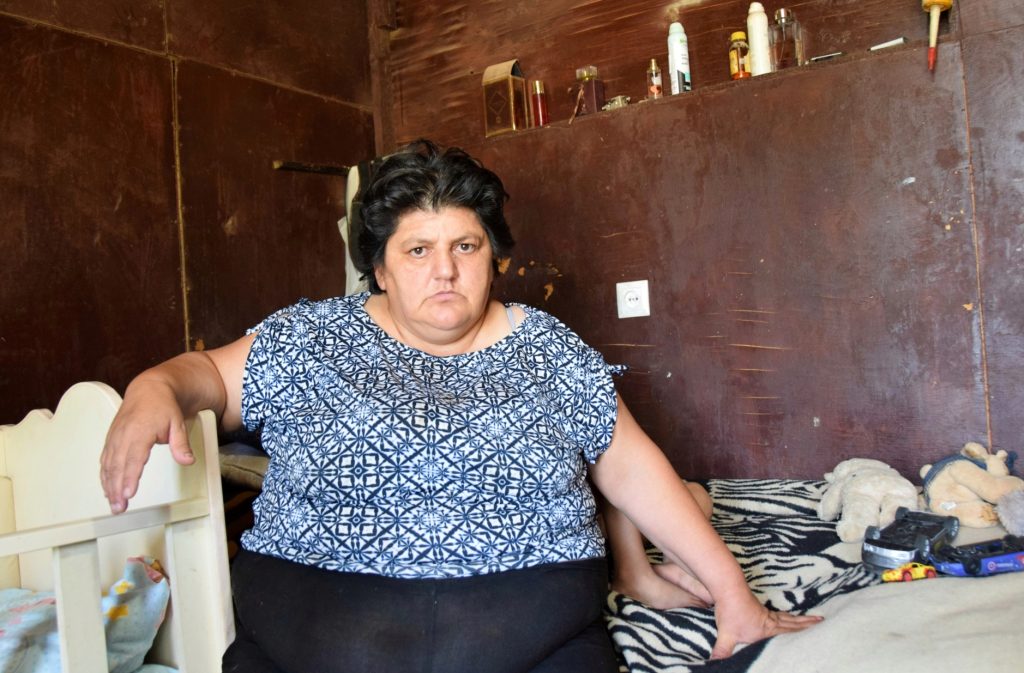 Marine Badalyan. Photo: JAMnews
  The youngest member of the family. Photo: JAMnews
 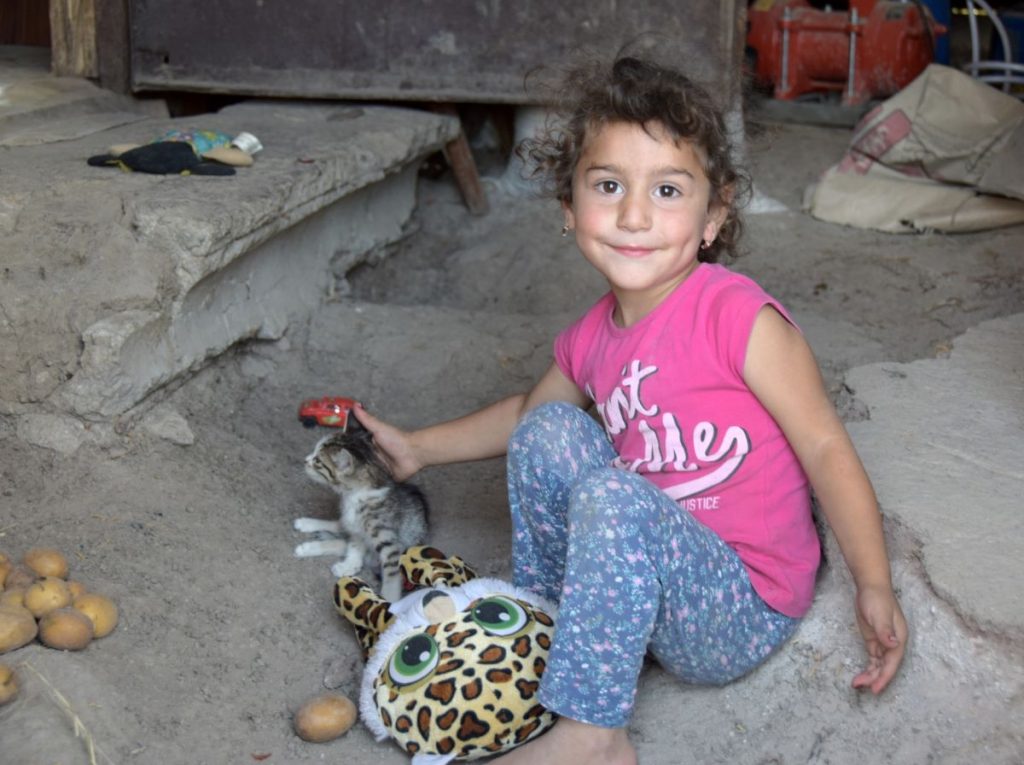 Granddaughter Mariné plays with a kitten. Photo: JAMnews
 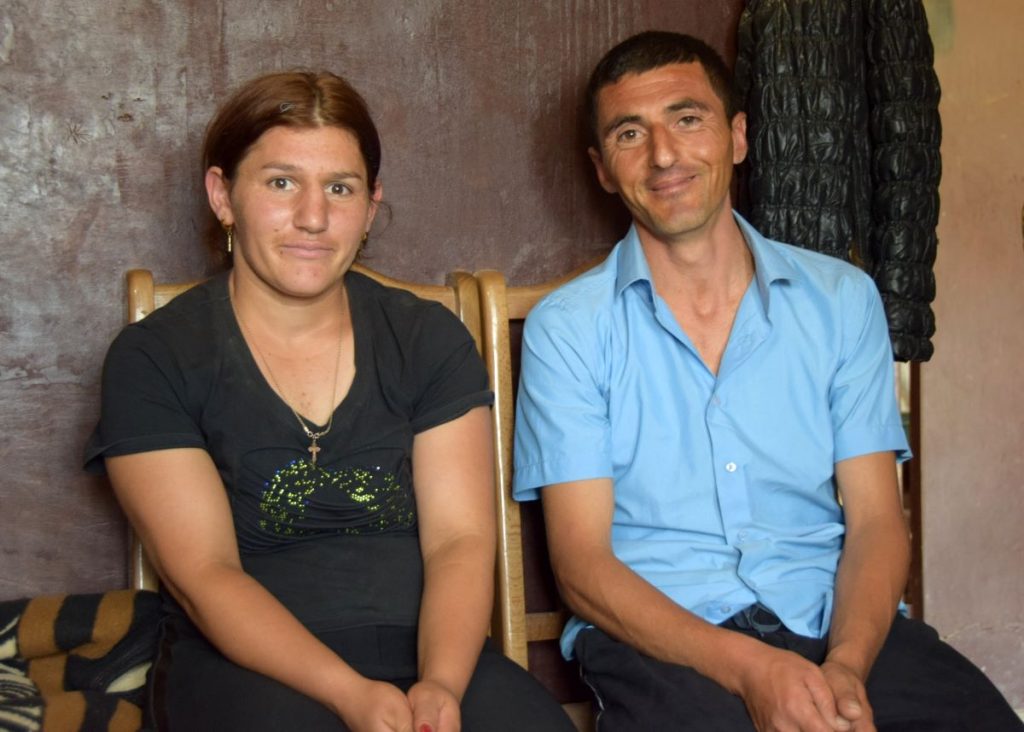 Arthur and Lusine. Photo: JAMnews
 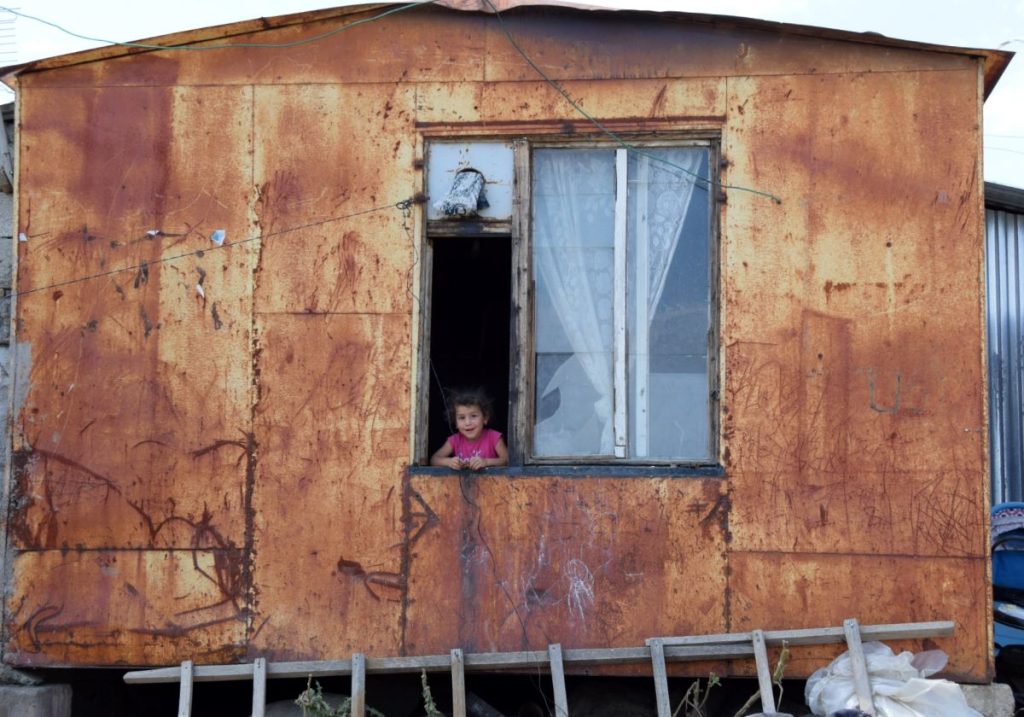 Badalyan’s house in Nerkin Khndzoresk. Photo: JAMnews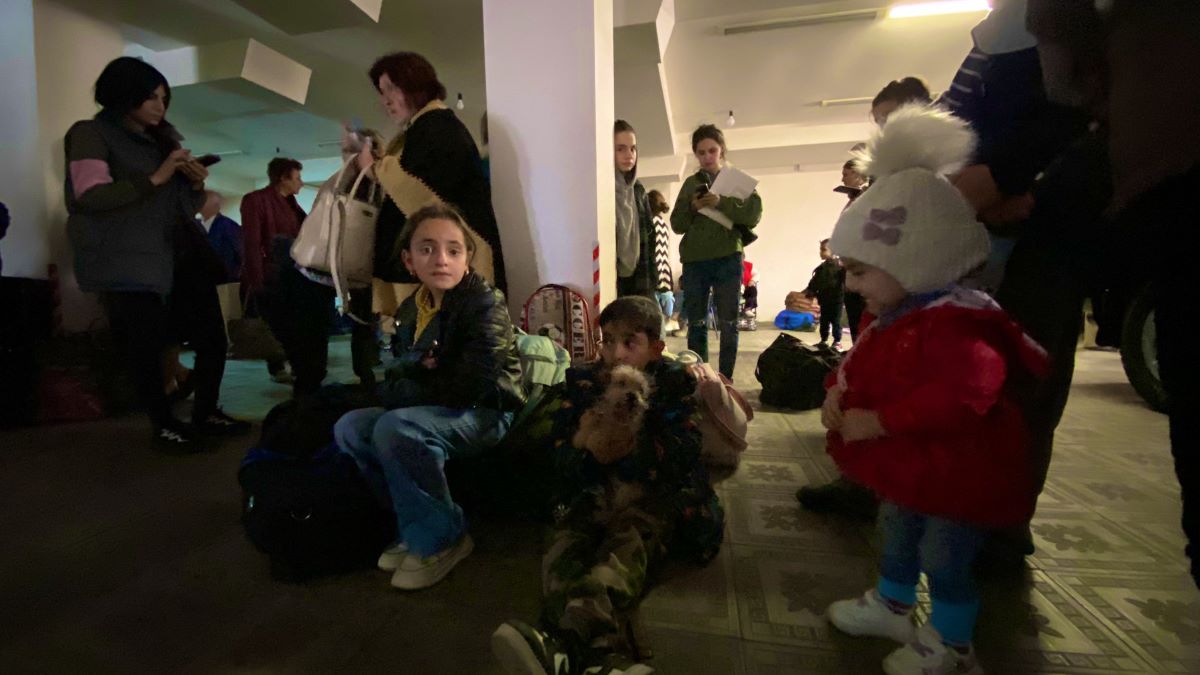

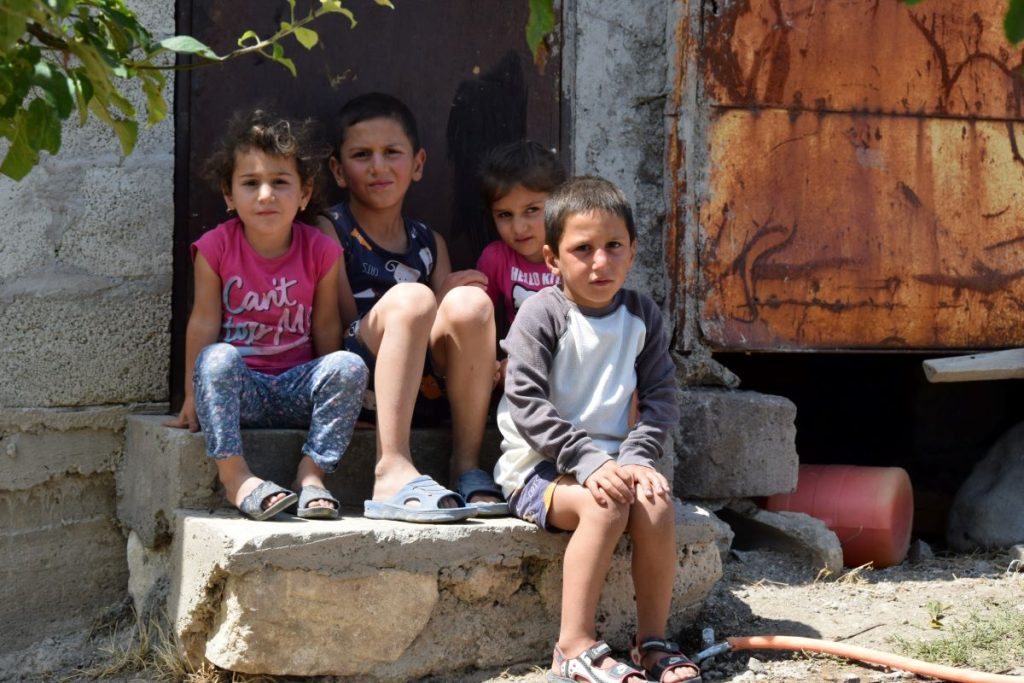 Arthur’s children. Photo: JAMnews