
Open hatred of Jews surges globally, inflamed by Gaza war The Korea Herald
Day: November 1, 2023
The @nytimes does it again:
Craig Mokhiber, a UN official retired today. Upon his retirement, he wrote a vile letter to the UN Human Rights Commissioner which basically blames Israel for every possible crime, completely ignored the massacre of 7/10, and – calls for the… https://t.co/tL6tPTfyCi
— George Deek (@GeorgeDeek) November 1, 2023
The Chairman of the Foreign Affairs Committee of the Georgian Parliament, Nikoloz Samkharadze, has said that Georgia will not participate in the “3+3” platform unless the Georgian territories are de-occupied. “For us, the 3+3 format is unacceptable precisely because of Russia,” Samkharadze told the Georgian Public Broadcasting (GPB).
The format, which brings together three regional powers – Iran, Turkey and Russia – as well as two South Caucasus countries- Azerbaijan and Armenia, was established in 2021 and, despite its name, Georgia is not a member.
Samkharadze said that there is “a very clear position” on non-participation in the 3+3 format, although he also clarified that Georgia is not “excluding” itself from the internal Caucasian processes. Georgia’s non-participation “does not mean that we will not develop the bilateral relations with Turkey, or that we will not try to establish a format for trilateral relations with the participation of Georgia-Armenia-Azerbaijan,” – Samkharadze noted.
According to Samkharadze, in the Caucasus, it is important to create a kind of “climate” that will encourage political and economic cooperation. However, “when one of the members of this so-called format grossly violates the territorial integrity of our country and has the part of our country occupied, of course, it makes no sense to participate in this format,” – Samkharadze said.
The Parliamentary committee chair noted that the 3+3 format can’t be utilized for de-occupation. He said: “We have the Geneva format and we can see very well how Russia behaves in the Geneva format; for 15 years it has blocked all decisions that could advance the conflict resolution process and take some steps towards de-occupation. So I have no illusions that Russia will behave differently in any other format.”
Samkharadze also noted that the last meeting of the 3+3 format in Tehran issued a communique in which the signatories, including Russia, recognized the territorial integrity and inviolability of internationally recognized borders.
The last meeting in the framework of the 3+3 platform was held this year in Tehran, Iran, on October 23. Georgia did not participate in the meeting, although the joint communique called for its “equal participation.” Following the ministerial, Russian Foreign Minister Sergey Lavrov and Iranian Foreign Minister Hossein Amir-Abdollahian also expressed their willingness and called for Georgia’s participation in the future meetings of the format.
Also Read:
- 11/12/2021 – Tbilisi Skips 3+3 Platform Meeting in Moscow
- 14/01/2022 – Lavrov Hopes Baku, Ankara, Yerevan Can Convince Tbilisi on Joining 3+3
In the third reading, on November 1, the Parliament amended the Law “On Georgian Citizenship” to reduce the residency threshold required for foreign citizens who wish to acquire Georgian citizenship from 10 to five years.
According to the Ministry of Justice, which proposed the change in June 2023, the decision is aimed “at improving and simplifying the citizenship procedure.”
The Parliament said, that once the minimum threshold of residency is reached, “the Public Service Development Agency will ensure the verification of the level of knowledge of the state language of Georgia, of the history of Georgia, and the basic principles of law” by persons who would want to become Georgian citizens.
Also Read:
In an audio recording leaked on social media on October 31, Grigory Karasin, chairman of the Russian Federation Council’s Foreign Affairs Committee, and Zurab Abashidze, the Georgian Prime Minister’s Special Representative for Russia, apparently discuss the possibility of the resumption of air traffic between Russia and Georgia in March 2022.
Civil.ge has compiled the politicians’ reactions to the audio recording.
Ruling Georgian Dream party
Rati Bregadze, Minister of Justice: “These people used to meet and talk, and there is such a channel of communication. I think there is nothing particularly secret here. If any kind of recording is released, which is most likely illegally obtained, it must first be proved authentic. I have not heard this, and it will be difficult for me to talk about it… You [journalists] want, and you should say it directly, to hold accountable the person who made it easier for the citizens of Georgia to travel [to Russia]… What would be the interest of the Russian Federation? I know and I can tell you from the Georgian point of view that it will be easier for the citizens of Georgia to travel… I don’t see anything wrong with it.”
Nikoloz Samkharadze, Chairman of the Foreign Affairs Committee of the Parliament: “Zurab Abashidze has commented on it. He said it’s the spring of 2022. I didn’t see the video myself, I only saw Zurab Abashidze’s comment, so I trust Zurab Abashidze, he will tell the truth to the Georgian society”.
Tengiz Sharmanashvili, Deputy Chairman of the Defense and Security Committee of the Parliament: “I have not heard… as far as I know, these negotiations did not take place, there were no consultations with Russia on this issue [resumption of flights], and Russia unilaterally removed what it unilaterally imposed… [Karasin – Abashidze’s conversation] does not mean anything, because Abashidze is not an official who can make this kind of decision. The format [of Karasini-Abashidze] is simply to share views with each other”.
Opposition
Tinatin Bokuchava, United National Movement: “This is also Putin’s style to expose collaborators and traitors, that is, meaning Russia itself expositing the Russian government doing the Russian deed … I am sure that we will hear many more such things from Russia about this government, I do not exclude that [Levan] Davitashvili [Minister of Economy and Sustainable Development] was in Beijing not only to participate in the multilateral format, but that Ivanishvili’s pawn brought treasonous messages to Beijing and held secret negotiations with the country’s occupier and internationally recognized terrorist, Vladimir Putin.”
Salome Samadashvili, Lelo for Georgia: “This record confirms what we have been saying for a long time, that Abashidze is not a representative of Georgia, he is a representative of Russia, he is Karasin’s assistant who receives tasks from him. But the absurdity of all this is that he receives his salary from the money taken from the pockets of the Georgian people, and most importantly, there is no accountability, that is, he carries out his functions without control – the fulfillment of Russia’s tasks. I am going to raise the question in the Parliament – how can the society force the Russian representative Abashidze to be accountable to the people”.
Beka Liluashvili, For Georgia: “I appeal to the Prime Minister of Georgia to come out and say when did he lie? When he came out and proudly said – there were no formal negotiations on the issue of flights and it was Russia’s unilateral decision, or now they are lying to the citizens with this whole process and secondly, what are the other issues on which the audio recording has not yet been released… Maybe there are ongoing negotiations on other non-state, anti-Georgian issues, for example, whether the issue of Ochamchire is part of such negotiations”.
Paata Manjgaladze, “Strategy Aghmashenebeli”: “The Abashidze-Karasin format is useless and is designed to act as a decoy, as if Russia has no communication with “Georgian Dream” except through this format. Of course, this confirms that the communication was also through this channel, but “Georgian Dream” has a tighter, closer relationship and direct contact with Russia than the Abashidze-Karasin format, and this is evidenced by Partskhaladze’s direct contact to Russia, who is close to the Garibashvili’s and Bidzina Ivanishvili’s families”.
Khatuna Samnidze, parliamentary group “Reforms Group”: “I am not surprised that such a recording was revealed and that such relations exist. We have a government which, is characterized not only by its cautious policy towards Russia, as it calls it, but also by its cowardly policy and is at odds with national interests of the country. This record is another proof that this government does not have national interests as its main goal.”
Tamar Kordzaia, independent MP: “The fact, that it is the authorities that spread disinformation in this country, has been confirmed… We remember very well the announcements about the resumption of flights, that the resumption was a unilateral [decision] on the part of Russia. We asked very simple questions at the time… but there was no answer. These lies have been exposed.”
“What do the mobilizations in Israel and Russia have in common?” a Russian stand-up comedian asks the audience, “in both cases there are long queues for flights to Tel Aviv”. Almost everyone in the Bukhari stand-up bar in central Tbilisi laughs.
The author: Nico Butylin is a German journalist from Berliner Zeitung working with Civil.ge in the framework of the IJP Scholarship
For more than 90 minutes, several dozen – all Russian – people listen to the latest jokes from the Russian diaspora: swearing, mockery of Putin and the Russian homeland, but also mockery of the “Ruzzians Go Home” drawings in the Georgian capital.

After the attack on Ukraine in February and especially after the partial mobilization in the autumn last year, many Russians left their homeland. It is estimated that nearly a million people have left their country in the last 20 months – hundreds of thousands have fled to Georgia, and a few thousand have come to Germany. But there are serious differences between the Russian community in Georgia and in Germany.
In Georgia: a short-term stay in a bubble
While Germany has traditionally been a country of refuge – whether for Turkish or Italian guest workers, Poles, Russians or Romanians – the story is different in Georgia. Many Georgians have left their country in recent decades in search of better economic opportunities or because of political circumstances. But since the war with Russia, Georgia has itself become a destination for migrants.
The number of Russian migrants has risen from 15 percent to almost 50 percent – and this has made the social conflicts within Georgian society more visible. In the Georgian capital of Tbilisi, for example, not only have house prices exploded, but the cost of shopping in a supermarket or eating in a restaurant has more than doubled in some parts of the city. In addition, many Georgians have been burdened by the language situation since masses of Russians arrived in Georgia last year. Speaking the Russian language without being asked whether they know it is often described by Georgians as arrogant. There have also been allegations of physical confrontations between locals and fleeing Russians.
Walking around the places frequented by the Russian diaspora in Tbilisi, one thing stands out: Russians tend to stay in their bubble. They meet like-minded people at yoga classes, sign up for co-working spaces in Tbilisi’s trendy districts, or spend an evening at a stand-up comedy club. There are Russian schools, cafes, and reportedly even hospitals. But no one knows how long their bubble will last.
Most of the fleeing Russians don’t know how many months or even years they will stay in Georgia. “Maybe a year or two, depending on how the war goes,” says a Russian woman in a café near Tbilisi’s Liberty Square. Many of them hope that the war will soon be over, that Putin will fall and that they will be able to return home. With this assumption, many Russians remain in their bubble, have little contact with the majority society and, apart from Gamarjoba and Madloba, hardly learn the Georgian language. Almost everyone hopes that their stay in Georgia will be short.
But things could heat up very quickly: from skyrocketing property prices in Tbilisi and Batumi to social tensions between Russian tourists and locals. The housing market is particularly tense in Georgia’s larger cities. “While an apartment in the Chughureti district with a nice view of the city cost between $250 and $300 before the war, it now costs more than $600 a month in some cases,” says a Georgian homeowner in Tbilisi.” The prices are almost the same as in Western European capitals. The numerous graffiti and stickers in the Georgian capital also speak a clear message.
Moreover, Georgian restaurants and bars often try to point out that a stay in their country is based on their own rules. “By entering our restaurant, you agree that Putin is a war criminal and respect the territorial integrity of Georgia, Moldova and Ukraine,” reads a sign on the door of a restaurant in Stepanzminda. Another café in Dedaena Park in central Tbilisi asks customers to sign declarations saying they oppose Russian aggression in Ukraine and agree that Vladimir Putin is a war criminal.

Talking to Russians who have fled however, it is clear that they are aware that their homeland is associated with imperial behavior; to this day, 20 per cent of the Georgian state is occupied by Russian troops. The last war was only 15 years ago. This is another reason why many Georgians have doubts about the extent to which Russians should be welcomed with open arms. Discussions about visa restrictions, or a prevailing narrative that “Russians come to Georgia, stay in their bubbles, start businesses and send the money home”, reveal such negative attitudes.
In Germany: long-term stay and attempts to integrate
Germany, on the other hand, has a different basic premise towards Russian migrants in its history. Russians have come to Germany in several waves over the past 100 years – after the October Revolution, after World War II, during the GDR, after the collapse of the Soviet Union, and now again after the attack on Ukraine. The number of Russians in Germany varies greatly, as the very heterogeneous group of Russian citizens, Russian-Germans, Russian-speaking people from Kazakhstan or Ukraine and Jewish-Russian refugees are often added together.
What is striking, however, is that Russians are often seen as ‘well integrated’ in German discourse. Many of them attend language courses, try to integrate into the majority society and hope to stay in Germany for a longer period of time. In contrast to Georgia, Germany is perceived by many Russians as a long-term place of refuge.
This also has something to do with the social structures in Germany: there is an established Russian community there. One is a political player, publicly calling for financial and military support for Ukraine, or seeing itself as the pro-European future of a post-Putin Russia. “Unlike in Georgia, Russians in Germany are less likely to be equated with the policies of the Putin regime,” says a Russian woman who sought refuge in Georgia and Germany after the war broke out.
On the other hand: what is unimaginable to happen in Georgia is the pro-war mobilization of a small part of the Russian-speaking community, like in Germany. Shortly after the start of the war, several car parades took place in Germany, the Russian tricolor was hoisted, and participants wore Putin and PMC Wagner shirts. Social tensions between pro-Putin supporters and their opponents around the Soviet monuments in Berlin were particularly high around 9 May. The Georgians were spared this. In fact Georgians in Tbilisi took part in or organized rallies to protest against Russia’s war in Ukraine.
The Chairman of the Foreign Affairs Committee of the Georgian Parliament, Nikoloz Samkharadze, has said that Georgia will not participate in the “3+3” platform unless the Georgian territories are de-occupied. “For us, the 3+3 format is unacceptable precisely because of Russia,” Samkharadze told the Georgian Public Broadcasting (GPB).
The format, which brings together three regional powers – Iran, Turkey and Russia – as well as two South Caucasus countries- Azerbaijan and Armenia, was established in 2021 and, despite its name, Georgia is not a member.
Samkharadze said that there is “a very clear position” on non-participation in the 3+3 format, although he also clarified that Georgia is not “excluding” itself from the internal Caucasian processes. Georgia’s non-participation “does not mean that we will not develop the bilateral relations with Turkey, or that we will not try to establish a format for trilateral relations with the participation of Georgia-Armenia-Azerbaijan,” – Samkharadze noted.
According to Samkharadze, in the Caucasus, it is important to create a kind of “climate” that will encourage political and economic cooperation. However, “when one of the members of this so-called format grossly violates the territorial integrity of our country and has the part of our country occupied, of course, it makes no sense to participate in this format,” – Samkharadze said.
The Parliamentary committee chair noted that the 3+3 format can’t be utilized for de-occupation. He said: “We have the Geneva format and we can see very well how Russia behaves in the Geneva format; for 15 years it has blocked all decisions that could advance the conflict resolution process and take some steps towards de-occupation. So I have no illusions that Russia will behave differently in any other format.”
Samkharadze also noted that the last meeting of the 3+3 format in Tehran issued a communique in which the signatories, including Russia, recognized the territorial integrity and inviolability of internationally recognized borders.
The last meeting in the framework of the 3+3 platform was held this year in Tehran, Iran, on October 23. Georgia did not participate in the meeting, although the joint communique called for its “equal participation.” Following the ministerial, Russian Foreign Minister Sergey Lavrov and Iranian Foreign Minister Hossein Amir-Abdollahian also expressed their willingness and called for Georgia’s participation in the future meetings of the format.
Also Read:
- 11/12/2021 – Tbilisi Skips 3+3 Platform Meeting in Moscow
- 14/01/2022 – Lavrov Hopes Baku, Ankara, Yerevan Can Convince Tbilisi on Joining 3+3
In the third reading, on November 1, the Parliament amended the Law “On Georgian Citizenship” to reduce the residency threshold required for foreign citizens who wish to acquire Georgian citizenship from 10 to five years.
According to the Ministry of Justice, which proposed the change in June 2023, the decision is aimed “at improving and simplifying the citizenship procedure.”
The Parliament said, that once the minimum threshold of residency is reached, “the Public Service Development Agency will ensure the verification of the level of knowledge of the state language of Georgia, of the history of Georgia, and the basic principles of law” by persons who would want to become Georgian citizens.
Also Read:
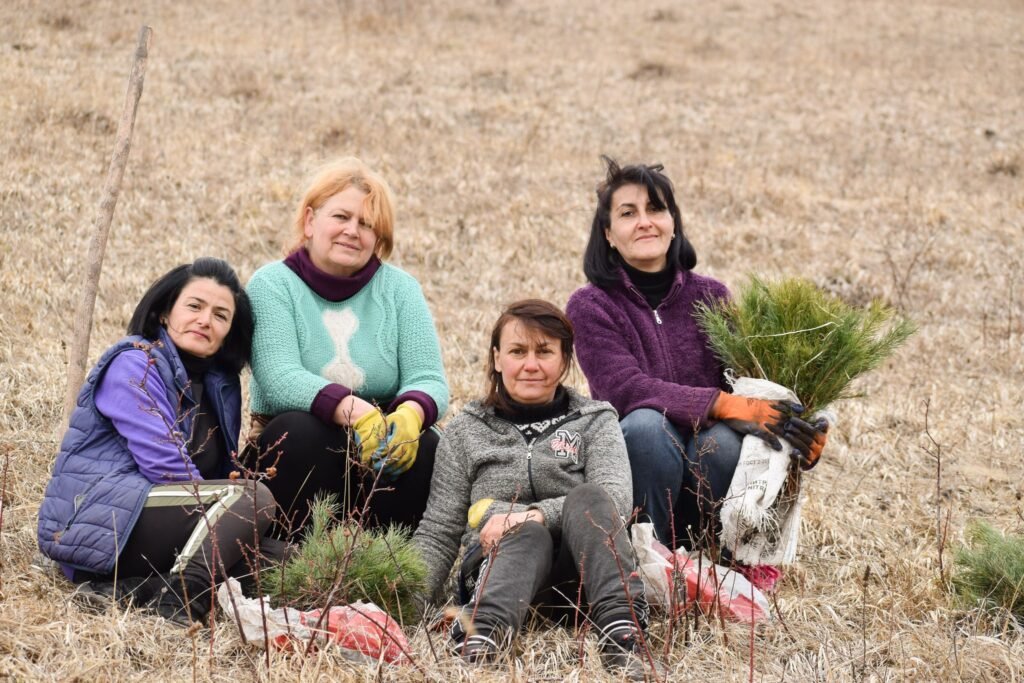 ATP seasonal workers, hired from remote villages in Armenia, assisting with fall planting
As autumn descends, the dedicated team of forestry experts at Armenia Tree Project (ATP) is hard at work at forest sites. They are joined by skilled seasonal workers, who are hired from local villages around the various regions of Armenia. Their mission: to plant 302,000 trees across 175 hectares of land, marking the anticipated start of the fall planting season in 2023.
About Forests in Armenia
The distribution of forests in Armenia exhibits an imbalance, with primary forested areas situated in the north, northeast and south, while the central part of the country remains predominantly treeless. Today, the majority of forest cover is concentrated in the northern and northeastern regions of Lori and Tavush, as well as in the southeastern region of Syunik. Therefore, only a limited portion of the country’s central region is forested.
Armenia Tree Project collaborates closely with local communities and regional authorities to establish new forests, revitalize degraded lands, prevent erosion, protect topsoil and significantly improve livelihoods by planting forests even in the most degraded and arid regions of Armenia. Since 1994, ATP has planted over 1,500 hectares of new forest, and will reach the milestone of 650,000 trees planted at forest sites this season. By the end of 2023, ATP will have planted over 8 million trees across Armenia.
2023 Fall Planting Initiatives
This fall, ATP’s goal is to continue planting trees at various forest sites in the Shirak, Kotayk and Lori Regions. In addition, ATP is expanding its planting initiatives by establishing its first forest in the border region of Gegharkunik.
Gegharkunik is the largest region in Armenia covering an area of 5,348 km² (18-percent of the total area of Armenia). Approximately 1,278 km² of its territory is encompassed by Lake Sevan, the largest lake in the Caucasus. The new forest will be established in the Gegharkunik village on 20 hectares of land.
In the long term, our reforestation and afforestation efforts are crucial for meeting Armenia’s climate commitments under the Paris Climate Agreement to reduce national emissions and to adapt to the impacts of climate change. Our commitment to a green future for Armenians and for the world is unwavering and ever-expanding.
As ATP prepares for another successful fall planting season, it looks to hire over 100 local villagers to assist with the seasonal work. The economic opportunity provided in these remote villages is crucial given the current situation in Armenia. These seasonal employees look forward to the work provided by ATP every year. Additionally, ATP is preparing to launch its Artsakh Refugee Aid program, which will provide more economic opportunities to the displaced families from Artsakh that the organization had previously aided through the Artsakh Greenhouse Program.
To donate to fall planting and help ATP hire more seasonal employees, please visit ArmeniaTree.org/en/donation.
Author information

Armenia Tree Project (ATP) is a non-profit program based in Woburn and Yerevan conducting vitally important environmental projects in Armenia’s cities and villages and seeks support in advancing its reforestation mission. Since 1994, ATP has planted and restored more than 6,000,000 trees, and hundreds of jobs have been created for Armenians in seasonal tree-related programs.
|
The post Falling Leaves, Rising Forests: Sustainable Planting Initiatives in 2023 appeared first on The Armenian Weekly.