Michael Novakhov’s favorite articles

The responsibility Israel’s prime minister bears for Oct. 7.
Michael Novakhov’s favorite articles

The responsibility Israel’s prime minister bears for Oct. 7.
Nineteen days into a war triggered by Hamas’s brutal October 7 terror attack on southern Israel, with the nation reeling from the horrific killings of some 1,400 people and abduction at least 224 more, and as the Israeli military prepares for a ground offensive in Gaza and potential escalation on the northern border, there is a new whisper of unity in Israeli society.
From coffeeshops to the front lines, many Israelis say they are unified on two things: they are convinced of the need to uproot Hamas, and they do not trust their own government to oversee the process.
That adds up to a deeply troubling, even terrifying scenario for the more than 350,000 reservists mobilized since the outbreak of war, the 150,000-180,000 standing army soldiers they are joining, and an Israeli society that will sacrifice to support them.
In media interviews, in (limited) demonstrations and in private conversations, many voice a crisis of faith citing the compound catastrophic failures of both government and security chiefs: first, in not preventing Hamas’s terrible attack in the first place; second, in the unbearably slow response of the security forces to the atrocities, which left unarmed civilians to fend for themselves in the face of marauding killers for long hours; third, in the slow and clumsy reservist call-up process that exposed shocking shortages in basic military equipment; and finally in the government’s sluggish civil response in support of those displaced by the fighting.
Such sentiments are backed up by numbers: New polling data shows that Israelis’ trust in government is at a 20-year low of 18%. Only 20.5% of Jewish Israelis and 7.5% of Arab Israelis polled by the Israel Democracy Institute in the aftermath of Hamas’s attack said they had trust in Prime Minister Benjamin Netanyahu’s cabinet. (In June, these populations polled at 28% and 18%, respectively.)
Get The Times of Israel’s Daily Edition by email and never miss our top stories
By signing up, you agree to the terms
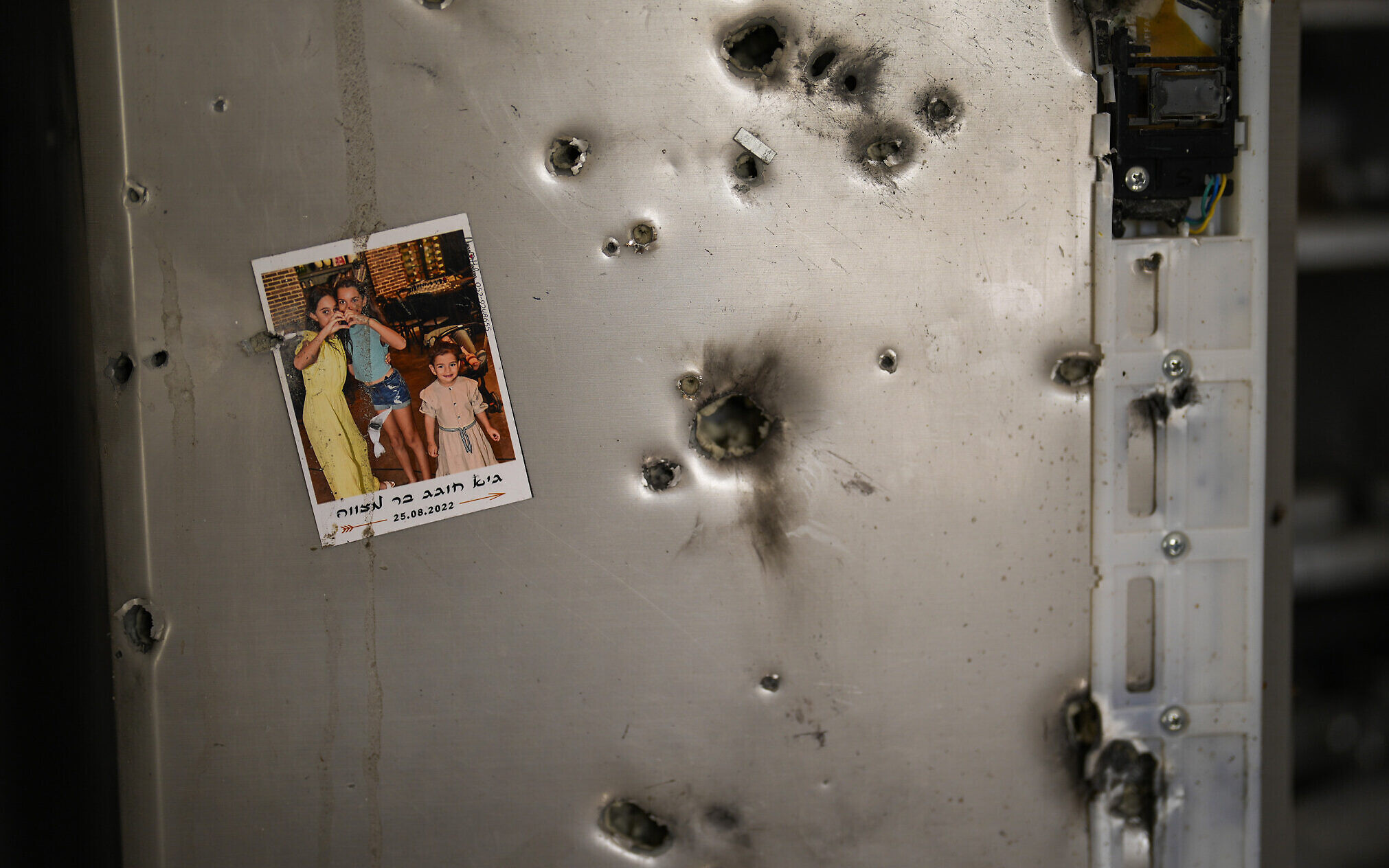
A photo hangs on a refrigerator next to bullet holes in a house at Kibbutz Kissufim in southern Israel, October 21, 2023, after it was targeted in the Gaza-ruling Hamas terror group’s deadly onslaught on October 7. (AP Photo/Francisco Seco)
Faith in the security forces and in the media, by contrast, has increased, despite the military’s central role in the failure. Jewish Israelis’ trust in the Israel Defense Forces rose by 2.5% to 87% and Arab Israeli trust similarly increased, by 2% to 23%.
At least seven senior Israeli officials have publicly taken blame for the state’s failure to protect its citizens, including the IDF chief of staff, the defense minister, the head of the Shin Bet, and the head of the National Security Council. Former prime minister Naftali Bennett, who has been out of office for more than a year, has said he has a share of the blame. Notably missing is Netanyahu, who has also failed to interact with the public beyond videos, public appearances with visiting world leaders at which he does not take questions, and PR photo ops with the troops.
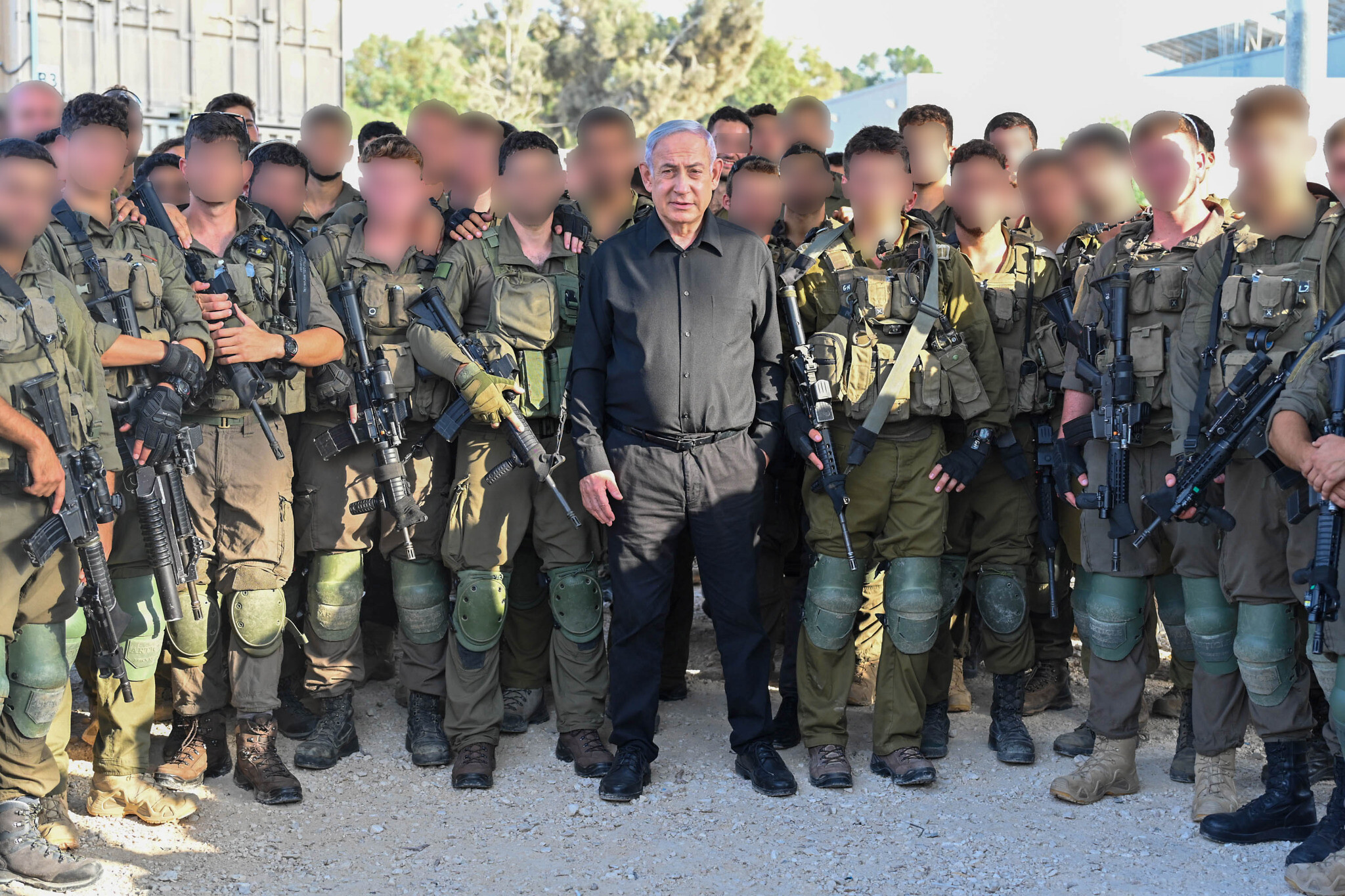
Prime Minister Benjamin Netanyahu visits the Yahalom unit of the IDF’s Combat Engineers, October 24, 2023 (Kobi Gideon / GPO)
But blame-taking is not Israelis’ biggest gripe. Rather, to many, the government has exacerbated its October 7 failure by inadequately responding to the aftermath.
On Sunday, the mayor of the rocket-blasted city of Netivot, considered a traditional stronghold for Netanyahu’s Likud party, sent the prime minister a letter accusing the government of “abandoning” his municipality. It was the latest in a growing chorus of criticism that has cracked even Likud’s famously loyal base.
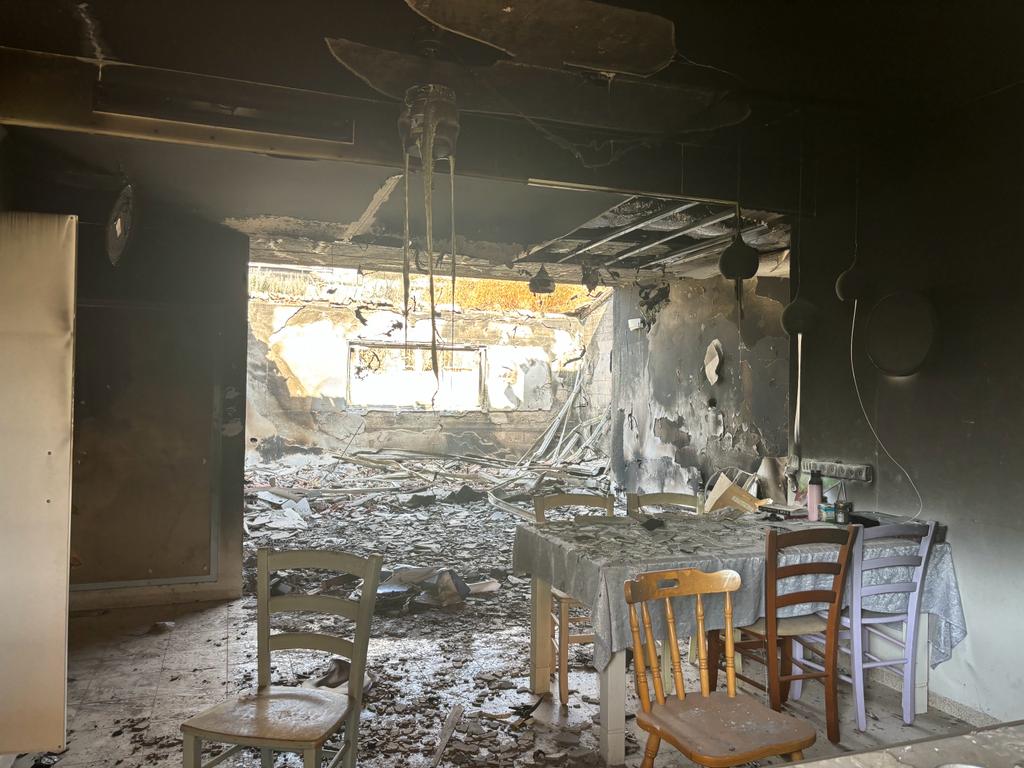
The remains of Kibbutz Be’eri, destroyed by Hamas attack on October 7, photographed on October 20, 2023 (Carrie Keller-Lynn/The Times of Israel)
It took Netanyahu a week to first visit attacked communities, and eight days to meet with families of Hamas’s hostages. The process for negotiating their release remains opaque, even after four were released by Hamas in recent days, with the terror group citing “humanitarian” considerations. Israel’s involvement in those releases is reported to have been minimal.
At the same time, the coalition’s clumsy handling of hostages’ families has also received intense attention, with many relatives complaining they have had hardly any contact from government representatives.
In the first chaotic days following the disaster, civil society and private individuals stepped into the vacuum, organizing open-source and cellphone-based tracking of missing family members, with hopes of finding clues as to their current or last-known whereabouts.
With reports continuing to flow in about the Israel Defense Forces’ shortages of proper equipment to protect its reservists, Israelis and Diaspora Jews are filling the gap, pumping money, bulletproof vests and other needed supplies into the army units.
On the civil front, the government’s anemic response to the immediate needs of what has now grown to over 200,000 internally displaced Israelis has been stop-gapped by volunteers arranging clothing, food, and basic necessities.
Israelis load their belongings onto a bus as they evacuate from the southern Israeli town of Sderot, Oct. 15, 2023. (AP Photo/Ariel Schalit)
Over 15,000 volunteers have gathered at a makeshift operations center in Tel Aviv, many of them organizing through the same civil society network that only weeks ago was directing its energies towards fighting the Netanyahu government’s judicial overhaul bid. With the outbreak of war, some of the loudest voices in that movement, such as the Brothers in Arms reservist protest, immediately shifted to organizing logistics for civil response.
Before the government decided in recent days to shutter its flagging Public Diplomacy Ministry, the public body only recently established to communicate Israel’s narrative abroad, the ministry had failed to release any explanatory materials, and its minister quit six days into the war.
Civil society again moved to plug the hole, with ad hoc operations rooms being formed to handle Israeli public relations and create content.
The cabinet’s poor wartime response is a reflection of the fact that this government was built last December out of necessity, not desire, say coalition politicians behind closed doors. Determined to return to power, and having burned his centrist and moderate right-wing political alliances during the five election cycles Israel held within four years, Netanyahu allied his right-wing Likud party to two far-right and two ultra-Orthodox partners.
Likud and its partners have called themselves natural allies, and have spoken about their union as an ideologically “full-on right-wing government.” But it was the most hardline coalition Netanyahu has ever led in his 16 years in Israel’s top job, and to manage it, he situated himself as a decision-making gatekeeper on top of committees and appointments.
Netanyahu aimed to oversee Finance Minister Bezalel Smotrich’s second appointment as an independent minister in the Defense Ministry, to supervise Jewish supremacist Avi Maoz’s controversial role overseeing Jewish national identity, and to chair a new socioeconomic task force — a role he only relinquished to Smotrich after it was rebranded last week as a wartime economic force.
Furthermore, Netanyahu broke apart and redistributed various departments of ministries and authorities, creating overlapping and illogical ministerial hierarchies and responsibilities. At the time of the government’s formation, a Likud adviser privately described it as a strategy that ultimately referred vast power back to the prime minister.
Nearly a week into the war, Netanyahu accepted an offer from centrist opposition figure Benny Gantz to bring his National Unity party into an emergency government. This move created a small war cabinet on which Gantz, a former IDF chief of staff and defense minister, now sits with Netanyahu and Defense Minister Yoav Gallant.
This shifted influence away from Netanyahu’s broader security cabinet, a body that he has barely relied upon — reportedly, among other reasons, because he cannot trust far-right National Security Minister Itamar Ben Gvir to not leak details of its discussions.
The security cabinet, by law, must include Israel’s finance and national security ministers, positions that Netanyahu awarded to far-right party heads Smotrich and Ben Gvir.
Bringing Gantz into the government and creating the war cabinet further devolved power away from the broader, now 39-minister government and placed it in a small number of hands, among them Netanyahu’s.
It also diluted the influence of far-right parties in the broader cabinet, by adding five new, portfolio-less ministers from Gantz’s National Unity who will be a counterweight to the six far-right ministers’ votes.
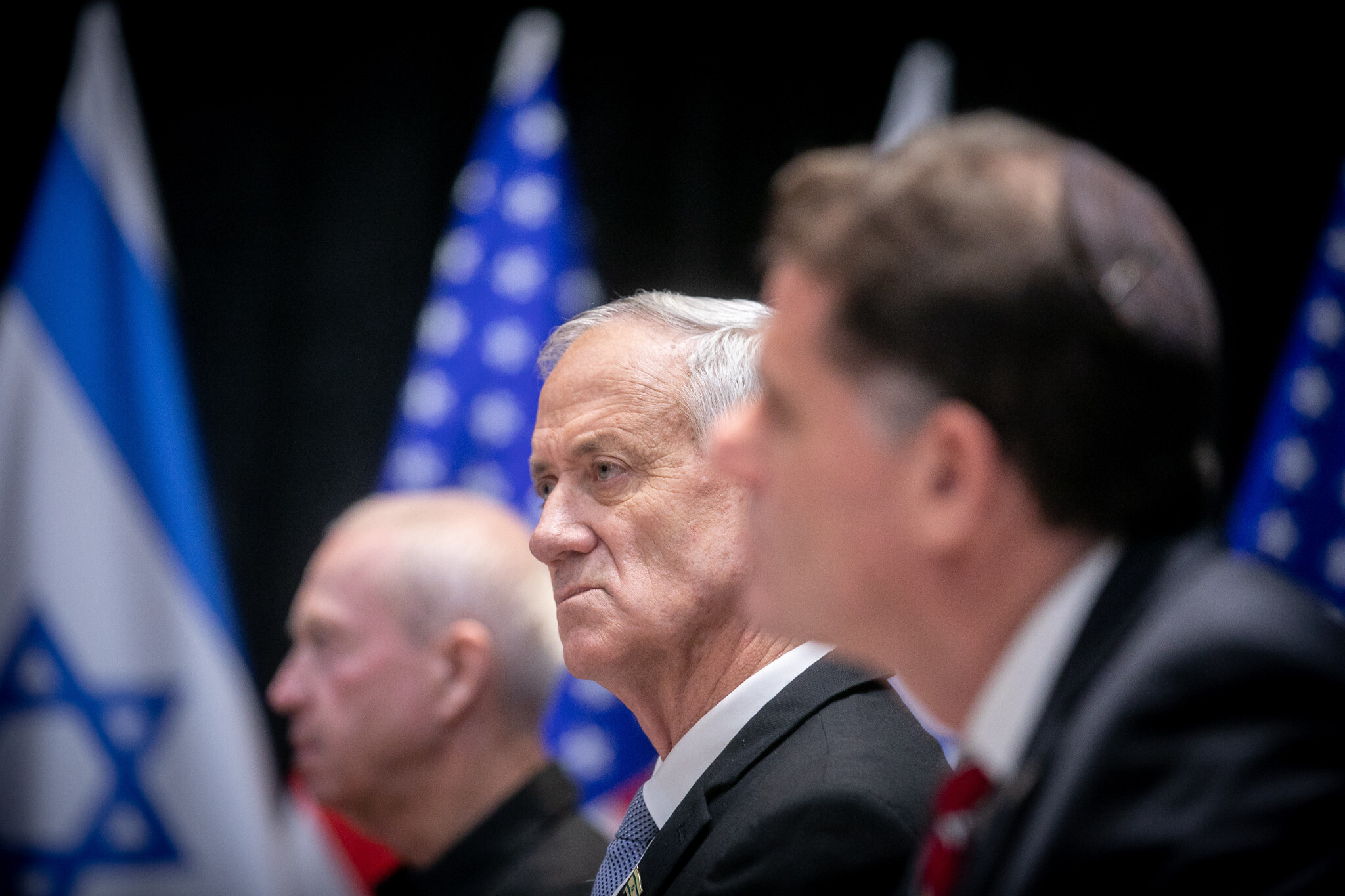
Minister Benny Gantz seen during a meeting of Prime Minister Benjamin Netanyahu and US President Joe Biden in Tel Aviv, October 18, 2023. (Miriam Alster/ Flash90)
However, even this cabinet is firmly under Netanyahu’s control, with Gantz reportedly prevented from holding independent meetings with military brass without Netanyahu’s approval.
The situation echoes a previous, peacetime arrangement, whereby all cabinet members were told to hold off on traveling to the US to meet their counterparts until the White House thawed its cold shoulder and acquiesced to a summit between Netanyahu and President Joe Biden. This eventually happened on the sidelines of the United Nations General Assembly in September.
Even within their spheres of interest, ministers are barely operating.
Foreign Minister Eli Cohen, from Netanyahu’s own Likud party, has been largely silent in foreign media, and is not known to have made any trips abroad to solicit international support for Israel since war broke out until he appeared at the United Nations Security Council on Monday, day 18 of the war.
In two months, Energy Minister Israel Katz is scheduled to rotate into this sensitive position, based on an arrangement designed to appease him when Israel’s 37th government was finalized last December.
Ben Gvir has worked to arm civilian frontline defense organizations, but has also invested energy in politicking, demanding the broadening of the narrow war council created precisely to exclude his influence.
Most cabinet members have been noticeably absent from the war effort, apart from taking intermittent trips to visit evacuated families, attend funerals, and tour the destruction of Israel’s south.
National Security Itamar Ben Gvir during visit to southern Tel Aviv, September 3, 2023. (Avshalom Sassoni/Flash90)
On Monday, Hebrew daily Yedioth Ahronoth reported that three unidentified members of Netanyahu’s cabinet were considering resigning in response to the government and security establishment’s failure to prevent October 7, as well as its handling of the aftermath. Likud advisers dismissed the reports when queried by The Times of Israel.
As finance minister, Smotrich is the most active minister outside the war cabinet, working on a plan to keep Israel’s economy moving during hostilities. He has, however, faced considerable criticism for not supplying solutions that will actually prop up the economy and its most vulnerable workers.
On Monday, Economy Minister Nir Barkat told the Knesset committee debating Smotrich’s emergency plan that he had already warned Smotrich during a previous cabinet meeting that his plan was not good.
“The Finance Ministry’s budget department time and time again thinks in a treasurer’s way and not in a business way,” Barkat told the Knesset’s Economic Committee. “The experience that the business sector has is greater than the experience of budget department personnel, who don’t even know how to issue an invoice,” Barkat quipped, saying that the plan does not answer business needs.
The finance minister has also promised to reevaluate the budget in light of the war. However, an open question remains as to whether Smotrich will ultimately redistribute billions of shekels in frozen coalition funds to the war effort, diverting them away from mainly ultra-Orthodox special interests.
Rather than directing money away from funding political promises, Hebrew media has reported, ministries might face another across-the-board shave in order to cover wartime priorities.
Transportation Minister Miri Regev, at Ben Gurion International Airport, June 20, 2023. (Jonathan Shaul/Flash90)
Transportation Minister Miri Regev has at least liaised with Israeli airlines in order to increase flight frequency and to make evacuation flights from Turkey cheaper, after Israel upped its travel warning to its highest state of alert.
The Knesset, in a marked change from peacetime, is an island of political tranquility. Getting over a quick reversion to political theater on its opening day last Monday, when the opening session was also interrupted by rocket alerts, cross-aisle politicians have agreed to limit the use of parliamentary tools to advancing wartime interests, rather than engage in political stunts.
This agreement is in line with Netanyahu’s deal to bring Gantz into the government, whereby parliament would only focus on critical, emergency legislation unless approval is granted by both leaders.
This, in turn, has sidelined coalition members’ ambitions to advance the judicial overhaul and to legislate sweeping military exemptions for Torah scholars.
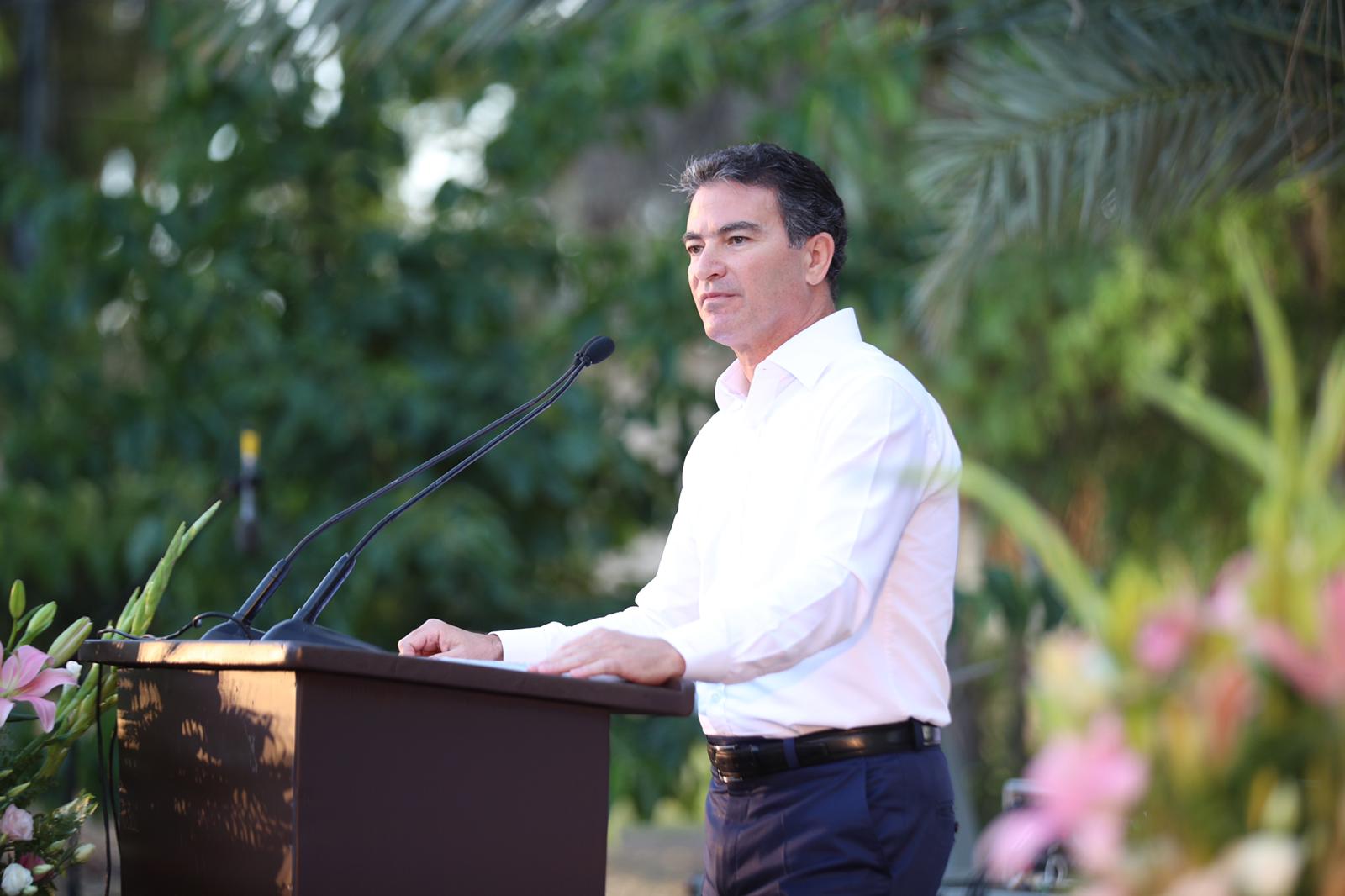
Former Mossad chief Yossi Cohen on Monday evening commented on the delay in the start of the ground incursion in Gaza, saying that it is good for the move to be carried out with full and optimal preparedness.
“I don’t get the impression that there is a delay, and I have argued in every forum in which I have appeared that we should allow ourselves the maximum time to enable maximum readiness. We should not rush. There is no delay here. The siege of Gaza is critical and essential and, before entering an area so saturated with potential surprises, the intelligence should also be up-to-date. As soon as the IDF is called upon, it will be ready with all its might,” Cohen said in an interview with Channel 12 News.
He added, “I am convinced that the government is not afraid of ground military action. There is a built-in and difficult tension here: Because on the one hand, we say – get ready – and the army continues to prepare by all means. On the other hand, some opportunities cannot be given up for the release of hostages. The decisions on these issues will have to be made daily.”
To the question about the lack of trust between the political echelon and the IDF, he replied, “In my opinion, it is not true and I had a different impression. I also came into contact with those who are in touch with the families of the hostages, both with Gal Hirsch’s headquarters and with the political echelon. I have not heard that side A lacks confidence in side B.”
Cohen estimated that a report stating that Hamas is willing to release 50 hostages with dual citizenship is not true. “I am not aware of the State of Israel discussing at all such a distinction for the release of holders of foreign passports. The State of Israel right now – and at any given moment since the magnitude of the disaster and the number of abductees to the Gaza Strip became known – is making an extraordinary effort to bring everyone home.”
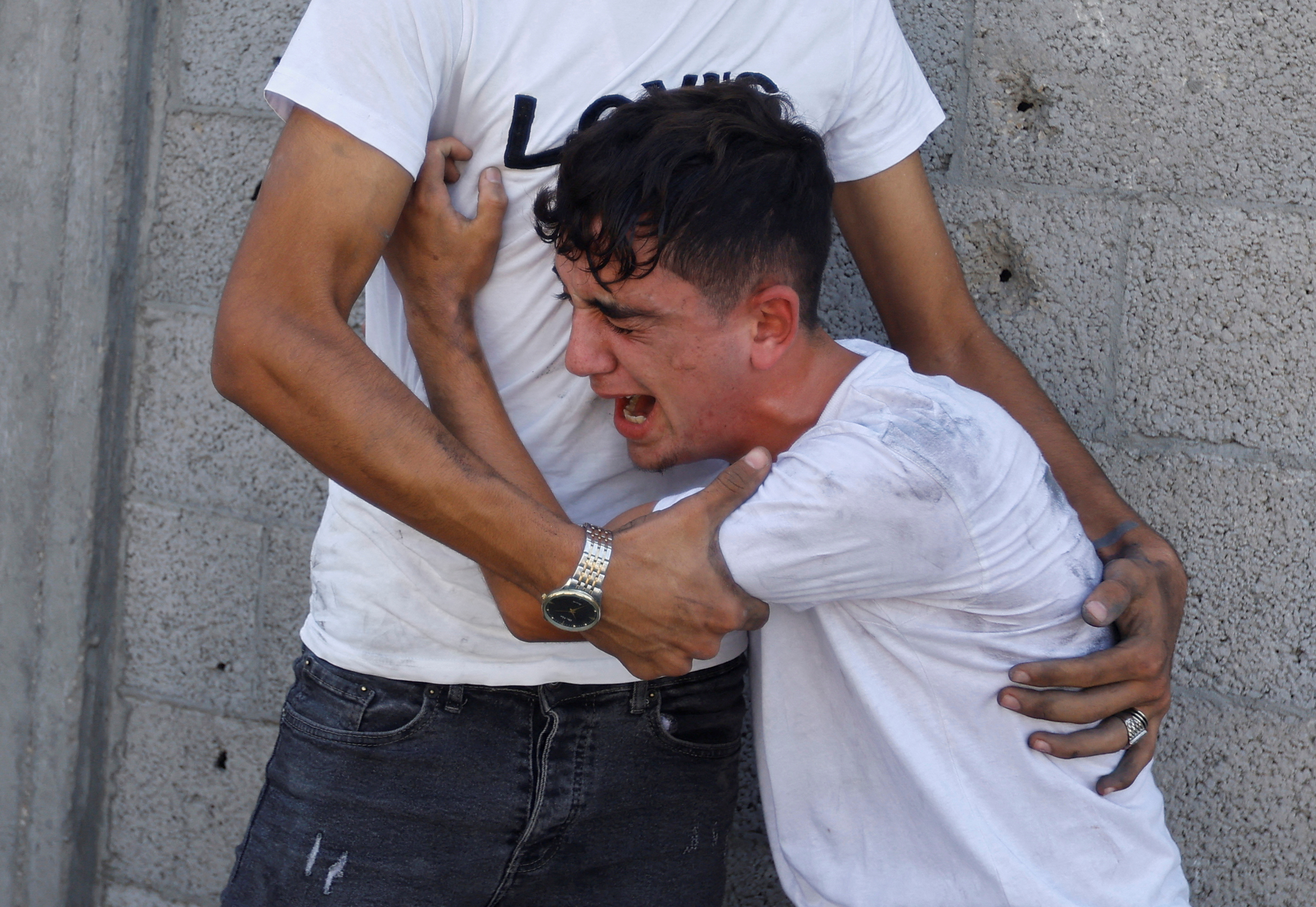
Palestinian women react as a body is carried out from the rubble of a destroyed house following Israeli airstrikes on Gaza City, Saturday, Oct. 21, 2023. (AP Photo/Abed Khaled)
–
Israel bombs market in Gaza, killing at least 10
Videos
Israel bombs market in Gaza, killing at least 10
At least six people have been confirmed killed in Deir al Balah when an Israeli strike hit the home of the Abu Me’leq family on Sunday afternoon. Dozens of injured were rushed to the hospital, many of them children, covered in dust and blood following the blast. (October 22) (AP video by Mohammad Fayeq)
Photos
RAFAH, Gaza Strip (AP) — The second aid convoy destined for desperate Palestinian civilians reached Gaza on Sunday, as Israel widened its attacks to include targets in Syria and the occupied West Bank and the Israeli prime minister warned Lebanon’s Hezbollah militant group that if it launches its own war, “we will cripple it with a force it cannot even imagine.”
For days, Israel has been on the verge of launching a ground offensive in Gaza following Hamas’ brutal Oct. 7 rampage through a series of Israeli communities. Tanks and troops have been massed at the Gaza border, waiting for the command to cross.
Israel’s military spokesman, Rear Adm. Daniel Hagari, said the country had increased airstrikes across Gaza to hit targets that would reduce the risk to troops in the next stage of the war.
Fears of a widening war grew as Israeli warplanes struck targets across Gaza, two airports in Syria and a mosque in the occupied West Bank allegedly used by militants.
Israel has traded fire with Hezbollah militants since the war began, and tensions are soaring in the West Bank, where Israeli forces have battled militants in refugee camps and carried out two airstrikes in recent days.
Prime Minister Benjamin Netanyahu told troops in northern Israel that if Hezbollah launches a war, “it will make the mistake of its life. We will cripple it with a force it cannot even imagine, and the consequences for it and the Lebanese state will be devastating.”
Hamas said it fought with Israeli forces near Khan Younis in southern Gaza and destroyed a tank and two bulldozers.
Late Sunday, Hagari announced that a soldier was killed and three others wounded by an anti-tank missile during a raid inside Gaza as part of efforts to rescue more than 200 hostages abducted in the Oct. 7 attack.
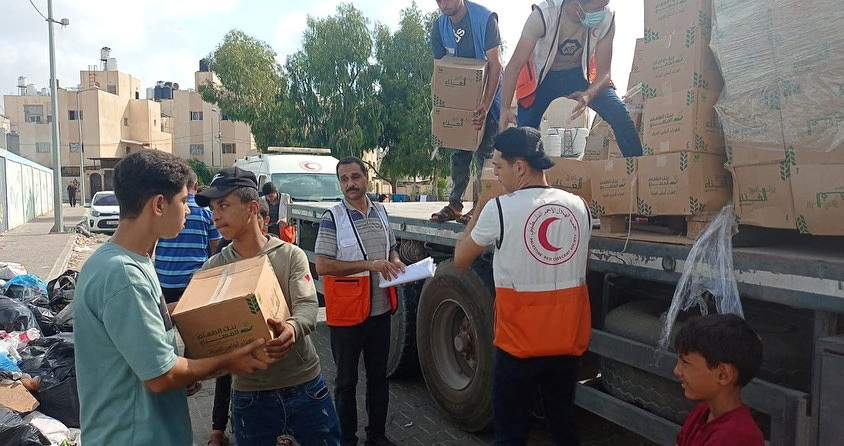
On Saturday, 20 trucks entered Gaza in the first aid shipment into the territory since Israel imposed a complete siege two weeks ago.
Israeli authorities said late Sunday they had allowed a second batch of aid into Gaza at the request of the United States. COGAT, the Israeli defense body responsible for Palestinian civilian affairs, said the aid included water, food and medical supplies and that everything was inspected by Israel before it was brought into Gaza.
The U.N. agency for Palestinian refugees confirmed the arrival of 14 trucks.
Israel has not allowed any fuel to enter Gaza.
In a sign of how precarious any movement of aid remains, the Egyptian military said Israeli shelling hit a watchtower on Egypt’s side of the border, causing light injuries. The Israeli military apologized, saying a tank had accidentally fired and hit an Egyptian post, and the incident was being investigated.
Relief workers said far more aid was needed to address the spiraling humanitarian crisis in Gaza, where half the territory’s 2.3 million people have fled their homes. The U.N. humanitarian agency said Saturday’s convoy carried about 4% of an average day’s imports before the war and “a fraction of what is needed after 13 days of complete siege.”
The Israeli military said the humanitarian situation was “under control,” even as the U.N. called for 100 trucks a day to enter.
In a Sunday phone call, Netanyahu and U.S. President Joe Biden “affirmed that there will now be continued flow of this critical assistance into Gaza,” the White House said in a statement.
Israel repeated its calls for people to leave northern Gaza, including by dropping leaflets from the air. It estimated 700,000 have already fled. But hundreds of thousands remain. That would raise the risk of mass civilian casualties in any ground offensive.
Israeli military officials say Hamas’ infrastructure and underground tunnels are concentrated in Gaza City, in the north, and that the next stage of the offensive will include unprecedented force there. Israel says it wants to crush Hamas. Officials have also spoken of carving out a buffer zone to keep Palestinians from approaching the border, though they have given no details.
Hospitals packed with patients and displaced people are running low on medical supplies and fuel for generators, forcing doctors to perform surgeries using sewing needles, resorting to vinegar as disinfectant and operating without anesthesia.
The World Health Organization says at least 130 premature babies are at “grave risk” because of a shortage of generator fuel. It said seven hospitals in northern Gaza have been forced to shut down due to damage from strikes, lack of power and supplies, or Israeli evacuation orders.
Palestinian women react as a body is carried out from the rubble of a destroyed house following Israeli airstrikes on Gaza City, Saturday, Oct. 21, 2023. (AP Photo/Abed Khaled)
Shortages of critical supplies, including ventilators, are forcing doctors to ration treatment, said Dr. Mohammed Qandeel, who works in Khan Younis’ Nasser Hospital. Dozens of patients continue to arrive and are treated in crowded, darkened corridors, as hospitals preserve electricity for intensive care units.
“It’s heartbreaking,” Qandeel said.
Palestinians sheltering in U.N.-run schools and tent camps are running low on food and are drinking dirty water. The lack of fuel has crippled water and sanitation systems.
Heavy airstrikes were reported across Gaza, including in the southern part of the coastal strip, where Israel has told civilians to seek refuge. At the Al-Aqsa hospital in Deir al-Balah, south of the evacuation line, several bodies wrapped in white shrouds were lined up outside.
Khalil al-Degran, a hospital official, said more than 90 bodies had been brought in since early Sunday, as the sound of nearby bombing echoed behind him. He said 180 wounded people had arrived, mostly children, women and the elderly displaced from other areas.
Soldiers drive a militar vehicle near the border between Israel and Gaza Strip in Israel, Saturday, Oct. 21, 2023. (AP Photo/Francisco Seco)
Airstrikes also smashed through the marketplace in the Nuseirat refugee camp. Witnesses said at least a dozen people were killed.
The Israeli military has said it is striking Hamas fighters and installations and insists it does not target civilians. Palestinian militants have fired over 7,000 rockets at Israel, according to the military, and Hamas says it targeted Tel Aviv early Sunday.
More than 1,400 people in Israel have been killed — mostly civilians slain during the initial Hamas attack. At least 212 people were captured and dragged back to Gaza.
Two Americans were released Friday, hours before the first shipment of humanitarian aid.
More than 4,600 people have been killed in Gaza, according to the Hamas-run Health Ministry. That includes the disputed toll from a hospital explosion.
Syrian state media, meanwhile, reported that Israeli airstrikes hit the international airports in the capital, Damascus, and the northern city of Aleppo, killing one person and putting the runways out of service.
Israel has carried out several strikes in Syria since the war began. Israel rarely acknowledges individual strikes, but says it acts to prevent Hezbollah and other militants from bringing in arms from Iran, which also supports Hamas.
In Lebanon, Hezbollah said six fighters were killed Saturday, and the group’s deputy leader, Sheikh Naim Kassem, warned that Israel would pay a high price if it invades Gaza. Israel struck Hezbollah in response to rocket fire, the military said.
Trucks with humanitarian aid for the ‘Gaza Strip enter from Egypt in Rafah on Saturday, Oct. 21, 2023. (AP Photo/Fatima Shbair)
Israel also announced evacuation plans for another 14 communities near the Lebanon border.
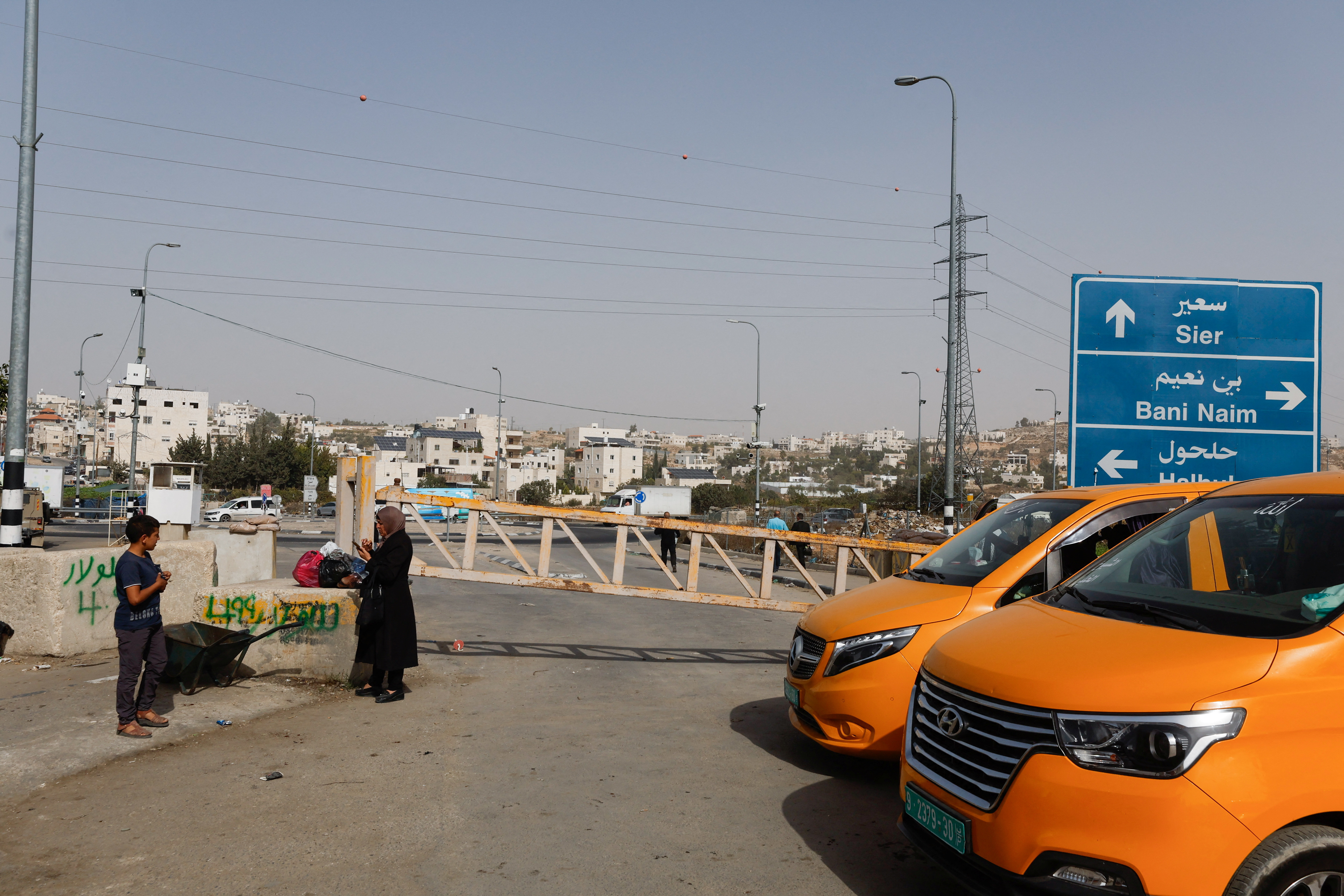
In the Israeli-occupied West Bank, 93 Palestinians have been killed — including eight Sunday — in clashes with Israeli troops, arrest raids and attacks by Jewish settlers since the Hamas attacks, according to the Palestinian Health Ministry. Israeli forces have closed crossings into the territory and checkpoints between cities, measures they say are aimed at preventing attacks. Israel says it has arrested more than 700 Palestinians since Oct. 7, including 480 suspected Hamas members.
The internationally recognized Palestinian Authority administers parts of the West Bank and cooperates with Israel on security, but it is deeply unpopular and has been the target of violent Palestinian protests.
Magdy reported from Cairo and Nessman from Jerusalem. Associated Press journalists Amy Teibel in Jerusalem; Samya Kullab in Baghdad; Bassem Mroue in Beirut; Ashraf Sweilam in el-Arish, Egypt, and Albert Aji in Damascus, Syria, contributed to this report.
On 7 October, hours after the surprise offensive by Hamas that left 1,400 Israelis dead, the Israeli prime minister, Benjamin Netanyahu, took to the airwaves to declare war on Hamas and issue a warning to Palestinians in Gaza: “leave now”. The question of where 2.3 million Palestinians, the vast majority of them refugees who have lived under a brutal siege and blockade for the past 16 years, should go to was left unsaid.
Israel proceeded to unleash an unprecedented aerial assault, dropping 6,000 bombs on the densely populated enclave in the first five days alone. Then came the order: a directive for the 1.1 million people in northern Gaza to evacuate to the south within 24 hours.
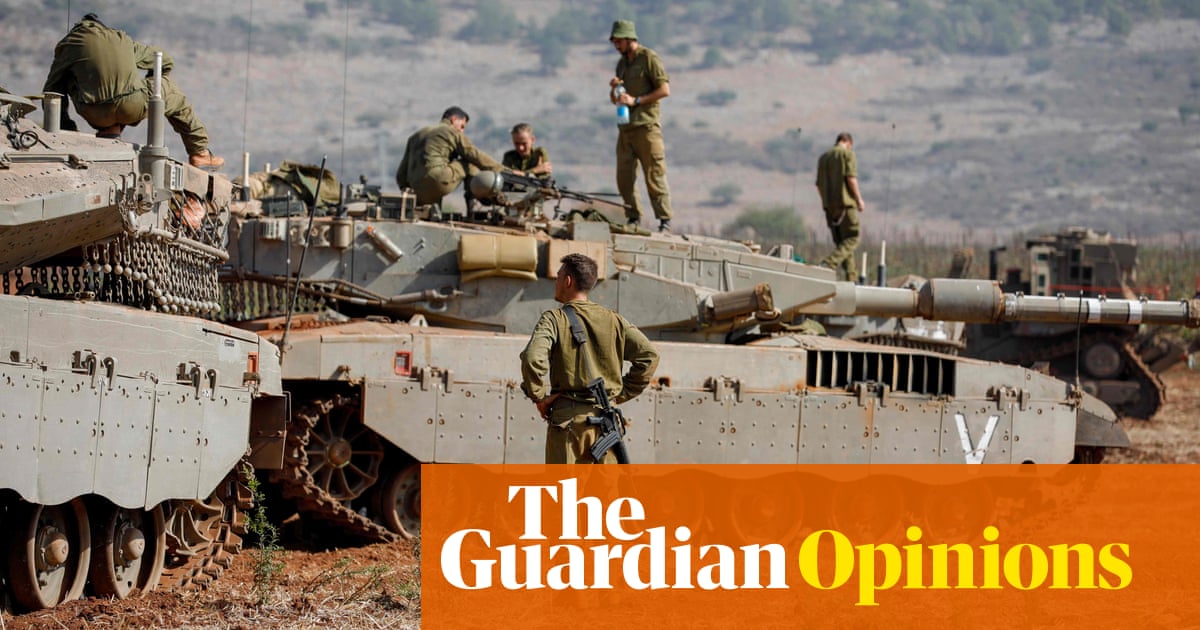
Maps showing evacuation corridors along which Palestinians were told to flee appeared as manifestations of colonial fantasy: two long arrows pointing southward, away from Palestine towards the Egyptian border.
Egypt, the only country other than Israel to share a border with Gaza, is being pressed by the US and other western states to open the gates and accept a flood of Palestinians fleeing the relentless assault and humanitarian crisis. In an interview on Sky News, Israel’s former ambassador to the US, Danny Ayalon, said: “The people of Gaza should evacuate and go to the vast expanses on the other side of Rafah at the Sinai border in Egypt … and Egypt will have to accept them.”
Instead of putting pressure on Israel to halt its bombing campaign, protect civilian life and allow in aid, various western governments have instead tried to broker a deal with Egypt by offering economic incentives for them to let in Palestinians, according to the Egyptian news site Mada Masr.
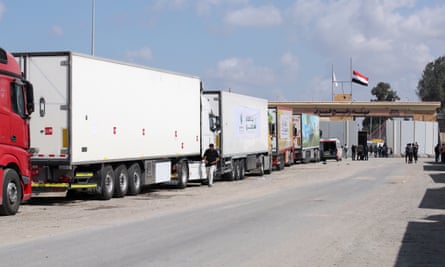
Egypt has said it will allow foreigners and Palestinian dual nationals through the Rafah crossing on the condition that Israel allows humanitarian aid in. Thousands of tonnes of food, fuel, water, medicine and other lifesaving aid packed into a long convoy of trucks have been idling on the Egyptian side of Rafah for days. On Wednesday, Israel said that it will allow Egypt to deliver limited humanitarian aid to Gaza, though the flow of relief is expected to fall short of what is needed, and the deal remains fragile.
‘Hundreds of tonnes of food, fuel, water, medicine and other lifesaving aid packed into a long convoy of trucks have been idling on the Egyptian side of Rafah for days.’ Photograph: Khaled Elfiqi/EPA
However, Egypt has remained steadfast in its refusal to allow for the mass resettlement of Palestinians in North Sinai. “We reject the displacement of Palestinians from their land,” the Egyptian president, Abdel Fatah al-Sisi, said on Wednesday, stressing that “the Palestinian cause is the mother of all causes and has a significant impact on security and stability”. He also warned that Egypt could then become a new base of Palestinian attacks against Israel. Meanwhile, Egypt’s foreign minister, Sameh Shoukry, speaking on CNN, warned that the forcible resettling of Palestinians into Egypt might constitute a war crime.
While rejecting a policy that essentially amounts to a second Nakba (the mass displacement of Palestinians during the 1948 Arab-Israeli war) is laudable, Cairo’s rhetoric invoking the Palestinian cause rings hollow. Egypt’s decisions are ultimately driven by national security concerns and avoiding what it would consider a nightmare scenario of a mass Palestinian refugee population to contend with on its own territory.
For years, Egypt has been complicit in the siege on Gaza, helping to enforce the blockade, destroying tunnels that provided a lifeline to the strip, and coordinating with Israel on security, including allowing Israeli drones, helicopters and warplanes to carry out a covert air campaign in Sinai. Egypt’s treatment of Palestinians entering and exiting Gaza is notorious for its indignity – the latest iteration being Palestinians who tried to enter Gaza only to find the border closed on 7 October, stranding them in North Sinai; they are being hosted by families who are under strict security instructions not to allow them to leave the neighbourhoods where they reside.
Egypt has erected barricades at the border to contain more tightly any mass exodus – should it come. Meanwhile, Israel has bombed the Rafah crossing four times, most recently slamming a missile right by the concrete barrier on Egyptian territory.
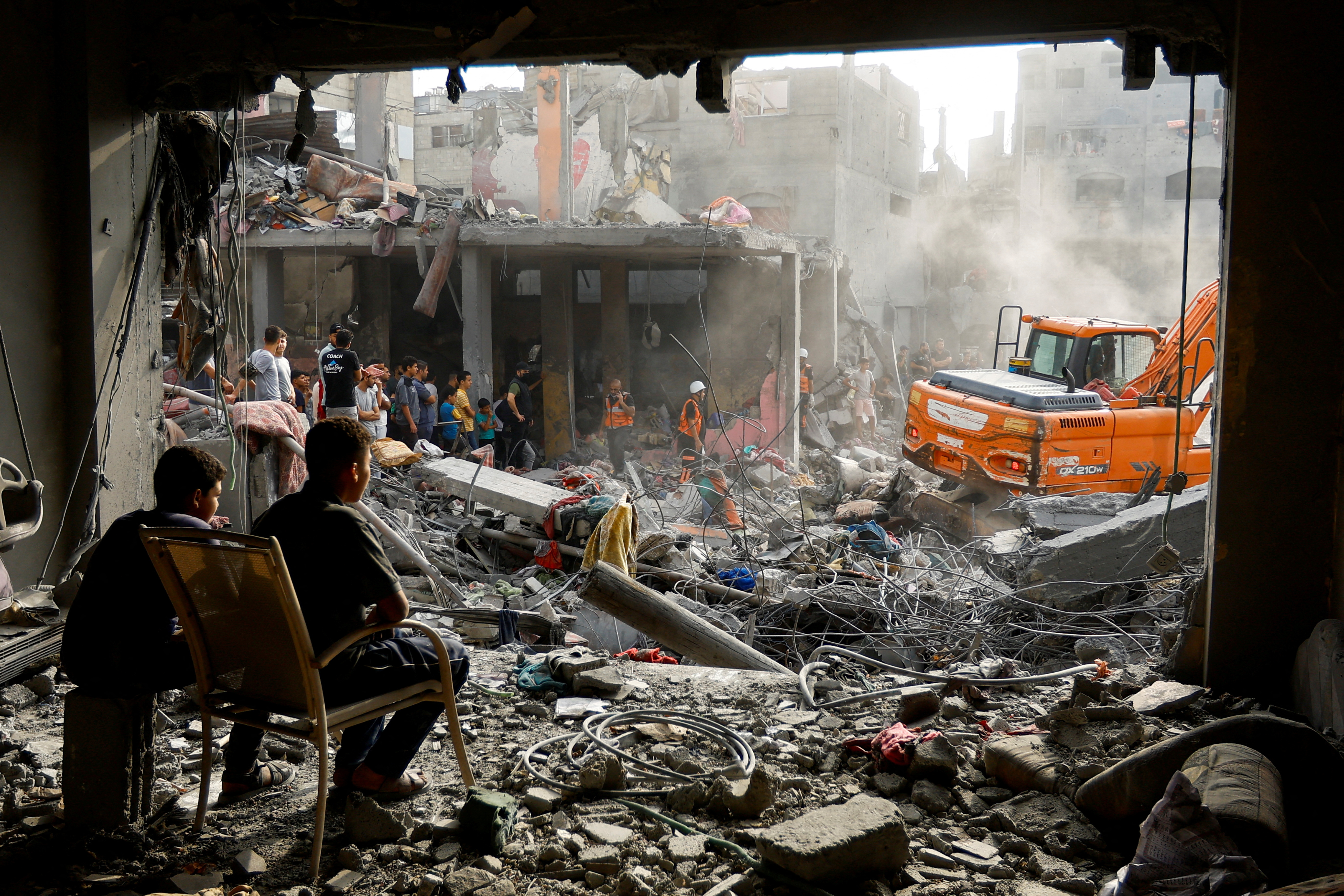
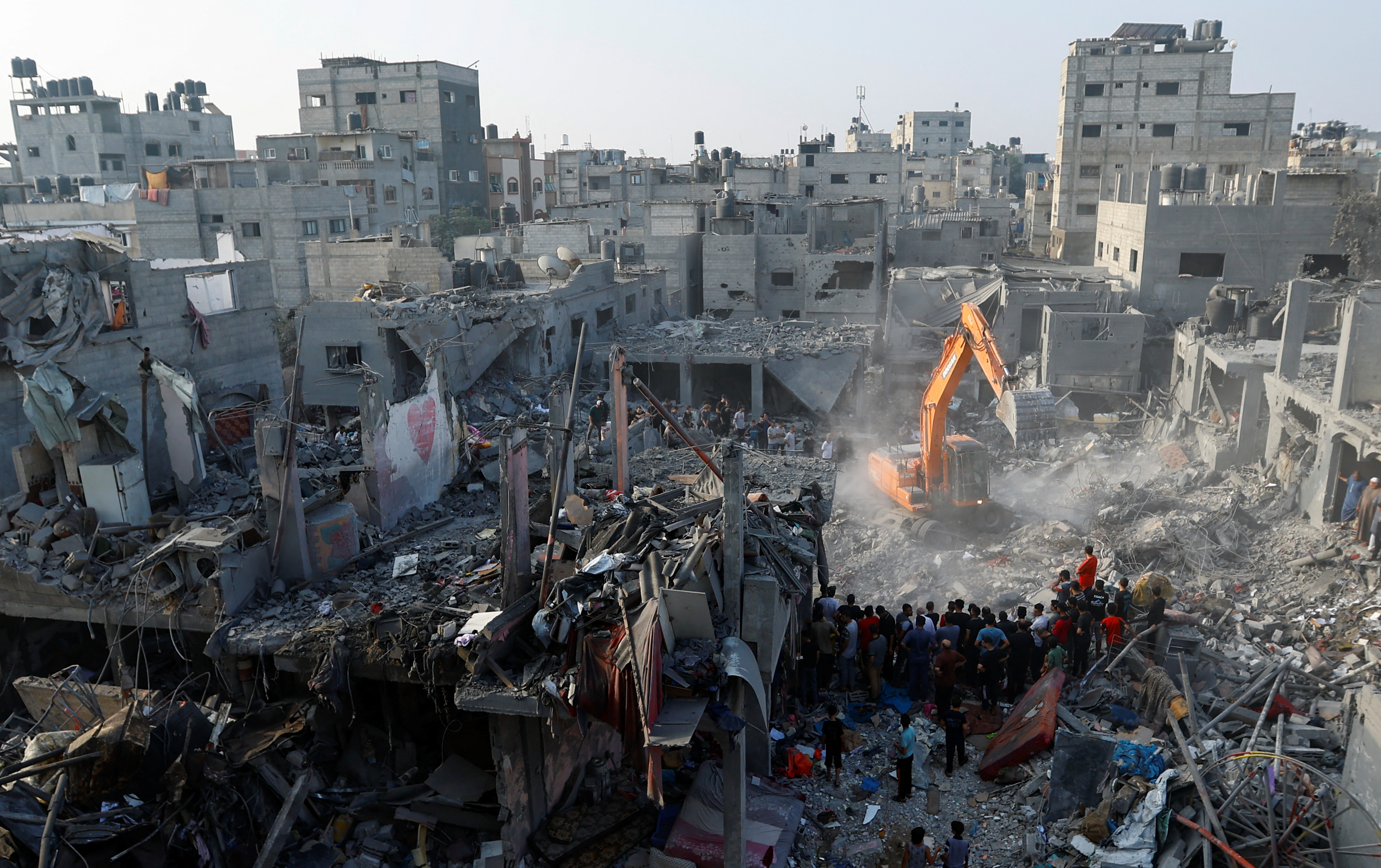
As it stands, the situation in Gaza is at a catastrophic impasse. Food and water are running out. Medicines and other critical supplies have been exhausted, with doctors performing surgery on floors, often without anaesthetics. There is little to no fuel or electricity. Even colour has been obliterated, with entire neighbourhoods now reduced to rubble, encased in grey concrete dust.
As of Thursday, the death toll in Gaza stood at 3,478, including more than a thousand children, according to the health ministry in Gaza. Another 1,300 people are believed to be buried under the rubble, alive or dead. About a million have been displaced. And many more untold horrors we have yet to discover.
Mohammed Ghalayini, the son of an acquaintance, fled his home in Gaza City to Khan Yunis, in the south of Gaza. He told me on Wednesday: “I think Israel’s endgame is for Palestinians to be pushed out of Gaza into Egypt: 100% that’s their gameplan. I think this is ethnic cleansing and genocide all wrapped into one.”
The idea of resettling Palestinians in Gaza to Sinai is not new. In the mid-1950s, the UN devised a plan to transfer thousands of Palestinian refugees in Gaza to Sinai’s north-western region, a project that was met with popular outrage and crushed in a mass uprising. After the Naksa of 1967 (the six-day war, in which Israeli forces captured East Jerusalem and the Palestinian territories, including Gaza), the Allon plan, drafted by Israeli politician Yigal Allon, envisioned the Gaza Strip being annexed to Israel. In 1971, about 400 Palestinian families displaced by the Israeli army were relocated to Arish, while 12,000 relatives of suspected Palestinian guerrillas were deported to detention camps in the Sinai desert and were only able to return to Gaza two decades later after significant international pressure.
Israel is seizing the moment. As western governments cheer them on, they are driving Palestinians in Gaza to the very brink. They might be trying to drive them out of Gaza altogether, to extend the arrows on the maps further outward.
Sharif Abdel Kouddous is an independent journalist based in New York and Cairo. He has reported multiple times from Gaza and across Palestine since 2011
Do you have an opinion on the issues raised in this article? If you would like to submit a response of up to 300 words by email to be considered for publication in our letters section, please click here.

Since 7 October, questions have been posed over whether Hezbollah would intervene in the fight against Israel in aid of Hamas, and on the extent of Iran’s involvement in Hamas’s attack on Israel. Iran backs both Hamas and Hezbollah: they are military partners and have coordinated training and battles with support from the Islamic Revolutionary Guards Corps. Neither Hamas nor Hezbollah take decisions to declare war or peace without explicit prior agreement from Iran.
However, battles are not the same as full-on war. To date, Hamas and Hezbollah have never been involved in a war on two fronts against Israel. This is a scenario that neither the two groups nor Iran take lightly, because such a scenario amounts to regional war in the Middle East, which is in no one’s interest.
Hamas’s objectives in the 7 October attack on Israel were political: it wants to assert itself as the sole legitimate representative of Palestinian voices by engaging in an act which, in its eyes, would be seen by its supporters as heroic and would force the international community to engage with it as a de – facto military and political authority.
Hezbollah recognises this approach as it pursued a similar strategy in its own war with Israel in 2006. At that time, Hamas did not intervene to support Hezbollah, leaving the latter to claim singlehanded “victory” against Israel. With Hezbollah being the better equipped of the two militant groups, there is a clear imperative for Hezbollah to let Hamas be the leading actor in this war so as not to detract from Hamas’s pursuit of status. This is partly why Hezbollah’s leader, Hassan Nasrallah, has been noticeably absent from the public domain since 7 October.
Iran, on the other hand, has always made sure its superiority over the groups it supports is known. Iran does not need to instruct Hamas to start a war with Israel or even to be directly involved in Hamas’s war planning. What Iran does is more nuanced: on the one hand it expresses support for the actions of Hamas but then shakes the stick of Hezbollah against Israel. This was seen in the 12 October speech by the Iranian foreign minister, Hossein Amir-Abdollahian, during his visit to Beirut when he raised the prospect of Israel receiving a response from “the rest of the axis”. This way Iran does not undermine Hamas’s stature, but at the same time the invocation of Hezbollah places it as a stand-in for all Iran-backed militias in the Middle East – Hamas included – and therefore affirms Iran’s position as their patron.
Yet, while they have been careful not to detract from the leading role Hamas is taking in the war, Hezbollah’s status does carry the expectation of not standing still while its ally is engaged in the most important fight of its history against Israel. This is translating into escalated but calculated attacks by Hezbollah on areas in northern Israel. The attacks have mainly been on military targets and disputed territories that Hezbollah regards as Lebanese but occupied by Israel. Hezbollah’s rockets have not reached areas further inside Israel, as they did in 2006. Although Israel has responded by bombing southern Lebanon, killing two civilians and a Reuters journalist in separate attacks, the extent of this bombing remains within 3km of Lebanon’s southern border and most of the targets are connected to Hezbollah. It is clear from Hezbollah’s actions and Israel’s reactions that both still abide by their undeclared rules of engagement whereby neither side sparks a new war.
But there is a threat that still looms: if such a war were to happen again, Israel has said it would no longer distinguish between Hezbollah and the rest of Lebanon. It is, though, not in Israel’s interest to open a northern front while it is engaged in a significant southern front, especially considering political divisions within the country and question marks over its security and intelligence apparatuses, which failed to see the Hamas attack coming. While this may seem like an opportune moment for Hezbollah to take advantage, the group must also answer to the Lebanese public. Lebanon is suffering from the worst financial crisis in its modern history and cannot withstand the cost of another war. Unlike in 2006, when the country could expect aid and reconstruction money from Arab Gulf countries in the war’s aftermath, those countries have made it clear they will no longer engage in this kind of unconditional rescue.
As things stand, the likelihood of escalation from Hezbollah is low, and lowered further by the fact that, unlike in 2006, it does not need another “victory” to consolidate its position in the country, as it is comfortably the the most powerful political actor in Lebanon. Nor will Iran want to sacrifice Hezbollah’s political gains for the sake of Hamas, as the Lebanese militant group’s role in aiding Iranian allies across the Arab world is key to Iran’s regional influence.
Iran’s preferred method of balancing politics and military action is for its allies to be on the frontline against Israel, so it can celebrate them as winners and martyrs at once. This way both Iran and these militant groups reap the political benefits while keeping Iranian territory out of the line of fire. That is why a Lebanese front is unlikely: it wouldn’t be in Iran’s interests, as it would entail the intervention of the US, which has already sent aircraft carriers to the eastern Mediterranean as a deterrent. US intervention sparks the potential for the war to spread to Iran itself, which is the last thing Iran wants. Its role and Hezbollah’s position would seem to suggest that, unless something dramatically changes, they are adhering to their post-2006 stance of mutual deterrence.
Lina Khatib is director of the Soas Middle East Institute and associate fellow at the Middle East and North Africa programme at Chatham House

Save
The animating hatred of Hamas’s Oct. 7 terrorist attack in Israel was specific — this was a pogrom against Jews — but the massacre was indiscriminate in its deadly swath. The victims were overwhelmingly Israeli Jews, but Jews and non-Jews alike were among the more than 1,400 people killed. They came from dozens of countries, including Argentina, Brazil, Britain, Canada, China, Portugal, Romania, South Africa, Thailand and the United States.
It was an attack on the state of Israel, of course, because Hamas — like other Iranian puppets, Hezbollah in Lebanon and the Houthis in Yemen — thinks the nation has no right to exist. For Islamist fanatics such as these, though, a more basic motivation is this: They want Jews dead. Consider the recording revealed by the Israel military on Monday of an exultant Hamas terrorist calling his parents, crowing, “Your son killed so many Jews. Mum, your son is a hero.”
Many serious and candid people know that the masterminds and financiers of the slaughter, its strategists and tacticians, have an address: Tehran.
“Iran invaded Israel,” Robert C. O’Brien told me in a radio interview last week. The former national security adviser to President Donald Trump had previously served in his administration as special presidential envoy for hostage affairs during a period that saw dozens of American hostages returned to the United States. O’Brien has great diplomatic skills, but now he does not mince words.
Of Hamas and the Oct. 7 attack, O’Brien said, “These guys are serial killers. They’re not even terrorists. I think that’s too good of a label for them. This is like having Ted Bundy or John Wayne Gacy and a bunch of them living as your neighbors. You can’t have John Wayne Gacy as your neighbor who’s killed a couple of your kids, and then say ‘Well, if you build a higher wall, you know, it’ll be fine to keep him as a neighbor.’ These serial killers of Hamas have to be rooted out.”
That is the sort of clarity and resolve needed today. Let’s also be clear about who is allied with Iran’s so-called supreme leader, Ayatollah Ali Khamenei: dictators Xi Jinping in China and Vladimir Putin in Russia. The ruthlessness of these tyrants is not in dispute.
Khamenei, before aiding and encouraging the Oct. 7 slaughter in Israel, crushed protests in his own country, leaving hundreds dead. Xi’s Chinese Communist Party has perpetrated genocide against the Uyghur people of the Xinjiang region. Putin long ago demonstrated his capacity for barbarism, in Russia’s assaults on Chechnya in the 1990s, and he followed that brutal path in the invasion of Ukraine.
Perhaps too many in the West are not familiar enough with Xi’s and Putin’s outrages. The CCP worked hard to conceal its campaign against the Uyghurs, and as retired general David Petraeus and historian Andrew Roberts note in their new book, “Conflict,” the full extent of Russia’s war crimes in Ukraine are still yet to be known.
But make no mistake, these regimes are in league with Iran as enemies of freedom and democracy. They supply each other raw materials, weapons and investment. It is all one enemy, one evil force, waging war on the West.
This is not the “clash of civilizations” Samuel P. Huntington predicted in the 1990s. It is a clash between the civilized — the West, both as traditionally represented by the nation-state, but also by those peoples held captive by these uncivilized regimes — and the barbaric.
Unless we first recognize the barbarity, the depth of the depravity coursing through these three linked regimes, we cannot possible defeat it. Can a post-Christian West, tied in knots by “social issues,” rally to its own defense?
The combined poisons of communism, fascism and Islamist fanaticism cannot be defeated without a moral clarity that too many hesitate to express for fear of offending the small contingent of fellow citizens who prefer to impose their own absurd ideological slogans on everyone. The vast bulk of U.S. universities cannot even rise to the effort of condemning the Oct. 7 butchery, or of articulating the principles of a “just war,” or of offering a coherent definition of what “proportionality” in the law of armed conflict actually means.
The widespread outcry against these craven institutions was encouraging: Maybe the West is finally beginning to wake up to the threats from the gathering storm clouds that grow ever darker, and ever closer.

ایران اینترنشنال

Due anni fa ha lasciato l’agenzia. Qualcuno lo vedeva come successore di Netanyahu alla guida del Likud. Sulla riforma della giustizia ha cercato di non dispiacere a nessuno. Oggi è al fianco delle famiglie degli ostaggi nelle mani di Hamas mettendo al servizio loro e di Israele i suoi contatti. Domani in politica? Chissà
Sono passati poco più di due anni da quando Yossi Cohen ha lasciato la guida del Mossad a David Barnea, allora suo vice. Di lui, diventato consulente di SoftBank dopo aver diretto l’agenzia d’intelligence israeliana focalizzata sulle operazioni all’estero, e del suo futuro si è detto molto. Perfino che sarebbe stato il candidato più forte alla guida del Likud dopo Benjamin Netanyahu, al quale è molto legato da tempo. Ma il suo articolo di luglio su Yedioth Ahronoth in cui auspicava uno stop della riforma della giustizia promossa dal primo ministro e dalla sua maggioranza di destra (l’ha definita “giusta e giustificata” ma fatta in un modo che “mette in pericolo la resistenza della sicurezza nazionale dello Stato di Israele nell’immediato”) potrebbe aver cambiato le carte in tavola. Ma non le sue ambizioni politiche. Anzi, quell’intervento è sembrato a molti un esercizio di equilibrismo di Cohen.
Nei giorni scorsi l’ex capo del Mossad ha accompagnato le famiglie degli ostaggi nelle mani di Hamas e dei dispersi negli incontri con il presidente israeliano Isaac Herzog, con il presidente statunitense Joe Biden, con il primo ministro Netanyahu e con Benny Gantz, uno dei leader dell’opposizione che è stato convolto nel gabinetto di guerra istituto dopo il 7 ottobre. Al termine dell’incontro con Herzog, Eyal Eshel, padre della diciannovenne soldatessa Roni, si è detto “più rassicurato”. Poi si è rivolto al primo ministro Netanyahu: “Signor primo ministro, lei ha arruolato le ragazze, le ha mandate nell’esercito, noi chiediamo che le riporti a casa”. Meirav, madre di Guy Gilboa-Dalal che era al festival musicale di Re’im, ha detto di aver ricevuto “sostegno emotivo” durante l’incontro e che Herzog “è un uomo rispettabile, caloroso e amorevole”. Ha aggiunto che non hanno ricevuto alcuna notizia durante l’incontro e che ciò che desidera sentire è che “mio figlio sta tornando a casa. Voglio vedere in televisione che gli ostaggi sono tornati. Svegliarmi con una notizia del genere”.
Cohen sta usando la sua rete di contatti nei Paesi arabi, in particolare in Qatar, per riportare a casa gli ostaggi. Lo stesso stanno facendo alcuni ex dirigenti dello Shin Bet, l’intelligence interna, come l’ex capo Yaakov Peri a cui si sono rivolte alcune famiglie. Oltre al loro, c’è ovviamente il lavoro del governo: in particolare di Gal Hirsch, incaricato dal premier di gestire la questione, e di Ronen Levi, nome in codice Maoz, da inizio anno direttore generale del ministero degli Esteri, dopo una trentennale carriera nello Shin Bet e al Consiglio di sicurezza nazionale, tra gli architetti degli Accordi di Abramo che hanno portato alla normalizzazione delle relazioni tra Israele e alcuni Paesi arabi.
Nei giorni scorsi Cohen aveva risposto così a una domanda di Israel Hayom sulle difficoltà di un’operazione terrestre a Gaza alla luce degli oltre 200 prigionieri. “Questo rende la missione delle Forze di difesa israeliane più complessa, ma fa parte della nostra realtà. Non negoziamo direttamente con Hamas, non lo abbiamo mai fatto. Tuttavia, diversi intermediari sono probabilmente impegnati in sforzi per il loro rilascio”, ha aggiunto. Più recentemente, a Channel 12 News, ha inviato a “non avere fretta” per l’operazione terrestre. “L’assedio di Gaza è critico ed essenziale e, prima di entrare in un’area così satura di potenziali sorprese, anche l’intelligence dovrebbe essere aggiornata. Non appena le Forze di difesa israeliane saranno chiamate a intervenire, saranno pronte con tutte le sue forze”. Inoltre, “c’è una tensione intrinseca e difficile: perché da un lato diciamo ‘preparatevi’ e l’esercito continua a prepararsi con tutti i mezzi, dall’altro non si può rinunciare ad alcune opportunità per il rilascio degli ostaggi”, ha aggiunto.
Nell’intervista a Israel Hayom, Cohen aveva anche parlato di Hamas che va “eliminata” dalla Striscia e dell’Iran “presente in tutto il conflitto”. Aveva detto di aspettarsi un’indagine sugli errori di (sotto)valutazione. E aveva elogiato coloro che, tra gli addetti ai lavori, si sono assunti le responsabilità dell’impreparazione come Aharon Haliva, capo dell’Aman, l’intelligence militare.
“La classe dirigente civile dovrebbe fare lo stesso?”, l’ultima domanda. “Dovete chiederlo a loro. Sapete come raggiungerli”, la risposta laconica che in questa fase non può non far pensare al futuro, al suo in primis ma anche a quello di una classe dirigente, quella attuale, che rischia di saltare non appena lo scenario diventerà meno imprevedibile.
Israel intensified its overnight bombing of southern Gaza, where officials said record numbers of Palestinians were killed again, as violence flared elsewhere in the Middle East and a showdown loomed at the U.N. on Wednesday over desperately needed aid.
Hundreds of thousands of Palestinians fled from north to south in the tiny, crowded enclave after Israel warned them it would bombard the north, including Gaza City, to wipe out Hamas after its killing and kidnapping spree in Israel on Oct. 7.
The Palestinian death toll now exceeds 6,500, Gaza’s health ministry said on Wednesday. Reuters was unable to independently verify the ministry’s figures.
Sami Al-Bayouk resorted to a donkey and cart to carry away one of six family members killed in an overnight air strike on Khan Younis in Gaza’s south. “Death is everywhere,” he said.
Palestinian anger over the toll has been inflamed further by a sense of betrayal as many of those who heeded Israel’s call to move south are also being killed. The Israeli military says that Hamas, which seized control in Gaza in 2007, has entrenched itself among the civilian population everywhere.
One overnight strike brought down several apartment buildings in Khan Younis.
“This is something not normal, we have not heard something like this before,” said Khader Abu Odah, one of many shell-shocked residents waiting for an excavator to lift rubble so they could look for survivors.
Israel said its latest strikes had eliminated more Hamas operatives including the head of the Islamist group’s battalion for Khan Younis, Tayseer Bebasher.
It said Hamas tunnel shafts, command centres, weapons caches and rocket launch positions were targeted, plus a cell of Hamas divers trying to infiltrate Israel by sea near Kibbutz Zikim.
In Gaza City, rescue workers pulled an apparently lifeless young child out of rubble before trying to calm an agitated, partially buried man crying out his family’s names.
“They are OK, I swear,” one rescuer said in video footage from the scene.
Israeli tanks and troops are massed on the border with Gaza awaiting orders for an expected ground invasion, amid growing international pressure on Israel to exercise restraint to avoid endangering more than 200 Israeli hostages in Gaza and enable aid to reach stricken Palestinian civilians in the enclave.
“The next stage of action…will come,” Israeli government spokeswoman Tal Heinrich told Fox News. “We are consulting with international partners…and we will make the right decisions at the right time…(and) act decisively and judiciously”.
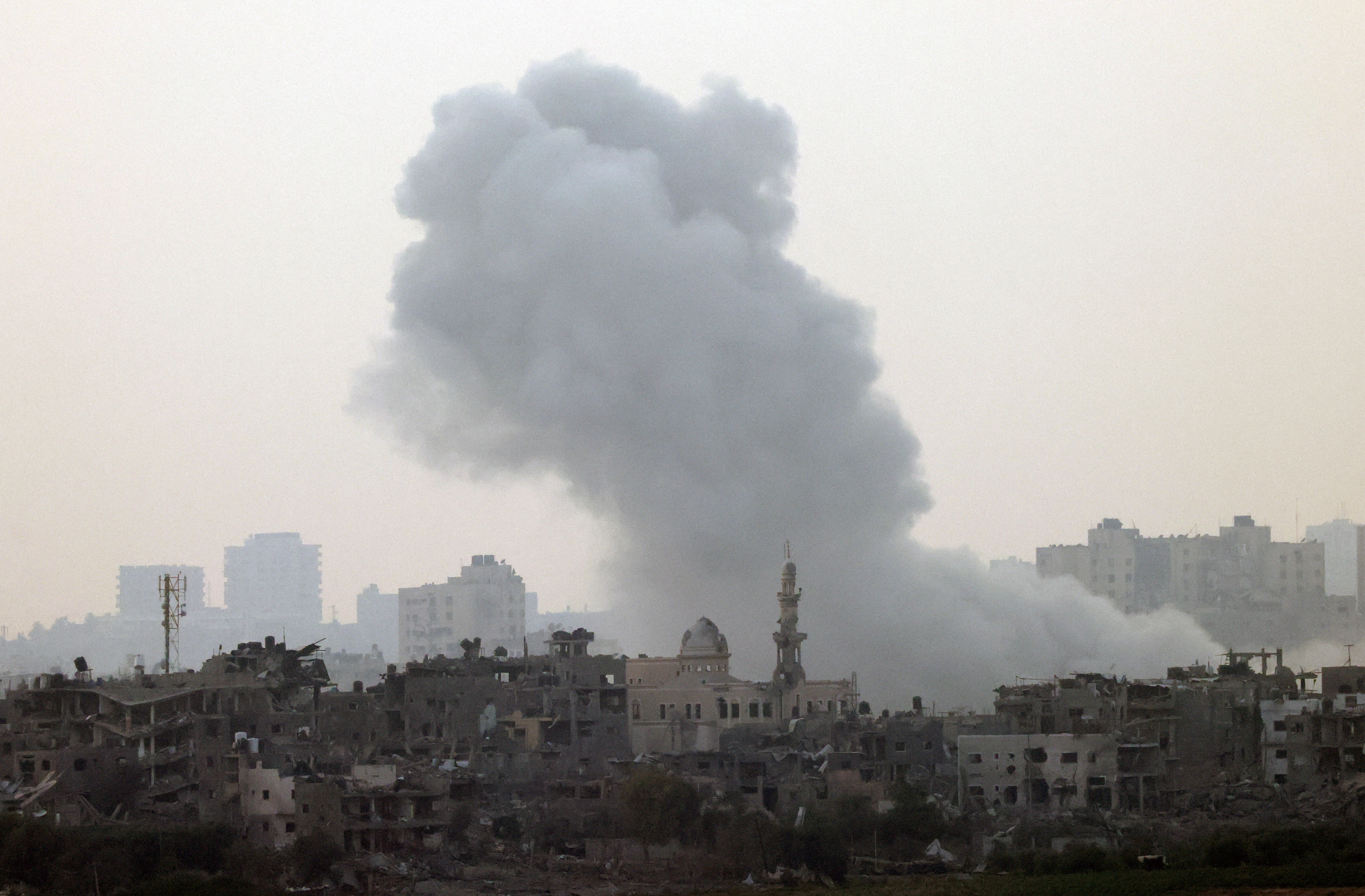
Israeli warplanes also struck Syrian army infrastructure in response to rockets fired from Syria, an ally of Iran, the Israeli military said. The strike stoked concerns that its war with Iran-backed Hamas will ignite the wider region.
Syrian state media said Israel had killed eight soldiers and wounded seven more near the southwestern city of Deraa, and hit Aleppo airport in the northwest, already out of action.
Israel did not accuse the Syrian army of launching rockets but is suspicious of Iran, its arch-enemy which has a significant military and security presence in Syria.
Iran has sought regional ascendancy for decades and backs armed groups in Syria, Lebanon and elsewhere as well as Hamas. It has warned Israel to stop its onslaught on Gaza.
Israel said its forces also hit five squads in south Lebanon preparing attacks. Lebanon’s Iranian-backed Hezbollah group said 42 of its fighters had been killed since border clashes with Israel resumed after the Gaza war erupted. Israeli-Hezbollah clashes have unnerved civilians on both sides of the border.
“You don’t know what will happen in a few days. You just wait,” said Rabab Yousef, a 57-year-old mother who lost a daughter under the rubble of an Israeli air strike in 2006.
The United States and Russia are leading rival calls at the United Nations for a pause in fighting to allow aid into Gaza, where living conditions are harrowing with medical care crippled due to a lack of electricity, and food and clean water scarce.
Limited deliveries of food, medicine and water from Egypt restarted on Saturday through Rafah, the only crossing not controlled by Israel, which announced it had sealed off the coastal enclave for good after this month’s attack from Hamas.
U.N. agencies say more than 20 times as much are needed by the Gaza Strip’s 2.3 million people, even in peacetime.
In proposals the U.N. Security Council was expected to consider on Wednesday, the United States is seeking short pauses to allow aid in while Russia advocates a wider ceasefire. Israel has resisted both, arguing that Hamas would only take advantage and create new threats to its civilians.
Germany said it had confidence in U.N. Secretary General Antonio Guterres after Israel demanded his replacement following comments that international law was being violated in Gaza, where he said at least 35 U.N. staff had been killed.
Israel started its aerial blitz against Gaza after Hamas militants stormed southern Israeli towns in a shock infiltration on Oct. 7, killing 1,400 people, most of them civilians, and taking some 222 people hostage.
Gaza’s health ministry said at least 6,546 Palestinians had been killed by Israeli bombardments since then, including 2,704 children. Of the total, 756 had been killed in the previous 24 hours, half of them children, it said – even more than the 704 it reported on Tuesday.
Clashes have also intensified in the occupied West Bank, where the Israeli military has killed more than 100 Palestinians, the Palestinian health ministry said.
Qatar, which is leading mediation talks in coordination with the United States, urged both sides to de-escalate and warned that an Israeli ground assault on the densely-populated enclave would make freeing hostages much more difficult.
Hamas has released a mother and daughter with dual U.S.-Israel nationality and two Israeli women.


The U.S. Senate Foreign Relations Committee on Wednesday backed President Joe Biden’s nomination of former Treasury Secretary Jack Lew to be ambassador to Israel, paving the way for his expected confirmation by the full Senate.
With Biden’s fellow Democrats pushing to fill the position quickly in the aftermath of the Oct. 7 Palestinian Hamas attack on Israel from Gaza, the committee backed the nomination by a 12-9 vote, mostly along party lines.
Lew is expected to be confirmed. He needs only a majority vote, and Democrats control a 51-49 seat majority in the chamber.
Lew was supported by every committee Democrat, as well as Republican Senator Rand Paul.
Lew’s confirmation hearing was contentious, with some Republicans sharply criticizing his defense of the 2015 Iran nuclear deal sealed during former Democratic President Barack Obama’s administration. They said it would be hard for them to support Lew given his past work to implement the agreement with a country that is a sworn enemy of Israel’s.
Former Republican Donald Trump withdrew Washington from the international pact with Iran in 2018.
Democrats have argued it is important to confirm an ambassador to support Israel in the aftermath of the Oct. 7 attack on Israeli villages and military bases by Hamas gunmen who killed 1,400 people and took more than 200 hostages, raising fears of a broader conflict.
Palestinian health officials said the Palestinian death toll now exceeds 6,500, as Israel has struck back against Hamas with strikes on Gaza.
Washington has not had an ambassador to Israel since July, when Tom Nides left the post. Biden nominated Lew in September.
According to the U.S. Embassy in Georgia, Ambassador Erin Elizabeth McKee, USAID Assistant Administrator for Europe and Eurasia, has arrived in Georgia following her visit to Armenia. During her stay, Assistant Administrator McKee will head the U.S. delegation at the Tbilisi Silk Road Forum, “advancing the U.S. partnership with Georgia as it solidifies itself as a key Euro-Atlantic trade, transport, logistics, and energy hub.”
Assistant Administrator McKee will meet with Georgian Government officials “to reaffirm USAID’s three-decade-long strategic partnership with Georgia.” She will launch USAID’s new Educating the Future Program, a joint initiative with Georgia’s Ministry of Education and Science to enhance teacher training.
Assistant Administrator McKee will also meet with civil society leaders, journalists, educators, and business community members.
This is her second visit to Georgia, following her previous trip in November 2022.
USAID official’s visit comes as the “Georgian Dream” officials doubled down on their criticism of U.S.-backed programs, accusing them of fomenting unrest. The Speaker of the Georgian Parliament, Shalva Papuashvili, said recently that some USAID programs encourage “extremism” and “polarization.”
Also Read: