
Categories
South Caucasus News

Instead of dissolving, Artsakh should have an exiled government


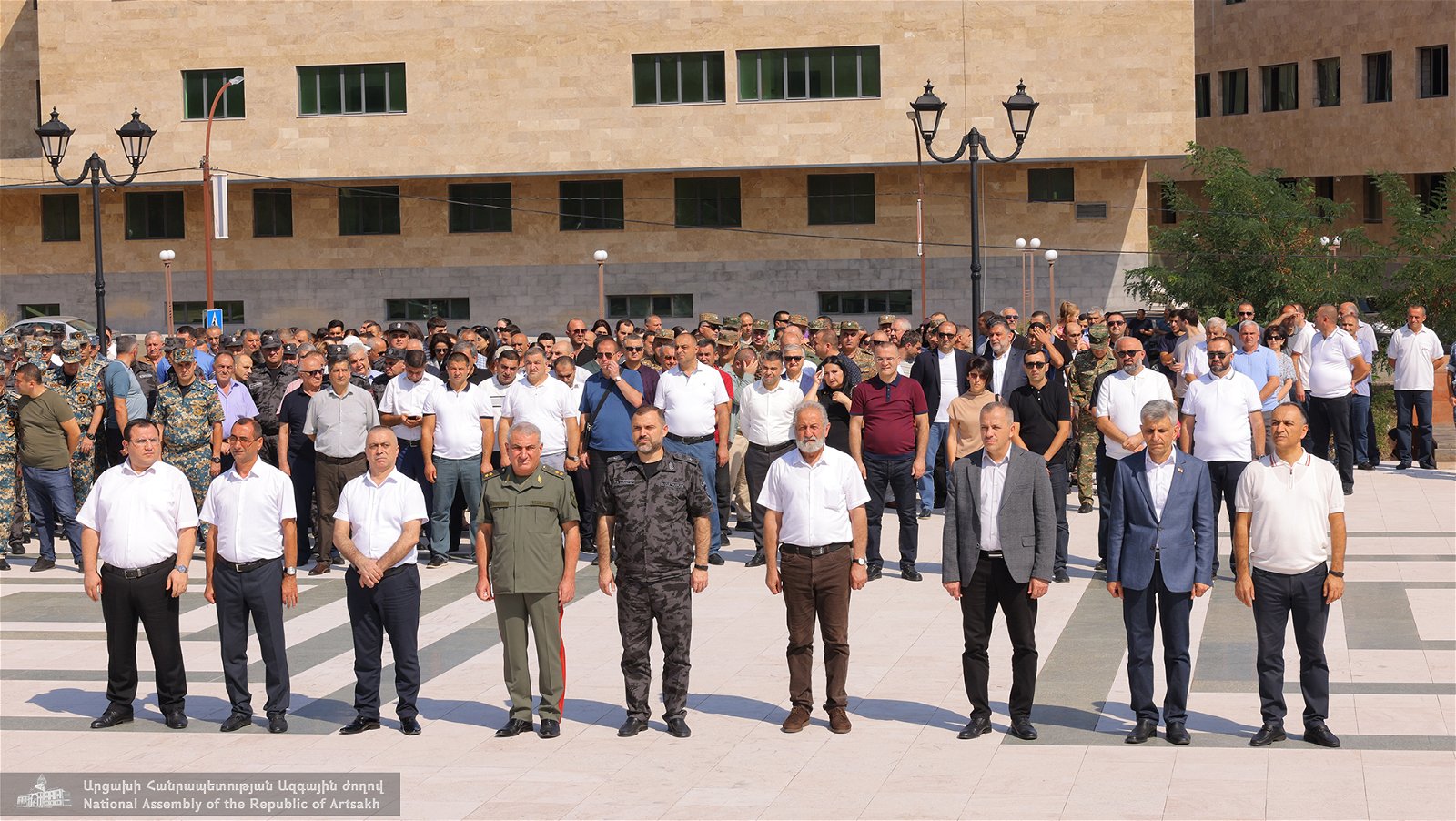
Artsakh officials on Independence Day, Sept. 2, 2023 (NKR InfoCenter)

On September 28, 2023, Artsakh President Samvel Shahramanyan issued a decree announcing that, in the wake of Azerbaijan’s assault on Artsakh, the authorities of Artsakh agreed to dissolve their government by the end of the year and be fully integrated into Azerbaijan. 

The decree aimed:

  1. To dissolve all state institutions and organizations under their departmental subordination until January 1, 2024, and the Republic of Nagorno-Karabakh (Artsakh) shall cease to exist.
  2. The population of Nagorno-Karabakh, including those outside the Republic, after the entry into force of this decree, shall familiarize themselves with the conditions of reintegration presented by the Republic of Azerbaijan in order to make an independent and individual decision on the possibility of staying in Nagorno-Karabakh.

This was perceived as the end of the Artsakh dream. However, this announcement came under the threat of force and ethnic cleansing, placing its legality in question. Moreover, most of the political and military leaders of Artsakh have been arrested by Azerbaijan, amid the passive stance of the Russian peacekeepers and the Armenian government. 

What is to be done after the indigenous Armenians of Artsakh have been forcibly displaced from their ancestral homeland? Should we turn the page of the 2,000-year old history of Armenian civilization in Artsakh? Should the more than 100,000 refugees be integrated into Armenia and abandon their right of return? What will happen to the soldiers of the Artsakh Defense Army, the farmers, the students, the relatives of the deceased? Who will pay them monthly compensation—employees of the public sectors and key security institutions? The list of unanswered questions goes on. One thing is clear: abandoning the cause of Artsakh and its people is a crime against our nation, and a strategy is needed to cope with the situation and devise a wise and realistic solution.

To answer these questions, I have been reading the literature of the Polish exile government (1939-1990), the Czechoslovak National Liberation Committee (1939-1945), the Free French (1940-1944), the Greek Cairo Government (1941-1944) during World War II and the Palestinian Liberation Organization (PLO, 1964-1982) in Lebanon, examples of governments in exile.

According to the Princeton University online dictionary, a government in exile is “a temporary government moved to or formed in a foreign land by exiles who hope to rule when their country is liberated.” A representative group might organize to govern outside of its territory as a government in exile, claiming to have the authority as its state’s legitimate government if  there is a political or security threat, generally with the intention of returning to its native lands. Upon such a return, the government would then use either political or military means to regain control as the nation’s formal government. Examples from history include negotiations with the de facto authorities on the ground, such as between Israel and the PLO in 1993, or military victory, such as at the end of World War II when after the defeat of Nazi Germany and the end of its occupation many exile governments returned to their original countries.

Historically, international law has recognized that governments in exile are permitted to undertake certain activities. These actions include:

  1. Becoming a party to a bilateral or international treaty;
  2. Amending or revising its own constitution;
  3. Maintaining military forces; [as this was the case with many exiled governments during WWII]
  4. Retaining diplomatic recognition by sovereign states;
  5. Issuing identity cards;
  6. Allowing the formation of new political parties;
  7. Instituting democratic reforms;
  8. Holding elections.

With the ethnic cleansing of Armenians of Artsakh and the dispersal of its population throughout Armenia, there needs to be an authority, such as a government in exile, to reorganize the population and lobby for its right of return to its ancestral homeland, with certain guarantees for their rights and security and the preservation of Armenian cultural and religious sites. 

Establishing a government in exile for Artsakh is a necessity. It can be made up of an executive branch and parliament with its parliamentary committees and two bodies authorized under a single leadership or authority. 

The socio-economic body should be based in Armenia. The body should work in coordination with its sister ministries in Armenia and address the socio-economic needs of the Artsakh Armenians regarding relocation, housing, health and employment. This body can also cooperate with the International Committee of the Red Cross (ICRC), U.N., EU or other international or regional humanitarian agencies. 

The political body should be based outside of Armenia. It should have representative bodies in Europe, the U.S. and Russia, if allowed, and seek diplomatic recognition. The responsibility of this body would be to engage in lobbying, keep the cause of the right of return of Artsakh Armenians to their homeland alive, participate in conferences, attain certain representative status in international bodies and expose Azerbaijan’s crimes against the Armenians of Artsakh. 

If the political body was based in Armenia, Azerbaijan and Turkey would impose political and military pressure on Yerevan, triggering another unnecessary war. Azerbaijan in recent years established an exile government representative community of “Western Azerbaijan” in Ankara and may put the right of return of both people on the same level (although Azerbaijanis who lived in Armenia before 1988 were not deported or ethnically cleansed, despite the false post-2020 war narrative disseminated by Azerbaijani officials). Having such a body in Europe, the United States or Russia is also problematic, as both sides will use the Artsakh cause as a proxy to push their own interests against the other. Hence, the best scenario would be a neutral zone close to the region. Lebanon can be one option where the political representatives can easily communicate with diplomats from all sides and cooperate with Armenian Diaspora institutions. When it comes to the military, the Defense Ministries of Armenia and Artsakh would decide whether the latter will be integrated into the former or turned into a kind of police force, if certain security guarantees are met for the safe return of Armenians to Artsakh. 

The realization of this initiative depends on the will of the Armenian national leaders and, most importantly, the leaders of Artsakh. The representatives of Artsakh have a huge responsibility on their shoulders to take courageous and risky steps to keep the light of the Artsakh cause alive, despite the geopolitical odds against them. We as a nation cannot repeat the tragic loss of Western Armenia and have another genocide remembrance day on our calendar. Armenians must wake up and, instead of engaging in internal accusations, form a clear strategy for the future of Artsakh, while Armenia faces an existential crisis due to  Azerbaijan’s limitless territorial ambitions. The geopolitical tides may change in the future, and Armenians must be ready to adapt to the changes. 

Author information
Yeghia Tashjian

Yeghia Tashjian

Yeghia Tashjian is a regional analyst and researcher. He has graduated from the American University of Beirut in Public Policy and International Affairs. He pursued his BA at Haigazian University in political science in 2013. In 2010, he founded the New Eastern Politics forum/blog. He was a research assistant at the Armenian Diaspora Research Center at Haigazian University. Currently, he is the regional officer of Women in War, a gender-based think tank. He has participated in international conferences in Frankfurt, Vienna, Uppsala, New Delhi and Yerevan. He has presented various topics from minority rights to regional security issues. His thesis topic was on China’s geopolitical and energy security interests in Iran and the Persian Gulf. He is a contributor to various local and regional newspapers and a presenter of the “Turkey Today” program for Radio Voice of Van. Recently he has been appointed as associate fellow at the Issam Fares Institute for Public Policy and International Affairs at the American University of Beirut and Middle East-South Caucasus expert in the European Geopolitical Forum.

| Twitter |

The post Instead of dissolving, Artsakh should have an exiled government appeared first on The Armenian Weekly.

Categories
South Caucasus News

Facebook’s Controversial Policies: Silencing Armenian Narratives


On August 26, 2023, Facebook suspended Artsakh President Arayik Harutyunyan’s official Facebook account. Generally, Facebook suspends user accounts for a variety of reasons, such as violations of the site’s rules and regulations, suspicious login activity that signals unauthorized access, the use of false personal information, or other inappropriate or illegal actions that go against Facebook’s Community Standards or Terms of Service. President Harutyunyan, however, had not engaged in any activity that would violate the company’s policy. The reason behind the suspension of Harutyunyan’s page was rather strange, highly questionable and problematic, to say the least. The suspension was the result of a continuous campaign of complaints filed by Azerbaijani users. According to Armenpress, “The president’s office said Harutyunyan’s account was actively targeted with complaints for many months, which had gradually led to many restrictions, including the artificial drop in visibility of posts and ban on certain functions. And as a result of the recent complaints the page became fully inaccessible on August 26.” 

President Harutyunyan only made one “mistake” for which his account could have been suspended: he was the president of the Republic of Artsakh. To best understand the absurdity of the situation, one should simply imagine a similar title: “Ukrainian President Volodymyr Zelenskyy’s Official Facebook Account Suspended Due to Complaints Filed by the Russian Side.” Such a nonsensical title would be unimaginable for most, yet why does it become not only imaginable, but also real when it comes to the case of Artsakh’s president? Why has the game of double standards and hypocrisy become so mainstream that we no longer talk about it nor make an effort to fight it? 

This parallel reminded me of how I felt while studying in international academic settings. Following Russia’s invasion of Ukraine on February 24, 2022, a significant majority of the international student body voiced their grievance and discontent toward Russia and stood up for Ukraine in all possible ways, from fundraisers to spreading awareness across social media platforms. I admired the sense of solidarity and shared the immense pain of my fellow Ukrainian peers, hoping for an immediate, peaceful resolution of the conflict. Yet deep down in my heart, I also ached. I ached to hear all the voices that spoke so boldly and blatantly against Russian aggression, the voices that were silent as the grave when the same was happening to the Armenian people. I ached, not because they stood up for Ukraine (in fact, I was more than happy to see the unanimous support), but because they never did for Artsakh. I ached, because the double standards and the “made-normal” hypocrisy have killed my people in the past and continue doing so in the present. I ached, because some crimes against humanity scream so loudly, and some others are silenced to death. 

The suspension of President Harutyunyan’s official account was a deliberate attempt at silencing to death. The page, with over 459,000 followers, was one of the few sources for the communication and exchange of timely information between Artsakh’s government and its population which, by the way, at the time had been deprived of basic human necessities such as food, electricity, hygiene products and medical supplies for months due to Azerbaijan’s illegal blockade of the Berdzor (Lachin) Corridor, the only humanitarian corridor connecting Artsakh to Armenia and the outside world. The suspension of the president’s Facebook account was not a silly game by Azeri users but a deliberate attempt to completely isolate Artsakh’s population, not only in the real but also in the virtual world—something completely unjust and unjustifiable, something which Facebook, whether inadvertently or intentionally, played a role in. 

Nevertheless, the suspension of Harutyunyan’s account is just one instance of Facebook’s problematic attitudes and decisions within the context of Armenian narratives. On October 12, 2020, Facebook announced an update in its “hate speech policy to prohibit any content that denies or distorts the Holocaust.” This is a praiseworthy decision, targeted at the prevention of denial or distortion of the factual historical event of the Holocaust. However, the decision becomes less admirable as one realizes that the update in hate speech policy applies to the case of Holocaust only and excludes other genocides such as the Rwandan or Armenian genocides. In fact, pages still exist that publicly and blatantly deny the Armenian Genocide. 

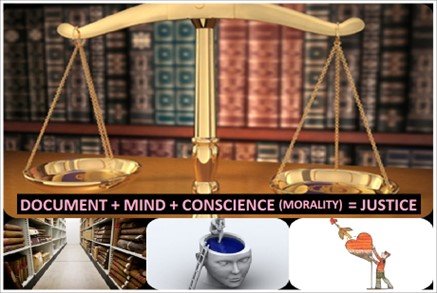
The Facebook page “Armenian Genocide Lie,” for example, not only has permission from Facebook to exist but is given the right to make posts and comments about the “mythness” of the Armenian Genocide on a regular basis, sharing books, articles and highly biased opinions that distort history and present the Armenian Genocide as a fictional narrative invented by the Armenian people. The page has over 9,300 followers and therefore plays a crucial role in spreading disinformation and repeating the generational cycle of history falsification among Turkish and Azerbaijani audiences. Ironically enough, the background image of the “Armenian Genocide Lie” Facebook page features the following statement: “Document + Mind + Conscience (Morality) = Justice.” It’s ridiculous to see the grandchildren of genocide perpetrators speak about “document,” “morality” and “justice.” 

The background image of the Facebook page “Armenian Genocide Lie”

Which document exactly are they referring to – the testimonies of Armenian Genocide survivors and their descendants (second and third generation), or the accounts of numerous international scholars, Arab and Greek eyewitnesses, rescuers and aid providers, foreign witnesses and Yezidi survivors, who all confirm the factuality of the Armenian Genocide? What do they really mean when speaking about morality? The “morality” of killing over 1.5 million ethnic Armenians by exposing them to all sorts of inexplicable violence that the average human mind would be incapable of imagining or seeing, let alone implementing? The “morality” of torturing and murdering children, pregnant women, the elderly and people with disabilities? Or the (im)”morality” of still denying the Armenian Genocide at the state level and openly supporting another genocide toward the Armenians of Artsakh over 100 years later? Perhaps to best understand how comical and ironic the words “document,” “morality” and “justice” sound in this context, both the admins of the “Armenian Genocide Lie” Facebook page as well as the policymakers at Facebook should watch the films The Lark Farm, Aurora’s Sunrise or The Promise. Perhaps after watching those films, the admins of the Facebook page who were raised and educated with biased and one-sided Turkish ideologies and narratives would be exposed to the historical truth and decide to take down the page by themselves.  

When the suffering of one group is validated and condemned, while the other’s is subjected to ignorance and indifference, important questions of impartiality, fairness and equity arise. Banning any content that denies or distorts the Holocaust while allowing the public denial of the Armenian Genocide on Facebook is another portrayal of double standards and hypocrisy to which the modern world, both physical and virtual, has become so accustomed. Acknowledging historical atrocities, such as the Holocaust or the Armenian Genocide, and banning any attempts at denial is a moral imperative, because it acknowledges the suffering of the victims and helps prevent such events from happening in the future. Denial and indifference, on the other hand, cause a perpetuation of injustice and suffering, facilitating the repetition of genocide. 

As the crimes of the past are not punished, they are likely to happen in the future, and it is mind-blowing to witness that, in the 21st century, in this “civilized world” of transparent communication and timely updates, some social media platforms not only do not strive to prevent the repetition of a new genocide but even facilitate its success, whether by inaction and indifference or the one-sided suppression of voices and narratives.

This phenomenon and the direct cause-effect relationship between denial and repetition can clearly be observed in the context of recent developments in the region: the devastating attacks by Azerbaijan on Artsakh in 2020 and in September 2023, the over nine-month-long blockade of the Berdzor Corridor and the resulting humanitarian catastrophe, the forced exodus of Artsakh’s Armenian population, and many other events that caused significant territorial and humanitarian damages and losses for the Armenian people, while leaving them under a new imminent threat. In fact, according to an article published on POLITICO on October 13, U.S. Secretary of State Antony Blinken warned that his department is tracking the possibility that Azerbaijan could soon invade Armenia. This is not at all surprising, as Azerbaijani President Ilham Aliyev had previously spoken about his intentions to use force in order to solve the “problem” of opening a corridor along Armenia’s southern border in an attempt to link mainland Azerbaijan to an exclave bordering Turkey and Iran. As the crimes of the past are not punished, they are likely to happen in the future, and it is mind-blowing to witness that, in the 21st century, in this “civilized world” of transparent communication and timely updates, some social media platforms not only do not strive to prevent the repetition of a new genocide but even facilitate its success, whether by inaction and indifference or the one-sided suppression of voices and narratives.

As I recently moved to the College of Europe in Natolin to pursue my advanced master’s degree in European interdisciplinary studies, I had the chance to meet over 100 young people from various nationalities and backgrounds. As we were exchanging our contact information with one another, one of the students asked, jokingly: “Guys, is there anyone who still uses Facebook?” Everyone started laughing as if talking about something old-fashioned and outdated. This was a huge surprise for me, as in Armenia, Facebook is still one of the most commonly used social media platforms, where people discuss important socio-political matters and where the government exchanges important information with the population (such as during the COVID-19 pandemic, when communication between the prime minister and the population would mainly take place in the form of Facebook lives). There were as many as 2,163,300 Facebook users in Armenia in January 2022, which accounted for 74.3-percent of its entire population, whereas the registered voter turnout to the 2021 Armenian parliamentary election was only 49.37-percent. With such a large user base in Armenia and the “loyalty” of the Armenian population to the platform, Facebook should put some effort into making the platform more fair and just for its Armenian users and understand how big a role any of its actions and policies can have in the protection of historical truth and in the prevention of new crimes against humanity.

Author information

Milena Baghdasaryan

Milena Baghdasaryan

Milena Baghdasaryan is a graduate from UWC Changshu China. Since the age of 11, she has been writing articles for a local newspaper named Kanch (‘Call’). At the age of 18, she published her first novel on Granish.org and created her own blog, Taghandi Hetqerov (‘In the Pursuit of Talent’)—a portal devoted to interviewing young and talented Armenians all around the world. Baghdasaryan considers storytelling, traveling and learning new languages to be critical in helping one explore the world, connect with others, and discover oneself. Milena currently studies Film and New Media at New York University in Abu Dhabi.

|

The post Facebook’s Controversial Policies: Silencing Armenian Narratives appeared first on The Armenian Weekly.


Categories
South Caucasus News

Ambassador of Armenia, Greek Parliament Speaker discuss the … – ARMENPRESS


Ambassador of Armenia, Greek Parliament Speaker discuss the …  ARMENPRESS

Categories
South Caucasus News

A black flag over Iran’s Imam Reza shrine isn’t a war cry. It represents mourning for Gaza victims – The Associated Press


A black flag over Iran’s Imam Reza shrine isn’t a war cry. It represents mourning for Gaza victims  The Associated Press

Categories
South Caucasus News

Pashinyan boasts about Armenia’s fake democracy at European Parliament – Armenian Weekly


Pashinyan boasts about Armenia’s fake democracy at European Parliament  Armenian Weekly

Categories
South Caucasus News

Instead of dissolving, Artsakh should have an exiled government – Armenian Weekly


Instead of dissolving, Artsakh should have an exiled government  Armenian Weekly

Categories
South Caucasus News

AP Headline News – Oct 24 2023 20:00 (EDT)


28013281


Categories
South Caucasus News

Graham Mertz ‘maybe the No. 1 QB in the country’ over last two games, says Georgia coach Kirby Smart – 247Sports


Graham Mertz ‘maybe the No. 1 QB in the country’ over last two games, says Georgia coach Kirby Smart  247Sports

Categories
South Caucasus News

Gallery: Georgia Air National Guard Recruiting Office Ribbon Cutting Ceremony – WSAV-TV


Gallery: Georgia Air National Guard Recruiting Office Ribbon Cutting Ceremony  WSAV-TV

Categories
South Caucasus News

Aiming for new heights – Opinion – Chinadaily.com.cn – China Daily


Aiming for new heights – Opinion – Chinadaily.com.cn  China Daily