
Day: October 19, 2023
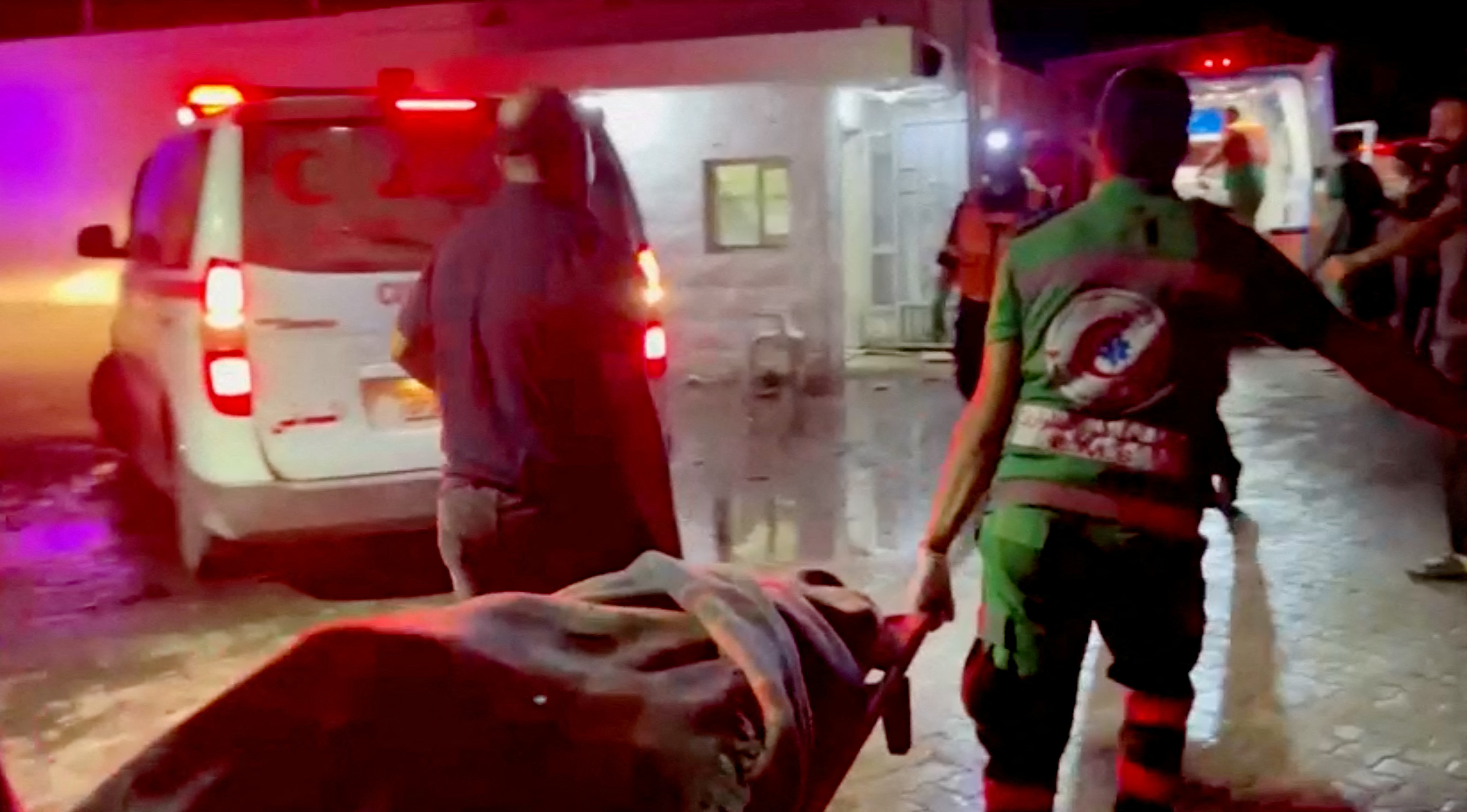
Rescue personnel work at scene At Al-Ahli Hospital, after hundreds of Palestinians were killed in a blast at Al-Ahli hospital in Gaza that Israeli and Palestinian officials blamed on each other in Gaza City, Gaza Strip, in this screen grab obtained from video, October 17, 2023. REUTERS/Reuters TV Acquire Licensing Rights
Oct 18 (Reuters) – A blast at a Gaza hospital killed hundreds of Palestinians just before U.S. President Joe Biden visited Israel as the conflict between the Israeli military and the Hamas militant group raged.
WHO BOMBED THE HOSPITAL IN GAZA?
Israelis and Palestinians have blamed each other for the hospital bombing.
Biden, who has stood squarely behind Israel from the start of the conflict, said that based on information he had seen the hospital blast appeared to be the result of an errant rocket fired by a “terrorist group”, echoing Israel’s view.
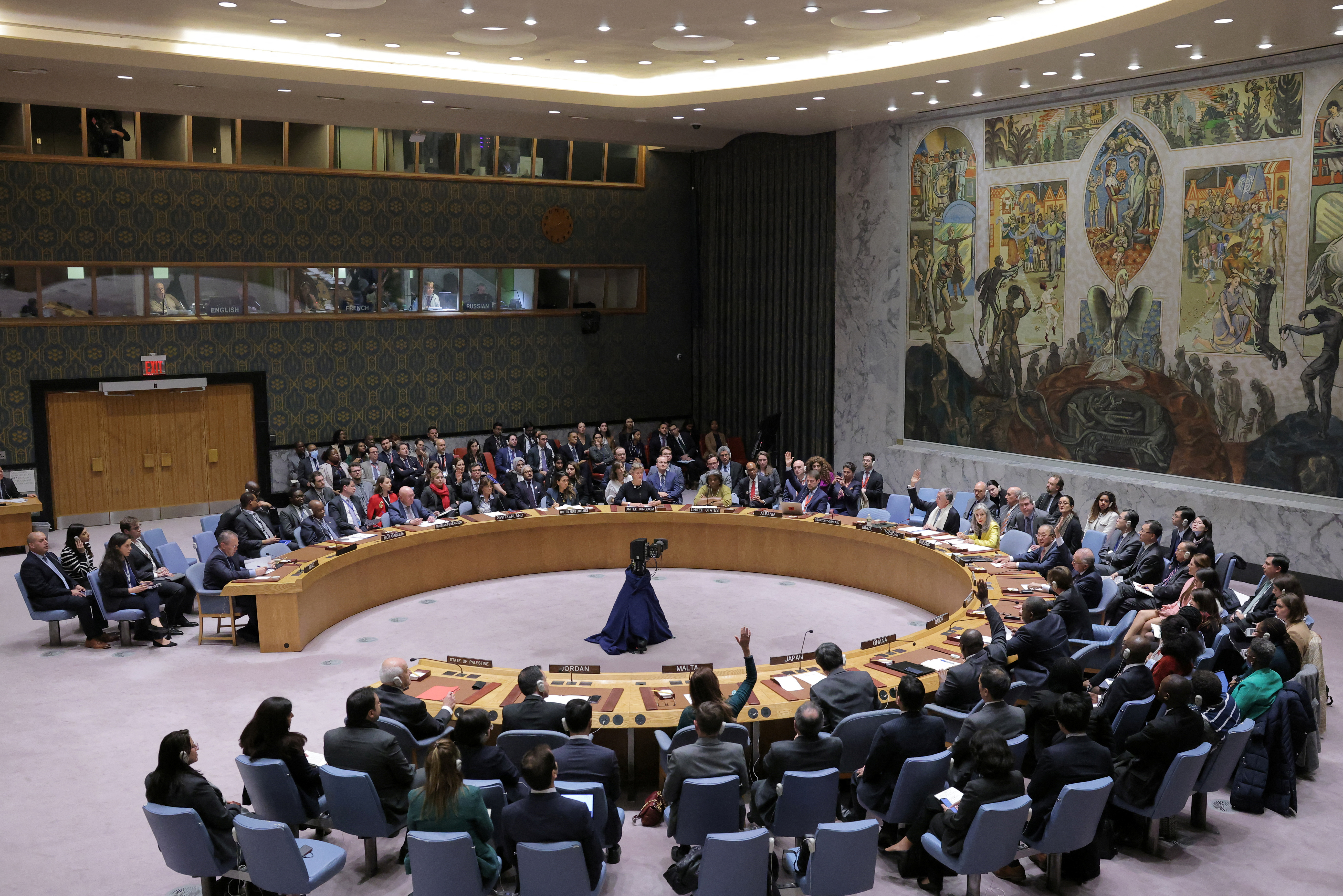
Some Western countries have called for an investigation, without pointing the finger at this stage, while Arab states have blamed Israel.
WHAT DO WE KNOW ABOUT THE HOSPITAL?
Founded 1882 and run by the Anglican church, Al Ahli Arab Hospital described itself on its website as “a haven of peace in the middle of one of the world’s most troubled places”. The hospital said it offered 80 beds with services such as a free programme to detect breast cancer, a centre for elderly women, and a mobile clinic offering free services to surrounding towns.
It is located in the Zeitoun neighbourhood of Gaza City, in the northern region of the Gaza Strip.
Reuters Graphics
HOW MANY PEOPLE WERE IN THE HOSPITAL?
Although it had a limited number of beds, the hospital and others in Gaza have been crammed with casualties beyond their capacity since the start of Israeli air strikes launched in response to the Oct. 7 Hamas attack on Israel.
As well as handling a surge in the number of wounded, people have also sought refuge in hospital grounds all over Gaza believing them to be safe havens against strikes.
Dr Fadel Naim, head of orthopaedic surgery, said about 1,000 people were in Al Ahli Arab Hospital on Tuesday morning and more rushed there later in the day after he said the Israeli army had warned residents in the Zeitoun neighbourhood to evacuate their homes.
Dr Ibrahim Al-Naqa said more than 3,000 people had sought refuge at the hospital at the time of the strike.
WHAT HAPPENED BEFORE THE STRIKE?
Israel previously told Palestinians in the north of Gaza, including in Gaza City, to move south for their own safety. Israel’s military specifically told Zeitoun residents to move south on Tuesday in a message issued on social media platform X.
The Kuwaiti specialized hospital in Rafah city, in the south of Gaza, said on Oct. 16 it had it had received two Israeli warnings to evacuate but its director said its staff would not leave.
WHAT DETAILS DO WE HAVE ABOUT THE STRIKE?
Dr Naim said he had finished one surgery and was about to start another when he heard a huge explosion. Dr Naqa said the blast took place at about 6.30 p.m. (1530 GMT).
WHAT DAMAGE WAS SUSTAINED?
Footage and images obtained by Reuters from inside the hospital showed about two dozen destroyed vehicles in its grounds.
They were surrounded by damaged buildings with windows blown out. Blood stains were on the walls and the ground.
WHAT HAVE THE PALESTINIANS SAID?
Palestinian officials have blamed Israel.
Islamic Jihad, a Palestinian militant group that is an ally of Hamas, denied any of its rockets were involved in the blast, saying it did not have any activity in or around Gaza City at that time.
Hamas leader Ismail Haniyeh said the United States was responsible, saying Washington had given Israel “the cover for its aggression”.
The health minister of the West Bank-based Palestinian Authority blamed Israel for what he called a “massacre”.
WHAT HAS ISRAEL SAID?
Israel has denied it was to blame and said the blast was caused by a failed rocket launch by Islamic Jihad.
An Israeli army spokesperson said an analysis of the operational systems of the Israel Defense Forces indicated that a barrage of rockets was fired by militants in Gaza, passing in close proximity to the hospital at the time it was hit.
“Intelligence from multiple sources we have in our hands indicates that Islamic Jihad is responsible for the failed rocket launch which hit the hospital in Gaza.”
A military spokesperson said there was no structural damage to buildings around the hospital and no craters consistent with an air strike. The spokesperson said Hamas had inflated the casualty numbers and said the group could not know as quickly as it claimed what caused the blast.
The military also released an audio file and a transcript of what it said was a conversation between two Hamas militants saying an Islamic Jihad rocket had misfired. It was not possible to verify the material independently. The audio was edited including with bleeps to obscure words and names.
Hamas did not immediately comment on the audio.
The military said some 450 rockets fired from Gaza had fallen short and landed in the Gaza Strip in the past 11 days.
WHAT HAS THE UNITED STATES SAID?
Biden pointed the finger of blame at Palestinian militants.
Speaking alongside Israeli Prime Minister Benjamin Netanyahu, Biden said: “I was deeply saddened and outraged by the explosion of the hospital in Gaza yesterday, and based on what I’ve seen, it appears as though it was done by the other team, not you.”
WHAT HAS THE ANGLICAN CHURCH SAID?
Justin Welby, the Archbishop of Canterbury and head of the Anglican church, said: “This is an appalling and devastating loss of innocent lives. The Ahli hospital is run by the Anglican church. I mourn with our brothers and sisters.”
“I renew my appeal for civilians to be protected in this devastating war. May the Lord God have mercy.”
WHAT HAS BEEN THE REACTION IN THE REGION?
The strike has enflamed Arab governments and groups in the region. Protesters took to the streets in several Arab countries denouncing what they said was an Israeli strike on the hospital.
Jordan’s King Abdullah blamed Israel for the blast and his country cancelled a summit it was to host in Amman on Wednesday to discuss Gaza with the U.S. president and the Egyptian and Palestinian leaders. Egypt also blamed Israel.
In Lebanon, Iran-based Hezbollah, which fought a war with Israel in 2006, denounced what it called Israel’s deadly attack and called for protests on Wednesday. The Beirut government declared a national day of mourning.
Reporting by Reuters correspondents; Editing by Edmund Blair, Angus MacSwan and Daniel Wallis
Our Standards: The Thomson Reuters Trust Principles.
The World Bank is ready to work with Azerbaijan’s newly-created Water Reserves Agency, Winston Yu, Water Practice Manager for the Europe and Central Asia Region at the World Bank, said in an interview, according to Azerbaijan in Focus, reporting Trend.
“I’m delighted to see the attention being given by the government to this very important topic of water. I think it represents a huge opportunity for the government to think about how they want to better regulate the resource and how to provide better services to its people, not only households, common citizens in Baku and other cities, but also farmers who receive irrigation services,” he said.
The Azerbaijan Water Reserves Agency was established in March 2023 by President of Azerbaijan Ilham Aliyev’s order on the improvement of water resources management.
The Agency has been set up on the basis of the Emergency Ministry’s State Water Reserves Agency in order to use water resources effectively and improve irrigation practices. The assets of national water and sanitation operator Azersu and Azerbaijan Melioration and Water Management joint-stock companies have been handed over to the newly established Azerbaijan Water Reserves Agency.
Yu thinks it remains to be seen how this new agency will evolve, grow and take on new responsibilities and new roles.
“I think it represents a huge opportunity. Households, businesses and farmers need good services. And I think this is a good opportunity now to look at the roles and financial sustainability of both water and sanitation and irrigation services. The World Bank is a global institution, we have almost 300 professionals working in the water sector. So that means that we know many stories and experiences pretty similar to Azerbaijan’s. The challenges here are not very different than the challenges in Vietnam or countries in Africa and South Asia, and even in the US. I personally come from California, where we face droughts. I think one of the main tasks for the World Bank is to help share that global knowledge. This new institution, as it moves forward, can be staffed properly, they can have the right policies in place, have the right incentives in place. I am really hoping that we can be a good partner for the government and share those ideas and those experiences,” said the WB water practice manager.
He pointed out that the World Bank is happy to develop guidelines for the new agency if the Azerbaijani government asks.
“We have an ongoing technical assistance activity, within which we are undertaking a large number of analytical studies to dig a bit deeper to help the government figure out what are the priorities. As an example, we want to help the government think through the financial sustainability of this new agency, and that requires some homework on budgeting, subsidies, tariffs. Reviewing all of that, we hope we will begin to lay out a plan for the agency moving forward. But it will be the government to decide whether they want us to support them on that and be partners in this journey of this new agency,” added Winston Yu.
He went on to add that the work on creating a new water management model in Azerbaijan comprises two streams.
“The first is looking at the water supply and wastewater sector and the other is the irrigation for farmers’ sector. In the water supply work, what we’re looking at is undertaking several studies, one of which is to look at subsidies and tariffs and the whole financial arrangements. Another sub-study is to look at services, particularly, in smaller cities and rural areas where there is less concentration of people. That presents its own unique set of challenges. On the irrigation side, what we are trying to do is to develop tools that the government can use to benchmark irrigation performance. How do you know how well an irrigation system is performing? Using satellite technologies and all kinds of new modeling tools we can develop rather simple tools that the government can utilize to figure out where do we need improvements in performance, where do we need more investment and etc. These are some of the activities that we are undertaking under the current technical assistance,” said the water practice manager.
Yu noted that every country, and every city needs to diversify sources, but one also needs to be mindful that there are enormous opportunities for improving efficiency.
“Anytime you have losses in your networks, it translates to losses of revenue, energy, public effort. In my view, the priority is to first improve the existing system. Many countries now are reusing wastewater, and feeding it back into the system. I think those are all very good ideas. The technologies have advanced to the point where I believe in the future the re-use of wastewater will be a norm,” he said.
As for the institutional reforms in the water sector, Yu said first of all, he hopes that the government requests the World Bank’s help and sees that it has some value to bring to the conversation.
“If the government requests help, the first thing I would share with them is the experiences in other countries. I would also share with them that this is a long-term effort and this requires enormous investment, not only in infrastructure, but also investment in people and investment in institutions. We have to think long-term here. Presumably, you want to leave a water supply system for your children and for their children, so that they can always have clean drinking water. Same with farmers. And that process takes quite a bit of time. There needs to be political commitment and really genuine investment in people who will be running these systems. I think that’s probably the most important thing. We have a very famous principle at the World Bank which reads that we don’t want to just fix the pipes, we want to fix the institutions that fix the pipes. You can fix pipes easily, but you need to invest in people and the public to help ensure that these pipes are always fixed and people are getting good services,” noted the WB water practice manager.
Yu thinks that in an environment where climate is changing, the public finance space is much more limited, and the provision of services is becoming more and more expensive, financial sustainability is a key.
“I come originally from more of an engineering and technical background. I used to think that the solution was technical, desalinization, AI, blockchain and all these things, but I’m actually more and more convinced that it is about human capacity. It is really important that we get the financing correct, so that the systems are sustainable, whatever it gets built today, will last not only your lifetime, but also your children’s lifetime and their children’s lifetime. We need to get the incentives right. And I think leaning towards more performance-based budgeting, and performance-based incentives is really the way to go. Unless you have proper incentives in the system, it’s not going to get priorities right. Secondly, we have to make sure we separate services from regulation, the two cannot be the same. Whoever is responsible for regulating should not be the same people who are also providing a service. You know, it’s hard to go further in recommendations because I think it is still early days for this institution. You need to have a proper permitting system in place. You also need to have good data, every country needs to strengthen data monitoring, and that’s probably going to be a responsibility of this new agency,” Yu said.
He believes it’s encouraging that the government has made a conscious political decision about forming this new agency.
“For me, that’s the first step. Now, this is where the hard work begins and it requires a lot of conversation. From the World Bank side, we want to give the government as much knowledge as possible, both the good experiences and maybe even more importantly, the bad experiences, because there’s been a lot of bad experiences and we don’t want Azerbaijan to go down a failed path. Technology will only save us to an extent. You still have to invest in people. There are a lot of innovative things, but there are also some basic things that still need to be done. One of the things we’re doing under the technical assistance is to help share with the government different kinds of models used in more rural parts of the country, which are often very different than Baku. You can still use performance-based approaches in more rural parts of the country. It’s a bit more challenging, but it’s not impossible,” added Winston Yu.
The World Bank water practice manager noted that there’s still room for more investment in the water sector.
“From the World Bank perspective, we’re ready to help the government when requested. I want to thank the new agency, and also the technical people from Azersu and Amelioration Company who’ve been very kind and open-armed with us in discussing the issues. This technical assistance is extremely important. We thank our donor, the European Union, for providing it, because it really helps to discuss with the government some big issues, and what are the emerging ideas on how to make things better. Clearly, beyond just the losses and the need to fix this problem, there’s a clear institutional gap that needs to be filled. I’m hoping that this new agency will fill that gap. Time will tell and we were ready to provide the government and this new agency with our thoughts and to share the experiences worldwide,” Winston Yu concluded.
The post Winston Yu: World Bank ready to work with Azerbaijan’s Water Reserves Agency appeared first on Azerbaijan In Focus.
