
On October 11, during the 54th session of the UN Human Rights Council, the Delegation of the Republic of Azerbaijan made a statement in response to the statement delivered by France. The statement which is falsely presented in the Armenian media as a joint statement by 34 countries, has in fact been delivered on behalf of France and Armenia only, according to the official webpage of the Human Rights Council, Azernews reports.
Day: October 12, 2023
This is the third in a series of articles that explore the underlying incentives and disincentives driving minority integration in Georgia.
As previously discussed in this series, the lack of incentives to bridge the linguistic barrier between Georgian speakers and ethnic minority groups presents a significant impediment to meaningful minority integration. This language gap is intimately linked with the stark disparities in information access, further marginalizing and isolating minority communities.
Georgia’s information landscape is dominated by television, which inadvertently widens the communication gap between ethnic minorities and the majority population. Coverage is dominated by three national stations – Imedi TV, Mtavari TV, and Rustavi 2. The Georgian Public Broadcaster (GPB), though legally obliged to offer minority-language programming, largely fails to serve its purpose of integrating Georgia’s mediatic and public space. This leaves regional voices, particularly those of ethnic minorities, largely unheard by the rest of the country and confined to specialized, mostly online publications.
Information Infrastructure: widening the gap
TV leads as a source of information and opinions country-wide. In the regions, TV stations are also the main source of information, since access to the internet is uneven. In 2021, an overwhelming majority of the population (87.9 percent) used TV as a source of information. Television was ranked as the most utilized source of information to receive news about Georgia’s current events by all citizens, regardless of their ethnic background.
Internet and social media are narrowing the gap and were also highly rated as a source of information for Georgians, regardless of their ethnic background. Official statistics show that the share of households with access to the internet grew from 70.1 percent in 2016 to 88.4 percent in 2022. However, the gap between rural and urban areas is apparent: rural Georgians are less likely to have computers and access to broadband internet connections.
Fiber-optic cable infrastructure is underdeveloped in regions far from the capital, affecting the quality of connections. High-quality internet is unevenly distributed in the country – more than half of the country’s optical Internet users live in Tbilisi. In 2014, the government announced plans to build a high-speed fiber-optic backbone and backhaul networks to serve 2,000 settlements by the end of 2020. But the program stalled in 2019, due to competing private interests and the high costs of the project.
Multilingual Programming: the missing link
The absence of multilingual programming further exacerbates the isolation of ethnic minorities. National and regional TV stations broadcast almost exclusively in the Georgian language. Regional broadcasters often lack the resources to produce original content and broadcast content produced by outside companies. There are a handful of regional stations that either broadcast fully in minority languages (such as Armenian ATV 12 and Parvana TV), also and Russian (TOK TV), or produce just a portion of content in minority languages (such as TV9 or Marneuli TV).
Georgia’s Public Broadcaster (GPB) is mandated by law to be inclusive of minority needs and to “reflect ethnic, cultural, linguistic, religious, age and gender diversity of the society within programs.” GPB broadcasts news programs in Georgian, Armenian, and Azerbaijani languages. It also hosts an online platform with content in seven languages (Georgian, Abkhazian, Ossetian, Armenian, Azerbaijani, English and Russian).
At the same time, shortcomings in the execution of this mandate are widely acknowledged. Georgia’s State Strategy for Civic Equality and Integration notes, “The news provided by the Public Broadcaster and other regional TV channels in ethnic minority languages are scarce, and the quality and intensity of the news need further improvement.”
Newscasts are typically translations of the Georgian language news programs rather than content specifically targeting ethnic minorities, and regional news and events are seldom covered. In addition, a large portion of multilingual content produced by the Public Broadcaster is only available online, creating further obstacles to access. Sources suggest that the failure of the GPB to fulfill its mandate is primarily due to a lack of effective accountability mechanisms.
Ethnic minority-run media outlets attempt to bridge the gap, but funding constraints limit their reach and impact. Two of the largest ethnic minority-run radios are FM Radio Marneuli, available in Azerbaijani, and FM Radio NOR, available in Armenian. JNews.ge is a prominent newspaper based in Akhalkalaki that reports news in Georgian, Russian, and Armenian. Some local media with limited resources use social media very effectively to expand their audience and reach. For example, Parvana TV and ATV 12 in Samtskhe-Javakheti and Marneuli TV in Kvemo Kartli are particularly active on social networks and provide news to their readers through Instagram. Nevertheless, despite several successful examples, ethnic minority-run media lack funding, and their impact is described by key informants as relatively limited, especially when it comes to bridging the information gap.
The Impact of Informational Isolation
The dearth of reliable information in languages spoken by minorities pushes them towards foreign media sources, creating an informational divide whereby neighboring countries (especially Russia, Armenia, and Azerbaijan) become primary news sources. Ethnic minority communities thus often exist in a different informational ecosystem from the ethnic Georgian community. This divide limits their understanding of broader Georgian society and also renders them vulnerable to external influences, including malign information, jeopardizing social cohesion.
The State Strategy for Civic Equality and Integration notes that, due to these gaps in the information landscape, ethnic minorities “prefer to receive information from the channels of neighboring countries that negatively affect their attitudes toward the ongoing developments in the country, affects the integration process as a whole and creates fruitful ground for disinformation.”
Bridging Information Divide: a call to action
Addressing the information gap demands a comprehensive strategy. First and foremost, investments in education are vital. Qualified teachers, bilingual teaching materials, and comprehensive language programs can empower ethnic minorities, help bridge the linguistic gap, and foster inclusion.
Second, improving internet infrastructure and digital literacy in rural areas can also help bridge the digital divide. Ensuring equal access to information can empower ethnic minorities and facilitate their active participation in information space – hoping that their civic voice would also carry better.
Third, enhancing multilingual programming in traditional media and online platforms is crucial. The Public Broadcaster must fulfill its mandate, providing diverse, multilingual content that resonates with all Georgians. Experimental approaches here – like subtitling, which is not widely practiced in Georgia, or investing in and using AI for translations – are worthy of public funding. Adequate funding for minority-run media outlets can amplify local voices and create a sense of belonging.
Lastly, fostering a national dialogue on inclusivity and shared identity is imperative. Initiatives promoting intercultural exchanges, dialogue, and cooperation among ethnic groups can nurture mutual respect and understanding. Emphasizing shared Georgian identity while celebrating its diverse cultural heritage can instill a sense of belonging and unity among all citizens.
In conclusion, acknowledging the language gap is the first step towards bridging the information divide. By investing in education, improving information access, enhancing multilingual programming, and fostering a shared identity, Georgia can pave the way for a more integrated information space and improved resilience towards the malignant information actors.
This article is made possible by the generous support of the American people through the United States Agency for International Development (USAID) through its Unity for Diversity Program. The contents are the author’s responsibility and do not necessarily reflect the views of USAID, the United States Government, or the Unity for Diversity Program.
This is the second in a series of articles that explore the underlying incentives and disincentives driving minority integration in Georgia. Read the introductory article here.
Language is often seen as one of the most formidable challenges to minority integration in Georgia. While the Law on State Language (2015) provides extensive guarantees for respecting national minority languages in official communications, poor knowledge of Georgian is still widely considered a major impediment to integration.
Author: April Gordon is a researcher contributing to the implementation context analysis team at the Unity for Diversity Program, administered by the UN Association of Georgia.
The Government names “state language to support integration” as one of the top priorities under the State Strategy for Civic Equality and Integration. Overcoming the language “barrier” is also seen as a key component to addressing one of the 12 conditions for EU candidacy related to strengthening the protection of human rights of vulnerable groups.
This article explores the role of language in the integration of ethnic minorities in Georgia and delves into the incentives and strategies that can foster a more inclusive and harmonious society.
Language in Historical Context
Under the Soviet Union, minority groups were encouraged to use Russian as the primary language for communication, leading to poor Georgian language proficiency among these communities. This language gap – compounded with geographic, religious, and other distinctions from mainstream Georgian culture – has contributed to the isolation of minority groups from the broader Georgian society. It has also made these communities largely inaccessible for ethnic Georgians, who usually do not speak minority languages and often must resort to Russian as a lingua franca.
The issue of language carries symbolic as well as practical importance. In continuity with the intellectual tradition of Georgia’s late 19th-century national movement, language is perceived as an essential marker of civic national identity (Kartveloba). This perception continues to resonate in present-day Georgian society – based on a 2020 poll, a full 92 percent of those surveyed thought that Georgian citizens should speak Georgian.
Language as a Gateway
Language is not just a means of communication but a gateway to understanding, participation, and empowerment. Notably, the Georgian Government considers that the level of proficiency in the Georgian language among minorities is a crucial factor in achieving the active participation of ethnic minorities in the country’s development. Moreover, experts link the language barrier to other integration challenges, including human capital development, access to information, access to state services and programs, political participation, and employment.
Unfortunately, despite the state paying attention to this issue, language proficiency outcomes remain low. According to an NDI poll from August 2022, only two percent of non-Georgian-speaking citizens speak the state language fluently. The 2021 Report of the Public Defender of Georgia also notes that “properly informing ethnic minorities of the government programs and public services in a language understandable to them represents a major challenge.”
Education and Empowerment
Education is a key battleground for integration. Georgia has made efforts to address the language barrier in education with programs aimed at improving Georgian language proficiency among minority students.
Yet, these efforts face challenges. Bilingual textbooks and teaching materials often fall short in quality, hindering effective learning. The shortage of qualified teachers in non-Georgian-language schools compounds the issue. The Council of Europe’s Framework Convention for the Protection of National Minorities has called for identifying a multilingual education model adapted to the Georgian context, emphasizing the need for high-level professional development for teachers.
One relative success story for language education is the “1+4” program, launched in 2010. This program allows ethnic minority youth to intensively study Georgian for one year before beginning their university studies. It has been instrumental in increasing access to higher education for minority communities. The program’s popularity has grown significantly, enabling more minority students to pursue higher education in Georgia. It is widely seen as a positive step towards reducing language-related barriers to integration.
At the same time, experts note that the “1+4” program is insufficient for addressing the language challenge. Many minority students enrolling in the “1+4” program find it difficult to meet its demands and often drop out. This highlights the need for a more comprehensive approach to language education, starting from early childhood education. A holistic strategy addressing students’ needs from pre-enrollment to post-graduation is essential for successful integration.
Reimagining Incentive Structures
The language “barrier” to integration is influenced by incentive structures that shape the behavior of both minority groups and the state. Minority communities must weigh the benefits of investing in Georgian language proficiency against other options available to them, including emigration. Discrimination and difficulties in finding employment after graduation remain concerns for minority youth, influencing their calculus on whether to invest in learning the state language.
At the same time, the state’s focus on raising Georgian language knowledge levels can be complemented by greater efforts to provide translated materials in minority languages. Access to translated materials could spur minorities’ greater civic participation and integration into the Georgian informational landscape and ultimately serve as incentives for language learning. Embracing modern technologies, such as AI translation models in public service centers, could also simplify access to state services. Hiring personnel who speak minority languages also can further enhance inclusivity.
The arrival of Russians and Ukrainians due to the war in Ukraine offers a notable comparative perspective. For them, language does not appear to be a decisive barrier. The Russian population, in particular, seems to have very little trouble opening successful business ventures in Georgia and navigating the administrative landscape. While Russian served as a lingua franca in Soviet times, the language has much more of a negative stigma in present-day Georgia, particularly in the shadow of the Ukrainian war.
The example of these recent immigrant communities may serve as an indication that language is not so much a “barrier”, but a factor within a larger incentive structure, which may be differently perceived and experienced by different minority groups and also by the majority group, depending on the context and a historical moment.
Nudging toward the conversation
The integration of ethnic minority communities is a journey that involves bridging divides and addressing incentive structures that impede or drive progress. Language plays a pivotal role in this process as a fundamental element of identity and communication.
Georgia’s commitment to improving language education and reducing language-related barriers is commendable. However, a more comprehensive and inclusive approach is needed to fully unlock its diverse population’s potential. This approach must encompass language education but should also contain strategies to ensure that language proficiency brings tangible benefits to minority communities and also incentivizes the Georgian-speakers to reach out and show flexibility.
If people need to speak to each other, they usually find the way. Creating more venues where they can do so and accompanying it with short-term fixes (translation, interpretation, sub-titles) and long-term policies (education) should foster a sense of belonging, empower individuals, and encourage active participation in shaping Georgian society together.
This article is made possible by the generous support of the American people through the United States Agency for International Development (USAID) through its Unity for Diversity Program. The contents are the author’s responsibility and do not necessarily reflect the views of USAID, the United States Government, or the Unity for Diversity Program.
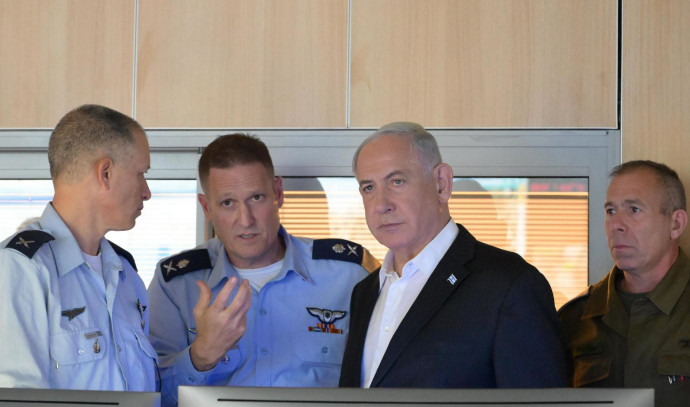
Four out of five Jewish Israelis believe the government and Prime Minister Benjamin Netanyahu are to blame for the mass infiltration of Hamas terrorists and the massacre of Israel’s South, a new Dialog Center poll released on Thursday found.
An overwhelming majority of 86% of respondents, including 79% of coalition supporters, said the surprise attack from Gaza is a failure of the country’s leadership, while a staggering 92% said the war is causing anxiety.
Furthermore, almost all of the respondents (94%) believe the government has responsibility for the lack of security preparedness that led to the assault on the South, with over 75% saying the government holds most of the responsibility.
The survey, which polled 620 Israeli Jews from across the country, also found that a majority of respondents believed Netanyahu should resign following the conclusion of Operation Shields of Iron.
A slim majority of 56% said Netanyahu must resign at the end of the war, with 28% of coalition voters agreeing with this view.
Israeli Prime Minister Benjamin Netanyahu and Defense Minister Yoav Gallant are both seen in the Knesset in Jerusalem. (credit: YONATAN SINDEL/FLASH90)
In addition, 52% of respondents also expect Defense Minister Yoav Gallant to resign.
In addition, most respondents also noted that they do not trust the government to lead the war on Gaza, though the poll was held prior to former defense minister Benny Gantz joining an emergency unity government on Wednesday evening.


HELSINKI/BRUSSELS: NATO will discuss damage to a gas pipeline and data cable running between member states Finland and Estonia, and will mount a “determined” response if a deliberate attack is proven, NATO Secretary General Jens Stoltenberg said on Wednesday.
Damage to the Balticconnector pipeline and telecommunications cable was confirmed on Tuesday after one of the two pipeline operators, Finland’s Gasgrid, noted a drop in pressure and possible leak on Sunday night during a storm.