
Day: October 12, 2023
By Tho Bishop
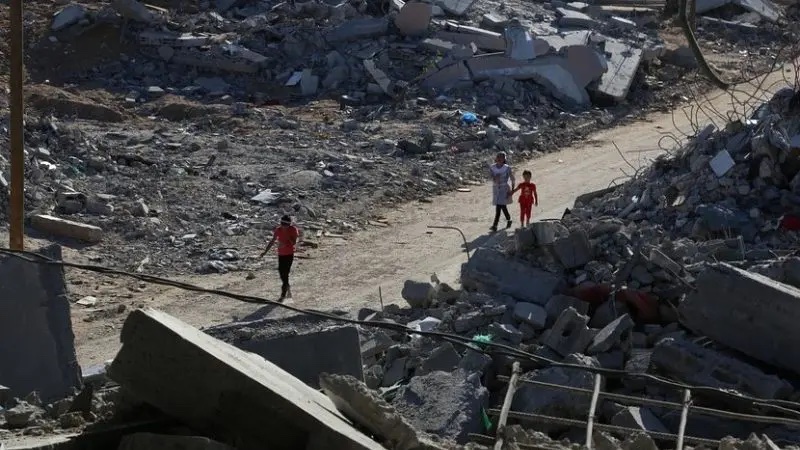
This past weekend, the world witnessed absolute barbarism play out as Hamas agents brutally targeted Israeli civilians. The State of Israel, suffering from a historic failure to protect its residents, has predictably responded with major military operations in the Gaza strip. The result is a growing regional conflict fueled by historic feuds beyond the scale of traditional geopolitical considerations.
Add to this the ongoing war in Ukraine, a less-talked-about conflict between Armenia and Azerbaijan, and the threat of renewed fighting between Kosovo and Serbia, and the world is witnessing the breakdown of a global order established by modern assumptions that are being exposed.
In the later part of his career, Murray Rothbard identified the Whig theory of history as one of the most dangerous intellectual traps in existence. The general belief that society is in a constant march toward progress, that newer ideas reflect a natural upgrade over past wisdom, has been accepted by broad segments of the modern intellectual class. As Hans-Hermann Hoppe has critiqued, this theory underlies a number of modern assumptions about the world.
Whig hubris has resulted in a global order that has sowed the seeds of barbarism. The triumph of fiat money has created an economic system that enriches states and the politically connected at the expense of the rest of society. Technocratic public health initiatives created authoritarian states in the face of a global pandemic. Politically driven climate hysteria has prompted a policy agenda that is gambling away human well-being on utopian promises of a “green energy” revolution.
The deadliest of these false assumptions has been the modern “rules-based international order” guided by post–Cold War US hegemony. The triumph of “liberal democracy” over the Soviet Union fueled the hubris of Washington and its allies—their belief that the world could be shaped to fit into comfortable models, that concerns over ethnicity, religion, and the past could be transformed by the power of economics and intellectual change.
By this thinking, Afghanistan and Iraq could be transformed with just the right mix of warfare and pocket constitutions. Russian ambitions could be blunted with the right mix of regional defense treaties and economic relations. China would adopt Western liberalism with enough global trade.
Underlying these assumptions of US power has been the triumph of the dollar, which has financed the American empire and become the foundation of the global economy. With US debt as the most reliable financial asset in the world, America has enjoyed the privilege of incredible soft power in dealing with major nations, allowing its military focus to be directed at nonstate terrorist groups and “rogue state” allies.
This belief in a global order backed by American economic and military power, limited only by political will, has influenced how other global actors have operated. Foreign lobbies have dedicated vast resources to Washington. While the influence of the Israel lobby is the most visible, with politicians vocally pledging their allegiance to the Jewish state, since 2016 nations like Qatar, Saudi Arabia, China, Japan, South Korea, and others have also invested hundreds of millions of dollars in influencing American policy.
Assumptions of American support have undoubtedly influenced nations’ strategic decisions about their own security. Ukraine surrendered Soviet nuclear weapons in exchange for Western security promises, which for a long time may have served as a potent deterrent to a Russian invasion. The government of post–World War II Japan demilitarized in exchange for its own security guarantees from the United States. With rising concerns over China, Washington and Tokyo have pivoted toward rearmament.
Decisions made by the State of Israel have also been guided by false assumptions, such as the belief that militant movements would be easier to delegitimize internationally than other political actors seeking to create a Palestinian state. As the Wall Street Journal reported in 2009:
“Hamas, to my great regret, is Israel’s creation,” says Mr. Cohen, a Tunisian-born Jew who worked in Gaza for more than two decades. Responsible for religious affairs in the region until 1994, Mr. Cohen watched the Islamist movement take shape, muscle aside secular Palestinian rivals and then morph into what is today Hamas, a militant group that is sworn to Israel’s destruction.
Instead of trying to curb Gaza’s Islamists from the outset, says Mr. Cohen, Israel for years tolerated and, in some cases, encouraged them as a counterweight to the secular nationalists of the Palestine Liberation Organization and its dominant faction, Yasser Arafat’s Fatah.
A look at Israel’s decades-long dealings with Palestinian radicals—including some little-known attempts to cooperate with the Islamists—reveals a catalog of unintended and often perilous consequences. Time and again, Israel’s efforts to find a pliant Palestinian partner that is both credible with Palestinians and willing to eschew violence, have backfired. Would-be partners have turned into foes or lost the support of their people.
Israel’s experience echoes that of the U.S., which, during the Cold War, looked to Islamists as a useful ally against communism. Anti-Soviet forces backed by America after Moscow’s 1979 invasion of Afghanistan later mutated into al Qaeda.
As Israeli officials have acknowledged, American military support, which became a staple of US foreign-aid military strategy following the Six Days War in 1967, has influenced Israel’s aims for Palestinian relations.
Similarly, as the WSJ article mentions, the belief that nonstate Islamic groups would be easier to control than functional states has been an ongoing and consistent blind spot for Washington. The toppling of Saddam Hussein and Muammar Gaddafi created power vacuums in the Middle East that were filled by the Islamic State and other jihadist groups.
Recognizing these government blunders of the past should not be confused with providing moral cover for the horrific consequences suffered by the citizens of these states. Understanding the cause and effects of state action on innocent people is important in shaping future decisions so as to avoid such disasters in the future.
The unfortunate reality is that the global order—one built on the assumption that American blood and treasure can single-handedly maintain stability and peace—is under severe stress. The poor foundation is beginning to crack. In September 2001, the US debt reached $3.4 trillion. In 2023, it stands at over $34 trillion. The Pentagon’s virtually nonexistent oversight of the American military budget has contributed to gross malinvestment and misallocation of resources. In modern conflict, million-dollar weapons have been destroyed by cheap drones, not a small concern as US aircraft carriers head to the Middle East.
The breakdown of the old order also means that we should expect new behavior from states adapting to the times. Israel, for example, has ended previous campaigns against Hamas following international pressure resulting from civilian casualties, which has shaped how the Islamic group positions its military and arms. Will similar condemnation come following the most recent attack? Will Israel care? What paths exist for deescalation?
Additionally, the hubris created by the presumption of dollar dominance, which has factored in the weaponization of the dollar, has sparked a blowback of its own. The BRICS nations have recently called for alternatives to the dollar for foreign trade, and even the Bank of England has raised concerns about the power and influence the dollar gives Washington. Concerns about China and supply chain disruptions due to both covid and the Ukraine-Russia war have sparked renewed concerns over how close international trade relations should be, which could further impact economic globalization.
Domestically, Western nations are also being stressed by another false assumption of modern states—the deemphasis of a common ethnic, religious, and cultural background as a building block of society relative to immigration policy. Large rallies in support of the “decolonization” of Israel, fueled by social justice ideologies that equate the cause of Hamas with the perceived victimization of other minority groups, have sparked new concerns about social stability and order. How modern nations, whose most shared experience is becoming a common tax collector, will fare in a time of crisis will continue to be a potent political question going forward, as witnessed by the growing populist movements in Europe.
History shows that periods of crisis can radically transform the global order. Following World War II, Ludwig von Mises called for a global embrace of sound money, government restraint, and cultural conservatism. Unfortunately, the West embraced the ideologies of inflationism, interventionism, and cultural leftism instead. Without a correction, Mises warned, assumptions of ever-improving material well-being would be found wanting.
As he wrote in Planning for Freedom, “It is not true that human conditions must always improve, and that a relapse into very unsatisfactory modes of life, penury and barbarism is impossible.”
The recent attacks in Israel are a horrific reminder of how lightly guarded civilization is from savagery.
About the author: Tho is Editorial and Content Manager for the Mises Institute, and can assist with questions from the press. Prior to working for the Mises Institute, he served as Deputy Communications Director for the House Financial Services Committee. His articles have been featured in The Federalist, the Daily Caller, Business Insider, The Washington Times, and The Rush Limbaugh Show.
Source: This article was published by the Mises Institute
How can believers in one religion understand those parts of another religion that seem the opposite of their own religion?
We know how Christian missionary battles against Judaism and Islam reached new heights of hostility starting in Spain in the tenth century; that led Muslims like Ibn Hazm to respond extremely fiercely. Religious truth in Europe, and then in the Middle East, became a zero sum game: anything positive said about another religion was seen as weakening your own side.
The goal was not to modestly try to harmonize various religious perspectives of the one and only God; but to self-righteously exaggerate religious differences, well beyond any reasonable understanding of the two sides.
In a zero sum game any value or true spiritual insight I grant to another scripture somehow diminishes my own. This view was the result of the specific influence of Aristotle, who questioned where European freshwater eels came from, and decided rationally that they sprang up spontaneously from the mud, and Greek philosophy’s general emphasis on the logic of the excluded middle. Something is either true or it is false. There is no other option. If two propositions contradict one another, one or both of them must be false. They cannot both be true.
If one believes that there is only one God who is revealed by many different inspired prophets, then we should be able to learn more about God’s will by gaining insights into our own unique revelation, from other revelations of that one God. Since all monotheistic scriptures come from the one and only God, we should view other scriptures as potentially enriching our understanding and appreciation of our own scripture.
But in the Middle Ages almost all readers thought of revelation as a zero sum sport like tennis; rather than a multiple-win, co-operative sport like mountain climbing. This would mean that if my religion is true, yours must be false. In modern terms, light could not be both a particle and a wave. Yet we now know that light is indeed both a particle and a wave, and at the same time.
This medieval situation did not improve much in modern times. In the last two centuries university academics have written many studies of comparative religion which they claim are objective and not distorted by their religious beliefs.
Unfortunately, academics who treat other religions academically usually do not believe that other scriptures are actually Divinely inspired. Indeed, many academics do not believe that even their own sacred scriptures are Divinely inspired. They use the same kinds of explanations to understand a revealed religion that they would use to explain secular history and literature.
As a rabbi I follow a different model. For example, the Mishnah (an early third century compilation of the oral Torah), states, “Adam was created as an individual to teach you that anyone who destroys a single soul, Scripture imputes it to him as if he destroyed the whole world.” (Mishnah, Sanhedrin 4:5)
And the Quran states, “One who kills a human being, unless it be for murder or for spreading mischief in the land, would be as if he slew the whole people, and if any one saved a life, it would be as if he saved the life of the whole people.” [Quran, 5:32]
Academics explain the similarity of the two statements by assuming that since the Jewish statement is four centuries earlier than the Qur’anic one, Muhammad must have heard it from a Rabbi or other educated Jew in Medina.
But I believe Prophet Muhammad was an agent of God who confirms the Torah of Prophet Moses. Muhammad has no need to learn this statement from another human being. Academics might reply that the statement is not found in the written Torah; it appears in the oral Torah written by the Rabbis in the Mishnah more than 1,000 years after Moses.
But the Rabbis maintain that the Mishnah is part of the oral Torah that was passed down from Moses through many generations just as hadiths have been passed down orally through the generations. Indeed, the Quran itself introduces this statement as follows, “It is because of this that We ordained for the Children of Israel “one who kills a human being … [Quran, 5:32]
No prophet of God needs to be informed by another human what should be written in Holy Scripture. God is the source of all Divine inspiration. There are several verses in the Qur’an that mention things from the oral Torah. My perspective is that prophets and Holy Scriptures cannot in reality oppose one another because they all come from one source. Prophets are all brothers; it is as if they have the same “father” (God) and different “mothers” (motherlands. mother tongues, nations, cultures and historical eras).
All of these factors produce different rituals and legal systems, but their theology can differ only in details. Religions differ because the circumstances of each nation receiving them differ. Where sacred Scriptures differ they do not nullify each other; they only cast additional light on each other.
Take for example, the prophet and priest Ezra. Was he a prophet and priest like Prophet Ezekiel, or a “son of God” like Jesus?
A Jewish convert to Islam Al-Samawʾal ibn Yaḥyā al-Maghribī (d. 1175) accused Ezra of interpolating stories such as Genesis 19:30-38 into the Bible in order to sully David’s origins and to prevent the rule of the Davidic dynasty during the second Temple. A century earlier Ibn Hazm,[iii] an Andalusian Muslim scholar, explicitly accused Ezra of being a liar and a heretic who falsified and added interpolations into the Biblical text.
Ezra was a good target to attack since he is specifically mentioned in the Quran as ‘Uzair: “The Jews call ‘Uzair a son of Allah, and the Christians call Messiah (Jesus) a son of Allah. That is a saying from their mouth; (thus) they only imitate what the unbelievers of old used to say (pagans who believed their many gods had many divine or semi-divine children). Allah’s curse be on them: how they are deluded away from the Truth!” [Quran 9:30]
Now there are a half dozen different places in the Qur’an where the Christians claim that Jesus is the “son of God” is refuted and denied. For example, “Jesus son of Mary, did you ever say to people, ‘Worship me and my mother as gods beside Allah?’ and he will answer, ‘How could I say what I had no right to say?’ [Quran, 5:116] Also, “The Messiah, Jesus son of Mary, was no more than a Messenger of Allah…do not say “Trinity.” Stop saying that.” [Quran, 4:171]
And general statements like: “Those who say, ‘Allah has begotten a son’ have no knowledge about it, nor did their forefathers; this is a monstrous word that comes from their mouths. They utter nothing but a lie.” [Quran 18:4,5] [Also see Quran 5:72-75, and 19:30]
Indeed, the verse that follows 9:30 (above) specifically applies to Jesus: “They take their priests (ahbar) and their monks to be their Lords in derogation of Allah, and (take as their Lord) the Messiah, the son of Mary; yet they were commanded to worship but One God: there is no god but He. Praise and glory to Him: (Far is He) from having the partners they associate (with Him).” [Quran, 9:31]
So how shall we understand the Quran’s statement: “The Jews call ‘Uzair a son of Allah”?
Al-Tabari and Abdallah ibn Ubayd state that only one Jew (Pinhas) viewed Uzayr as a “son of God.” Ibn Abbas and Qurtubi say only four Jews, whose names they record, believed Uzayr as a “son of God.” Ibn Hazm said that just a small group of Jews in Yemen worshipped ʿUzayr as a “son of God” in some remote period.
Since the Jews of Yemen, who have lived there since the third or fourth century, do have an old tradition not to name their children Ezra, perhaps there was such a small heretical sect that later generations wanted to forget about.
But most Christians to this day, proudly proclaim that they do indeed worship Jesus, as “the Son of God.” Jews however, have always vehemently denied that they worship any partner or other deity except the one and only God. So how can we understand the difference between the two seemingly parallel statements in ayah 9:30?
There is a Sunan Al-Tirmidhi hadith which says that the Jews worship their Rabbis. One of the Companions said that this is not true. Then Muhammad said that they (Jews) accept what their Rabbis say over the word of God; so in this way they worship them. This hadith provides an important clue.
Christians actually do venerate and pray to both Jesus and his mother Mary; but only some Jews figuratively venerate their rabbis as Muhammad says because, “They accept what their Rabbis say over the word of God, so in this way they worship them.”
This hadith is correct. Orthodox Jews believe in both a written Torah and an oral (unwritten at first like the Hadith) Torah which has been handed down for over 3,200 years, ever since Sinai. They often observe Judaism according to the rabbinic interpretation of this oral Torah.
For example, the Torah states that the new Jewish year starts: “On the first day of the seventh month you shall have a holy convocation. You shall not do any ordinary work. It is a day for you to blow ram horns.” (Torah Numbers 29:1)
This one-day holy day was turned into a two-day holy day some 17-18 centuries ago, when most Jews lived outside the Land of Israel and could not be sure exactly when the lunar new year calendar began. A similar issue exists for Muslims in determining the start of Ramadan, which is why in some years two different days mark the beginning of Ramadan in various parts of the world.
Thus, different circumstances produce different rituals and legal systems, but basic theology can differ only in small and unessential details. As the sage of Konya, Jalal al-Din al-Rumi, says, “Ritual prayer might differ in every religion, but belief never changes.” (Fihi Mafih 49)
So we should emphasize our common beliefs and respect our particular differences because,
“To each among you, We have prescribed a law and a clear way. If Allah willed, He would have made you one nation, but (He didn’t in order to) test you in what He has given you; so strive (compete) as in a race to do good deeds. You all will return to Allah; then He will inform you about that in which you used to differ.” (Qur’an, 5:48)
Thus, I agree with the Qur’anic religious principle of religious pluralism: lana dinuna walaka dinuka, (in Hebrew lanu dinu valakha dinkha) for us is our religion and for you is your religion. (Qur’an 109:6)
The conflict between Israel and Hamas has escalated to a new level of violence, as Iran warns that the war may spread to other fronts in the region. Israel has continued to bombard the besieged Gaza Strip, killing more than 1,200 Palestinians and injuring thousands more.
Hamas has fired rockets into Israel, killing at least 25 Americans and taking hostages. The humanitarian situation in Gaza is dire, as the only power station has stopped working and more than 330,000 people have been displaced.
Iran’s Foreign Minister Hossein Amir-Abdollahian arrived in Beirut on Thursday and met with representatives of Hamas and the Palestinian Islamic Jihad. He said that if Israel’s attacks on Gaza do not stop, the war may open on “other fronts” – an apparent reference to the Lebanese group Hezbollah, which is allied with Tehran. Hezbollah has been involved in several clashes with Israel along Lebanon’s southern border in recent weeks. Amir-Abdollahian also visited Iraq and is expected to visit Syria later this week as part of a regional tour.
 In a heated session at the International Court of Justice (ICJ) on Thursday, longstanding adversaries Armenia and Azerbaijan clashed over allegations of “ethnic cleansing” in the Nagorno-Karabakh region, AFP reports. Yerevan accused Baku of carrying out these actions, prompting a vehement response from Azerbaijan, denouncing the charges as “unfounded.”This confrontation occurred just weeks after Azerbaijan launched a rapid military offensive, gaining control of …
Categories