
Day: October 11, 2023
By Dawit Yohannes, Meressa Kahsu, and Andrews Atta-Asamoah
Peacekeeping operations have played a crucial role in stabilising fragile situations across Africa for over 60 years. More than 13 United Nations (UN)-led missions in Africa and about 27 African-led peace support operations since 2000 have incurred billions of dollars annually and cost thousands of peacekeepers’ lives.
While these missions haven’t met all their host countries’ expectations, they have helped prevent state collapse, notably in Somalia, Mali and the Democratic Republic of the Congo (DRC).
But are peacekeeping missions fulfilling their mandates? In Mali, persistent insecurity and the demands of the 2020 coup leaders led to the withdrawal of UN peacekeepers. Continuing violence in eastern DRC, despite the UN Organization Stabilization Mission in the Democratic Republic of the Congo (MONUSCO) being in the country for over 20 years, fuelled similar calls. Funding challenges and a political standoff informed the push to end the African Union (AU) Transition Mission in Somalia (ATMIS).
In all three countries, calls for withdrawals have been driven by local and international political pressures, unmet domestic expectations for improved security and donor funding fatigue. This raises questions not only about peacekeeping in Africa, but the effectiveness of the global peacekeeping architecture and how public perceptions regarding its role are managed.
The withdrawal of peacekeepers raises vital questions about the future of Africa’s security management
UN Secretary-General António Guterres’s recent report on the overall performance of UN peacekeeping operations acknowledged these questions. It asked whether the missions were fit for purpose and why there was a gap between their mandates and what they deliver.
The implications of withdrawing peacekeepers raise vital questions about the future of security management in Africa. Does the continent have the capacity to fill the inevitable security vacuum? Current developments particularly in Somalia, Mali and the DRC suggest that removing peacekeepers would create a significant security gap, leading to more violence and worsening humanitarian conditions.
Since the UN Multidimensional Integrated Stabilization Mission in Mali (MINUSMA) withdrawal began last July, insecurity has surged. Conflict between militants and the national army has reignited, and militant attacks have increased. Mali’s fragile security situation could regress to 2012 levels when jihadists tried to seize several key towns, including Timbuktu.
Violent clashes are also rising in eastern DRC. Over 600 people died in attacks by armed groups between April and June 2023. In addition to MONUSCO and the SADC Force Intervention Brigade, the East African Community military deployment in 2022 hasn’t resolved the situation.
National and regional efforts haven’t matched the severity of threats following peacekeepers’ withdrawal
In Somalia, al-Shabaab has intensified its terror campaign against civilians, government and peacekeepers since ATMIS began its drawdown in June 2023. Recent incidents include a devastating truck bomb in Beledweyne, resulting in 18 deaths; suicide bomb attacks in Mogadishu that killed at least seven civilians; and an ambush on Ethiopian troops.
The AU Peace and Security Council recently raised concerns about al-Shabaab’s potential to exploit security gaps following ATMIS’ withdrawal. It was also worried about the premature downsizing and shutdown of AU peace support operations, due to financial constraints, and the closure of several UN peacekeeping operations.
AU Commission Chairperson Moussa Faki Mahamat recently underscored this point, referring to the twin attacks on a military base and a passenger boat in Mali while MINUSMA was leaving the country. He said the situation highlighted the need for comprehensive, sustainable solutions to prevent violence in the Sahel from merging with Lake Chad region clashes or expanding further into West Africa.
Worsening insecurity after peacekeepers depart shows the need for circumspection in demands for troops to leave. There is also an urgent need to develop robust alternatives to fill the resulting security vacuum. Thus far, national and regional efforts have not matched the severity of the threats following the peacekeepers’ withdrawal.
Political rather than security considerations have influenced calls for the withdrawal of peace missions
The current surge in domestic military operations in Somalia, deployment of regional forces like the East African Community in DRC, and use of entities like Wagner in Mali have been inadequate. And despite nearly two decades of investments, the AU still hasn’t used the African Standby Force for various reasons, including the lack of political will to deploy. And even if troops were mobilised, funding issues would hinder their swift deployment and sustainability.
The inability to manage consequences shows that political – rather than security – considerations influenced calls for peace missions to be withdrawn. The timing of these departures highlights a new security reality in which non-state actors continue their attacks while responses remain insufficient.
Sober reflections are needed. First, the UN–AU dialogue on peacekeeping should acknowledge that Africa requires more capacity to fill the security gap following drawdowns. Calls by some African leaders and communities for peacekeepers to leave shouldn’t lead to international disengagement from those situations or abandoning Africa to fend for itself.
Innovative continental and regional approaches must be considered. A UN Security Council framework resolution to guide the UN’s funding of AU peace support operations through UN-assessed contributions is also urgent.
Second, now is the time for frank and open discussions between the UN and AU, as called for by the New Agenda for Peace and Guterres’s recent UN peacekeeping report. The AU must urgently review and enhance its African Peace and Security Architecture framework to prepare the African Standby Force to fill the security gap. And the UN–AU dialogue should go beyond financing peace missions to include revisiting the military-heavy approach to peacekeeping.
About the authors: Dawit Yohannes, Project Manager and Senior Researcher and Meressa Kahsu, Senior Researcher and Training Coordinator, Training for Peace, and Andrews Atta-Asamoah, Head, Africa Peace and Security Governance, ISS Addis Ababa
Source: This article was published by ISS Today

By Misha Monteiro-Benson
For over a decade, Kazakhstan has been experiencing a ‘brain drain’ of skilled and educated workers in many key industries. This may be starting to change.
Kazakhstan’s economic growth, propelled by oil and gas, has slowed in part due to fluctuations in global commodity prices. The government has attempted to diversify the economy to promote sustainable growth. But inadequate tertiary education has left a massive skills deficit, while many skilled workers have sought greener pastures abroad.
Kazakh officials have attempted to stem the brain drain with policies like the Bolashak program, which provided scholarships to Kazakhs to acquire skills at foreign universities. The program had some success, but failed to fill gaps in key sectors like information technology. Some scholars also chose to not return to Kazakhstan for personal or professional reasons.
Unexpectedly, Russia’s invasion of Ukraine has resulted in massive individual and corporate migration from Russia to Kazakhstan. This is creating a new opportunity for a sustained ‘brain gain’ and economic upgrade. But Kazakh policymakers risk missing this opportunity due to an over-cautious balancing of conflicting policy goals.
Since its invasion of Ukraine, Russia has experienced three large waves of emigration. The first wave included tech workers and vocal opponents of the war fleeing persecution. This began a trend of Russian small and medium enterprises moving to Kazakhstan, with its largest city Almaty a favourite destination. Between January and September 2022, the number of Russian companies in Kazakhstan increased by around 4000.
A second emigration wave occurred around July 2022. This comprised those who planned to leave at the outset of the war but required longer periods of preparation, such as people with less mobile businesses and families with school-aged children.
A third wave came after Russian President Vladimir Putin’s partial mobilisation order on 21 September 2022. Around 98,000 Russians fled to Kazakhstan the week following the mobilisation.
Reactions from Russian officials during the first two waves were muted, even as state media pundits called the emigres (relokants) traitors. The third wave triggered more ire. Russia introduced long prison sentences for ‘draft dodgers and those who surrender willingly’. Around 700,000 Russians fled in the third wave, mostly men eligible for the partial mobilisation.
A substantial number of the relokants are fighting-age men with their families and partners. Many of them are skilled workers in fields like information technology, medical services and creative industries.
Before the war, many parts of northern Kazakhstan faced severe shortfalls of skilled labour, which eased thanks to the Russian migrants. One district hospital in Ayagoz, Abai Province, advertised 20 job vacancies for Russian doctors, offering them ‘comfortable housing’ as an incentive.
Many migrants also naturally flocked to Kazakhstan’s main cities, Almaty and Astana, contributing to a booming real estate market. Rents for one-room apartments in middle-income areas of Almaty spiked from US$415 to US$1040 per month between March and July 2022.
Kazakh policy on relokants must balance Kazakhstan’s domestic and foreign policy priorities. Given Russian military intervention in cities like Zhanaozen during nationwide unrest in Kazakhstan in 2022, Kazakh leaders must be careful to avoid upsetting their northern neighbour. Many Kazakh institutions retain legacies of Soviet rule, and Russian remains Kazakhstan’s main working language.
But Kazakhs’ sentiments towards Moscow have deteriorated since the invasion of Ukraine. Six months after the initial invasion, the number of Kazakhs who believed Russia would invade Kazakhstan had doubled. Anti-war sentiment was coupled with sympathy for ordinary Russians fleeing its consequences.
A backlash to Russian immigration began to surface on Telegram and internet chat boards around the middle of 2022. A poll in December 2022 revealed that 38 per cent of Kazakhs opposed the influx of migrants. The poll suggested that the growing opposition stemmed from concerns over rising costs and a fear of social destabilisation by immigrants. The poll also indicated that 30 per cent of respondents feared that ‘supporters of the Russian world’ were infiltrating Kazakhstan in an organised attempt to destabilise the country.
Traditionally, the Kazakhstan–Russia border was relatively open, as both countries belong to the Eurasian Economic Union. In December 2022, the Kazakh government revised its border regulations, prompting warningsthat authorities were making living long-term in the country unviable for many relokants. Incoming visitors from the Eurasian Economic Union were no longer able to stay in Kazakhstan for more than 90 out of 180 days. This forced Russian migrants to get residence permits or other formal arrangements.
Of those unable to find stable employment in Kazakhstan, many Russians who entered Kazakhstan have instead registered to stay in Uzbekistan without great difficulty. Still, Kazakh policymakers continued tightening immigration policy in 2023 by requiring knowledge of Kazakh language, history and culture as criteria for naturalisation.
In 1991, when Kazakhstan became independent, Kazakhs made up only 40 per cent of the population, while Slavs made up 44 per cent. In 2023, Kazakhs make up a majority of the population, but Russian influence is still pervasive. Domestic political and interethnic sensitivities restrict the government’s ability to accommodate migrants.
Regardless of the justification for the government’s immigration tightening, the wartime wave of relokants offers an influx of fresh talent. This represents Kazakhstan’s best chance in decades to overcome slowing economic growth and the dominance of oil and gas.
About the author: Misha Monteiro-Benson is Research Assistant at the Middle East Institute, National University of Singapore.
Source: This article was published by East Asia Forum
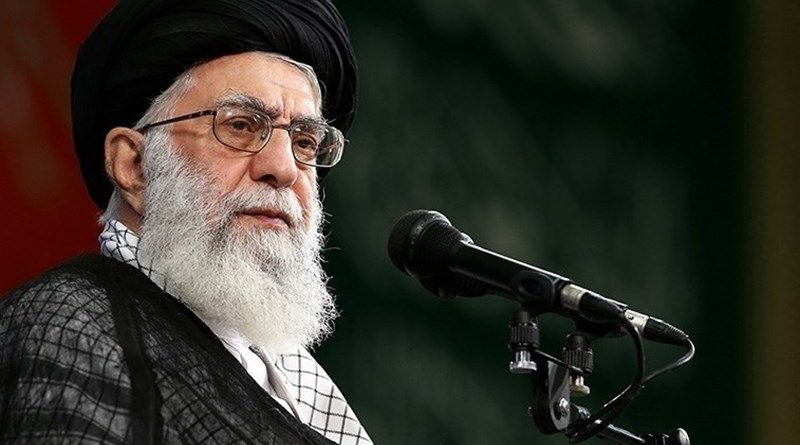
Amidst growing speculations in the US about Tehran’s involvement in the Hamas’ attack on Israel last Saturday and the reported move by the Pentagon to despatch by the weekend a second aircraft carrier to the East Mediterranean, Iran’s Supreme Leader Ayatollah Ali Khamenei has spoken for the first time on the explosive situation.
Khamenei spoke in Tehran on Tuesday in his capacity as the Commander-in-Chief of Iran’s Armed Forces choosing the occasion of the annual joint graduation ceremony for the cadets of Iran’s military academies to dwell on the topic.
In an unprecedented move, excerpts of Khamenei’s remarks have since been relayed in Hebrew to the Israeli audience.
Khamenei’s statement warns Israel against any rash moves that it may come to repent later. Khamenei anticipated Israel’s “irreparable defeat.” He said “the killing Palestinian men, women, children, and elderly, desecrating the al-Aqsa Mosque, beating worshipers, and letting loose armed settlers to attack the Palestinian people are among the atrocities committed by the Zionist regime.”
Khemenei made three key points in his speech:
- First, Israel is on the wrong path by embarking on such a war against Gaza. “The rulers and decision-makers of the Zionist regime and their supporters should know that these actions will bring a greater disaster upon them, and the Palestinian people, with a firmer determination, will slap their hideous faces harder in response to these crimes.”
- Second, the rumour “spread by the elements of the Zionist regime and its supporters” about the involvement of “non-Palestinians (read Hezbollah) including Iran” in the recent events is “nonsense.”
- Three, most important, Khamenei prefaced his remarks by describing Iran’s armed forces as “the steel fortress of security, honour and national identity.” He recalled Iranian armed forces’ brilliant record in the eight-year war with Iraq, which was also a world war, and later, in thwarting the US’s “wicked plot” to create ISIS and destabilise the region, Iran being the ultimate target.
Khamenei was all but explicit that Iran’s armed forces are in a state of readiness and have the capability to defend the country if push comes to shove. That said, he also made a nuanced remark that “The entire Islamic world is obliged to support the Palestinian nation.”
The bottom line is, in Khamenei’s words, “From the military and intelligence aspects, this defeat (of Israel) is irreparable. It is a devastating earthquake. It is unlikely that the usurping regime will be able to use the help of the West to repair the deep impacts that this incident has left on its ruling structures.”
Indeed, Israel faces a serious existential crisis due to the disunity within and the irrelevance of its military prowess to meet the challenges of the hybrid war it is experiencing. Iran, therefore, sees that the advantage lies with the axis of resistance.
Interestingly, Egypt has disclosed that it had warned Israel about an impending large-scale attack by Hamas but the latter failed to act on it. To be sure, there is going to be stocktaking within Israel at some point. Prime Minister Netanyahu will be hard-pressed to explain. On the other hand, typically, he will try to cover up and whip up xenophobia with war cries to distract attention.
In the big picture, it is inconceivable that given the catastrophic consequences, the US will dare to attack Iran. But the temptation will be there to roll back the Hezbollah in neighbouring Lebanon using the present opportunity and, second, seriously destabilise the Syrian situation while Russia remains preoccupied in Ukraine — that is to say, make a desperate attempt to undo the gains of the so-called Axis of Resistance led by Iran through the past decade and more. Therefore, there is no question that this remains a potential flashpoint as far as Iran is concerned, and Tehran will remain vigilant about not losing ground in the Levant.
The heart of the matter is that the US and Israel are confronting today a vastly different Iran than they have been used to through the past four decades and more since the 1979 Islamic Revolution. Consider the following:
- Iran is no more in isolation and it has successfully overcome the Western sanctions;
- BRICS membership is a game changer for Iran’s integration into the global community.
- Iran is a threshold state in its nuclear weapon programme, enjoying strong relationships with Russia and China and can even tilt the balance in the co-relation of forces in West Asia and neighbouring regions and even internationally.
- Iran is no longer entrapped in a debilitating regional rivalry with Saudi Arabia and the easing of the conflict situations in Yemen and Syria creates space for Tehran to manoeuvre on the diplomatic arena. (Iran’s foreign minister is actively coordinating with his counterparts in the region.)
All of this enables Iran to move to the next phase of development and advance its global presence and expand its influence. Suffice to say, Iran is steadily outstripping Israel in the power dynamic of the region. Being a much smaller country with an uncertain future which is called upon to adjust to the new reality of US retrenchment, Israel is no longer in the same league as Iran. The Hamas operation exposes this geopolitical reality.
A protracted war in Gaza will be a colossal drain on Israel’s resources and can only weaken the country. Its outcome remains anybody’s guess. But on the other hand, Israel believes that it has no diplomatic options, either. On top of it, if Hezbollah enters the fray, all that happened last Saturday in Israel will seem a picnic. With its massive stockpile of advanced missiles — close to 200,000 rockets trained on virtually every nook and corner of Israel — Hezbollah has the capability to destroy Israel comprehensively.
Principally, the deployment of two US aircraft carriers in Eastern Mediterranean is intended to send a strong message to Hezbollah. On the other hand, it also highlights that in addition to Ukraine and Taiwan, the West Asian theatre will continue to engage the US for a foreseeable future. If this is not imperial overstretch, what is it? Something has to give way.
These are early days. Meanwhile, the EU’s united front on Israel’s war with Hamas is already showing its first cracks. On Monday, within hours of the announcement that the EU would put €691 million in aid to the Palestinian Authority under review, with all payments immediately suspended, foreign policy chief Josep Borrell stepped in to retract, saying the Commission “will not suspend the due payments” as “punishing all the Palestinian people” would have “damaged the EU interests in the region and would have only further emboldened terrorists.”
Disagreements have appeared between EU countries on the conflict. Historically, Israel-Palestine is one of the most divisive issues in the EU. Several countries — including Ireland, Luxembourg and Denmark — sought a reference to de-escalation in the EU joint text on the conflict, which was opposed by others. France, the Nordic states, Belgium and Ireland traditionally support a position that is seen by some other countries as too pro-Palestinian.
Quite obviously, with hardly any country in the Global South — other than a handful of cases such as India — rushing in to express “solidarity” with Israel in its apocalyptic war with Gaza and the contradictions within Israel waiting to implode sooner rather than later, Tehran is justified to believe that it is on the right side of history.
This article was published at Indian Punchline
By Samuel Kramer
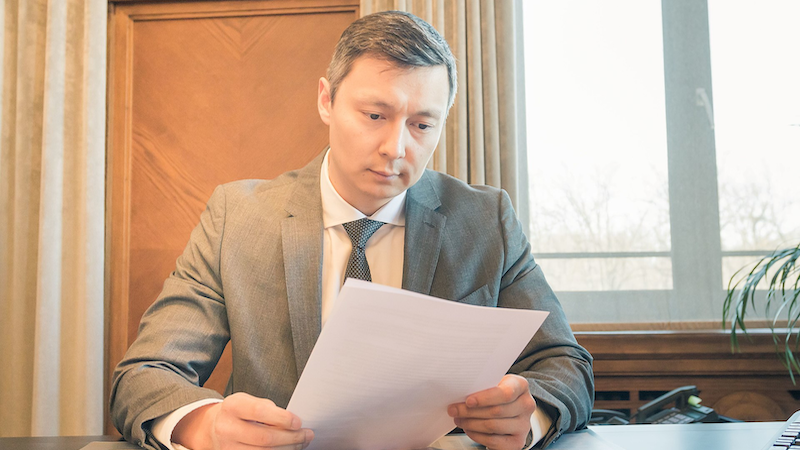
(FPRI) — In the September 2023 Center Party leadership elections, members chose Tallinn Mayor Mihhail Kõlvart over former Health Minister Tanel Kiik as party chair. Center Party rose to prominence in the 1990s by forging a coalition of disaffected citizens, Russophones in particular. Since 2019, a string of election defeats and scandals have prompted the party leadership to re-evaluate its strategy. The Russian-speaking Kõlvart’s victory suggests that the Center Party is refocusing on Russophone voters, its main constituents, by melding social conservatism and syncretic economic policy. This article outlines Center’s rise to power, its tumultuous tenure on Toompea Hill leading to a swift fall from grace, as well as a future direction for Estonia’s oldest political party.
Foundations of Success
The Center Party’s existence in the Estonian political firmament is remarkable for its longevity. Kõlvart is only the third Center Party leader. Edgar Savisaar founded the party in 1991 on the basis of the pro-perestroika Popular Front of Estonia. After resigning as the country’s first post-communist prime minister in early 1992, he railed against his successors’ free-market reforms, forging a coalition of the dissatisfied. Between 1995 and 2023, Center consistently earned high vote shares in Estonia’s parliamentary elections. It garnered particular attention from exurban residents, who resented the economic advantages marketization brought the cities. Savisaar also cooperated with the country’s Russophone minority, promising to preserve the Russian language’s status in public life if elected. The party became a major opposition force by drawing from both ethnic Estonians and Russophones unhappy with privatization, uniting them around common resentments. In the late 1990s, it gained majorities on the Narva and Tallinn city councils.
Center’s long stints in power presented opportunities for graft. Indeed, Savisaar was charged with corruption in 2015. The same year, Jüri Ratas replaced Savisaar as Center Party head. The new leader’s background differed from Savisaar’s. While Savisaar served as a Communist Party functionary for decades, Ratas’ father, Rein, belonged to the pro-independence Congress of Estonia, joining the Center Party only in 1999. The younger Ratas’s views reflected his father’s outlook: He sought to forge Center into a mainstream party of government. When Jüri Ratas became prime minister in 2016, he emphasized his commitment to Estonia’s Euro-Atlantic alliances and proposed a progressive tax system. His moderate policies proved sufficiently popular to elicit admiration from abroad — Oxford Analytica praised Ratas’ statements as “a model of restraint.” At home in Estonia, the party’s shift to the middle frustrated long-time Russophone politicians: Yana Toom, long one of Center’s most popular candidates in the country’s Russophone-majority east, sparredwith Ratas, even proposing a separate electoral list for the Tallinn city council elections. “We are campaigning on those topics which became passé for the Centrists,” she announced at a press conference barely a year after Ratas took office. While the proposed second list never materialized, it hung darkly over Center’s unity.
Stagnation and Defeats
Center faced further dilemmas in 2019. After that year’s parliamentary elections resulted in a deadlocked parliament, Ratas agreed to form a tripartite coalition with the conservative Isamaa and far-right EKRE parties. Both parties largely campaigned among ethnic Estonians and promoted free market economics alongside ethnic nationalism. EKRE’s radical reputation damaged Ratas’ relationship with his multi-ethnic electoral base. The Russophone wing, fearing the new coalition would undo the policies favoring them, balked. Toom and her then-ally Kõlvart disagreed with the coalition’s composition, but did not impede its formation. When asked, Toom described EKRE as “a party growing out of — how to put this politely — the fears of Estonians.”
Moreover, the restrictive migration policies EKRE implemented during the COVID-19 pandemic aggravated the small farmers who comprised Center’s other electoral pillar. Center Party Health Minister Tanel Kiik’s softer approach to tackling the outbreak also hurt the coalition’s popularity. Although the economy fell only by 1.2%in the final quarter of 2020, the following year Estonia experienced the largest consumer price increase nationwide since 2018. Public dissatisfaction increased: 60% of Estonians surveyed disapproved of Kiik’s performance in early 2021. The final blow came in January 2021, when the Center Party-controlled Tallinn municipal government was implicated in a loan provision scandal with lender KredEx. Despite being cleared of wrongdoing, Ratas resigned and Center joined a coalition government led by the Reform Party’s Kaja Kallas.
Forming a coalition with the Reform Party further strained Center’s overall popularity. This new government lasted less than a year, breaking apart on June 3, 2022, when Prime Minister Kaja Kallas invited Isamaa and the Social Democrats to form a new government. The Reform and Center parties disagreed on how to counter inflation and Russia’s invasion of Ukraine. Center’s traditionally pro-Moscow sympathies were incompatible with the Estonian public’s support for Ukrainian self-defence, and economic populism was anathema to the free-market Reform Party. A further reason for the coalition’s collapse potentially lay in the Center Party’s continuing scandals. Its former education minister, Mailis Reps, was tried for embezzlement. Ongoing litigation over Reps’ case, which began in 2020, feeds media scrutiny of the party’s inner workings. Moreover, Center lost some urban strongholds in northeastern Estonia after the 2021 local elections. This defeat signalled the party’s weakness, providing the Reform Party a pretext for creating a new coalition. The Center Party’s ouster was followed by its rout in the March 2023 parliamentary elections, where Center lost almost half of its seats, mostly in Ida-Viru County (where Narva is located). The party’s most recent reversal appeared fatal.
The Center Party’s 2023 leadership contest displayed a party reeling from five years of turbulent coalition governments and electoral losses. Ratas’ plan to move the Center Party to the political middle and become a supra-ethnic party of power foundered on the party leadership’s scandals. Center’s next leader faced a choice: double down on redefining the party ideology, or rely increasingly on its current voter base.
Kõlvart’s Election and the Return of the “Russians”
The short and sharp 2023 leadership election campaign served as a referendum on Ratas’ leadership. The Ratas-Kõlvart divide spilled over from personalities into worldviews. As prime minister, Ratas hewed to a pro-Atlantic foreign policy. Kõlvart faces criticism for participation in the Bronze Soldier controversy and accusations of insufficient support for Ukraine. In the 2023 leadership election, Ratas lobbied heavily for Kiik, who served in both Center Party and Reform Party-led coalitions. “The party needs a new breath of life and a person who can unite and lead the party forward, who can work together inside and outside the party, and who is a credible candidate for prime minister,” Ratas explained in a subtle critique of two-term Tallinn mayor Kõlvart. Kiik thus positioned himself as Center’s young, mediagenic face. Kõlvart represented the party’s longstanding Russophone supporters, concentrated in the capital’s outlying districts and eastern Estonia.
Kõlvart responded to this challenge by attacking the party’s indecisiveness, implicitly targeting Ratas’ policies. The main problem facing Center, he explained, was that “the Center Party failed to convey to its voters in a precise and understandable way what our ideology is and for whom and what [we are acting].” In this mindset, the party needed to take deliberate, if sometimes controversial, positions to be noticed. Kõlvart reasoned, “What is needed is really serious structural change, and that needs to be addressed. It has to be recognized that change is needed.” The Ratas-era structures had to go. Concrete policies, he added, would also foster a loyal electorate. “It is possible to unite people through clear messages. Once you have people behind you, financial support will follow. It is simple mathematics,” statedKõlvart, suggesting his leadership would reinvigorate the party. The effort paid off: At the September 2023 Center Party meeting, Kõlvart won with 543 votes to Kiik’s 489.
Upon winning, Kõlvart immediately installed his allies in the party leadership: Anneli Ott became general secretary, while Yana Toom, Lauri Laats, Jaan Toots and Jaak Aab became vice-chairs. Rather than resisting change, the opposition retreated: As of mid-September, some 40 people resigned their Center Party membership following the leadership change. Ratas’ influence ended, Center is indisputably Kõlvart’s party now. The question arises what Kõlvart’s tenure means for Estonia’s political future.
What Kõlvart Stands For and What He May Do
Kõlvart’s views are at odds with the Estonian political consensus. He vocally advocates for retaining Russian-language schools instead of transitioning to Estonian-only education. Unlike the governing coalition, which proposed free-marketpolicies to curb galloping inflation, Kõlvart’s Tallinn mayoralty provides subsidies for housing, urban development and sports. Regarding Center’s position on the political spectrum, Kõlvart ally Vadim Belobrovtsev noted that the party’s defeats under Ratas made an ideological refashioning critical. “We need to come to a common denominator,” he added, citing the dissonance between Center party constituents’ opposition to changes in Russian-language schooling and Ratas’ support for education reforms. However, Kõlvart’s anti-establishmentarianism has limits. He opposed working with the far-right EKRE party after the 2019 parliamentary election, and currently governs in coalition with the Center-left Social Democratic Party. The Tallinn mayor clearly aspires to national leadership, and his appeal for change reaches a receptive audience.
Support for the Center Party under Kõlvart’s leadership could come from familiar quarters: dissatisfied urban Russian-speakers. Before 2019, the Center Party drew from both Russophone and ethnic Estonian voters. Following its coalition with EKRE, some Russophones and ethnic Estonian party members departed. This became evident in the 2021 local elections, where Center lost control of the Narva mayoralty and had to form a coalition with the Social Democratic Party to retain power in Tallinn. Despite declining Russophone vote share in the last few years, Center remains the community’s primary choice. January 2023 heralded modest revival, with 51% of Russophones voting for Center. However, this was a far cry from 2015, when Center commanded 70-80% of the Russian-speaking electorate. Center’s core voters are also concentrated in Tallinn: In the 2021 local elections, two of the party’s top three vote-getters hailed from the capital. In contrast to the Tallinn-area resurgence, regaining votes in Ida-Viru County remains unlikely. On Sept. 12, the Narva City Council backed a Center-led vote of no confidence against Social Democratic mayor Katri Raik. Center thus regained power after its humiliating 2021 loss. Nonetheless, local journalist Erik Gamzejev observed, “The Center Party no longer has strong leaders in Narva.” Kõlvart acknowledged critics’ claims that he did not “have a grasp of what is happening in Narva.” The mere fact that Kõlvart felt obliged to respond indicates political turbulence in the party’s Ida-Viru County branch. Having secured its position in the capital, the post-Ratas Center Party will need to spread its message nationwide to stay competitive.
Center’s path to government leadership remains unlikely, though it retains a crucial role in Estonian political life. In the two most recent polls, conducted by Norstat and Turu-uuringute AS, Center comes in third place after Reform and EKRE. However, these reports noted “a continued trend for a fall in support for the three coalition parties as a whole.” Most importantly, the Turu-uuringute survey concluded that while other opposition parties increased, EKRE, the second-largest parliamentary party, “saw a fall from 24% in August, to 20% [in September].” The combined trends of opposition stalemate and government losses makes a cross-ideological coalition inevitable. Center’s support in forming the government thus becomes invaluable. The EKRE leadership already sent out feelers, with chair Martin Helme commenting, “Members of the Center Party rejected the so-called Ratas liberal route … the Center Party, I believe, will become more conservative regarding various matters as a result.” EKRE leadership evidently envisions a populist EKRE-Center coalition united around social conservatism and opposition to the Reform Party. Indeed, despite his stated disagreement with EKRE, Kõlvart shares some of its policy views, notably scepticism of e-voting. Nonetheless, Kõlvart’s municipal coalition partner Jevgeni Ossinovski opined, “It’s a bit too early to make predictions at the moment … the question now is how — how will he manage to get the whole party to work.” To become politically viable, Center will need to show its membership and the Estonian public it possesses ideological and organizational coherence.
Kõlvart’s victory conveys a change in the Center Party’s approach to policymaking. The party’s long-time leadership sought to join the political mainstream; however, their reputation was discredited by defeats and scandals. Under new leadership, the party modified its strategy by recruiting more Russophones through populist, potentially confrontational, rhetoric. Kõlvart’s election and mandate for change reflects a broader shift in Estonian politics. Opposition parties are increasingly turning to protest and extra-parliamentary maneuvers to attract attention. Estonian society is likewise changing. The Russophone minority, one of Center’s bulwarks, has gradually lost its privileged cultural position. In Estonia’s shifting political environment, parties face a choice: Expand their electoral pool or confine it to their most loyal voters. Center tried broadening its support base. After years of setbacks, it is retrenching with a dependable electorate until it rediscovers its niche.
The views expressed in this article are those of the author alone and do not necessarily reflect the position of the Foreign Policy Research Institute, a non-partisan organization that seeks to publish well-argued, policy-oriented articles on American foreign policy and national security priorities.
About the author: Samuel Kramer is a PhD candidate at the University of St. Andrews and a former Visiting Research Fellow at the University of Tartu.
Source: This article was published by FPRI
By Connor O’Keeffe
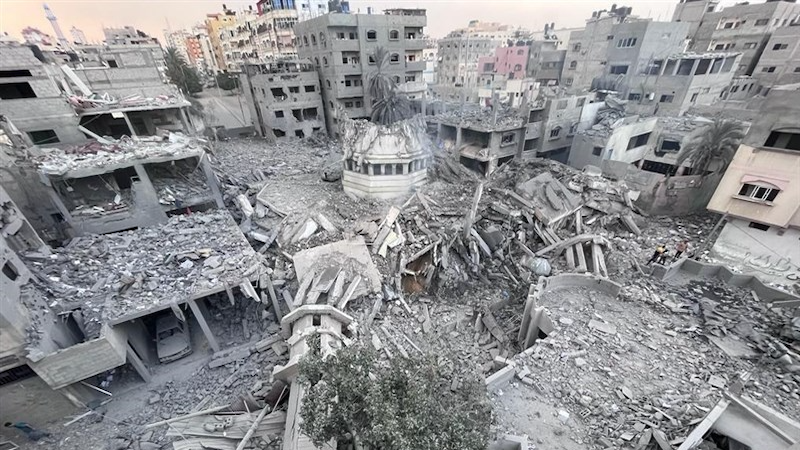
Saturday the world was rocked by the outbreak of war in southern Israel as Hamas fighters crossed out of Gaza, taking hostages and killing Israeli civilians. The political leader of Hamas says the attacks were in response to the Israeli treatment of Palestinians at the al-Aqsa Mosque last week. But other reports indicate that the attack was planned for weeks with the help of the Iranian government and was meant to mark the fiftieth anniversary of the Yom Kippur War.
Over nine hundred Israelis and fourteen American citizens are confirmed dead as of this writing. Music festival attendees and members of a tiny farming community were massacred. Over a hundred Israelis and some Americans were taken captive and brought back into Gaza.
In response, Israel formally declared war and ordered the largest call-up of reservists in the country’s history. On Monday, Israel’s defense minister announced a “complete siege” of Gaza. “There will be no electricity, no food, no fuel, everything is closed. We are fighting human animals and we will act accordingly.”
The Israeli air force began firing at targets within Gaza shortly after the attack. As of Tuesday, the strikes have killed over eight hundred people, including dozens of children. One family lost thirteen members, four of whom were toddlers when their apartment building was hit. On Monday, a Hamas spokesman threatened to broadcast the execution of an Israeli hostage for every unannounced strike, saying, “The enemy does not understand the language of humanity and morals, so we will address him in the language he knows.”
Coverage of war is often intense and emotional, especially when developments are fresh. That is, of course, because the healthy human reaction is to be horrified and angered by reports and footage of people being slaughtered, captured, or forced to flee for their lives.
War is no trivial subject. It’s violence on the widest scale. At their best, wars can throw off the worst tyrannies and liberate the oppressed. But they can also bring about the worst atrocities.
That’s why it is so important to have a firm and precise understanding of when violence is justified. History shows that without this it is far too easy for our healthy human reactions and emotions to be funneled into support for further crimes—trapping us in indiscriminate revenge cycles.
The best outline of when violence is justified in the context of war is Murray Rothbard’s 1963 essay “War, Peace, and the State.” In it, Rothbard shows that the difference between war and all other questions of crime and punishment is simply a matter of scale. Therefore, the general prohibition on invading the persons or property of innocent people is still at play and must be considered absolute.
Everyone is justified in resisting or repelling any invasion of their person or property; extracting restitution or exacting punishment in response to an invasion; or helping someone else do the same. However, as Rothbard lays out, one of the most important concepts that often gets lost or forgotten in the fog of war is that violence may only be used to resist or punish the aggressor. Any violence committed against an innocent third party in response to a crime is itself a new crime:
If Jones finds that his property is being stolen by Smith, he has the right to repel him and try to catch him; but he has no right to repel him by bombing a building and murdering innocent people or to catch him by spraying machine gun fire into an innocent crowd. If he does this, he is as much (or more of) a criminal aggressor as Smith is.
The fact that wars are often fought between groups does not change the fact that attacking innocent people is a crime. But even if one doesn’t care about the rights of people in the vicinity of the enemy, attacking them is a bad strategy.
Killing someone’s friends and family motivates them to fight back—not roll over and put down their weapons. That can be seen in the West’s reactions to the Hamas soldiers’ slaughter of Israeli civilians. They want blood. Maybe people on the other side feel that way too.
That tragic cycle of indiscriminate attacks, indiscriminate bloodlust, and more indiscriminate attacks defined America’s war on terror. As Scott Horton outlines in the introduction to his book Enough Already, Osama bin Laden and his couple hundred followers planned the 9/11 attacks to draw the United States into Afghanistan in an attempt to replicate the 1980s Afghan war of attrition with the Soviet Union—which contributed to the USSR’s downfall. In Horton’s words:
Al Qaeda’s mission was accomplished when America attacked Afghanistan in 2001. But, if the U.S. invasion of Iraq in 2003 was the “hoped for, but unexpected gift to bin Laden,” in the words of the former chief of the Central Intelligence Agency’s al Qaeda unit, the rest of American policy since then must seem like they hit the lottery. The regimes in Egypt and Saudi Arabia still stand, but America’s wars in Iraq, Somalia, Yemen, Libya, and especially the covert war against the Syrian government from 2011–2017, have helped spread bin Ladenite political and religious radicalism and violent conflict throughout the region and into northern and western Africa. Groups declaring loyalty to al Qaeda or its Iraqi splinter group ISIS now number in the tens of thousands.
In other words, even if we accepted that the lives of Arabs, Persians, and Pashtuns have no value—that there is nothing immoral about killing their children—the US’s indiscriminate response to 9/11 served only to advance the cause of the enemy and boost their numbers exponentially.
But the rights of innocents do matter. Those who attacked and abducted innocent civilians deserve to be brought to justice. And those who killed them deserve to die. But those who did not don’t. That it is difficult to capture or kill only the enemy is no excuse for killing the innocent.
About the author: Connor O’Keeffe produces media and content at the Mises Institute. He has a master’s in economics and a bachelor’s in geology.
Source: This article was published by the Mises Institute