Categories
South Caucasus News

Israel Officially Declares War On Hamas After Surprise Attack


Israel Officially Declares War On Hamas After Surprise Attack

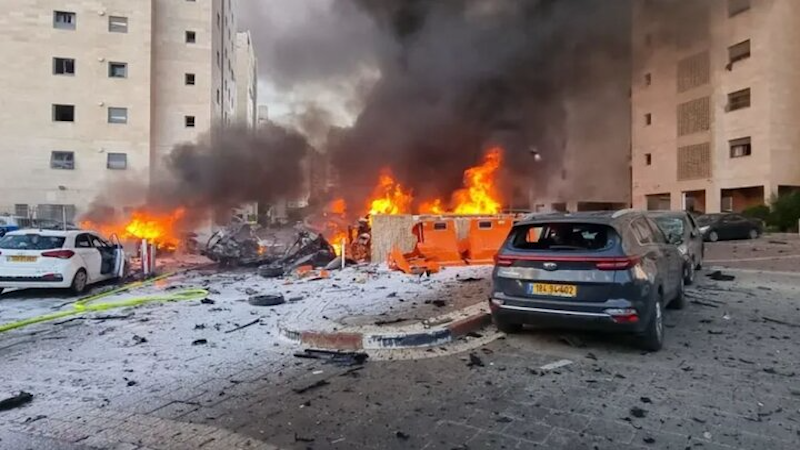
Aftermath of Hamas rocket attack on Israel. Photo Credit: Mehr News Agency

The Israeli government formally declared war Sunday on Hamas militants in Gaza, setting the stage for a massive Israeli military response to the Islamist militant group’s surprise attack on the Jewish state.

Israeli Prime Minister Benjamin Netanyahu had already said Saturday his country was at war with Hamas as the militants’ attack raged, but his assessment was rhetorical. The Cabinet decision was an official declaration of war.

Ahead of the Cabinet vote, Netanyahu declared that Israel would “take mighty vengeance” against Hamas, even as Israeli soldiers battled Hamas fighters Sunday in the streets of southern Israel and launched retaliatory airstrikes that leveled buildings in Gaza.

But it was not clear what form a new Israeli response would entail. Some Middle East analysts have suggested that Israel could mount a ground attack into Gaza, which would be a significant escalation of the conflict.

Whatever the response, Netanyahu warned, “This war will take time. It will be difficult.”

Maj. Gen. Ghassan Alian, a key Israel Defense Forces official, said that Hamas had “opened the gates of hell” with its surprise attack and “will bear the responsibility and pay for its deeds.”

Israel said that at least 600 people have been killed in Israel, including 44 soldiers, and more than 1,500 injured, while officials in Gaza said 313 people had died in the territory, and nearly 2,000 others were wounded. An Israeli official said the military had killed 400 militants and captured dozens more.

But Hamas has also seized an untold number of Israelis — women, children and the elderly — and is holding them for a possible exchange for Hamas prisoners.

U.S. Secretary of State Antony Blinken told CNN’s “State of the Union” show that the United States is investigating reports that Americans are among those killed in the fighting. It erupted early Saturday with a barrage of hundreds of missiles launched by Hamas at Israeli targets and a significant Hamas breach of security barriers at the Israel-Gaza border.

Blinken called it “the worst attack on Israel since the Yom Kippur War in 1973.”

The top American diplomat said the U.S. stands firmly behind Israel and the “first concern” of the U.S. is “to make sure Israel has what it needs” to combat the Hamas fighters. Blinken said the U.S. would announce further military assistance to Israel later Sunday.

The White House said President Joe Biden ordered unspecified additional support for Israel after he and Vice President Kamala Harris heard a report on the attack from national security officials.

One U.S. official, New Jersey Democratic Senator Cory Booker, was in Israel at the time of the Hamas attack but sheltered safely before leaving the country on Sunday.

“I emphatically condemn Hamas’ horrific acts of violence, kidnapping and terror targeting Israeli families, children and other civilians in towns and cities across the nation of Israel,” Booker said in a statement. “I stand with the people of Israel and the families of those who have lost loved ones.”

The shock attack signaled a significant Israeli intelligence failure, but Blinken declined to assess blame for the moment. “There will be plenty of time to see what anyone missed,” once the military conflict is resolved, he said.

Efraim Halevy, the former chief of Mossad, Israel’s intelligence service, told CNN on Saturday that Israel “didn’t have an inkling of what was going on.”

“We had no warning of any kind, and it was a total surprise that the war broke out this morning,” he said, adding that it was the first time the Palestinians had been able to “penetrate” so deeply into Israel.

The militants launched more than 3,000 missiles in less than 24 hours, according to Halevy. “This is beyond imagination from our point of view,” Halvey said. “We didn’t know they had this quantity of missiles, and we certainly didn’t expect that they would be as effective as they were today. … As an operation, it was highly successful, unfortunately.”

Hamas and Israel have fought four wars since Hamas took control of Gaza in 2007.

The U.N. Security Council called an emergency meeting for Sunday to discuss the latest violence.

Israeli TV news aired a stream of interviews with relatives of captive or missing Israelis. Those relatives wailed and begged for assistance amid a fog of uncertainty surrounding the fate of their loved ones. In Gaza, residents fled homes near the border to escape Israeli strikes, fleeing deeper inside the territory after warnings in Arabic from the Israeli military.

Many Israelis lined up at health centers to donate blood for their injured compatriots.

The Israeli army said it was working Sunday to clear out Hamas fighters who remained in the country a day after the militant group’s surprise attack on Israel.

“Hundreds of terrorists” have been killed and captured, an Israeli military official said.

The Israel Defense Forces reported fighting at several locations in the south near the Gaza Strip from where Hamas launched its attack Saturday. The locations included the city of Sderot.

Lt. Col. Jonathan Conricus, an IDF spokesperson, told CNN there may have been as many as 1,000 Hamas fighters who entered Israel Saturday.

Israel said Sunday it had launched retaliatory airstrikes, in the Gaza Strip, that hit the Hamas intelligence headquarters, a weapons production plant and two banks.

Much of Gaza has been plunged into darkness since the attacks. Israel maintains a blockade around the territory and Netanyahu announced that Israel will cut the electricity, fuel and other goods it supplies to Gaza.

Hamas kept up its strikes overnight too, firing rockets at several cities, including Tel Aviv.

Meanwhile, the Israeli army exchanged fire Sunday with Hezbollah militants on the Lebanese border, opening up the possibility of a broader conflict, although Blinken said fighting there had quieted.

Lebanon and Israel are considered enemy states, but a 2006 truce between them has held, for the most part with occasional small rocket attacks from Lebanon which Israel has addressed with retaliatory attacks.

Linda Gradstein in Jerusalem contributed to this report

Categories
South Caucasus News

Saudi Arabia Calls For End To Escalation Of Israel-Hamas Violence


Saudi Arabia Calls For End To Escalation Of Israel-Hamas Violence

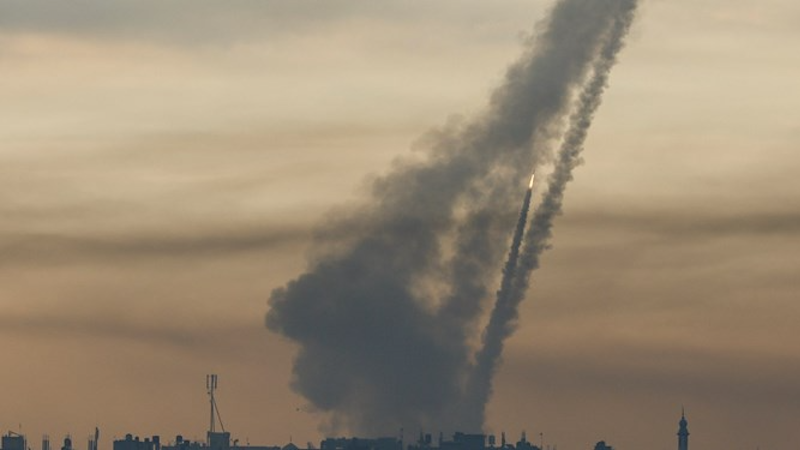
Hamas launches rocket attack on Israel. Photo Credit: Fars News Agency

Saudi Foreign Minister Prince Faisal bin Farhan on Sunday called for an end to the escalation of violence following Saturday’s surprise attack on Israel by the Palestinian Hamas group.

Israel pounded the Palestinian enclave of Gaza on Sunday, killing hundreds of people in retaliation for one of the bloodiest attacks in its history that killed several hundred Israelis.

Airstrikes hit housing blocks, tunnels, a mosque and homes of Hamas officials in Gaza, killing more than 400 people, including 20 children, in keeping with Israeli Prime Minister Benjamin Netanyahu’s pledge of “mighty vengeance.”

Prince Faisal’s comments came during a phone call he received from US Secretary of State Antony Blinken.

They discussed the danger of the continued military escalation, and the need to find ways to defuse tensions.

They also discussed the need for the international community to come together to mitigate the repercussions of the crisis in a way that contributes to maintaining international peace and security, the Saudi Foreign Ministry said in a statement.

Earlier on Sunday, Prince Faisal received a call from French Minister for Europe and Foreign Affairs Catherine Colonna. They discussed the latest developments in Gaza and the need to stop the escalation.

He stressed the Kingdom’s rejection of the targeting of civilians, and the need for the Israelis and Palestinians to respect international humanitarian law.

He also received a phone call from his Dutch counterpart Hanke Bruins Slot to discuss the situation. 


Categories
South Caucasus News

Congress Members Urge DOJ To Reject Deportation Of German Family Who Sought Asylum In US


Congress Members Urge DOJ To Reject Deportation Of German Family Who Sought Asylum In US

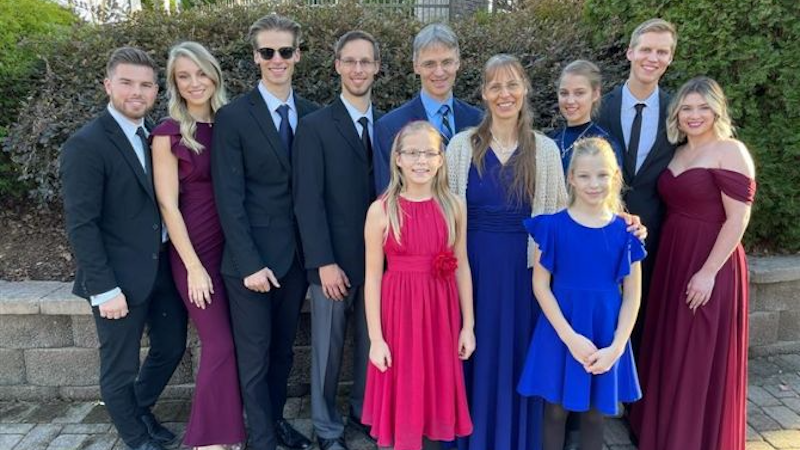
The Romeike family fled from Germany in order to homeschool their children, and now faces deportation from the U.S. | Credit: The Romeike Family

By Daniel Payne

A group of congressional representatives this week urged the Biden Department of Justice to refrain from deporting a German family who emigrated to the U.S. more than a decade ago seeking asylum in order to home-school their children. 

In the letter, addressed to Attorney General Merrick Garland and Homeland Security Secretary Alejandro Mayorkas, the 32 representatives — all Republicans — urged the Department of Justice to reject the “unconscionable” deportation of the Romeike family, who arrived here 13 years ago after the German government forbade them to home-school their children. 

The Romeikes are evangelical Christians and had eschewed public schooling due to conflicts with their religious beliefs. In 2013 they were granted deferred action status by the Obama administration, allowing them to remain in the U.S. indefinitely. But the Biden administration last month signaled that it might deport them in October of this year.

In their letter this week, the representatives said the looming deportation “is as inexplicable as it is unconscionable.”

“By all accounts, the Romeikes are model citizens,” the letter states. “Since their arrival to the United States, the members of the Romeike family have successfully assimilated into their local community and the fabric of American life. Uwe, the father, works at a Christian university. The youngest two children were born and raised here. The older Romeike children have even gotten married and have had their own children.”

The representatives said the Romeike family “has lived peacefully and in our country for over a decade” and that “to force this refugee family to suddenly return to Germany, with a government that once forcibly removed their children from their home simply for observing their deeply-held religious beliefs, is immoral and indefensible.”

The politicians noted that both Garland and Mayorkas possess the power to grant asylum to those seeking it in the United States. 

“We … respectfully ask that you use this power given to you by Congress to grant the Romeike family asylum,” they wrote. 

The current status of the Romeike family in the U.S. is unknown. Their report date for their possibly final meeting with immigration officials is sometime this month. 

Kevin Boden, an attorney with the Home School Legal Defense Association, which has provided the Romeikes with legal help over the course of their time in the U.S., told CNA last month that the family “[didn’t] know if they’re going to be forced to leave … [or]  if they’re going to be taken into custody” at this month’s meeting.

Boden did not respond to a query on Friday about the family’s status. Last month he said HSLDA was “working with Immigration and Customs Enforcement,” among other approaches, to try to secure their stay in the U.S.


Categories
South Caucasus News

Rising Skepticism Over Moscow’s Candidacy For United Nations Human Rights Council – OpEd


Rising Skepticism Over Moscow’s Candidacy For United Nations Human Rights Council – OpEd

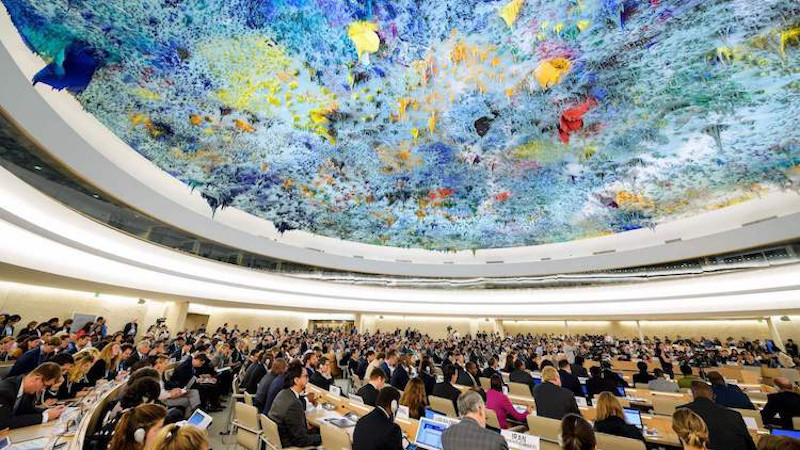
File photo of UN Human Rights Council in Geneva. Credit: Wikimedia Commons.

Russia’s decision to seek fresh membership position in the prestigious U.N. Human Rights Council (UNHRC) primarily portrays a crucial challenge whether it would, this time, observe fundamental human rights stipulated by the United Nations Charter after Moscow’s isolation over its February 2022 invasion of neighbouring Ukraine. While Russia has a reasonable chance of getting voted back onto the U.N. Human Rights Council, it simultaneously offers Western-allied members to keep taps on Russia to strictly observe human rights when dealing with external states around the world.

Over these post-Soviet years, Russia has denied the accusations of rights abuses including its own domestic politics, silencing opposition groups, scrutinizing media and NGOs that have been critical about the government. Long before its invasion of Ukraine, the U.N. Human Rights Council which is dominated by Western voices, and usually show overbearing attitudes toward Russia over its allegedly abuses of basic human rights, critics often say Russia’s dealing with Ukraine has additionally wrecked its credibility to continue its membership in the Geneva-based UN’s Human Rights Council.

According authentic reports, Russia was ousted from the UN Human Rights Council after its forces invaded Ukraine, and now attempting a passionate return to the prestigious body on October 10 — an uncertain move that will definitely provide a gauge of its international support. The UN General Assembly will vote that day to elect 15 new members to the Geneva-based UN body, for terms running from 2024 to 2026.

“The Human Rights Council must be protected from misuse as a tool for settling political scores and from the practice of double standards,” Vassily Nebenzia, Russia’s Ambassador to the United Nations, said UN headquarters in New York. “Those are the tactics of certain states … that proclaim themselves to be human rights champions.” 

As its differences on many global and regional questions intensify with the United States and European countries, Russia has ultimately quitted from a number of foreign organizations. Russian officials described a number of them have now turned into “a puppet structure for promoting flagrant Russophobic attitudes” and Russia does not comply with that vision of the world, nor would accept such Western values and approaches. 

“We are indeed going to file such an application. At present we are not a HRC member but we continue actively to work within this body by promoting our initiatives,” Russia’s Permanent Representative at the UN office in Geneva, Gennady Gatilov told the television channel Rossiya-24 (VGTRK). “With full membership in this body additional possibilities will open up for us.” 

Some analysts say Russia is still at the crossroad. It leads multipolar arrangement largely in theory, in practice it is far from being an integrated, interactive society. Many Western companies have suspended their business operations in the Russian Federation. On the other hand, Russia’s economy is increasingly becoming stronger than previously, according to Russian economists, pointing to facts following the United States, the European Union, the United Kingdom, and several others’ decision to introduce stiff sanctions against Russian legal entities and private individuals.

Seeking membership, after it was ousted from the UN Human Rights Council for invading Ukraine, demonstrates the UN Human Rights Council (HRC) is an instrument that must be recognized and its acceptable role in ensuring basic human rights are adhere to and other international treaties in the field of promotion and protection of human rights within the Universal Declaration of Human Rights.

According to several official documents read by this author, Russia has expressed utter dissatisfaction over its membership in the UN Human Rights Council (HRC).  “We will use all opportunities that are still available to us,” Gatilov said, and further expressed deep concern with regards to the unprecedented scale and depth of discrimination unleashed against Russia.

That however, rejoining means rejoicing over human rights abuses and marginalizing opposition groups and imprisoning its leaders, and to continue stifling civil society in civilized multipolar world. Since the collapse of the Soviet in 1991, and throughout its political developments, Russia’s opposition political groups have faced no freedom and their rights to participate in today’s politics and in government has allegedly been squeezed in a country that claims observing human rights. It has also signed several joint declarations adherence to observe human rights and democratic freedom.

As a staunch founding member of BRICS (Brazil, Russia, India, China and South Africa), and the group from January 2024 to be joined by six new members, under the rotating chairmanship of Russia, the question of pushing the world into adopting a multipolar order which implies concept of inclusiveness and respect for broader views and approaches toward peace and security, sustainable development and new economic architecture, broader consensus over use of resources.

BRICS has achieved an enormous diverse successes since its creation, and the latest was in August 2023 in Johannesburg when it agreed to enrol six into its fold. In fact the unique aspect which featured throughout its summits is joint declarations. At the XV BRICS Summit in Johannesburg, where it had the opportunity this powerful gathering for the second time, the declaration, among other issues, indicates: “We reaffirm our commitment to the BRICS spirit of mutual respect and understanding, sovereign equality, solidarity, democracy, openness, inclusiveness, strengthened collaboration and consensus. As we build upon 15 years of BRICS Summits, we further commit ourselves to strengthening the framework of mutually beneficial BRICS cooperation under the three pillars of political and security, economic and financial, and cultural and people-to-people cooperation and to enhancing our strategic partnership for the benefit of our people through the promotion of peace, a more representative, fairer international order, a re-invigorated and reformed multilateral system, sustainable development and inclusive growth.”

The declaration further states: “We reiterate our commitment to inclusive multilateralism and upholding international law, including the purposes and principles enshrined in the Charter of the United Nations (UN) as its indispensable cornerstone, and the central role of the UN in an international system in which sovereign states cooperate to maintain peace and security, advance sustainable development, ensure the promotion and protection of democracy, human rights and fundamental freedoms for all, and promoting cooperation based on the spirit of solidarity, mutual respect, justice and equality.”

Russian President Vladimir Putin and his Foreign Affairs Minister Sergey Lavrov have also mentioned and made constant references to the issues of human rights in several speeches as stipulated in Russia’s Constitution. 

In October 2023, Putin took part in the plenary session of the 20th anniversary meeting of the Valdai International Discussion Club. The 20th annual meeting’s theme – “Fair multipolarity: How to ensure security and development for everyone” had and even now has a huge meaning and was held in Sochi, Russia’s southern coastal city. In a nutshell, the Valdai discussions invariably reflect the most important global political processes in the 21st century in their entirety and complexity.

Putin noted this point in his presentation. He also stressed a lot of issues throughout the presentations, including the fact that both Russia and the world have seen drastic, and even dramatic, colossal changes. But what is relevant to the discussion here is that in Russia’s Foreign Policy Concept, our country is characterised as an original civilisation-state. According to Putin this wording clearly and concisely reflects how it is understood not only in development, but also the main principles of international order. 

First, there are many civilisations, and none is superior or inferior to another. They are equal since each civilisation represents a unique expression of its own culture, traditions, and the aspirations of its people. The essential characteristics of a civilisation-state encompass diversity. In an era of radical change, more and more states are becoming aware of their own interests and needs, opportunities and limitations, their own identity and degree of inter-connectedness with the world.

Putin has stated that, in this sense, Russia stands for maximum representation. Russia was, is and will be one of the foundations of this new world system, ready for constructive interaction with everyone who strives for peace and prosperity, but ready for tough opposition against those who profess the principles of dictatorship and violence.

Foreign Affairs Minister Sergey Lavrov at the 78th session of the UN General Assembly, New York, September 23, 2023, emphasized the irreversible changing processes towards a multipolar order, whereby the logic of the historical progress is undeniable, the main trend of which being that states constituting the global majority are strengthening their sovereignty and defending their national interests, traditions, culture and different ways of life.

In this evolutionary processes, Lavrov however asserted the significant role Russia is playing, especially in organizations such as the SCO, ASEAN, CSTO, EAEU, CIS, and many others. That Russia is open to all associations and countries with common shared interest and re-affirmed its highest commitment without exception and reservation.

Today, humanity is at a crossroads again, as has happened many times in the past, Russia supports a fair and equitable balance of interests of all member states of the United Nations in addressing a future of peace and prosperity based on equity and solidarity, basic fundamental human rights, freedom of expression and development of democratic governance, as essential pillars in achieving common future. 

In addition to that there was a media statement following the meeting of BRICS Ministers of Foreign Affairs/International Relations on the margins of the 78th session of the UNGA, 20 September 2023. In this statement, the Ministers reiterated their commitment to strengthening multilateralism and upholding international law, including “cooperating to maintain peace and security, advance sustainable development, ensure the promotion and protection of democracy, human rights and fundamental freedoms for all, and promoting cooperation based on the spirit of solidarity, mutual respect, justice and equality.”

Nevertheless, what is so important for this discussion here in that the Ministers reiterated “the need to cooperate in promoting and protecting human rights and fundamental freedoms under the principles of equality and mutual respect.” 

Noting further that the United Nations General Assembly and Human Rights Council have to promote, protect and fulfil human rights in a non-selective, non-politicized and constructive manner and without double standards. With collective call for respect of democracy and observing human rights, Russia has faced international isolation in its invasion of Ukraine, and many member-states supported UN resolutions condemning Russia’s invasion of neighbouring Ukraine late February 2022. Its main aim was explained – “demilitarization and denazification” in Ukraine, approved by the State Duma and Federation Council of the Russian Federation.


Categories
South Caucasus News

NPR News: 10-08-2023 6PM EDT


NPR News: 10-08-2023 6PM EDT

Categories
South Caucasus News

Several hundred Wagner fighters return to Ukraine, impact limited – Kyiv – Yahoo Movies UK


Several hundred Wagner fighters return to Ukraine, impact limited – Kyiv  Yahoo Movies UK

Categories
South Caucasus News

ESPN releases 2023 College Football Playoff, full bowl projections … – On3.com


ESPN releases 2023 College Football Playoff, full bowl projections …  On3.com

Categories
South Caucasus News

Man sets truck on fire then tries to run over deputy chasing him, Georgia cops say – Sacramento Bee


Man sets truck on fire then tries to run over deputy chasing him, Georgia cops say  Sacramento Bee

Categories
South Caucasus News

President Ilham Aliyev: We implemented UN resolutions ourselves … – News.Az


President Ilham Aliyev: We implemented UN resolutions ourselves …  News.Az

Categories
South Caucasus News

Senator Bob Menendez Faces Indictment for Bribery – Ravalli Republic


Senator Bob Menendez Faces Indictment for Bribery  Ravalli Republic