
Day: October 6, 2023
Secretary General Jens Stoltenberg has appointed a group of independent experts to support a review of NATO’s approach to its southern neighbourhood – particularly the Middle East, North Africa and Sahel regions. Professor Ana Santos Pinto of Portugal was appointed as Chair.
At the Vilnius Summit earlier this year, Allies launched a deep reflection on NATO’s relationship with its southern neighbourhood. The aim is to agree concrete proposals in time for the next NATO Summit, due to take place in Washington, D.C. in July 2024.
The group will develop a report to support this process, which will be delivered to the Secretary General ahead of a meeting of NATO Foreign Ministers next April. The report should assist the Allies in taking stock of evolving developments in NATO’s broader southern neighbourhood and identifying concrete recommendations to shape NATO’s future approach, including by outlining opportunities for further engagement and cooperation with partner nations, international organisations and other relevant actors.
The following people have been appointed to the group: Dr Katja Lindskov Jacobsen (Denmark); D. Elie Tenenbaum (France); Ambassador (ret.) Hermann Nicolai (Germany); Dr Thanos Dokos (Greece); Brigadier General Alessio Nardi (Italy); Dr Aleksandra Bukowska-McCabe; (Poland); Professor Ana Santos Pinto (Portugal); Mr Carlos Carnero González (Spain); Ambassador Refik Ali Onaner (Türkiye); and Ambassador Richard B. Norland (United States).
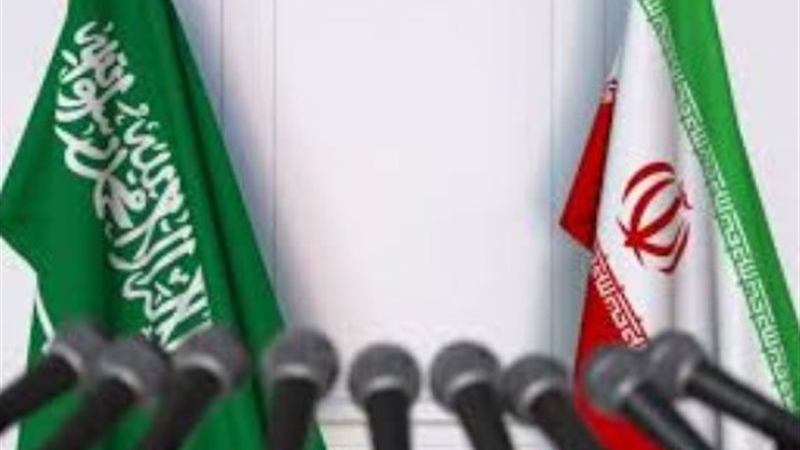
Saudi and Iranian sports have politics written into their DNA.
Little more than a decade ago, Saudi Arabia fielded three expatriate Saudi women athletes at the 2012 London Olympics to avoid an International Olympic Committee (IOC) ban on participation.
The IOC had made fielding women athletes a condition for Saudi male athletes, alongside Qataris and Bruneians, for competing in the tournament. At the time, Saudi Arabia, Qatar, and Brunei were the three countries that had never included women in their Olympic teams.
Today, women’s sports is a tool in Saudi Arabia’s effort to cement its position as a global player and leader of the Muslim world, defender of Muslim rights, and arbitrator of what constitutes ‘moderate’ Islam.
In the kingdom’s latest move, the Riyadh-based Islamic Solidarity Sports Federation (ISSF) warned that a ban on French women athletes wearing a hijab, or headcover, at next year’s Paris Olympics “send(s) a message of exclusion.”
The Federation groups representatives of 39 Muslim-majority National Olympic Committees and governmental youth and sports organisations. It is headed by Saudi sports minister Abdulaziz bin Turki Al Faisal, a member of the kingdom’s ruling family and former racing driver.
Last week, the IOC insisted hijabs would be allowed inside the athletes’ village at next year’s Olympics but stopped short of applying the rule to the French squad.
The IOC said it was in touch with the French Olympic Committee “to further understand the situation regarding the French athletes.”
Earlier, French sports minister Amelie Oudea-Castera told France 3 television that no French delegation member would be allowed to wear the hijab to support France’s “strict secularism.”
In a statement, the ISSF asserted the ban “contradicts the principles of equality, inclusivity, and respect for cultural diversity that the Olympics stand for. The hijab is an aspect of many Muslim women’s identity and should be respected.”
The ISSF said, “This ban not only infringes upon the religious freedom of French Muslim athletes but could also deny them the opportunity to participate in the Olympics, representing their country and inspiring others.”
The Olympic ban follows the August banning of the abaya, or women’s whole body cover, in French schools.
By defending a Muslim majority view in favour of a woman’s right to wear a hijab, Saudi Arabia, a dominant force in the ISSF, brandishes its religious credentials at a time when it has lifted several restrictions on women in the kingdom, including in sports, eased gender segregation, sought to reduce the role of religion in public life, and introduced Western-style entertainment.
It also comes as many suspect Saudi Arabia may compromise on Palestinian rights as part of a US-led effort to get the kingdom to recognize Israel. In a first, two Israeli ministers visited Saudi Arabia in the last week to attend international conferences.
Politics also loomed large when Saudi club Al-Ittihad FC refused this week to play an Asian Champions League match in Isfahan against Iran’s Sepahan because of busts of controversial assassinated Iranian military commander Qasem Soleimani at the entrance to the pitch.
Iranian media reported that the busts had been in place for three years and that Al Ittihad practiced in the stadium earlier this week without making an issue of the figures.
The match would have been one of the first since 2016 that Saudi and Iranian clubs would have played games against one another on home soil.
In a similar incident in June, Saudi Arabian Foreign Minister Faisal bin Farhan, in Tehran for the first time since Saudi Arabia and Iran reestablished diplomatic relations, demanded a change of venue for a news conference with his Iranian counterpart because the initially scheduled room featured a photo of Mr. Soleimani on the wall.
China mediated the restoration of relations in March. Saudi Arabia severed ties in 2016 after Iranians ransacked Saudi diplomatic missions in protest against the kingdom’s execution of a prominent Shiite Muslim cleric.
Mr. Soleimani was killed near Baghdad airport in a United States drone strike in January 2020. Saudi Arabia had designated as terrorists Mr. Soleimani and his Al Quds Brigade, the Islamic Revolutionary Guard Corps (IRGC) unit operating outside Iran.
Iranian authorities celebrate Mr. Soleimani as a national hero.
Saudi Arabia asserts the brigade and Mr. Soleimani were involved in Iranian attacks on Gulf shipping and Saudi oil installations and support Yemen’s Houthi rebels and Shiite Muslim militias in Lebanon, Syria, and Iraq.
Some 60,000 spectators waited in vain this week in Isfahan’s Naghsh-e Jahn Stadium as Al-Iitihad refused to leave the dressing room if Mr. Soleimani’s busts remained in place.
Although spectators were disappointed at being deprived of the opportunity to see stars N’Golo Kante and Fabinho play, videos circulating on social media appeared to show angry Iranian fans chanting that politics should be kept out of the beautiful game. N’Golo Kante and Fabinho transferred to Al-Ittihad earlier this year.
Some postings suggested that Sepahan players applauded the fans.
The Asian Football Confederation (AFC), the continent’s soccer body, said it was looking into the incident. The AFC could penalize both clubs.
Sepahan could be fined and lose points for putting political symbols in the stadium in violation of the fictitious assertion by football regulators that sports and politics are separate, while Al-Ittihad could be punished for refusing to play a match.
Two weeks ago, Saudi club Al-Nassr played Iran’s Persepolis in Tehran’s empty Azadi Stadium after the AFC imposed a one-game spectator ban because of fan behaviour.
The Isfahan stadium protest follows a crackdown on months of protests sparked a year ago by the death of 22-year-old Mahsa Amini while in Iran’s morality price custody.
Security forces killed more than 500 protesters and detained 20,000 others, including footballers, journalists, and film stars.
Seven protesters were sentenced to death and executed in what the United Nations UN Special Rapporteur on human rights in Iran Javaid Rehman called “arbitrary, summary and sham trials marred by torture allegations.”
This week’s hospitalisation of a 16-year-old girl in Tehran has put Iran back on edge. Activists alleged the girl was beaten on a train into a coma by the morality police for not complying with Iran’s mandatory hijab rules.
State-run media asserted the girl had fainted because her blood pressure dropped and had hit the side of the train carriage.
Al-Iitihad’s refusal to play Sepahan highlights limits to Saudi Arabia and Iran’s rapprochement. The two countries seek to cooperate on economic and other issues without attempting to resolve fundamental differences symbolized by Mr. Soleimani’s legacy.
Mr. Soleimani’s bust sent a message that Iran was unlikely to modify policies bitterly opposed by Saudi Arabia as a result of the restoration of diplomatic relations. These policies include Iran’s support for militias in various Arab countries and its nuclear and ballistic missile programmes.
As a result, the Al-Ittihad incident casts a shadow over Saudi and Iranian efforts to manage their differences to prevent them from spinning out of control.
Relations could further sour if the kingdom concludes a legally binding security deal with the United States as part of an agreement involving Saudi recognition of Israel.
Iranian Supreme Leader Ayatollah Ali Khamenei told Muslim ambassadors this week that normalisation of relations with Israel amounted to “gambling” that was “doomed to failure.”
He warned that countries that establish relations with the Jewish state would be “in harm’s way.”
Also addressing the gathering, Foreign Minister Hossein Amir-Abdollahian added, “We do welcome the new page in ties with our regional brothers, yet we should also … move decisively to reject the Zionist regime’s legitimacy and forgo normalization with it.”
Al-Ittihad’s refusal, on the one hand, highlights the fragility of the Saudi-Iranian rapprochement.
On the other hand, like the support for French Muslim women athletes, it reinforces the kingdom’s positioning as an authoritarian yet socially more liberal and moderate Muslim power opposed to religious militancy, including Iran’s brand of aggressive militant Islam.
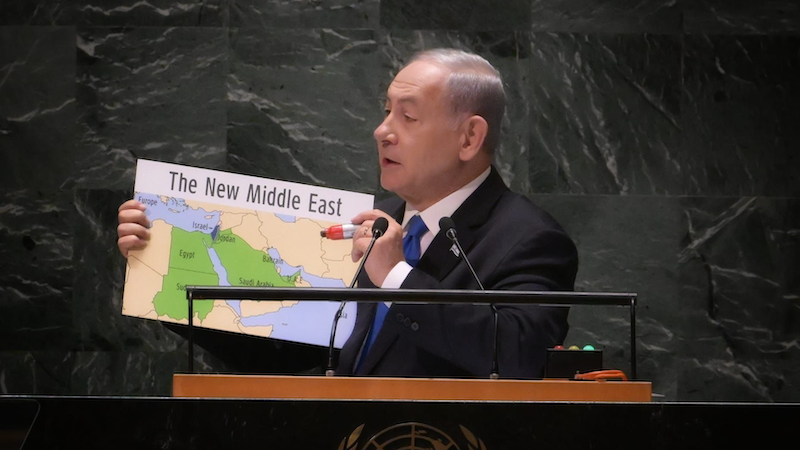
On September 22 Benjamin Netanyahu stepped onto the podium at the UN General Assembly in New York, and addressed a plenum that was half-empty – understandably so, since it was 9.15 am. Word has it that the PM considered this slot preferable to the time originally scheduled for his address – the evening of the previous day, which would have been late at night in Western Europe and the middle of the night in Israel and the Middle East generally. As it was, the prime minister’s speech appeared on Israeli TV screens at 4.15 pm on a Friday afternoon, far from an ideal viewing time. Yet there may well have been method in the apparent madness, for we later learned that his address had been screened live across Saudi Arabia – well after Friday prayers on a rest day, guaranteeing mass viewings.
Saudi Arabia featured strongly in Netanyahu’s speech as he dealt at length with the mounting expectation of a normalization deal with Israel. He was, in fact, echoing the optimistic comments made only two days earlier by Saudi Crown Prince Mohammed bin Salman (MBS) in a rare interview with Fox News. He told his interviewer that the prospects of normalized relations with Israel were getting closer by the day.
Not surprisingly, however, MBS reiterated the qualification that has always accompanied the Saudi position on normalization. Calling the potential accord “the biggest historical deal since the end of the Cold War,” he said it would all depend on agreements aimed at “giving the Palestinians their needs”.
This is one of several issues notably absent from Netanyahu’s address. He included a list of the steps the Palestinians would need to take in order to achieve a genuine peace (such as stopping the spread of Jew-hatred, and reconciling themselves to the right of the Jewish people to have a state of their own in their historic homeland). What he failed to do was to open the world’s eyes to the realities behind the universally-supported nostrum of a two-state solution.
He did not mention the word Hamas once. Yet up to half the Palestinian population lives in the Gaza Strip under the pernicious governance of the Hamas organization. How could the two-state solution – the concept of a sovereign Palestine living alongside a sovereign Israel – be a practical possibility when Hamas, and those Palestinians outside Gaza who subscribe to its philosophy, regard the whole area “from the river to the sea” (that is, from the Jordan to the Mediterranean) as Arab territory to which Israel has no right? The prime purpose of Hamas, its very raison d’être,is to eradicate Israel altogether and ensure that no Jews remain in the area.
The 2002 Arab Peace Plan, to which Saudi Arabia still subscribes, was conceived before Hamas was of any major significance, and well before it had seized control of Gaza and virtually kidnapped a great mass of the Palestinian people. Netanyahu did not ask the world why so little thought has been given to the practical hurdles in the path of achieving its much advocated two-state solution. Since Hamas would never be a signatory to such a deal, Gaza would be excluded from the arrangement. What sort of sovereign Palestine could it be, shorn of half the Palestinian population? In short, Netanyahu could have provided world opinion with some home truths, among them that the prerequisite to achieving a genuine two-state solution is the disempowerment of Hamas.
Another word that did not pass Netanyahu’s lips was “apartheid” – the charge used to tar Israel by bodies like Human Rights Watch and Amnesty International and a whole host of anti-Israel groups and individuals. He could have provided the world with a brief lesson on the total lack of ethnic, racial or religious discrimination of any kind within the sovereign state of Israel – and demonstrated with facts and figures the increasingly successful integration of Israel’s Arab population into the social, political and judicial structure of the state.
Netanyahu might also have called for some understanding of the complex administrative nightmare bequeathed to Israel by the Oslo Accords of the 1990s, that failed attempt to resolve the Israel-Palestine issue. Although most of the 3 million Palestinians living in the West Bank are governed, either wholly or largely, by the Palestinian Authority in Areas A and B set up in the Oslo Accords, the situation for the 300,000 living in Area C under military law is far from satisfactory. It is nothing approaching apartheid, but the whole situation does require resolution, and could be resolved within the terms of the normalization package currently being negotiated with Saudi Arabia.
Another matter to which Netanyahu made no reference at all is the one Israeli issue that has been dominating the world’s headlines for the past months – the matter of judicial review, and the fears aroused, both within Israel and beyond, that restricting the power of the Supreme Court to hold the whole governmental structure to account could lay the road open to a possible dictatorship.
Most people now realize that the clash of public opinion in Israel has arisen largely because, over time, the distinction between the legislative and the judicial roles within the system of governance has become increasingly blurred. The judiciary has over time been forced, in addition to its main functions, to assume the role that belongs to the second chamber in a bi-cameral legislature – to scrutinize proposed new law and suggest improvements.
Both the US and the UK have bi-cameral legislative systems, but even so powerful voices have been declaring for some time that the judiciary has been exceeding its proper function by venturing too far into the political arena. Last year the USA Politico journal remarked: “The Supreme Court has usurped the power of the elected branches to interpret the Constitution,,,It has accomplished this power grab through unfounded assertions of judicial supremacy.“ Or, as Britain’s prestigious Prospect magazine put it a while ago: “The judiciary has made a slow march to the heart of politics.“
So there seems to be room for modest reform of Israel’s system by devising a better balance between the democratic mandate handed to members of the Knesset by the electorate, and the powers of the judiciary to defend groups and individuals against gross infringements of their democratic rights. Netanyahu might well have seized the opportunity of his address on the world stage to defuse this matter among the others.
By Ryan McMaken
On September 22, members of the Canadian Parliament provided a standing ovation for Yaroslav Hunka, a member of Nazi Germany’s Waffen-SS during World War II.
The event surrounded a visit to Ottawa by Ukrainian president Volodymyr Zelensky. In their hysterical rush to praise all things anti-Russian in 2023, some of our social democratic elites in the West have taken to praising literal Third-Reich Nazis. Specifically, the Speaker of the House of Commons described Hunka as “a Ukrainian hero, a Canadian hero, and we thank him for all his service.”
Shortly after Canadian politicians showered praise on Hunka, some observers on social media began to point out Hunka’s Nazi past, and the matter became an embarrassment for Canada’s PM Justin Trudeau and for the Speaker who resigned days later. Moreover, the affair has highlighted a longstanding pattern of tolerance for Ukrainian SS members demonstrated by the regimes in both the United Kingdom and Canada.
These reminders of Ukrainian collaboration with the Third Reich has provided another Nazi-themed black eye for the Ukrainian regime which has already been accused—with good reason—of supporting neo-Nazi groups like the Azov Battalion which has long employed Nazi symbols such as the wolfsangel, the swastika, and the black sun. Ukrainian nationalists like those in the Azov battalion have also sought to dismiss criticism of Ukraine-Nazi collaboration while portraying pro-Nazi Ukrainians as mere innocent anti-Russian freedom fighters. Yet, Hunka’s unit and other Ukrainian nationalist groups are notable for crimes inflicted against ethnic Poles and Jews, and reminders of such past crimes are likely to further raise tensions between the Polish and Ukrainian regimes. Warsaw and Kiev are presently denouncing each other over war funding and the importation of cheap Ukrainian grain into the EU.
Current allies of Ukraine, however, have likely noted the danger posed to the pro-Ukraine narrative by the Hunka fiasco. Thus it is not surprising to see headlines from Western media attempting to excuse Ukrainian Nazi collaborators. On Monday, for example, the European version of Politico published an article titled “Fighting against the USSR didn’t necessarily make you a Nazi.” The article is by committed Russophobe Keir Giles and makes the case that at least some Nazi soldiers weren’t really all that bad since they were fighting Russians.
One of Giles’s chief “arguments” is simply that “it’s complicated” and Ukrainian SS members have been judged unfairly. Meanwhile, Canada’s military history magazine Legion tells us to consider the “nuance of history” before casting aspersions on these Nazis. The CBC makes a similar claim that the Hunka situation “reveals a complicated past” and that Ukrainian Nazis were simply choosing what they perceived to be the lesser of two evils.
Legacy-media journalists—many of whom spent the last three years denouncing any opposition to the establishment narrative as “racism” or “misinformation”—are now telling us that we must approach the nuances of Nazi volunteers with an open mind.
The Record of Ukraine’s Waffen-SS Nazis
Attempts to downplay the Nazi status of Hunka’s unit conveniently ignore a variety of facts that hardly add “nuance” to the situation. It is important to keep in mind, of course, that the Waffen-SS was not the Wehrmacht, the “regular army” of Germany. Rather, the Waffen-SS was the combat arm of the fanatical and ideological paramilitary group Schutzstaffel (SS) tasked with carrying out the Holocaust and the German regime’s many other efforts to murder enemies of the state. The SS was under the command of Heinrich Himmler, and the Gestapo answered to the SS.
The unit was known officially as the 14th Waffen Grenadier Division of the SS or the “1st Galician” unit. German commanders often called it simply the “SS Galizien.” Hunka was a volunteer in this unit, as were many other Ukrainian nationalists. It was only in 1944, after the unit suffered devastating losses in battle, that the unit was rebuilt using conscripted soldiers. Indeed, thousands of Ukrainian nationalists volunteered for service with the Nazis, with 52,000 men enlisting. Among these, about 13,000 were inducted into the SS. Many other volunteers went on to serve in the German concentration camp system, especially at Trawniki concentration camp. The camp served as a forced labor camp for Jews and others under the watchful eyes of Ukrainian “freedom fighters.” The camp also served as an SS training camp, mainly for Ukrainian recruits.
As for the Galizien unit, it has been implicated in several specific war crimes, especially the massacre at Huta Pieniacka where approximately 700-1,200 ethnic Poles and Jews were killed. A 2003 investigation by the Polish Institute of National Remembrance into the massacre concluded that “the crime was committed by the 4th battalion of the 14th division” (i.e., the Galizien division.) In 2005, the Institute of History at the Ukrainian Academy of sciences agreed with a Ukrainian nationalist who, at the time, declared that “Ukrainian SS-men wiped out the entire village.”
But this not surprising as the Galizien unit worked closely with notoriously brutal Waffen-SS units. As Per Anders Rudling noted in the Journal of Slavic Military Studies:
The Waffen-SS Galizien worked alongside one of the most brutal counter-insurgency units of Nazi Germany, the dreaded SS-Sonderbattalion Dirlewanger, a unit which included rapists, murderers, and the criminally insane, which carried out brutal anti-partisan activities in Belarus and Poland, and the no less brutal suppression of the Warsaw uprising in 1944. Waffen -SS Galizien and Dirlewanger transferred officers between their units.
The idea that the Galizien unit had no interest or complicity in killing anyone other than Russians is dubious at best. After all, anti-Polish sentiment was common among Ukrainian nationalists at the time, as western Ukraine had long been a conquered territory under the rule of the Polish-Lithuanian commonwealth. During the Second World War, the far-right Organization of Ukrainian Nationalists (OUN-B) engaged in numerous massacres of Poles designed to prevent them from asserting sovereignty over western Ukraine at the end of the war. Ukrainian nationalists had long clashed with the Polish state in western Ukraine, often in and around the Polish city of Lwów—now Lviv in western Ukraine—which was heavily Ukrainian in the interwar years of the Second Polish Republic. Anti-semitism was common in Western Ukraine as evidenced by the energetic participation of local ethnic Ukrainians in the 1941 Lwów pogroms.
The SS Galizien unit came into being in this milieu of anti-Polish nationalism. Yet, virtually no article on Ukrainian nationalism in the corporate media since 2022 mentions Poland’s conquests in what is modern-day Ukraine, or the anti-Polish reprisals that followed.
Members of the Galizien, including Yaroslav Hunka, also took an oath of loyalty to Adolf Hitler which read:
I swear before God this holy oath, that in the battle against Bolshevism, I will give absolute obedience to the commander in chief of the German Armed Forces Adolf Hitler, and as a brave soldier I will always be prepared to lay down my life for this oath.”
Lest anyone think these Ukrainian nationalists thus limited themselves to strictly combatting Bolshevism, we must keep in mind that Waffen-SS troops hardly granted their victims fair trials before executions and massacres were carried out. Rather, Jews were often regarded as communist collaborators in general, and treated accordingly. Ethnic Poles who proved inconvenient to “anti-Bolshevik” activities were killed in large numbers.
Contrary to the now-preferred myth that the Galizien unit was just a bunch of misunderstood good guys, Rudling concludes “There is no overt indication that the unit in any way was dedicated to Ukrainian statehood, let alone independence. The volunteers committed themselves to a German victory, the New European Order, and to Adolf Hitler personally.”
However, even if Hunka’s unit had not been involved in war crimes, it is remarkable that the Canadian parliament would give a standing ovation to a man who for all intents and purposes fought against Canada and its allies in the Second World War. As British historian Mark Felton sarcastically put it in a recent video:
Now if any Canadian members of Parliament are watching, this next bit might be rather difficult to understand, but the Red Army, commonly referred to as “the Russians,” were our allies in World War II while the Ukrainian SS was fighting for somebody called Adolf Hitler who, according to Wikipedia, wasn’t very nice.
Nowadays, we’re supposed to applaud anyone and everyone who kills a Russian. But during the Second World War, the US regime under Franklin Roosevelt wholeheartedly embraced the Soviet regime as an ally. Roosevelt was personally fond of Josef Stalin, calling him “Uncle Joe.” The Americans and other western Allies coordinated efforts with the Soviets in the fight to encircle and crush the Third Reich. Moreover, it was the Red Army which did most of the heavy lifting in the land war in Europe. As the Red Army pressed further toward eastern Germany, this forced the Germans to send ever larger numbers of its best recruits to the meat grinder on the eastern front. Had this not been the case, it is likely D-Day in Normandy would have been futile for the Allies, or at the very least an Allied bloodbath far worse than that which actually occurred. As historian Ralph Raico has pointed out, many of the German troops at Normandy were young boys and old men. The best troops were dealing with the Soviets in the east.
Yet, the Canadian Parliament applauds a man who was helping the Germans fight off the Red Army, which in effect allowed the German army to kill more Americans, Brits, French, and Canadians.
When Western Socialists Defended Nazis
The global establishment’s sudden discovery of the “good” Nazis has its precedent. Let it not be forgotten that in the late 1930s, Nazi Germany courted the Soviet Union as an ally, culminating in the Molotov-Ribbentrop Pact (the “Nazi-Soviet Pact”) of 1939. As a result, communists in the West praised and defended Hitler and the Third Reich while blaming the war solely on British and French imperialists. Then in 1941, after the German invasion of the USSR, communists in Britain and the UK turned on a dime and suddenly decided that Nazis were the bad guys again.
The Left is apparently back to defending Nazis. Now that anti-Russian hysteria is supposed to be the guiding principle of “global democracy,” we’re told that we are to applaud former Waffen-SS soldiers for fighting against the Allies.
It’s quite an interesting turn of events, but given the current realities of relentless regime gaslighting and propaganda, it’s not terribly surprising.
About the author: Ryan McMaken (@ryanmcmaken) is executive editor at the Mises Institute. Send him your article submissions for the Mises Wire and Power and Market, but read article guidelines first. Ryan has a bachelor’s degree in economics and a master’s degree in public policy and international relations from the University of Colorado. He was a housing economist for the State of Colorado. He is the author of Breaking Away: The Case of Secession, Radical Decentralization, and Smaller Polities and Commie Cowboys: The Bourgeoisie and the Nation-State in the Western Genre.
Source: This article was published by the Mises Institute
Pay no heed to the circus politics coming out of Washington DC. It’s just more of the same grandstanding by tone-deaf politicians oblivious to the plight of the citizenry.
Don’t allow yourselves to be distracted by the competing news headlines cataloging the antics of the ruling classes. While they are full of sound and fury, they are utterly lacking in substance.
Tune out the blaring noise of meaningless babble. It is intended to drown out the very real menace of a government which is consumed with squeezing every last penny out of the population.
Focus instead on the steady march of the police state at both the national, state and local levels, and the essential freedoms that are being trampled underfoot in its single-minded pursuit of power.
While the overt and costly signs of the despotism exercised by the increasingly authoritarian regime that passes itself off as the United States government are all around us—warrantless surveillance of Americans’ private phone and email conversations by the FBI, NSA, etc.; SWAT team raids of Americans’ homes; shootings of unarmed citizens by police; harsh punishments meted out to schoolchildren in the name of zero tolerance; drones taking to the skies domestically; endless wars; out-of-control spending; militarized police; roadside strip searches; privatized prisons with a profit incentive for jailing Americans; fusion centers that collect and disseminate data on Americans’ private transactions; and militarized agencies with stockpiles of ammunition, to name some of the most appalling—you rarely hear anything about them from the politicians, the corporations or the news media.
So what’s behind the blackout of real news?
Surely, if properly disclosed and consistently reported on, the sheer volume of the government’s activities, which undermine the Constitution and dance close to the edge of outright illegality, would give rise to a sea change in how business is conducted in our seats of power.
Yet when we’re being bombarded with wall-to-wall news coverage and news cycles that change every few days, it’s difficult to stay focused on one thing—namely, holding the government accountable to abiding by the rule of law—and the powers-that-be understand this.
As with most things, if you want to know the real motives behind any government program, follow the money trail.
When you dig down far enough, you quickly find that those who profit from Americans being surveilled, fined, scanned, searched, probed, tasered, arrested and imprisoned are none other than the police who arrest them, the courts which try them, the prisons which incarcerate them, and the corporations, which manufacture the weapons, equipment and prisons used by the American police state.
These injustices, petty tyrannies and overt acts of hostility are being carried out in the name of the national good—against the interests of individuals, society and ultimately our freedoms—by an elite class of government officials working in partnership with megacorporations that are largely insulated from the ill effects of their actions.
Everywhere you go, everything you do, and every which way you look, we’re getting swindled, cheated, conned, robbed, raided, pickpocketed, mugged, deceived, defrauded, double-crossed and fleeced by governmental and corporate shareholders of the American police state out to make a profit at taxpayer expense.
Not only are Americans forced to spend more on taxes than the annual financial burdens of food, education and clothing combined, but we’re also being played as easy marks by hustlers bearing the imprimatur of the government.
Examples of this legalized, profits-over-people, government-sanctioned extortion abound.
On the roads: Not satisfied with merely padding their budgets by issuing speeding tickets, police departments have turned to asset forfeiture and speeding and red light camera schemes as a means of growing their profits. Despite revelations of corruption, collusion and fraud, these money-making scams have been being inflicted on unsuspecting drivers by revenue-hungry municipalities. Now legislators are hoping to get in on the profit sharing by imposing a vehicle miles-traveled tax, which would charge drivers for each mile behind the wheel.
In the prisons: States now have quotas to meet for how many Americans go to jail. Increasing numbers of states have contracted to keep their prisons at 90% to 100% capacity. This profit-driven form of mass punishment has, in turn, given rise to a $70 billion private prison industry that relies on the complicity of state governments to keep the money flowing and their privately run prisons full, “regardless of whether crime was rising or falling.” As Mother Jones reports, “private prison companies have supported and helped write … laws that drive up prison populations. Their livelihoods depend on towns, cities, and states sending more people to prison and keeping them there.” Private prisons are also doling out harsher punishments for infractions by inmates in order to keep them locked up longer in order to “boost profits” at taxpayer expense. All the while, prisoners are being forced to provide cheap labor for private corporations. No wonder the United States has one of the largest prison populations in the world.
In the schools: The public schools have become a microcosm of the total surveillance state which currently dominates America, adopting a host of surveillance technologies, including video cameras, finger and palm scanners, iris scanners, as well as RFID and GPS tracking devices, to keep constant watch over their student bodies. Likewise, the military industrial complex with its military weapons, metal detectors, and weapons of compliance such as tasers has succeeded in transforming the schools—at great taxpayer expense and personal profit—into quasi-prisons. Rounding things out are school truancy laws, which come disguised as well-meaning attempts to resolve attendance issues in the schools but in truth are nothing less than stealth maneuvers aimed at enriching school districts and court systems alike through excessive fines and jail sentences for “unauthorized” absences. Curiously, none of these efforts seem to have succeeded in making the schools any safer.
In the endless wars abroad: Fueled by the profit-driven military industrial complex, the government’s endless wars are wreaking havoc on our communities, our budget and our police forces. Having been co-opted by greedy defense contractors, corrupt politicians and incompetent government officials, America’s expanding military empire is bleeding the country dry at a rate of more than $93 million per hour. Future wars and military exercises waged around the globe are expected to push the total bill upwards of $12 trillion by 2053. Talk about fiscally irresponsible: the U.S. government is spending money it doesn’t have on a military empire it can’t afford. War spending is bankrupting America.
In the form of militarized police: The Department of Homeland Security routinely hands out six-figure grants to enable local municipalities to purchase military-style vehicles, as well as a veritable war chest of weaponry, ranging from tactical vests, bomb-disarming robots, assault weapons and combat uniforms. This rise in military equipment purchases funded by the DHS has, according to analysts Andrew Becker and G.W. Schulz, “paralleled an apparent increase in local SWAT teams.” The end result? An explosive growth in the use of SWAT teams for otherwise routine police matters, an increased tendency on the part of police to shoot first and ask questions later, and an overall mindset within police forces that they are at war—and the citizenry are the enemy combatants. Over 80,000 SWAT team raids are conducted on American homes and businesses each year. Moreover, government-funded military-style training drills continue to take place in cities across the country.
In profit-driven schemes such as asset forfeiture: Under the guise of fighting the war on drugs, government agents (usually the police) have been given broad leeway to seize billions of dollars’ worth of private property (money, cars, TVs, etc.) they “suspect” may be connected to criminal activity. Then—and here’s the kicker—whether or not any crime is actually proven to have taken place, the government keeps the citizen’s property, often divvying it up with the local police who did the initial seizure. The police have actually being trained in seminars on how to seize the “goodies” that are on police departments’ wish lists. According to the New York Times, seized monies have been used by police to “pay for sports tickets, office parties, a home security system and a $90,000 sports car.”
By the security industrial complex: We’re being spied on by a domestic army of government snitches, spies and techno-warriors. In the so-called name of “precrime,” this government of Peeping Toms is watching everything we do, reading everything we write, listening to everything we say, and monitoring everything we spend. Beware of what you say, what you read, what you write, where you go, and with whom you communicate, because it is all being recorded, stored, and catalogued, and will be used against you eventually, at a time and place of the government’s choosing. This far-reaching surveillance, carried out with the complicity of the Corporate State, has paved the way for an omnipresent, militarized fourth branch of government—the Surveillance State—that came into being without any electoral mandate or constitutional referendum. That doesn’t even touch on the government’s bold forays into biometric surveillance as a means of identifying and tracking the American people from birth to death.
By a government addicted to power: It’s a given that you can always count on the government to take advantage of a crisis, legitimate or manufactured. Emboldened by the citizenry’s inattention and willingness to tolerate its abuses, the government has weaponized one national crisis after another in order to expand its powers. The war on terror, the war on drugs, the war on illegal immigration, asset forfeiture schemes, road safety schemes, school safety schemes, eminent domain: all of these programs started out as legitimate responses to pressing concerns and have since become weapons of compliance and control in the police state’s hands. Now that the government has gotten a taste for flexing its police state powers by way of a bevy of COVID-19 lockdowns, mandates, restrictions, contact tracing programs, heightened surveillance, censorship, overcriminalization, etc., “we the people” may well find ourselves burdened with a Nanny State inclined to use its draconian pandemic powers to protect us from ourselves.
This perverse mixture of government authoritarianism and corporate profits has increased the reach of the state into our private lives while also adding a profit motive into the mix. And, as always, it’s we the people, we the taxpayers, we the gullible voters who keep getting taken for a ride by politicians eager to promise us the world on a plate.
This is a far cry from how a representative government is supposed to operate.
Indeed, it has been a long time since we could claim to be the masters of our own lives. Rather, we are now the subjects of a militarized, corporate empire in which the vast majority of the citizenry work their hands to the bone for the benefit of a privileged few.
Adding injury to the ongoing insult of having our tax dollars misused and our so-called representatives bought and paid for by the moneyed elite, the government then turns around and uses the money we earn with our blood, sweat and tears to target, imprison and entrap us, in the form of militarized police, surveillance cameras, private prisons, license plate readers, drones, and cell phone tracking technology.
With every new tax, fine, fee and law adopted by our so-called representatives, the yoke around the neck of the average American seems to tighten just a little bit more.
All of those nefarious deeds by government officials that you hear about every day: those are your tax dollars at work.
It’s your money that allows for government agents to spy on your emails, your phone calls, your text messages, and your movements. It’s your money that allows out-of-control police officers to burst into innocent people’s homes, or probe and strip search motorists on the side of the road. And it’s your money that leads to Americans across the country being prosecuted for innocuous activities such as growing vegetable gardens in their front yards or daring to speak their truth to their elected officials.
As I make clear in my book Battlefield America: The War on the American People and in its fictional counterpart The Erik Blair Diaries, this is not freedom, America.