A summit gathering close to 50 European leaders, dozens of aides and legions of journalists ended as a damp squib when those gathered failed to make any significant progress to resolve conflicts on…
Day: October 6, 2023
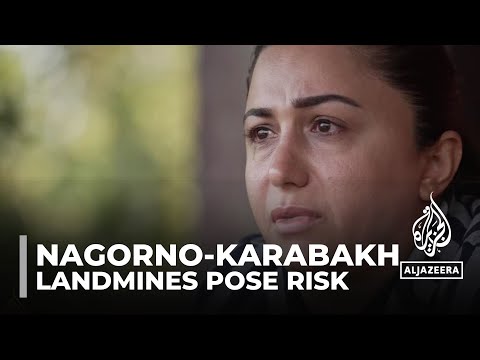
Al Jazeera English published this video item, entitled “Demining Nagorno-Karabakh: Landmines pose risk to returning civilians” – below is their description.
Azerbaijan says up to 10,000sq km (nearly 4,000sq miles) of its territory is contaminated with land mines, unexploded munitions and other remnants of its three-decade conflict with Armenia.
Many of the mines are in residential and agricultural areas and have killed more than 3,500 people.
Al Jazeera’s Osama Bin Javaid reports from a minefield being cleared in Horadiz in the Nagorno-Karabakh region.
Subscribe to our channel http://bit.ly/AJSubscribe
Follow us on Twitter https://twitter.com/AJEnglish
Find us on Facebook https://www.facebook.com/aljazeera
Check our website: https://www.aljazeera.com/
Check out our Instagram page: https://www.instagram.com/aljazeeraenglish/
Download AJE Mobile App: https://aje.io/AJEMobile
@AljazeeraEnglish
#AlJazeeraEnglish
#News
#Azerbaijan #Khankendi #Stepanakert #NagornoKarabakh #KarabakhExodus #Karabakh #Armenia
Al Jazeera English YouTube Channel
Got a comment? Leave your thoughts in the comments section, below. Please note comments are moderated before publication.
The video item below is a piece of English language content from Al Jazeera. Al Jazeera is a Qatari state-funded broadcaster based in Doha, Qatar, owned by the Al Jazeera Media Network.
Recent from Al Jazeera English:
Armenia is a nation, and former Soviet republic, in the mountainous Caucasus region between Asia and Europe.
5 Recent Items: Armenia
Azerbaijan, the nation and former Soviet republic, is bounded by the Caspian Sea and Caucasus Mountains, which span Asia and Europe. Its capital, Baku, is famed for its medieval walled Inner City.
5 Recent Items: Azerbaijan
Nagorno-Karabakh, also known as Artsakh, is a landlocked region in the South Caucasus, within the mountainous range of Karabakh, lying between Lower Karabakh and Zangezur, and covering the southeastern range of the Lesser Caucasus mountains. The region is mostly mountainous and forested.
5 Recent Items: Nagorno-Karabakh
 Zaven P. and Sonia Akian in the AUA Akian Art Gallery
The generosity of the Akian family toward the advancement of the American University of Armenia knows no bounds. AUA benefactors and Pillars Zaven P. and Sonia Akian have been involved with AUA for decades, pouring their time, efforts, and financial resources to ensure that the University remains at the forefront of academic excellence in Armenia and the region. From AUA’s commensurate naming of the Zaven P. and Sonia Akian College of Science & Engineering to the recent establishment of the Akian BioScience Laboratory, in that same vein, the Akians recently announced a transformational $9 million gift to name the new AUA Science & Engineering building.
“Zaven P. and Sonia Akian’s support of the University has reached far and helped numerous bright students realize their dreams of obtaining an AUA education. But their contribution goes beyond supporting students — they are investors in the future of Armenia,” expounds Vice President of Development Gaiane Khachatrian.
As part of the Build a Better Future with AUA capital campaign, the University is seeking to accelerate progress and innovation where science, technology, and engineering play a transformative role bridged with the humanities, social sciences, and arts. To accommodate the doubled enrollment projected within the next five years, the University is rapidly expanding its campus. The new Science & Engineering building, to be named the Akian Family Building, will be part of a complex of structures, including a Humanities & Social Science building and a separate Arts building. The latter two will be named the Edward & Pamela Avedisian Building and Paruyr Sevak Building, respectively, perpetuating the most recent capital gift by the Avedisian family.
 Zaven P. Akian in his office, Valencia, CA, 2007aven P. Akian in his office, Valencia, CA, 2007
All three new buildings will be connected through an atrium, named the Founders’ Atrium, which will provide a meeting space for users of all three, with separate entrances into each building. The Akian Family Building is expected to measure approximately 80,000 square feet of usable space and will include space for research and experimentation in physical sciences and biophysics, in addition to classrooms, offices, auditoriums, and other intended uses. It is anticipated that the Building will be ready for occupancy by Fall 2027.
 Zaven P. Akian with his parents, Yervant and Marie, and sister Zevart in Lebanon, circa 1945
 When asked why they were inspired to name the Science & Engineering building at AUA, Zaven comments, “I had felt for a long time that AUA’s College of Science & Engineering needed physical expansion to facilitate the addition of new degree programs in other critical disciplines and state-of-the-art laboratories. I couldn’t ignore the financial need to make this a reality; I wanted to ensure that the College would be transformed into a full-fledged quality STEM educational center in our homeland for generations to come. The recent philanthropy by the Avedisian family inspired me to follow suit and complete the campus master plan.”
The magnitude and longevity of the Akian family’s support for AUA is awe-inspiring. The family patriarch, Zaven Paul Akian, was born in Beirut, Lebanon in November 1942. He received a baccalaureate degree from the International College of the American University of Beirut and emigrated to the United States in 1960 to attend the New York University School of Engineering. A year later, he transferred to Adelphi University, where he studied mathematics and physics. At Adelphi, where he was recruited to play soccer, he participated in the semi-finals of the 1963 NCAA tournament. Upon graduation in 1964, he continued his studies at the University of California, Los Angeles, where he enrolled in the M.S. in applied mathematics and MBA programs. During his graduate studies, he served in the U.S. Army Reserve for six years.
 Sonia and Zaven P. Akian after he received the Medal of Gratitude issued by the President of Armenia, June 2017, Yerevan
Zaven found success through several technology-based business ventures, some of which included partnerships with all U.S. Armed Forces agencies, NASA, and commercial and defense aerospace companies. For over 25 years, he owned and held CEO positions at Western Filter and Puroflow Corporations, hydraulic filtration systems manufacturers for the aerospace industry, both of which he sold in 2008 to Donaldson Company. He is Chairman of the Board at Integra Technologies, which he has funded since its inception in 1998 and of which he is the principal owner. A semiconductor company with research centers in California, Arizona, and Armenia, Integra employs over 30 engineers supporting the development and production of high-power radio frequency devices, pallets, and power amplifiers for avionics and air traffic control, as well as radar systems for defense and commercial applications. Through its differentiated technology in high voltage GaN, Integra has recently become the world leader in innovating and delivering RF high power solutions all around the world. In 1999, Zaven also acquired FluiDyne Fluid Power, located in Fraser, Michigan. FluiDyne, a hybrid manufacturer of hydraulic pumps and valves, which is run by Zaven’s son-in-law, Bernd, for the Akian family. In addition to various commercial and start-up ventures, Zaven has been active in commercial real estate across the U.S. through Akian Capital, LLC, a diversified investment and real estate firm.
 Zaven P. and Sonia Akian on their wedding day, May 1970
 Sonia’s parents, Kerope and Amalia (Hagopjanian) Der Avedisian
In addition to his roster of incredible professional achievements, Zaven served six years as Trustee of the Board of Adelphi University. He currently serves as a member of the Board of Directors for Golden State Bank and on the Board of the Western Diocese Armenian Church Endowment Fund. For his efforts and valuable contributions across multiple organizations in Armenia and the Diaspora, he has received the Medal of St. Gregory the Illuminator (Grigor Lusavorich) by Catholicos Karekin II, the Medal of Gratitude issued by the President of Armenia, and the State of California Legislature’s resolution bestowing him the Armenian ARPA Institute for Research Eternal Flame Award.
 Sonia Akian as a flower girl at a wedding, 1948
 “During my entire professional life, I have been involved in solving complex problems through science and technology. This has been incredibly rewarding and intellectually challenging. I likewise believe that the fields of STEM education will be at the forefront of technological and scientific advancements in Armenia. Indeed, STEM education is most important for the future of Armenia’s economy, as it plays a key role in its sustained growth, stability, and security while enhancing the advancement of the next generation of innovators,” Zaven says, commenting on the envisioned impact of his gift in Armenia.
In 1970, two years after they met on a double date, Zaven and Sonia were married. Sonia was born in Philadelphia in 1945 to parents Kerope and Amalia Der Avedisian. Her father was a survivor of the Armenian Genocide, during which his parents, sister, and brother were killed. Soon after, he served as captain of the cavalry of Armenian freedom fighters under General Sebouh and was also a French Legionnaire. Later in life, he settled in Philadelphia, where he served the Armenian community through various organizations. He and Amalia raised their three daughters — Armena, Malena, and Sonia — with high regard for their Armenian heritage and education. Influenced by her parents, Sonia graduated from Pennsylvania State University with a degree in English and has long been an advocate of access to education for all.
 Zaven P. and Sonia Akian at the ribbon-cutting ceremony for the Akian College of Science & Engineering, 2017
Soon after they were married, Zaven and Sonia started a family welcoming their three children: Lori, Lena, and Haig. All three are actively involved in the multiple initiatives of their family foundation. The Akians have made sure to instill philanthropic values in their children. “We strongly believe that involving our children and grandchildren in our charitable activities is pivotal to passing on our deeply held personal values. We believe in instilling in our children and grandchildren the love of giving while we help them develop a sense of personal responsibility,” they say. Lori Stephan, Lena Akian, and Haig Akian, inspired by their parents as Pillars of AUA, became AUA ChangeMakers in 2020.
For every Akian, philanthropy lies close to the heart and inspires work with many non-profit organizations in Armenia and the United States. Their support of AUA has been driven by their desire to educate the youth of Armenia with Western values that will help the country attain stability and a prosperous, democratic future. “We have been fortunate to have had access to quality education in the U.S., which allowed us to grow personally and professionally. In turn, we wanted to ensure that our homeland would also provide its students the academic space and freedom to pursue their passions and receive, in part, knowledge and skills similar to what we experienced,” Zaven and Sonia say. Zaven has also served on the AUA Board of Trustees since 2012, as well as Chair of its Finance Committee, taking part in decades-long strategic decisions that drove the University to its current position as a leading institution of higher education in Armenia.
The Akian family’s contributions to AUA include namings — the new AUA Science & Engineering Building as the Akian Family Building, and the Zaven P. and Sonia Akian College of Science & Engineering — the establishment of the Akian BioScience Laboratory, and the Akian Art Gallery. Yet perhaps what they see as the most critical, above all, is their support of the University’s scholarship program, which has been far-reaching and impactful.
To date, close to 600 deserving students have benefited from the “Zaven P. & Sonia Akian Scholarship” at AUA. The gift these students received has enabled them to gain access to a Western-style AUA education they would otherwise not have been able to obtain. Through the Akian family’s support, hundreds of students and alumni continue to reap success from the knowledge and resources they have gained at the University and are now thriving leaders in the workforce of Armenia.
As the family looks to a new era of academic excellence at AUA, they are hopeful that the work of the University in STEM education, integrated with the humanities and social sciences, will fuel significant progress in the country. Indeed, their gift is intended to create a powerful wave of impact that creates ripples across Armenia in terms of scientific discovery and technological advancement. AUA President Bruce Boghosian comments, “In recent years, the application of ideas from the STEM fields to the social sciences has given rise to entirely new areas of study, with names like ‘econophysics’ and ‘opinion dynamics.’ These new fields employ methods of mathematics, physics, statistics, and data science to attack fundamental problems in economics, political science, sociology, and psychology. The visionary contributions of Zaven P. and Sonia Akian and their family foundation will help position AUA as a leader in these new and exciting interdisciplinary fields. We are very grateful to them for their willingness to engage with our faculty to explore potential areas of growth and improvement, as well as for their longstanding support designed to place AUA on a trajectory to become a world-class beacon of scholarship and academic excellence.”
Founded in 1991, the American University of Armenia is a private, independent university located in Yerevan, Armenia, affiliated with the University of California, and accredited by the WASC Senior College and University Commission in the United States. AUA provides local and international students with Western-style education through top-quality undergraduate and graduate degree and certificate programs, promotes research and innovation, encourages civic engagement and community service, and fosters democratic values. AUA’s Office of Development stewards the University’s philanthropic efforts exclusively for educational purposes.

BY KATY SIMONIAN
The Armenian National Community of America–Western Region will honor human rights activist and the former Prosecutor of the International Criminal Court Luis Moreno Ocampo with the prestigious “Champion of International Justice” award for his unequivocal support of preventing genocide in Artsakh and his lifetime of pursuing justice for crimes against humanity around the world.
The Armenian community will have the opportunity to salute Ocampo’s trailblazing work at the ANCA-Western Region’s annual Awards Banquet which will take place on Sunday, November 12 at The Beverly Hilton.
Following nearly ten months of Azerbaijan’s illegal blockade of Artsakh and its military onslaught which resulted in the forced depopulation of Artsakh, the ANCA-WR Board seriously considered canceling this year’s Awards Gala.
However, remembering the inspiring words of Artsakh Foreign Minister and last year’s Freedom Award honoree David Babayan, who is currently unlawfully imprisoned in Baku, the ANCA-WR Board decided that it must not show weakness in the face of Azeri aggression and that it must forge ahead in a show of unity and resilience against the injustices inflicted on our people, pledging to donate a portion of the proceeds toward humanitarian assistance for Artsakh genocide survivors.
A few short weeks ago, while speaking at a Congressional Hearing for the Tom Lantos Human Rights Commission, Ocampo articulated a clear, declarative rejection of any refusal to call Azerbaijan’s actions against Artsakh a case of genocide in the name of preserving negotiations.
“The negotiation is between a genocider and his victims. You cannot ask for a negotiation between Hitler and the people of Auschwitz. It’s not a negotiation. You have to stop Auschwitz and then discuss negotiation. And that, I think, is the secret here,” he said at the hearing.
Ocampo’s words and presence at the Congressional Hearing offered an unprecedented display of support from one of the world’s most influential figures in international criminal justice. The context he provides with his detailed report on the current conditions in Artsakh, including the blockade that has pushed 120,000 Armenians to the brink of starvation, demonstrates that the Azeri government is clearly and incontrovertibly attempting to commit genocide against Christian Armenians in Artsakh.
“You cannot be involved in negotiations when President Aliyev uses genocide as a method of negotiation,” said Ocampo, as he continues to urge the Biden Administration to take a declarative stance to end Azerbaijan’s genocidal blockade of Artsakh.
“Having the support of Luis Moreno Ocampo during one of the darkest moments in our history offers all Armenians a sense of hope, knowing that a human rights defender of his caliber is committed to protecting the people of Artsakh and securing the safety of the Armenian homeland. History will remember him as a man of honor who spoke the truth, sounding the alarm to prevent crimes against humanity in the name of justice,” said ANCA-WR Chair Nora Hovsepian, Esq.
“We salute Mr. Ocampo and continue to urge lawmakers across the United States and around the world to heed his word and take action in preventing further crimes against humanity in Artsakh,” added Hovsepian.
Ocampo’s words carry a great deal of weight across the international community.
A living legend who served as the First Prosecutor of the International Criminal Court from 2003-2012, Ocampo has been at the forefront of pursuing justice in the name of peace and democracy for over fifty years. Born in Argentina, Ocampo trained at the University of Bueno Aires before starting his career as a Prosecutor.
In 1985, he made history while serving as Assistant Prosecutor in the Trial of the Juntas, which prosecuted the heads of the military Juntas that governed Argentina during the country’s last military dictatorship in 1975. The prosecution proved criminal responsibility against former Presidents Jorge Rafael Videla and Roberto Viola, Admirals Emilio Massera and Armando Lambruschini, and Brigadier Orlando Agosti, who were all convicted on December 9, 1985. This was the first case since the Nuremberg Trials where miliary commanders faced accountability for mass killings of the country’s citizens. Argentina 1985, a film chronicling the harrowing efforts of Ocampo and his fellow prosecutors, was released in 2022 and is available on Amazon Prime after becoming Argentina’s official film submission for the Academy Awards.
Following the landmark prosecution, Ocampo continued his commitment to seeking justice against the Juntas who sought to flee prosecution and successfully facilitated the extradition of many, including General Guillermo Suárez Mason from California in 1988.
During the 1990s, he joined the private sector, whilst maintaining his commitment to human rights by taking on cases of corruption across the public and private sectors. His experience made him a prominent voice across the international community and he used his platform by hosting a television series, Fórum, la corte del Pueblo, which gave audiences a window into the process of mediation.
After years of serving as a jurist across the field of human rights, Ocampo made history in 2003 when he was unanimously elected as the first prosecutor of the newly founded International Criminal Court. During his nine-year tenure as prosecutor, he opened investigations in the Democratic Republic of the Congo, Uganda, the Central African Republic, Kenya, as well as Darfur and Libya, at the request of the UN Security Council, and in Côte d’Ivoire at the request of national authorities.
His unique insight and background equipped him with formidable antennae to pursue cases of crimes against humanity and leaders with a complete absence of empathy and regard for the law, chief among them being Omar al-Bashir who Ocampo accused of crimes against humanity in Darfur. His office prosecuted Bashir, after investigations proved he had caused the deaths of over 300,000 people including a UN peace keeping force.
Under his leadership, the first trial of the ICC resulted in the conviction of Thomas Lubanga, who was convicted of war crimes and the use of child soldiers in the Congo. As fate would have it, the legendary Ben Ferencz, who served as prosecutor at the Nuremberg Trials, closed the prosecution at age 93 – a fitting connection for Ocampo, who embraced the legacy of Nuremberg in seeking justice for his country of Argentina.
Ocampo went on to prosecute cases in Sudan and Kenya, with his trademark steadfast dedication to holding those in power accountable for their actions and maintaining a strong stance against corruption that would cause harm to developing democracy. As the first prosecutor, he set crucial precedents for what is possible when achieving international criminal justice, proving that victims of crimes against humanity can and must be heard in order to heal and to prevent future crimes.
After his tenure at the ICC was completed, he carried on with his groundbreaking work, applying pressure to the UN Security Council in many high-profile cases, as he joined the campaign group Yazda, which sought to persuade heads of state to recognize the crime of genocide in support of the Yazidi community of Iraq. He is a senior fellow at the Jackson Institute for Global Affairs at Yale University and a senior fellow at the Carr Center for Human Rights Policy at Harvard University.
As a man of immense humility and grit, he has never chosen to shy away from challenging cases or be discouraged by the often-deafening silence of the international community on matters of genocide prevention. His presence, speaking truth to power on behalf of the Armenian community has been quite impactful. “This is an ongoing genocide. This is happening now,” he told the Congressional hearing. “Genocide under Article IIC requires just creating the conditions to destroy a people … blocking the Lachin Corridor with its life systems for the Nagorno-Karabakh people is exactly creating those conditions.” His words offer a stern warming to the United States against any complicity in what is clearly an act of genocide by all legal and moral standards.
After the most recent horrors that took place in Artsakh which saw Azerbaijan’s forces attack innocent civilians, forcing over 100,000 Armenians to flee their ancestral lands, Ocampo voiced his position once again in a scathing article in The Washington Post, condemning international complacency in failing to prevent a second Armenian Genocide. His article calls for international intervention and the need for acknowledge the crime of genocide, writing “The world must call the crime by its proper name. Resistance to using the term “genocide” has been a long-standing problem in international affairs. In April 1994, most U.N. Security Council members refused to label the mass killings in Rwanda as genocide. Little has changed in thirty years.” Ocampo’s command of the geopolitical nuances at the backdrop of international complacency is matched only by the clarity with which he condemns all who are willfully complicit in allowing what he calls “the Armenian genocide of 2023” to occur.
One of the greatest enemies of progress is the cold, glazed wall of indifference. Such walls cannot be broken with force, but rather with the blazing light of truth, melting barriers of injustice and fear. Luis Moreno Ocampo has dedicated his life to being a light for those without a voice in order to create spaces in which people may be heard and justice can be accomplished. The light he continues to shine on the people of Artsakh serves as a warning for all nations and a call to action to prevent genocide from ever again occurring in the name of global accountability and peace.
For more information about Luis Moreno Ocampo’s extraordinary work for global human rights, genocide prevention and justice, and to purchase tickets for the 2023 ANCA-Western Region Awards Banquet, please click here. A portion of the proceeds from this year’s gala will be donated to support Artsakh Genocide survivors.
The Armenian National Committee of America – Western Region is the largest and most influential nonpartisan Armenian American grassroots advocacy organization in the Western United States. Working in coordination with a network of offices, chapters, and supporters throughout the Western United States and affiliated organizations around the country, the ANCA-WR advances the concerns of the Armenian American community on a broad range of issues in pursuit of the Armenian Cause.
Azerbaijan’s Aliyev Hopes Meeting Will Give Impetus To Peace Process For Nagono-Karabakh Radio Free Europe / Radio Liberty

The UN mission will visit Karabakh again in the coming days, Azerbaijani President Ilham Aliyev said at a meeting with Hans Henri Kluge, the regional director for Europe at the World Health Organization.
He noted that “in the near future, the office of the UN Resident Coordinator in Azerbaijan, together with representatives of the relevant specialized agencies of the organization, will again visit those territories.”