
Day: October 5, 2023
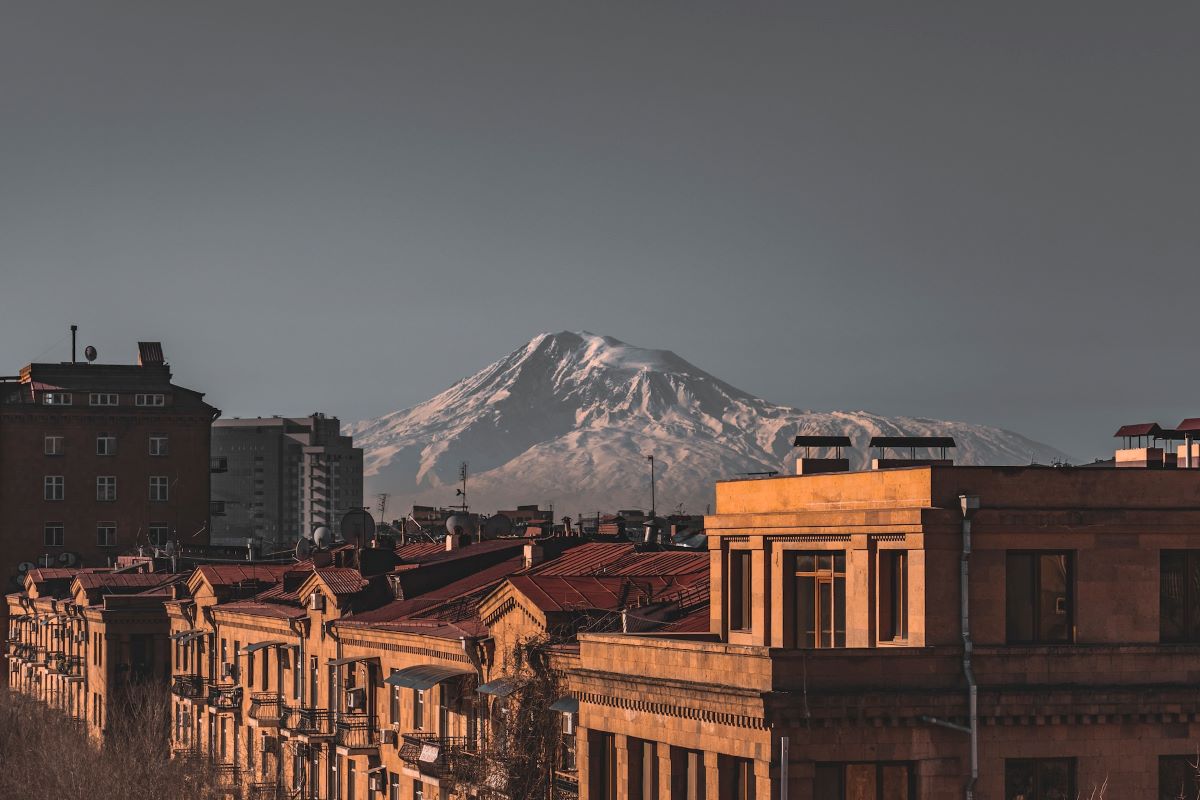
How the issue of housing for Karabakh Armenians is solved
Almost all residents of unrecognized NKR have already moved to Armenia, more than 100 thousand people. People started moving since September 24, when Azerbaijan, after a 10-month blockade, opened the Lachin corridor and allowed movement through it towards Armenia. On the same day, the Armenian Prime Minister said that the homeland “will accept with all care the sisters and brothers leaving MK”.
Places for accommodation were prepared for them in advance. According to the latest data, out of 100,625 arrivals, more than 59,000 people have used the free housing provided by the government. The rest intend to resolve the issue on their own.
JAMnews tried to find out whether they manage to find housing, what they can count on now, based on the offers on the real estate rental and sale market, whether the prices are affordable. It turned out that after the arrival of Karabakh Armenians the rent prices have increased many times, at the same time, some local residents provide housing to compatriots arriving from NK for free.
About the situation – from the words of those who have arrived and those who are trying to accommodate them.
- “Let’s sacrifice NK to punish Pashinyan” – Tom de Waal on Moscow’s position
- France to provide military equipment to Armenia. Unexpected statement in Yerevan
- “NK issue will become a bargaining subject for Baku with Russia and the West”. Opinion
“The main thing is that I managed to move to Armenia”
Liana, 25, is one of thousands who have moved to Armenia. She says that during the hostilities, they could not even hope to get to Armenia alive:
“All hope was on Askeran airport, near which we gathered with the whole family – in my grandfather’s house. We decided to be in one place so that in case of any problems, we could overcome them together.”
The excitement that appeared when Azerbaijan opened the Lachin corridor faded with the realization that they had only one car for several families and would not be able to leave together.
“Then our friends offered to take some of our relatives in their car. Since I was with my child, we decided that we should take us out first,” says Liana.
On the night of September 24, she was already in Armenia and checked in at the checkpoint near the village of Kornidzor.
“To the Red Cross staff asking about our needs, I told them what I needed for my one-year-old baby. I refused the free housing provided by the government. There are people in a more difficult situation, they have no relatives in Armenia. Let them have it,” says Liana, who and her family are still staying with relatives in a village in Syunik region.
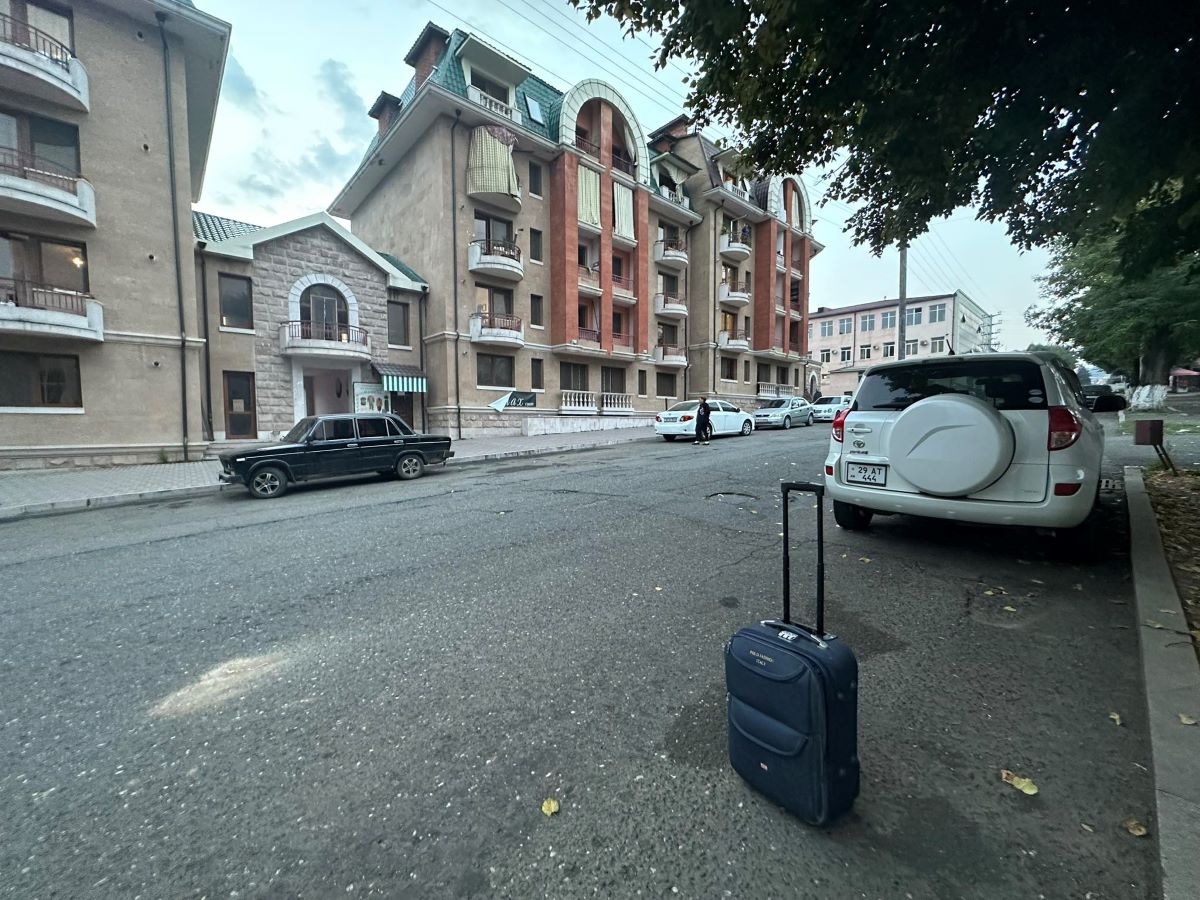
Most people prefer to settle in Yerevan
Now Liana and her husband are actively looking for an apartment in Yerevan.
“Every day, from morning till evening, we look through social networks, websites, call a lot of people, but we cannot find an apartment at an affordable price.
They ask for 300 thousand drams ($715) for a one-room apartment. Plus prepayment, plus interest for brokerage services. This is too much for people who left everything and moved out. We left two apartments in the center of the capital, and here we can’t find one for rent,” she says.
The young family decided to move to Yerevan, expecting to find a highly paid job here.
“My husband is a specialist in logistics, he also has experience as a manager in a restaurant. And I am a historian. I think it will be easier for us to find work in the capital,” she explains.
This is what many Karabakhis who have moved to Armenia think. The resulting high demand is the reason for the sharp rise in apartment rental prices.
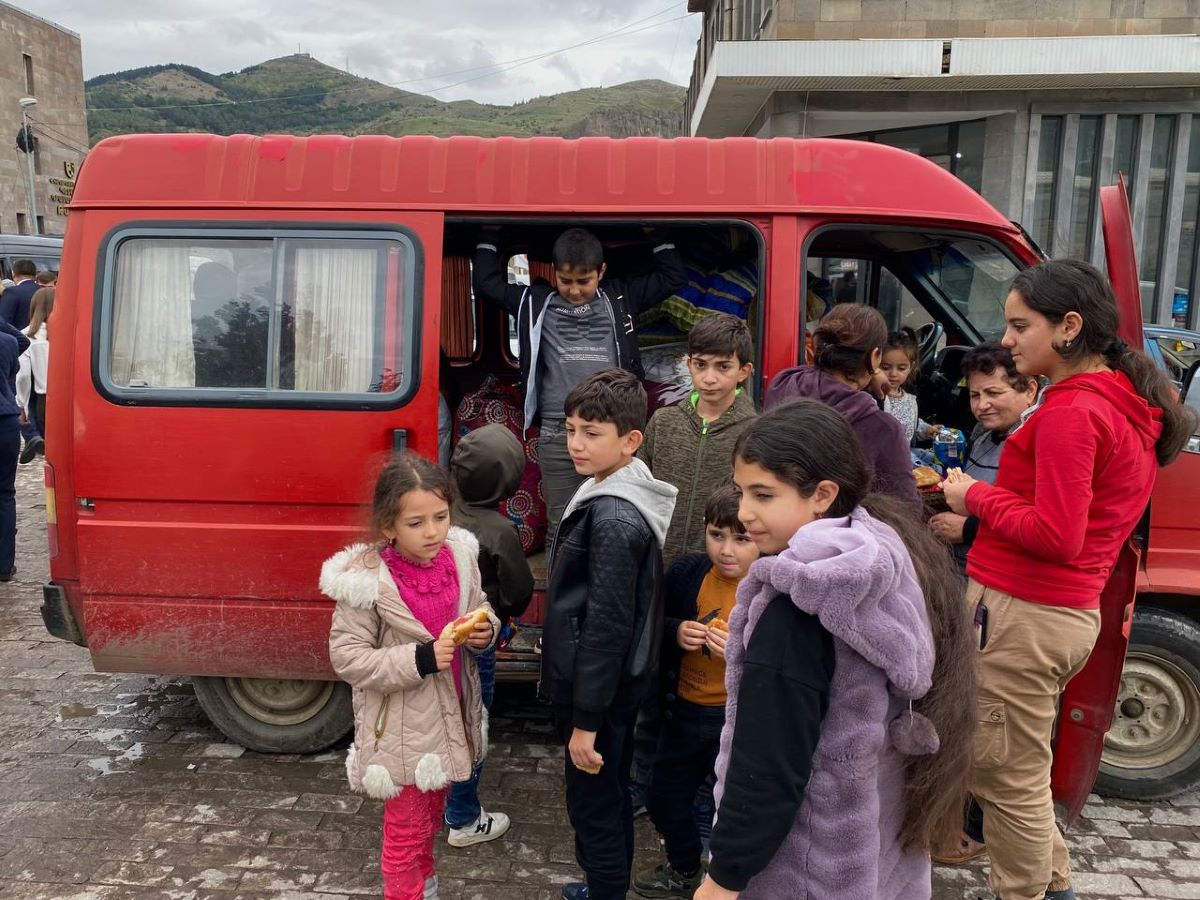
Demand is several times greater than supply
“With the influx of a large number of people from NK, the real estate market has become chaotic. In Yerevan and surrounding areas, demand exceeds supply several times over. In the first two days alone, rents on the real estate market increased by 30-40 percent,” says economist Suren Parsyan.
“From the moment they announced the relocation of Artsakh residents to Armenia, in front of our eyes, apartment owners began to raise the prices of apartments on electronic sales platforms every half an hour. As a result, an apartment rent of 150,000 drams ($350) has doubled or more in a matter of hours,” says Andranik Harutyunov, director of the Silver Rea real estate agency.
Along with this, finding an apartment in Yerevan has become almost impossible, he said:
“There is no vacant housing in Yerevan now to rent out. I have many friends from Artsakh who have asked me to find them an apartment, but I can’t find anything”.
Suren Parsyan reminds that this is already the second sharp jump in prices on the real estate market for the last three years. And now it has affected insolvent Karabakh residents.
“In 2022, when the Russian-Ukrainian war started, the rent for apartments doubled. Over the past 5-6 months, along with the departure of Russians and the increase in the supply of apartments in new buildings, prices have decreased, and a certain stabilization has already been observed in the real estate market,” says the economist.
Andranik Arutyunov, who actively worked with Russian re-locatees, emphasizes:
“Apartment rental prices were affordable for most Russians who moved to Armenia. These were mostly highly paid IT specialists. But for the exhausted Artsakh people, who lived in a blockade for 10 months without a salary, it is very difficult to pay 300 thousand drams or more per month”.
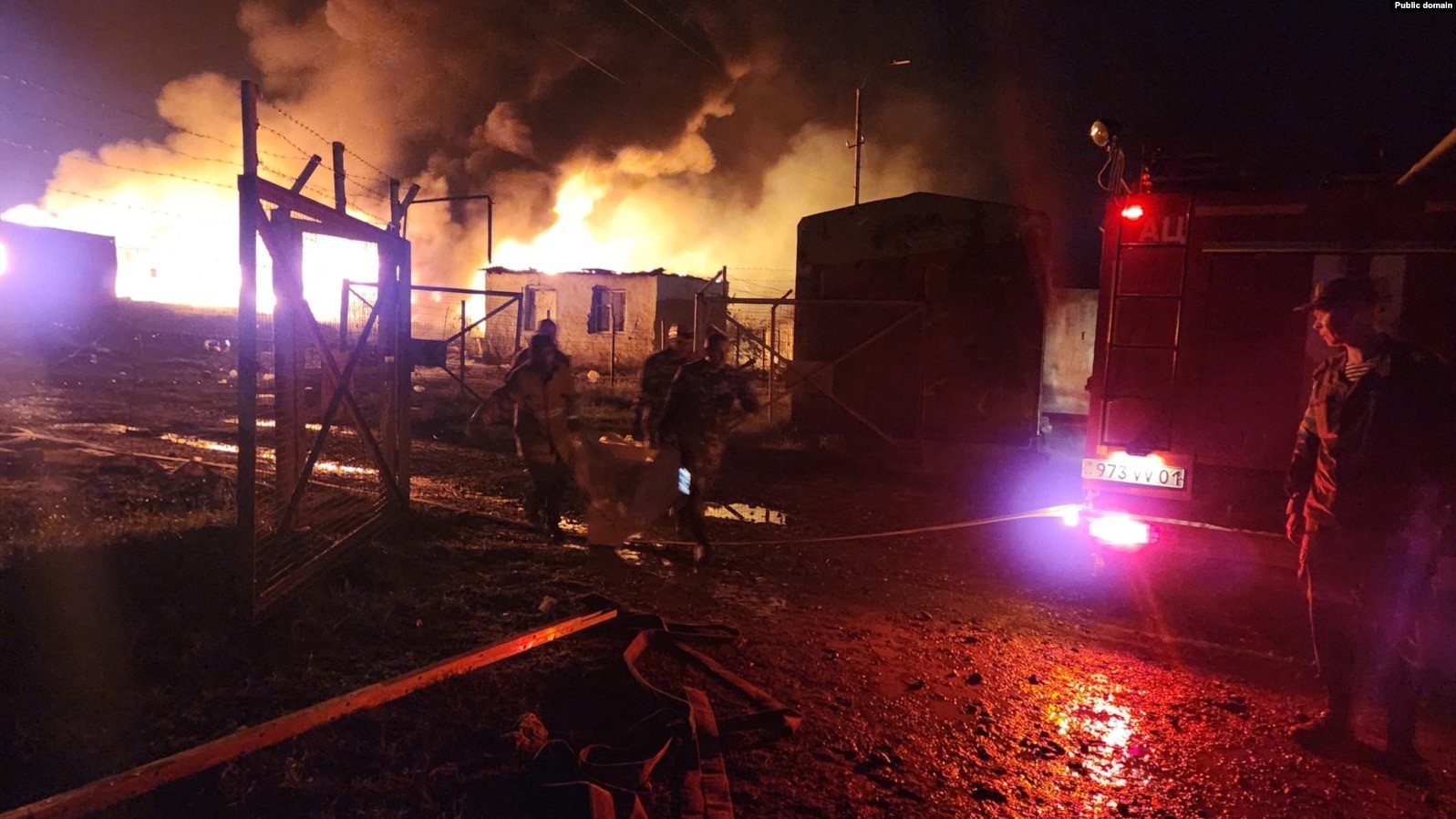
Why do many people refuse government-provided housing?
Economist Suren Parsyan explains this by the following circumstances:
“Some of them do not want to be in the regions bordering Azerbaijan, they consider it dangerous. Some of them definitely want to live in Yerevan – their child needs to get an education, or they want to work in the capital. Some of them are simply unaware of various support programs, offers of housing in the regions. Some of them are simply tired, exhausted and do not want to wait in lines for hours to officially register and get something from the government”.
He says many people headed to Yerevan with their families immediately after entering Armenia, not assuming that they would not even find a place to sleep:
“I think we need to work with people, raise their awareness. It is necessary to explain the risks of not having official registration and refusing offers of accommodation. At least for a short while, one should take the opportunity to settle in the places offered by the state, have a rest, take care of the priority needs of the family, and then look for a job and housing near the place of work.”
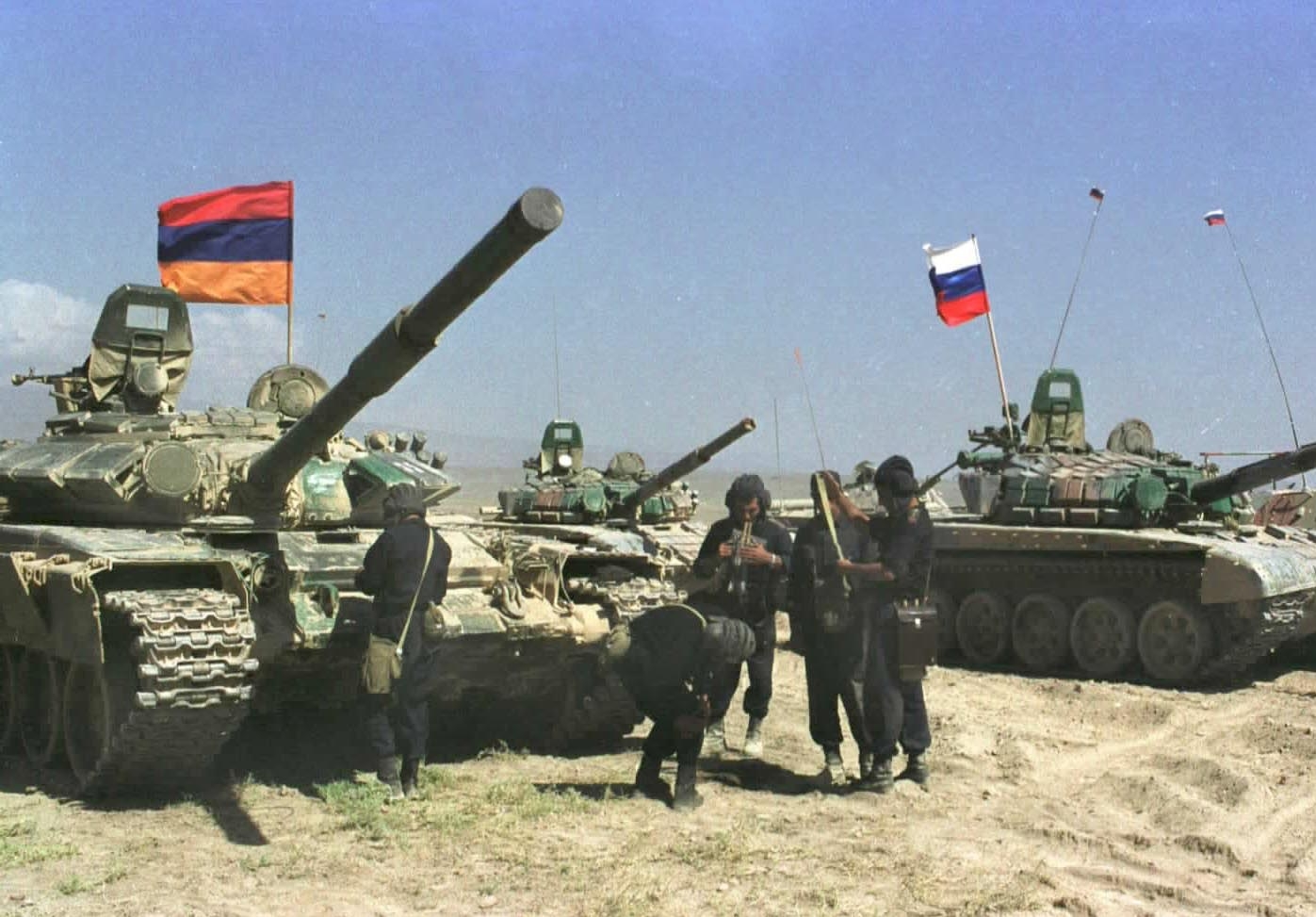
Free housing offers
In parallel with the increase in rents, more and more offers of free housing appear every day, especially in the villages. As in the days of the Karabakh war in 2020, so now individual residents of Armenia, groups of people, and businessmen are trying to support their compatriots with their own efforts.
Pages and groups have been created on various social media platforms to collect offers of vacant apartments and houses in cities and villages.
Separate platforms have appeared to provide the newcomers with jobs, additional humanitarian aid, household necessities and furniture.
Active work is underway to resettle Karabakh students in Yerevan families who are ready to provide them with a room in their apartments without payment.
Suren Parsyan participates in the programs supporting students from Nagorno Karabakh. He says that many families have expressed readiness to host young people in their homes, which will allow them to adapt faster and resume their studies in Yerevan universities.
The economist considers charitable projects implemented by individuals and organizations important, but sees the need to coordinate the work:
“The government, individuals and organizations should be aware of each other’s actions, so that the result would be more visible and the work would be more effective.”
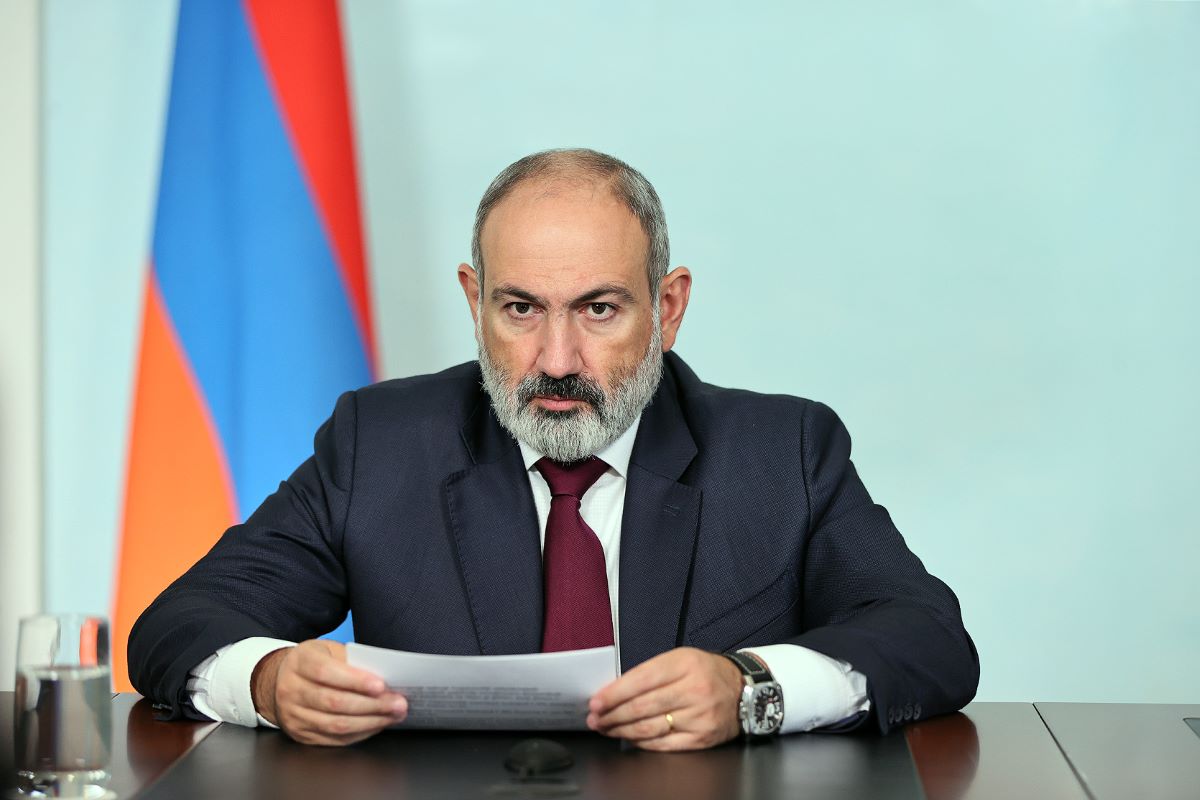
“Armenia will receive our brothers and sisters leaving NK” – Pashinyan
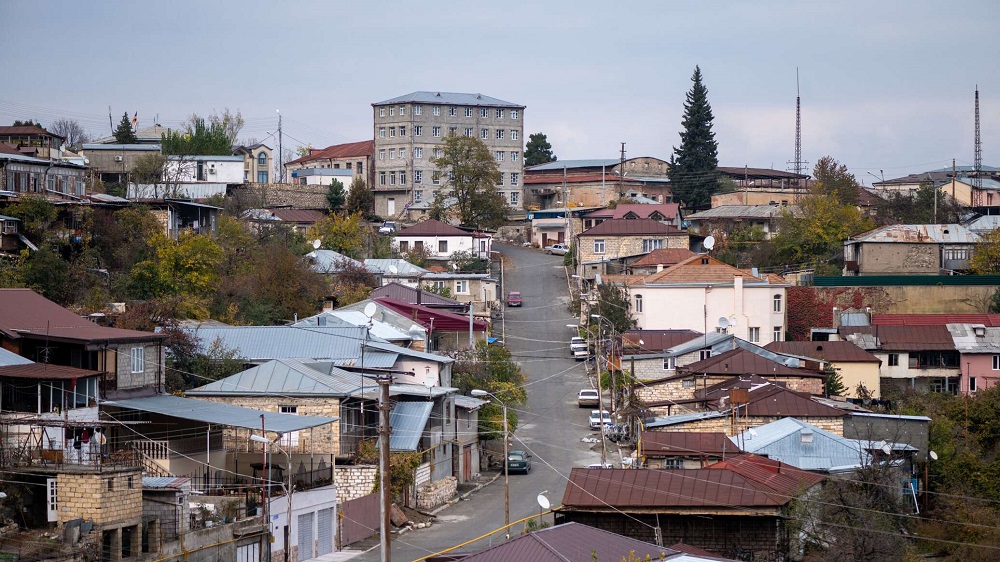
People need assurances of safety
If in the first days, when people started arriving from NK, it was unclear how many thousands of people would move to Armenia, now another question has arisen: what percentage of the displaced people will stay.
“I can’t say how long we will stay in Armenia. These are such times now that you don’t know what will happen in an hour. I was playing with my child at home when the bombing started in Artsakh, everything changed in a second. I don’t know what will happen in an hour or a day, where we will end up,” Liana says.
According to economist Suren Parsyan, Armenia should make every effort to ensure that people arriving from NK do not leave:
“The Armenian government should integrate Artsakh people by providing them with housing, land, education, jobs and, most importantly, a sense of security. Many of them are IDPs for the second time and are already tired.
Armenia should give them security guarantees so that they see their future here. Everything should be done so that the Artsakh people stay, not leave. They are smart, strong, active people. The state should strive to increase the intellectual potential of the country and the number of population”.
Follow us – Twitter | Facebook | Instagram
How the issue of housing for Karabakh Armenians is solved
Contents:
Third war over Karabakh crystallizes a new balance of power in the South Caucasus
Iulia-Sabina Joja
Director, Black Sea Program

-
The final military episode of the Azerbaijani-Armenian conflict over Karabakh seems to have ended, and the massive exodus of Karabakh Armenians will have profound and lasting social, political, demographic, and economic implications for the wider region.
-
With Moscow and Tehran apparently no longer able or willing to actively support Yerevan in any future armed standoffs against Baku, only the West would have the clout to prevent another war in the region, should the threat of violence reemerge.
The final military episode of the Azerbaijani-Armenian conflict over Karabakh seems to have ended. The third Karabakh war lasted only 24 hours, concluding on Sept. 20, with the separatist Armenian Karabakh military forces capitulating. Unlike in the previous two wars — of 1988-1994 and September-November 2020, respectively — this time the Republic of Armenia stayed out of the fighting. As Baku claimed victory, a large exodus quickly ensued. Over the next week, 100,000 ethnic Armenians from Karabakh, roughly 80% of the heretofore disputed territory’s total population, fled to Armenia. The social, political, demographic, and economic implications of this refugee wave will be felt across the region in the years to come.
So what next for the South Caucasus? Two of the neighboring powers that have dominated the region for centuries — Iran and Russia — notably avoided getting involved in the latest deadly exchanges in Karabakh. On paper, both back Armenia, with Moscow being a treaty ally; and Russia once more negotiated the ceasefire. But Yerevan is apparently keen to rid itself of its long-term patron: Illustratively, Armenian Prime Minister Nikol Pashinyan declared his country’s security guarantees “ineffective.” On the other hand, Turkey, as Azerbaijan’s most important ally, seems to have stepped up as the region’s most influential power. The West — both the United States and the European Union — have played a limited role.
Even with hostilities over for now, the most contentious issue remains the 27-mile border between Iran and Armenia. Azerbaijan wants to develop a parallel east-west land bridge (which Baku calls the “Zangezur Corridor”) across this Armenian territory to connect to its Nakhchivan exclave. But such a land bridge — if Azerbaijan manages to secure extraterritorial rights for itself there — would effectively cut Iran off from Armenia. According to Turkish President Recep Tayyip Erdoğan, the Iranian government has dropped its vehement opposition to the Zangezur Corridor. With Moscow and Tehran apparently no longer able or willing to actively support Yerevan in any future armed standoffs against Baku, only the West would have the clout and relatively impartiality to prevent another war in the region, should the threat of violence reemerge. In the aftermath of the Third Karabakh War, the coming months will be crucial to stabilize the South Caucasus for the long term.
Follow on Twitter: @IuliJo
Menendez case unlikely to be a game changer for US-Turkey ties
Gönül Tol
Director of Turkey Program and Senior Fellow, Black Sea Program

-
With Sen. Bob Menendez stepping down temporarily from the chairmanship of the Senate Foreign Relations Committee, President Recep Tayyip Erdoğan is hopeful that Turkey’s stalled bid to purchase F-16 fighter jets from the U.S. might soon be resolved.
-
But the goodwill generated by Turkey’s early moves on Ukraine has been dampened by Erdoğan’s decision to hold up NATO expansion, and Washington’s frustration with Erdoğan’s U-turns means that Sen. Menendez is not Ankara’s only problem.
On Sept. 22, federal prosecutors accused a top Democrat and long-time critic of Turkey’s President Recep Tayyip Erdoğan, Sen. Bob Menendez (D-N.J.), of accepting hundreds of thousands of dollars in cash, gold bars, and other gifts in exchange for using his position as the chairman of the Senate Foreign Relations Committee to benefit the government of Egypt and three New Jersey businessmen. After the indictment, Menendez stepped down temporarily from his committee chairmanship, in line with Senate Democratic rules. President Erdoğan is hopeful that this will pave the way for the resolution of Turkey’s stalled bid to purchase F-16 fighter jets from the United States to modernize its Air Force.
In 2021, following Ankara’s removal from the F-35 program in 2019 due to its purchase of Russia’s S-400 missile-defense system, Turkey made a request to its North Atlantic Treaty Organization (NATO) ally to buy 40 Lockheed Martin-made F-16 fighter jets and nearly 80 modernization kits for its existing warplanes. The Biden administration backs Turkey’s bid, but many in the U.S. Congress have opposed the sale, citing Erdoğan’s problematic foreign policy behavior and record on human rights. Russia’s full-scale invasion of Ukraine helped to ease some of the anti-Erdoğan sentiment in Congress. While they remained critical of many of Erdoğan’s policies, some members appreciated Turkey’s early stance in the conflict. Shortly after Moscow’s February 2022 invasion, Turkey officially labeled Russia’s move as a war, which enabled Ankara to invoke the Montreux Convention and restrict some warships from passing through key waterways to the Black Sea. It also sold drones to Ukraine. These moves helped Erdoğan accumulate goodwill among some formerly critical members of Congress.
That goodwill, however, is now mostly gone thanks to Erdoğan’s decision to hold up enlargement of NATO to extract concessions from the West. Erdoğan dragged his feet on Finland’s and Sweden’s accession for months before finally agreeing to let Finland into the Alliance in March. Sweden’s accession is still waiting. The Biden administration had hoped to welcome Sweden as a NATO ally at the Alliance’s summit in Lithuania in July. The Turkish side had assured the administration it was going to happen, but at the last minute, President Erdoğan told reporters that Sweden’s NATO accession should be linked to Turkey’s membership in the European Union. Erdoğan’s U-turn angered the U.S. administration and Congress. Everyone in Washington is now skeptical about Turkey’s assurances that its parliament will approve Sweden’s bid in October. “I will believe it when I see it,” a Department of Defense official who has been involved in the discussions told this author recently.
Erdoğan wants Washington to approve the sale of the F-16s first, before he lifts his opposition to Sweden’s accession. Washington, for its part, wants to see Sweden in NATO first, before moving ahead with the sale.
Washington’s frustration with Erdoğan’s U-turns means that Sen. Menendez is not Ankara’s only problem. Menendez’s legal troubles might make things less complicated for Erdoğan, but there is still plenty of resentment in Washington at his efforts to hold NATO enlargement hostage to his ever-growing list of demands.
Follow on Twitter: @gonultol
America’s policy on Iran remains a weak link in its Middle East strategy
Brian Katulis
Vice President of Policy

-
As the Biden administration steps up its diplomatic engagement in the Middle East, Iran continues to pose a challenge to regional stability and order via its nuclear program, destabilizing regional actions, support for terrorism, repression of its own people, and stepped-up efforts to build cheap military drones that it provides to other malign actors.
-
Iran’s drone program undercuts Middle Eastern stability, puts American soldiers in harm’s way, and prolongs the war in Ukraine by providing military support to Russia.
The Biden administration has increased its diplomatic engagement in the Middle East in an effort to set the conditions for a possible normalization deal between Saudi Arabia and Israel. Yet achieving diplomatic progress in a volatile part of the world that faces many security challenges is difficult, and one of the biggest threats to regional stability comes from Iran.
Iran’s nuclear program continues to exceed the limits set by the 2015 nuclear deal, and Tehran’s lack of full cooperation with the International Atomic Energy Agency (IAEA) raises concerns about a possible nuclear arms race in the near future. The country continues to maintain a network of non-state groups that conduct attacks and pose threats around the region, prompting the United States to step up its military operations and drills with Middle Eastern partners. Moreover, the Iranian regime’s ongoing repression of its own people and extensive human rights abuses, accelerated last year in response to the massive popular protests against the death of Mahsa Amini, show the measures the leadership will take to maintain its grip on power.
One other dimension of the challenges posed by Iran is its burgeoning drone warfare effort, a program that not only undercuts Middle Eastern stability but also offers support to Russia’s war against Ukraine. In a briefing at the U.S. Defense Intelligence Agency’s (DIA) headquarters this past week, this author saw firsthand the unmanned aerial vehicles (UAVs) produced by Iran and employed in places like Iraq and Ukraine. The U.S. government briefer hewed closely to this unclassified report on the subject produced by the DIA last summer and discussed how Iran remains an “acute and persistent threat” across the Middle East, despite recent trends toward diplomatic de-escalation between Iran and some of its neighbors.
The reassembled debris on display from drones recovered in Iraq and Ukraine included components traced directly back to Iran. The briefer explained how attack UAVs of this type, ranging in cost from $10,000-$20,000, have become an important tool in the Iranian regime’s efforts to shape the security landscape across the Middle East. These drones have been used against U.S. troops in the region. At the same time, several news organizations have documented how Iran has aided Russia in producing thousands of these unmanned systems for use against Ukraine. The drones are reportedly constructed with certain components built by corporations in Europe and the United States, demonstrating the critical limitations in the West’s efforts to disrupt Iranian (and Russian) military-industrial supply chains. Iran’s drone program, with its close links to Russia, has added another dimension to the already complicated effort to advance a new U.S. policy on Iran.
Last week, much of the U.S. policy discussion on Iran was consumed by a report contending an Iranian influence operation from nearly a decade ago targeting American and European policy circles. What that mostly self-absorbed debate over those allegations ignored, however, was the grim reality of repeat failures by successive U.S. administrations to live up to the Iran policy goals they had set for themselves.
America’s policy on Iran remains one of the weakest links in its overall approach to the Middle East.
Follow on Twitter: @Katulis
As Libyan strongman explores deepened relationship with Russia, US has multiple sanctions options
Jonathan M. Winer
Non-Resident Scholar

-
Libyan warlord Khalifa Hifter met with U.S. military and diplomatic officials less than a week before visiting Moscow, and there is talk of him trying to push Libya’s House of Representatives to endorse a joint Libyan-Russian defense agreement, which would represent a direct challenge to fundamental American national, regional, and global security interests.
-
In response, Washington could impose sanctions on Hifter under any of three of major U.S. sanctions programs — Russia/Ukraine, Magnitsky Act, and Libya — all of which might readily be applied to his actions.
In the three weeks since Mediterranean Storm Daniel caused the city of Derna’s dams to collapse, resulting in an estimated 4,000 dead and 8,500 missing and presumed lost, the humanitarian catastrophe continues to unfold not only for the families of the dead but for some 43,000 displaced people, including thousands of Libyan children.
While international organizations and aid groups have pledged to help with the rescue, the Benghazi-based de facto military overseer of Derna, Khalifa Hifter, who conquered and took control of the city in June 2018, spent his time seeking to turn the catastrophe to his own advantage. On Sept. 21, he posed for photographs with United States General Michael Langley and Special Envoy Richard Norland while discussing military reunification, countering terrorism, and getting foreign forces out of Libya. Five days later, Hifter popped up in Moscow, where he was given the full red-carpet treatment, before meeting with Russian Deputy Defense Minister Yunus-bek Yevkurov and President Vladmir Putin.
He’d previously met with Yevkurov in eastern Libya on Aug. 22, 2023, one day before the plane crash just north of Moscow that killed Wagner Group head Yevgeny Prigozhin. The parties involved claimed the timing was just a coincidence. With Prigozhin dead, the obvious question for the two sides was whether there was a deal to be had, whereby Hifter could secure still more military, economic, and political support from Russia, while Russia obtained further guarantees that it could maintain its base(s) in Libya indefinitely.
Over the decades, Hifter has worked for many powers, including Russia and the U.S. He was educated and trained as a military officer (and spy) in the Soviet Union in the mid-1970s. On being abandoned by Moammar Gadhafi after losing a war with Chad, Hifter moved to Langley, Virginia, where he reportedly worked for the Central Intelligence Agency (CIA) during the Reagan years. Since returning to Libya amid the 2011 uprising after 30 years of exile, Hifter has taken advantage of relationships with Egypt, Jordan, and the United Arab Emirates, as well as Russia, among others, to secure his position as the country’s most significant warlord.
The U.S. wants the Wagner Group and its state-sponsored “mercenaries” out of Libya, one of the most important regional “keys” to Africa. Russia, with Hifter’s help, intends to keep them there. There is current talk of Hifter asking Libya’s House of Representatives, still controlled by his sometime ally in the east, Aguila Saleh Issa, to swiftly endorse a joint Libyan-Russian defense agreement. Any such accord would represent a direct challenge to fundamental U.S. national, regional, and global security interests.
In response, Washington could impose sanctions on Hifter under any of three of major U.S. sanctions programs: Russia/Ukraine; Magnitsky Act, applied to those who carry out serious human rights violations while lining their pockets; and Libya, recently updated by President Joe Biden, which authorize sanctions for such negative acts as arms violations, actions to delay the political transition, misappropriation of state assets, attacks against Libyan ports, coercion of Libyan state institutions, and the targeting of civilians with acts of violence — all of which could readily be applied to Hifter’s actions.
The U.S. faced significant criticism for the Langley/Norland meetings, which were compared to discussing fire safety with an arsonist. But Hifter would be mistaken to assume that the Biden administration’s commitment to Libya is too weak for it to respond forcefully when faced with further evidence of his allying himself with Russia, the Wagner Group, and Putin.
Follow on Twitter: @JonathanMaWiner
The continued souring of Afghan-Pakistan relations
Marvin G. Weinbaum
Director, Afghanistan and Pakistan Studies

-
Troubled by the surge in domestic terrorism that has come with Taliban rule, Pakistan has increasingly adopted a tough stance toward Afghanistan, with both the acting prime minister and the army chief recently threatening that Pakistan is prepared to take more vigorous military action to root out the Tehreek-e-Taliban Pakistan.
-
Feeling the heat, Afghan authorities seem now to be showing some greater receptiveness to Pakistan’s security concerns, pledging to relocate the TTP away from the border areas and announcing the arrest of 200 suspected militants accused of involvement in attacks on Pakistani security forces.
Pakistan’s having “buyer’s remorse” is a refrain often used to describe how its leaders must be feeling since the Afghan Taliban seized power in Kabul more than two years ago. Their disappointment is with a movement Pakistan had backed since the mid-1990s in the hope that once in power the Taliban would help block India’s influence in Afghanistan and agree to dismantle the sanctuaries that Pakistan’s adversary, the Tehreek-e-Taliban Pakistan (TTP), has established there over the last decade.
Troubled by the surge in domestic terrorism that has come with Taliban rule, Pakistan has increasingly adopted a tough stance toward its western neighbor. In seeking to destroy TTP encampments inside Afghanistan, Pakistan’s military regularly clashes with Taliban forces. In its most aggressive move, in April 2022, Pakistan carried out well-publicized air strikes against TTP training camps across eastern Afghanistan that resulted in the killing of many militants but also dozens of civilians. Pakistan has as well inflicted significant losses on Afghan trade by periodically closing its border with Afghanistan, the last time this past September for nine days at the busy Torkham crossing. Recently, the Islamabad government has announced plans for the deportation of 1.1 million undocumented refugees, using as a pretext their involvement in anti-state activities and crimes.
Pakistan has also raised the sharpness of its rhetoric. During his speech at the 78th United Nations General Assembly (UNGA) on Sept. 22, Pakistan’s interim prime minister, Anwaar-ul-Haq Kakar, asserted that currently, his country’s foremost priority is to prevent and counter all terrorism emanating from Afghanistan. On the sidelines of UNGA, the acting prime minister charged that multiple players in the Taliban regime have vested interests in backing the terrorists. Both he and Army Chief Asim Munir have also recently threatened that Pakistan is prepared to take more vigorous military action to root out the TTP in Afghanistan. Ironically, each has as well questioned the very legitimacy of the Taliban regime to which Pakistan contributed so much over the years to place in power.
Feeling the heat, Afghan authorities seem now to be showing some greater receptiveness to Pakistan’s security concerns. The Kabul government has repeated a pledge to relocate the TTP, which it refers to as “Waziristan refugees,” away from the border areas, and last week the Kabul government also announced the arrest of 200 suspected militants accused of being involved in multiple attacks on Pakistani security forces. An understanding to increase cooperation was supposedly achieved during a recent meeting in Kabul between the Pakistani envoy, Asif Ali Durrani, and Afghanistan’s acting Taliban foreign minister, Amir Khan Muttaqi. But while the Kabul government has apparently given up denying the presence in their country of any anti-Pakistan militants, it has significantly not denounced or severed its long-established ties to the TTP.
Taliban officials have consistently insisted that for Pakistan to meet the challenges posed by its domestic terrorism, it should be doing more on its side of the border. But rather than undertaking systematic military efforts to root out reinfiltrated TTP fighters in Pakistan’s border areas, Pakistani authorities have found it easier to broadly target Afghan refugees illegally residing in Pakistan, accusing them of playing a significant role in deeply entrenched terrorist networks said to be operating across the country. Recently, Counter-Terrorism Departments in Khyber Pakhtunkhwa and Punjab provinces claim to have carried out numerous intelligence-based operations and succeeded in dismantling a large extortion racket benefiting the TTP. They also announced having thwarted a major terrorist attack by apprehending illegal Afghan nationals associated with either the TTP or Islamic State-Khorasan Province.
It remains to be seen how far the governments of Pakistan and Afghanistan are willing to go to curtail TTP activities. The Afghan regime’s long, close working ties and ideological affinities to the militant group leave much room for doubt. Both countries are also burdened by a history of deep mutual suspicions that long predate the Afghan Taliban and the still unresolved ethnic issue of creating a Pashtunistan.
Research assistant Naad-e-Ali Sulehria contributed to this piece.
Follow on Twitter: @mgweinbaum
Photo by EMMANUEL DUNAND/AFP via Getty Images
The Middle East Institute (MEI) is an independent, non-partisan, non-for-profit, educational organization. It does not engage in advocacy and its scholars’ opinions are their own. MEI welcomes financial donations, but retains sole editorial control over its work and its publications reflect only the authors’ views. For a listing of MEI donors, please click here.
 In a landmark deal that marks a significant advancement in Azerbaijan’s space capabilities, Azercosmos, the country’s space agency, has acquired two multi-spectral electro-optical spy satellites from Israel Aerospace Industries (IAI). The acquisition is part of the Azersky-2 program, a strategic initiative that promises to bolster Azerbaijan’s surveillance and reconnaissance capabilities.This is reported by the international publication
 In September, in Baku, the average price of the consumer basket (CB) for 30 types of basic food products of domestic production, compiled by the Turan agency, rose by 3%.In August, the average CB price rose by 0.8%, in July it fell by 3%, in June – by 7%, in May – fell by 7%, in April it rose by 0.7%, in February the price fell by 1%, in January it rose by 2.6%, in December 2022 – by 1%, in November – by 0.3%, in October by 0.7%, in September – by 5%, in August – …
 In a surprising turn of events, Azerbaijan declined participation in a highly anticipated five-way meeting scheduled for today in Granada, Spain, leaving diplomatic circles buzzing with speculation about the reasons behind this decision.Reports of Azerbaijan’s withdrawal from the meeting emerged from Azerbaijani media outlets citing unnamed “private” sources. According to these reports, Azerbaijan had insisted on Turkey’s participation in the meeting, a request that …
 The implementation of any large-scale infrastructure project always begins with the questions – “what political and commercial benefits or losses will it bring me?”, and the new geopolitical realities that have arisen due to the war of the Russian Federation in Ukraine force us to make fateful decisions promptly and immediately.The September events in Karabakh seem to have driven a wedge between Azerbaijan and the West regarding approaches to the final settlement of the …
 The number of girls who received their white judogis in the frames of the social campaign is already one thousand peopleThe “White Suits Girls” campaign implemented in partnership with “Azercell Telecom” and the Azerbaijan Judo Federation has reached its goal. Thousands of girls put on white judogi and joined the social campaign!The “White Suits Girls” aims to encourage girls to develop and participate in sports. The campaign also addresses the issue …