
President of the Republic of Azerbaijan Ilham Aliyev signed a decree amending the decree of the President of Azerbaijan dated August 7, 2015, No. 575 “On approval of the issue, volume, term, and payment conditions of loans subject to issue by the “Agrarkredit” Closed Joint Stock Company non-bank credit organization” under the state guarantee”.
Day: October 5, 2023

Another Karakalpak Activist Facing Extradition To Uzbekistan Released From Kazakh Custody Radio Free Europe / Radio Liberty
The nationalism of the Aliyev regime suffers from chronic pettiness, a self-realization that its banality breeds an artificial eulogization of historical relevance. Limited in historic values that give substance to a society’s conceptualization of its national spirit, the Azeri[1] ethos faces a profound dilemma: its nationalism is defined by its emptiness [in this article “Azeri” is a specific reference to the Azeri Turkic people that comprise approximately 90% of Azerbaijan, while “Azerbaijani” refers to citizens of the state of Azerbaijan – Editor]. This vacuity in its collective consciousness not only suffocates a desire for historical pride, but it also delimits the re-articulation of a modern nationalism.
The scholarly literature notes the conflict in post-Soviet Azerbaijan between Sovietized and emerging identities, giving way to diverging conceptions of culture, identity, ethnicity, and nationality.[2] To fill this void, modern Azerbaijan, under the autocratic leadership of Ilham Aliyev, has doubled down on this emptiness. Lacking its “own” language, alphabet, historical “glory” or exclusive ethnic identity,[3] Aliyev’s Azerbaijan has sought to fabricate an alternative historical and national identity. This fabrication, however, is not the recreation of a new identity, but rather, the negation and absorption of another’s—that of the Armenians. The Azeri nationalism of Aliyev is not so much defined by Azeri-ness as it is defined by it’s anti-Armenianness. Its logic of Armenophobia,[4] then, is not simply an exercise in cultural, racial, and political chauvinism; it is also a necessary precondition of Azeri nationalism.
How has the Aliyev government gone about doing this? It has done so by relying on historical revisionism and promoting a state ideology that embraces the nonsensical. It has attempted to erase and destroy Armenian history in its territories to argue that Armenians never lived on these lands. It made a mockery of itself among the global academic world by claiming that the Azeris are the descendants of the Caucasian Albanians, thus seeking to provide historical substance to the Azeri identity. It has absurdly claimed that the Azeris were the first Christian people of the region, but they in fact converted to Islam only in recent history. It has thrown tantrums when maps of history do not show an “ancient” Azerbaijan. It has destroyed Armenian iconography in an illogical attempt to demonstrate that Armenian language and art never existed. It has internationally proclaimed that not only the Republic of Armenia, but all Armenians of the world are enemies of Azerbaijan, thus qualifying the innate racism of its state policy. It has, in its totality, basically claimed that everything Armenian is actually Azeri. In essence, it has attempted to recreate a culture and history that simply does not make sense… not even to its own people!
But why is modern Azerbaijan doing this? Why is Aliyev humiliating Azerbaijan in front of the learned world and why has he demanded that the nonsensical become state policy? Because nothingness is more terrifying. And herein lies the paradox. To escape its own emptiness, its own collective ontology of desolateness, Azeri nationalism has sought to embrace the culture, history and values of the Armenian. But this embrace requires an act of nihilism: they must kill the author and plagiarize the book. The erasure of the Armenian legacy requires its Azerbaijanization. In this context, anti-Armenianness is a prerequisite for the structuration of post-Soviet Azeri nationalism. Armenophobia is the one dominant concept that nourishes Aliyev’s otherwise empty and malnourished nationalism.
This article in no way suggests that the values, identities or histories of one people (the Armenians) is superior or better to that of another (the Azeris). But the fact remains that these are the precise terms under which Armenophobia has been cultivated by Aliyev and Azerbaijan’s faux “intelligentsia.” A coordinated state policy, the contours of Armenophobia presuppose the dehumanization of an entire people, where hatred and aversion towards an Armenian is embedded in Azerbaijan’s political culture, where disdain for all things Armenian is normalized, where degradation of the Armenian is glorified, and where, in its public discourse, the lowest and most reviled thing that anyone can be is an Armenian. It is this modality of indoctrination that allows a society, among other things, to venerate a cowardly axe-murderer, to celebrate the shelling of civilian populations and to viscerally mobilize into spontaneous protests calling for war and death to Armenians.
That this is an aporia surprises no one: Azerbaijan’s elite are projecting their own sense of insecurity. Knowing and accepting that post-Soviet Azeri nationalism struggled with substance and authenticity, and facing the humiliation of defeat at the hands of the Armenians,[5] the Azeri political leadership found itself asphyxiated by an inability to articulate a national ethos. Hateful and bitter of the Armenian, a phantom had to be constructed to appease this insecurity: the Armenian as a monster, and the subsequent need to dehumanize this monster. The end result was the distinct formulation of Azeri Armenophobia, qualified specifically in grievances against the Armenian people, and normalized as part of mainstream Azeri political culture. Temporally, the development of Armenophobia as state policy remains specific to the Ilham Aliyev regime. While anti-Armenian sentiments were fairly common prior to his administration in Azerbaijan,[6] these were neither systemic, part of state policy, nor methodically entrenched in its political culture. In this context, Azeri Armenophobia is a distinct articulation of the Aliyev regime and an inherent component of its nationalism. Elements of Armenophobia are codified in the laws of Azerbaijan, while precepts of anti-Armenianness are institutionalized in every facet of Azeri society, from education, to media, to basic social discourse. For this regime, and for this form of nationalism, to be Azerbaijani is to be Armenophobic.
Conceptually, an important question presents itself: Why is the Azeri nationalism of the Aliyev regime qualified as empty? A concept, such as nationalism, cannot be finite. It must have substance and authenticity, and most importantly, it must be qualified and justified in and of itself. Thus, in order for a concept to have substance, it must stand on its own legs and fundamentally possess deontological justification. In this context, contemporary Azerbaijani nationalism is qualified as “empty” because it is not defined by its own substance, but rather, by its opposite. It is not defined deontologically, but rather, by its negation. Simply put, it is not defined by its Azeriness, but rather, by its anti-Armenianness.
A concept of emptiness cannot be self-reflective, for there is nothing to reflect upon. Thus, the empty seeks to define itself through its opposite: the external. Armenia is the external to the emptiness of Azeri nationalism. Without the Armenian, however, Azeri nationalism collapses on its face. To satisfy this ideational void, the Azeri elite simply decided to hijack the Armenian and remold it as their own national daemon. Lacking Geist, and in desperate need of a national spirit, these autocrats did what autocrats do best: cheat. They concocted a state ideology that not only lies to its own people about their very identity, culture and history, but to deflect from this lie, they had to demonize the Other: the Armenian.
The emptiness of contemporary Azerbaijan’s nationalism is a cynical dive into the dialectical, a frantic need for self-legitimization, a desperate desire for authenticity and a clear recognition of the Aliyev regime’s ideological impotence. The poverty of its national ethos has led to an intellectual famine, a scarcity in intellection that has birthed a hunger for ideas. This hunger, of course, has been satisfied by absorbing the Armenian. The Armenian, to the political Azeri, is the archetype of historic and national substance. And Azeri nationalism precisely seeks to steal this archetype. It is no wonder that every conception of contemporary Azeri nationalistic value is defined by its negation: the absorption and alienation of the Armenian as historic and ontological reality.
Lithuania is allocating €350k of humanitarian aid to Armenia, Lithuanian President Gitanas Nausėda said in a post on X (formerly Twitter).
The leaders of the two countries caught up on the sidelines of the European Political Community Summit in Granada.
The security situation in the South Caucasus was discussed.
Lithuania is allocating €350k of humanitarian aid to Armenia to address the challenge of migrants’ influx from Nagorno Karabakh, Gitanas Nausėda said.
Caught up with
PM @NikolPashinyan at the sidelines of #EPC in Granada.
Discussed security situation in the South Caucasus.
is allocating €350k of humanitarian aid to #Armenia to address the challenge of migrants’ influx from #Karabach. pic.twitter.com/uGjyrTUs4g
— Gitanas Nausėda (@GitanasNauseda) October 5, 2023
Over 100,000 forcibly displaced people arrived in Armenia after a large-scale aggression unleashed by Azerbaijan on September 19.
Prime Minister Nikol Pashinyan participated in the third summit of the European Political Community in Granada, Spain.
The leaders of more than four dozen countries were welcomed at the venue by the Prime Minister of the Kingdom of Spain, Pedro Sanchez.
Prime Minister Pashinyan also participated in the round table discussion on “Multilateralism, including security and geopolitical issues”.
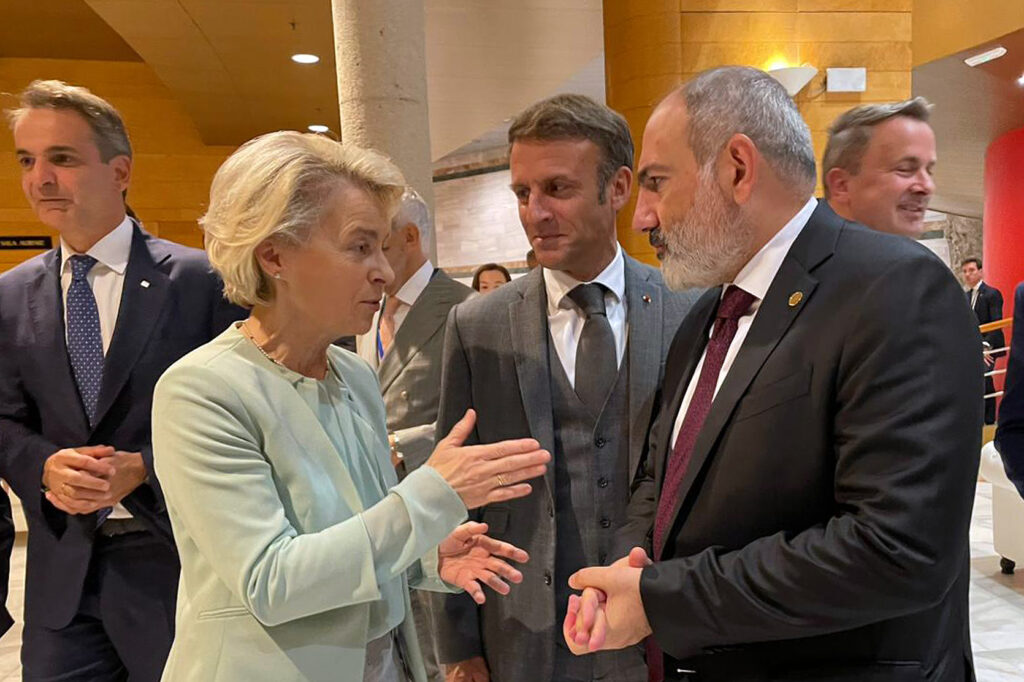
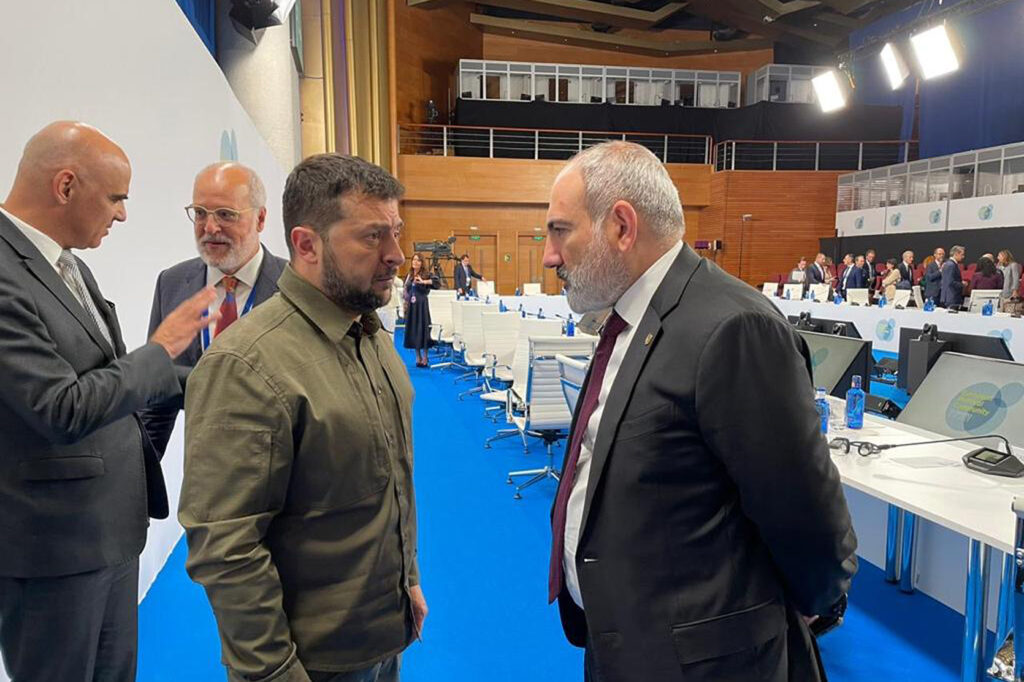
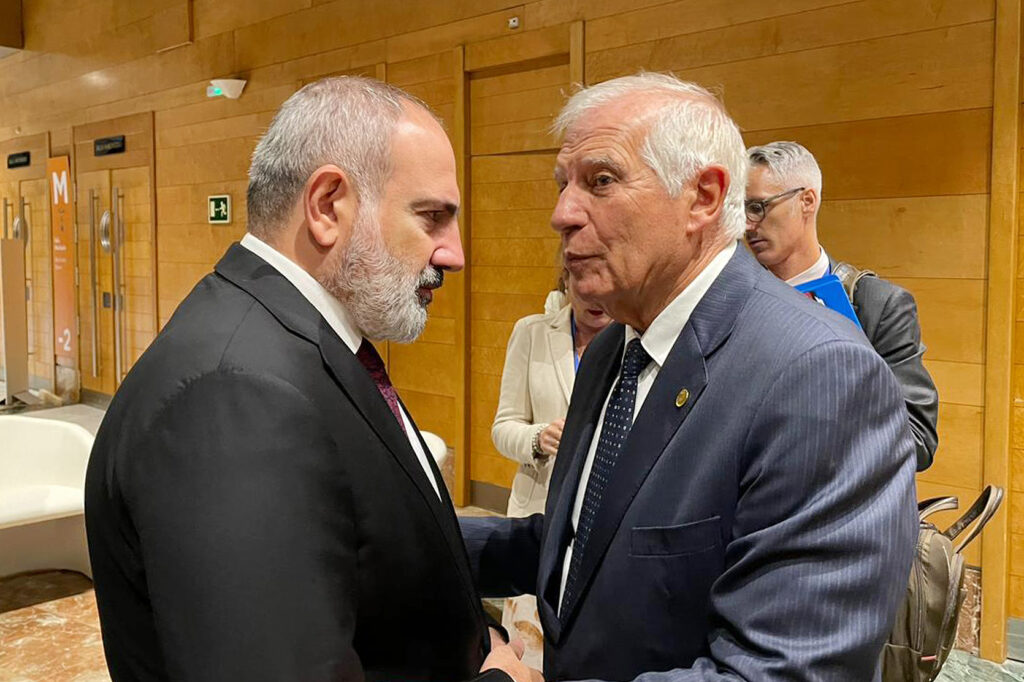

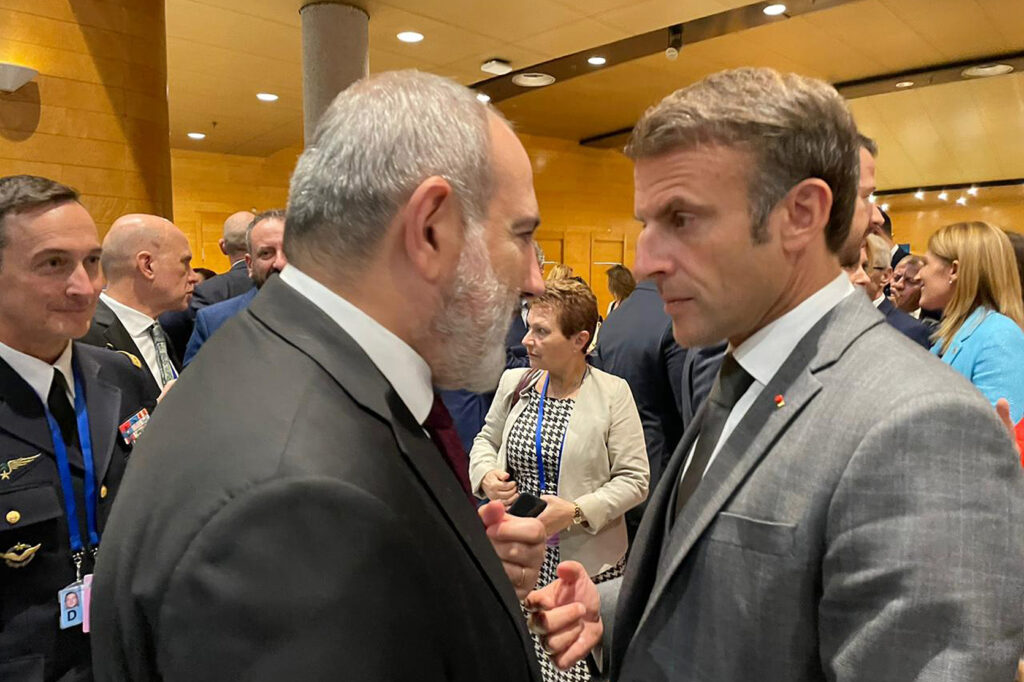
Nikol Pashinyan had short talks with the leaders of a number of countries and institutions within the framework of the summit. In particular, the Prime Minister talked to French President Emmanuel Macron, German Chancellor Olaf Scholz, European Council President Charles Michel, European Commission President Ursula von der Leyen, High Representative of the European Union for Foreign and Security Poliy Josep Borelli, President of the European Parliament Roberta Metsola, Prime Minister of Greece Kyriakos Mitsotakis, Prime Minister of Norway Jonas Gahr Støre, Prime Minister of Finland Petteri Orpo, Prime Minister of Iceland Katrín Jakobsdóttir, President of Lithuania Gitanas Nausėda, Prime Minister of the Netherlands Mark Rutte, Latvian Prime Minister Evika Silina, Croatian Prime Minister Andrej Plenković, Montenegrin President Jakov Milatović, Ukrainian President Volodymyr Zelensky, North Macedonian Prime Minister Dimitar Kovačevski.
Reference was made to issues of mutual interest, including the situation created by Azerbaijan’s policy of ethnic cleansing in Nagorno-Karabakh.
Following Azerbaijan’s military seizure of Nagorno-Karabakh, the European Parliament is set to adopt a strong resolution today condemning Baku’s unjustified attack against the mountainous South Caucasus enclave. As requested by the Socialists and Democrats, the Parliament is calling on the EU to comprehensively review its relations with Baku. The EU should suspend the negotiations on a new EU-Azerbaijan agreement, and reduce EU dependency towards Azerbaijan gas exports.
For the S&Ds, the EU cannot morally accept negotiating a future partnership agreement with a country that blatantly violates principles of international law as well as its international obligations and is thus neither a reliable nor a trustworthy partner, as it was presented when Commission President Ursula von der Leyen announced the energy partnership with Azerbaijan. The S&Ds therefore urge to reconsider the ‘strategic partnership’ with Azerbaijan in the field of energy and to suspend oil and gas imports from Azerbaijan in case of military aggression against the territorial integrity of Armenia.
The S&Ds urge Baku to ensure the rights and security of Nagorno-Karabakh Armenians, and return to negotiations as the only way forwards a sustainable resolution of the decade long conflict between Armenia and Azerbaijan. The S&Ds also call on the EU to substantially increase its humanitarian aid to Armenia.
“We have to stop with appeasement: there must be immediate consequences for the Aliyev regime. Azerbaijan’s actions, starting with military actions and concluding with forced displacement of the ethnic Armenian population from Nagorno-Karabakh, amounting to de facto ethnic cleansing, are not acceptable. The EU must stand behind its core values – respecting human rights and international law, and its commitment to a rules-based international order,” said Marina Kaljurand, S&D MEP and chair of the European Parliament’s delegation for relations with the South Caucasus.
“First, we must reconsider our relations with Azerbaijan and make them conditional. A country taking military action cannot be considered an EU ‘strategic economic partner’, as Baku wishes to brand itself. The EU has political leverage and has to use it! The EU’s strong response should also include the sanctioning of responsible Azerbaijani authorities, halting visa facilitation agreements, and the suspension of the gas deal,” Kaljurand added. “Second, Armenia today needs the EU’s substantial humanitarian and political support more than ever before, not only to deal with the immediate challenge of taking care of the refugees, but also to withstand Russia’s pressure and discourage any further aggression from Baku. It is time to upgrade the current partnership agreement with Yerevan as a sign of the EU’s political and economic support”.
“I urge Azerbaijan to refrain from any further violence or hate speech against an already vulnerable population and I call on Armenia and Azerbaijan to conclude a peace agreement that will bring lasting peace and stability to the region, as well as the safety and the rights of Armenians who decide to return to their homes in Nagorno-Karabakh,” concluded Kaljurand.