
Day: October 3, 2023
Categories
NPR News: 10-03-2023 7PM EDT
YEREVAN (Azatutyun.am)—Ignoring stern warnings from Russia, Armenia’s parliament voted on Tuesday to ratify the founding treaty of an international court that issued an arrest warrant for Russian President Vladimir Putin in March.
The decision initiated by Prime Minister Nikol Pashinyan’s government is bound to add to its mounting tensions with Moscow which is increasingly calling into question the long-standing alliance of the two nations.
The Russian Foreign Ministry listed earlier this month Yerevan’s plans to ratify the treaty, known as the Rome Statute, among “a series of unfriendly steps” taken by Pashinyan’s administration. Kremlin spokesman Dmitry Peskov warned last week that Armenia’s acceptance of jurisdiction of the International Criminal Court would be seen as an “extremely hostile” move.
The main official rationale for the ratification is to bring Azerbaijan to justice for its “war crimes” and to prevent more Azerbaijani attacks on Armenia. Yeghishe Kirakosyan, who represents the Armenian government in international tribunals, repeated it during a parliament debate that preceded the vote.
Kirakosyan again insisted that Putin will not risk arrest and extradition to the ICC if he visits Armenia. The Rome Statute allows countries to sign bilateral agreements to ignore ICC arrest warrants, he claimed, adding that Yerevan has offered to sign such a deal with Moscow.
Opposition politicians and other critics counter that Azerbaijan is not a party to the Rome Statute and would therefore ignore any pro-Armenian ruling by the ICC. They say the real purpose of ratifying the treaty is to drive another wedge between Russia and Armenia and score points in the West which has accused Russia of committing war crimes in Ukraine.
Predictably, 22 lawmakers from the opposition Hayastan and Pativ Unem alliances voted against the ratification. But 60 other members of the National Assembly representing Pashinyan’s Civil Contract party voted for it.
Moscow was quick to react to the vote through Yury Vorobyov, the deputy speaker of Russia’s upper house of parliament. Vorobyov described it as an “unfriendly step” directed at Putin.
Peskov criticized the “incorrect decision” later in the day. The ratification raised “additional questions” that were “passed on to the Armenia side in advance,” he told reporters in Moscow.
The Kremlin spokesman also dismissed the Armenian proposal to sign a bilateral treaty related to the ICC, saying it is not clear how Yerevan can “put in place special conditions, exceptions.”
Asked whether Putin will avoid visiting Armenia in the future, Peskov said: “Of course, we would not want the president to have to renounce visits to Armenia for some reason.”
Putin did not attend a summit of the BRICS nations held in South Africa in August. South Africa is a signatory to the ICC treaty.
The European Council President Charles Michel said that the European Union was “extremely disappointed” with Azerbaijan over its attack on Artsakh last month, but emphasized that Baku “still remained” a partner.
Michel made the statements during an interview on Monday with Euronews’ Global Conversation program, as criticism from members of the European Parliament mounted in recent week over his, and the EU’s, “total failure” in mediating a peace process between Armenia and Azerbaijan.
It becomes evident, however, that Michel’s main message was that Russia “betrayed” the Armenian people by standing idly in Nagorno-Karabakh.
Members of the European Parliament have accused the EU of failing to name the aggressor — Azerbaijan — and ignoring Armenia’s pleas.
Michel rejected this criticism, telling Euronews that “European mediation, which was conducted in parallel with others such as that of the US, enabled us to advance, for example with prisoner exchanges, and to better understand how to improve the connectivity of this region to ensure better future stability.”
Currently, dozens of Armenian POWs still remain in captivity in Azerbaijan and during the past several days Azerbaijan has been arresting prominent Artsakh officials, among them the three former presidents of Artsakh whose arrest was confirmed on Tuesday by Baku.
“We also made progress on texts that aim to ensure a future peace deal between Armenia and Azerbaijan,” Michel said.
“But having said that, I am extremely disappointed by the decision that was taken by Azerbaijan and I have expressed that very firmly to President Aliyev,” he added.
Michel was quick to point out that Azerbaijan still remained “a partner” for the EU, despite its deadly attack on Artsakh last month.
“Azerbaijan is a partner today, yes, it’s a partner. That doesn’t mean the relationship is simple. No, it’s not simple. Are there difficulties? Yes, and these difficulties are real and should be understood,” Michel explained.
He denied that the EU had turned a blind eye to signs of hostilities when EU Commission President Ursula von der Leyen hailed Baku a “trustworthy” partner in 2022, striking a deal to double EU imports of Azerbaijani gas by 2027 in a bid to wean off Russian fossil fuel imports.
“I understand the argument, but it’s not correct,” Michel said. “We showed Europe’s ability to very quickly diversify energy supplies following the Russian invasion of Ukraine and therefore we now have many options in terms of energy supplies.”
When asked if the EU should reconsider its gas deal with Baku, Michel said: “Of course. What we now need to look at is how to normalize the relationship between Armenia and Azerbaijan so that we can firmly and incontestably ensure the mutual recognition of the territorial integrity of both countries.”
“We will encourage a normalization process that can lead to commitments on both sides to respect the promises they have made. And the absolute priority is to ensure that there are negotiations on territorial borders,” he explained.
“It is the European mediation process that secured progress in this regard, on a peace treaty to normalize the relationship and also on what we call connectivity, that is, the possibility both for the populations of both Armenia and Azerbaijan to be able to move in the region.”
Michel told Euronews that the EU played a critical role in ensuring the re-opening of the Lachin Corridor, which was being blockaded since December 12. While the EU urged Azerbaijan to lift the blockade, Michel was the first to continuously advance Azerbaijan’s positions, most recently the insistence to simultaneously open the Lachin Corridor and the Aghdam road to Stepanakert.
While such posturing was taking place by Michel and other EU officials, the people of Artsakh were facing life-threatening humanitarian conditions, with the European bloc not lifting a finger to address those issues.
The Lachin Corridor and the Aghdam road were finally opened to humanitarian supply deliveries on September 18, but Azerbaijan attacked Artsakh on September 19 setting off the events of the past weeks, which saw the almost total depopulation of Artsakh.
Michel, however, told Euronews the he and the EU played a crucial role in “re-opening” of the Lachin Corridor, which was used to facilitate the exodus of more than 100,000 Artsakh Armenians from their ancestral homes.
“We are very committed to supporting Armenia, which is receiving a high number of refugees who have left their home region in Nagorno-Karabakh,” Michel explained. “We also need to remain engaged at a political and diplomatic level to make sure that there’s a very clear reaffirmation of the respect for the territorial integrity of Armenia.”
It became evident that Michel used the interview with Euronews as a key opportunity to further vilify Russia and send a message to Armenia — and the rest of the world —that Russia solely is to blame for Azerbaijan’s most recent aggression.
Russia’s failure to ensure peace and security in Nagorno-Karabakh is a ‘betrayal’ of the Armenian people, Michel told Euronews.
“It is clear for everyone to see that Russia has betrayed the Armenian people,” Michel said.
“Russia wanted to have soldiers on the ground to guarantee this peace and security agreement. But we see that the military operation was launched without the slightest reaction from the Russian peacekeeping forces in the territory. The European Union, on the other hand, had no force or military presence on the ground,” he added.
Prime Minister Nikol Pashinyan has also turned up his and Yerevan’s criticism of Russia, accusing it of failing to protect the Artsakh Armenians. In turn, the Kremlin has accused Yerevan of kowtowing to the EU and the United States.
Opposition leader Benjamin Netanyahu sought to film and record a closed-door meeting with visiting US senators and diplomats this week, but was told by the American officials to shut off the equipment if he wanted the meeting to proceed, according to a report Wednesday.
Two unnamed individuals familiar with Monday’s incident told Walla news that the group of Democratic and Republican senators, as well as US Ambassador to Israel Tom Nides, entered the room for a meeting that was expected to touch on the potential nuclear deal with Iran.
When they came in, they saw a member of Netanyahu’s staff activate a videocamera.
Nides also noticed a small microphone attached to Netanyahu’s jacket, and asked the former prime minister why he was wearing the device.
Netanyahu attempted to brush off Nides’s question, answering “it’s nothing,” the report said.
Get The Times of Israel’s Daily Edition
by email and never miss our top stories
by email and never miss our top stories
By signing up, you agree to the terms
According to the sources, Senator Lindsey Graham demanded that all recording devices be removed from the room before the meeting could begin.
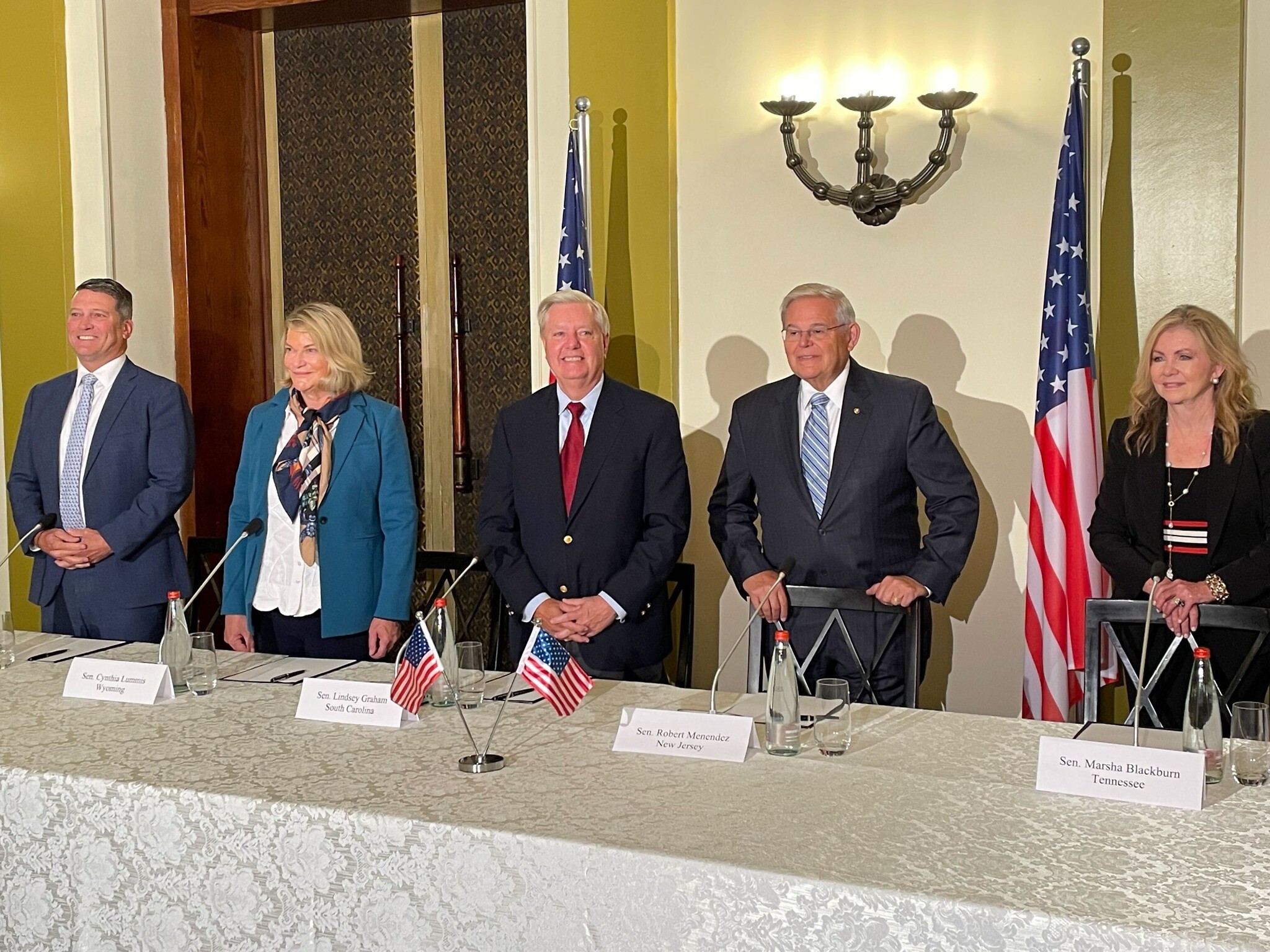
US Senators including Lindsey Graham and Bob Menendez (center) at a press conference in Jerusalem on September 5, 2022. (Jeremy Sharon)
It is not clear why Netanyahu sought to record the meeting, but he has in recent weeks increased his public protest against a potential nuclear deal, and Walla speculated he may have been seeking video content for his campaign.
מסיים פגישה חשובה עם חבריי הטובים, הסנאטורים לינדזי גראהם ובוב מננדז, שהגיעו לישראל בראש משלחת דו-מפלגתית של סנאטורים וחברי קונגרס. ???????????????? pic.twitter.com/pNIVbWzRd1
— Benjamin Netanyahu (@netanyahu) September 5, 2022
Netanyahu’s office played down the incident, telling Walla that as a matter of protocol all meetings with the former prime minister are documented, and insisting “there was no drama” at the meeting. “The request was honored and the camera was removed.”
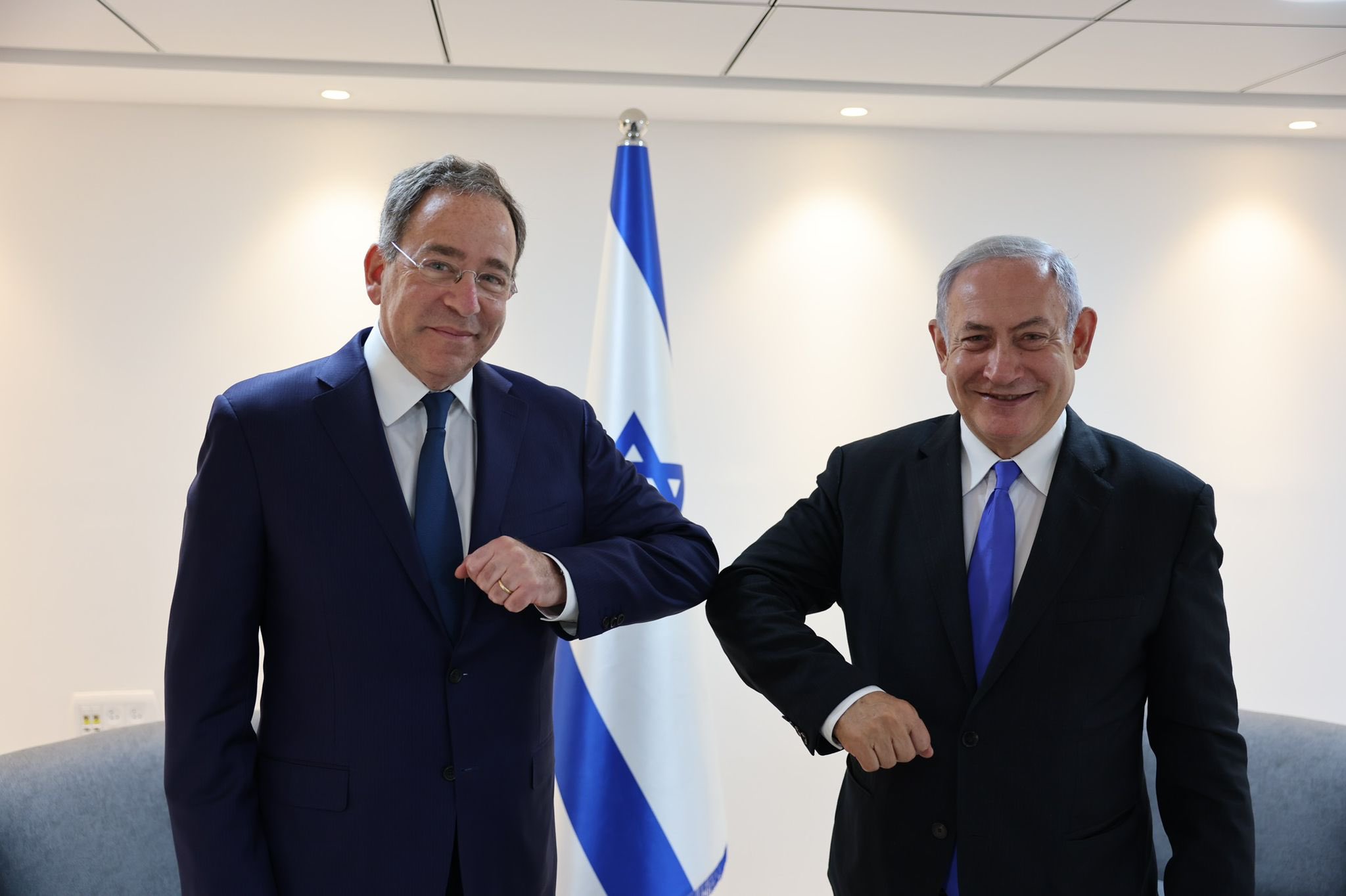
US Ambassador to Israel Tom Nides (L) and opposition chairman Benjamin Netanyahu meet in the Knesset on December 9, 2021. (US Embassy in Israel)
The American group was part of a bipartisan senate delegation to Israel, which is being led by Senator Graham of South Carolina (Republican), and includes Republican senators Cindy Hyde-Smith of Mississippi, Marsha Blackburn of Tennessee, Cynthia Lummis of Wyoming, Representative Ronny Jackson of Texas, as well as Senate Foreign Relations Committee Robert Menendez, a Democrat.
The visit came amid fears amongst Israeli officials over the looming Iran nuclear deal.
On Wednesday, The Times of Israel’s Hebrew sister site Zman Yisrael reported that the deal is likely off the table after Iran made new demands Washington refuses to accept.
The nuclear agreement that has been negotiated on since Biden entered the White House in January 2021 focused on removing sanctions on Iran in exchange for limiting Tehran’s ability to reach the capability to build a nuclear weapon.
Times of Israel staff contributed to this report.
Responsibly covering this tumultuous time

As The Times of Israel’s political correspondent, I spend my days in the Knesset trenches, speaking with politicians and advisers to understand their plans, goals and motivations.
I’m proud of our coverage of this government’s plans to overhaul the judiciary, including the political and social discontent that underpins the proposed changes and the intense public backlash against the shakeup.
Your support through The Times of Israel Community helps us continue to keep readers across the world properly informed during this tumultuous time. Have you appreciated our coverage in past months? If so, please join the ToI Community today.
~ Carrie Keller-Lynn, Political Correspondent
Yes, I’ll join
Yes, I’ll join
Already a member? Sign in to stop seeing this
You’re a dedicated reader

We’re really pleased that you’ve read X Times of Israel articles in the past month.
That’s why we started the Times of Israel eleven years ago – to provide discerning readers like you with must-read coverage of Israel and the Jewish world.
So now we have a request. Unlike other news outlets, we haven’t put up a paywall. But as the journalism we do is costly, we invite readers for whom The Times of Israel has become important to help support our work by joining The Times of Israel Community.
For as little as $6 a month you can help support our quality journalism while enjoying The Times of Israel AD-FREE, as well as accessing exclusive content available only to Times of Israel Community members.
Thank you,
David Horovitz, Founding Editor of The Times of Israel
Join Our Community
Join Our Community
Already a member? Sign in to stop seeing this
