
The 13th international IAF (International Astronautical Federation) meeting for ministers and members of parliaments (MMoP) has kicked off in Baku.
Day: October 1, 2023
México is swimming against a tide of Western crackdowns on Russian espionage. While more than 600 suspected spies have been expelled from Russian embassies across Europe since its invasion of Ukraine in February 2022, the Mexican government in recent months has authorized 37 new diplomats in the Russian Embassy in Mexico City on top of the 49 already there, for a staggering 86, according to the foreign ministry´s Directory of Foreign Missions (which is no longer available to the public but I obtained). Russia currently has by far the largest diplomatic contingent than any other legation in Mexico City, including the American Embassy, which has 46 diplomats, not including diplomatic personnel in their nine consulates across the country.

A Russian regiment was invited to participate in Mexico’s Independence Day parade, outraging many Mexicans, not to mention Ukraine’s ambassador
The 60 per cent jump in the months after the invasion has no diplomatic justification for either side, considering their traditionally low-level relationship. Mexico-Russian trade is equivalent to one day of business between Mexico and the U.S. But it does offer something else of high value to Moscow: a platform for espionage against the behemoth to the north. What Mexico gets out of it is another question.
It is no secret that Russia has historically used its diplomats for spying on the United States and that the Russian embassy, an imposing, walled complex in the heart of Mexico City, with large satellite dishes on the roof, has a decades-old reputation for being an espionage safe haven—more so in times of war. During the height of the Cold War, U.S. intelligence estimated that at least 150 KGB officers were working in Mexico under cover of diplomats, clerks, drivers and journalists.
To be sure, under a longstanding security cooperation effort between the United States and Mexico, the CIA has historically had a robust presence in Mexico, if only as an arena safer than Moscow to meet its Russian agents or pitch others on defecting. But in the depths of the Cold War it ran numerous operations to neutralize Mexican communist sympathizers. In the past decade and a half, its numbers and operations increased as they became more engaged in the war against drug cartels.
In 2020 the Mexican congress, angered by DEA operations, passed a law that limits the number of all foreign agents and stripped them of diplomatic immunity—not that it curtailed Russian espionage operations.
“Spies almost always operate under diplomatic cover and Mexico has always been a number one target for Russia because of its proximity to the U.S., ” says John Feeley, a retired career U.S. ambassador who specializes in Latin American security issues. “It’s a very convenient place to spy on the U.S. Their U.S. undercover assets can travel as tourists to Cancun and be debriefed by their handlers with no one watching.
Feeley, who served as deputy chief of mission and chargé d’affaires in Mexico City during 2009-2012, told me that the large number of Russian diplomats in Mexico, “makes no sense if they would be doing traditional diplomatic work. Why so many diplomats, why such a big embassy for so little economic ties and tourism? The Russian Embassy is and has long been a center of espionage. That’s why.”
Travel Surge
Likewise, Mexico has seen a 20 per cent jump in Russian nationals entering the county in 2022, most of them to Cancun, a tourism mecca full of Americans and Europeans, according to Mexico´s Government Department. Many are Russian men fleeing the war, it’s said, but others are unspecified individuals and couples planning to give birth to anchor babies so they can apply for easily acquired Mexican immigration papers and passports that allows them to travel to the United States.
The long arm of Russian intelligence services is believed to be behind the sudden jump of Russian nationals in Cancun. Other nations have uncovered Russian spies carrying Latin American identity papers from elsewhere: Estonia recently uncovered three Russian spies carrying Argentine passports. Last spring Dutch authorities expelled a Russian spy posing as a Brazilian student. Now jailed in Brazil, the young man had previously spent two years at the Johns Hopkins School of Advanced International Studies in Washington, D.C., whose faculty includes former U.S. intelligence officials.
When I first published a Spanish version of this story in the Mexican news site Eje Central, the Russian embassy accused me via Twitter (now X) of spreading “Russophobia.” They didn’t deny the surge in their diplomatic roster, but maliciously claimed the list was given to me by “Langley”—shorthand for the CIA. By singling me out, Russian diplomats broke rules of protocol against publicly attacking host country citizens.
It hardly needs saying that Vladimir Putin stands out as one of the most repressive rulers in the world against Russian and foreign journalists who publish stories he does not like. By allowing them to harass a journalist in Mexico with little or no restraint, the Mexican government is de facto sanctioning the harassment of reporters.
FBI Director Christopher Wray warned last week that the number of Russian spies operating inside the United States is “still way too big,” despite efforts to identify and kick them out. “The Russian traditional counterintelligence threat continues to loom large,” he said during public remarks at the Spy Museum in Washington. But when I asked the FBI if Wray was also concerned about Russian spies in Mexico, a spokesperson told me they had nothing additional to provide.

While Wray confesses to difficulty catching Russian spies, the Mexican government doesn’t even seem to be trying. It appears to allow Russian agents to work there virtually without restraint as long as their target is the U.S., not Mexico. While President Andrés Manuel López Obrador, or AMLO, as he’s referred to, has joined the U.S. and its allies in non-binding condemnations of Russia’s invasion at the United Nations, he’s otherwise called NATO’s military aid to help Ukraine fight Russian aggression “immoral” and declared Mexico “neutral” in the conflict. On Saturday, a Russian regiment participated in Mexico’s 213th Independence Day parade, outraging many Mexicans, not to mention the Ukrainian ambassador. With that alone, AMLO turned himself into a useful tool in the Kremlin´s propaganda machine against the West.
GRU Playground
General Glen VanHerck, head of the U.S. Northern Command, warned last year that there are more Russian military spies in Mexico than any other country in the world.
“The largest portion of the GRU members in the world is in Mexico right now,” he told the Senate Armed Services Committee in March 2022. “Those are Russian intelligence personnel. And they keep a very close eye on their U.S. opportunities to influence and access.”
The unambiguous statement did not go down well in Mexico. AMLO brushed it off, saying that Mexico was nobody’s colony. Marcelo Ebrard, at the time the Mexican foreign minister, demanded to see evidence. A NorthCom spokesperson declined to elaborate on VanHerck´s remarks when I asked him, highlighting instead the “steadfast security partnership” with their Mexican counterparts “against encroaching competitor presence and influence” in the region.
Quid Pro Quo
Because of AMLO´s cooperative stance on helping the Biden Administration curtail undocumented migration, American officials are reluctant to say anything publicly about Mexico´s welcoming of Russian spies.
“We are certainly mindful of Russia’s efforts to gain footholds and influence in Latin America and Africa—obviously, we watch that closely. It’s of concern, so we take it seriously”, responded John Kirby, the White House spokesperson for national security, when I asked him about it during a foreign media briefing in October. Kirby declined to answer specific questions concerning the Russian presence in Mexico.
If Cold War practices are any guide, one can assume that the CIA and other U.S. intelligence agencies based in Mexico City have probably escalated their counterespionage operations—most likely without the official help of Mexican security officers. How effective they are at keeping the Russians on their toes depends on how many CIA officers have been deployed—during the Cold-war era they were far outnumbered, according to a senior American official cited in a 1985 The New York Times article—and on the technological resources they have committed. Needless to say, it would help if the U.S. persuaded Mexico to limit Russian diplomats to the same number Mexico has in Moscow (11), in compliance with reciprocity protocols. But to that, AMLO is very likely to respond, Mexico is a “neutral country.” ###
Dolia Estevez began her career in the late 1980s as a Washington-based foreign correspondent specializing in Mexico and U.S.-Mexico relations. Over the years she has freelanced and authored investigative pieces on security and corruption. Her most recent book is: Mexico, A Challenging Assignment: U.S. Ambassadors Share Their Experiences (Wilson Center).
The Azerbaijani Foreign Ministry condemned the attack by Armenian radical groups on the participants of the “Turkish Public Diplomacy” conference, which took place on September 29, 2023, in Los Angeles, according to Azerbaijan in Focus, reporting Turan.
It was conducted at the University jointly by the Annenberg School of Communication and Journalism and the Yunus Emre Institute.
Such aggressive attacks by representatives of the radical Armenian diaspora, which cannot accept the failure of slanderous Armenian propaganda against Azerbaijan, and the collapse of the illegal regime in Karabakh, are criminal actions and must be punished, the Azerbaijani Foreign Ministry said in a statement.
The relevant government agencies must take concrete steps to prevent such actions, the statement of the Azerbaijani Foreign Ministry concluded.
According to Anadolu Agency, at the beginning of the event, the Los Angeles police removed a person from the hall who insulted Azerbaijan, Turkey and the organizers of the event.
In addition, a group of Armenian students tried to disrupt the speech of Turkish Ambassador Hasan Murat Mercan. Consul General of Azerbaijan Ramilya Gurbanova was subjected to verbal attacks.
After intervention by campus security and police, the disruptive individuals were escorted out of the hall.
After the end of the conference, the head of the Yunus Emre Institute, the religious services attaché in Los Angeles, Ismail Demirezen, and the head of O3 Medya, Saner Ayar, were physically and verbally attacked in the street by Armenian radicals.
The Turkish Ministry of Foreign Affairs also condemned the actions of radical Armenian groups and stated that
will initiate legal proceedings against those who carried out the physical attack.
The post Baku and Ankara condemned the aggressive behavior of Armenian radicals in Los Angeles against diplomats appeared first on Azerbaijan In Focus.
Categories
NPR News: 10-01-2023 3AM EDT
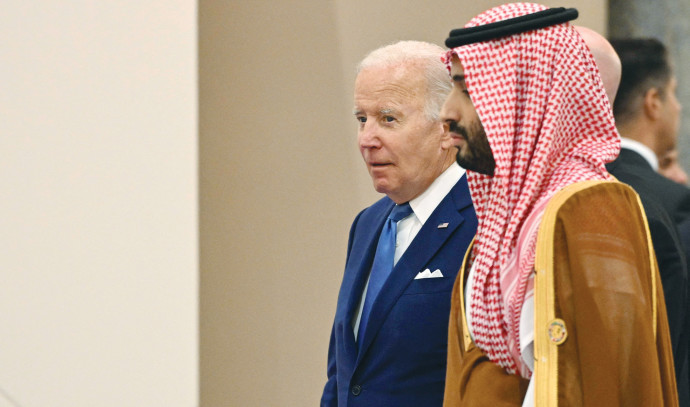
Saudi Arabia will not hold up a peace deal even if Israel does not offer major concessions to Palestinians in their bid for statehood, three regional sources familiar with the talks said.
The Palestinians could get some Israeli restrictions eased but such moves would fall short of their aspirations for a state. As with other Arab-Israeli deals forged over the decades, the Palestinian core demand for statehood would take a back seat, the three regional sources familiar with the talks said.
“The normalization will be between Israel and Saudi Arabia. If the Palestinians oppose it the kingdom will continue in its path,” said one of the regional sources. “Saudi Arabia supports a peace plan for the Palestinians, but this time it wanted something for Saudi Arabia, not just for the Palestinians.”
The Saudi government and the US State Department did not respond to emailed questions about this article.
Netanyahu hails possibility of historic peace
Prime Minister Benjamin Netanyahu has hailed the possibility of a “historic” peace with Saudi Arabia, the heartland of Islam. But to secure the prize, Netanyahu has to win the approval of parties in his a far-right coalition which reject any concessions to the Palestinians.
MbS said in a Fox News interview this month that the kingdom was moving steadily closer to normalizing ties with Israel. He spoke about the need for Israel to “ease the life of the Palestinians” but made no mention of Palestinian statehood.
US SECRETARY of State Antony Blinken walks with Saudi Arabia’s Foreign Minister Prince Faisal bin Farhan during a visit to Riyadh, in June. (credit: Ahmed Yosri/Reuters)
Nevertheless, diplomats and the regional sources said MbS was insisting on some commitments from Israel to show he was not abandoning the Palestinians and that he was seeking to keep the door open to a two-state solution.
Those would include demanding Israel transfer some Israeli-controlled territory in the West Bank to the Palestinian Authority (PA), limit Jewish settlement activity and halt any steps to annex parts of the West Bank. Riyadh has also promised financial aid to the PA, the diplomats and sources said.
Palestinian President Mahmoud Abbas has said any bargain must recognize the Palestinian right to a state within the 1967 borders, including East Jerusalem, and must stop Israeli settlement building. However, all the sources said a Saudi-Israeli deal was unlikely to address those flashpoint issues.
Netanyahu has said Palestinians should not have a veto over any peacemaking deal.
Can Israel-Saudi peace deal get support of US Congress?
Yet, even if the US, Israel, and Saudi Arabia agree, winning support from lawmakers in the US Congress remains a challenge.
Republicans and those in Biden’s Democratic Party have previously denounced Riyadh for its military intervention in Yemen, its moves to prop up oil prices, and its role in the 2018 killing of Saudi journalist Jamal Khashoggi, who worked for the Washington Post. MbS denied ordering the killing.
“What’s important for Saudi Arabia is for Biden to have the pact approved by Congress,” the first regional source said, pointing to concessions Riyadh was making to secure a deal.
For Biden, a deal that builds a US-Israeli-Saudi axis could put a brake on China’s diplomatic inroads after Beijing brokered a rapprochement between Saudi Arabia and Iran, which Washington accuses of seeking nuclear arms. Tehran denies this.
“There was a sense that the US has abandoned the region,” said one diplomat. “By courting China, the Saudis wanted to create some anxiety that will make the US re-engage. It has worked.”