
Day: September 28, 2023


In an interview with the TASS Russian news agency today, Russian Foreign Minister Sergey Lavrov, when asked if he saw any possibility of diplomatic relations between Georgia and Russia being restored in the near future, said that the decision to sever diplomatic relations between the two countries had been taken “by the Saakashvili regime”.
Lavrov said: “Diplomatic relations were not broken by us, it was the initiative of the Saakashvili regime, which, with the encouragement of the United States, raised its hand against its own citizens, against Ossetians, whom it considered its citizens, raised its hand against peacekeepers. And when it received a decent response, it began to compensate for its total political and military failure with anti-Russian actions.
He went on to say: “We have never had a negative attitude towards the Georgian people, we truly love the Georgian people, as indeed do all the peoples of the Transcaucasus. Georgians occupy a special place in the history of Russia, in the history of the Soviet Union, in the history of our art, culture and science”.
He added that when Moscow saw that the current government in Tbilisi was interested in normalizing relations, “we agreed with Mr. Garibashvili’s government to resume flights and abolish the visa regime”.
He also noted that the introduction of a visa-free regime for Georgian citizens on the basis of reciprocity and the establishment of air links “of course make our relations much more convenient, much more comfortable”. Lavrov also observed that “the number of flights is increasing, the geography of direct flights is also expanding, and trade turnover is growing”, stressing that many traditional Georgian export goods “are very popular in Russia: wine, Borjomi and much more”.
Also Read:
- 31/08/2023 – Russia Offers Georgian Citizens Free Higher Education
- 18/08/2023 – Regular Postal Shipments between Moscow and Tbilisi Reach 4.6 Tons in Under 1.5 Months
- 20/09/2023 – “Russo-Georgian Business Council” Ponders Expansion of Transport Links to Georgia
- 10/05/2023 – Russia Abolishes Visa Regime and Lifts Ban on Airline Flights with Georgia Starting May 15

The primary duty of the Armenian government is to receive, in the most caring way possible, our brothers and sisters who were forcibly displaced from Nagorno-Karabakh, and to provide for their most urgent needs. Prime Minister Nikol Pashinyan stated this at Thursday’s Cabinet meeting of the Armenian government.
He asked Deputy Prime Minister Tigran Khachatryan to present the currently available statistics on those forcibly displaced from Nagorno-Karabakh to Armenia.
The deputy PM noted that as of 10am today, the total number of forcibly displaced people was 66,500.
“In addition, I would like to draw attention to the fact that most of these people were displaced to Armenia especially yesterday and the day before yesterday. In general, if a total of 9,000 people were displaced during the first two days, on September 24 and 25, then only on the 26th of the month, the number of displaced was 22,800, and yesterday—26,600, and from midnight to 6am today—8,100. The intensity of arrivals is very high,” Khachatryan emphasized.
According to him, about 10,967 persons displaced from Karabakh have received shelter in Armenia, and the distribution of lodgers is almost the same throughout the country, but only there were a little more in Kotayk and Syunik Provinces.
“We are working to identify those persons who at that moment turn to our respective agencies for need,” added the Armenian deputy premier.
The primary duty of the Armenian government is to receive, in the most caring way possible, our brothers and sisters who were forcibly displaced from Nagorno-Karabakh, and to provide for their most urgent needs. Prime Minister Nikol Pashinyan stated this at Thursday’s Cabinet meeting of the Armenian government.
He asked Deputy Prime Minister Tigran Khachatryan to present the currently available statistics on those forcibly displaced from Nagorno-Karabakh to Armenia.
The deputy PM noted that as of 10am today, the total number of forcibly displaced people was 66,500.
“In addition, I would like to draw attention to the fact that most of these people were displaced to Armenia especially yesterday and the day before yesterday. In general, if a total of 9,000 people were displaced during the first two days, on September 24 and 25, then only on the 26th of the month, the number of displaced was 22,800, and yesterday—26,600, and from midnight to 6am today—8,100. The intensity of arrivals is very high,” Khachatryan emphasized.
According to him, about 10,967 persons displaced from Karabakh have received shelter in Armenia, and the distribution of lodgers is almost the same throughout the country, but only there were a little more in Kotayk and Syunik Provinces.
“We are working to identify those persons who at that moment turn to our respective agencies for need,” added the Armenian deputy premier.
By Connor O’Keeffe
Last week, prosecutors for the Southern District of New York unsealed an indictment against New Jersey senator Robert Menendez. The senator, his wife, and several businessmen are accused of providing “sensitive U.S. Government information” and taking steps that “secretly aided the Government of Egypt” in exchange for cash, gold bars, a luxury convertible, and more.
Senator Menendez has dismissed the charges and refuses to resign from Congress. In a statement Friday, he attempted to explain away the indictment as a political attack from “forces behind the scenes.” And in a press conference Monday, he said he expects the trial to exonerate him.
But also featured in the senator’s Friday statement was an interesting admission. In highlighting his exchange of political privileges for cash and gifts, Menendez said prosecutors have “misrepresented the normal work of a Congressional office.”
Menendez is right. But that’s less a defense of his actions than a condemnation of our entire political system. The effort by foreign governments and corporations, both at home and abroad, to influence the US federal government is extensive. But the roots of this problem lie in the globe-spanning power of Washington, DC, not a couple unconventional payments to one New Jersey senator.
According to the indictment, from 2018 until at least 2022, Senator Menendez allegedly used his position as the chair and ranking member of the Senate Foreign Relations Committee to secretly aid the Egyptian government “with respect to foreign military sales and foreign military financing.” He also pressured officials at the Department of Agriculture to grant monopoly privileges to his wife’s longtime friend, Wael Hana, a New Jersey businessman with ties to the Egyptian government.
In exchange for these services, Senator Menendez and his wife received hundreds of thousands of dollars in cash. They also received thirteen gold bars, a new Mercedes Benz convertible, and payments toward their home mortgage.
But, to Menendez’s point, there is nothing abnormal about a foreign government spending money to influence an American policymaker. In fact, according to Open Secrets, since 2016 thousands of foreign agents and lobbyists have registered with the Department of Justice to lobby on behalf of foreign governments. Collectively, these governments have spent billions trying to influence American policymakers to their own benefit.
But the number of registered foreign agents and their reported spending underrepresents the extent of foreign lobbying and bribery. As Ben Freeman and Eli Clifton of the Quincy Institute for Responsible Statecraft have demonstrated over and over again, foreign governments fund many top Washington think tanks—a way to influence American policymakers that often goes undisclosed.
Individual politicians also enjoy their share of foreign government cash. For example, as is detailed in one of Clifton’s latest reports, the top 2024 Republican presidential candidates have received “six- or seven-figure paydays” from foreign governments, including the United Arab Emirates and Oman. And, of course, President Joe Biden’s own son received millions of dollars from foreign sources with close links to the governments of China, Ukraine, Romania, and Kazakhstan, culminating in a “salary” he claimed to split with his father.
The widespread nature of foreign payoffs in Washington, DC, should not be taken as a defense of Senator Menendez but as evidence that exchanging political favors for cash is much more common than the occasional scandal would have us believe.
And, crucially, it must be understood that the United States’ ability to offer fruitful political privileges is responsible for all the cash pouring into DC, not the reverse, as many progressives claim.
For foreign governments like Egypt, the political privilege for sale is access to the largest, most powerful military in history and the arms industry that props it up. That is the real problem that this Menendez story brings to light.
Our politicians have used our money to build a global empire backed by the most powerful military and arms industry in history, the use of which they can then offer up for sale. Why are we ever surprised that there are interested buyers?
About the author: Connor O’Keeffe produces media and content at the Mises Institute. He has a master’s in economics and a bachelor’s in geology.
Source: This article was published by the Mises Institute
By Tim Donner
It’s been said that it is better to have loved and lost than never to have loved at all. While that may be true in romance, it most definitely is not in politics, where defeat inevitably tarnishes even the most sterling reputations. That said, and hindsight being 20-20, one-time rising star Ron DeSantis might well be regretting his decision to run for president in 2024. And if he isn’t, he probably should.
It is understandable he would seek the biggest prize of all, having just won a landslide victory in Florida and presenting as the newest, shiniest object on the right, widely presumed to be the heir apparent to the still towering but legally entrapped Donald Trump. He was, and perhaps still is, the Republican who Democrats were said to fear the most. It seemed the smart thing to follow a cardinal rule of politics, to strike while the iron is hot, when one’s political career had reached or approached its climax if not its zenith. How could the governor have known Trump would dominate the projected death match between the two combatants and build a virtually insurmountable lead – by getting repeatedly indicted?
DeSantis Fever Breaks
Indeed, as late as the spring of this year, few thought DeSantis’s presidential ambitions to be unwarranted. But there were always questions about his timing. Subjecting himself to the slings and arrows of Donald Trump in the 2024 race, when he could have waited until 2028 after the field was clear of Trump for the first time in a dozen years, has undoubtedly taken a toll on his exceptional reputation. If he had remained on the sidelines for 2024, he would almost certainly have been considered the default frontrunner for 2028, while carrying on with his war on woke as governor of Florida, continuing to delight the right and further strengthening his appeal for 2028.
Instead, as Trump builds a lead of mammoth proportions, and Vivek Ramaswamy and Nikki Haley draw widespread praise for their performance in the first debate and on the campaign trail, the Florida governor’s polling numbers sink into pure also-ran territory even as he clings to a distant second place nationally. Despite delivering detailed and far-reaching policy pronouncements such as his recent plan for achieving energy dominance (not just independence), he has been accused in some circles of being excessively harsh, unrelatable, and not at his best when not in sole possession of the bully pulpit and bullhorn of a governor. In short, he has been tagged as unequal to, or unprepared for, the herculean task of running for president. Further bad news for DeSantis came in the form of a shocking poll by ABC News on September 24 showing Trump with a stunning nine-point lead over Joe Biden, a result sure to generate widespread head-spinning and only add to the growing momentum of the 45th president.
It’s Not About Money
DeSantis’s failure to launch certainly has nothing to do with money. His super PAC has lapped the field in fundraising, raking in some $97 million as of June 30, far more than any of his rivals including Trump. But paradoxically, as his campaign burned through more than $30 million in the first half of 2023, he simultaneously fell into a steeper descent than any of the other dozen candidates. As recently as March, he had attracted more than 30% support among the GOP faithful in multiple polls, narrowed Trump’s lead to single digits and even beat the former president in one CNN poll. He is now averaging 13%, according to the Real Clear Politics average. That is a whopping 17-point and 57% plunge in the space of six months. By way of comparison, in the same time period, Ramaswamy has increased his support from near-zero to 7%, Haley has risen slightly to 5%, and the rest of the field has been marching in place, remaining essentially where they started.
Reality bites even harder for DeSantis in Iowa, where he trails Trump by 34 points, and in New Hampshire, where he is in single digits and stuck in fourth place behind even protest candidate Chris Christie. Getting routed in the first two contests would unquestionably sink the DeSantis campaign. And all he will have accomplished is to be a magnet for attack from the master of the art of attack, diminishing his own reputation, eliminating himself from contention for the number two spot on the ticket, and thus bringing himself back to the pack for 2028. In fact, given that Trump has called him disloyal for having the audacity to challenge him in the GOP primary, and DeSantis has been forced to hit back, the governor has likely lost considerable ground among the Trump-only crowd as they consider who is worthy to follow in the footsteps of their man.
There was little the governor could do to reverse the overwhelming impact of Trump’s arrests, which he was forced to decry even as he raised questions about Trump’s conduct. However, the impact of his unsuccessful campaign is not limited to the presidential race. As his numbers have dropped precipitously, so has his unquestioned command of the GOP supermajority in the Sunshine State legislature which has famously served as a virtual rubber stamp for the popular and powerful governor. A recent article in Politico entitled “DeSantis’ influence nosedives in Florida,” which some might justifiably label a hit piece, Florida Republicans, from whom never was heard a discouraging word when it came to their governor, at least until recently, were surprisingly willing to open up to the author from the liberal site. Most notable was a GOP consultant who pulled no punches in declaring, “There’s no love lost between the Legislature and DeSantis. … They are faking it. They are waiting long enough to see the king drained of all his power. It’s a slow-motion coup.”
Has DeSantis exemplified the Peter Principle, which postulates that people rise to their level of incompetence? Just because someone is an effective or powerful governor, does not mean they will become an attractive presidential candidate. History is replete with the political corpses of rising stars who stopped rising once they ran for president. In 2016 alone, Marco Rubio was the apple of the neoconservative eye, Scott Walker was a conservative hero, and Jeb Bush was declared the secure frontrunner. In 2020, many Democrats thought their savior was Sen. Elizabeth Warren (D-MA) or Kamala Harris or Michael Bloomberg. All of them raised and/or spent huge sums of money. And yet, they all failed to make a dent and either became irrelevant to the national conversation or all but disappeared from sight.
If he had just waited for the towering figure of Donald Trump to leave the stage come 2028, imagine how far the DeSantis star might have risen absent the brutal attacks from Trump and the crowd of afterthought candidates vying for their measly portion of political crumbs left on the table by Trump. Facing the equivalent of a must-win debate on Wednesday – a meh performance will not do the trick – DeSantis is in desperate need of reasserting his prominence among the non-Trump field of candidates, or face the eventual reality that he will be forced to, at best, postpone his path to the White House.
About the author: Senior Political Analyst at LibertyNation.com. Tim is a radio talk show host, former candidate for the U.S. Senate, and longtime entrepreneur, Conservatarian policy advocate, and broadcast journalist. He is Founder and President of One Generation Away, LN’s parent organization.
Source: This article was published by Liberty Nation
By Gerard Gallucci
It remains an open question whether differing ethnic and/or religious groups – tribes if you will – can share a state without conflict turning into ethnic cleansing. Since antiquity, history offers few examples except at times in large multi-ethnic empires such as the Roman, Ottoman and American. Even in the American, recent days showcase often vicious White nationalism and intolerant Christian fundamentalism tearing at the fabric of the political system. Kosovo and Nagorno-Karabakh raise this question afresh.
Azerbaijan is an overwhelmingly Muslim and Turkic country while the enclave’s Armenians are Christians who have lived there for millennium. The seizure of Nagorno-Karabakh by the Azerbaijan military is reportedly leading many of the enclaves 120,000 Armenians to consider leaving. Azerbaijan – an authoritarian, family-ruled state – claims it wants to integrate them as “equal citizens.” But the Armenians fear – not without reason given Azerbaijan’s destruction of centuries-old churches in areas captured in the 2020 war – being eventually cleansed. The Armenians of Nagorno-Karabakh are isolated as the enclave does not share a land border with Armenia proper. They have little choice but to risk staying or leave for Armenia.
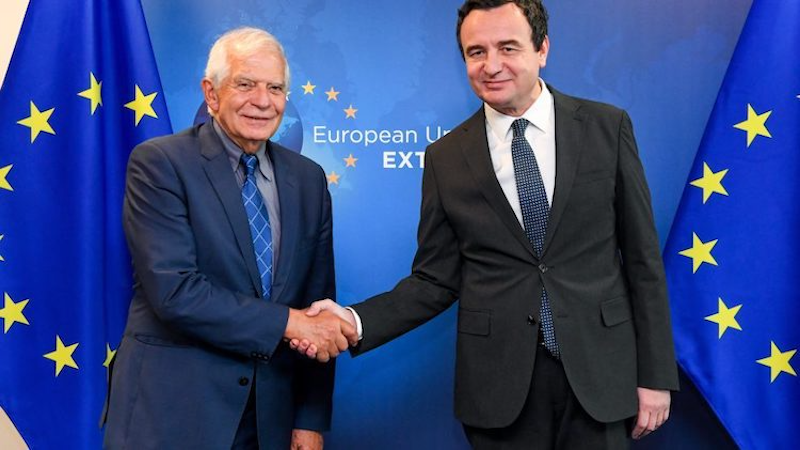
Kosovo is overwhelmingly Albanian and Muslim. Northern Kosovo is majority Serbian and Christian. The political status of Kosovo remains unsettled since 1999 and the conflict between Serbs and Albanians there is considerably older. The Albanian-nationalist Kurti regime has upped the ante this past year by seeking to use its police to take control of the north away from local Kosovo Serb authorities. The U.S., EU and NATO prevented Kurti accomplishing his immediate aims but continue to fail to resolve the underlying status issue. Now, a reported standoff between Kosovo police and armed men at or near a monastery in the north where Serbian pilgrims were visiting. A policeman and at least three of the armed men reportedly were killed before police were able to enter the monastery. NATO forces are at the scene. I don’t know the details of this particular conflict – what and who led to what. But it was clear to me when I arrived as UNKIK’s regional representative in Mitrovica in 2005 that most Albanians deeply resented the continued presence of Serbs north of the Ibar and want them gone.
The northern Kosovo Serb enclave has a land connection to Serbia proper. It is time to recognize that the U.S. and EU efforts to win agreement between Belgrade and Pristina or make Kosovo into a peaceful multi-ethnic state go nowhere. The Quint powers that enabled Kosovo independence must now face the reality that it won’t work until Serbian security returns to the north and it becomes fully part of Serbia again. This may leave the remaining Kosovo Serbs south of the Ibar at some risk. But even Kurti may recognize the business possibilities of preserving the cultural sites and places such as Štrpce for tourism.
Gerard M. Gallucci is a retired US diplomat and UN peacekeeper. He worked as part of US efforts to resolve the conflicts in Angola, South Africa and Sudan and as Director for Inter-American Affairs at the National Security Council. He served as UN Regional Representative in Mitrovica, Kosovo from July 2005 until October 2008 and as Chief of Staff for the UN mission in East Timor from November 2008 until June 2010. He was Diplomat-in-Residence at Drake University for the 2013-14 school year and now works as an independent consultant.
The views expressed in this article do not necessarily reflect those of TransConflict.
By Dr. Mohamed ELDoh
The India-Middle East-Europe Corridor (IMEC), announced during the 2023 G20 Summit, holds significant potential for enhancing economic integration, trade, investments, and fostering cooperation among the participating countries on multiple fronts.
This ambitious project aims to establish a seamless trade route connecting India, the United Arab Emirates (UAE), the Kingdom of Saudi Arabia (KSA), Jordan, Israel, and Europe, with the potential to revolutionize global trade dynamics. The IMEC is expected to facilitate international trade by creating a consolidated trade route that will reduce trade costs, promote market access, and encourage investment opportunities between the participating countries. It is also expected that such a gigaproject will enhance regional connectivity by improving transportation infrastructure, cross-border cooperation, energy supply, and logistical efficiencies.
This connectivity will foster closer economic ties and allow for the movement of goods, services, and labor more smoothly. More importantly, the establishment of this corridor may serve as a catalyst for increased diplomatic collaboration and geopolitical stability among the participating nations. Close economic ties resulting from the corridor will incentivize collaboration on various fronts, including security, counterterrorism, and regional stability. Additionally, a shared economic interest will create avenues for stronger diplomatic relations, security cooperation, facilitating dialogue, and fostering geopolitical equilibrium.
Even though the IMEC, announced during the recent G20 Summit, holds significant potential for the participating countries, it may face several critical challenges and obstacles that must be addressed to ensure its successful implementation and maximize its benefits. One of the foremost challenges for the IMEC is navigating the complex geopolitics of the region. The corridor spans diverse nations with varying political dynamics, interests, and previous tensions. These complexities may hamper cooperation and hinder the development of seamless connectivity between the involved countries. Diplomatic dialogue and a unified vision among all participating nations are imperative to mitigate potential conflicting views and create an environment conducive to collaboration.
The complexities associated with the logistical challenges of the project are still to be addressed, given that such a large project encompasses a vast geographic area. The corridor’s success largely hinges on developing efficient transportation networks to connect the three regions seamlessly. Creating an integrated transportation system that covers vast distances, varied geographical terrains, and diverse infrastructural capabilities poses significant logistical challenges.
The construction of ports, roads, railways, and other connectivity infrastructure, as well as improving existing infrastructure, would require substantial investment, expertise, and meticulous planning. Additionally, addressing logistical issues such as customs procedures, border regulations, and transportation delays would be critical to preventing bottlenecks and ensuring smooth trade flows. However, the diverse political and legal frameworks governing all the nations involved may create bureaucratic hurdles, trade barriers, and delays in decision-making processes, resulting in a slowdown in the corridor’s progress. In this respect, overcoming the logistical challenges is further associated with addressing the collective regulatory and investment aspects of the project effectively.
Harmonizing regulatory frameworks represents a formidable challenge for the IMEC. The corridor involves multiple countries with differing legal systems, policies, transportation protocols, and regulations. Streamlining and unifying these frameworks is essential to facilitate trade, investment, and economic cooperation. Collaborative discussions and negotiations should be pursued to address regulatory barriers and promote a consistent and transparent business environment across the corridor.
These efforts will be crucial in fostering trust and confidence among stakeholders and creating a conducive ecosystem for economic activities. Otherwise, differing policies and bureaucracy will result in delays and operational inefficiencies. In this respect, the establishment of favorable trade and investment regulations among the participating nations is of key importance. However, navigating the complex path of regulatory convergence can pose political challenges and potentially create conflicts of interest. Countries may seek to protect their domestic industries, maintain sovereignty over regulatory frameworks, and negotiate different terms of collaboration. Striking a balance between national interests and regional cooperation will require significant diplomatic efforts and compromise.
On the investment aspect, one of the critical obstacles to implementing the IMEC is securing adequate funding. Large-scale infrastructure projects typically require substantial financial resources, and it might be a challenge to garner the necessary investment in a timely manner given the involvement of several nations. In this respect, attracting massive investments from multiple stakeholders, including governments, international organizations, and private sector entities, demands a robust financial framework connecting all involved nations. Otherwise, the delay in funding in any of the infrastructure projects associated with the IMEC in any of the participating nations will undoubtedly affect the overall progress.
That said, financial connectivity is vital for facilitating cross-border transactions, investment, and trade finance. The corridor would benefit greatly from the establishment of efficient financial systems, harmonized banking regulations, and frameworks for currency convertibility. Encouraging the development of local and regional financial hubs along the route, with robust regulatory frameworks, will support economic activities and attract financial institutions. Additionally, fostering cooperation among the central banks and financial institutions of the participating nations will enhance transparency and facilitate cross-border capital flows. However, balancing cost-effectiveness with the project’s long-term sustainability is essential to maximizing the corridor’s economic benefits.
As far as maximizing the corridor’s economic benefits, it is also important to consider the economic competition that is expected to take place with China. China’s increasing global economic influence and connectivity initiatives, such as the Belt and Road Initiative (BRI), can create economic competition for the IMEC.
As a strategic competitor, China will seek to divert trade and investments towards its own corridors, potentially undermining the effectiveness of the IMEE corridor. It is crucial for India, Middle Eastern countries, and Europe to strategically navigate this competition, although it may prove challenging for Europe given that China is the second main trade partner to Europe after the US, with bilateral trade volume exceeding 850 billion USD in 2022 in comparison to India, whose trade volume with Europe is barely 90 billion USD.
In this regard, existing trade rivalries seeking to exert influence within the regions involved in the corridor are already present and therefore present geopolitical risks for the nations participating in the IMEC. Conflicting interests of trade powers may result in power struggles and potential resistance during the actual implementation of the project. Such rivalries can manifest in economic competition, security concerns, proxy conflicts, or attempts to control key maritime infrastructure.
Having mentioned the investment aspect of the IMEC, it is also important to consider the transparency and governance aspects. Applying robust transparency mechanisms among participating nations, conducting due diligence, prioritizing sustainability, and promoting good governance practices will help mitigate any negative repercussions on the long term and avoid potential pitfalls. Especially that we should learn from China’s BRI and its involvement in infrastructural projects globally which have raised concerns regarding transparency in funding, governance, and the long-term implications of debt, or in other words the ‘debt trap.’
Ensuring the security and stability along all the nations participating in the IMEC is a paramount challenge. The region traversed by the corridor has been susceptible to various security threats, including terrorism, conflicts, and political instability. Strengthening regional cooperation on defense, security, sharing intelligence, and forging joint initiatives to counter security risks are necessary steps to safeguard the corridor’s successful development and operation.
A stable and secure environment is indispensable for attracting investments and fostering economic growth along the corridor. Yet the security and political challenges involved may stem from the complex geopolitical landscape of the regions being traversed. Various conflicts and rivalries exist, such as the Indo-Pakistani dispute, Saudi-Iranian history of rivalry, the ongoing conflicts in Syria and Yemen, and threats to Israel from Iran-backed groups in Syria and Lebanon. These geopolitical tensions can impede cooperation and hinder the implementation of regional connectivity projects.
Furthermore, the stark diversity of political systems among the participating countries may present a challenge where the existence of differing political ideologies and values can hinder efficient implementation and could potentially create disparities among stakeholders. Accordingly, achieving a clear consensus and coordination among the involved nations is of utmost importance given the presence of differing priorities and historical conflicting views on various economic and political matters. Thus, maintaining a cohesive and cooperative approach among all the participating nations amidst political differences will be vital to the success of the corridor.
Political considerations between participating nations are only one aspect of addressing the geopolitical risks involved in the IMEC; risks associated with non-participating nations should also strategically be addressed and accounted for. For example, China’s strategic moves in pursuing its BRI ambitions appear at the top of this list. As far as China is concerned, the risks go far beyond the BRI.
For instance, the Saudi-Iranian peace agreement announced earlier in March 2023 was brokered by China in an attempt to showcase China’s influence in the Middle East. However, the announcement of the IMEC can be viewed as a counter initiative to China’s BRI, and this may trigger the latter to, for example, weigh in on Iran’s destabilizing behavior in the region in order to delay any progressive steps towards the establishment of the IMEC.
Iran’s geographical location at the crossroads of the Middle East and Asia grants it considerable influence in the region. Its proximity to the Strait of Hormuz, the number one essential route of connection between India and the UAE under the IMEC, presents a clear threat to the IMEC project. Any disruptive actions by Iran, such as threats to mining or blocking the strait, could severely impact the transportation of goods and energy through the corridor, thereby impeding its smooth functioning.
Furthermore, Iran’s alleged support for non-state actors and terrorist organizations throughout the Middle East has drawn international concern. Irregular activities by such groups, armed with advanced weaponry, could threaten the safety and security of the corridor. Given Iran’s historical inclination towards asymmetric warfare and unconventional military strategies, there exists a real threat of terrorist attacks targeting critical infrastructure along the corridor’s route.
The response of other neighboring nations such as Egypt and Turkey who are considered as close allies to Europe, KSA and the UAE, should also be addressed as well. On one hand, Egypt’s strategic geographical location plays an important role in international trade routes via its Suez Canal which is a vital shipping route connecting the Mediterranean Sea with the Red Sea as well as being a key generator of foreign currency income to the country.
The IMEC corridor, being an alternative land route, may pose a potential threat to Egypt’s dominance in the region, diverting trade away from the Suez Canal and potentially leading to negative economic repercussions. As Egypt has played a significant role in fostering stability and mediating conflicts within the Middle East, it is essential to address Egypt’s concerns and engage in a dialogue throughout the planning and implementation phases. A comprehensive framework that integrates the interests of Egypt and leverages its strategic location could provide a win-win situation for all parties. This approach would ensure that Egypt remains a valued partner to the IMEC participating nations. On the other hand, Turkey’s President Erdogan made it clear that there is no IMEC without Turkey’s inclusion.
As with Egypt, it is necessary to consider Turkey’s concerns and potential objections. Turkey, as a key transit hub and regional power, has vested interests in maintaining its strategic position, protecting its economic interests, and safeguarding its geopolitical influence. Therefore, recognizing and addressing Turkey’s concerns will be critical in navigating the potential objections that may arise and fostering broader regional cooperation within the framework of the IMEC corridor.
The IMEC holds immense potential for economic growth, enhancing trade, boosting regional connectivity, energy cooperation, and promoting cultural exchanges. Its successful implementation will undoubtedly require sustained commitment and cooperation from the participating nations. Despite the project’s potential for significant economic and strategic benefits, its implementation comes with several difficulties and risks that need to be carefully considered. These include interstate tensions, geopolitical rivalries, and security threats. Collectively countering these challenges is of utmost importance for all the participating nations.
However, the US has a key role in supporting the IMEC. In this respect, the US is renowned for its robust security apparatus and extensive experience in counter-terrorism measures. It follows that the IMEC is likely to face significant security challenges, including threats from extremist groups and illicit activities because of geopolitical rivalries including Iranian proxies. By actively participating in information-sharing, intelligence cooperation, security cooperation, and joint military exercises, the US can play a crucial role in strengthening the corridor’s security framework.
Furthermore, the Middle East region, with its myriad geopolitical challenges and historical conflicts, underscores the significance of US involvement in the corridor’s success. The US has maintained significant political and military engagement in the Middle East, striving towards regional stability. Its presence and efforts help in encouraging cohesive cooperation among the corridor nations as well as providing a platform for dialogue, conflict resolution, and the promotion of shared interests, which will further enhance the IMEC’s prospects for success.
The views expressed in this article belong to the authors alone and do not necessarily reflect those of Geopoliticalmonitor.com.