
Categories
Audio Review - South Caucasus News

The Daily Beat: 26 September


Georgia banned the re-export of specific EU-made cars to Russia and Belarus. Effective 25 September, the ban applies to vehicles with engine capacity of more than 1900ccm and electric and hybrid cars. The ban is introduced in line with the EU’s 11th sanctions package against Russia. Similar restrictions are already imposed on US-made cars as well.  


President Salome Zurabishvili met with Latvian President Edgars Rinkēvičs in Riga and thanked Latvian colleague for steadfastly supporting Georgia’s European integration. While President Zurabishvili seemed pleased with the warm welcome in Riga, Edgars Rinkēvičs urged Georgia to join the EU Common Foreign and Security Policy, including the EU sanctions against Russia. The next stop will be in Vilnius, where Zurabishvili is scheduled to meet the Lithuanian President Gitanas Nausėda.


Georgian Foreign Minister Ilia Darchaiashvili is on an official visit to Brussels, apparently in a bid to brief high-ranking EU representatives on Georgia’s very recent efforts to fulfill the 12 EU conditions. In Brussels, Minister Darchaiashvili met with the Director General for Neighborhood and Enlargement Negotiations (DG NEAR), Gert Jan Koopman, the European Commissioner for Home Affairs, Ylva Johansson, and the Vice-President of the European Commission, Věra Jourová. According to the official press releases, during the meetings, Ilia Darchiashvili stressed the strategic importance of the EU candidacy, and updated the EU representatives on the recent legislative and institutional reforms.


The Armenian Embassy in Tbilisi dismissed the “disinformation spread in the Georgian media” about the possible intentions to resettle the ethnic Armenians fleeing Nagorno-Karabakh outside the Republic of Armenia. “The Armenian Embassy in Tbilisi rejects such fabricated fake news and condemns their dissemination and cheap speculation on this issue, especially at this difficult time for the Nagorno-Karabakh and Armenian people,” – reads the Embassy statement. Fact-checking online platform “Myth Detectorrevealed that the government-affiliated Facebook page “Leader 41” published disinformation about the “plans” to resettle 40,000 Armenians deported from Karabakh in the houses of Georgian citizens in occupied Abkhazia.


The chief diplomat of Russia-occupied Abkhazia, Inal Ardzinba, also reacted to the possible influx of Armenian refugees from Nagorno-Karabakh, saying that Abkhazia does not expect a mass influx of Armenian refugees from Karabakh. According to Ardzinba, due to “capitulation,” the status of Nagorno-Karabakh “has been canceled,” indicating the possible implications for the wider region. “It may not have a direct impact, but to say the least, it contributes to the growth of tension in the region. We don’t want something like this to happen here,” noted a top diplomat from Russia-occupied Abkhazia.


Tbilisi State Conservatory issued a statement, noting that the decree of Culture Minister Tea Tsulukiani scraps the procedure of electing the rector. Musicians now fear that the Minister will appoint a loyal rector, undermining the institution’s independence, and are calling for a protest rally. A few days ago, speaking before the parliament, Minister Tsulukiani pointed to some problems at the management level of the conservatory and pledged to reshuffle it. It seems she is true to her word.   

Categories
South Caucasus News

The Daily Beat: 26 September


Georgia banned the re-export of specific EU-made cars to Russia and Belarus. Effective 25 September, the ban applies to vehicles with engine capacity of more than 1900ccm and electric and hybrid cars. The ban is introduced in line with the EU’s 11th sanctions package against Russia. Similar restrictions are already imposed on US-made cars as well.  


President Salome Zurabishvili met with Latvian President Edgars Rinkēvičs in Riga and thanked Latvian colleague for steadfastly supporting Georgia’s European integration. While President Zurabishvili seemed pleased with the warm welcome in Riga, Edgars Rinkēvičs urged Georgia to join the EU Common Foreign and Security Policy, including the EU sanctions against Russia. The next stop will be in Vilnius, where Zurabishvili is scheduled to meet the Lithuanian President Gitanas Nausėda.


Georgian Foreign Minister Ilia Darchaiashvili is on an official visit to Brussels, apparently in a bid to brief high-ranking EU representatives on Georgia’s very recent efforts to fulfill the 12 EU conditions. In Brussels, Minister Darchaiashvili met with the Director General for Neighborhood and Enlargement Negotiations (DG NEAR), Gert Jan Koopman, the European Commissioner for Home Affairs, Ylva Johansson, and the Vice-President of the European Commission, Věra Jourová. According to the official press releases, during the meetings, Ilia Darchiashvili stressed the strategic importance of the EU candidacy, and updated the EU representatives on the recent legislative and institutional reforms.


The Armenian Embassy in Tbilisi dismissed the “disinformation spread in the Georgian media” about the possible intentions to resettle the ethnic Armenians fleeing Nagorno-Karabakh outside the Republic of Armenia. “The Armenian Embassy in Tbilisi rejects such fabricated fake news and condemns their dissemination and cheap speculation on this issue, especially at this difficult time for the Nagorno-Karabakh and Armenian people,” – reads the Embassy statement. Fact-checking online platform “Myth Detectorrevealed that the government-affiliated Facebook page “Leader 41” published disinformation about the “plans” to resettle 40,000 Armenians deported from Karabakh in the houses of Georgian citizens in occupied Abkhazia.


The chief diplomat of Russia-occupied Abkhazia, Inal Ardzinba, also reacted to the possible influx of Armenian refugees from Nagorno-Karabakh, saying that Abkhazia does not expect a mass influx of Armenian refugees from Karabakh. According to Ardzinba, due to “capitulation,” the status of Nagorno-Karabakh “has been canceled,” indicating the possible implications for the wider region. “It may not have a direct impact, but to say the least, it contributes to the growth of tension in the region. We don’t want something like this to happen here,” noted a top diplomat from Russia-occupied Abkhazia.


Tbilisi State Conservatory issued a statement, noting that the decree of Culture Minister Tea Tsulukiani scraps the procedure of electing the rector. Musicians now fear that the Minister will appoint a loyal rector, undermining the institution’s independence, and are calling for a protest rally. A few days ago, speaking before the parliament, Minister Tsulukiani pointed to some problems at the management level of the conservatory and pledged to reshuffle it. It seems she is true to her word.   


Categories
South Caucasus News

Key indicators of world commodity, stock, and currency markets (27.09.2023)


Current price

Categories
South Caucasus News

James Comer: Hunter Biden listed dad Joe’s Delaware HOME as the address on $250,000 wire transfer from China


Joe Biden’s Delaware home was listed as the beneficiary address on two wire transfers Hunter Biden received from China, a top Republican has said, Report informs via Daily Mail.

Categories
South Caucasus News

Brazil’s Amazon rainforest faces severe drought that may affect around 500,000 people


The Amazon rainforest in Brazil is facing a severe drought that may affect around 500,000 people by the end of the year, authorities said, Report informs via ABC News.

Categories
South Caucasus News

Ministry of Defense releases video about Remembrance Day


The Ministry of Defense of Azerbaijan released a video about September 27 – Remembrance Day, Report informs.

Categories
South Caucasus News

Economy Minister: ‘Relentless efforts of Azerbaijani Army to liberate our lands from occupation serve as embodiment of solidarity’ 


The relentless efforts of our glorious Army, led by the head of state and Victorious Supreme Commander-in-Chief Ilham Aliyev, to liberate our native lands from occupation serve as a true embodiment of patriotism, determination, and solidarity, Economy Min

Categories
Selected Articles

Armenia-Azerbaijan: Increasing Instability Likely Following Nagorno-Karabakh Capitulation


The recent capitulation of Nagorno-Karabakh’s ethnic-Armenian leadership to Azerbaijani authorities raises the likelihood of domestic instability within Armenia and renewed military conflict between Yerevan and Baku. Armenian President Nikol Pashinyan’s profoundly unpopular decision not to intervene in Nagorno-Karabakh will trigger sustained unrest and may weaken his hold on power. Simultaneously, emboldened by a quick and decisive military victory, Baku may attempt to extract additional concessions from Yerevan through direct military confrontation.

Nagorno-Karabakh authorities’ capitulation to Baku on Sept. 20 likely marks the end of the ethnically Armenian region’s quest for independence from Azerbaijan. Military hostilities resumed between Baku and Stepanakert (Xankəndi) on Sept. 19; however, unlike previous flare-ups, Yerevan declined to intervene. Subsequently, following rapid Azerbaijani advances, Stepanakert and Baku announced a ceasefire entailing complete disarmament and disbandment of militarized Armenian elements in Nagorno-Karabakh. Further talks are underway to determine a path forward for integration into Azerbaijan. Nagorno-Karabakh’s population remains deeply distrustful of Azerbaijani authorities, claiming that Baku intends to ethnically cleanse the area, and many residents are fleeing to Armenia. Large-scale population transfer to Armenia is likely in the coming weeks.

Pashinyan’s Decision Not to Intervene

Pashinyan’s decision not to intervene has been met with fury from many parts of Armenian society. Nagorno-Karabakh’s independence is enshrined in the Armenian constitution, and many Armenians feel that ensuring Nagorno-Karabakh’s separation from Azerbaijan is an integral role of the Armenian state. Demonstrations calling for Pashinyan to resign will likely grow as Stepanakert begins its integration with Baku and will intensify in the event of large refugee flows from Nagorno-Karabakh into Armenia. Should allegations of atrocities committed by Azerbaijani forces against the residents of Nagorno-Karabakh emerge or reports that Azerbaijan has crossed Armenia’s international border, demonstrations across Armenia will drastically escalate. Furthermore, given the overwhelming unpopularity of Pashinyan’s decision and the Armenian government’s alleged failure to enforce its constitutional responsibility to defend Nagorno-Karabakh, it is possible that mass protests may transform into an uprising aimed at toppling the Pashinyan government; similarly, opposition parties have formed a committee to design an impeachment plan. Within this context, an attempted military coup cannot be ruled out in the coming weeks.

Threat of Azerbaijani Military Action

The continued threat of Azerbaijani military action against sovereign Armenian territory is an additional destabilizing factor. At the very least, Azerbaijan may use the threat of force to coerce further concessions from Yerevan. Azerbaijani authorities have for years demanded Armenia open transport links to the Azerbaijani exclave of Nakhchivan in line with the 2020 Nagorno-Karabakh ceasefire agreement. Azerbaijani President Ilham Aliyev and members of his government have also publicly discussed the establishment of the “Zangezur Corridor,” a proposed Azerbaijani-controlled strip of land to be seized from Armenia along the Armenia-Iran border that would connect contiguous Azerbaijan with Nakhchivan. Baku’s military superiority over Yerevan as demonstrated in the 2020 Nagorno-Karabakh war, Turkiye’s continued strong military and political support for Azerbaijan, and Russian peacekeepers’ unwillingness to intervene in the September military operations or recent Azerbaijani activities targeting Armenia proper, likely give Azerbaijani authorities the perception that they are in a dominant position against an isolated Armenia. Baku, therefore, has significant incentives to press its advantage via renewed interstate military operations.

The Path Forward

The Armenia-Azerbaijan conflict is entering a volatile new stage likely characterized by deep Armenian vulnerability. Armenian instability, particularly any potential uprising, will likely encourage more assertive Azerbaijani military actions against Armenia, promoting further Armenian unrest. The primary factor dictating the conflict’s path forward will be Pashinyan’s ability to weather an intense political storm: should he effectively contain the institutional blowback to Nagorno-Karabakh’s collapse as an ethnically Armenian entity and prevent unrest from spiraling into serious instability, he may be able to successfully dissuade Azerbaijan from a direct military confrontation. However, it is far from certain that Pashinyan will be able to maintain control. Should impeachment or a military coup topple Pashinyan, Armenia’s new leaders will be under intense pressure to attempt to restore Stepanakert’s autonomy through military means, likely resulting in Azerbaijan extracting harsh political concessions regarding access to Nakhchivan. The development of Armenia’s public response to Nagorno-Karabakh’s defeat and Azerbaijani military movements near the Armenian border will be crucial indicators in the coming weeks of whether the conflict will escalate; any direct confrontation will likely result in further Armenian concessions. All outcomes entail political, economic, and military uncertainty for Armenia in the coming months.


Categories
Selected Articles

Menendez indictment prompts calls in US Congress for Egypt aid rethink


U.S. Senator Bob Menendez to make first remarks following indictment

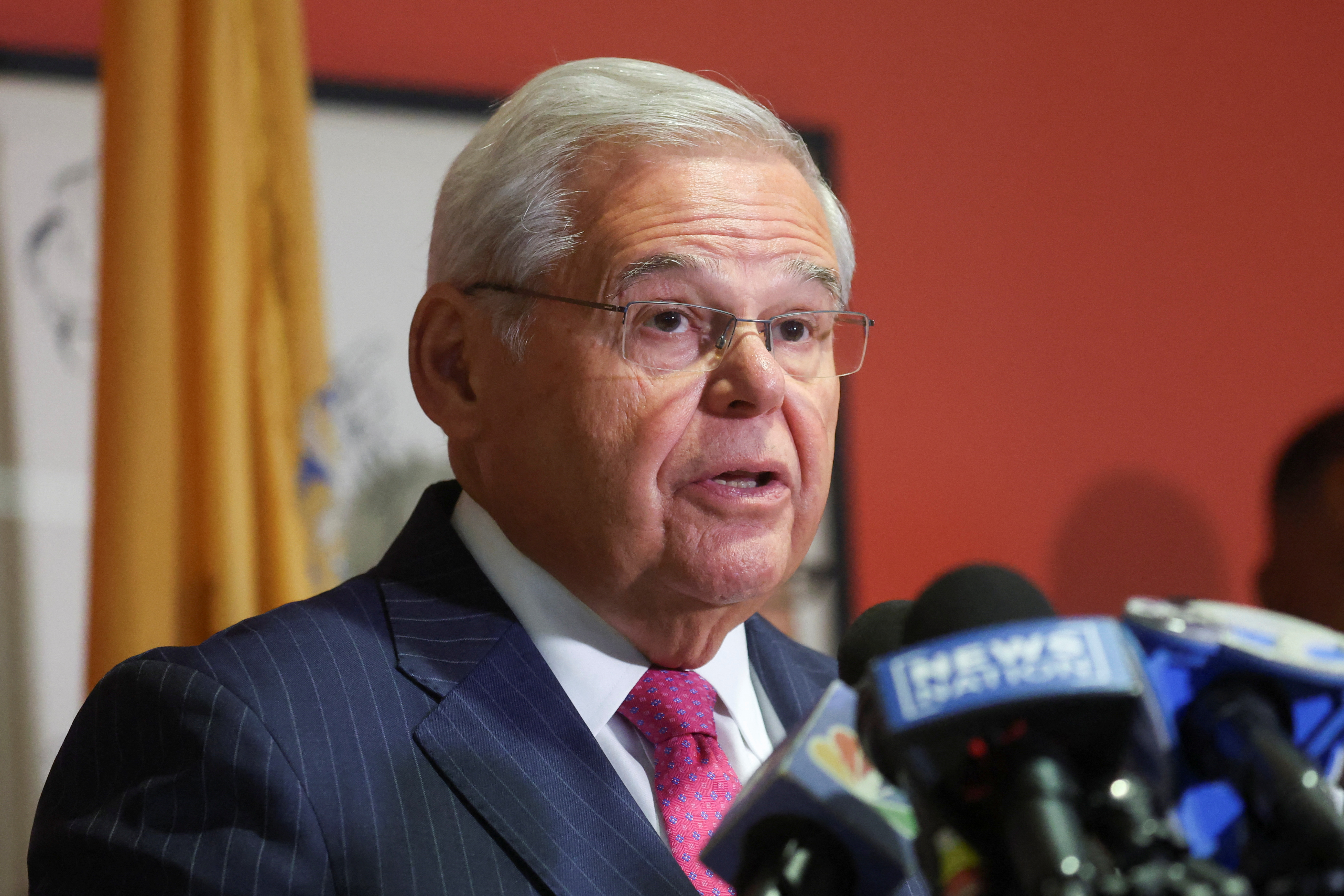
U.S. Senator Robert Menendez (D-NJ) delivers remarks, after he and his wife Nadine Menendez were indicted on bribery offenses in connection with their corrupt relationship with three New Jersey businessmen, in Union City, New Jersey, U.S., September 25, 2023. REUTERS/Mike Segar Acquire Licensing Rights

WASHINGTON, Sept 26 (Reuters) – Charges that Senator Bob Menendez accepted bribes in exchange for wielding his influence to aid the Egyptian government prompted calls in the U.S. Congress on Tuesday for the Biden administration to rethink $235 million in military aid to Cairo.

Democratic Senator Chris Murphy, who chairs the Senate Foreign Relations Committee’s Middle East subcommittee, said he hoped the committee would investigate the allegations and Egypt’s involvement.

U.S. prosecutors announced an indictment on Friday accusing Menendez of accepting gold bars and hundreds of thousands of dollars in cash in exchange for wielding his influence to aid the Egyptian government.

“I would hope that our committee would consider using any ability it has to put a pause on those dollars, pending an inquiry into what Egypt was doing,” Murphy told reporters.

“I have not talked to colleagues about this yet, but obviously this raises pretty serious questions about Egypt, Egypt’s conduct,” he said.

The indictment against Menendez also says he had close relationships with members of Egypt’s intelligence services and held meetings to discuss U.S. military aid.

Menendez has repeatedly denied wrongdoing. He has stepped down temporarily from his role as chairman of the powerful Senate Foreign Relations Committee. Senate Democratic rules require a member charged with a felony to give up any leadership position.

President Joe Biden’s administration decided this month to allow much of U.S. foreign military aid to Egypt to go ahead, saying the country was vital to national security interests despite what critics have said about human rights abuses.

Murphy was among lawmakers who criticized the decision.

Representative Don Beyer, a Democratic House of Representative member and co-founder of the congressional Egypt Human Rights Caucus, said Egypt “is conducting an espionage operation within the U.S. Senate” and Washington should respond.

“I think that calls for a much stronger response from the Biden administration, and the straightforward one is to withhold (the military funds),” Beyer said on CNN.

Reporting by Patricia Zengerle; Editing by Tom Hogue

Our Standards: The Thomson Reuters Trust Principles.

Patricia Zengerle has reported from more than 20 countries, including Afghanistan, Iraq, Pakistan, Saudi Arabia and China. An award-winning Washington-based national security and foreign policy reporter who also has worked as an editor, Patricia has appeared on NPR, C-Span and other programs, spoken at the National Press Club and attended the Hoover Institution Media Roundtable. She is a recipient of the Edwin M. Hood Award for Diplomatic Correspondence.


Categories
South Caucasus News

World Bank: Georgia advances on financial inclusion, enterprise financial transparency


The World Bank on Tuesday said Georgia had advanced “ambitious” second-generation reforms aimed at boosting private sector development and enhancing financial inclusion thanks to the institution’s €4 million Georgia Financial Inclusion and Accountability project, Azernews reports, citing Agenda.